12 035 résultats
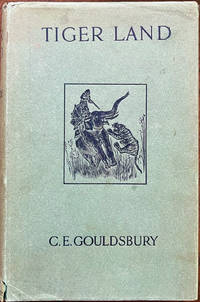
191362084London: Chapman & Hall Ltd. 1913. Thick 8vo. xvi 2 216 1 pp. plus 4 pp. publisher’s ads. Photo frontisp. 23 photo plates. Pictorial green linen publisher’s cloth gilt illustration front cover of tiger attacking elephant and hunter gilt lettering front cover & spine very slight bumping to couple corners minor shelfwear slight foxing to fore-edges w/ d.j. dark gray-green paper illust. repeated on front cover in blue blue lettering VG/NF copy w/ “Association for Promoting Christian Knowledge†prize bookplate on front pastedown to F.H. Giltrap of Mountjoy School in 1914. Second edition of this informative memoir drawn from personal interviews experiences and notebooks of big game hunter and late Inspector General of Police Bombay Digby Davies as well as the author’s own sporting experiences. At the time he had been specifically requested to eliminate all personal names and references in the incidents with Davies whom Gouldsbury would specifically mention in the follow-up “Tiger Slayer by Order†1915. Gouldsbury writes of numerous encounters with tigers in his own adventures hunting from elephant back and machans as well as leopards and maruading elephants with additional references to bison ibex and others. Davies relates his time serving during the Sepoy Mutiny work as a sporting inspector and specifically hunting down tigers elephants and others endangering villagers and livestock. One chapter specifically mentions hunting a 419 lb. tiger stretching over 10 feet 7 inches from nose to end of tail and standing 3 1/2 feet which had terrorized villagers killing cattle across Bengal. Very rare in original dustjacket. Chapman & Hall, Ltd., hardcover
1900D0407Edinburgh & London, Oliver & Boyd, s.d. (vers 1900) ; 140 x 214 mm, 56 pp., cahier agrafé (petite déchirure en queue, sur 8 pages). En langue anglaise. Bon état.
Edinburgh & London, Oliver & Boyd, s.d. (vers 1900); 140 x 214 mm, 56 pp., cahier agrafé (petite déchirure en queue, sur 8 pages). En langue anglaise. Bon état.
1889002014No Place: No Publisher 1889. Cabinet card of a Regimental boxing match in India approximately 165mm x 105mm in size dated 1889 to reverse. Image faded pin hole to either end where once pinned up slightly rubbed. Reverse has notes in ink 'From Joseph Theodore O'Brien to his affectionate chum Edward Perkins Ramplu India 20th February 1889 for Rs 150 37 rounds'. First Edition. Unbound. Good. 32mo Oblong. Cabinet Card. No Publisher Paperback
1915AQ27136Ranikhet: Abdulla Khan photographer 1915. 24 black and white photographs mounted on twelve leaves. Sewn as issued in original publisher's printed red wrappers. Rubbed and creased a trifle bowed. An unrecorded publication comprised of 24 evocative photographs primarily group shots of members of the 1/4th Battalion Duke of Cornwall's Light Infantry whilst stationed at Bareilly Uttar Pradesh during the first year of the Great War. 1/4th Battalion formed in Truro made up part of the Devon and Cornwall Brigade in Wessex Division. They sailed for India late 1914 and landed in Bombay on 10th November 1914 and remained there until 1916 where they moved to Aden 1916-1917 and then finished out the war in Egypt 1917-1918. . Oblong 8vo. [Abdulla Khan, photographer] unknown
1796398421796. The archive comprises: 1. Autograph letter signed "John Canning." Bifolium 13 x 8 1/4 inches 21 lines in fine Malay Jawi with Arabic opening formula docketed "Calcutta 10 Dec 1796"; octagonal red-wax armorial seal of the Canning family. Letter requests that local rulers receive Capt. Hogan "as our agent. to conclude a treaty advantageous to both sides" dated 22 Jumada II 1211 / 10 Dec 1796. 2. to 5. 4 Paper wrappers. English addresses in a copperplate hand & parallel Jawi headings each with intact Canning seal. Addressed to the Sultan of Magindanao King of Mempawah Borneo King of Bali Sultan of Borneo. 6. to 8. 3 Yellow-silk diplomatic covers. Golden satin sleeves with paper address bands in two languages; two remain unopened and sealed. Addressed to the Sultan of Johor unopened King of Sumbawa unopened Sultan of Sulu wrapper only. An exceptional archive uniting British Malay and Islamic manuscript traditions that captures the East India Company’s first concerted overtures to the island-states of Southeast Asia.<br/> <br/> Drafted in the wake of the Dutch East India Company's collapse and the French Revolutionary Wars this archive documents the East India Company's first concerted diplomatic overtures to the maritime courts of the Malay world. With Dutch control unraveling after the 1795 Batavian Revolution Britain saw a strategic opportunity to enter the lucrative Spice Island trade. Lacking on-the-ground alliances the Company turned to private initiative: Captain Michael Hogan an Irish-American merchant and former convict transport captain was enlisted as unofficial envoy aboard his ship Marquis Cornwallis. The diplomatic texts were composed by Captain John Goodall Canning then Harbour-Master of the port in refined court Malay using Jawi script the Islamic-inflected lingua franca of diplomacy from Aceh to Sulu. In keeping with regional tradition the letters open with Islamic invocation and florid honorifics followed by carefully phrased expressions of friendship and commercial intent. The surviving autograph letter fixes the date of the mission and declares its purpose: "to plant affection and concord and if Your Highness deem it good to enter with us into a compact benefiting both realms." After disembarking convicts in Port Jackson Sydney in February 1796 the Marquis Cornwallis passed northward through Torres Strait calling at New Guinea the Moluccas and ports across the Java Sea almost certainly delivering these and parallel documents en route. The silk wrappers signal the elevated diplomatic status of the messages which were meant to be presented in person by Hogan and opened only in the presence of the addressee. The present archive offers a rare and vivid glimpse into the hybrid ceremonial linguistic and political world of early modern Southeast Asia and into the improvisational diplomacy of the Company at the edge of empire. unknown
1860223307London.: Day & Son Lithographers to the Queen. 1860. Additional tinted lithographed title 39 tinted lithographs each with 2 pp of descriptive text contemporary half green morocco elaborately gilt decorated spine with raised bands red gilt-lettered title label pebbled green cloth boards 28.5 x 20.3 cms marbled fore edges and endpapers the binding a little scuffed and worn the prelims rather browned the first three leaves loose at the lower hinge scant spotting and to the margins of the plates occasional pencilled marginalia but a very good complete copy in a handsome binding. George Francklin Atkinson 1822–1859 was a captain in the Bengal Engineers and a skilled artist. He drew directly from his personal experiences in India and here he intended to offer a humorous satirical look at the lives of British colonials in India especially in the wake of the Sepoy Rebellion set in the fictional village of "Kabob" . The author's dedication is to the Victorian novelist and man of letters William Thackeray himself born in India and begs him to "accept this salute of my little craft as a trifling token of congeniality admiration and esteem". . Day & Son, Lithographers to the Queen. hardcover
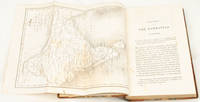
1778223135London.: Printed for John Nourse. 1778-1880. Third Edition"revised by the author" of Volume I; first edition of Volume II Part I only lacking Part II. Two volumes 23 maps plans or views of 36 most folding: iv 436pp xcvii Index iii Errata Errata in the Index Directions for the Binder to Place the Maps; ii 365pp contemporary calf boards re-backed boards scored and scuffed 28.3 x 22 cms several of the maps with small fold splits no loss some offsetting the folding views of Calcutta and Bengal particularly fine the large folding "General Map of Indostan" in the first volume heavily spotted affecting the facing leaf several old paper repairs and inked corrections in an early hand with the armorial bookplates of Joseph Cator a prominent merchant and administrator with the East India Company and of Peter Cator his son founder of the Cator Prize and of Bertie Peter Cator and of Kelham Hall a handsome example lacking the second part of Volume II in good condition. Foundational work written by Robert Orme an official and historiographer for the British East India Company EIC with a noteworthy family provenance. The text chronicles the geopolitical struggles and military conflicts that paved the way for British dominance over the Indian subcontinent. <br> <br>The Cator family built a legacy of immense wealth regional development and colonial influence spanning three generations. Joseph Cator 1733–1818 laid the financial foundations as a wealthy "nabob" and high-ranking East India Company official in Calcutta. His 1780 marriage to Diana Bertie daughter of Sir Albemarle Bertie successfully elevated the family into the British aristocracy allowing him to return to England and manage expanding Kent estates like Beckenham Place Park. His son Peter Cator 1796–1873 leveraged this land inheritance during the mid-19th-century railway boom. Alongside his brother Peter transformed these holdings into the upmarket Cator Estate across Blackheath and Beckenham while also working as a lawyer and establishing educational scripture prizes in Madras. This colonial and legal influence continued with his descendant Sir Ralph Bertie Peter Cator 1861–1945 who served the British Empire as a prominent colonial judge holding key judicial appointments as the First Judge of British East Africa and later in the High Court of Constantinople. . Printed for John Nourse. hardcover
1826222929London.: Longman Rees Orme Brown and Green. 1826. Three volumes engraved frontispieces a trifle spotted and stained folding Map of India in Vol I lacks the large folding map called for in Vol II wood engravings in the text: xxxii 571 pp final blank; xix 483 pp final blank; iii-xx lacks half title 537 pp final blank 2 Directions to the Binder; contemporary half calf over marbled boards 21.5 x 14 cms spines gilt decorated inked name of a previous owner to the front pastedown of Vol I a few neat pencilled annotations in the margins some browning and occasional staining rubbed at extremities in good condition. James Grant Duff 1789-1858 an East India Company army officer administered the princely state of Satara Bombay Presidency and he based his narrative on extensive archival access and on his own service in western India. His was a foundational colonial-era narrative and regarded as the most detailed account of Maratha political history available to English-speaking audiences. . Longman, Rees, Orme, Brown and Green. hardcover
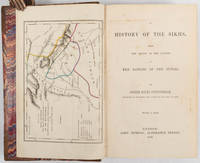
1849222747London.: John Murray. First Edition. 1849. Frontispiece map and one other folding map both hand-coloured in outline folding table xxxvi 425 3 pp; early half calf marbled boards 21.5 x 14 cms marbled endpapers spine blind-stamped in compartments and gilt-ruled red title label folding map with a sealed 4cm fold split at the head of one fold scant spotting and age-toning boards a trifle rubbed and scuffed neat inked previous owner's name to the front free endpaper and the pencilled name and address of bookseller R. D. Steedman paper abrasion to the verso of the front free endpaper a very good copy. <br> <br>Handsome armorial bookplate 'Erimus' to the front pastedown. First edition. Rare. <br>Joseph Davey Cunningham 1812-1851 wrote this landmark English work on the history of the Sikhs whilst serving as a Captain in the Bengal Engineers and the Political Agent to Bhopal. He had gathered extensive first-hand knowledge during eight years 1837–1845 of service as a political assistant on the Sikh frontier. The work gained notoriety for Cunningham's criticism of Sir Henry Hardinge's management of the Anglo-Sikh War. The subsequent disgrace led to his professional ruin and is reported to have hastened his early death at the age of 38. A second edition issued posthumously by the author's brother Peter Cunningham 1816–1869 a prominent British writer and critic softened its criticism of British policy. . John Murray. hardcover
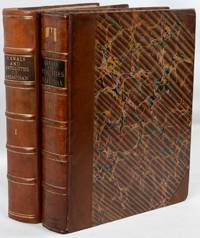
1829222492London.: Smith Elder and Co. First Edition. 1829-1832. First edition. Rare. Two vols: <br>Vol I Engraved frontispiece large folding engraved map of Rajast'han hand-coloured in outline and laid-down on linen 29 engraved plates or tables three folding iii-xxx title dedication introduction contents lacks half-title ii list of plates 806 pp errata leaf; <br>Vol II Engraved frontispiece 22 engraved plates two folding iii-xxxii title dedication introduction lacks half-title ii list of plates 791 pp. <br>Two of the plates foxed four with marginal foxing images unaffected the list of plates in Vol I strengthened at the foot and p.329 with an archivally sealed tear no loss; contemporary half calf over marbled boards 31.5 x 25 cms quarto Vol I sympathetically re-backed endpapers renewed gilt-lettered title labels between gilt-ruled raised bands the remains of a library ticket to the head of Vol II speckled edges a good set of the rare first edition. <br>With the bookplate of Anthony Mactier Durris. A landmark illustrated work of British India; the rare first edition with a noteworthy provenance. Anthony Mactier 1773-1854 served as Registrar of the High Court in Calcutta before returning to Scotland in 1834 purchasing the Durris estate in 1837. At the time Tod's "Annals" was regarded as "the political officer's bible" see Charles Allen "Lives of the Indian Princes" 1985 p. 255 and shaped European and Indian perceptions of Rajput identity. . Smith, Elder, and Co. hardcover
24731One item from ‘Allen’s Indian Mail’ 28 March 1887. Three items marked as from the periodical ‘India’ 1902 1903 and 1906. Another ‘Reprinted from “INDIA†August 16 1901.’. Five galley-proofs of articles written during the high-point of the Raj by leading Victorian journalist in India W. Martin Wood editor of the Times of India founder and editor of the Bombay Review. Ephemeral items creased and worn but with text clear and entire. ONE: Headed ‘ALLEN’S INDIAN MAIL / THE LATE MR. EDWARD BROOME C.E. / Mr. M. Martin Wood writes to us as follows: -’. Sixty-two lines in small print follow beginning: ‘Some little time back your “Domestic Occurrences†contained the name of Mr. Edward Broome Civil Engineer as having died at Southport something under 60 years of age. It struck me then that a note of Mr. Broome’s quiet work in India ought to be made’. TWO: Annotated at head by Wood ‘India Sep 16th. 1902’. Sixty-eight lines of small print. Three sections concerning drought ‘in Gujerat and the Deccan’. The first begins: ‘An esteemed correspondent writes: Telegrams from India during the last few weeks have told us very little about the suspension and in certain districts what almost threatens failure of the later monsoon rains.’ The second starts: ‘But this passive creed is nto that of their masters from the West’. The third: ‘Meantime what has become of the Scott-Moncrieff comprehensive Water-Supply and Irrigation Report’ THREE: Headed ‘INDIA’S CHRONIC DEFICIT. / FROM AN ANGLO-INDIAN CORRESPONDENT. Annotated by Wood at head: ‘From India Feb. 13th. 03’. Beginning ‘Those few of our official financiers at Simla or in the palace overlooking St. James’s Park who are at all sensitive to Press criticism must have felt happy when in the last Financial Statement they recorded the line - “the entry under Exchange has become of minor importance.â€â€™ Ninety-three lines of text. FOUR: Headed ‘INDIA’S SEABORNE TRADE: / BALANCED ONLY BY DEADWEIGHTS.’ Annotated at head by Wood: ‘From India Jan 15. 06’. Begins: ‘Only within the last fortnight have come to hand detailed returns of India’s trade with the outside world during the first six months of its current financial year - April 1 to September 30.’ Eighty-one lines in small print. FIVE: Headed ‘Reprinted from “INDIA†August 16 1901. / INDIAN LOANS GUARANTEE. / AN EMERGENT ILLUSTRATION. / BY AN ANGLO-INDIAN.’ Beginning ‘The miscarriage of the proposed Indian sterling loan of £3000000 last month must have recalled attention to the often pressed always postponed demand for a British Treasury guarantee in support of the public debt of India.’ Sixty-five lines of small print. One item from ‘Allen’s Indian Mail’, [28 March 1887]. Three items marked as from the periodical ‘India’, [1902], 1903 unknown
24732One item from ‘Allen’s Indian Mail’ 28 March 1887. The other ‘Reprinted from “INDIA†August 16 1901.’. Two galley-proofs of articles by leading Victorian journalist in India W. Martin Wood editor of the Times of India founder and editor of the Bombay Review. Ephemeral items creased and worn but with text clear and entire. ONE: Headed ‘ALLEN’S INDIAN MAIL / THE LATE MR. EDWARD BROOME C.E. / Mr. M. Martin Wood writes to us as follows: -’. Sixty-two lines in small print follow beginning: ‘Some little time back your “Domestic Occurrences†contained the name of Mr. Edward Broome Civil Engineer as having died at Southport something under 60 years of age. It struck me then that a note of Mr. Broome’s quiet work in India ought to be made’. TWO: Annotated at head by Wood ‘India Sep 16th. 1902’. Sixty-eight lines of small print. Three sections concerning drought ‘in Gujerat and the Deccan’. The first begins: ‘An esteemed correspondent writes: Telegrams from India during the last few weeks have told us very little about the suspension and in certain districts what almost threatens failure of the later monsoon rains.’ The second starts: ‘But this passive creed is nto that of their masters from the West’. The third: ‘Meantime what has become of the Scott-Moncrieff comprehensive Water-Supply and Irrigation Report’ THREE: Headed ‘INDIA’S CHRONIC DEFICIT. / FROM AN ANGLO-INDIAN CORRESPONDENT. Annotated by Wood at head: ‘From India Feb. 13th. 03’. Beginning ‘Those few of our official financiers at Simla or in the palace overlooking St. James’s Park who are at all sensitive to Press criticism must have felt happy when in the last Financial Statement they recorded the line - “the entry under Exchange has become of minor importance.â€â€™ Ninety-three lines of text. FOUR: Headed ‘INDIA’S SEABORNE TRADE: / BALANCED ONLY BY DEADWEIGHTS.’ Annotated at head by Wood: ‘From India Jan 15. 06’. Begins: ‘Only within the last fortnight have come to hand detailed returns of India’s trade with the outside world during the first six months of its current financial year - April 1 to September 30.’ Eighty-one lines in small print. FIVE: Headed ‘Reprinted from “INDIA†August 16 1901. / INDIAN LOANS GUARANTEE. / AN EMERGENT ILLUSTRATION. / BY AN ANGLO-INDIAN.’ Beginning ‘The miscarriage of the proposed Indian sterling loan of £3000000 last month must have recalled attention to the often pressed always postponed demand for a British Treasury guarantee in support of the public debt of India.’ Sixty-five lines of small print. One item from ‘Allen’s Indian Mail’, [28 March 1887]. The other ‘Reprinted from “INDIA,†August 16, 1901.’ unknown
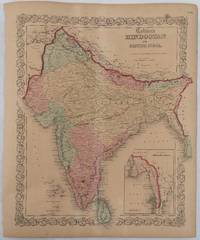
1859224156New York.: J. H. Colton. 1859. Hand-coloured map 40 x 33 cms inset map "Continuation of British India" 12 x 9.3 cms showing Burma elaborate decorative burst border a few spots sheet age-toned inner margin a little chipped not affecting the map and small split in the outer margin no loss text "Farther India or Indo-China" from Colton's atlas on the verso an attractive map in good condition. Attractively hand-coloured map showing different districts presidencies and independent kingdoms with contrasting pastel pinks yellows greens and blues. Major Presidencies Bengal Bombay and Madras are shown alongside extensive detail on river networks the Himalayan range roads and early railway lines connecting major trading hubs. Published a year after the East India Company was stripped of its governing powers following the tumultuous events of the 1857 Indian Rebellion Sepoy Mutiny. This 1859 map is one of the very first American atlas sheets printed to reflect the formal establishment of direct British Crown rule the Raj. It illustrates a subcontinent transitioning from a corporate-held trade monopoly into the crown jewel of Queen Victoria's empire neatly delineating newly pacified administrative boundaries. . J. H. Colton unknown
1839223681London.: Smith Elder and Co. Cornhill. 1839. Engraved handcoloured frontispiece opposite the additional engraved title page sketch map and 7 other full-page illustrations one folding and 5 hand-coloured text illustrations 2 half-title xvii including both the engraved and printed title pages 283pp; original blind-stamped pebbled green cloth boards 23 x 14.5 cms re-backed mounting the original gilt-lettered backstrip endpapers renewed scant spotting the boards faded and the backstrip chipped at the foot with the neat inked inscription of a previous owner but in very good condition. Scarce. Pioneering account beautifully illustrated after sketches by the author. Marianne Postans travelled to India in 1833 with her husband Thomas Postans a Captain in the 15th Regiment of the Bombay Native Infantry where he was posted to Cutch Kutch the northwestern region of modern-day Gujarat. They both shared a deep interest in the people and traditions of India. Marianne's account attempts to describe the culture of the region its bards and bardic literature including specific songs and stories of Kutchi bards arts and crafts and agriculture and trade. She also describes in detail rituals such as infanticide and the practise of sati. <br>The beauty of the Rann awed her: “The distant aspect of the Runn resembles that of the ocean at ebb tide; and as some water always remains on it the refraction of light produces the most beautiful and mysterious effects decorating it with all the enchantments of the most lovely specimens of mirage whose magic power exerting itself on the morning mists indues this desert tract with the most bewitching scenes…”. . Smith, Elder and Co. Cornhill. hardcover
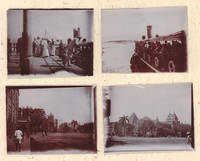
1906181023Mumbai. Circa 1906. Four silver albumen prints with pencilled captions on the verso approx. 7.4 x 10 cm fading and edge wear one minor tear but in good condition.<P> Group of private tourist photos taken around 1906 as captioned a street scene and one looking towards Dadabhai Naoroji Road with impressive architectural skyline and two of well-dressed European passengers on board a tug heading towards a "British India Steamer". <br> <br>From the Estate of the late collector and scholar Arthur Hacker.<P> <b>When referring to this item please quote stockid 181023</b> . unknown
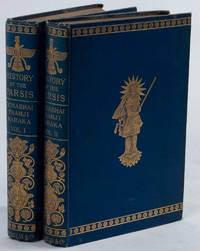
1884223672London.: Macmillan & Co. First Edition. 1884. Two volumes 8 full -page illustrations including 4 chromolithograph plates two photographic illustrations tipped in and two black and white steel engravings xxxiii 332pp; viii 350pp the final leaf unopened original azure linen cloth-covered boards elaborately gilt with a cover vignette and highly embellished spine gilt lettered extremities a trifle rubbed and bumped scant foxing a highly attractive copy in very good condition. Foundational work on the Parsis for a Western audience by influential Indian newspaper editor and adminstrator Dosabhai Framji Karaka 1829-1902. . Macmillan & Co. hardcover
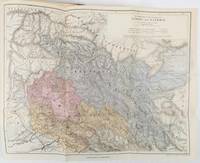
1887215585London.: W. H. Allen & Co. Limited. First Edition. 1887. Two volumes. Two coloured folding maps coloured frontispiece in each volume profusely illustrated some plates in colour original tipped-in photographic portrait of Sir Salah Jung without the specimen handwriting two panoramic sketches from the Takht-I-Sulaiman. Volume I: xxvii 314pp; Volume II: viii 303pp. Original mint green cloth covered boards ruled and decorated in black spines lettered in gilt head of spine to Vol I strengthened cloth a little worn and dusty hinges tender but holding a few gatherings unopened top edges uncut a good set of this handsome first edition. With the book tickets of noted collector and bibliographer Benton L. Hatch and bookplates of Vernon Howard Californian bookseller and mountaineer in each volume. 22.5 x 14 cm. A descriptive illustrated guide and history drawn from the memoirs of British colonial administrator Sir Richard Temple 1826-1902 Governor of Bombay from 1877 to 1880 and from his extensive travels throughout Kashmir Sikkim and Nepal over almost thirty years. Edited by his Indian-born son Richard Carnac Temple an amateur anthropologist and in his later career Chief Commissioner of the Andaman and Nicobar Islands. . W. H. Allen & Co., Limited hardcover
1813222916London.: John Murray. 1813. 10 hand coloured aquatints xiv 358pp ii Directions to the Binder lacks half title later half morocco red linen covered boards gilt-lettered spine 26.5 x 20.7 cms margins trimmed one plate with slight loss to the publisher's signature title page strengthened at the hinge small chip at the lower corner two leaves with short sealed edge tears text unaffected fifteen leaves stained at the gutter with loss to the inner margin of one plate final leaf with soft creases and a short sealed tear text unaffected the margins of the plates rather dusty and browned good condition. Firsthand account by Thomas Duer Broughton 1778-1835 a British army officer of the East India Company appointed military resident with the Mahrattas in 1802. Compiled from a series of letters to his brother Broughton's account includes detailed descriptions of festivals and ceremonies. Nine of the ten fine handcoloured plates are notable for being after sketches by Indian artist "Deen Alee". . John Murray. hardcover
1828214811London.: John Murray Albemarle Street. First Edition. 1828. First Edition two volumes in 1: xvi 4 xvii-xlviii 632pp; full-page map coloured in outline 5 plates 21 wood engravings in text List of Subscribers etc. last blank; viii 516pp 5 plates 4 wood engravings in text contemporary calf boards scuffed sympathetically rebacked with the gilt monogram of the Church Missionary Society 27 x 20cm considerable foxing to plates & adjacent leaves with small waterstain to several plates in Volume I neat sealed tears to five leaves in the Appendix of Volume II otherwise clean with the label of the Church Missionary Society and of Kumars the Calcutta Booksellers to the front pastedown neat ownership inscription of W. R. Crocker to the front free endpaper a good copy. A seminal work describing India's geography and people with an interesting provenance. Sir Walter Russell Crocker KBE 1902 – 2002 was an Australian ambassador and he authored a well-received biography of Jawaharlal Nehru: "Nehru: A Contemporary's Estimate" 1966. He was ambassador or high commissioner to eleven countries including India twice Indonesia Canada Italy Belgium Nepal the Netherlands Ethiopia Kenya and Uganda. He headed the Department of International Relations at the Research School of Pacific and Asian Studies Australian National University 1949–1954 and was a Lieutenant-Governor of South Australia for more than nine years. . John Murray, Albemarle Street. hardcover
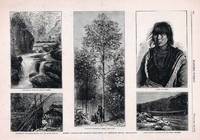
1872195548New York.: Harper's Weekly. 23 November1872. Five engravings in three columns 23.5 x 10 cms; on a single newspaper leaf 28.7 x 40.8 cm unrelated text on the verso lower margin creased with a small central tear affecting the caption no loss the image sin very good condition. Engravings from Harper's Weekly in November 1872 all centred on the quinine production in Darjeeling. Production began in the 1860s from seeds sent by the famed botanist Sir Joseph Dalton Hooker. Quinine proved indispensable to British rule in India and they invested heavily in plantations to sure up supply.The anti-malarial was vital for colonial expansion "quinine coursed through the bloodstream of empire" Townsend Middleton "Becoming after: The Lives and Politics of Quinine’s Remains" in Cultural Anthropology Vol. 36 Issue 2 pp. 282-311 2014 although probably known more to the readers of Harper's Weekly as an essential for gin and tonic. <br> <br>The five engravings: <br>Foot-Bridge over the River Rungbee <br>Buttress of Suspension Bridge over the River Teestah <br>Cinchona Succirubra Thirty Feet High signed but indecipherable <br>Native of Sikkim <br>Cane Suspension Bridge over the Great Runjeet. . Harper's Weekly. unknown
1844223122London.: J. Hatchard and Son. 1844. Two volumes hand-coloured chromolithograph portrait frontispiece to each volume 30 plates including 6 botanical plates in the second volume lacking the tissue guards: xii 475 pp ; vii List of Illustrations 459 pp; contemporary half calf spine gilt-ruled between compartments raised bands gilt lettered title labels edges fully gilt 23.5 x 16 cms professionally re-backed mounting the original spine corners a little rubbed and bumped title and frontispiece to each volume rather spotted and affecting a number of the plates some age toning but a good handsome copy. Sir William Henry Sleeman 1788–1856 was a British soldier and administrator in India and "his most memorable achievement was an exposure of the practices of the thugs an organised fraternity of professional murderers.In February 1839 additional duties being assigned to his office he became commissioner for the suppression of Thuggi and dacoity. During the next two years he was actively engaged in investigating and repressing criminal organisations in Upper India. During 1826 and 1835 over fourteen hundred thugs were hanged or transported for life." DNB. At the time of writing Sleeman was political resident in Gwalior. His readable observations touch on a myriad of subjects and places and illustrate many facets of Indian life including suttee witchcraft influence of electricity on vegetation corn dealers the Kohinoor diamond transit duties Delhi Indian Police and military discipline. . J. Hatchard and Son hardcover
1813222915London.: Edward Orme. 1813. 20 hand coloured aquatint plates 149pp x Index including the Half Title and List of Plates; contemporary half calf over marbled boards spine gilt-lettered in compartments marbled edges 28.2 x 22 cms the first plate a trifle spotted with a small chip from the bottom margin slight age-toning and minor spotting in very good condition. Scarce suite of finely hand coloured aquatints depicting domestic colonial life in British India: the Europeans at their leisure attended by Indian servants. Doyley's compositions are often quietly satirical: Plate IV "A Gentleman Dressing Attended by His Head-Bearer and Other Servants" shows a young man in his gown relaxed seated and reading while an Indian servant washes his feet another in the background pours his drink and yet another makes his bed all overseen by the "Head-Bearer". The artist Charles Doyley was illustrating and observing a world in which was an intimate participant he had been born in India into a family that had long served in India himself serving as a member of the Bengal Civil Service from 1797 to 1838. <br> <br>Abbey Travel 435; Tooley 185 . Edward Orme. hardcover
1907223716Oxford.: Clarendon Press. 1907 19081909 1931. 26 volumes including the Index and Atlas frontispiece map of "The Indian Empire" in vols I-XXV neatly strengthened to the verso in a few volumes 26 other folding maps or plans the Atlas volume with 66 double page coloured maps or plans Vol II with inked name of an early owner “K. Shama Ras…Benares 21st July 1911” and the blind stamp of the bookseller Ram Narain Lal Allahabad Vols III and IV with the inked stamp of the Ruskin Library; endpapers rather age-toned throughout scant foxing; original green cloth gilt lettered on the spines 22 x 14 cms occasional rubbing and wear the cloth to the second volume faded and rubbed at the corners with some loss the hinges of a couple of volumes starting but sound a very good set of the complete third edition. <br> <br>A complete collation is available on application. A magisterial survey of Empire. This "New" edition issued in twenty-six volumes by the Clarendon Press Oxford constitutes the definitive third iteration of this landmark administrative and geographical record. Produced under the editorial guidance of Sir Herbert Hope Risley and James Sutherland Cotton the work expanded upon the foundational work of Sir William Wilson Hunter. The first four volumes "The Indian Empire" offer an exhaustive analysis of the subcontinent’s historical economic and administrative frameworks. The twenty succeeding volumes of alphabetical entries offering close statistical and descriptive accounts of specific regions and localities. The collection is formally concluded by a comprehensive index and a concluding atlas volume the latter featuring maps by J. G. Bartholomew. . Clarendon Press. hardcover