12 033 résultats
In 4°, pp. 18 non numerate. Fotografie di M.M. Sacha di Londra, Hamilton di Bombey e Dorys di Parigi. Brossura originale.
Roma, 1929 ottobre 13, copertina illustrata a colori in fascicolo originale completo di pp. 16 de "La Tribuna illustrata - Supplemento illustrato de La Tribuna"
(Codice PT/0038) In 16° 79 pp. Raccolta di 326 massime. Prefazione di E.Taglialatela. Tela editoriale, titolo e fregi oro. Ottimo. ~~~ SPEDIZIONE IN ITALIA SEMPRE TRACCIATA
1938185820Paul Geuthner Paris, Librairie Orientale Paul Geuther, 1938. In-12 carré broché de 37 pages. Peu courant. Collection Phoinikes et dravidiens. Bon état
1938185821Paul Geuthner Paris, Librairie Orientale Paul Geuther, 1938. In-12 carré broché paginé 38* à 84. Deuxième partie. Peu courant. Collection Phoinikes et dravidiens. Bon état
189945849ABBombay., The Times of India Office., 1899. Groß 8°. 50 S., 23 Tafeln. Farbig illustriertes OLeinen Sixth Edition. Einband etwas berieben und tels leicht fleckig. Widmung auf Vorsatz, sonst ordentliches Exemplar.
1373447Bombay, London: The "Times of India", 1899 in-4, 50 pages, 10 planches hors texte (sur 24) . Cartonnage d'éd. défraichi. VENDU EN L'ETAT, INCOMPLET DE 14 PLANCHES.
small 4to [25.5 x 19 cm]; xii [ads], [ii, half-title], 50, xiii-xix [ads] pp, 24 colored plates including frontis, with tissue guards. original cloth with title in red & black in black border, lightly rubbed, margin of frontis a little frayed, inscription dated 1897 on endpaper, very good. A picture of this book is available upon request by email. The colored plates show costumes worn by natives of India, especially Bombay, including different religions and castes, snake charmer, merchant, etc. An interesting feature are the 21 pages of ads, some with illustrations, including jewelry, medicine, bicycles, shipping agents, art.
Fine English Original typescript paper for the XVth International Congress of Sociology held at Istanbul in 1952: "Impact of modern life on the fundamentals of tribal culture of Eastern India" signed 'Tarak Ch. Das' with autograph signature by Das. Folio. .(34,5 x 22 cm). In English. 50 p. (text in 25 p.). It's written on the last page 'Basilmistir' [i.e. It's printed]. Some autograph corrections on text. Tarak Chandra Das was an anthropologist of Calcutta University. He did his Masters' from Calcutta University in 'Ancient Indian History and Culture' and joined the then newly founded Department of Anthropology at Calcutta University (the first Department of Anthropology in India) in 1921 as a research scholar and then he became lecturer in 1923 and finally retired as a Reader from the Department in 1963. Das conducted extensive fieldworks in Chotanagpur in the then Bihar and in Assam. Das was interested in the application of Anthropology. In 1941, he delivered the Sectional Presidential address in the Anthropology Section of the Indian Science Congress on the 'Cultural Anthropology in the Service of the Individual and the Nation'. In the address, Das elaborately charted out the future path of Indian anthropology with a description of the social dynamics of the tribal and peasant societies in India in the context of the role of anthropologists in nation building. Two books written by T.C. Das bears testimony of his observation and collection of data through anthropological fieldwork. One is his monograph on the Purum Kuki tribe of north-eastern India. and the other is on the Great Bengal Famine during the Second World War.[Bengal famine (1943):As revealed in a survey of the destitutes of Calcutta,1949]. Both the books were published by the University of Calcutta. Northeast India provided windows for Das in his applied anthropological approach towards nation building. The Purum monograph was one of the most comprehensive works produced by an anthropologist on the life of a small tribe and it became a major source of data for a number of world-renowned social anthropologists of Great Britain and USA in later years. The book on the famine of Bengal which took place in 1943 was a unique and rare first-hand study done by any anthropologist or social scientist on the victims of one of the greatest tragedies of India under the colonial rule. An earlier version of the book was discussed in the then British Parliament and some of the recommendations advanced by Das were adopted by the Famine Inquiry Commission in 1944 formed by the colonial government for the prevention of future famines in India. The Nobel Laureate economist Amartya Sen cited Das's original work in his famous book Poverty and Famines. Throughout the book, one finds description by Das wherein dry quantitative data,graphs and tables were made alive with human stories of 'grim struggles between hunger and finer sentiments of love, affection and kindness'. Das had conducted intensive fieldwork among three tribes in eastern India, viz. Ho, Kharia and Bhumij during 1927-31 and had shown how these tribes maintained their sociocultural identities. Apart from his success as an ethnographer,Das was also an armchair anthropologist. His studies on culture around fish in Bengal, museums and dowry restriction law provided examples of his keen interest in dealing with archival materials and written texts in social anthropological and sociological studies. (Source: Wikipedia).
Very Good English Original typed paper by Mukerjee with some autograph corrections in text andsignature. 4to. (30 x 24 cm). In English. [21] p. Type paper with autograph corrections and signature. Signed 'Radhakamal Mukerjee'. Paper for the International Congress of Sociology, Istanbul Session. Watermarked 'Glorious Bond' paper made in Sweden. Mukerjee, a leading thinker and social scientist of modern India, was Professor of Economics and Sociology and Vice-Chancellor of the University of Lucknow. Mukerjee played an important and constructive role in the Indian independence movement. He was a highly original philosopher of history and a discerning interpreter of culture and civilization and a 1962 recipient of the third highest Indian civilian honour of the Padma Bhushan. Mukerjee was the son of a barrister in Baharampur, West Bengal, a city located some 185 km north of Kolkata. He grew up in a household with a scholarly focus and a library devoted to history, literature, the law and Sanskrit texts. After attending Krishnanagar College, he gained an academic scholarship to Presidency College, under the University of Calcutta. He earned his honours degrees in English and History. Mukerjee opened the discourse of the Ashtavakra Gita into English with his posthumous work published in 1971. Mukherjees theory of society sought to explain the values of civilization. In sense, Radhakamal was a pioneer of transdisciplinary approach in science. Radhakamal Mukerjee emphasized interdisciplinary disciplinary approach towards the understanding of life. Mukerjee sought to break the barriers between physical sciences and sciences relating to persons aspects. He was a pioneer of Sociology in the 1900s. (Wikipedia).
1952052344India: Autograph note: Paper for the International Congress of Sociology Istanbul Session 1952 1952. Soft cover. Very Good. 4to - over 9¾ - 12" tall. Original typed paper by Mukerjee with some autograph corrections in text andsignature. 4to. 30 x 24 cm. In English. 21 p. Type paper with autograph corrections and signature. Signed 'Radhakamal Mukerjee'. Paper for the International Congress of Sociology Istanbul Session. Watermarked 'Glorious Bond' paper made in Sweden. Mukerjee a leading thinker and social scientist of modern India was Professor of Economics and Sociology and Vice-Chancellor of the University of Lucknow. Mukerjee played an important and constructive role in the Indian independence movement. He was a highly original philosopher of history and a discerning interpreter of culture and civilization and a 1962 recipient of the third highest Indian civilian honour of the Padma Bhushan. Mukerjee was the son of a barrister in Baharampur West Bengal a city located some 185 km north of Kolkata. He grew up in a household with a scholarly focus and a library devoted to history literature the law and Sanskrit texts. After attending Krishnanagar College he gained an academic scholarship to Presidency College under the University of Calcutta. He earned his honours degrees in English and History. Mukerjee opened the discourse of the Ashtavakra Gita into English with his posthumous work published in 1971. Mukherjees theory of society sought to explain the values of civilization. In sense Radhakamal was a pioneer of transdisciplinary approach in science. Radhakamal Mukerjee emphasized interdisciplinary disciplinary approach towards the understanding of life. Mukerjee sought to break the barriers between physical sciences and sciences relating to persons aspects. He was a pioneer of Sociology in the 1900s. Wikipedia. <br/> <br/> [Autograph note: Paper for the International Congress of Sociology, Istanbul Session], 1952 paperback
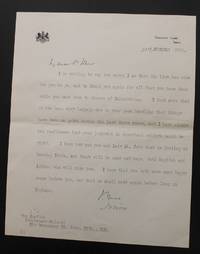
18021.I know how sad you and Lady St. John must be feeling at leaving India.". Viceroy's Camp India 23rd October 1930. Usual fold; in the original envelope. unknown
12903On letterhead of Newhouse Mersham Ashford Kent. 22 July 1996. 1p. 12mo. In fair condition laid down on backing and a little creased. He thanks him for a letter about 'the study you are doing of Royal bookplates and of course I remember the icon you had had sic of my great aunt Ella and was so pleased to have the postcard of it you kindly sent me'. He is also pleased to learn that Lee has been able to identify the print which his father sent Lee of his bookplate as the work of George Taylor Friend 'which I am sure he would have been very pleased to know'. Lee's research 'must produced quite a few headaches but with very interesting results'. He is sending 'a print of my bookplate which my father had designed for me but perhaps not by George Taylor Friend'. On letterhead of Newhouse, Mersham, Ashford, Kent. 22 July 1996. unknown
199366358Oxford, 1993, in-8, 394pp, broché, Bel exemplaire! 394pp
240 p. Memoirs of their childhood in India written by Rumer Godden & her sister, published jointly by their publishers. Hardcover Very good condition good
No marks or inscriptions. A very clean very tight copy with unmarked brown cloth boards, dusty page edges, minor rubbing to spine ends and no bumping to corners. Dust jacket not price clipped or marked with minor loss/tears to corners and very rubbed. 199pp. The authors wer seven and six in 1914 when they left their grandmother's London house to live with their parents in Bengal due to the outbreak of war. They spent five free and untrammelled years there and this is the story of that time seen through the eyes of the two children.
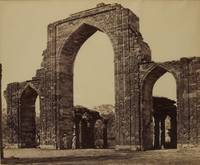
186632820551<p><b>This is a splendid pair of Samuel Bourne views of the Qutb complex in Delhi.</b></p><p>The first photograph shows the Delhi minaret and "victory tower" at the Qutb complex the tallest minaret in the world built of bricks. "The Qutb Minar is one of the most famous monuments in India and one of the most significant examples of early Indo-Islamic architecture. It is a tower of victory which also served as a minaret for the adjacent Quwwat al-Islam Might of Islam mosque. It was begun by Qutb-ud-Din Aybak ruled 1206-1210 the first Sultan of Delhi and founder of the Mamluk or Slave Dynasty and continued by Shams-ud-Din Iltutmish ruled 1211-1236. It is 72.5 m 238 ft high and rises in five tapering fluted" British Library.</p><p>The second photograph shows the screen of the Quwwat-ul-Islam mosque. "The screen which is often referred to as the 'Great Arch' is 6.7 metres wide and 16 metres high. An inscription on the central arch states that it was built in 1199 by Qutbuddin Aibak. It was one of the first Islamic monuments to be built by Hindu craftsmen in India. The craftsmen used the traditional method of laying blocks of stone horizontally and rounding the sides of individual stones to create the curve of the arch. The screen was ornately decorated with carved calligraphy and repeating scroll-like designs" Victoria and Albert Museum. The iron pillar at the left is cropped as issued. The dark tones and strong contrast wonderfully highlight the intricate carvings.</p><p>British photographer Samuel Bourne traveled throughout India from 1863-1870 photographing monuments people and landscapes. "By the time Bourne left India in 1870 to return to England he had produced over 2500 views mostly of architecture and landscapes which distributed by his partner Charles Shepherd constitute the most exhaustive record made in India by a single photographer. Bourne's carefully thought-out meticulously crafted images were collected by tourists archaeologists and botanists alike" Metropolitan Museum of Art.</p>
AQ25280s.i.: s.n. 1929-35 I: Oblong quarto. 30 photographs mounted on 30 leaves. Contemporary light green embossed cloth paper label to upper board title in manuscript 'Lahore Cricket Teams Khyber Pass and Family Groups'. Rubbed and marked joints split. II: Oblong quarto. 21 photographs mounted on 12 leaves bound with string in contemporary reversed half-calf beige cloth boards paper label to upper board titled in manuscript 'Kangra Valley'. Rubbed and marked. Two well-presented photograph albums featuring a total of fifty-one images depicting inter-war India. The first contains nine images of Himachal Pradesh state specifically the Uhl Valley and Lamba Dag River; eight photographs of the Khyber pass including Attock Bridge and the Khyber Valley Railway; three of 'The Unbendables' cricket team; two depicting Quetta in the aftermath of the 1935 earthquake; and three photographs of crowds taken at the Lahore session of the Indian National Congress at which was passed the historic 'Purna Swaraj' total independence resolution following the breakdown of negotiations between freedom movement leaders and the British government over the question of dominion status. The second album contains idyllic photographs of the Kangra Valley Himachal Pradesh predominantly of the Uhl and Banganga rivers including one of a gentleman fly fishing and two images of the Khyber Valley Railway. . [s.n.], [1929-35] hardcover
8vo., First Edition, with patterned endpapers; cloth gilt, gilt back, a near fine copy in unclipped dustwrapper.
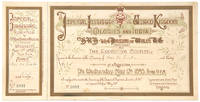
110625London Waterlow and Sons Ltd. 10 May 1893 & 17 May 1893. . Two over-sized colour-printed illuminated card invitations numbered addressed in pen & ink 22.7 x 31.2 cm; 16.5 x 32.6 cm; a printed manila envelope for replying to 'The Secretary / Imperial Institute / London SW'; a letter printed in red on Imperial Institute 4to headed paper requesting a reply to the invitation to the opening ceremony in order to reserve seats; single folio sheet 'General Outline of the Ceremonial' for the opening; 2 copies of printed folio sheet verso blank 'General Arrangements for the Reception of HRH the Prince of Wales. Wednesday May 17th 1893'.<br /> The first of these two over-sized invitations received by Louisa Da Costa was to the opening of the Imperial Institute on 10th May 1893 with Queen Victoria and the Prince of Wales in attendance. Since the Great Hall of the Institute wasn't completed in time a temporary hall was constructed for the opening. The second evening invitation from HRH the Prince of Wales invites Miss Da Costa and a friend to an evening reception from 9pm with 'Instrumental and Vocal Music. and Refreshments' in the illuminated gardens of the Imperial Institute in South Kensington - now the site of Imperial College London. The accompanying 'General Arrangements.' sheet give details of the evening's entertainments as well as travel arrangements special trains on the Inner Circle Line at 1am and 1:30am and the arrangements for 'Cold Suppers'.<br /><br />Louisa Da Costa was the sister of Mr Benjamin Mendes Da Costa both being descendants of the well-known wealthy Portuguese-Jewish trading dynasty. After his great success with real estate in Adelaide Australia Mr Da Costa sold his business there and sailed to England together with his sister. He died in Brighton in 1868 and his sister was the sole beneficiary of his will. Miss Da Costa died in 1898 bequeathing all her real estate in Adelaide to the Governor of South Australia to establish a Samaritan fund for convalescents from the Adelaide Hospital - the Louisa DaCosta Trust still operating today.<br /> London, Waterlow and Sons Ltd., 10 May 1893 & 17 May 1893. unknown
Book is in excellent condition. Binding is solid and square, covers have sharp corners, exterior shows no blemishes, text/interior is clean and free of marking of any kind. 161 pages. Chapters include: State oppression in Punjab, Patterns and characteristics of violence, Role of the police, Congress (1) party and the Delhi Administration ( Deployment of army, Censorship of the press ) Genocide, Knowledge, justice and reparation, etc.
1920390921 vol. in-4 br. format à l'italienne, s.d. (circa 1920), Plâté Ltd, Colombo, Kandy, & Nuwara Eliya,, with its 25 photographs
1 vol. in-4 br. format à l'italienne, s.d. (circa 1920), Plâté Ltd, Colombo, Kandy, & Nuwara Eliya,, with its 25 photographs Inscription en français en page de titre. Bon état par ailleurs. Anglais
c4491Bombay, Published by The Maharashtra Tourism Development CO, sans date(1973) ;in 4° en feuilles, couverture de papier fort vert à rabats, illustré en noir au 1er plat , avec titre doré, mentions d'édition et impression au 2ème plat; 12 reproductions en couleurs de miniatures indiennes, sur papier illustré ton sur ton, de couleur différente pour chaque mois.
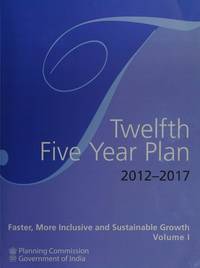
AT 9788132113683USA Edition . New. Brand New! Fast Delivery This is an International Edition and ship within 24-48 hours. Deliver by FedEx and Dhl & Aramex UPS & USPS and we do accept APO and PO BOX Addresses. Order can be delivered worldwide within 6-10 days and we do have flat rate for up to 2LB. Extra shipping charges will be requested if the Book weight is more than 5 LB. This Item May be shipped from India United states & United Kingdom. Depending on your location and availability. unknown