[Cuba]. [Slavery]Biblio.com
469 résultats
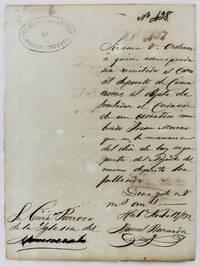
18723066Havana 1872. Very good. Manuscript form approximately 8.5 x 6.25 inches. Minor wear at edges; a few small worm holes. Contemporary ink stamp. Light tanning and offsetting. This 1872 manuscript form from a Havana jail the Celaduria de la Punta notes the death there of an "Asiatico" a Chinese indentured servant with the given name of Juan Macao and orders the transfer of the body to the mortuary for cremation. Indentured servants found themselves jailed for several reasons including suspicion of theft and other crimes recapture following runaway or mere suspicion of abandoning a contract. unknown
A9781164615675New. unknown
116461567X.Gpaperback. Good. Access codes and supplements are not guaranteed with used items. May be an ex-library book. paperback
B9781164615675New. unknown
1437008380.Ghardcover. Good. Access codes and supplements are not guaranteed with used items. May be an ex-library book. hardcover
1436816793.Gpaperback. Good. Access codes and supplements are not guaranteed with used items. May be an ex-library book. paperback
0332477975.Ghardcover. Good. Access codes and supplements are not guaranteed with used items. May be an ex-library book. hardcover
1332709818.Gpaperback. Good. Access codes and supplements are not guaranteed with used items. May be an ex-library book. paperback
0260298654.Ghardcover. Good. Access codes and supplements are not guaranteed with used items. May be an ex-library book. hardcover
0260298441.Gpaperback. Good. Access codes and supplements are not guaranteed with used items. May be an ex-library book. paperback
033173236X.Ghardcover. Good. Access codes and supplements are not guaranteed with used items. May be an ex-library book. hardcover
3848467682.Gpaperback. Good. Access codes and supplements are not guaranteed with used items. May be an ex-library book. paperback
1012467082.Gpaperback. Good. Access codes and supplements are not guaranteed with used items. May be an ex-library book. paperback
1012467090.Ghardcover. Good. Access codes and supplements are not guaranteed with used items. May be an ex-library book. hardcover
1275318185.Gpaperback. Good. Access codes and supplements are not guaranteed with used items. May be an ex-library book. paperback
198044366Editorial Letras Cubanas. VG/G. 1980. Hardcover. Two-volume hardback set with covers in different colors. Contents clean tight with little evidence of handling. DJs very worn with tears uneven fading edgewear. Not library discards. ; . Editorial Letras Cubanas, hardcover
BN22668Joy-Verlag Auflage: 2. Auflage: 2. Softcover. 244 x 21 x 1 cm. Mit Qi-Übungen täglich Lebenskraft tanken - zu Hause im Büro und unterwegs8 bis 10 Minuten reichen schon aus um Stress abzuschütteln und den Qi-Fluss anzuregen. Dafür benötigen Sie nicht mehr als einen Quadratmeter Bewegungsfreiheit und einen Stuhl. Erwin Cuba hat mit der 8-Minuten-Energiedusche ein ganzheitliches Fitnessprogramm entwickelt das er in seiner Praxis seit Jahren erfolgreich anwendet. Durch sanfte Selbstmassagen und Aktivierung der Meridiane Muskeln und Gelenke werden auch hartnäckige Verspannungen gelöst - das Qi kann wieder frei fließen. Schon nach einer kurzen Zeit des Übens verbessert sich Ihr allgemeines Wohlbefinden und Sie werden sich geistig frischer und emotional ausgeglichener fühlen. Die 8-Minuten-Energiedusche nimmt wenig Zeit in Anspruch reduziert Stress und löst körperliche sowie seelische Verspannungen regt den Stoffwechsel an und versorgt die Körperzellen mit frischer Energie ist besonders empfehlenswert für Personen mit vorwiegend sitzender Tätigkeit behandelt folgende 12 KörperregionenGelenke Wirbelsäule Kopf Augen Nacken Schultern Brustkorb und Brustwirbel Atmung Verdauung Lendenwirbel Hüfte und Becken Beine. AutorErwin Cuba arbeitet als Gesundheitstrainer Qi-Gong und Tai-Chi-Lehrer sowie als Shiatsu-Praktiker. Er ist Mit- begründer des Shiatsu-Netzwerkes Vital Living und bietet mobile Gesundheitsvorsorge in Unternehmen an. <br/><br/>Mit Qi-Übungen täglich Lebenskraft tanken - zu Hause im Büro und unterwegs8 bis 10 Minuten reichen schon aus um Stress abzuschütteln und den Qi-Fluss anzuregen. Dafür benötigen Sie nicht mehr als einen Quadratmeter Bewegungsfreiheit und einen Stuhl. Erwin Cuba hat mit der 8-Minuten-Energiedusche ein ganzheitliches Fitnessprogramm entwickelt das er in seiner Praxis seit Jahren erfolgreich anwendet. Durch sanfte Selbstmassagen und Aktivierung der Meridiane Muskeln und Gelenke werden auch hartnäckige Verspannungen gelöst - das Qi kann wieder frei fließen. Schon nach einer kurzen Zeit des Übens verbessert sich Ihr allgemeines Wohlbefinden und Sie werden sich geistig frischer und emotional ausgeglichener fühlen. Die 8-Minuten-Energiedusche nimmt wenig Zeit in Anspruch reduziert Stress und löst körperliche sowie seelische Verspannungen regt den Stoffwechsel an und versorgt die Körperzellen mit frischer Energie ist besonders empfehlenswert für Personen mit vorwiegend sitzender Tätigkeit behandelt folgende 12 KörperregionenGelenke Wirbelsäule Kopf Augen Nacken Schultern Brustkorb und Brustwirbel Atmung Verdauung Lendenwirbel Hüfte und Becken Beine. AutorErwin Cuba arbeitet als Gesundheitstrainer Qi-Gong und Tai-Chi-Lehrer sowie als Shiatsu-Praktiker. Er ist Mit- begründer des Shiatsu-Netzwerkes Vital Living und bietet mobile Gesundheitsvorsorge in Unternehmen an. Joy-Verlag paperback
20202-6200359172Editorial Académica Española 2020. Paperback. New. 112 pages. Spanish language. 8.62x5.91x0.32 inches. Editorial Académica Española paperback
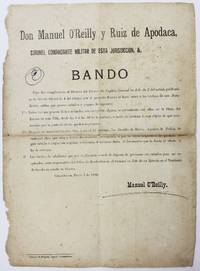
18963188Guanabacoa: Imprenta el Progreso 1896. About very good. Broadside approximately 17 x 12.5 inches. Previously folded. Some biopredation at left edge not affecting text. Otherwise faint foxing light tanning and dust soiling. Two contemporary manuscript rubrics. Unrecorded broadside that orders the presentation of privately-owned horses and pack animals in the town square of Guanabacoa for requisition by the Spanish army in January 1896 at the outset of the Cuban uprising that would eventually lead to the end of Spanish colonial rule. This bando states first that "Todos los que posean dichos animales sin excepción alguna se presentarán con ellos en la Plaza del Recreo de esta Villa desde las 8 á las 10 de la mañana á partir de mañana 8 con objeto de que reconocidos por la junta al efecto queden requisados." Following these initial voluntary presentations inspections would be made of homes and farms and those found not to have handed over usable animals would be guilty disobeying army orders during a time of war. At this point Spain had 100000 troops on the island and another two years of fighting the insurrection incited by José Marti would pass before the intervention of the United States. Not in OCLC. Imprenta el Progreso unknown
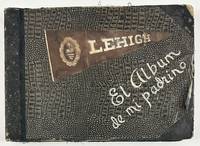
12844Various locations in Cuba and Pennsylvania: contents ca 1973. 25 leaves totaling 40pp. illustrated with thirty black-and-white and sepia-toned photographs with detailed manuscript captions plus seven large clippings from school publications and six additional ephemeral items. Oblong folio. Black cloth with alligator-patterned cloth on front board with manuscript title below a drawn representation of a small pennant for Lehigh University. Covers worn frayed and chipped alligator-style cloth curling a bit along fore edge. A few items loose from adhesive and a few with small tears scattered spotting and soiling. Overall very good condition with fascinating materiality. A lovingly-compiled photograph album and memorial book created by a young woman named Magdalena Sofia Guitart in tribute to her godfather Rafael Genó a Cuban engineer who studied at Lehigh University in Pennsylvania. Juan Rafael Genó Rizo was born in Santiago de Cuba in 1883. A doctoral thesis on Cuban architecture found online deems him one of the premiere Art Deco architects of Santiago and the only one to obtain a degree abroad. Genó graduated with a degree in Civil Engineering from Lehigh in 1909 and from the University of Havana in 1913. He died in Miami Florida in 1973.<br /> <br /> This doting scrapbook was compiled and heavily captioned in Spanish which we hereafter present in translation as a "Memorial which with love and pride I dedicate to my godfather and some of his works; a pale reflection of all the good he has done in his life" by Magdalena Sofia Guitart who was born in 1936 in Santiago and arrived in Miami in 1958. She includes photos of Genó as a baby and a boy of 11 "From a very young age as you can see here my godfather was a little gentleman" as well as in uniform alongside Mexican and Costa Rican comrades at Pennsylvania's Wayne Field. She lauds his "triumphs" and "genius" in "thousands of battles." Genó likely came to the United States following the Spanish-American War during the growth of Cuban immigration resulting from increased American attention of the island country. All of the content in the album is artfully presented within decorative rules or floral borders providing an unusual flair to the presentation. The book displays not only the hand-drawn Lehigh pennant on the cover but also large artistic renditions of the campus and an internal shot of its library clipped from school publications and comparing views from 1873 1909 and 1933 the relevance of Lehigh at the later date is unclear.<br /> <br /> Additional photographs and decorative designs share the story as "our engineer" returns to Cuba and "begins to demonstrate his knowledge" in the mines of Ponupo. Soon "his hard work integrity and honesty led him to be chosen" for other feats of engineering including "la Iglesia church Los Desamparados constructed by my godfather 1932" and a train terminal in Guantánamo. Images and a photographic clipping laud his renovations of "Colegio La Salle" in 1937. There are also six photos and a clipping showing Genó's work on the altar for the Eucharistic Congress held in Santiago in 1936 during which the original statue of Our Lady of Charity of El Cobre Patroness of Cuba was granted a canonical coronation by Pope Pius XI. The album also holds a clipping naming Genó as president of the Board of Directors of Santiago's Urban Property Center an inauguration ribbon and brochure for the Municipal Food Market in 1950 with which he was also involved and photos of the celebrated engineer later in life.<br /> <br /> A captivating and carefully-assembled homage created by a Cuban immigrant to the United States honoring a loved one who was educated in Pennsylvania and then returned to his home country to serve as a noted engineer during the first half of the 20th century. contents ca unknown
1975652469Habana Cuba: Editorial de Ciencias Sociales 1975. Softcover. Very Good. 457 pages in very good condition. VOLUME 1 ONLY. Pages are clean and unmarked. Text is in SPANISH. Minor stains on the flyleaf. Page edges are lightly darkened and stained. Bound in orange card covers with black titles. Faded marked and creased on the spine. Worn faded and creased around the edges. SCARCE. VG <br/> <br/> Editorial de Ciencias Sociales paperback
9590102514.Gpaperback. Good. Access codes and supplements are not guaranteed with used items. May be an ex-library book. paperback
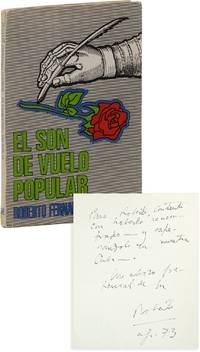
197288465Havana: UNEAC 1972. First Edition. First Impression one of 10000 copies. Octavo 21cm; original pictorial wrappers with French flaps; 89-897pp; text is entirely in Spanish. Inscribed by Retamar on the front endpaper to Puerto Rican editor translator and literary critic Roberto Márquez: "Para Roberto / Contento con haberlo rencontrado - y esperandolo en nuestra Cuba - Un abrazo fraternal del Roberto / Ap. 73." The recipient's pervasive ink annotations and markings appear throughout the text. Edgeworn a few tiny tears and creases and a 2" split at upper front joint; Very Good. <br /> <br /> Collection of four extended essays on Nicolas Guillen by the noted Cuban poet essayist and literary critic. A warm inscription and a nice association to Marquez a Guillen scholar and translator of his work. 88465. UNEAC unknown
20171-3639733894Editorial Académica Española 2017. Paperback. New. 88 pages. Spanish language. 8.66x5.91x0.20 inches. Editorial Académica Española paperback
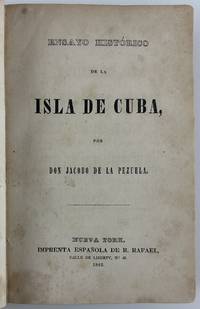
184213073Nueva York: Imprenta Espanola de R. Rafael 1842. viii631pp. Contemporary quarter calf over marbled-paper boards spine gilt gilt leather label. Substantial scuffing and wear to spine and extremities spine ends frayed rubbing to boards. Hinges somewhat tender but holding strong varying degrees of toning and foxing throughout. Good condition. A scarce historical work on Cuba by a Cuban-born Spain-and-France-educated soldier and historian. Jacobo de la Pezuela 1812-1884 was born in Havana went to school in Valladolid and Montpellier then returned to Cuba in his thirties to serve at various army posts and also record the history of his native country. He published several works and later became a member of Spain's esteemed Real Academia de la Historia. In the present work which translates to Historical Essay on the Island of Cuba Pezuela begins at the beginning with Columbus's arrival on the island and continues to almost the present moment concluding with an appraisal of the governorship of Miguel Tacon. In the last chapter Pezuela also includes a section on "Negros emancipados" "Emancipated Blacks". A dense history of Cuba by a Cuban-born historian published in Spanish in New York in 1842.<br /> <br /> Sabin 61329. Imprenta Espanola de R. Rafael unknown