469 résultats
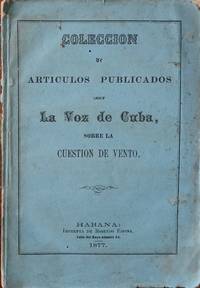
18773543<p>Coleccion de articulos publicados por la voz de cuba sobre la cuestion de vento primera edicion habanaimprenta de rosendo espina 1877 caratulas originaleslibro originalestado regularla voz de cuba fue un periodico cubano del siglo XIX en este libro se publican articulos del ingeniero cubano francisco de albearcon respecto a la construccion del acueducto de vento en la habanaAsí a solicitud del capitán general de la Isla el coronel de ingenieros >Francisco de Albear y Fernández de Lara presentó en 1855 una "Memoria acerca del Proyecto de conducción a La Habana de las aguas de los manantiales de Vento" que proyectaba un sistema de acueducto de mampostería cerrado que conduciría por gravedad las aguas de dichos manantiales hasta su destino final a una distancia de once kilómetros. En la Memoria Albear realizó un estudio de los antecedentes y las posibilidades de aprovechamiento de los acueductos anteriores efectuó un cálculo de la dotación de agua para la ciudad valoró las dificultades para lograr la obra de captación en Vento y propuso el trazado del canal hasta el depósito.</p><p>Atendiendo a la extraordinaria complejidad de la obra y a las dificultades de su ejecución en el convulso período de la >Guerra de los diez años Albear elaboró y presentó en 1876 dos nuevos documentos: la "Memoria del Proyecto de depósito de recepción y de distribución de las obras del Canal de Vento" y la "Memoria del Proyecto de la distribución del agua de Vento en La Habana". En la primera valoraba los aspectos relativos a la ubicación altura capacidad y dimensiones del depósito así como otros aspectos tecnológicos; mientras que en la segunda se argumentaban las condiciones requeridas para un buen sistema de distribución dividido en dos partes interior y exterior así como las particularidades y aportes de cada una de ellas.</p>La inauguración del Acueducto de Albear denominado finalmente así tras la muerte de su artífice el 22 de octubre de 1887 no ocurriría hasta seis años más tarde el 23 de enero de 1893 en medio de condiciones políticas y económicas sumamente adversas plagadas de dificultades no sólo topográficas y tecnológicas sino incluso higiénicas en momentos en que las llamadas "fiebres de Vento" diezmaban a sus constructores. La etapa final de las obras a cargo de la firma Runkle Smith and Co. de Nueva York y encabezada por el ingeniero Sherman Gould por la parte norteamericana fue dirigida de acuerdo con los proyectos originales por un discípulo y continuador de Albear el coronel de ingenieros >Joaquín Ruiz. No obstante su artífice llegó a tener en vida la satisfacción de ver su proyecto premiado con Medalla de Oro en la Exposición Universal de >París de 1878 donde se la consideró como una obra maestra de la ingeniería del siglo XIX. Imprenta de rosendo espina paperback
0267585276.Gpaperback. Good. Access codes and supplements are not guaranteed with used items. May be an ex-library book. paperback
1390716910.Gpaperback. Good. Access codes and supplements are not guaranteed with used items. May be an ex-library book. paperback
0364273518.Ghardcover. Good. Access codes and supplements are not guaranteed with used items. May be an ex-library book. hardcover
0483780391.Gpaperback. Good. Access codes and supplements are not guaranteed with used items. May be an ex-library book. paperback
0483780820.Ghardcover. Good. Access codes and supplements are not guaranteed with used items. May be an ex-library book. hardcover
0332730271.Ghardcover. Good. Access codes and supplements are not guaranteed with used items. May be an ex-library book. hardcover
1391173635.Ghardcover. Good. Access codes and supplements are not guaranteed with used items. May be an ex-library book. hardcover
025920949X.Gpaperback. Good. Access codes and supplements are not guaranteed with used items. May be an ex-library book. paperback
0332314847.Ghardcover. Good. Access codes and supplements are not guaranteed with used items. May be an ex-library book. hardcover
0259242853.Gpaperback. Good. Access codes and supplements are not guaranteed with used items. May be an ex-library book. paperback
0483709255.Ghardcover. Good. Access codes and supplements are not guaranteed with used items. May be an ex-library book. hardcover
0484345281.Ghardcover. Good. Access codes and supplements are not guaranteed with used items. May be an ex-library book. hardcover
0656614382.Gpaperback. Good. Access codes and supplements are not guaranteed with used items. May be an ex-library book. paperback
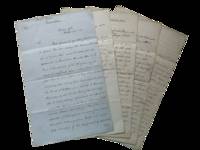
a58469A wonderful and poignant collection of 8 letters written by a Spanish emigrant in Cuba 1905-06. The letters total 39 sides on 12 sheets of paper all handwritten in ink in Spanish and addressed to Sra. Mercedes Chueca Alonso in Barcelona. All are signed Pepe who also identifies himself as Jose Vila Maria and as Jose Vicente. The letters include a fairly detailed account of his voyage to Cuba via Barcelona Paris Marseille; a comparison of Havana to Barcelona; advice to a prospective emigrant Mercedes's brother; and some account of his attempts to seek his fortune apparently in the miitary. In passing he mentions something of the events of the time - the August 1906 uprising and subsequent American military intervention:.El haberme hecho ciudadano Cubano fue con objecto de ingresor en la academia del cuerpo de artilleria mas me imponian condiciones que no pude aceptar pues tenia que entrar de soldado y firmar un contrato por cuartro anos y el examen para oficial era libre pues aqui el servicio es voluntario mas illegible quiero que aqui solo illegible la influencias y son muchos los libertadores que de la ultima guerra existen resultan que por muy benos examanes que se hagan podran illegible a extranjero a illegible la plaza inguesaron cuando la intervencion americana fueron relevados en sus cargoes. April 1 1906 .Hace unos dia me intregaron dos targeta y una carta tuya; en esta ultima me manifiestas estraneza por no tenor noticia mas.a circumstancias por que ha estado atravesando la Habana; pues en momentos en que ya tenia el nombramiento.a ingresor en el cuerpo del ejercito contro lo que era de esperar intervinieron los americanos por lo que me virprecisado a marcher a Port Tampa Estados Unidos en donde he permanecido hasto unos dias antes de pasar por aqui.los muchos destrozos que en esta capital. November 20 1906 Also included is a letter from Pedro Marden of Barcelona postmarked 1907 informing Sra Chueca of the death of Vicente presumably the Pepe of the other letters in Cuba of unknown causes. Together with 9 stamp-bearing envelopes. . unknown
19036457V.p. 1903. 36 postcards all completed in manuscript generally very good or better with some wear and rounded corners. <br /> <br /> A fascinating assemblage of cards written by Pre-Castro intellectuals to a Maria de Serra though a few are written to other women. It is difficult to pin down de Serra though we do know she was highly educated and very well-known and connected. It makes sense to us that she is perhaps the Maria de Serra mentioned by William Wells Brown in his important work The Rising Son or the Antecedents and advancement of the Colored Race 1874. On pg 260 Brown writes:<br /> <br /> "The free blacks in Cuba form an important element in her population and these people are found in all the professions and trades. .one of the best young ladies' academies at present existing at Havana is personally conducted by an accomplished negro woman Maria de Serra to whom many a lady of high rank owes her social and intellectual accomplishments."<br /> <br /> Further research may be fruitful in retrieving more information on this Maria de Serra.<br /> <br /> It goes without saying that the sentiments and signatures are the most appealing part of this collection. Many of the cards appear to contain original verse and all are quite legible and well preserved. Equally as lovely are the cards themselves many being of exceptional beauty as they were all chosen by artists and intellectuals. All in all a remarkable set worthy of further research. The correspondents are as follows:<br /> <br /> <br /> Diego Vicente Tejera; one of the most famous turn-of-the-century Cuban poets but also known as a short story writer orator and political activists.<br /> <p><br /> Nestor Cargonell; famous poet and writer. His son went on to become a Hollywood star.</p> <br /> <p>Conde Kostia pseudonym of Aniceto Valdivia; writer journalist poet critic lecturer dramatist founder of newspapers and Cuban diplomat.</p> <br /> <p>Rafael Maria Merchain; very influential poet and philosopher</p> <br /> <p>Enrique Fontanills; very prominent Cuban journalist.</p> <br /> <p>Florimel: great Cuban journalist writer and poet who died early in life.</p> <br /> <p>Manuel Raul Blanco Belmonte; Cuban poet.</p> <br /> <p>Ramon Meza; One of the most important Cuban writers of his time. Many of his books are considered classics and remain in print.</p> <br /> <p>Aurelio Cancio; Cuban journalist who founded "La Discusion" newspaper.</p> <br /> <p>Manuel Serafin Pichardo; one of the most popular Cuban poet of the 1900s.</p> <br /> <p>Frederico Mendes Cobos; a Cuban politician who became a a senator in 1902.</p> <br /> <p>Juan Maria Alberti: influential Cuban politician.</p> <br /> <p>Manuel Marquez Sterling; fine writer and politician.</p> <br /> <p>Jose Manuel Govin; journalist and director of the popular newspaper "El Munto"</p> <br /> <p>Cesar Cancio; Very popular Cuban poet born in St Spiritus.</p> <br /> <p>Pablo Bonachea; great Cuban journalist and director of "La Discussion" newspaper for one year.</p> <br /> <p>Jose Ernesto Trian; Cuban writer with political connections. Was ambassador to Venezuela.</p> <br /> <p>Manuel Tierso; Romantic Cuban poet</p> <br /> <p>Alvaro de la Iglesia. revered Cuban writer who penned the great "Cuban Traditions"</p> <br /> <p>Frederico Ledesma Balsunde: journalist and editor at "El Lucero."</p> <br /> <p>Fabio Fiallo; a leading Dominican writer poet and politician. He died in Cuba.</p> <br /> <p>Dulce Maria Borrero de Lujan; the most important Cuban woman writer and poet of her time.</p> <br /> <p>Frederico Hermida; author of any Cuban novels in the 1900s.</p> <br /> <p>Mariana Comas; Cuban essayist</p> <br /> <p>Joaquin Lopez Sena; renown Cuban poet and a politician from the 1900s to the 1920s.</p> <br /> <p>Eliseo Giberga; a very powerful and influential Cuban politician of the early 1900s.</p> <br /> <p>Manuek Coronado; an important Cuban journalist.</p> <br /> <p>Antonio San Miguel; Cuban writer and journalist.</p> <br /> <p>Pablo Santi Rois; Poet and respected journalist.</p> <br /> <p>Armando Celorio; One of the finest Cuban poets.</p> <br /> <p>Jose Maria Carbonell; famous Cuban poet and writer.</p> <br /> <p>Marcos Trazivark; famous Cuban writer and Musician.</p> <br /> <p>Esteban Joven; Cuban writer poet and essayist.</p> <br /> <p>Narciso de Puso; famous poet well entrenched in Cuban high society.</p> <br /> <p>Eduardo Mencis Capote; Cuban journalist popular among the elite.</p> <br /> <p>Lorenzo Frau Marsal; respected Cuban journalist</p> <br /> . unknown
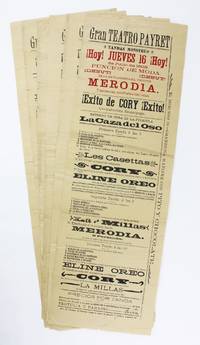
19085578Havana: Moises V. Codina 1908. Good plus. Seven broadsides each approximately 22 x 7.25 inches plus one double bill measuring about 22 x 15 inches. One broadside printed in red and black. Previously folded. Scattered shallow tears from edges not affecting text with some tape repairs on blank versos. A group of eight playbills spanning eight consecutive days in July 1908 that advertise performances and events at the Gran Teatro Payret in Havana. The theater was built by its namesake Jaoquin Payret in 1877 on a corner across from the Villanueva Railway Station now the Capitolio Nacional de la Habana and initially focused on opera and high-class performing arts to compete directly with other established theaters in the Cuban capital. The building had five floors and a capacity of 2300 but the upper balconies collapsed in 1882 after which the theater changed hands and began to showcase more varied popular offerings.<br /> <br /> These playbills publicize an array of performers including the ballet dancer Millas; a cabaret artist Eline Oreo; a magician and telepath Sidney Richards; Troupe Montrose a group of acrobats an Italian dance troupe Les Casettas; two clowns named Pito and Chocolate; and many others. Notably the programming also includes a heavy rotation of short and feature films such as La Electricidad Liquida 1907; El Inagarrables Pick Pocket 1908; Victima de la Ciencia 1907; En Chine: Voyage sur le Canal Impérial 1908; and Venganza del Dervich 1907. The playbill for Thursday July 16 with its headline and date in red proclaims the debut of Trouppe Merodia a seven-person group of acrobats and cyclists as well as the Cuban premiere of a film titled La Caza de Oso The Bear Hunt.<br /> <br /> The theater was closed by hurricane damage in 1926 but reopened as a cinema in 1935 and in the following years became known as the "Cathedral of Spanish Cinema." The building again fell into disuse and disrepair in the decades following the Cuban Revolution but was restored in 2008. A very interesting group that gives a great sense of day-to-day operations at one of Cuba's most important and historic theaters. Moises V. Codina unknown
1852List2521London 1852. Five groups of documents measuring 13 x 8 inches various paginations see full description below. Fine condition. A scarce set of primary source documents relating to the protection of British territory in the Caribbean in particular along the Mosquito Coast during the period of varied interests in the area in the period following the Anglo-Spanish agreement on the slave trade. Consisting of a series of secretarial copies of reports delivered to Peter McQuhae Commodore of H.M.S. Imauam stationed in Jamaica these dispatches offer an overview of the issues confronting the British Navy in Jamaica during the period and in the Caribbean more broadly. Most of the documents refer to issues with Cuba the most interesting perhaps being a letter warning of an impending filibustering expedition against Cuba by a pro-slavery faction in the American South. <br /> <br /> The group consists of five groups of bound documents some bound out of order and likely bound later. Contents are as follows: <br /> <br /> 1. Addington A.M. Four Page Report Concerning Placing a Ship of War at Grey Town to Discourage Invasions on the Mosquito Coast March 13 1851. <br /> <br /> Henry Addington writes McQuhae to recommend stationing a warship at Grey Town:<br /> <br /> “.it would be sufficient that a Ship of War should from time to time look in grey Town without remaining there at any time long enough to endanger the health of the crew… to provide for the case which is possiblee tho’ not at all likely that during the interval between the visits of a Ship of War some expedition of Nicaraguan or some of the North Americans returning from California might take advantage of the comparatively unprotected state of the lace to take possession of it and that the cruiser on its return to Grey Town might find the place so occupied Lord Palmerston concieves taht in such an event it would seem to be inconsistent with the Honor of this Country that a British Ship of War should acquiesce in such an aggression and it would be right that the intruder should be expelled if the Commander of the Ship of War should find as he probably would that he had the means of doing so without much difficulty and that in case he should repel the intruders and re-establish the authorities of the Mosquito Government demanding the liberation of any British or Mosquito subjects who might have been made Prisoners and holding hostages for their relief if they should have been removed up into the interior of the Country.<br /> <br /> It It is to be hoped however that all questions of dispute in regard to Grey Town will beoon be settled because Her Majesty’s government has through Her Majesty’s Minister at Washington proposed to the Government of the United States that an arrangement should be made by which the Sovereignty of Grey Town… should be transferred to the State of Costa Rica… Lord Palmerston desires me to add that there are at present at Washington a plenipotentiaries both from Nicaragua and Costa Rica for the purpose of conducting this negotiation…â€<br /> <br /> 2. Addington G.M. Single Page Letter in Secretarial Hand Warning of Incoming Ships to Cuba Carrying Enslaved Individuals January 24 1852. <br /> <br /> Addington writes to McQuhae about two incoming vessels carrying enslaved Africans passing on information received at Rio De janeiro by another British vessel:<br /> <br /> “I am directed by Earl GraH.M. Minister at Rio reporting that he had recieved information that two Slavers had sailed from Havana to… the coast of Africa… with the intention of returning with Cargoes of slaves which are to be landed at the Entrade de Cuchillo in Cuba.â€<br /> <br /> 3. Seymour G.F. et al. Four Reports Bound Together on Varied Subjects including the Case of the Creole British Fishing Rights in Spanish Waters off of Cuba and Porto Rico and the Case of a Detained British Vessel in Cuba 1852. <br /> <br /> A series of four reports addressed to McQuhae on various subject as follows:<br /> <br /> A. Report dated May 17 1852 from Seymour discussing the case of the Creole detained in 1851:<br /> <br /> “.enclosing copies of a letter from the Under Secretary of State for Foreign Affairs approving of the course I had pursued with regard to the Creole and of a despatch from the Earl of Malmesbury to Her Majesty’s Minister at Madrid relative to the rights of British Subjects to fish on the coast of Cuba…â€<br /> <br /> B. Letter from Augustus Stafford Apriul 23 1852 discussing the Creole mostly discussing the enclosure of varied reports on the subjects but with little specific information. <br /> <br /> C. Addington A.M. April 21 1852 letter discussing the Creole case and the enclosure of documents. <br /> <br /> D. Earl of Malmesbury April 14 1852 letter discussing the Creole case in more detail:<br /> <br /> “ The Right thus claimed rests on this universally admitted precept of international Law “dominium finitur ubi finitur armorum vis†which in modern practice has been construed to mean “about one marine league from the mainland†and H.M.’s Govt are clearly justified in demanding that the Spanish authorities shall be ordered not to meddle or interfere with British fishermen outside that three mile boundary…â€<br /> <br /> 4. Earl of Malmesbury et al. Series of Three Secretarial Copies of Reports Concerning Impending Filibuster Raids on Cuba Giving Instructions for Assisting Spanish Forces. <br /> <br /> A very interesting series of reports detailing the planned response to pending “Piratical Attacks†showing the extent to which British forces were prepared for an American filibuster attack on the island and the degree to which they intended on assisting the Spanish forces. As follows:<br /> <br /> A. Seymour G.F. Secretarial Copy of Letter Written on May 5 1852 from Cumberland at Bermuda relaying the transmission of a full report of instructions to the British forces regarding an impending filibuster raid:<br /> <br /> “ I hereby enclose for your guidance… orders… relative to the assistance which is to be afforded by Her Majesty’s Ships on the application of the Captain General of Cuba in the Transport of Troops in the event of a Piratical attack being again made on that island by which you will govern your conduct…â€<br /> <br /> B. Earl of Malmesbury. Secretarial Copy of a Letter Dated April 10 1862 discussing piratical attacks:<br /> <br /> “.that in the event of a Piratical Attach being made upon that island… HM’s ships might assist in conveying troops to any poiunt of the Coast of Cuba at which the invading Party might effect a landing…â€<br /> <br /> C. Honley P. Secretarial Copy of an Undated Letter c. 1852 regarding piratical attacks:<br /> <br /> “Her Majesty’s ships might assist in coveying Troops to any point off the Coast of Cubat at which the invading Party might effect a landing… you should be instructed until further ORders that if the Captain General of Cuba should require your assistance for the transport of troops in the manner pointed out in your abovementioned dispatch you should comply with that demand…â€<br /> <br /> 5. Crampton Sir John. Copy of a Letter in Secretarial Hand Relaying the Impending Danger of a Pro-Slavery Filibuster Mission from Florida May 17 1852. <br /> <br /> A fascinating letter relaying information received from M. Calderon de la Barca concerning an impending filibuster mission against Cuba led by a Dr. Wren part of an organization called “The Lone Star Association:â€<br /> <br /> “.it would appear that the government of the United States has also received an intimation that something of the sort is on foot for the President informed M. Calderon that orders had already been sent to the U.S. Authorities at the different Ports of the Union to be prepared to take vigorous measures for the repression of any such attempts… an expedition is in fact meditated by certain parties in the South and that it is intended that it should leave some Port of Florida. The real object of this expedition however as as I am told not Cuba… but San Domingo for the purpose of acting as auxiliaries to the Dominicans against the Haytians… it is by no means impossible that its ultimate aim would be Cuba… the persons I am given to understand engaged in the expedition are a Dr. Wren who is president of a society called “The Lone Star State Association…â€<br /> <br /> The letter is worthy of further study - we find references to a Dr. Wren in newspaper articles from the period but were unable to pinpoint his identity or the history of his organization. An article from a Loudon Tennessee newspaper describes Dr. Wren as a “representative of New Orleans societies†and described a meeting in Loudon in 1852 trying to recruit for the overthrow of the Spanish colonial government of Cuba through an invasion. unknown
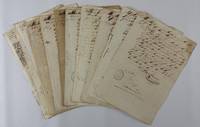
187312720Cuba 1873. Twelve manuscript documents on folio sheets approximately 8.5 x 12.5 inches all with official rubber-stamped seal. Small pinholes along left margin light wear occasional chipping to edges some ink bleed and light damp staining. Overall very good. A collection of documents recording the liberation or attempted liberation of numerous men women teenagers and a child from enslavement. The child is but seven years old while the remaining slaves range from fifteen to fifty-seven years old. The slave trade ended in Cuba around 1867 but the practice of owning slaves remained legal until 1880 and then was abolished completely by Spanish decree in 1886. Cuba was the penultimate country to outlaw slavery in the western hemisphere beating Brazil to formal abolishment by two years. Even before the official abolition of slavery in Cuba African or criollo slaves were manumitted by a variety of owners and at various costs as evidenced here especially after the practice of importing Chinese indentured servants began. Each of the present documents names the slaveholder and the slave granted "libertad" along with the cost in escudos or pesetas of that liberty. The slaves liberated here are as follows:<br /> <br /> 1 Luis criollo 7 years old for the sum of 28 pesos<br /> <br /> 2 Maria Antonia part criolla 20 years old for the sum of 2500 pesetas<br /> <br /> 3 Catalina morena de Africa 41 years old for c.200 pesetas<br /> <br /> 4 Lorenzo moreno criollo 21 years old for 2500 pesetas<br /> <br /> 5 Lucia morena criolla 15 years old for 320 pesos or 1600 pesetas<br /> <br /> 6 Frigidae "negro.de Africae" 56 years old<br /> <br /> 7 Augusto criollo 19 years old for 1750 pesetas<br /> <br /> 8 Marta criolla 16 years old for 1621 pesetas<br /> <br /> 9 Gil moreno de Africa 57 years old for 1500 pesos<br /> <br /> 10 Carmita morena criolla 20 years old for 1750 pesetas<br /> <br /> 11 Augustina Prieto morena criolla 30 years old for 1750 pesetas<br /> <br /> 12 Edwigio 39 criolla; Lazara 36 criolla; and Maria Leoncia 15 criolla for 2000 pesetas.<br /> <br /> These Cuban slave manumissions are offered with one 1844 manumission document liberating a slave in Spain totaling two pages and measuring about 8.5 x 13.5 inches. The document also has three rubber-stamped official seals at the head noting Isabella II. This document appears to free slave Nicolas 25 years old for the sum of 400 pesos and is signed November 5 1844. unknown
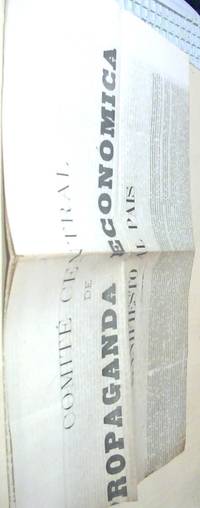
*XS018419.- La Habana. 1891. La Razón. 625 x 49 cm. 1 hoja impresa por ambas caras. Pequeña falta papel afectando algunas letras sin impedir lectura. . . Economía unknown
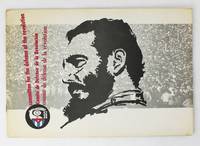
19656257Habana 1965. Very good. 16pp. Oblong pamphlet in original pictorial wrappers stapled. Light wear and toning at wrapper edges with a few faint creases. Internally clean. A visually rich pro-Casto and pro-Communist pamphlet that highlights the history and core activities of Cuba's Committee for the Defense of the Revolution CDR neighborhood-based civil defense organizations created by Castro in 1960 to defend the revolution and maintain social and political control at the local level. This often included activities like surveillance distribution of propaganda and vigilante justice. The pamphlet is illustrated with photos throughout and also contains a two-page spread with maps of the island and charts data and statistics about the Cuban people. It contains a year-by-year account of the Committee's achievements and activities and ends with a section concerning its relations with other countries and their visits to Cuba. The rear wrapper states that editions were published in English French and Spanish as evidenced by the trilingual title on the front cover but we find no evidence of any edition in OCLC. Scarce and with much interesting and propagandized information about Castro's local enforcers during the early years of the Communist regime. unknown
139073224X.Gpaperback. Good. Access codes and supplements are not guaranteed with used items. May be an ex-library book. paperback
1391802675.Ghardcover. Good. Access codes and supplements are not guaranteed with used items. May be an ex-library book. hardcover
0483709379.Ghardcover. Good. Access codes and supplements are not guaranteed with used items. May be an ex-library book. hardcover
0483709298.Gpaperback. Good. Access codes and supplements are not guaranteed with used items. May be an ex-library book. paperback