[Cuba]. [Chinese Labor]Biblio.com
137 résultats
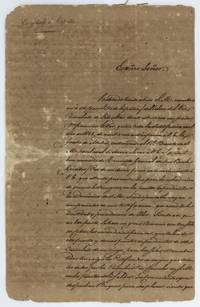
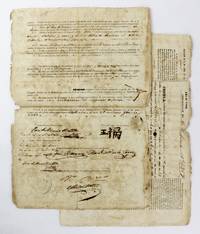
18636222Havana 1863. Good. Two partially printed broadsheets completed in manuscript 13 x 9 inches. Old folds wear at edges; some light worming slightly affecting text. Lightly soiled. A pair of documents recording the indenture of a Chinese national in Havana. The present documents contract the "Asiatico Francisco" as a cook to Don Jose Antonio Battle y Olle; the contract is dated June 28 1861 and is signed by "Francisco" in Chinese characters for a term of two years. At the end it is noted in manuscript that the Asiatico Francisco has completed the two years of his contract. The cedula is dated 1863 and indicates that Francisco is 33 years of age and now indentured for eight years as a "cocinero." An interesting pair of documents showing the continuing servitude of imported Chinese laborers particularly attractive for being signed in Chinese characters. unknown
189934190New York, Verlag von Chas. Wildermann, 1899. 8°, 210 S.; Bezahlung per PayPal möglich, we accept PayPal, Einb. ger. beschabt u. ger. bestoßen u. angeschmutzt, Rückenbindung defekt, altersbed. Bräunungen, Gebr.sp., broschiert
1876gm3749Paris, E. Plon et Cie, imprimeurs-éditeurs, 10, rue Garancière Relié 1876 In-12 (12 x 18 cm), reliure demi-chagrin, gardes couleur, 325 pages, gravures en noir hors texte ; coupes usées, par ailleurs bon état général. Livraison a domicile (La Poste) ou en Mondial Relay sur simple demande.
187619672Paris Plon 1876 In-12 325 pp + 10 Gravures en place annoncées . pas de rousseurs, livre longtemps conservé en zone humide le papier est déformé mais très acceptable, plats en état moyen
1854AMA-124Librairie de l’Association pour la propagation et la Publication des Bons livres, s.d. [1854-1855]. 3 volumes in 12, demi-chagrin noir, dos à nerfs orné de petits fleurons et de filets dorés, têtes dorées. (2)ff.-VIII-408 pp., (2)ff.-444 pp., (2)ff.-433 pp.
18754417Paris Plon 1875 in-12 demi-chagr. bleu, dos orné [Rel. de l'époque], coiffe sup. arrachée
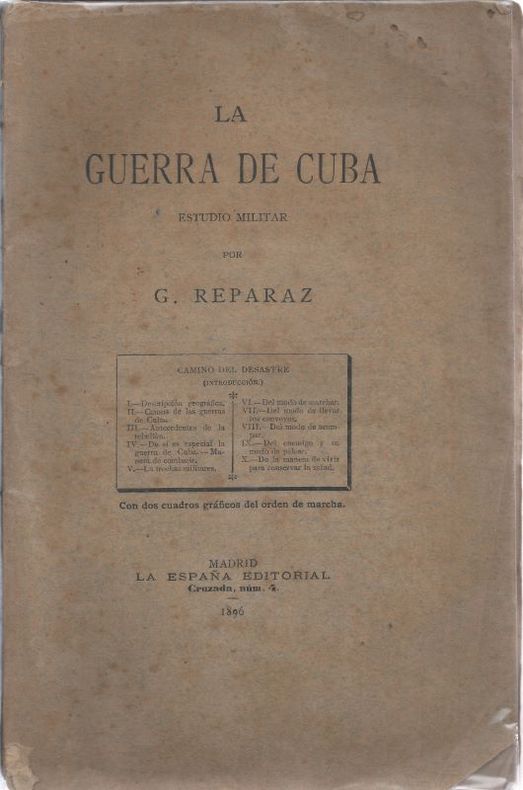
189699917626La Espana Editorial Madrid La Espana Editorial 1896, In-8 broché, 216 pages et deux croquis (con dos cuadros graficos del orden de marcha). Petits défauts à la couverture sans gravité, inétrieur en parfait état .Camino del desastre. Descripcion geografica. Causas de las guerra de Cuba. Antecedentes de la rebelion. De si es especial la guerra de Cubz. Manera de combatir. La trochas militares. Del modo de marchar. Del modo de llevar los convoyes. Del enigmo y su modo de pelear. De la manera de vivir para conservar la salud. Peu courant
1864981Havana: Viuda de Barcina y Comp 1864. Good. Twenty-three issues each approximately 32pp. No. 11 with folding chart lacks pp.25-32. No. 13 lacking last few leaves. With title page and half title at start of each volume. Original quarter calf and boards spine gilt. Spine ends chipped and worn some crude glue residue; hinges solid. Boards heavily worn. Light toning and wear to text light scattered worming throughout. A rare run of the first two years of the first Cuban pharmacological magazine and one of the island's earliest medical periodicals. La Emulacion was published from 1863 through 1867 with the present sammelband containing all issues published in 1863 and 1864 a total of twenty-three issues. Their mission statement that heads the first issue here reads in part: "Animados del deseo de ser útiles al pais -- en cuanto nuestras fuerzas lo permitan-- hemos resuelto dar à luz en esta ciudad un periódico que ocupándose preferentemente de todo lo relativo à la Farmacia no descuide por eso la quÃmica é historia natural médicas y la toxicologÃa ciencias de que no pueden prescindir ni los Médicos ni los Farmacéuticos y cuya importancia en el dia pocos podrán desconocer. Procurarémos pues que en nuestro periódico hallen cabida las producciones originales de los que en Cuba cultivan la Farmacia la quÃmica é historia natural médicas y la toxicologÃa; mas no olvidarémos por eso que léjos de nuestro suelo existen los mas célebres y laboriosos de los cultivadores de esas ciencias y que La Emulacion no llenarÃa la mision que nos proponemos si no hiciéramos figurar en ella lo que se dé à luz en Europa y merezca la sancion de las personas ilustradas." The resulting publication contains numerous original articles by Cuban pharmacists doctors and scientists as well as important work published outside of Cuba. Additionally the issues include biographies of significant figures in the field accounts of local scientific societies including the Real Academica de Ciencias de la Habana and publication of new pharmacological formulas discovered in Cuba or "adapted for the needs of the country." As a result the periodical forms an important record of medical and pharmacological developments and thought on the island in the mid-19th century. We locate only one run of this pioneering periodical at the National Library of Cuba with only the present set of issues appearing in auction records. Bound between Volumes I and II is a pamphlet by Fernando Paez "Manual de farmacia practica" Havana 1864 possibly incomplete at 8 pages; no examples of this pamphlet appear in OCLC. Viuda de Barcina y Comp unknown books
1896ABE-1518427661120 PAGES FORMAT 28,5 CM X 38,5 CM-EN COUVERTURE DESSIN DE BOMBLED "MADAGASCAR ATTAQUE DE TANYMANDRY PAR LES SAKALAVES", LEGENDE INTERIEURE-LA REVOLUTION CUBAINE, 3P, 9 ILL-UN INTERVIEW DU PROFESSEUR ROENTGEN, 4 PHOTOS-LA BIEVRE, 3P PAR G. LENOTRE, 9 PHOTOS, RUE DE TOLBIAC, PLACE D'ITALIE, .-
189861195Couverture souple. Numéro complet, gravures en noir et blanc. 8 pages. 30 x 45 cm. Légèrement défraîchi.
189874763Couverture souple. 8 pages. 31 x 45 cm. Gravures en couleurs. Réparé.
1898135691Couverture souple. 8 pages. 31 x 45 cm. Gravures en couleurs. Réparé.
189587496Havana: Castro Fernandez 1895. First. hardcover. near fine. Folding table. 414pp. 1/2 modern lavender buckram marbled boards original wrappers bound in. Habana: Castro Fernandez 1895. First Edition. Near Fine.<br/> <br/> Laws regulating the telephone and telegraph industries.<br/> <br/> Castro, Fernandez unknown
189587496Havana: Castro Fernandez 1895. First. hardcover. near fine. Folding table. 414pp. 1/2 modern lavender buckram marbled boards original wrappers bound in. Habana: Castro Fernandez 1895. First Edition. Near Fine.<br/><br/> Laws regulating the telephone and telegraph industries.<br/><br/> Castro, Fernandez unknown books
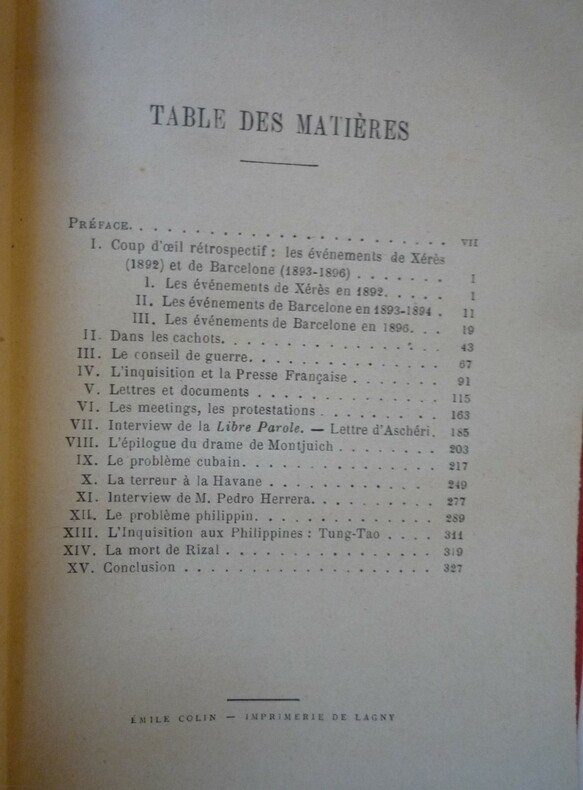
1897219Montjuich - Cuba - Philippines. Bibliothèque sociologique n° 17 Paris - STOCK- ancienne librairie Tresse et Stock - 1897- Format : 12 x 19 cm, broché, 346 pages couverture un peu salie sinon BON ETAT
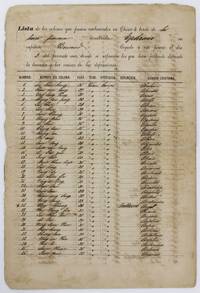
18673977Havana: August 3 1867. Good. 7pp. on pre-printed folio forms completed in manuscript. Later staple. Moderate tanning and edge wear short separations along some folds. A manuscript manifest listing of 285 Chinese field hands who undoubtedly signed up as indentured laborers in their quest to escape the hardships of China in the vain hope of a better life in Cuba. The document begins "Lista de los colones que fueron embarcados en China." with the name of the French ship on which they were transported "barca francesa nombrada Ephrem" filled in and the captain noted as Boucand. The Chinese name of each "colono" settler is given and also their adopted Christian name as well as age ranging from 18 to 35 sex all men and profession all field laborers "campo". Seven of the listings have an "X" next to them along with "Falleco" passed away written in the column headed "Defuncion." Among those who died on the voyage is a 26-year-old man named Ping Chiong given the Christian name of "Angel."<br /> <br /> Formal slavery persisted in Cuba until 1886 but from the mid-19th century it was accompanied by a significant population working in indentured servitude. Cuba's massive sugar industry had consumed huge imports of African slaves in the 18th century. The abolition of the slave trade in 1808 vigorously enforced by the British Navy meant that a new source of labor was necessary. Indentured servitude became the predominant source for labor in the region. Unlike the earlier waves of European immigrants who travelled to the New World as indentured servants Asia was now the primary source. Between 1848 and 1874 125000 Chinese indentured servants arrived in Cuba alone - a figure outstripped only by the number who indentured themselves in California. A high percentage of these laborers were kidnapped from their homeland with many unable to survive the long passage from China to Cuba as the present document illustrates in sad detail. If these Chinese indentured laborers were fortunate enough to survive the voyage to Cuba these men quickly found out that their working life in the coffee and sugar fields was tantamount to slavery. August 3 unknown
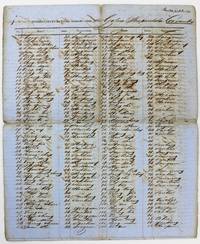
18673978Macau: April 6 1867. Very good. 6pp. on large folio partially-printed forms printed in two columns completed in manuscript. Old folds with minor losses at a few spots along the horizontal fold. Five hundred and fifty Chinese laborers bound for Cuba aboard the Spanish galley "Cervantes" are listed by name with their age and town or city of origin given. The laborers hail from several different cities in China and their ages range from 18 to 36 with the majority of the men in their 20s. The end of the document is signed and dated on the final page by José de Aguilar the Spanish consul at Macau. The left side of the final page contains two separate lists one with five numbers and the other with four numbers keyed to the manifest. The list of five names has an "x" next to each number perhaps noting that these men did not in fact make the trip to Cuba; each "x" could also signal that these men died during the voyage from Macau to Cuba which was a common-enough occurrence that it is often noted on manifests of this kind.<br /> <br /> Chinese indentured servitude in 19th-century Cuba was an insidious practice tantamount to slavery which flourished in Cuba even after the abolition of the peculiar institution in the British West Indies. With their free source of labor no longer available plantation owners in Cuba looked elsewhere; and they looked east. From around 1848 to the mid-1870s over 100000 Chinese indentured servants made their way to Cuba often sailing to Cuba in large groups. Once they arrived Chinese laborers indentured themselves to Cuban masters for terms of at least five years. The treatment of Asian indentured servants in Cuba varied widely with reports of some particularly ill-treated laborers ending their lives by suicide. "Some contemporaries and later historians.have condemned the servitude of the Asians as a thinly disguised revival of slavery. These critics have pointed to a variety of abuses to which the Asians were subjected both legally - with severe laws governing absenteeism vagrancy and insufficient work - and illegally in the form of harassment by vicious masters. Yet other observers have defended the system as a boon to the Asian workers. Voluntary reindenture at the end of their terms was common among the migrants suggesting that many Asians judged the system to be beneficial to them" - Drescher.<br /> Seymour Drescher & Stanley L. Engerman editors A Historical Guide to World Slavery New York 1998 pp.239-42. April 6 unknown
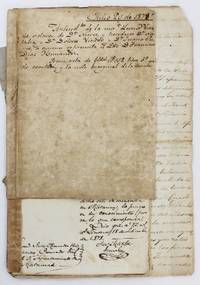
18784011Various places in Cuba 1878. Overall good. 29 leaves varying sizes. In contemporary ad hoc selfwrappers loosely stitched. Rear wrap tattered. Varying degrees of toning and wear. Scattered offsetting throughout. Fascinating gathering of documents and letters that present several cases of Cuban slaves applying for their own freedom in 1878. The gradual abolition of slavery on the island was enacted by Spain in 1880 but prior to this there were several bureaucratic mechanisms by which enslaved people could apply for or purchase their own manumission. The most interesting case amongst the present manuscript documents is the claim of a male slave that states he was born free in Puerto Rico but was somehow included in an inheritance as a young boy transported to Cuba and sold into slavery:<br /> <br /> "Un individuo que hoy se encuentran en la Cárcel del Alacranes y que dice nombrase Juhan ó José Julian Quintana y ser esclavo actualmente de Dn. Serapio Hernandez dueño de los ingenios Escorial ubicado en Colon y Sta. Rosa en Limonar y vecino de esa Ciudad calle del Rio ha solicitado se le restituyan un derechos de libertad por haber nacídolibre en Puerto Rico de donde á la edad de 5 ó 6 años le trajeron à esta Ysla y vencieron como esclavo."<br /> <br /> Interesting for the study of manumission in late-colonial Cuba and certainly worthy of further research. unknown
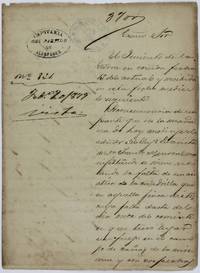
18792090Cuba 1879. About very good. 3pp. on a small bifolium. Contemporary ink stamps; accomplished in a fairly legible hand. Minor wear. A few small wormholes. Light tanning and dust soiling. Brief but very interesting manuscript report on the case of a missing Chinese indentured servant in the district of Alagranes near Matanzas. On February 18 1879 the owner of the plantation Juanita reports the missing person stating that there was a fire in his sugar cane field and it is thought that the laborer might have been burned. It seems that the present document serves to register the case with regional authorities in Matanzas and is a good record of the bureaucracy controlling indentured servitude in Cuba at this time. unknown
18282401Gibraltar 1828. Good. 3pp. on a bifolium. Previously folded with separations. Tanned somewhat brittle. An interesting example of official communications concerning trade between colonial Cuba and the Spanish mainland. In this manuscript letter date March 14 1828 the new Spanish Vice Consul in Gibraltar writes to the Governor General of Cuba concerning several topics. These include the regulation of shipping to Cuba and by implication the rest of the Caribbean through Gibraltar particularly of French ships leaving Mediterranean ports. Also discussed is keeping track of individuals particularly merchants going to Cuba by means of identification papers and other documents. The consul also reminds the colonial government of the importance of documenting duties and tariffs paid for shipping cargo and goods. unknown
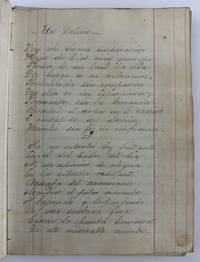
18894403Havana Cuba 1889. Good. 69pp. of manuscript text plus 77pp. of newspaper extracts. Contemporary quarter calf and marbled paper-covered boards. Moderate scuffing and wear to boards and edges spine scuffed. Hinges broken with text block only nominally attached by threads with many leaves detached. Ownership ink stamp on front free endpaper "Manuel F. Barranco" with a gilt insignia affixed below reading "MB." A unique and personal manuscript journal and scrapbook composed and maintained by an important but obscure Cuban-American poet and author Manuel Francisco Barranco y Miranda 1843-1894. Barranco was born in Puerto Principe and lived about half of his life in Cuba before emigrating to Florida in 1875. He married Mercedes Fernández y Fernández-Mora and the couple raised a family in Cuba Florida and New York. Mentions of Barranco are rare in available records but he seems to have been a colleague of famed Cuban revolutionary figure Jose Marti. Barranco and Marti were involved with a Cuban revolutionary emigrant colony in Key West as well as Cuban literary and political societies in Havana and New York such as La Liga. Regarding the latter one of Barranco's poems in the present work composed in eleven parts is titled "Versos recitados en la sesion ordinaria de la Sociedad Literaria Hispano-Americana la noche del 17 de Maya de 1889." The Sociedad Literaria Hispano-Americana or Spanish American Literary Society provides a further connection to Jose Marti as Marti was one of the most prominent members of the club in the 1880s and '90s. Barranco presumably spent the remainder of his life between Cuba and the eastern coast of the United States where he passed away in Tampa Florida in 1894.<br /> <br /> The present material was written and compiled by Barranco over about a thirty year period in the mid-19th century before and after he emigrated to the United States. The chief feature of the present work is contained in almost seventy pages of manuscript poetry by Barranco. The poems which number around a couple dozen compositions include "Un Delirio" written in six parts "Versas improvisados en el Bautiro de mi hija Ana Maria el dia 1 de Enero de 1875" "Versos improvisados en comemora cion del Bautiro de mi hija Ana Maria el dio 1 de Enero del 1876" "Al congreso de la Paz" and various sonnets and other poems dated between 1875 and 1889. Barranco authored a few poems here about his wife Mercedes with titles such as "A Mercedes" "Improvisados a la orrilla del mon - A Mercedes" and "Al contemplar tu retrato." He also composed poems about his mother Ana Maria Sebastiana de Miranda. Several of the later poems from 1888-89 are datelined Havana next to the date of composition indicating Barranco moved back and forth between Cuba and America.<br /> <br /> The manuscript text is supplemented by almost eighty pages of newspaper extracts featuring various articles letters and printed poetry by Barranco published under his own name and a pen name "Leunam." The subject matter of these pieces include education women literature and various family members and other subjects in his own poetry. An example of the latter is a memorial poem for his granddaughter Margarita Barranco who died in Puerto Principe in 1866. Following the manuscript poems themselves is a single handwritten page of contents relating to these newspaper extracts. The extracts very likely come from Cuban newspapers and periodicals since they predate his move to Florida in 1875. A printed note laid into the book reads: "A Bound Journal Containing Published and Unpublished Handwritten Letters and Poems by My Grandfather Manuel Francisco Barranco y Miranda in Habana in the mid-19th Century Probably During the Period 1859-1869." Not much else is easily discovered about Barranco providing an excellent chance for original research into the work of this obscure but important 19th-century Cuban-American poet and writer. unknown
18772027Havana 1877. Very good. 1p. on a bifolium. Removed from a a bound volume with unobtrusive stabholes at gutter margin. Light wear at edges; light dust soiling and damp staining. Remarkable bidsheet submitted by a Cuban business in response to a newspaper advertisement for an auction of slaves for hire held in Havana during November 1877. The firm Jado Sarasúa y Compañia writes that "Enterada del anuncio publicado en la Gaceta fecha 9 del corriente para el arrendamineto en publica subasta de los esclavos existentes en el Asilo de San Jose pertenecientesa Bienes Embargados y sujentadose en un todo al pliego de Condiciones inserto en la misma Gaceta hace la siguente proposicion." Below is a list of fourteen slaves mostly women and the prices that the company is willing to offer for the slaves being rented ranging from ten to seventeen pesos per month. Signed and dated at the bottom "Habana Noviembre 14 de 1877. unknown books
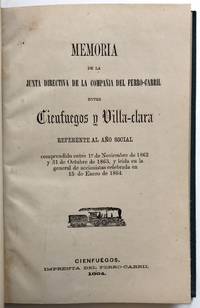
18641312Cienfuegos: Imprenta del Ferro-Carril 1864. About very good. 20pp. plus seven tables two folding. Original green cloth blind stamped and gilt lettered. Light wear at edges and spine ends; minor rubbing to boards. Manuscript letter laid in. Separation along fold and short closed tear at gutter of one plate. Light tanning. A rare annual report on the railroad that connected Cienfuegos to Santa Clara in the central portion of Cuba during the mid-1860s. The text gives details of the company's revenue and shipping totals passenger services work and improvements undertaken and levels of employment including discussion of indentured Chinese labor. The tables at the rear provide more complete statistics on the amount of products shipped number of passengers carried types of repairs carried out and the number of accidents and hospitalizations amongst employees and laborers. This copy was presented to a Señor Enrique Gatke likely a Havana investor in the company with his named lettered in gilt on the front board and with a letter from the company secretary Pedro Fernandez de Castro laid in. A scarce and detailed account of railroad operations in central Cuba during the mid-19th century. We locate only one example of any edition of these reports outside of the National Library of Cuba a copy of the 1862 report at the New York Public Library. Imprenta del Ferro-Carril unknown books
18308598<p>Two volumes in one with continuous pagination. No further volumes were published. Spanish text. Full mottled calf with red morroco label to spine and gilt particulars. Marbled endpapers. Loss to foot of spine see image and to corners. No previous owners' names or other defacements. Very scarce.</p><p>6 x 8.25 in</p> Imprenta de las Viudas de Arazoza y Soler hardcover
18491647030th Cong. 2nd Sess. SED33. Washington 1849. 33 pp. Disbound scattered foxing. Good. unknown books