137 résultats
18511368131st Cong. 2d Sess.: SED41. 1851. 90pp Disbound light soil. Very Good. SED41. unknown books
18701438441st Cong. 2d Sess.: SED99. 1870. 5pp Disbound Very Good. SED99. unknown books
18701700741st Cong. 2d Sess.: SED113. 1870. 24pp disbound. Very Good. SED113. unknown books
186111927Paris E. Dentu [1861] in-12 de 2 ff.n.ch. et 446 pp. broché, couv. verte imprimée, infimes déch. au dos, petit manque angulaire au plat inf
186111929Paris Collection Hetzel, E. Dentu [1861] in-12 de 2 ff.n.ch. et 446 pp. demi-veau glacé bleu, dos à nerfs rehaussés de point. dorés, fleurettes dans les entrenerfs [Rel. de l'époque]
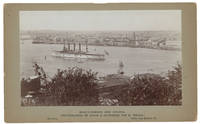
1890LIST110Havana: R. Testar 1890. Albumen photograph on cardstock mount image measuring 7 1/4 x 4 1/2 inches on 8 3/4 x 5 1/2 inch mount. A view of an American warship in Havana harbor likely taken prior to the outbreak of hostilities between the United States and Spain in early 1898. The photographers Leach and Patterson of Calle San Rafael published several views of Cuba at this time mostly of bucolic scenes around Havana and its environs. The American cruiser is similar in design to the U.S.S. Maine with slight differences - two smokestacks instead of three. An excellent example with minor wear to mount and fine image. R. Testar unknown
1890LIST110Havana: R. Testar 1890. Albumen photograph on cardstock mount image measuring 7 1/4 x 4 1/2 inches on 8 3/4 x 5 1/2 inch mount. A view of an American warship in Havana harbor likely taken prior to the outbreak of hostilities between the United States and Spain in early 1898. The photographers Leach and Patterson of Calle San Rafael published several views of Cuba at this time mostly of bucolic scenes around Havana and its environs. The American cruiser is similar in design to the U.S.S. Maine with slight differences - two smokestacks instead of three. An excellent example with minor wear to mount and fine image. R. Testar unknown books
1898ZB410896Washington: GPO 1898. 8 pp issued as 55th Congress 2d Session SD 129; light extraction roughness at margin now disbound in self wrappers. - If you are reading this this item is actually physically in our stock and ready for shipment once ordered. We are not bookjackers. Buyer is responsible for any additional duties taxes or fees required by recipient's country. Washington: GPO, unknown
18842025Matanzas 1884. Still very good. 3 leaves plus 4pp. pamphlet in original plain wrappers string tied. Light wear at edges. A few very small worm holes. Contemporary ink stamps. Light tanning and foxing. The Spanish Cortes approved a gradual manumission law in 1880 for slaves in Cuba that provided for an eight-year period of patronato tutelage for all slaves liberated according to the law which essentially amounted to indentured servitude. The transition to the patronato system was overseen by a provincial network of government agencies called Juntas de Patronato. Most of the workings of the slave system were preserved but patrocinados as former slaves came to be known received a minimal set of legal rights and were to be paid a token wage. <br/><br/>This fascinating set of Cuban manumission documents from the Junta de Patronato of Matanzas records this process and contains a rare cedula de patrocinado an identification booklet stating a slave is now a freedman with a supporting sponsor. The cedula completed in manuscript states that "Moreno Luis Morejon Natural de Africa.Vecino del Potrero Miraflores.Patrocinado de Da Josefa Morejon de Rodriguez" is "Gratis Sin Enmienda" as of September 15 1881. The second leaf of the pamphlet prints the rights of the freedman and the responsibilities of the sponsor such as the provision of food clothing and nominal salary. <br/><br/>The second document present here is a contemporaneous manuscript letter from Josefa Morejon de Rodriguez confirming that she will act as sponsor for the freedman and the final document dated January 28 1884 and signed by Rodriguez and the relevant local magistrates states that the sponsorship has been completed and is now legally concluded. With the ink stamp of the Matanzas Junta Provincial on first page and the contemporary stamps of several other relevant authorities. An outstanding record of the process of gradual manumission in Cuba during the last years of legal slavery on the island with a rare surviving freedman's identification book. unknown books
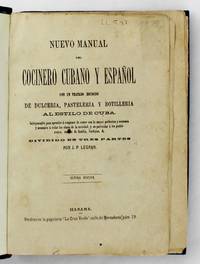
18806249Habana 1880. About very good. 199xxi3pp. Contemporary quarter red leather with modern marbled boards spine gilt. Light wear to binding. Minor soiling and wear to text. "Ultima edicion" originally published in 1857. This charming Cuban production is divided into three parts -- Sopas; Menestras Salsas Legumbres Frituras y Menudencias; and Pasteleria Reposteria y Dulceria. Each section has an index at the end of the text. The work includes local flavors such as Sopa Cubana; Ajiaco de Puerto-Principe; Lengua a la Criolla; Jigote Cubano; Pargo a la Americana; and more. We locate two copies of the 1857 edition of this work. Though we find a listing in OCLC there are no physical locations attached. unknown
184125455PARIS 1841-45 -in-8 demi-basane 31 plaquettes du même Auteur, reliées en 2 volumes, reliure demi-basane (half binding sheepskin) bleu-marine in-octavo, dos long (spine without raised band)décoré "or" (gilt decoration), Auteur et Titre frappés "or" (gilt title) avec 4 filets fins "or" de part et d'autre, 4 filets fin "or" en place des nerfs et en tête et en pied, papier marbré vert, crème et marron aux plats (cover with marbled paper), toutes tranches lisses (all smooth edges), sans illustration (no illustration), Oeuvres Reliées comme suit : TOME I ...... 1- Précis de l'Affaire Douillard-Mahaudière adressé à la Chambre des Députés, 20 pages, 1841, Paris Imprimerie de Cosse et G.-Lagionie Editeur, 2- Mémoire du Conseil des Délégués des Colonies à M. le Baron DUPERRE Amiral de France, Ministre de la Marine et des Colonies, 28 pages, 1841, Paris Imprimerie de Cosse et G.-Lagionie Editeur, 3- Conseil des Délégués des Colonies. a Monsieur le Ministre de l'Agriculture et du Commerce, 21 pages, 1841, Paris Imprimerie d'Ad. Blondeau Editeur, 4- Avis de M. JOLLIVET, Délégué de la Martinique à Monsieur le Ministre de la Marine et des Colonies, sur le projet d'Ordonnance relatif à l'emprisonnement disciplinaire des Esclaves, 24 pages, 1841, Paris Imprimerie d'Ad. Blondeau Editeur, 5- ANALYSE DES OPINIONS ET VOTES DES CONSEILS GENERAUX DE L'AGRICULTURE, DES MANUFACTURES ET DU COMMERCE, SUR LA QUESTION DES SUCRES : Lettre de Mr A. JOLLIVET, Membre de la Chambre des Députés, Délégué de la Martinique à Messieurs les Présidents et Membres du Conseil Supérieur du Commerce, SUR LA QUESTION DES SUCRES, 18 pages, 1842 Paris Imprimerie d'Ad. Blondeau Editeur, 6- Des Missions en France de la Société Abolitionniste Anglaise et Etrangère, par M. JOLLIVET, Député d'Ille-et-Vilaine, Délégué de la Martinique, 15 pages, sans date (1841)Paris Imprimerie d'Ad. Blondeau Editeur, 7- Question des Sucres dans la Chambre des Communes d'Angleterre - Du Travail Libre et du Travail Forcé. Leur Influence sur la Production Coloniale, par M. JOLLIVET, Député d'Ille-et-Vilaine, Délégué de la Martinique, Bon à Tirer avec dernières corrections de fautes et parfois de phrases rajoutée de la main de l'Auteur avant impression définitive par l'Editeur, 27 pages, Mai 1841 Paris Imprimerie d'Ad. Blondeau Editeur, 8- De L'Expropriation Forcée dans les Colonies de la Martinique, de la Guadeloupe et de la guyane par M. JOLLIVET, membre de la Chambre des Députés, 70 pages, 1842 Paris Imprimerie d'Ad. Blondeau Editeur, 9- Du Projet de Loi tendant à Régler les Attributions Financières des Conseils Coloniaux par M. JOLLIVET, membre de la Chambre des Députés, 51 pages, 2 Avril 1842 Paris Imprimerie d'Ad. Blondeau Editeur, 10- De la Philantropie Anglaise par Mr JOLLIVET, membre de la Chambre des Députés (deuxième edition), 55 pages, 1842 Paris Imprimerie d'Ad. Blondeau Editeur, 11- Discours de Mr JOLLIVET, Député d'Ille-et-Vilaine, dans les Séances des 28 et 30 Mai 1842, 15 pages, 1842 Paris Imprimerie de Cosse et G.-Laguionie Editeur, 12 - LETTRE ET REPONSE AU JOURNAL DES DEBATS, par M. JOLLIVET, Membre de la Chambre des Députés, Délégué de la Martinique, 14 pages, 1842 Paris Imprimerie de E.-B. DELANCHY Editeur, 13 - LETTRES de M. A. JOLLIVET, Membre de la Chambre des Députés et Délégué de la Martinique, 31 pages, 1842 Paris Imprimerie de E.-B. DELANCHY Editeur, 14- Analyse des Délibérations et Avis des CONSEILS COLONIAUX des Gouverneurs et des Administrateurs des Colonies sur les PROJETS D'EMANCIPATION(ABOLITION DE L'ESCLAVAGE), de la Commission présidée par M. Le Duc de Broglie, Par M. JOLLIVET, Membre de la Chambre des Députés, 69 pages, 1843 Paris Imprimerie Bruneau Editeur, 15 - L'EMANCIPATION ANGLAISE (ABOLITION DE L'ESCLAVAGE) Jugée par ses Résultats - Analyse des Documents Officiels Imprimés par ordre de M. le Ministre de la Marine et des Colonies, par M. JOLLIVET, Membre de la Chambre des Députés, Délégué de la Martinique, 104 pages, 1842 Paris Imprimerie de Moquet et Hauquelin Editeur, 16 - Enquête Parlementaire sur les COLONIES ANGLAISES publiée en Septembre 1842 - ANALYSE DE L'ENQUÊTE par M. JOLLIVET, Membre de la Chambre des Députés, 48 pages, 1843 Paris Imprimerie de Bruneau Editeur, 17- QUESTION DES SUCRES par M. JOLLIVET, Membre de la Chambre des Députés, 86 pages, 1843 Paris Imprimerie de Bruneau Editeur, 18 - PARALLELE entre les COLONIES FRANCAISES ET LES COLONIES ANGLAISES, Appendice au Rapport du Duc de Broglie par M. JOLLIVET, Membre de la Chambre des Députés, Délégué de la Martinique, 40 pages, 1843 PARIS Imprimerie de Bruneau Editeur, TOME II ..... 1 - Lettre de M. JOLLIVET, Membre de la Chambre des Députés, Délégué de la Martinique, au Rédacteur du Journal des Débats, 13 pages, 1844 Paris Imprimerie de Bruneau Editeur, 2 - Note Présentée au Conseil des Ministres Par M. JOLLIVET, Membre de la Chambre des Députés, Délégué de la Martinique, sur UN PROJET DE LOI RELATIF A LA CONSTITUTION POLITIQUE DES COLONIES, 23 pages, sans date (1844)Paris Imprimerie de Bruneau Editeur, 3 - A LOS HABITANTES DE LA ISLA DE CUBA (texte en espagnol ...par A. JOLLIVET, diputado de la camara de francia, y delegado de la Martinica), 23 pages, 1844 Paris imprimerie d'Ed. Proux et Cie Editeur, 4 - HISTORIQUE DE LA TRAITE ET DU DROIT DE VISITE. Par M. JOLLIVET, Membre de la Chambre des Députés, 35 pages, 1844 Paris Imprimerie de Bruneau Editeur, 5 - PETITIONS DE QUELQUES OUVRIERS ET OUVRIERES DE PARIS POUR L'ABOLITION IMMEDIATE DE L'ESCLAVAGE - VERITABLE SITUATION DES NOIRS DANS LES COLONIES FRANCAISES Par M. JOLLIVET, Membre de la Chambre des Députés, 20 pages, 1844 Paris Imprimerie de Bruneau Editeur, 6 - Observations Présentées par M. JOLLIVET, Délégué de la Martinique, devant la Commission de la Chambre des Pairs sur LE PROJET DE LOI (SUR L'ESCLAVAGE DES NOIRS), Tendant à Modifier les Articles 2 et 3 de la loi du 24 Avril 1833 - Séance du 11 Juin- 81 pages, 1844 Paris Imprimerie de Bruneau Editeur, 7 - QUESTION DES SUCRES EN ANGLETERRE. - DU TRAVAIL LIBRE ET DU TRAVAIL ESCLAVE, par M. JOLLIVET, Membre de la Chambre des Députés, 23 pages, 1845 Paris Imprimerie de Bruneau Editeur, 8 - DOCUMENTS AMERICAINS, ANNEXION DU TEXAS, EMANCIPATION DES NOIRS(ABOLITION DE L'ESCLAVAGE), POLITIQUE DE L'ANGLETERRE, par M. JOLLIVET, Membre de la Chambre des Députés, 40 pages, 1845 Paris Imprimerie de Bruneau Editeur, 9- ANNEXION DU TEXAS - NOUVEAUX DOCUMENTS AMERICAINS Publiés par M. JOLLIVET, Membre de la Chambre des Députés, 55 pages, 1845 Paris Imprimerie de Bruneau Editeur, 10 - DOCUMENTS AMERICAINS, 3ème Série. LES ETATS UNIS D'AMERIQUE ET L'ANGLETERRE. ANNEXION DU TEXAS. L'OREGON, par M. JOLLIVET, Membre de la Chambre des Députés, 74 pages, Avril 1845 Paris Imprimerie de Bruneau Editeur, 11 - LES COLONIES FRANCAISES DEVANT LA CHAMBRE DES PAIRS. Analyse de la Discussion Générale du Projet de Loi sur le Régime Colonial, par M. JOLLIVET, Membre de la Chambre des Députés, 112 pages, 1845 Paris imprimerie de Guiraudet et Jouaust Editeur, 12 - Chambre des Députés - Session de 1844-1845 - DISCOURS prononcé par M. JOLLIVET, Député d'Ille-et-Vilaine dans la discussion générale du projet de loi relatif aux COLONIES, Séance du 29 Mai 1845, 31 pages, extrait du Moniteur Universel du 30 Mai 1845, 1845 Paris Imprimerie Panckoucke Editeur, 13 - DISCOURS prononcés par M. JOLLIVET, Député d'Ille-et-Vilaine, dans la discussion des articles du projet de loi relatif au REGIME DES COLONIES, Séances des 2, 3 et 4 Juin 1845, extraits du Moniteur Universel des 3, 4 et 5 Juin 1845, 36 pages, 1845 Paris Imprimerie Panckoucke Editeur,
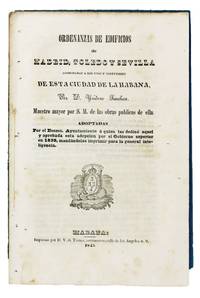
18455182Habana: Impresas por D. V. de Torres 1845. Good. 533pp. Contemporary plain blue wrappers separated at spine. Stitched as issued with additional small stabholes at gutter where previously bound into a sammelband. Light foxing and dust soiling. A seemingly unrecorded architectural pamphlet that prints the first comprehensive building code for Havana developed in 1837 by Isidoro Sánchez y Fuentes the city’s Director of Public Works. The text outlines detailed rules for the construction of buildings and related infrastructure to accord to high technical aesthetic and public health standards influenced by such regulations as had been imposed in Madrid Toledo and Seville. Sánchez’s code proved highly consequential and it resulted in significant improvements to the appearance livability and safety of many Havana neighborhoods.<br /> <br /> In the 18th century Madrid Seville and Toledo suffered from many of the same problems of haphazard urban development as Havana. However great efforts were made to develop and enforce building codes which cleaned up most of these city’s formerly slum-like suburbs of great benefit to public health not to mention aesthetics. Teodoro Ardemans Madrid’s Director of Public Works began the reforms in these Spanish cities and his 1720 work on the subject was fantastically influential for generations going through multiple reprints until 1848. Isidoro Sánchez adapted Ardemans’ concepts but updated and improved them to the requirements of the tropical climate and customs of Havana. He thus developed the first comprehensive building code for the Cuban capital which was one of the most progressive and well-considered in the Americas. <br /> <br /> Two preambles begin the work by discussing the importance of taking architectural inspiration from the buildings of classical antiquity and of considering the historical context and significance of reformed Spanish building codes. The bulk of the text takes up a variety of interesting and practical topics -- erecting urban and suburban buildings; respecting neighbors’ rights when building homes shared alleyways building ovens in light of nearby homes; creating ventanas de medianería large windows that can open or close depending the temperature and breeze; how garages should open onto public thoroughfares; where building materials should be manufactured; building basements; building balconies etc. on public streets; drainage systems and sewers; creating wells and other drinking water sources; where to build forges without disturbing neighbors; large windows for basements; building attics; and air circulation.<br /> <br /> Sánchez presented his proposed code to the City Council on June 10 1837 and in 1839 it was approved in full by the Governor but the printing of the text was only approved in April 1845 according to the introduction. We locate no copies of this significant work in OCLC or available auction records. Impresas por D. V. de Torres unknown
1823145311823 A Paris chez Bechet 1823, in8, reliure demi chagrin, dos a nerfs, caissons ornés de fleurons dorés,nerfs soulignes de filets dorés, titre edoré, date dorée en queue du dos,254 pp , bon exemplaire dans sa reliure ancienne
18095958Havana 1809. Good. 1p. on a bifolium. Printed form completed in manuscript. Previously folded. Small portion of upper left corner torn away and some scattered worming neither affecting text. Upper right of blank conjugate leaf clipped. Some scattered staining and offsetting with even tanning. An early 19th-century bill of sale for four slaves in Havana. The form completed in manuscript approves the sale by Doña Dolores Hernandez of "quatros negros" who had been brought from the coast of Africa on the slave ship Juno captained by Jabez Gibbs 1360 reales. It further states that the enslaved men are "Con la calidad de bozal alma en boca huesos en costal à uso de férias sin asegurar de tachas ni enfermedades mal de corazon gota coral de S. Lazaro ni orta qualesquiera que puede paceder la humana naturaleza porque toas corren por cuenta del comprador." The document is signed by the relevant authorities and dated March 26 1809. A good document of the slave trade in Cuba during the early 1800s. unknown
190050718- Photographie 4 x 7, 5 cm. Notice biographique collée au dos.
190052322- Photographie 4 x 7, 5 cm collée sur carton.
190053606- Photographie 4 x 7, 5 cm. Notice biographique collée au dos.
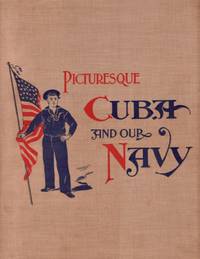
189832565Chicago: Published by Belford Middlebrook and Co. and Printed by Rand McNally and Co. Printers 1898. First Edition. Hardcover. Fair. Folio. Unpaginated. Illustrated. Light tan cloth hardcover with title and red blue and tan patriotic illustrated front cover. Restored. Front and rear hinges repaired with tissue. Tan cloth binding is soiled along the edges with a few spots on the rear cover. Published by Belford, Middlebrook and Co. and Printed by Rand, McNally and Co. Printers hardcover
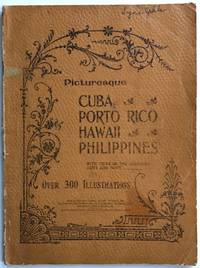
1898535Springfield Oh: Mast Crowell & Kirkpatrick 1898. Good. 121pp. Folio. Original orange printed wrappers. Light wear and soiling spine chipped with some glue repair. Ink ownership inscription at top of front cover. Minor internal soiling several leaves with tape repairs at edges. Extensively illustrated souvenir publication of the Spanish-American War. Images include local street scenes and landmarks photos of the native populations and the American military occupation. "Depicting the natives their costumes habitations and occupations; prominent buildings street scenes mountain and river scenery etc. Also life in the American Army and Navy with portraits of the chief actors in the Spanish-American War. Over three hundred illustrations. Mast, Crowell & Kirkpatrick unknown books
1896100758Havana (Havanna), Edwin W. Wilson, o.J. (um 1896). 48 unpag. S. Mit 24 ganzseitigen s/w Abbildungen. Quer-Kl.-4°. Lwd. d. Z. mit mont. hs. Deckelschild u. eingeb. OU. mit goldgepr. Umschlagtitel.
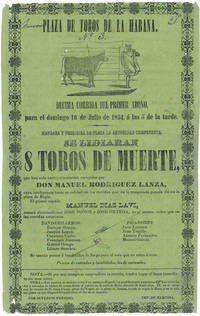
1854WRCAM46994Havana 1854. Broadside 12 1/2 x 8 inches. Printed on green paper. Old fold lines. Light wear and soiling minor separation at some folds. A few contemporary notations. Very good. Cuban broadside advertising a bullfight featuring matador Don Manuel Rodriguez Lanza and the "8 toros de muerte." The top of the sheet features a woodcut of a matador holding his cape out to a bull. The first swordsman for the fight is Manuel Diaz Lavi with two alternates listed. The names of the Banderilleros and Picadores for the fight are also noted. Bullfighting was a popular entertainment in Cuba during the Spanish colonial period though it was done away with after Cuban independence at the beginning of the 20th century. unknown books
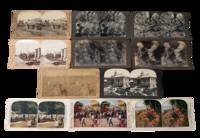
1890231711890. Stereoview archive of the post-emancipation Caribbean showing how the islands were marketed to western viewers through plantation labor export agriculture civic spectacle and catastrophe. As a group these photos function not only as an ethnographic travel archive but as evidence of the visual economy that followed slavery. The British West Indies moved through emancipation in 1834 to 1838 the French Caribbean in 1848 Puerto Rico in 1873 and Cuba in 1886 yet plantation production remained central to regional life well into the early twentieth century. These stereoviews preserve a colonial way of seeing in which Black and Afro-Caribbean labor rural discipline and extractive agriculture remained the background condition of "tropical" beauty and commercial modernity. Cuba's sugar economy in particular expanded through the nineteenth century and slavery was not abolished there until 1886 while Weyler's later reconcentration policy during the Cuban War of Independence violently reorganized rural life. Martinique after 1848 likewise shifted into new labor regimes including imported workers from India and China.<br /> <br /> Archive of 11 stereoview cards late 1890s to early 1900s depicting Cuba Jamaica Martinique Puerto Rico and the Dominican Republic. Most black and white with a few colorized. Each measure 3.5" x 7". All with captions on the margins. "Reconcentrado Farming Scene Province of Havana Cuba" links agricultural production to the brutal displacements of Spain's reconcentration campaign; "Cutting sugar cane Montego Bay Jamaica W.I." records cane labor in a colony where emancipation had not ended plantation dependency; and "Harvesting Coconuts Porto Rico" likewise frames Caribbean land through export work rather than local life. Other views extend that economic framing through cacao and coffee scenes while the paired Havana cards shift into urban leisure and public display including "Beautiful Central Park Havana Cuba" and "Holiday in Havana Cuba" the latter with both Cuban and American flags visible a telling image of the new imperial order after 1898. The disaster views from Martinique and the Lesser Antilles show how stereoview publishers also turned Caribbean destruction into consumable spectacle. the Morne Rouge card is accompanied on the reverse by the grim printed text "Dead bodies which were to be seen in Morne Rouge." while the wider context is the 1902 eruptions of Mount Pelée in Martinique and La Soufrière on Saint Vincent two catastrophes that killed roughly 30000 and 1600 people respectively and devastated local communities and agriculture.<br /> <br /> Some corner wear light toning scattered surface and edge wear. Overall very good condition. This collection gives direct visual representation of Caribbean history Atlantic slavery and emancipation plantation labor and U.S. imperial expansion in the circum-Caribbean preserving the transition from slavery to post-abolition labor. unknown
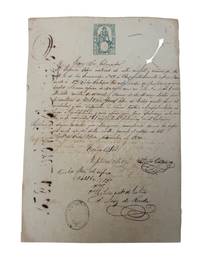
1870231221870. Slavery Cuba Spanish colonial slave sale manuscript recording the transfer of four enslaved individuals in Cuba in 1870. Produced within the official bureaucratic framework of Spanish colonial governance the document reflects the legal normalization of slavery in Cuba even as abolitionist pressures mounted across the Atlantic world. The document records the sale of four enslaved people described as "criollos" and African-born individuals situating the transaction within a labor system that combined locally born and imported enslaved populations. Created at a time when Spain had formally restricted the transatlantic slave trade but continued to permit slavery itself the manuscript demonstrates the persistence of legalized human commodification and the integration of enslaved labor into the island's economic structure sixteen years prior to abolition in 1886.<br /> <br /> Official Cuban slave contract documenting the sale of four enslaved individuals to Don Pedro Catasús by Don Enfemia Ochoa for the sum of 1100 pesos on November 29 1870. Single manuscript leaf written in Spanish cursive in black ink measuring 8.25" x 12". A green "50 cs de escudo" revenue stamp is affixed at the top center with a blind embossed Spanish crest at the upper left and a circular black ink government seal impressed at the lower left. Large vertical docketing appears on the verso. A stylized watermark is visible within the paper. The text organizes the enslaved individuals within a standardized transactional structure while the signatures of Enfemia Ochoa Pedro Catasús and A. Díaz de Rada authenticate the exchange and identify participants within the slaveholding economy.<br /> <br /> By 1870 Cuba remained a central node in the late Atlantic slave system with plantation agriculture especially sugar dependent on enslaved labor despite mounting abolitionist pressure. Although Spain had curtailed official slave imports earlier in the century illegal trafficking persisted into the 1860s and other coerced labor systems including the importation of Chinese indentured workers overlapped with slavery into the 1870s. The presence of both Creole and African individuals in this document reflects the layered composition of the enslaved population during this period. Light toning scattered foxing and edge wear visible. A closed wormhole extends from the upper right margin approximately five inches into the sheet resulting in partial loss of text. Evidence of prior tape reinforcement visible on the verso along with offsetting from previously adjacent material. Overall in very good condition. This document provides named transactional evidence of late-period slavery in Cuba offering concrete material for examining race labor and legal practice within Spanish colonial society. unknown
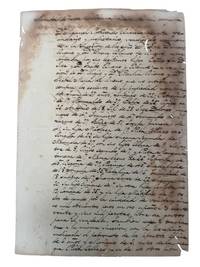
1875231241875. Slavery Cuba Spanish colonial slave sale manuscript recording the transfer of thirty-eight enslaved individuals in Cuba in 1875 materializing the sheer scale and organization of enslaved labor within the island's plantation economy during the final decade before abolition. The document enumerates a large group of enslaved people including multiple family units with young children demonstrating how slavery functioned as both an economic system and a hereditary condition sustained through the sale and reproduction of enslaved populations. Created eleven years prior to the abolition of slavery in Cuba in 1886 the manuscript documents the continued legality and normalization of large-scale slave transactions despite decades of international pressure and earlier prohibitions on the transatlantic trade offering concrete evidence of how internal markets sustained the institution in its final phase.<br /> <br /> Official Cuban slave contract documenting the sale of thirty-eight enslaved individuals for the sum of 126000 pesetas formalized before a public notary or legal authority. Single manuscript leaf written in Spanish cursive in black ink on both recto and verso densely filled with names ages and relational identifiers. Measures 8.5" x 12.25". The text lists individuals sequentially including men women and children with repeated references to kinship structures such as mothers with multiple children indicating the sale of family groupings rather than isolated individuals. The script reflects extended passages detailing ownership exclusions and conditions of transfer. A partial watermark of the official coat of arms of Cuba is visible. <br /> By 1875 Cuba remained one of the last major slave societies in the Atlantic world with sugar production driving demand for large controlled labor forces. Even after Spain curtailed the official slave trade earlier in the century illegal importation persisted into the 1860s and alternative systems of coerced labor including Chinese indenture supplemented plantation workforces. The scale of this transaction demonstrates the consolidation and redistribution of enslaved labor within domestic markets while the inclusion of children underscores the long-term economic logic of slavery as a self-reproducing system. Moderate toning and foxing concentrated along the edges with numerous small closed wormholes a few affecting portions of the text. Light edge wear present. Overall in good condition. This document provides unusually extensive nominal data on a large enslaved population encompassing the roles of kinship valuation and labor organization in late Spanish colonial Cuba. unknown
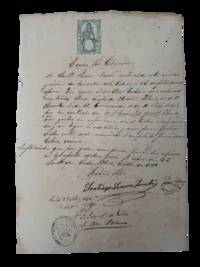
1870231191870. Slavery Cuba Spanish colonial manuscript documenting the late persistence of slavery in Cuba recording the sale of five enslaved Creole individuals including women and children 1870. Produced within the official bureaucratic framework of Spanish colonial governance the document reflects the legal normalization of slavery in Cuba even as abolitionist pressures mounted across the Atlantic world. The presence of multiple children within the transaction underscores the hereditary nature of enslavement and the commodification of family units offering direct material evidence of how slavery functioned socially and economically in its final decades on the island. Although Spain had formally ended the transatlantic slave trade earlier in the century illegal trafficking and internal slave markets persisted and slavery itself would not be abolished in Cuba until 1886 placing this document within a crucial transitional period marked by reform debates gradual emancipation laws and continued exploitation.<br /> <br /> Official Cuban slave contract recording the sale of five enslaved individuals identified as "criollos" including one adult woman and four children from Santiago Simón Fambi to Don Pedro Catasús for the sum of 1200 pesos on November 21 1870. Single page manuscript leaf measuring 8.25" x 12". The manuscript is written in Spanish cursive hand in black ink. The upper left bears a blind embossed crest of Spain while a circular black ink government seal is impressed at the lower left partially overlapping the text. The text enumerates the enslaved individuals with ages and names embedding human lives within the formulaic language of sale and valuation while the bold signatures of both seller Santiago Simón Fambi and buyer Pedro Catasús anchor the transaction in identifiable actors within the colonial economy.<br /> <br /> By 1870 slavery in Spanish Cuba remained central to the island's plantation economy particularly in sugar production which had expanded rapidly in the mid-19th century with industrialized mills and global demand. Enslaved people were primarily forced into agricultural labor under highly regimented and brutal conditions though others were used in urban domestic service skilled trades or as hired laborers generating income for their owners. This document exhibits light toning edge wear and scattered foxing throughout. A closed wormhole extends approximately two inches from the upper right margin inward not affecting legibility of the text. Minor losses and small tears along the edges. Overall in very good condition. Given that this document records a woman and four children the family was likely intended for a combination of field labor and domestic or auxiliary work with the children gradually incorporated into plantation labor as they aged reflecting the system's reliance on both immediate exploitation and the reproduction of enslaved labor over time. unknown