Slavery; CubaBiblio.com
469 résultats
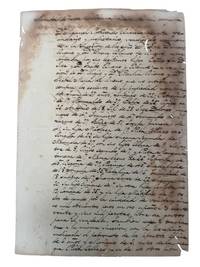
1875231241875. Slavery Cuba Spanish colonial slave sale manuscript recording the transfer of thirty-eight enslaved individuals in Cuba in 1875 materializing the sheer scale and organization of enslaved labor within the island's plantation economy during the final decade before abolition. The document enumerates a large group of enslaved people including multiple family units with young children demonstrating how slavery functioned as both an economic system and a hereditary condition sustained through the sale and reproduction of enslaved populations. Created eleven years prior to the abolition of slavery in Cuba in 1886 the manuscript documents the continued legality and normalization of large-scale slave transactions despite decades of international pressure and earlier prohibitions on the transatlantic trade offering concrete evidence of how internal markets sustained the institution in its final phase.<br /> <br /> Official Cuban slave contract documenting the sale of thirty-eight enslaved individuals for the sum of 126000 pesetas formalized before a public notary or legal authority. Single manuscript leaf written in Spanish cursive in black ink on both recto and verso densely filled with names ages and relational identifiers. Measures 8.5" x 12.25". The text lists individuals sequentially including men women and children with repeated references to kinship structures such as mothers with multiple children indicating the sale of family groupings rather than isolated individuals. The script reflects extended passages detailing ownership exclusions and conditions of transfer. A partial watermark of the official coat of arms of Cuba is visible. <br /> By 1875 Cuba remained one of the last major slave societies in the Atlantic world with sugar production driving demand for large controlled labor forces. Even after Spain curtailed the official slave trade earlier in the century illegal importation persisted into the 1860s and alternative systems of coerced labor including Chinese indenture supplemented plantation workforces. The scale of this transaction demonstrates the consolidation and redistribution of enslaved labor within domestic markets while the inclusion of children underscores the long-term economic logic of slavery as a self-reproducing system. Moderate toning and foxing concentrated along the edges with numerous small closed wormholes a few affecting portions of the text. Light edge wear present. Overall in good condition. This document provides unusually extensive nominal data on a large enslaved population encompassing the roles of kinship valuation and labor organization in late Spanish colonial Cuba. unknown
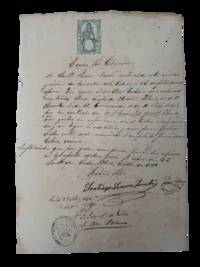
1870231191870. Slavery Cuba Spanish colonial manuscript documenting the late persistence of slavery in Cuba recording the sale of five enslaved Creole individuals including women and children 1870. Produced within the official bureaucratic framework of Spanish colonial governance the document reflects the legal normalization of slavery in Cuba even as abolitionist pressures mounted across the Atlantic world. The presence of multiple children within the transaction underscores the hereditary nature of enslavement and the commodification of family units offering direct material evidence of how slavery functioned socially and economically in its final decades on the island. Although Spain had formally ended the transatlantic slave trade earlier in the century illegal trafficking and internal slave markets persisted and slavery itself would not be abolished in Cuba until 1886 placing this document within a crucial transitional period marked by reform debates gradual emancipation laws and continued exploitation.<br /> <br /> Official Cuban slave contract recording the sale of five enslaved individuals identified as "criollos" including one adult woman and four children from Santiago Simón Fambi to Don Pedro Catasús for the sum of 1200 pesos on November 21 1870. Single page manuscript leaf measuring 8.25" x 12". The manuscript is written in Spanish cursive hand in black ink. The upper left bears a blind embossed crest of Spain while a circular black ink government seal is impressed at the lower left partially overlapping the text. The text enumerates the enslaved individuals with ages and names embedding human lives within the formulaic language of sale and valuation while the bold signatures of both seller Santiago Simón Fambi and buyer Pedro Catasús anchor the transaction in identifiable actors within the colonial economy.<br /> <br /> By 1870 slavery in Spanish Cuba remained central to the island's plantation economy particularly in sugar production which had expanded rapidly in the mid-19th century with industrialized mills and global demand. Enslaved people were primarily forced into agricultural labor under highly regimented and brutal conditions though others were used in urban domestic service skilled trades or as hired laborers generating income for their owners. This document exhibits light toning edge wear and scattered foxing throughout. A closed wormhole extends approximately two inches from the upper right margin inward not affecting legibility of the text. Minor losses and small tears along the edges. Overall in very good condition. Given that this document records a woman and four children the family was likely intended for a combination of field labor and domestic or auxiliary work with the children gradually incorporated into plantation labor as they aged reflecting the system's reliance on both immediate exploitation and the reproduction of enslaved labor over time. unknown
2016x-0674970667Harvard Univ Pr 2016. Hardcover. New. 238 pages. 9.50x6.25x1.25 inches. Harvard Univ Pr hardcover
0656815116.Ghardcover. Good. Access codes and supplements are not guaranteed with used items. May be an ex-library book. hardcover
1332893929.Gpaperback. Good. Access codes and supplements are not guaranteed with used items. May be an ex-library book. paperback
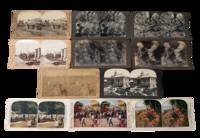
1890231711890. Stereoview archive of the post-emancipation Caribbean showing how the islands were marketed to western viewers through plantation labor export agriculture civic spectacle and catastrophe. As a group these photos function not only as an ethnographic travel archive but as evidence of the visual economy that followed slavery. The British West Indies moved through emancipation in 1834 to 1838 the French Caribbean in 1848 Puerto Rico in 1873 and Cuba in 1886 yet plantation production remained central to regional life well into the early twentieth century. These stereoviews preserve a colonial way of seeing in which Black and Afro-Caribbean labor rural discipline and extractive agriculture remained the background condition of "tropical" beauty and commercial modernity. Cuba's sugar economy in particular expanded through the nineteenth century and slavery was not abolished there until 1886 while Weyler's later reconcentration policy during the Cuban War of Independence violently reorganized rural life. Martinique after 1848 likewise shifted into new labor regimes including imported workers from India and China.<br /> <br /> Archive of 11 stereoview cards late 1890s to early 1900s depicting Cuba Jamaica Martinique Puerto Rico and the Dominican Republic. Most black and white with a few colorized. Each measure 3.5" x 7". All with captions on the margins. "Reconcentrado Farming Scene Province of Havana Cuba" links agricultural production to the brutal displacements of Spain's reconcentration campaign; "Cutting sugar cane Montego Bay Jamaica W.I." records cane labor in a colony where emancipation had not ended plantation dependency; and "Harvesting Coconuts Porto Rico" likewise frames Caribbean land through export work rather than local life. Other views extend that economic framing through cacao and coffee scenes while the paired Havana cards shift into urban leisure and public display including "Beautiful Central Park Havana Cuba" and "Holiday in Havana Cuba" the latter with both Cuban and American flags visible a telling image of the new imperial order after 1898. The disaster views from Martinique and the Lesser Antilles show how stereoview publishers also turned Caribbean destruction into consumable spectacle. the Morne Rouge card is accompanied on the reverse by the grim printed text "Dead bodies which were to be seen in Morne Rouge." while the wider context is the 1902 eruptions of Mount Pelée in Martinique and La Soufrière on Saint Vincent two catastrophes that killed roughly 30000 and 1600 people respectively and devastated local communities and agriculture.<br /> <br /> Some corner wear light toning scattered surface and edge wear. Overall very good condition. This collection gives direct visual representation of Caribbean history Atlantic slavery and emancipation plantation labor and U.S. imperial expansion in the circum-Caribbean preserving the transition from slavery to post-abolition labor. unknown
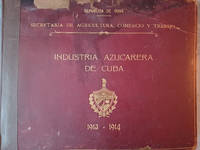
19153017<p>Portafolio azucarero de la industria azucarera de cuba 1912-1914 primera edicion libreria e imprenta la moderna poesia 1915 esta obra ha sido realizada siendo presidente de la republica de cuba dr mario garcia menocal y secretario de agriculturacomercio y trabajo el general emilio nunez caratulas originalesrestauradasgran libro ilustrado 424 pgs mas graficos libro con peso de 13 librascon 16 cm de largo por 12.5 cm de anchoes una obra super rarade colecciondonde se describen todos los centrales azucareros de cubacon fotos y sus caracteristicas publicada en el ano 1915 por la libreria e imprenta la moderna poesiaes una de las rarezas de la bibliografia cubana</p> Libreria e imprenta la moderna poesia hardcover
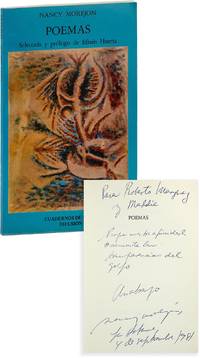
198088457Mexico City: Difusion Cultural Departamiento de Humanidades / Universidad Nacional Autónoma de México 1980. First Edition. First Impression one of 2000 copies. Small octavo 18cm; original pictorial card wrappers; 89-62pp. With a full-page inscription from Morejon to Puerto Rican editor translator and literary critic Roberto Márquez and his wife signed and dated in Havana 4 September 1981." Mild surface wear else a fresh very Near Fine copy. A collection of verse by the noted Afro-Cuban poet selected and edited by Mexican poet and journalist Efraín Huerta Roma 1914-1982. A nice inscription connecting two prominent Caribbean literary figures. 88457. Difusion Cultural Departamiento de Humanidades / Universidad Nacional Autónoma de México unknown
19012221928<p>First edition. Small octavo. Illustrated with b/w photos by V.K. Van De Venter Robin H. Ford John H. Rising L.E. Mayo and W.G. Spiker. Original grey pictorial cloth stamped in gilt black and green. No dust jacket. Very good small crack at rear joint. 220 pages 3 pages of ads. No signatures or bookplates. Scarce.</p> The Rumford Press hardcover
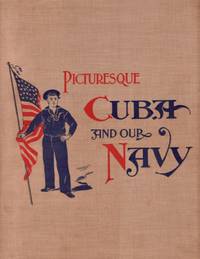
189832565Chicago: Published by Belford Middlebrook and Co. and Printed by Rand McNally and Co. Printers 1898. First Edition. Hardcover. Fair. Folio. Unpaginated. Illustrated. Light tan cloth hardcover with title and red blue and tan patriotic illustrated front cover. Restored. Front and rear hinges repaired with tissue. Tan cloth binding is soiled along the edges with a few spots on the rear cover. Published by Belford, Middlebrook and Co. and Printed by Rand, McNally and Co. Printers hardcover
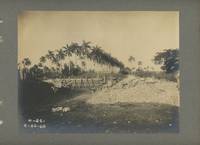
1906List3021La Habana Province Republic of Cuba 1906. Twenty-two photographs measuring 7 ¼ x 9 ½ inches mounted on heavy cardstock measuring 10 x 12 inches. Photos numbered and dated on negative. In album embossed with “Havana Central Railroad Co./ Progress Photographs/ GUANAJAYâ€. Photos with fine contrast and some wear; mounts with minor damage slightly warped with some detached from binding. Overall excellent. Havana Central Railroad Company was an American company formed in April 1905. It opened two electric tram lines—Havana to Guanajay in 1906 and Havana to Güines in 1907—before it was bought by the English company United Railways following the Panic of 1907. Offered here is a photo album showing the construction of the Guanajay line. The photographs show laborers assisted by horse-drawn carts digging culverts laying tracks and erecting bridges and buildings.<br /> <br /> This project came on the heels of the successful efforts of the Cuba Company another railroad company to make the emerging Cuban Republic amenable to American business.They did so first by using ‘revocable permits’ which could ostensibly be revoked by the new government when it was formed to circumvent the Foraker Amendment prohibiting concessions to American companies by the US’s military government; and second by using their close relationships to several members of the Cuban Constitutional Convention to include a law allowing irrevocable permits.1 These along with the Platt Amendment and Governor Leonard Wood’s General Railway Law led to what would amount to domination by US interests in Cuba particularly but not exclusively in the railroad industry.2<br /> <br /> Of interest to scholars of the early Republic of Cuba especially the history of US businesses in the country.<br /> <br /> 1 Juan C. Santamarina “The Cuba Company and the Expansion of American Business in Cuba 1898–1915†The Business History Review 74 no. 1 Spring 2000: 41–83.<br /> 2 Louis A. Pérez Jr. “Insurrection Intervention and the Transformation of Land Tenure Systems in Cuba 1895–1902†Hispanic American Historical Review 65 no. 2 1985: 229–254. unknown
1980211912Havana: Editorial Orbe 1980. hardcover. very good-. Many Illus. some in color. Square 8vo pictorial cloth rubbed. La Habana: Editorial Orbe 1980.<br/> <br/> Profiles of Cuban culture for the year 1978. Text in Spanish.<br/> <br/> Editorial Orbe unknown
44508189like new. unknown
44508189-nnew. unknown
2022__1646423453Univ Pr of Colorado 2022. Hardcover. New. 315 pages. 12.00x10.50x1.00 inches. Univ Pr of Colorado hardcover
ria9781646423453_inpHardcover. New. New Book; Fast Shipping from UK; Not signed; Not First Edition; The strength and vitality of Denver artist Paul Kontnys work reflected his passion for life and the inspiration he found in his environment. Happy to have escaped death during World War II he relished the opportunity to paint and scu hardcover
18095958Havana 1809. Good. 1p. on a bifolium. Printed form completed in manuscript. Previously folded. Small portion of upper left corner torn away and some scattered worming neither affecting text. Upper right of blank conjugate leaf clipped. Some scattered staining and offsetting with even tanning. An early 19th-century bill of sale for four slaves in Havana. The form completed in manuscript approves the sale by Doña Dolores Hernandez of "quatros negros" who had been brought from the coast of Africa on the slave ship Juno captained by Jabez Gibbs 1360 reales. It further states that the enslaved men are "Con la calidad de bozal alma en boca huesos en costal à uso de férias sin asegurar de tachas ni enfermedades mal de corazon gota coral de S. Lazaro ni orta qualesquiera que puede paceder la humana naturaleza porque toas corren por cuenta del comprador." The document is signed by the relevant authorities and dated March 26 1809. A good document of the slave trade in Cuba during the early 1800s. unknown
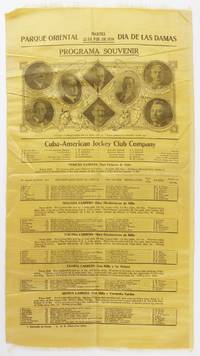
19164158Havana 1916. Very good. Broadside printed on light orange silk approximately 16.25 x 9 inches. Minor edge wear one small tear near bottom right. A seemingly unrecorded silk broadside issued by the Cuba-American Jockey Club Company advertising the lineup of horses and the schedule for a series of five races during Dia de las Damas "Ladies Day" at the Oriental Park racetrack in Marianao Havana in 1916. In addition the top of the broadside is printed with small oval- and diamond-shaped portraits picturing the nine officers of the club who are identified by name and their position within the club. Below these portraits is a listing of fourteen officers of the club. The Oriental Park Racetrack "Parque Oriental" opened in 1915 for winter racing which began in November and lasted into March each year. The racetrack was the only thoroughbred track in Cuba until Fidel Castro practically shut it down after the Cuban Revolution in 1959. The present broadside is a visual reminder of the influx of American business interests in Cuba in the early 20th century. No copies reported in OCLC. unknown
20001-9875002186Manantial 2000. Paperback. New. Spanish language. 8.46x5.51x0.79 inches. Manantial paperback
194755153Havana: Cuban Tourist Commission 1947. Paperback. Very good. Paperback. 22 by 28 inches unfolded. Foxed overall with some expected toning at the creases else very good and crisp. <br/><br/> Cuban Tourist Commission paperback
a17322Islas vol IX #4. Thick octavo wraps. 555pp. index. Issue for Oct.-Dec. 1967 . Entire issue devoted to revolutionary Cuban poetry. Text VG cover good plus lightly foxed and toned with one small closed tear; lightly worn. No ownership marks. Rare. . paperback
1985020353Taipei 1985. First Edition . Soft cover. Near Fine. Color Plates Throughout. 58 Pp Catalog All Text In Chinese. 11" Tall. Signed And Dated By The Artist. He Devoted Himself To Traditional And Contemporary Ink Painting Inherited The Essence Of Chinese Millennium Painting And Calligraphy And Opened Up Opportunities For The Reform Of Contemporary Ink Painting Which Set A Paradigm For New Ink Painting In The World Of Chinese Art For This Century. He Taught In Taiwan For Half A Century And Cultivated Countless Art Students. His Influence Is Profound. <br/> <br/> paperback
1994170268Burbank CA: Warner Brothers 1994. Revised Draft script for the 1995 film. Bound in at the rear of the script are nine pages relating to revisions to the script. <br /> <br /> US Army doctors race to find the cure to a deadly virus quickly spreading from Africa to North America by way of a smuggled capuchin monkey. <br /> <br /> Shot on location in California and Hawaii. <br /> <br /> Self wrappers. Title page present dated May 13 1994 noted as REVISION POLISH with credits for screenwriters Laurence Dworet and Robert Roy Pool and revision credits for uncredited screenwriter Ted Tally. 174 leaves with last page of text numbered 136. Xerographic duplication rectos only with rainbow revision pages throughout dated variously between August 7 and 17 1994. Pages Near Fine bound with two gold brads. Warner Brothers unknown
1995049294KBA Books 1995. Book. Fair. Paperback. 1st Printing. Worn copy with yellow highlighting on 3 pages upper edge of title page clipped presumably to remove owner name faint dampstain to upper corners. 57-page booklet. KBA Books Paperback
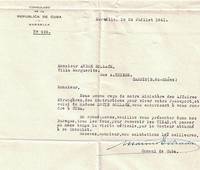
16-4373Marseille France: 24 juillet 1941. . TLS with franked envelope approving a visa for André and Lucie Bollack of Cassis.Provenance Estate of Paul Lombard. Né en 1889 Paul Lombard a été rédacteur en chef de la revue L’Homme libre journal de Clémenceau et critique littéraire sous le pseudonyme de Louis Méritan. Paul Lombard est de ces critiques qui comme l’a montré Thierry Laget Proust Prix Goncourt Gallimard 2019 reprochaient à l’Académie Goncourt d’avoir décerné leur prix à un écrivain trop vieux trop riche : "Au lieu de cela cette année le prix Goncourt … échoit à M. Proust qui n’est pas jeune : il a conquis en peu de jours une notoriété dont j’ignore le secret ; le prix Goncourt même s’il l’a mérité ne lui sera d’aucune utilité" déplore-t-il dans L’Homme libre du 11 décembre 1919 p. 2. Probablement aurait-il préféré que Les Croix de bois de Dorgelès remportât de prix d’autant que l'écrivain avait été un collaborateur régulier de L’Homme libre.Expertise by Ségolène Beauchamp 86bis rue de Bellébat 45000 Orléans and Pierre Prévost 75 rue Michel Ange 75016 Paris. Marseille, France: 24 juillet 1941. unknown