2 001 résultats
Odé 1955, In-12 toile grége de l'éditeur, 412 pages. Préface de Jacques PERRET. Txetes de Victor ALBA, Jean BABELON, Tibor MENDE, Philippe SOUPAULT etc...Illustrations de BARTOLI, BEUVILLE, VILLETTE etc... Trés bon état.
Reliure de l'éditeur. 412 pages. Jaquette.
1955ML6211955 P, Odé1955; in12 cartonnage marron éditeur,412pp Abondantes illustrations couleurs(Beuville,Brenet.).Textes entre autres de Blancpain,Fouchet,soupault.Edition de luxe numérotée.
ROD0038075Groupe Cep Euro éditions. sans date. In-8. Broché. Bon état, Couv. convenable, Dos satisfaisant, Intérieur frais. dépliant illustré de photos couleur. . . . Classification Dewey : 908.72976-Régionalisme : Guadeloupe
199079045P., Sylvie Messinger, 1990, in-8°, 351 pp, 21 gravures et plans, broché, couv. illustrée, bon état
xviii, 366 p. front., illus., plates Hardcover Ex-library, Very good condition
pp. xvii, 540. Illustrations by Thornton Oakley. 8vo. Original full yellow cloth binding, soiled. An account of four voyages in the Caribbean taken by the authors. PA 11
1782CA0094lii315 pages. Octavo 8" x 5 3/4" bound in full leather with gilt lettering to spine. Translated with notes by Pedro Varela y Ulloa. Palau 196692. First Spanish edition.<br /><br />A text that engaged the well-studied debates about the natural history of the Americas and Spain's colonial history. In 1780 in Venice Juan Nuix published Riflessioni imparziali supra l'umanita degli spagnuoli nell' Indie contro i pretersi filosofi e politici. Nuix a Catalan living in Italy since the expulsion of the Jesuits wrote the book to defend Spanish colonialism and historiography against the attacks of Robertson and Raynal. It sailed by the censors in the Council of the Indies and two separate translations appeared in succession one in 1782 edited by a member of the Royal Council Pedro Varela y Ulloa and another in 1783 by Joseph Nuix Juan's brother. The Spanish edition sponsored by the crown opened with an essay by Varela y Ulloa in which he first offered a searing Critique of traditional forms of colonialism not unlike that put forth by Raynal. After describing military campaigns in foreign lands from Alexander the Great to Genghis Kahn as butcheries Varela y Ulloa went on to claim that the Spanish colonialism was unique. The crimes attributed to Spain in the Indies had been committed by private individuals who did not represent the nation as a whole and who had acted as they did while surrounded by hungry cannibals. Moreover compared with the atrocities committed by other European colonial powers the actions of the Spaniards looked like misdemeanors. Varela y Ulloa's effort to portray Spanish colonialism as unique benign captured the essence of Nuix's thesis well. Nuix's defense of the record of Spanish colonialism opened with passages that sought to bolster his credibility by stressing that he was a Catalan and that Catalans had not really participated in the Spanish colonization of the Indies so that he could not be accused of being partisan. He then articulated a five-pronged defense of Castilian colonial behavior in America seeking to demonstrate the unreliability of the sources used by Robertson and Raynal and of their interpretations. Nuix First set out to prove that charges of Spanish cruelty to Amerindians were exaggerations originally put into circulation by writers such as Las Casas whose reports on the destruction of the Indies were at the root of most foreign criticisms of Spain. According to Nuix Las Casas was of Flemish origin which explained why he had sought to undermine Spain. Las Casas also often contradicted himself Nuix argued no impartial jury could trust such "an inept" witness. Foreign historians who had echoed Las Casas's allegations were not credible either not Robertson whose moderation had prompted him to dismiss Las Casas. Robertson had selected and reinterpreted the testimony of Spanish witnesses when recounting various colonial massacres. Instead of quoting them moreover Robertson had manipulated the testimony of witnesses to depict the Amerindians as passive victims of Spanish cruelty. History was not a matter of interpretation however but of faithfully presenting the testimony of witnesses and in that respect Robertson lacked credibility. In order to prove that Spaniards in America had not behaved like greedy barbarians Nuix argued that the alleged depopulation caused by the Conquest was the product of factors outside human control. The infantile susceptibility of the natives to disease for example was why epidemics had wiped them out. The barrenness of the Americas and the idleness of the originally small number of natives had moved the conquerors to create economies based on mining and large estates. Such economies along with the foreign monopoly on colonial trade not Spanish cruelty and greed Nuix contended were responsible for having slowed both markets and population growth.<br /><br />Condition:<br /><br />Provenance: Book plate of Alberto Parreño formerly president of the Cuban Chamber of Commerce in New York to front paste down. Spine head chipped rubbing to edges and corners very crisp internally else about a very good copy. Joachin Ibarra hardcover books
1782CA0094lii315 pages. Octavo 8" x 5 3/4" bound in full leather with gilt lettering to spine. Translated with notes by Pedro Varela y Ulloa. Palau 196692. First Spanish edition.<br /><br />A text that engaged the well-studied debates about the natural history of the Americas and Spain's colonial history. In 1780 in Venice Juan Nuix published Riflessioni imparziali supra l'umanita degli spagnuoli nell' Indie contro i pretersi filosofi e politici. Nuix a Catalan living in Italy since the expulsion of the Jesuits wrote the book to defend Spanish colonialism and historiography against the attacks of Robertson and Raynal. It sailed by the censors in the Council of the Indies and two separate translations appeared in succession one in 1782 edited by a member of the Royal Council Pedro Varela y Ulloa and another in 1783 by Joseph Nuix Juan's brother. The Spanish edition sponsored by the crown opened with an essay by Varela y Ulloa in which he first offered a searing Critique of traditional forms of colonialism not unlike that put forth by Raynal. After describing military campaigns in foreign lands from Alexander the Great to Genghis Kahn as butcheries Varela y Ulloa went on to claim that the Spanish colonialism was unique. The crimes attributed to Spain in the Indies had been committed by private individuals who did not represent the nation as a whole and who had acted as they did while surrounded by hungry cannibals. Moreover compared with the atrocities committed by other European colonial powers the actions of the Spaniards looked like misdemeanors. Varela y Ulloa's effort to portray Spanish colonialism as unique benign captured the essence of Nuix's thesis well. Nuix's defense of the record of Spanish colonialism opened with passages that sought to bolster his credibility by stressing that he was a Catalan and that Catalans had not really participated in the Spanish colonization of the Indies so that he could not be accused of being partisan. He then articulated a five-pronged defense of Castilian colonial behavior in America seeking to demonstrate the unreliability of the sources used by Robertson and Raynal and of their interpretations. Nuix First set out to prove that charges of Spanish cruelty to Amerindians were exaggerations originally put into circulation by writers such as Las Casas whose reports on the destruction of the Indies were at the root of most foreign criticisms of Spain. According to Nuix Las Casas was of Flemish origin which explained why he had sought to undermine Spain. Las Casas also often contradicted himself Nuix argued no impartial jury could trust such "an inept" witness. Foreign historians who had echoed Las Casas's allegations were not credible either not Robertson whose moderation had prompted him to dismiss Las Casas. Robertson had selected and reinterpreted the testimony of Spanish witnesses when recounting various colonial massacres. Instead of quoting them moreover Robertson had manipulated the testimony of witnesses to depict the Amerindians as passive victims of Spanish cruelty. History was not a matter of interpretation however but of faithfully presenting the testimony of witnesses and in that respect Robertson lacked credibility. In order to prove that Spaniards in America had not behaved like greedy barbarians Nuix argued that the alleged depopulation caused by the Conquest was the product of factors outside human control. The infantile susceptibility of the natives to disease for example was why epidemics had wiped them out. The barrenness of the Americas and the idleness of the originally small number of natives had moved the conquerors to create economies based on mining and large estates. Such economies along with the foreign monopoly on colonial trade not Spanish cruelty and greed Nuix contended were responsible for having slowed both markets and population growth.<br /><br />Condition:<br /><br />Provenance: Book plate of Alberto Parreño formerly president of the Cuban Chamber of Commerce in New York to front paste down. Spine head chipped rubbing to edges and corners very crisp internally else about a very good copy. Joachin Ibarra hardcover
8vo., Fourth Edition, with portrait frontispiece, plates, maps and endpaper maps; green cloth, gilt back, a near fine copy in unclipped but worn dustwrapper, the latter with loss at backstrip and heavily rubbed at fold-ins.
2014119164L'harmattan 2014 In-8 broché 24 cm sur 16. 353 pages. Bon état d’occasion.
1879005674Oneida NY: The American Socialist Publisher 1879. Wraps. Good. 104 issues spanning the years 1878 and 1879 being two complete years. Edited by John Humphrey Noyes the founder of a utopian community in Oneida and an advocate of communal style living including the controversial advocacy of men and women marrying multiple partners. Included are several articles on the short-lived Transcendentalist Utopian community Brook Farm including several articles containing excerpts from Charles Fourier's Harbinger as well as other topics related to the philosophy of Charles Fourier. Other topics include socialism in England the Workingmen's party Spiritualism and the necessity of Spiritualism Communism Communism in America Industrialization Krupp's Great Gun Factory-its cooperative phase 'The Father Land' by James Russell Lowell an illustration of the Shaker Village at Mount Lebanon Malthusian facts articles on the work studying population growth by Malthus The Marpingen miracles three views on the Origin of the Species Cook's marriage philosophy Utopian schemes labor and strikes Spirit rapping the Mennonites Paris under electric lights the Red Cross American Socialism the Atlantic Cable etc. Condition ranges from GOOD to VERY GOOD with most having light toning minor soiling creasing and edgewear. A few with minor chips and tears along the extremities. Vol IV. No. 52 with with moderate tearing along the extremities. A 4 inch triangular piece missing from the lower rear cover. Same sort of tearing to Vol III No. 52 with this number bearing heavy browning and staining to the rear cover affecting the last pages of this number. Vol. III no. 1 with moderate offsetting and soiling along the extremities. The American Socialist, Publisher unknown
004001Oneida NY: The American Socialist. Original Wraps. Good. Oneida NY. Edited by John Humphrey Noyes the founder of a utopian community in Oneida and an advocate of communal style living including the controversial advocacy of men and women marrying multiple partners. These pieces are 8 page newspaper devoted to topics on communism and socialism as well as items on spiritualism and religion. Brook Farm is discussed in several issues. With a page of ads on the rear. Present are 12 issues from 1876 to 1879. All are in GOOD or slightly better condition with general minor darkening varying amounts of minor soiling some with some staining and varying degrees of chipping and tearing to the extremities as well as some creasing. Specific condition issues where noted. Vol I No 34. November 16 1876. Topics include the connection between socialism and spiritualism socialism and the state-from an 1844 lecture by Ralph Waldo Emerson science and spiritualism etc. Some soiling along the extremities. Minor chipping along the fore edge. Vol II No. 10. March 8 1877. Topics include socialism and positivism evolution of communities etc. Several 1-2 inch tears along the extremities. Vol II No 13. Marh 29 1877. Topics include communism among the pilgrims advantages of communism etc. Dampstaining along the fore egdge. Moderate chipping and tearing along the lower and fore edges. Several pages unopened. Vol II No. 21. May 24 1877. Topics include an in depth look at communism Icaria history of German socialism etc. A few tears and some creasing along the extremities. Vol II No. 23. June 7 1877. Topics include cooperation in Massachusetts a brief bio of Noyes Icaria etc. Minor chipping and tearing along the fore edge with a longer tear at the upper edge. Minor faint staining and a faint dampstain along the lower spine. Vol II No. 25. June 21 1877. Topics include co-operation in Massachusetts land tenure in various countries the abdication of John Humphrey Noyes etc. Smallish area of dark staining to the center pages. Vol II No. 38. September 20 1877. Topics include socialist clubs the condition of the Icarian community positivism and spiritualism etc. With many small tears and chips along the fore edge with a few tears along the other extremities. Minor darkening with very minor scattered soiling and foxing. Minor creasing. Vol II No. 39. September 27 1877. Topics include socialism in England the Mennonites and their government some aspects of socialism in America etc. Two small areas of dark spotting on the front page maybe from ash as one of the two areas has a small hole in it. The lower spot affects all the pages throughout. Area of heavy foxing/spotting to the rear page. Minor edgewear and darkening. Vol III No. 42. October 17 1878.Topics include socialism in England a free press home life of Brook Farm spiritualism etc. A small area of dark stippling/soiling. Several 1 inch or slightly larger tears along the extremities with a few other shorter tears. Minor darkening and scattered minor soiling. First pages unopened. Vol III No. 43. October 24 1878. Topics include socialism in England inventor of the phonograph communism. Two 1-2 inch tears along the extremities. Several pages unopened. Vol IV. No 3. January 16 1879. Topics include colonization of the northwest Gertie Barton's cure Spiritualistic notes pedigree of American socialism. Several large tears in the extremities. Chip missing from the lower left corner. Vol IV No. 47 November 20 1879. Topics include communism life among the shakers description of a new cable line race-culture. The American Socialist unknown
1757PLON 1967- IN4 br.ed.d'Art et d'Histoire-221p.-ht-préface de LEMERY ancien sénateur de la Martinique-couv.ill.-IMPORTANT ENVOI AUTOGRAPHE DE L'auteur sur la page de faux titre adressé à l'amiral Auphan.
196778781967 broché (paperback) in-quarto, dos (spine) blanc, première de couverture ornée d'une illustration photographique en noir (front cover illustrated with photographic illustration in black) représentant une carte ancienne de la Martinique, orné de nombreuses gravures, plans, dessins et photographies in et hors-texte (in text and full page engraving) en noir et en couleurs, 221 pages, 1967 Paris Plon Editeur,
195720982Fort de France éd. des Horizons Caraïbes 1957 in-8 broché 1 volume, broché blanc in-quarto Editeur (paperback in-4 Editor) (24 x 18 cm), dos et 1ère de couverture imprimés en noir,1ère de couverture illustrée d'une reproduction de la carte de la Martinique du 17ème siècle, toutes tranches lisses (edges smoothes), orné de nombreuses photographies, documents, gravures, cartes hors-texte en noir, 1967, Paris Editions d'Histoire et d'Art-Librairie Plon Editeur,
1967104232Editions d’Histoire et d’Art - Librairie Plon 1967 In-8 broché 24 cm sur 18. 221 pages. Couverture tachée et légèrement écornée, Corps du livre parfait. Mors fendu au pied. Sinon Bon état d’occasion.
1967120311967 Paris, Editions d'Histoire et d'Art, Librairie Plon, 1967; grand in-8 broché de 222pp. - (1) f.; illustré hors texte de reproductions photographiques; couverture blanche, carte et titre en noir au 1er plat, titre en noir au dos.
1936103270P., Lethielleux, 1936, in-12, 173 pp, 16 planches de photos et 4 cartes hors texte, annexes, broché, bon état
200268512Orphie 2002 In-8 relié 27,2 cm sur 20,4. 167 pages. Très bon état d’occasion.
PARIS, Société d'Editions Géographiques, Maritimes et Coloniales, 1933 - In-4 - Broché (accroc au 1 er plat)- Edition originale numéroté - 71 Photographies NB Ht de l'auteur - 179 pages - bon exemplaire
23647PARIS, Société d'Editions Géographiques, Maritimes et Coloniales, 1933 - In-4 - Broché (accroc au 1 er plat)- Edition originale numéroté - 71 Photographies NB Ht de l'auteur - 179 pages - bon exemplaire
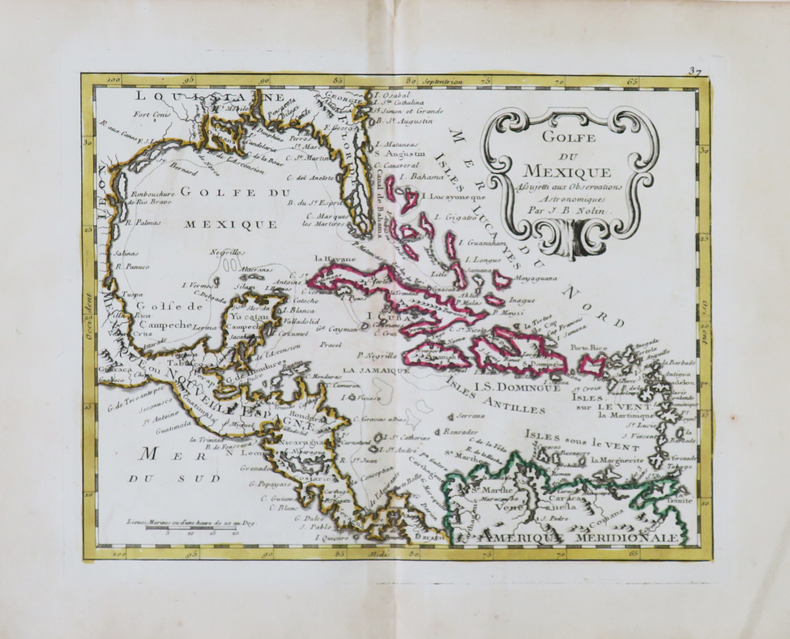
1791LBW-4853[Paris, Mondhare, 1791]. 203 x 262 mm.