71 307 résultats
1986C91556Clarkson Potter. As New. 1986. Hardcover. 051756341X . FREE UPGRADE to Courier/Priority Shipping Upon Request - IN STOCK AND IMMEDIATELY AVAILABLE FOR SHIPMENT - Flawless copy brand new pristine never opened -- 682 pages. Catalogue Raisonne Catalog Raisonné Complete Works Life and Work Raisonnee -- with a bonus offer-- - May be EITHER: out of print OOP and extremely rare in this pristine condition; signed by author or contributor; or a first or special edition; inquire for details . Clarkson Potter hardcover
179270902London:: Printed for the Author and Sold by P. Elmsley 1792-1800. First edition. old mottled calf neatly rebacked retaining the original spines and gilt-lettered red labels. There is shallow chipping to the extremities of some of the spines; all volumes tight and sound. Some mis-folding to the plates and a few neat tissue repairs; generally contents very attractive. 8vo. Illustrated with thirty fine engraved plates many folding. Additional postage applicable for this multiple-volume set. Printed for the Author, and Sold by P. Elmsley, unknown
19015787Innes & Sons 1901. First Edition. Hardcover. Very good. First edition of 500 signed copies but this with an additional full page inscription by Bucke signed: "Asylum London Ontario 4 September 1901." Bucke died five months later so inscribed copies are scarce and this is the only one I have seen inscribed to someone involved in the book production and at the London asylum. Book is tight and free of all markings paper label on the spine chipped but perfectly readable. This is one of the truly foundational books of American mysticism and free thought. <br/><br/> Innes & Sons hardcover
1953140940055New York: Ace Books 1953. First Edition. Very Good. Ace Double D-15 published dos-a-dos Maurice Helbrant's Narcotic Agent. First edition first printing of William S. Burrough's first published book published under the name William Lee. Signed by Burroughs on the title page. Very Good or better with light wear to covers toning to pages and small ink notation to first page on Junkie. A lovely copy. Ace Books unknown books
397411New York: Macmillan Company 1970. Hardcover. Fine/Fine. First American edition. Preface by Maurice Pagnol. Translated from the French by Cornelia Higginson. Fine in fine dust jacket. Nicely Inscribed by the singer and actor to the great songwriter: "To Irving Berlin with affectionate admiration. Maurice Chevalier. Macmillan Company hardcover
2510012The Bodley Head 1984. first. hardcover. fine. First edition with "First published 1984" stated on copyright page. INSCRIBED by Sendak and with DRAWING by Sendak. Book fine. The Bodley Head unknown
178828431Au Port-Louis Isle de France: Imprimerie Royale Rue de l'Hôpital. Printed by François Nicolas Bolle b. 1741 1788. Folio. 12 3/4 x 8 inches. 2 pp. letterpress broadsheet printed on recto and verso on a blue laid paper with watermark and attractive printer's ornaments; a list of 12 steps numbered I-XII for establishing an Apostolic Bureau of Charity under a new governmental administration. Early Mauritius imprint printed at the dawn of the French Revolution from when the island was the French colony of Isle de France; this letterpress broadside a "fine specimen of the typographic art" announces the creation of an Apostolic Bureau of Charity. Toussaint<br/> <br/> Early and unrecorded imprint from the colonial press at the French colony of Mauritius then known as the Isle de France. Isle de France was a French colony in the Indian Ocean from 1715 to 1810 comprising the African country in the Mascarene Islands now known as Mauritius and its dependent territories. It was governed by the French East India Company and formed part of the French colonial empire. Under the French the island witnessed major changes including the importation of enslaved people and the undertaking of vast infrastructural works that transformed the capital Port-Louis into a major center of international shipping warehousing and commerce. The present text contains twelve articles for establishing a Bureau de Charité for the island. The Bureau was announced by the Apostolic Prefect Charles Joseph Darthé who had been appointed by the Pope. Apostolic Prefects were Ecclesiastics representing the Holy See at the head of a territorial constituency in a mission country here being the Isle de France. Often when printing was introduced into a new land such as here clergy would be the only people with access to printing presses besides government officials. However Mauritius is something of an exception to this rule: "priests had little to do with printing . . . there is practically nothing worth recording in the way of religious publications." Toussaint The charitable plan laid out by the Prefect not unlike current-day means-tested social programs is almost absurdly complex in its bureaucratic levers and requirements. Pierre Saunois b. 1730 brought the first printing press to Mauritius in 1767. The first known imprint was a short poem by Saunois dedicated to the Dauphine of France Marie Josèphe de Saxe in 1768. The first newspaper and the first book a French-Malagasy phrase-book for missionaries appeared in 1773. During the French colonial period until the island's annexation by Britain in 1810 the output of Isle de France's early presses included besides a number of official publications several books of literary or scientific interest some of which were important enough to be commended by the Académie des Sciences an especially erudite series of almanacs written by Laurent Masson-Abraham from 1769 to 1794 and newspapers the earliest of which was issued in 1773. But also included were "quite a number of books and pamphlets representative of every branch of intellectual activity: scientific literary religious and political." Toussaint If one considers the small size of this island 710 square miles its isolated position and that its European population was barely 10000 strong in 1810 "its achievement in this field appears all the more remarkable." Toussaint About 400 imprints are extant of those that were produced in the Isle de France from 1768-1810; they are scattered in repositiories in Mauritius France and England the most important collection of which is the Mauritius Archives. All are rare. No copies of this broadside are located in OCLC and it was not recorded by Toussaint any of his bibliographies of Mauritius imprints. The Dutch were the first Europeans to become interested in the island taking possession in 1598. After exploiting the island's dense forests for a century and introducing the cultivation of sugar cane and cotton the Dutch abandoned the colony in 1710. The French soon claimed it as "Isle de France" and the island remained under the control of the French East India Company until 1767. During the long war between France and England at the beginning of the nineteenth century Mauritius proved to be an important strategic naval base and as a result the British took the island in 1810. The Treaty of Paris confirmed official British possession in 1814. It remained an important sugar producing colony and in the twentieth century its agricultural production expanded to include tea rice and other crops.<br/> <br/> Bonnefoy Table General Alphabetqiue et Analytique p. 135. Daruty de Grandpré "L'Imprimerie aux Mascareignes et à Madagascar" Nouvelle Revue Historique et Littéraire de l'île Mauice No. 45 1902: pp. 455-456 and No. 46 1902: pp. 461-470. Toussaint Early Printing in the Mascarene Islands 1767-1810 passim; Early Printing in Mauritius Réunion Madagascar and the Seychelles pp. 11-34. Toussaint and Adolphe Bibliography of Mauritius 1502-1954 passim. Imprimerie Royale, Rue de l'Hôpital. Printed by François Nicolas Bolle (b. 1741) unknown
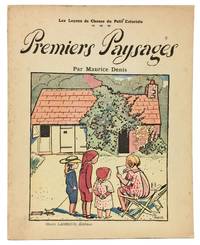
19121001451Paris: Henri Laurens Editeur 1912. First edition of Maurice Denis's iconic modernist coloring book Premiers Paysages First Landscapes. A founding member of the group of French painters known as Les Nabis Denis was invited by editor Henri Laurens to contribute to a popular children's art series Les Leçons de Choses du Petit Coloriste. In response during the summer of 1911 Denis produced a series of dreamlike French landscapes. "Petits coloristes" can lose themselves in painting scenes of villages and mountains countryside and seashore with captions by Denis that provide a wry running commentary on his creative process: "Ce n'est pas difficile de faire des maisons quand on ne fait pas toutes les fenêtres." Denis even reminds his young readers to keep their paints separate and their brushes clean. The quality of these vibrant landscapes which exemplify Denis's famous definition of painting as "a flat surface covered with colors assembled in a certain order" was immediately recognized. In 1912 the bibliophilic society "Les XX" commissioned a deluxe edition of twenty signed copies featuring an extra plate and multiple impressions of each image. This first edition of Premiers Paysages while less lavishly produced reflects the book's original identity as an inexpensive ephemeral activity book: surviving examples are typically found with plates colored by early owners. From the stock of legendary book scout Martin Stone 1946-2016 with his penciled note: "of the utmost rarity." We locate copies of this trade issue at BNF Getty Yale and the Smithsonian: this copy like the Yale copy is staple-bound. A near-fine unused example. Side-stapled volume measuring 10.5 x 8.5 inches: 16. Original color pictorial paper boards. Seven color plates and seven matching uncolored plates with two additional uncolored plates reproducing the color images printed on the boards. Lightest general foxing and toning. Henri Laurens, Editeur unknown books
1951150171United Synagogue of America 1951. First edition of this charming picture book celebrating the Shabbat with early illustrations by Maurice Sendak. Quarto original pictorial boards pictorial endpapers. Boldly signed by Maurice Sendak on the title page. Illustrated by Maurice Sendak. Leonard Weisgard Art Consultant. In very good condition. Exceptionally rare and desirable signed. United Synagogue of America hardcover
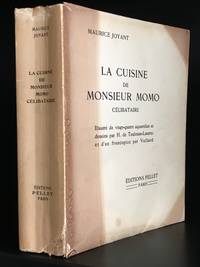
193012641Paris: Editions Pellet 1930. Limited Edition. Stiff printed wraps. Very Good/Good. Henri de Toulouse-Lautrec illustrations. 4to. Pp. iv 283. Frontis. color reproduction of a Vuillard portrait of Toulouse-Lautrec cooking. Illustrated with 23 intaglio reproductions of watercolors and drawings by Toulouse-Lautrec some in color with tissue guards. Text in French. Stiff plain paper wraps in printed dust jacket Arches paper leaf edges untrimmed and uncut. Number 203 of an edition limited to 250. Jacket with transfer toning from adjacent volumes light stains spine ends chipped. Offsetting from now-absent adhesive tape to front and rear flyleaves. Minimal soiling and toning to edges. Bookplate on a front flyleaf. Joyant 1864-1930 and Toulouse-Lautrec met when they were children and remained friends for life. This book is a collection of recipes and gourmet mementos from a large circle of artists and adventurers in many domains brought together by La Revue blanche. <p>An art and food critic in Paris then gallery owner art collector and editor Joyant organized Toulouse-Lautrec's first great exhibition in 1893 and wrote the first biography of the artist. Bitting 251; Oberlé 297.<p>Scarce in the original wraps and uncut. Editions Pellet unknown
1972211179Geneva and Paris: Editions Motte and Louis Carré 1972. Hardcover. VG dustjackets a a bit loose on several volumes. Previous owners circular blind stamp on title-page. Light blue cloth with gloosy white color pictorial dustjackets. Vol. 1 1972 Vol. 2 1973 Vol. 3 1976 Vol. 4 1977 Supplement 1985. Text is in French. Volume 1 covers the years 1895-1915 and is copy 512/1200 copies. 379 3 pp. mostly bw plates with some color. Volume 2 512/1200 copies 403 2 pp. and has profuse bw plates with some color as well. Volume 3 512/1200 copies has 391 2 pp.and has profuse bw plates with some color as well. Volume 4 512/1200 copies has 346 3 pp. and has profuse bw plates with some color as well. Volume 5 is a Supplement and is co-authored with Fanny Guillon-Laffaille with 207 4 pp. and lists and illustrates in bw or color an additional 254 works that had been discovered sincee the publication of Volume 4 in 1977. Other supplemental material is included in this final volume as well. Editions Motte (and) Louis Carré hardcover
16-3491Geneva: Motte and Paris: Louis Carré 1972-1985. . 5 vols. 4to. Original cloth and dust-jacketsVery good.Arntz Werkkataloge zur Kunst des 20. Jahrhunderts I p. 35 and II p. 38. Geneva: Motte and Paris: Louis Carré, \1972-1985. hardcover
1927006395Paris: Librairie Lemercier 1927. Limited Edition. First Edition thus. Three Quarter Morocco. Wooden boards. Fine. No. 54 of 255 copies in limitation on velin pur fil Lafuma. Beautiful 3/4 morocco binding with unusual wood or wood veneer boards and matching wood veneer endpapers. And leather painted "onlay" illustration mounted onto spine! 4to. 28 by 22 cm. 208 pp. with 18 color plates and twelve vignettes and a second suite of all the illustrations in just outline form bound in at the end along with the spine to the wraps. The wrap cover serves as one of the three title pages. In its original title "Raharu" this is the novel that put Loti on the map in 1880 and it served as the inspiration for Leo Delibes' once popular opera "Lakmé" which premiered just three years later. Essentially Loti was the authorial counterpart to Gauguin in plunging whole into Tahitian society and his pen-name "Loti" followed from this novel. Without question one of Loti's greatest strengths as a writer was the color he brought to his descriptions and exotic subject matter and these pochoirs most definitely honor and capture that mastery. The bright plates and vignettes could be mistaken for actual painting and they are a feast to the eye. Apparently scarce with the only copy we could locate at the BNF -- no copies of this edition were found at all on OCLC or in commerce. Light rubbing of front joint. <br /><br /> Librairie Lemercier hardcover books
1927004618Paris: Librairie Lemercier 1927. Limited Edition. First Edition thus. Three Quarter Morocco. Marbled Boards. Near Fine. 1 of 12 copies to the limitation this being a presentation copy to Madame de Becque the wife of the illustrator. Beautiful 3/4 morocco binding by Saulnier. 4to. 28 by 22 cm. 208 pp. with 18 color plates and twelve vignettes and a second suite of all the illustrations in just outline form bound in at the end along with the spine to the wraps. The wrap cover serves as one of the three title pages. In its original title "Raharu" this is the novel that put Loti on the map in 1880 and it served as the inspiration for Leo Delibes' once popular opera "Lakmé" which premiered just three years later. Essentially Loti was the authorial counterpart to Gauguin in plunging whole into Tahitian society and his pen-name "Loti" followed from this novel. Without question one of Loti's greatest strengths as a writer was the color he brought to his descriptions and exotic subject matter and these pochoirs most definitely honor and capture that mastery. The bright plates and vignettes could be mistaken for actual painting and they are a feast to the eye. Apparently scarce with the only copy we could locate at the BNF -- no copies of this edition were found at all on OCLC or in commerce. A few tiny specks of discoloration on the spine and very light edgewear. Otherwise clean and pristine inside. <br /><br /> Librairie Lemercier hardcover books
1927006395Paris: Librairie Lemercier 1927. Limited Edition. First Edition thus. Three Quarter Morocco. Wooden boards. Fine. No. 54 of 255 copies in limitation on velin pur fil Lafuma. Beautiful 3/4 morocco binding with unusual wood or wood veneer boards and matching wood veneer endpapers. And leather painted "onlay" illustration mounted onto spine! 4to. 28 by 22 cm. 208 pp. with 18 color plates and twelve vignettes and a second suite of all the illustrations in just outline form bound in at the end along with the spine to the wraps. The wrap cover serves as one of the three title pages. In its original title "Raharu" this is the novel that put Loti on the map in 1880 and it served as the inspiration for Leo Delibes' once popular opera "Lakmé" which premiered just three years later. Essentially Loti was the authorial counterpart to Gauguin in plunging whole into Tahitian society and his pen-name "Loti" followed from this novel. Without question one of Loti's greatest strengths as a writer was the color he brought to his descriptions and exotic subject matter and these pochoirs most definitely honor and capture that mastery. The bright plates and vignettes could be mistaken for actual painting and they are a feast to the eye. Apparently scarce with the only copy we could locate at the BNF -- no copies of this edition were found at all on OCLC or in commerce. Light rubbing of front joint. Librairie Lemercier unknown
1927004618Paris: Librairie Lemercier 1927. Limited Edition. First Edition thus. Three Quarter Morocco. Marbled Boards. Near Fine. 1 of 12 copies to the limitation this being a presentation copy to Madame de Becque the wife of the illustrator. Beautiful 3/4 morocco binding by Saulnier. 4to. 28 by 22 cm. 208 pp. with 18 color plates and twelve vignettes and a second suite of all the illustrations in just outline form bound in at the end along with the spine to the wraps. The wrap cover serves as one of the three title pages. In its original title "Raharu" this is the novel that put Loti on the map in 1880 and it served as the inspiration for Leo Delibes' once popular opera "Lakmé" which premiered just three years later. Essentially Loti was the authorial counterpart to Gauguin in plunging whole into Tahitian society and his pen-name "Loti" followed from this novel. Without question one of Loti's greatest strengths as a writer was the color he brought to his descriptions and exotic subject matter and these pochoirs most definitely honor and capture that mastery. The bright plates and vignettes could be mistaken for actual painting and they are a feast to the eye. Apparently scarce with the only copy we could locate at the BNF -- no copies of this edition were found at all on OCLC or in commerce. A few tiny specks of discoloration on the spine and very light edgewear. Otherwise clean and pristine inside. Librairie Lemercier unknown
1898253096New York: Dodd Mead & Co 1898. hardcover. fine. 19 volumes title-pages with decorative red borders. 8vo. Publisher's deluxe binding gold-decorated full blue crushed morocco ornately gilt spines and covers full finely tooled burgundy leather inside all covers top edge gilt deckled fore - and bottom edges. New York: Dodd Mead and Company 1898-1918. Near Fine.<br/> <br/> Autograph Edition limited to 150 copies. Volume 1 signed by Maeterlinck on blank leaf. Previous owners bookplates<br/> <br/> Dodd, Mead & Co unknown
1898253096New York: Dodd Mead & Co 1898. hardcover. fine. 19 volumes title-pages with decorative red borders. 8vo. Publisher's deluxe binding gold-decorated full blue crushed morocco ornately gilt spines and covers full finely tooled burgundy leather inside all covers top edge gilt deckled fore - and bottom edges. New York: Dodd Mead and Company 1898-1918. Near Fine.<br/><br/> Autograph Edition limited to 150 copies. Volume 1 signed by Maeterlinck on blank leaf. Previous owners bookplates<br/><br/> Dodd, Mead & Co unknown books
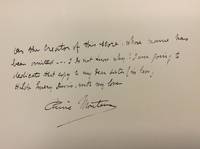
191013796Paris: Durand & Cie 1910. First. Used; Like New/Used; Like New. Piano score to Ravel's ballet in three scenes signed and inscribed opposite the title page by Pierre Monteux who conducted the work's premiere in 1912. He has boldly signed and inscribed to his sister-in-law Hilda Davis wife of bandleader Meyer Davis: "As the creator of this score whose name has been omited sic -- I do not know why!! I am going to dedicate that copy to my dear sister in law Hilda Emery Davis with my love." Indeed although the names of the original dancers including Nijinksy as Daphnis choreographer Michel Fokine and scenery designer Léon Bakst are all listed on the title page Monteux's name does not appear. A lovely inscription showing Monteux's characteristic good humor and charm! From the estate of Monteux's daughter Nancie Monteux Barendse.  <br>Upright folio. 10 x 13 inches 25 x 32.5 cm. 114 pp. PN D&F 7748. Softcover with light brown textured paper slipcovers printed in red and black in an elegant box bound in blue cloth. Some light wear to the edges of the box and slipcovers but the score itself in fine condition. Orenstein Ravel: Man and Musician p. 177. <br style="">Ravel began work on the score in 1909 after a commission from Sergei Diaghilev. It was premiered at the Théâtre du Châtelet in Paris by his Ballets Russes on 8 June 1912. At almost an hour long Daphnis et Chloé is Ravel's longest work. In spite of the ballet's duration four discernible leitmotifs give musical unity to the score. The music some of the composer's most passionate is widely regarded as some of Ravel's best with extraordinarily lush harmonies typical of the impressionist movement in music. Even during the composer's lifetime contemporary commentators described this ballet as his masterpiece for orchestra with Stravinsky hailing it as "one of the most beautiful products in all of French music." Monteux recorded the work later on with the London Symphony in 1959. Durand & Cie hardcover books
H2482Hardcover. Very Good. From the estate of Edmond Roze a copyist's version in typewritten and manuscript pages with multiple notes marginalia corrections additions bound in half cloth and marbled boards approximately 150 pp. Roze 1878-1943 was a theatre impresario director actor and stage manager. The premier of this play featured a set designed by Georges Barbier. Some of the additions are undoubtedly in Rostand's hand others are by Roze. Rostand was the son of Edmond Rostand and was openly homosexual a friend of Jean Cocteau and an author of poems novels and plays. hardcover
1862006327Paris: A. Lévy Fils 1862. Half Morocco. Very Good. Sand Maurice. All the plates are here rendered in three states -- full hand-colored black and white and sepia and white! 2 volumes 4to. 28 by 20 cm. viii 356 2 384 pp. 50 hand-colored plates and 100 additional in the two other formats featuring the stock characters of the improvisational Theatre Italienne such as Harlequino Arlechino Pulcinella Colombine Pagliaccio Pierrot Pantalon L'Apothicaire Le Notaire Scaramuccia Pasquariello etc. Nowadays these characters are most familiar to opera-goers thanks to the comical works of Donizetti Mascagni Busoni Mozart etc. Most of these characters grew out of the roaming theatrical troupes that originated in Italy of the sixteenth and seventeenth centuries. The costume and basic personality of the character remained stable from one performance to the next but within those parameters the characters in a troupe usually following the broad contours of a story line would improvise bringing in buffonery perhaps relating to the events of the day the specific venue where they were appearing or whatever else might spring into their mind on the spur of the moment. In the eighteenth century the free form went into decline replaced by more scripted plays but its influence is very evident in the plays of Goldoni Moliere who worked well before the form vanished and besides the opera buffa early twentieth century Vaudeville ballet and more current comedy. Also the costume from the Theatre Italienne has never failed to excite enthusiasm and thus it is often celebrated in the decorative arts as perhaps most magnificently in porcelain beginning in the eighteenth century with Meissen Nymphenburg and many other makes. Today the style of Harlequin or Arlecchino continue to be emulated in clothes design with some regularity. This two volume celebration of the costume and characters of this theater was written by Maurice Sand who was the son of the novelist George Sand who wrote the preface. Maurice Sand 1823 -1889 was an accomplished illustrator and writer in his own right. Provenance: this copy comes from the heirs of John James Audobon. The initials "V.A." are stamped on both front boards; these initials probably refer to Victor Gifford Audubon Jr. 1847-1915 the artist's grandson. Condition: some minor scuffs and abrasions on the leather spine shelfwear on the edges. A few some light soil spots here and there but overall quite clean and bright. <br /><br /> A. Lévy Fils books
1862006327Paris: A. Lévy Fils 1862. Half Morocco. Very Good. Sand Maurice. All the plates are here rendered in three states -- full hand-colored black and white and sepia and white! 2 volumes 4to. 28 by 20 cm. viii 356 2 384 pp. 50 hand-colored plates and 100 additional in the two other formats featuring the stock characters of the improvisational Theatre Italienne such as Harlequino Arlechino Pulcinella Colombine Pagliaccio Pierrot Pantalon L'Apothicaire Le Notaire Scaramuccia Pasquariello etc. Nowadays these characters are most familiar to opera-goers thanks to the comical works of Donizetti Mascagni Busoni Mozart etc. Most of these characters grew out of the roaming theatrical troupes that originated in Italy of the sixteenth and seventeenth centuries. The costume and basic personality of the character remained stable from one performance to the next but within those parameters the characters in a troupe usually following the broad contours of a story line would improvise bringing in buffonery perhaps relating to the events of the day the specific venue where they were appearing or whatever else might spring into their mind on the spur of the moment. In the eighteenth century the free form went into decline replaced by more scripted plays but its influence is very evident in the plays of Goldoni Moliere who worked well before the form vanished and besides the opera buffa early twentieth century Vaudeville ballet and more current comedy. Also the costume from the Theatre Italienne has never failed to excite enthusiasm and thus it is often celebrated in the decorative arts as perhaps most magnificently in porcelain beginning in the eighteenth century with Meissen Nymphenburg and many other makes. Today the style of Harlequin or Arlecchino continue to be emulated in clothes design with some regularity. This two volume celebration of the costume and characters of this theater was written by Maurice Sand who was the son of the novelist George Sand who wrote the preface. Maurice Sand 1823 -1889 was an accomplished illustrator and writer in his own right. Provenance: this copy comes from the heirs of John James Audobon. The initials "V.A." are stamped on both front boards; these initials probably refer to Victor Gifford Audubon Jr. 1847-1915 the artist's grandson. Condition: some minor scuffs and abrasions on the leather spine shelfwear on the edges. A few some light soil spots here and there but overall quite clean and bright. A. Lévy Fils unknown
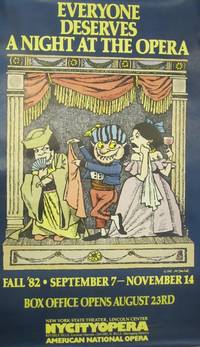
1982240516New York 1982. First. unbound. near fine. New York 1982. Limited Edition. This striking over-sized poster 68 1/2 x 47 1/2 inches was printed in an edition of about 50 copies to be used as advertising for the New York City Opera in bus shelters. It depicts three typical Sendak figures including a "Wild Thing" striking a pose in costume on a stage. Repaired 1 inch tear near bottom right corner. Not in Hanrahan. Very scarce.<br/><br/> unknown books
1963140937985New York: Harper & Row 1963. First Edition. About Very Good. First edition first printing with Library of Congress card number 63-21253 on title page. Signed on half title inscribed to the late antiquarian bookseller Sam Hessel "For Sam Hessel- GRRRRR! / Maurice Sendak / OCT. '78." Illustrated paper-covered boards with gray cloth backstrip. About Very Good with toning slight soiling and a few yellow marks to boards exposed tips a few small stains in text. Lacking dust jacket. The beloved Caldecott-winning illustrated children's book which inspired the 2009 film directed by Spike Jonze. Harper & Row unknown books
19711237921971. Signed. SENDAK Maurice. Print signed ""In the Night Kitchen"". No place: No date circa 1971. Color poster measuring 10 by 13 inches; matted and framed entire piece measures 21 by 23-1/2 inches. $2500.Lovely print of the cover from In the Night Kitchen signed in the margin by Maurice Sendak. From the collection of Sendak's close friend and neighbor.This is a print of the iconic cover from In the Night Kitchen. The former owner of this signed print was Maurice Sendak's neighbor Andrew from Ridgefield Connecticut. Sendak bought a home and studio in Ridgefield in 1972 with his longtime partner Eugene Glynn and lived there until his death. Andrew first encountered Sendak in 1975 during one of his daily dog walks. Sendak owned many dogs throughout his life and they often starred in his books. Andrew was immediately taken with Sendak who reminded him of his recently deceased father. One day Andrew called Sendak at home and asked if he could join him on his walks. Andrew and Sendak thus embarked on a 37-year friendship that also included the Andrew's mother Betty as well as Andrew's brother. Sendak went on long walks and hikes with Andrew and his family regularly discussing general life events opera and books. He also invited them into his studio to show off works in progress. Andrew's mother Betty was an avid reader and collector and she and Sendak would talk late into the night about books. Sendak offered Betty advice about how to find and authenticate rare children's books which she used to build her collection. Additionally he frequently bartered for autographs i.e. a cake for an inscribed drawing. The many inscribed drawings along with first editions signed books and other valuable items grew into one of the country's premier Sendak collections.Fine condition. unknown