Gomme, A W ; A Andrewes & K J DoverBiblio.com
18 204 résultats
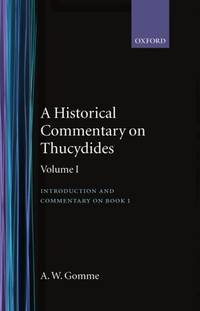
43495Oxford Clarendon Press. 1966. Hardcover. Very Good in No Dust Jacket dust jacket. Vol. 1: minor shelfwear. Minor shelwear. Scholar's name to ffep J. D. Fitton. VG. Vol 2: minor shelfwear. Scholar's name to ffep Martin Cropp. Vol 3: very minor shelfwear. Scholar's name to ffep Martin Cropp. Vol 4: small bump to top of spine. Chipping to foreedges of a couple of pages. Scholar's name to ffep Martin Cropp. VG. Vol 5: Pages tanned. Scholar's name to textblock and inner cover Peter Green. VG.; V. 1: 1966 480 pgs. ISBN: 0198141262; V. 2: 1966 edition 436 pgs ISBN: 0198140037; V. 3: 1966 edition pages 437-748. V. 4: 1970 edition 502 pgs ISBN: 0198141785; V. 5: 1981 edition 502 pgs. ISBN: 019814198X.; 5 Volume Set COMPLETE; 1-5 . Oxford Clarendon Press hardcover
Spine a bit tanned. Marbled edges darkened. Internally NF; Fold out map in rear pocket; 16mo - 6" to 7" tall; 374 pages
1988S6984Athens: ELIA 1988. In Greek. A facsimile reprint of the famous journal of the 19th century. Ten volumes. ELIA
1975es2Editions de l'odéon Livre en feuillets 1975 In-folio (30x 41 cm), livre en feuillets, couverture rempliée rouge illustrée en couleurs, sous emboîtage toile brune moirée avec décor et titre doré, 136 pages, texte établi d'après la traduction de M. Arnaud Revue et corrigée, illustré de 20 lithographies originales (10 planches doubles en couleurs et 10 planches doubles au trait sur fond blanc ou en couleur) de A. Bonnefoit, un des 125 exemplaires numérotés sur vélin pur chiffon de Lana comprenant l'état définitif des illustrations, 18 des lithographies sont signées, ne le sont pas la page de titre et la première page dont les illustrations (en double page)servent de fond au texte, notre exemplaire ( 227 ) est en outre dédicacé par Bonnefoit, envoi accompagné d'un dessin original pleine page, le justificatif est également signé; très bel exemplaire. Livraison a domicile (La Poste) ou en Mondial Relay sur simple demande.
2007GR478Athenes, 2007. Reprint de l'edition orignale en 1910 a Geneve. Grand folio, 47x37 cm, 2 volumes, 167 p. avec 134 phototypies in-texte et 40 planches hors-texte en heliogravure de Fr. Boissonnas. Texte francais avec un vol. supplem. de la traduction grecque. Edition avoisinant les 12 kgs. avec etui.
16760Dimensions : 268 x 212 mm.
La carta viene preparata da Gerard Mercator per il suo Italia, Sclavoniae et Graeciae tabula geographicae (Duisburg, 1589) che comprende un frontespizio allegorico e 22 carte geografiche della penisola, dei Balcani e della Grecia. Successivamente le carte sono ristampate nell’Atlantis Pars Altera (1595) pubblicato postumo alla morte del Mercatore, dallo stampatore di Duisburg Albert Buys, sotto la supervisione del figlio Rumold Mercator. Composto da sei parti – pubblicate separatamente tra il 1589 e il 1594 – comprende 107 mappe, tutte tranne la carta del mondo di Rumold, firmate da Gerard Mercator. Le lastre vennero poi acquistate da Jodocus Hondius, che tra il 1606 e il 1630 le utilizzò per il suo Atlas Sive Cosmographicae Meditationes de Fabrica Mundi, integrandole ed aggiornandole con proprie “nuove” carte. Delle mappe di Mercator sono note anche ristampe curate da Johannes Janssonius. Le edizioni Hondius e Janssonius ebbero un grande successo commerciale e furono stampate in più lingue, con il testo al verso della carta in latino, francese, tedesco e olandese. La carta è incisa con i connotati tipici dell'opera mercatoriana. Le montagne sono allineate in un concetto di area montuosa, non per indicare vere catene o valli, ed hanno una struttura con qualche differenza nella dimensione, ma simile per quanto riguarda la forma, con pendici verticali e cime piatte. Le città sono mostrate attraverso castelli più o meno grandi caratterizzati da tetti slanciati ed aguzzi, simili a cappelli di mago. Esemplare tratto da Atlas Sive Cosmographicae Meditationes de Fabrica Mundi di Jodocus Hondius. Incisione in rame, coloritura coeva, leggere abrasioni alla piega centrale, per il resto in buono stato di conservazione. Bibliografia cfr. Koeman II Me 11 e Koeman II Me 13A, 1595); Van der Krogt 1:002; J. Keuning, The History of an Atlas, in “Imago Mundi” IV (1947) pp. 37-43; World Encompassed p. 134. The map is prepared by Gerard Mercator for his Italia, Sclavoniae et Graeciae tabula geographicae (Duisburg, 1589), which includes an allegorical frontispiece and 22 maps of Italy, the Balkans and Greece. Later, the maps are reprinted in the Atlantis Pars Altera (1595) published posthumously after the death of Mercator, by the Duisburg printer Albert Buys, under the supervision of his son Rumold Mercator. Composed of six parts - published separately between 1589 and 1594 - it includes 107 maps, all except Rumold's map of the world, made by Gerard Mercator. The plates were then purchased by Jodocus Hondius, who between 1606 and 1630 used them for his Atlas Sive Cosmographicae Meditationes de Fabrica Mundi, integrating and updating them with his own "new" maps. Of Mercator's maps are also known reprints edited by Johannes Janssonius. The Hondius and Janssonius editions had a great commercial success and were printed in several languages, with the text on the back of the map in Latin, French, German and Dutch. The map is engraved with the typical connotations of Mercatorian work. The mountains are aligned in a mountainous area concept, not to indicate true chains or valleys, and have a structure with some differences in size, but similar in shape, with vertical slopes and flat tops. The cities are shown through more or less large castles characterized by slender and pointed roofs, similar to wizard hats. Example taken from the Atlas Sive Cosmographicae Meditationes de Fabrica Mundi by Hondius. Copper engraving, in good condition. Bibliografia cfr. Koeman II Me 11 e Koeman II Me 13A, 1595); Van der Krogt 1:002; J. Keuning, The History of an Atlas, in “Imago Mundi” IV (1947) pp. 37-43; World Encompassed p. 134; Zacharakis C. G. "A Catalogue of Printed Maps of Greece 1477 - 1800" (2009), n. 2206.
Henri Petri, Basilea, 1541 – 1545. Carta geografica tratta dalla “Geographia Universalis Vetus et Nova Complectens”, edita da H. Petri (realizzata a cura di B. Pirckheimer, Tip. H. Petrum). Incisione su legno, cm 31 x 40 circa (il foglio poiché non è visibile la battuta della lastra). Tavola tolemaica in posizione trapezoidale, inserita nella “Geographia” di Tolomeo e ripresa nell'edizione dello stesso Munster e in alcune edizioni della “Geographia” di Strabone. Titolo in alto, al centro, extramargine, “Tabula Europae IX”; al verso, in grande riquadro riccamente incorniciato da putti alati e festoni, il titolo “Nona Europae Tabula” e la numerazione 11 della pagina, testo latino; margine graduato su tutto il perimetro, senza scale grafiche e senza reticolato. Questa carta fu stampata nel 1541, 1542 e 1545; probabilmente poi nel 1552 e nel 1571; tutte le edizioni furono realizzate a Basilea. Alla sinistra del foglio, in basso, in piccolo riquadro, “Urbes Mysie Superioris”, in un secondo piccolo riquadro, a fianco del primo, più basso e più centrale, “Civitates Daciae”, alla metà del foglio, sulla destra, in piccolo riquadro “Thraciae Civitates”. L'orografia della tavola è rappresentata da coni di talpa (spesso a doppia sommità e con il tratteggio a sinistra), l'idrografia con una doppia riga a decorso arbitrario, la superficie dei mari è tratteggiata; i centri sono indicati con casette; vi sono alcuni limiti territoriali. Molti sono gli errori relativi al territorio. Sebastian Münster (1488 - 1552) è stato uno dei più importanti cartografi tedeschi del secolo XVI. La sua Cosmographia, edita a Basilea nel 1544, rappresenta la prima descrizione tedesca del mondo intero e l’opera principale, dopo la “Cronaca di Norimberga” del 1493, nella rinascita degli studi geografici del XVI secolo in Europa. Titolo e concetto si riallaciano all'opera di Tolomeo, con lo scopo di descrivere tutto il mondo, anche l'America appena scoperta. Münster aveva visitato diversi dei luoghi descritti durante i suoi viaggi, per altri dovette ricorrere a fonti di seconda mano che raccoglieva assiduamente. La “Cosmographia” conteneva non solo le ultime mappe e vedute di tutte le città più famose, ma anche una serie di notizie enciclopediche di dettagli relative al mondo conosciuto e sconosciuto. Dopo la sua morte nel 1552, il figlio Henri Petri continuò la pubblicazione dell’opera. Complessivamente, sono apparse circa 40 edizioni della Cosmographia tra il 1544 e il 1628. Foglio in bella impressione e in buono stato di conservazione.
Carta geografica dell'Isola di Creta e di Lesbos, Kithyra, Karpatos, Naxos, Santorini, Milos, Lemnos, Eubea, Rodhes and Chios. Carta tratta dal Theatrum Orbis Terrarum e che è considerato il primo vero “atlante” moderno. L’opera fu pubblicata in 7 lingue e 36 edizioni, per il quale – nel 1570 - Ortelius ottenne il privilegio, ovvero una sorta di diritto d'autore che impediva ad altri cartografi di pubblicare i propri lavori. Il Theatrum rappresentava il lavoro più avanzato del lavoro della descrizione cartografica. L’Ortelius vi raccolse il sapere geografico e cartografico del suo tempo, proponendo in 147 spettacolari tavole incise l’immagine più fedele del mondo allora conosciuto e, in alcune straordinarie “carte storiche”, regioni e itinerari tratti dalla letteratura, dalla mitologia, dalla tradizione. Ortelius fu anche il primo a citare le fonti, menzionando i nomi dei cartografi nel “catalogus auctorum”. Dal 1598 al 1612 le edizioni postume del Theatrum furono realizzate dal suo collaboratore Johannes Baptiste Vrients. Incisione in rame, finemente colorata a mano, in ottimo stato di conservazione. A rare and beautiful 1584 Abraham Ortelius map of Crete and ten other Greek islands. On top a large map of Crete and below 10 small maps of Metellino-Cerigo-Scarpanto-Nicsia-Santorini-Milo-Stalimene-Negroponte-Rodus- Scio. Map taken from the Theatrum Orbis Terrarum, which is considered the first true modern "Atlas". The work was published in 7 languages and 36 editions, for which - in 1570 - Ortelius obtained the privilege, a kind of copyright that prevented other cartographers from publishing his works. The Theatrum represented the most advanced work of cartographic description. Ortelius collected in it the geographical and cartographic knowledge of his time, proposing in 147 spectacular engraved plates the most faithful image of the world then known and, in some extraordinary "historical maps", regions and routes taken from literature, mythology, tradition. Ortelius was also the first to cite sources, mentioning the names of cartographers in the "catalogus auctorum". From 1598 to 1612 the posthumous editions of the Theatrum were made by his collaborator Johannes Baptiste Vrients. Copperplate, fine later hand colouring, very good condition. Marcel van den Broecke. Ortelius Atlas Maps, no.147.
In 8, cm 23 x 29, pp. XXVIII + 292 con molte illustrazioni nel testo e 60 tavole fuori testo incise su fondino applicato su carta pesante. Tutta tela editoriale con fregi ai piatti e al dorso. Cerniere riparate. Edizione originale e unica di questa descrizione delle coste del Golfo di Corinto corredata di tavole realizzate dallo stesso autoreLudwig Salvator, cugino di Francesco Giuseppe, dedico' la sua vita agli studi naturalistici e ai viaggi realizzati sui suoi yacht. Molte sono le opere da lui pubblicate dedicate alla Isole Baleari, ai costumi della Serbia, alla Tunisia, al Golfo di Buccari, all'Isola di Cipro, all'Egitto e Siria ecc. ecc.
8vo., First Edition, with frontispiece, title-vignette, 7 plates, woodcut illustrations in the text and full-page colour map; original maroon cloth, upper board and backstrip lettered in gilt, chocolate endpapers, uncut, backstrip lightly chafed at head and tail else a near fine copy. With the nineteenth century engraved armorial bookplate of T.V. Scudamore on front paste-down, and 24pp publisher's catalogue (January 1887) bound in at end. The frontispiece has been mounted on front free endpaper verso; the plate 'Monastery of St. Paul', called for at p.217, is placed at p.223. THIS VOLUME REMAINS THE ONLY SUBSTANTIAL WORK IN ENGLISH dedicated to the Athos peninsula, its monasteries and its monks. The author, who lived with the monks of several monasteries during the 1880s, records its ecclesiastical history throughout the Byzantine and Ottoman periods to its present status as an independent Greek state. EXTREMELY SCARCE.
1558GR138Basileae, I. Oporinum, ( colophon 1558 ), in-8o, I+16+1033+3+II p., texte grec et latin. Le travail de Hier. Wolf sur un manuscript de Fugger fut la base de ceux d' Estienne ( 1593 ), Crespin et autres. Foute Granjon, en copiant celle de Garamont. Non citee par Brunnet. Reliure carton 19e, premier mors use.
62705aafLeipzig, Staritz, 1818-1837, in-8vo, browning in places, library stamp on first title page, contemporary boards with marbled paper, hw. paper title- and library-number on spine, rubbed and bumped, corners scraped, red edges.
45525aafParis, Veuve Gandouin, Giffart, David l'Aîné, Jombert, Durand, 1754, in-4to, partiel à 2 col., richement illustrée de 113 planches gravées et dépliantes dont 4 cartes et 1 plan (de Cremone) cachet et envoi ms. sur les titres et à qqs autres endroits, exlibris héraldique ‘le chevr. Dampoigné’ à l'ntérieur des plats, cachets sur faux-titres et à qqs autres endroits, reliures en cuir marbré, dos à nerfs avec pièce de titre rouge-brune, dos richement ornés en or, plats encadrés de triple filets dorés (partiel. passé), dentelle à l'intér. des plats, frotté et griffé, extremités des coiffes supér. arrachées, pet. endomm. aux coiffes infér., nerfs, et bords, fentes en bas des charnières du premier vol., pet. trace de vers dans une charnière, tranches rouges.
Madrid, Herederos de Antonio Román, 1699, 28,5 x 20,5 cm., piel de época, lomo cuajado, 16 hojas incluso portada a dos tintas y orlada + 238 págs. 338 págs. (por error paginada 238) + 4 hojas. (Ejemplar falto de la última hoja de índices y con leve desgarro en la parte superior del lomo).
Madrid, Manuel Alvarez, 1796, 20,5 x 14 cm., pasta española de época, 2 hojas + VIII + 316 págs.
25546No place or date. See his entry in the Oxford DNB. On 10.5 x 5 cm strip of paper with thin mourning border cut from the end of a letter. In fair condition lightly aged and creased with thin strip of glue from mount to one edge and thin strip of paper laid down on reverse with manuscript note ‘Sir Thomas Wyse Minister to Greece’. Strong stylish signature to valediction reading: ‘I beg you to believe me / My Dear Lord / Sincerely Yrs. / Thos. Wyse’. Fragment of letter on reverse: ‘. truly at his discretion to go on .’. No place or date. unknown
1948047198Cambridge: Cambridge University Press 1948 Book. Fine. Hardcover. First Edition. Cambridge: Printed for private circulation at the University Press.1948. A memorial volume dedicated to John Pendlebury killed during the Nazi invasion of Crete May 1941.Read Dilys Powell's "Villa Ariadne" for a description of this First printing limited to 250 copies Slip laid in "With the compliments of Mrs John Pendlebury" Nice copy text clean and crisp.corner bumped. Name of previous owner on ffep.ONE copy found in Worldcat Onassis Org. Cambridge University Press hardcover
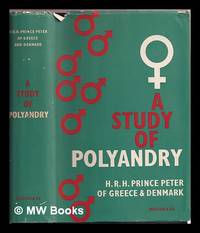
1963371068The Hague : Mouton 1963. First Edition. Hardcover. Signed by the author.Near fine cloth copy in a good if somewhat edge-torn and dust-dulled dust-wrapper now mylar-sleeved. Remains particularly and surprisingly well-preserved; tight bright clean and strong. Physical description: 601 pages : illustrations maps some folded genealogical tables ; 25 cm. Subjects: Polyandry Southeast Asia. Ethnology Southeast Asia. Genre: History. Language: English. The Hague : Mouton hardcover
3 Vols., 4to, limited to 300 numbered sets, illustrs., throughout, orig. cloth., as new. A well illustrated and detailed catalogue of 782 of the most important rare editions and manuscripts from the Sylvia Ioannou Foundation collection, one of the most significant private repositories of works on Cyprus worldwide.
Paris, chez De Bure, 1790, sette volumi in-8vo (cm. 20,5 x 13,5) legature coeve mezza pelle con angoli, con titoli e fregi dorati ai dorsi, pp. XXIV-382 + (6)-568 + (6)-560 + (6)-564 + (4)-543 + (6)-511 + (6)-130-(2)-CCCXXII-(2). Qualche lieve spellatura ai dorsi ma nel complesso in ottimo stato.
LBW-8100Brig la Surprise, rade de Smyrne 18 septembre 1838. 7 pp. in-4 (27,2 x 20,5 cm) sur 2 feuilles doubles.
[Venezia, 1698], carta nautica in calcografia, mm. 392x510 (l'impronta della lastra), mm. 470x625 (il foglio). Tratta dalla non comune edizione veneta del celebre atlante nautico che Coronelli pubblicò a fine Seicento come parte del suo Atlante Veneto. In origine la carta era stata pubblicata nella "Prima parte dello Specchio del mare", atlante che raccoglieva le carte di Francesco Maria Levanto, opera edita a Genova nel 1664. Restauro reintegrativo ai due angoli inferiori del margine bianco. Alcune mancanze dovute a tarli restaurate nella zona centrale della carta, lungo la piegatura.
205685Londres, et se trouve à Paris, Poinçot, 1785 in-8, viij-319 pp., avec un tableau généalogique en dépliant, broché sous couverture d'attente de papier bleu.
La carta sii riferisce alla riconquista veneziana della regione, il Golfo di Prevesa, da parte dell'armata guidata da Francesco Morosini.Il 29 settembre 1684 Morosini, nella sua prima campagna della Morea, attirò verso la riva la guarnigione di Prevesa, corsa per impedire uno sbarco di truppe dalle galee e galeazze presentatesi davanti alla piazza; e intanto fece effettivamente sbarcare il grosso delle forze in prossimità della cittadella, che dopo pochi giorni fu costretta ad arrendersi.Con la pace di Carlowitz (15 aprile 1701) Prevesa ritornò alla Turchia.Opera rarissima, della quale non abbiamo trovato tracce nella bibliografia. Acquaforte, in ottimo stato di conservazione. The map refers to the Venetian reconquest of the region, the Gulf of Prevesa, by the army led by Francesco Morosini.On September 29, 1684 Morosini, in his first campaign of the Morea, drew the Prevesa garrison towards the shore, a race to prevent troops landing from the galleys and galleys presented in front of the square; and in the meantime he actually had the bulk of the forces near the citadel, which after a few days was forced to surrender.With the Peace of Carlowitz (April 15, 1701) Prevesa returned to Turkey.Very rare work, of which we have not found traces in the bibliography. Etching, in excellent condition.