742 résultats
Very Good French Paperback. Demy 8vo. (21 x 14 cm). In French and English. 73, [1] p. Communaute et diversite de l'art des pays Balkaniques (XVIe s.- debut du XVIIIe s.). Rapport pour la seance pleniere. Ier Congres International des Etudes Balkaniques et Sud-Est Europennes. Sofia, 26 VIII - 1. IX. 1966. Contents: Avant-propos, M. Chadzidakis.; Considerations sur la peinture postbyzantine en Grece, M. Chadzidakis.; Painting in Serbia, Macedonia and Montenegro from the Middle of the XVth until the end of the XVIIth centuries, S. Petkovic.; Roumanie, V. Vatasianu.; Considerationss generales sur la peinture postbyzantine en Albania, T. Popa.; Les monuments d'art en Bulgarie, A. Bozkov.
Very Good French Paperback. Demy 8vo. (21 x 14 cm). In French and German. 95, [1] p. Les peuples de l'Europe du Sud-Est et leur role dans l'histoire (byzance et les peuples du Sud-Est Europeen). Rapport pour la seance pleniere. Ier Congres International des Etudes Balkaniques et Sud-Est Europennes. Sofia, 26 VIII - 1. IX. 1966. Contents: La synthese byzantine, D. Zakythinos.; Bulgarie, D. Angelov.; Die Völker jugoslaviens, B. Grafenauer.; Roumanie, M. Berza.; Albanie, A. Buda.
Fine English Paperback. Pbo. Roy. 8vo. (24 x 17 cm). In English.[14], 185, [1] p. Proceedings of the International Conference on Minority Issue in the Balkans and the EU. May, 16th 2007, Istanbul.
New English Original bdg. Roy. 8vo. (24 x 17 cm). In English, Turkish; and Macedonian, Albanian, Serbian. 2 volumes set: (752 p. 730 p.). Proceedings of the Fourth International Congress on Islamic Civilisation in the Balkans, 12-17 October 2010. Skopje, Macedonia.= Balkanlar'da Islâm Medeniyeti Dördüncü Milletlerarasi Kongre Tebligleri, 13-17 Ekim 2010. Üsküp, Makedonya. This is a collection of the papers that were presented during the international congress on "Islamic Civilisation in the Balkans" held in the Macedonian capital Skopje in October 2010. The congress, organized in cooperation with the Macedonian Academy of Sciences and Arts (MANU), was fourth in IRCICA's congress series that focus on the history and cultures of the Balkan region. The Skopje congress was accorded high patronage and opened by H.E. Gjorge Ivanov, President of the Republic Macedonia. President Ivanov also participated in the congress in his capacity as an academician and presented a paper. This State support and scholarly contribution extended to the congress underscored the importance attached to its objectives. The first volume contains the papers that were presented in English or Turkish (39 papers) and the second volume, those presented in Macedonian, Albanian or Serbian (44 papers). Located at crossroads between Europe and Western Asia, the Balkan peoples have been in contact with the Muslim world since at least the 8th century. Various phenomena, including the long experience in trade between the two regions, helped fasten the expansion process, and enhance the notable cultural role, of Islam in the Balkans. The relationship between the Muslim world and the Balkans has not only been one of encounters and exchanges but also one of coexistence. Research papers contributed to the congress addressed a wide range of topics highlighting the multicultural relations specific to the Balkan region. IRCICA's engagement in studies on the region in connection with the history of Islamic civilisation draws from the above aspects of the theme and also takes into account that two Balkan countries are members of the OIC and IRCICA: Albania is a full Member State and Bosnia and Herzegovina is an Observer State. Previously, three congresses were held on the same theme, in Sofia (2000), Tirana (2003) and Bucharest (2006) respectively. A fifth congress was held in May 2015. This program devoted to the history of Islamic civilization in the Balkans has succeeded in drawing interest and participation from around the world in addition to the Balkan countries themselves and generated a fascinating range of studies, as the contents of this publication reflect.
New English Paperback. Pbo. Roy. 8vo. (24 x 17 cm). In English and Turkish. 126 p. Proceedings of the Conference on Culture and Identity in the Balkans. Held jointly by Beykent University & Bogaziçi University. Istanbul, 23 - 24 May 2002.
Facsimile reprint of the original edition published by Edward Arnold in 1909, with an added introduction by John Hodgson. "The celebrated account of the late Victorian traveller who became a legend in her own lifetime through her extraordinary travels in the Balkans. Born in 1863, the daughter of a distinguished surgeon, Edith Durham began her career as an artist and illustrator. Following her doctor's orders after an illness and depression, she sailed to Montenegro and began a life-long love affair with the Balkans. In a letter she writes, "It occurred to me that the vexed question of Balkan politics might be solved by studying the manners and customs of each district, and so learning to whom each place should really belong." Thus she cheerfully started on her expeditions that, she was well aware, ignored the intrigues of the Great Powers who were actively encouraging the dismemberment of the Turkish Empire. This is a passionate and flamboyant account of her travels, particularly in the mountainous terrain of northern Albania, where she cut a strange figure in her waterproof skirt and Scotch plaid golf cape but won the trust of the people there." With an added introduction by John Hodgson. (xvi + 352p.) illus map. index Book
198331516Paris Editions Du Seuil 1983 In-8 Collection "L'Histoire immédiate" dirigée par Jean-Claude Guillebaud - 312 pp + 2 ff Tables - 1 ff de la collection
Very Good French Paperback. Roy. 8vo. (24 x 16 cm). In French. [8], [1 frontispiece with a portrait], [xvi], 81, [2] p. Chipped on extremities of wrappers. Spine repaired by restoration tape. Overall a good copy. The Dukagjini were an Albanian feudal noble family. They may have been relatives or descendants of the earlier Progoni, who founded the first Albanian state in recorded history, the Principality of Arbanon. Their domain extended from northern Albania to western Kosovo. The city of Lezhe was its most important holding. The Dukagjini evolved from an extended clan (farefisni) to a feudal family in the late 13th century, when their first known progenitor Gjin Tanushi who became known as a dux (duke) and thus his descendants took the surname Dukagjini. By the early 15th century, they had evolved in one of the most important feudal families in the country. After the Ottoman conquest of Albania, a branch of them found refuge and settled in Venetian Koper, where they became known as the Docaini family which held the governorship of the town until the early 17th century, when the last male line Docaini died. Another branch, converted to Islam from Catholic Christianity and remained in the Ottoman Empire, where they reached the high ranks of Ottoman leadership and produced many governors (pashas) in the Middle East, where descendants of them live in the modern period. Basri Bey, together with names such as Enver Bey and Kazim Karabekir, he was among the founders of the Manastir organization of the Union and Progress Society, which played an important role in the declaration of the Constitutional Monarchy. Basri Bey went to the opposition ranks with the claim that the Unionists, whom he thought was under the influence of a small clique, were moving away from the reforms and ideals, and expressed heavy criticism against them. Albania and the Ottoman Empire are important in terms of witnessing firsthand the approach of the Unionists on the eve of the Balkan War and Albanian independence, as well as the world of feelings and thoughts of the people of the region and especially the rebel Albanians. In this book, Basri Bey explained his thoughts on the nature of the Albanian revolt and the motives of the rebels against the Ottoman Empire.
ill., br. Scutari, 8 maggio 1908. Ai primi chiarori dell'alba, Edith Durham e la sua guida escono furtivamente dalla città per entrare nel cuore dell'Alta Albania, in territori comunemente considerati pericolosi e quasi mai esplorati da viaggiatori stranieri. Se un secolo prima Lord Byron aveva celebrato l'Albania del sud, dedicandole versi magnifici nel Pellegrinaggio del Childe Harold, le regioni del nord rimanevano avvolte nel mistero: erano le terre "dell'innominabile turco", la frontiera fra islam e cristianità. Munita di album da disegno, macchina fotografica e fonografo a rulli con cui registrò le prime incisioni di canti popolari balcanici, l'intrepida londinese si avventurò tra comunità sperdute e minuscoli villaggi i cui nomi non erano neanche segnati sulle carte geografiche. Quel viaggio nell'ignoto la portò a conoscere usanze e tradizioni le cui origini si perdevano nelle nebbie del mito, un piccolo universo a ridosso delle coste dell'Adriatico orientale rimasto prodigiosamente ai margini del tempo e della storia. Ora che l'Albania si è lasciata alle spalle il lunghissimo isolamento cui l'avevano confinata la dominazione ottomana prima e la dittatura comunista poi, questo libro offre ai lettori italiani una guida alla scoperta di uno dei più antichi e finora meno noti patrimoni culturali europei.
Mm 110x175 Volume di 220 pp. con due cartine ripiegate fuori testo. Legatura artigianale con titolo al dorso scritto manualmente. Alcune fioriture al testo e ai margini, ma opera nel suo complesso in buono stato. Testo in lingua francese. SPEDIZIONE IN 24 ORE DALLA CONFERMA DELL'ORDINE.
In 8' gr., br. ed. muta con sovrac., pp. 170, ill. col. n.t.; mostra inaugurata nell'ambito del progetto " I Tesori dell'Albania"-19 maggio-18 giugno 2000-Rimini.Testi in italiano e albanese, minimi segni del tempo, buon es.
Very Good German Paperback. Demy 8vo. (22 x 15,5 cm). In German. [8], 222, [2] p., 1 folded map, many b/w plates. Im türkischen Kriegslager durch Albanien: Bekenntnisse zur deutsch-türkischen Freundschaft. Ernst Jaeckh was a German author. He was born in Urach Germany. During the First World War, Jaeckh was one of the main propagandists of the German-Turkish alliance and worked for Eugen Mittwoch and his Nachrichtenstelle für den Orient. In 1920, he founded the Deutsche Hochschule für Politik, a key liberal think tank of the Weimar Republic. Being a staunch Anti-Nazi, he emigrated to Britain in the 1930s. In 1932, he became international director of the newly founded New Commonwealth Society. In 1940, he migrated further to the United States where he became professor at Columbia University and founded the Columbia Middle East Institute in 1948. In the 1940s he headed the Middle Eastern Department of the British Ministry of Information, a close associate was Eugen Mittwoch. He is remembered to be an author and academic. He promoted the German-Turkish Alliance (1908-1914) and founded the German Turkish Association in 1912. He became professor of Turkish history at the University of Berlin in 1914. Ernst Jäckh was a member of the diplomatic service during World War I and with Friedrich Naumann, he organized the liberal movement in Germany (1902-1912). Jäckh emigrated to Britain and held the position of international director of the New Commonwealth Institute until 1940 when he became Professor of Public Law and Government at Columbia University specializing in the politics of Germany the Balkans and the Middle East. He wrote books that include Albanian War, Der Austeigende Halbmonde, Background of the Middle East, Deutschland im Orient. First Edition.
Historical places and events of Kruja and Kurbin. Text in Albanian with a section "Historical places and events of Kruja and Kurbin".[pages - 11-121] in English. 121p. +15 pages of plates. map. Author inscription on title page. [2 copies found in WorldCat] Book
1969G56786Tirane [Tirana], Universiteti Shteteror i Tiranes 1969 268 [ii] pp.+ some plates out-of-text, 24cm., text in albanian, few library stamps, G
268 [ii] pp.+ some plates out-of-text, 24cm., text in albanian, few library stamps, G
201149566Ecrits de Lumiere, 2011. Format 16x19 cm, 123 pages. Etat de neuf.
LFA0123dUn ouvrage de 471 pages, format 120 x 170 mm, illustré, broché couverture couleurs, s.d., Aide à l'Eglise en Détresse, Collecion "Témoins", bon état
In-8° pp. 22, bross. edit. intonso.
LE RIVE DELL’ ADRIATICO ED IL MONTENEGRO di C. Yriarte. Nuova ediz. ill. da 257 incisioni . F.lli Treves edit. 1897 Venezia, Chioggia, Trieste, l’Istria, il Quarnaro e le sue isole, la Dalmazia, il Montenegro, Ravenna, Ancona, Loreto, Foggia, Brindisi, Lecce, Otranto. cm 30x40 pp. 576. Leg. in mz. tela coeva un pò consunta parte del dorso scollata alla costola ma buona conservaz.
19742144031Tirana: Shtepia Botuese '8 Nentori' 1974. 63 Seiten. Mit zahlreichen Abbildungen. Quer-Gr. 8° (22,5-25 cm) Orig.-Broschur. [Softcover / Paperback].
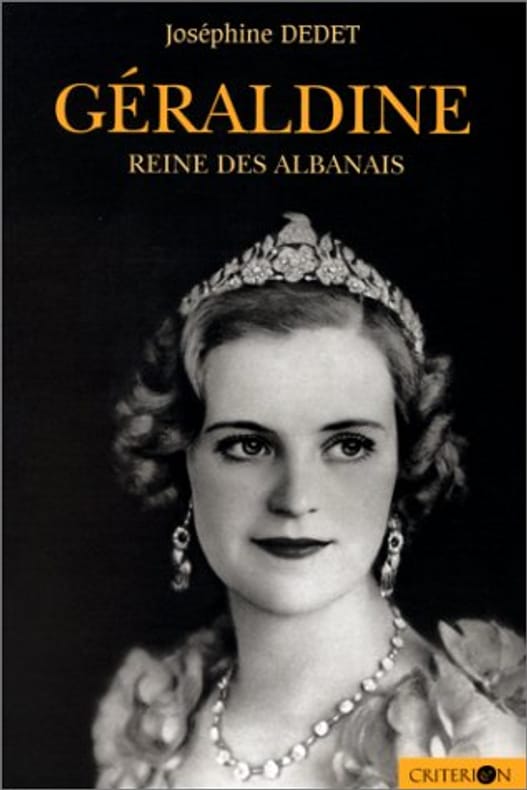
199646026P., Critérion, 1996, gr. in-8°, 387 pp, 16 pl. de photos hors texte, 3 tableaux généalogiques, une carte, biblio, broché, couv. illustrée, bon état
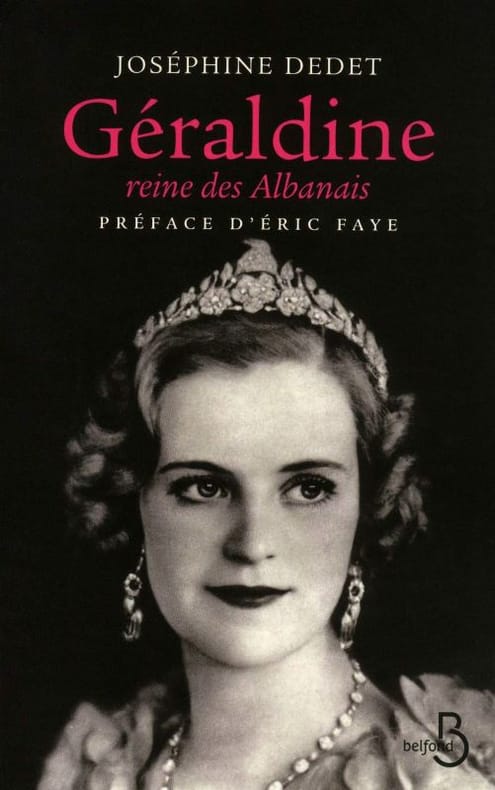
2016125806Belfond, 2016, gr. in-8°, 355 pp, préface d'Eric Faye, 16 pl. de photos hors texte, 3 tableaux généalogiques, une carte, biblio, broché, couv. illustrée, bon état
cm. 18 x 25,5, viii-136 pp. con 7 tavv. f.t. Studi albanesi - Studi e testi 406 gr. viii-136 p.
Paris, Dezauche succ. De l'Isle et Buache, 1780. (Parte incisa mm. 480 x 630). Bella carta geografica, in coloritura coeva, proveniente da Atlas géographique des quatre parties du monde par Guillaume De L'Isle et P. Buache.
59512Paris, éd du C.N.R.S, centre régional de Meudon-Bellevue, 1985, fort in-8, br., couv. ill. coul. éd., 620 pp., en fin de volume une liste des revues citées, un index par auteurs, LA "Bible" pour les ouvrages sur l'histoire de l'Albanie. Les livres en français mais aussi dans toutes les langues et toutes les revues. RARE Très bon état