MareMagnum

50 489 résultats
In-8 gr. Di questa fondamentale rivista di storia locale lombarda offriamo una "raccolta completa" di 139 annate - dal 1874 (Anno I) al 2014. La collezione è per lo più rilegata in elegante mz. pelle rossa, mentre alcune annate sono in brossura editoriale e 12 annate in cartonato moderno. Dal 1874 al 1947 l'"Archivio Storico Lombardo" si pubblicò annualmente in 4 fascicoli. Dal 1948/49 - Serie Ottava - solo in un volume all’anno. Tracce d’uso alle prime 4 annate in brossura e ai volumi in cartonato, ben conservati i volumi in mz. pelle: di certo complessivamente un buon esemplare.
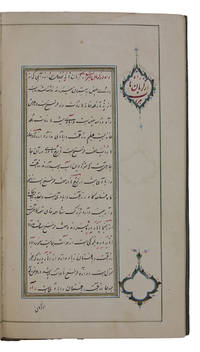
1850ABC_47715Qajar Iran 1850. Contemporary limp leather and woven floral-patterned cloth. 8vo 12.5 x 22 cm. Persian manuscript on polished paper. Black nasta'liq script in 15 lines per page ruled in green and blue with rubricated chapter headings and marginal medallions. A beautifully presented Persian manuscript comprising a unique guide to the barren crossing from Kerman to Kandahar in mid-19th century Qajar Persia. The guide perhaps actually used by two Russian owners whose inscriptions are extant on the front free endpaper in fact covers several routes through what is today south-eastern Iran and western Afghanistan providing reliable information on distances water sources and other relevant data. For instance a reader is told the number of houses in the most populated villages - and consequently the odds of spending the night sheltered indoors at a host's home. - The journey begins in the town of Kerman originally founded as a Sasanian outpost and proceeds to explain one's options to travel to the ancient city of Kandahar; also included are several other routes. The distances daily destinations and road options are all covered in detail for each journey. Apart from these practicalities a traveller also receives tips on the shrines or other tourist spots one might visit on a given day of travel.With two inscriptions in pre-reform Russian cursive on the front free endpaper dated 1855 and 1917. The first inscription appears to be a translation for the benefit of a Minister of the Russian Empire. The second mentions a journey across Afghanistan and Baluchistan possibly with the aid of this very manuscript or perhaps it was a souvenir. Certainly an interesting piece of travel writing and one designed not solely for the armchair traveller. Light wear to cloth though it is remarkably unfaded. Aside from one minor dampstain interior is bright and clean. hardcover
5239Paris, de l'Imprimerie de Pierre Didot l'ainé An X - 1802. 48 x 33 cm, grand in-folio de 1 faux titre avec au dos imprimerie Pierre Didot, 1 titre gravé - second faux-titre - 1 frontispice, VIII ff.nc. (liste des souscripteurs), 190 pp, 1 f.n.c. (errata), un f.bl. 1 carte dépliante de l'Istrie et de la Dalmatie, complet des 60 planches gravées annoncées, avec en plus 6 planches, 27 bis, 18 bis, 54 bis et 55 bis, et deux planches numérotées en double 37 et 9 en plus. Soit au total 69 planches gravées, y compris le titre, le frontispice et la carte dépliante. Relié demi-veau à petits coins, dos lisse, pièce de titre rouge, dos orné d'un décor de roulettes dorées. A part de légères rousseurs, bel exemplaire en reliure d'époque. Édition originale et premier tirage des illustrations gravées à l'eau-forte, d'après les dessins du peintre orientaliste français Louis-François Cassas (1756-1827), élève de Lagrenée le jeune et de Le Prince. Dessinateur auprès de l'ambassadeur à Constantinople Choiseul-Gouffier, Cassas accompagna ce dernier dans son ambassade et réalisa pour lui de nombreux dessins de monuments, vues, cartes, costumes de Turquie, Syrie, Liban, Phénicie, Palestine, Basse-Egypte, Lybie. Vers 1790, il visita l'Istrie et la Dalmatie et en ramena les matériaux de cette relation de voyage sur la côte orientale de la mer Adriatique, donnant un tableau exhaustif des richesses archéologiques de la Croatie sous le protectorat napoléonien.
5239Paris, de l'Imprimerie de Pierre Didot l'ainé An X - 1802. 48 x 33 cm, grand in-folio de 1 faux titre avec au dos imprimerie Pierre Didot, 1 titre gravé - second faux-titre - 1 frontispice, VIII ff.nc. (liste des souscripteurs), 190 pp, 1 f.n.c. (errata), un f.bl. 1 carte dépliante de l'Istrie et de la Dalmatie, complet des 60 planches gravées annoncées, avec en plus 6 planches, 27 bis, 18 bis, 54 bis et 55 bis, et deux planches numérotées en double 37 et 9 en plus. Soit au total 69 planches gravées, y compris le titre, le frontispice et la carte dépliante. Relié demi-veau à petits coins, dos lisse, pièce de titre rouge, dos orné d'un décor de roulettes dorées. A part de légères rousseurs, bel exemplaire en reliure d'époque. Édition originale et premier tirage des illustrations gravées à l'eau-forte, d'après les dessins du peintre orientaliste français Louis-François Cassas (1756-1827), élève de Lagrenée le jeune et de Le Prince. Dessinateur auprès de l'ambassadeur à Constantinople Choiseul-Gouffier, Cassas accompagna ce dernier dans son ambassade et réalisa pour lui de nombreux dessins de monuments, vues, cartes, costumes de Turquie, Syrie, Liban, Phénicie, Palestine, Basse-Egypte, Lybie. Vers 1790, il visita l'Istrie et la Dalmatie et en ramena les matériaux de cette relation de voyage sur la côte orientale de la mer Adriatique, donnant un tableau exhaustif des richesses archéologiques de la Croatie sous le protectorat napoléonien.
53521 In-8° pour le texte et in-4° pour les atlas. Demi-veau havane. Dos lisse souligné par des paires de filets dorés. Auteur, titre, tomaison et n° du voyage dorés. Plats décorés de papier marbré. Frottements timides çà et là. Coins légèrement émoussés. Intérieur très frais. Tampon encré aux initiales d'un ancien propriétaire à la 1ère garde du tome I du 1er voyage : M de J. Édition des trois voyages du capitaine Cook, dans une reliure homogène vers 1820. Les trois volumes d'atlas (un par voyage) avec les planches au format in-4° s'ajoutent à cet exemplaire, ce qui est loin d'être toujours le cas. Complet de toutes les cartes et planches à savoir : Atlas 1er voyage : 50 planches Atlas 2e voyage : 66 planches Atlas 3e voyage : 87 (portrait-frontispice de Cook compris ; erreur de numérotation : 2x la n°52) + 1 planche non numérotée relatant la mort de James Cook Soit au total 204 planches. Beaux tirages (marges parfois courtes pour les voyages 1 et 2). Paris, Nyon et Mérigot, 1789, 8 volumes ; Paris, Mérigot, 1792, 6 volumes ; Paris, Raymond, 1819, 4 volumes ; + 3 volumes d'atlas in-4° (l'atlas consacré au 1er voyage daté 1774 (année de la 1ère édition) et l'atlas consacré au 3e voyage imprimé à Paris, Hôtel de Thou, 1785). Soit 21 volumes au total.
53521 In-8° pour le texte et in-4° pour les atlas. Demi-veau havane. Dos lisse souligné par des paires de filets dorés. Auteur, titre, tomaison et n° du voyage dorés. Plats décorés de papier marbré. Frottements timides çà et là. Coins légèrement émoussés. Intérieur très frais. Tampon encré aux initiales d'un ancien propriétaire à la 1ère garde du tome I du 1er voyage : M de J. Édition des trois voyages du capitaine Cook, dans une reliure homogène vers 1820. Les trois volumes d'atlas (un par voyage) avec les planches au format in-4° s'ajoutent à cet exemplaire, ce qui est loin d'être toujours le cas. Complet de toutes les cartes et planches à savoir : Atlas 1er voyage : 50 planches Atlas 2e voyage : 66 planches Atlas 3e voyage : 87 (portrait-frontispice de Cook compris ; erreur de numérotation : 2x la n°52) + 1 planche non numérotée relatant la mort de James Cook Soit au total 204 planches. Beaux tirages (marges parfois courtes pour les voyages 1 et 2). Paris, Nyon et Mérigot, 1789, 8 volumes ; Paris, Mérigot, 1792, 6 volumes ; Paris, Raymond, 1819, 4 volumes ; + 3 volumes d'atlas in-4° (l'atlas consacré au 1er voyage daté 1774 (année de la 1ère édition) et l'atlas consacré au 3e voyage imprimé à Paris, Hôtel de Thou, 1785). Soit 21 volumes au total.
In-4, [12] ll. (incl. frontispiece), 689 pp., [9] ll., engraved title-page, full-page coat of arms of the dedicatee on the verso of the title, 12 copper-engraved plates; contemporary vellum, ms. title stamp, one clasp remaining, blue edges (tiny stain touching some margins, very rare sporadic browning, small cover defects). Genuine beautiful copy.
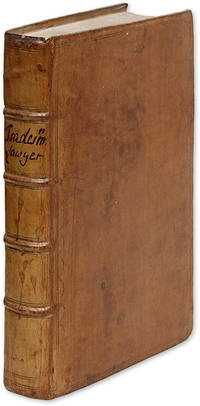
1703708281703. London 1703. 1st ed. rare. London 1703. 1st ed. rare. Legal Advice for Tradesmen Layman's Guide. The Tradesman's Lawyer and Countrey-Man's Friend: 1. Directing Them in Contracts Bargains and Agreements Whereby They May Learn to Buy and Contract Safely And Cautiously Avoid Being Over-Reached in Their Bargains &c. 2. Concerning Borrowing Lending and Restoring And of Goods Pledged and Pawned. 3. Setting Forth Several Other Adjudged Cases Relating to Tradesmen &c. 4. Cases Relating to Farmers And Concerning Stoppage of Ways Watercourses Lights Commons and Several Other Nusances. 5. Concerning Scandalous Words Purposely Spoken to Prejudice and Abuse Tradesmen &c. 6. Concerning Leases Mortgages Corn Waste Distresses &c. Also Many Other Matters Relating to Landlord and Tenant. 7. Concerning Discharging and Ending of Actions Suits and Controversies And Therein Largely Concerning Arbitrements Awards and Umpirage With All Their Circumstances. 8. Certain Statute Laws Concerning Labourers Tradesmen Artificers Apprentices Servants Petty Chapmen &c. Collected from the Antient and Modern Law Books And Confirmed by Several Authorities And Therefore May be Useful as Well to the Professors of the Law As to Tradesmen and Others. London: Printed by the Assigns of Richard and Edward Atkins Esqs. 1703. viii 424 pp. Octavo 6-1/2" x 4-1/4". Contemporary calf blind rules to boards blind fillets along joints raised bands and early hand-lettered title to spine gilt tooling to board edges. Negligible light rubbing and a few minor nicks to boards corners lightly bumped rear hinge cracked. Light toning to text slightly heavier in places tiny worm track near upper corners of final four text leaves rear free endpaper and rear pastedown early owner annotation to pp. 10 and 34 and rear free endpaper. A notably well-preserved copy of a rare title. Book housed in recent cloth clamshell box quarter morocco over cloth gilt title and gilt-edged raised bands to spine. $5000. First edition. An early form of "consumer protection" this book was written to protect members of the middle ranks of English society from the "cunning" of "persons of a higher Rank" who always enjoyed the "Learning and Leisure to read the Law." Two later editions were published in 1709 and 1720 with the title Gentleman's Assistant Tradesman's Lawyer and Country-Man's Friend. The. unknown books
1978mon0000032636TV Guide 1978T. single_issue_magazine. Very Good. in x in x in. Robert Urich of Vegas photo cover. NO mailing label. Evansville-Paducah edition. TV Guide unknown
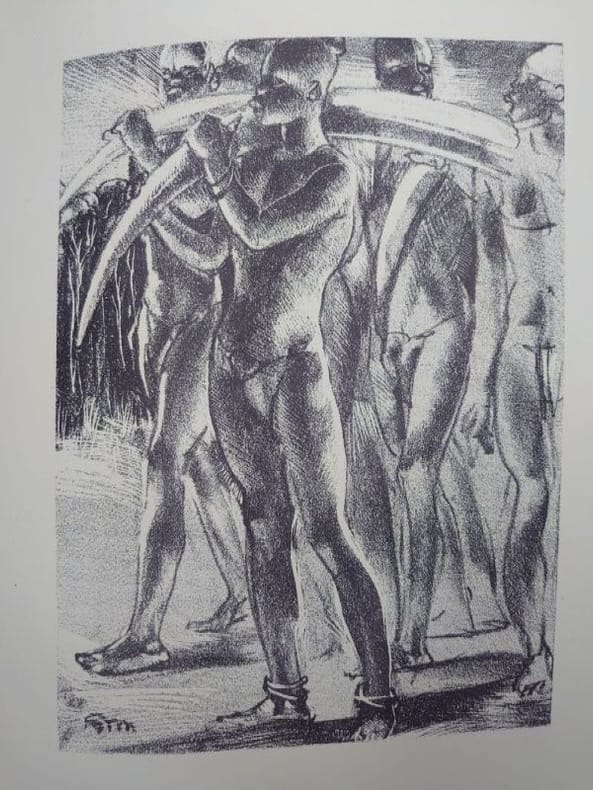
8177Liège, Union liégeoise du livre et de lestampe, 1934.33 x 25 cm, En feuilles, couv. imprimée et rempliée, chemise et emboîtage déditeur. Un des 75 exemplaires sur vélin à la forme Van Gelder destinés aux membres de lunion liégeoise (n°39 imprimé pour Henry Leclercq). Illustré de 41 lithographies de Mambour (complet). Étui avec de légères traces de frottement, exemplaire non coupé et intérieur très frais. Formé à lAcadémie des Beaux-Arts de Liège, Auguste Mambour, second prix de Rome en 1922. Il séjourne au Congo Belge de 1923 à 1926. Ce séjour sera déterminant pour lensemble de son oeuvre. En effet, tenté par lexpérience cubiste il en trouve un écho dans les « Sculptures vivantes » quil contemple en Afrique.
8177Liège, Union liégeoise du livre et de lestampe, 1934.33 x 25 cm, En feuilles, couv. imprimée et rempliée, chemise et emboîtage déditeur. Un des 75 exemplaires sur vélin à la forme Van Gelder destinés aux membres de lunion liégeoise (n°39 imprimé pour Henry Leclercq). Illustré de 41 lithographies de Mambour (complet). Étui avec de légères traces de frottement, exemplaire non coupé et intérieur très frais. Formé à lAcadémie des Beaux-Arts de Liège, Auguste Mambour, second prix de Rome en 1922. Il séjourne au Congo Belge de 1923 à 1926. Ce séjour sera déterminant pour lensemble de son oeuvre. En effet, tenté par lexpérience cubiste il en trouve un écho dans les « Sculptures vivantes » quil contemple en Afrique.
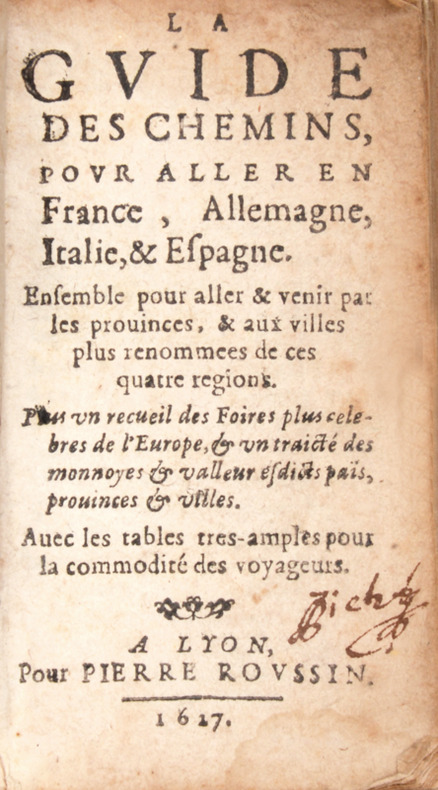
162741678Lyon, Pierre Roussin, 1627. In-16 de (6)-281 pp., vélin, dos lisse, titre manuscrit sur le dos (reliure de l'époque).
15244376Lyon: Claude Nourry 1524. Small 8vo 131 x 93 mm.  16 leaves. Collation: A-B8 A1r title A1v blank A2r text B8r explicit Explicit iste liber gemmis qui charior extat B8v blank. Title in two lines Cura clericalis in very large type / Lege relege in the larger of the two text types title woodcut of a scribe at his pulpit 54 x 70 mm. break in left border; the cut worn or poorly printed. Rounded French gothic types in two sizes. Text type G76 27 lines and headline. One 5-line white on black floral initial. Printing flaw on B4v obscuring a couple of letters; traces of adhesion on same page opening else in fine condition. 19th-century dark blue morocco by Cuzin sides and spine blind-paneled with gilt fleurons spine lettered in gilt turn-ins gilt gilt edges ribbon marker. Provenance: Fernand Gaulthier armorial bookplate.<br /> <br /> A rare Lyonese edition of a popular pocket guidebook for priests.<br /> <br /> A succinct survey of every aspect of the priesthood the text opens with the meaning of sacerdos priest a definition of the job: the care and salvation of human souls and the requirements for fulfilling this office: basic literacy and the ability to express oneself correctly. From abstract concepts to practical applications the fundamental tenets of the Christian Church are methodically reviewed: the articles of faith seven deadly sins cardinal and theological virtues three keys of the church three parts of penitence etc. as are the different kinds of sacraments the materials used for them and their meanings and the various clerical offices. The telegraphically short entries with abundant use in this small format edition of abbreviations permitted the inclusion of a vast amount of indispensable knowledge for the practicing priest. The last third of the text is devoted to an equally condensed introduction to the Computus with headline Abbreviatio compoti the all-important calculation of time based on the yearly date of Easter; it includes mnemonic verses and syllables. <br /> <br /> “The Cura clericalis reflecting the received wisdom on the subject defined four rules for the priest. He was to be a celebrant of Masses and so needed to understand the basic texts and to be able to pronounce the Latin grammatically and clearly. He must be a minister of the other sacraments and so needed to know what and how many they were to grasp the essential matter of the sacrament and be able to distinguish it from the peripheral features and to know the proper mode of administration. He was to be a confessor and so must above all be able to distinguish venial from deadly sin . Finally he was to be a ‘plebis doctor’ the teacher of his people able to instruct them in the articles of faith and the other precepts of God†E. Duffy The Stripping of the Altars: Traditional Religion in England 1400–1580 New Haven 2005 p. 57. <br /> <br /> Dozens of editions are recorded most surviving in one or two copies and some with no currently known locations. ISTC records nine incunable editions printed from ca. 1492-4 to 1500 all but one undated of which 8 from Germany and one printed in Paris. In the next century the earliest editions appeared in the northern Rhine and France and later in England and Italy. Pettegree and Walsby list 30 editions printed in France from ca. 1511 to 1580 French Books III & IV: Books Published in France Before 1601 in Latin and Languages Other Than French 2011 637490-63778. <br /> <br /> The anonymous printer of this edition of which one other copy is known Besançon Municipal Library was Claude Nourry as recently identified by Dr. Helwi Blom whom we thank for her kind assistance. Much of Nourry’s output was published without his name and he printed many editions without the place or date of printing. He issued another edition with full colophon in 1524 Baudrier 12 129; Gültlingen 1 86: 113; USTC 130305 but no present locations for that edition are known. The title woodblock was used in other Nourry editions including his 1523 Beroaldo Carmen lugubre de dominicae Passionis die USTC 130303 and the initial C on A2r appeared in editions from 1520.<br /> <br /> Not in Baudrier Gültlingen or USTC. Helwi Blom “Le Profil du Prince: Tendances et évolutions dans la production imprimée de Claude Nourry d’après un nouveau recensement bibliographique†in H. Blom M. Clément F. Montorsi editors Du Calendrier des bergers au Pantagruel Geneva: Droz 2024 p. 53 no. 27. Claude Nourry unknown
18721427091872. TRADE CATALOGUE -- NURSERYMAN'S GUIDE. DEWEY D.M. Nurseryman's Specimen Book of American Horticulture and Floriculture Fruits and Flowers Ornamental Trees Shrubs Roses &c. D.M. Dewey's American fruit & flower plates colored from nature 2300 varieties. With a chromolithographic title page and 56 stencillled plates of fruits flowers and 9 chromolithographic plates plates of fruits flowers and trees. 8vo. 220 x 140 mm bound in contemporary morocco rebacked. Rochester N.Y.: D.M. Dewey n.d. ca. 1872. An early American trade catalogue of Fruit Flowers Trees and Nursery stock issued according to the Smithsonian Library "ca. 1872" by the firm of D.M. Dewey Rochester N.Y. Many of the plates have captions giving name of variety of plant and brief information on main characteristics and growing season. The Smithsonian copy contains only 24 plates compared to the 40 in the above copy. "Nurserymen's plates were an American innovation. They were made by various methods the most distinctive being painted in watercolors. In design and coloring these plates were more akin to folk painting than to the commercial art of their time" Charles von Ravenswaay "Drawn and Colored from Nature" in Antiques Magazine March 1983 pp. 594-599. Some minor wear overall in excellent condition. See Raphael. An Oak Spring Pomona Nos 63 to 66. unknown books
In-folio, 57 ll., 1bl.; engraved title and 51 full-page engraved plates, giving geodetic and cosmographic instruments and measurements; woodcut ornate initials and tailpieces, large Aldus anchor woodcut device at the end. Bound in contemporary cartonnage (reliure d'attente), with weak hinges; occasional light foxing, light dampstain at the bottom of the last leaves. Despite the title the work includes 50 full-page engravings, of which the last 7 are a supplement by Scala and are especially devoted to architecture and perspective.
Fine Turkish, Ottoman (1500-1928) Modern light brown cloth bdg. gilt lettering on the front board. [1], 99 p., 36 numbered maps printed in black and red ink, 5 numbered folded plates. A fine copy. First and only edition of this extremely rare atlas in user guide form including the instructions and descriptions of the routes of vessels by an advisor of the British naval officer and German prince related to the British royal family, Prince Louis Alexander of Battenberg (1854-1921), who was the first Marquess of Milford Haven, commanded the Atlantic Fleet from 1908 to 1910 and became first sea lord in 1912. This book was translated by Nusret, who was a lieutenant in the Ottoman Naval Forces in its period and prepared only for use of Turkish naval officers. The plates include the maneuver plate of an officer named "Martin", who is not able to be recognized. Every map and plate depending on the current position of the ship has its own descriptive text. Özege 12270.; Not in OCLC and Library Hub.
182312774Madrid: Imprenta Nacional 1823. 146x97mm. 5¾x3¾". Madrid Imprenta Nacional 1823. 2 obras en un volumen. En 8º 146 x 97mm. -I: 2 retratos portada grabada 141 pp. 1 bl. -II: Portada grabada 227 pp. 1 gran mapa plegado. MagnÃfica encuadernación heráldica española de la época estilo Neoclásico en marroquén rojo ricamente decorada con grecas hierros y ruedas doradas en los planos anagrama real en el centro "F A" con la corona real arriba lomera con ruedas hierros dorados y tejuelo en marroquén verde cantos con rueda dorada contracantos ricamente decorados con ruedas y hierros dorados en el centro muaré azul con rueda a los lados. Atribuida a Antonio Suárez. Primera edición de esta bellÃsima GuÃa de Forasteros de Madrid y GuÃa Militar de España de procedencia real de la Biblioteca de Palacio vendida como duplicado según sello en tinta al verso de la guarda. Publicación de periodicidad anual fundada en 1722 por Luis Félix de Miraval y SpÃnola y que hasta 1734 se titula Kalendario particular. A partir de 1725 su impresor será Juan Sanz; después lo serán sus herederos y desde 1730 Antonio Sanz su sobrino que en 1769 cederá los derechos a la Corona española a cambio de una pensión vitalicia. Se trata de una guÃa completÃsima de la Administración del Estado. Desde 1768 le acompañará el Estado militar de España con portada propia con los nombres de los capitanes y tenientes generales del Ejército de Su Magestad mariscales de campo brigadieres y oficiales de Marina etc. En la edición de 1767 comienza a incluir grabados como los de Carlos III los PrÃncipes de Asturias o el del Palacio de Aranjuez y después los de Carlos IV y la reina Maria Luisa para en el siglo XIX incluir los de Fernando VII y los de su hija la joven reina Isabel II. Asimismo llegará a estampar una docena de mapas de España y planos de Tomás López y sus hijos. Durante la invasión del ejército napoleónico el kalendario no aparecerá en 1809 ni en 1810 y para 1811 saldrá de la Imprenta de D. Miguel Segovia impresor de la Real Marina desde la Real Isla de León en Cádiz y se titulará GuÃa patriótica de España. Las de 1812 y 1813 se titularán GuÃa polÃtica de las Españas y es también impresa en Cádiz la primera en la oficina de la viuda de Comes y la segunda en la Imprenta Nacional. Al regreso de Fernando VII retornará de nuevo a su tÃtulo anterior y a prácticamente a los mismos contenidos que publicaba durante el antiguo régimen hasta que durante el trienio liberal modifica otra vez su cabecera y algunos de sus contenidos al incluir de nuevo la relación de diputados a Cortes y las nuevas instituciones administrativas que el incipiente Estado liberal comienza a crear. En 1821 se titula GuÃa de forasteros en Madrid y en 1822 y 1823 GuÃa polÃtica y militar estampándose en la denominada Imprenta Nacional antes Imprenta Real. Por su parte el Estado militar de España que venÃa publicándose conjuntamente con el<em> kalendario</em> en 1821 1822 y 1823 se titulará Estado de los ejércitos de la monarquÃa española. Excelente ejemplar muy bien encuadernado y de procedencia real. Encuadernación atribuida a Antonio Suárez. Imprenta Nacional unknown
In-4 p. (mm. 292x214), mz. pelle coeva, fregi e tit. oro al dorso (lievi abras.), pp. (4),430,(2), molto ben illustrato f.t. (come da Indice) da 54 pregevoli tavole di vedute, litografate su fondo paglierino, tutte dettagliatam. descritte; ai monumenti antichi fanno seguito quelli del medio evo, quindi i moderni. L'opera è stata pubblicata a fascicoli, con cadenza settimanale. Il testo, curato da Giacinto Longoni, è racchiuso in delicata cornice con angoli floreali. E' questo uno dei libri più ricercati dell'Ottocento sia per le notizie sui monumenti di Milano sia per le animate incisioni, spesso di luoghi poco rappresentati fino allora. Cfr. Villa “Bibl. delle Guide di Milano”,236 - Predari, p. 14. Con fiorit. più o meno lievi, altrim. ben conservato.
793Couverture rigide Alinari & Cook Rome 25x34 cm
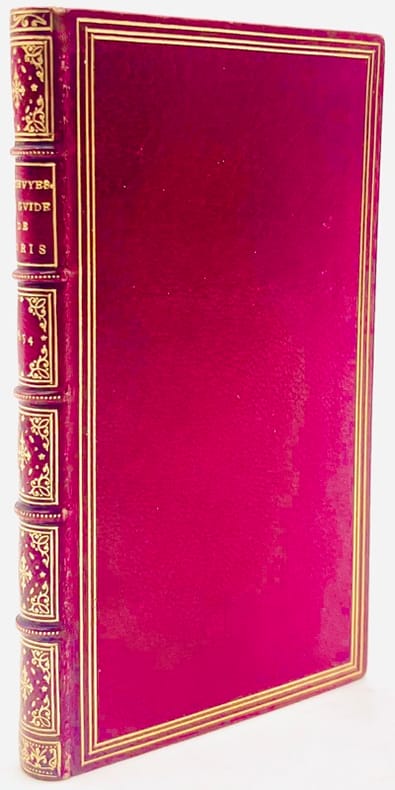
165443432A Paris, chez Cardin Besongne, 1654. DECHUYES. Liste generalle des Messagers, Postes, Courriers, Coches & Rouilliers de France. Avec leurs logemens, les jours qu'ils partent de cette Ville & qu'ils y arrivent. A Paris, chez Cardin Besongne, 1654. In-12 de 34 pp. 2 parties en 1 vol. in-12, maroquin rouge, dos orné à nerfs, triple filet doré sur les plats, dentelle dorée, tranches dorées (Masson-Debonnelle).
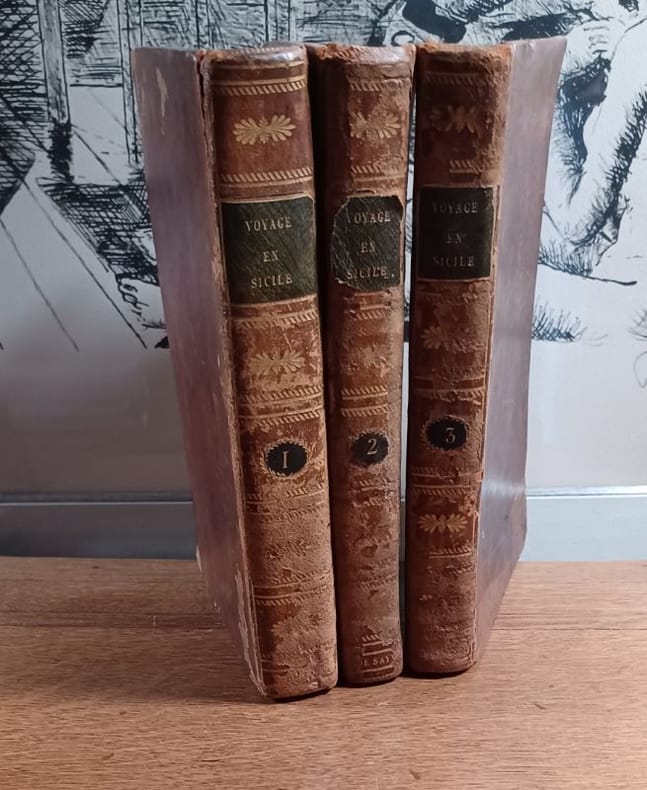
4068A Paris Chez Arthus Bertrand, Libraire rue Hautefeuille 1822. Exceptionnel exemplaire auquel ont été ajoutés 10 dessins originaux de l'auteur, au crayon ou à l'encre, dont 4 aquarellés. 20,5 x 12,5 cm, Trois volumes : 1) xi et 403 pp., 1 planche hors texte, 1 carte dépliante hors texte et 8 dessins originaux ajoutés dont 3 en couleurs. - 2) 2 ff.n.ch., 339 pp., 1 planche hors texte et 1 carte dépliante et 2 dessins originaux ajoutés dont 1 en couleurs. - 3) 2 ff.n.ch., 422 pp., 1 f.bl. et 1 planche hors texte et 1 carte dépliante.Reliés plein veau d'époque, dos lisses, pièces de titre noir, monogramme doré C.S. sur les premiers plats. Reliure usées, gauchies, nombreuses épidermures, petits manques de cuir aux tomes 1 et 3, coins émoussés, mouillures sur les premières pages de chaque volume, et sur deux des planches lithographiées. État moyen. Édition originale, ornée de 6 gravures hors texte, certaines dépliantes, dont une carte de la Sicile répétée à chaque volume. Exemplaire auquel ont été ajoutés 10 dessins originaux de l'auteur, au crayon ou à l'encre, dont 4 aquarellés. Quelques uns portent la mention A. de S. fecit. La première planche manuscrite est un relevé à Palerme d'écriture arabe ancienne. Une des aquarelles représente l'éruption de l'Etna de 1669 telle que décrite par un témoin oculaire, sont aussi aquarellés les plans de Palerme, Syracuse et Messine. Il s'agit, comme le confirme le monogramme doré CS, de l'exemplaire personnel de l'un des membres de la famille de l'auteur, sa nièce en l'occurence, Cécile de Sayve, Cécile-Isaure-Marie de la Croix de Chevrières, née le 10 mai 1817, mariée le 15 juin 1840 au comte Louis Marie du Couëdic de Kergoualer.
4068A Paris Chez Arthus Bertrand, Libraire rue Hautefeuille 1822. Exceptionnel exemplaire auquel ont été ajoutés 10 dessins originaux de l'auteur, au crayon ou à l'encre, dont 4 aquarellés. 20,5 x 12,5 cm, Trois volumes : 1) xi et 403 pp., 1 planche hors texte, 1 carte dépliante hors texte et 8 dessins originaux ajoutés dont 3 en couleurs. - 2) 2 ff.n.ch., 339 pp., 1 planche hors texte et 1 carte dépliante et 2 dessins originaux ajoutés dont 1 en couleurs. - 3) 2 ff.n.ch., 422 pp., 1 f.bl. et 1 planche hors texte et 1 carte dépliante.Reliés plein veau d'époque, dos lisses, pièces de titre noir, monogramme doré C.S. sur les premiers plats. Reliure usées, gauchies, nombreuses épidermures, petits manques de cuir aux tomes 1 et 3, coins émoussés, mouillures sur les premières pages de chaque volume, et sur deux des planches lithographiées. État moyen. Édition originale, ornée de 6 gravures hors texte, certaines dépliantes, dont une carte de la Sicile répétée à chaque volume. Exemplaire auquel ont été ajoutés 10 dessins originaux de l'auteur, au crayon ou à l'encre, dont 4 aquarellés. Quelques uns portent la mention A. de S. fecit. La première planche manuscrite est un relevé à Palerme d'écriture arabe ancienne. Une des aquarelles représente l'éruption de l'Etna de 1669 telle que décrite par un témoin oculaire, sont aussi aquarellés les plans de Palerme, Syracuse et Messine. Il s'agit, comme le confirme le monogramme doré CS, de l'exemplaire personnel de l'un des membres de la famille de l'auteur, sa nièce en l'occurence, Cécile de Sayve, Cécile-Isaure-Marie de la Croix de Chevrières, née le 10 mai 1817, mariée le 15 juin 1840 au comte Louis Marie du Couëdic de Kergoualer.
<p>in 8°, (19x13) cm, rilegatura coeva in piena pergamena, titolo in oro incorniciato al dorso; p. (16), 672. Complessivamente 70 tavole di cui: antiporta, 3 grandi carte geografiche più volte ripiegate e 66 belle incisioni di vedute di città ripiegate più volte fuori testo. Bell'esemplare raro da trovarsi completo di tutte le tavole</p>
Very Good Russian Original dark green cloth bdg. Oblong folio. (28 x 36 cm). Eight languages of the title on the colophon, the text is completely Russian. [6], [ii], 108 p., [36] maps in various sizes, some of folded: (62x47 cm, 52,5x45,5 cm, 49,5x27 cm [x3], 61x47 cm; other maps are 36x28 cm). Four unnumbered leaves with half-title and contents for each section. Two small millimetric cuttings on two text pages. Ex-owner's name is on the title page. Markings on the index. Otherwise a very good and clean copy. Rare complete and the first atlas including a fine collection of 36 attractive chromo-lithograph maps mostly with tissue papers of the Soviet Union, edited by the Central Executive Committee and Enukidze (1877-1937), who was a prominent Georgian "Old Bolshevik". One of 11000 copies. Being published only 10 years after the USSR was established, this is the earliest atlas of the country. It seems to have been published with a wider audience in mind, with a title page in various European languages. The borders of many areas -including not just administrative regions throughout the USSR, but also entire autonomous republics (especially in Central Asia)- were in a state of flux; as such, the borders in this Atlas (including the wax-paper overlays meant to update various maps with changes made between when they were drawn and when the Atlas was published) often don't look anything like the borders they were set at the end of the Soviet Union and have continued on to modern times. Since the boundaries were often ideologically- (sometimes ethnically-, less so economically-) motivated, this offers an interesting insight into the mindset of the administration that was making these changes. Map list: World map, General USSR, USSR in Europe, Asia and USSR, Karelian Autonomous Soviet Socialist Republic, Komi-Zyryan Autonomous Oblast, Avt, Votskaya Oblast, Maryinskaya, Cherepovetsky District, Vologda Oblast, Avt. Chuvashskaya SSR (Chuvashia), Avt. Tatarskaya SSR (Tatarstan), Avt. Bashkirskaya SSR (Bashkiria), ASSR Nemchev Povoljiya, Kalmykia (Kalmykia), Krimskaya SSR (Crimea), Adigeiskaya (Tscherkeskaya) Obl. (Cherkesia), Kabardino-Balkarskaya Avt. Obl. (Kabardino-Balkarian Rep.), Karachayskaya Avt. Obl. & Tscherkesskiy Nation. Okrug (Karachay-Cherkessia), Chechenskaya Avt. Obl. (Chechnya), Ingushetiya, Severo-Osetiya, Avt. Daghestanskaya SSR, Avt. Kazakskaya SSR, Kyrgyzkaya ASSR, Avt. Oiuratskaya Oblast, Burito - Mongolskaya SSR (Kazakhstan), Avt. Yakustkaya SSR (Yakutia), Beloruskaya SSR (Belarus), Ukrainskaya, SSR (Ukraine), Moldavskaya SSR (Moldovia), Zakavkazkaya SSR (Abkhazia), Azerbaijanskaya SSR (Azerbaijan), Arminskaya SSR (Armenia), SSR Gruzii (Georgia), Central Asian SSR (Karakalpakstan, Kyrgyzstan, Turkmenistan, Uzbekistan), Uzbekistan, Turkmenistan. OCLC shows copies in twenty-three libraries worldwide: 7852120, 968755133, and 822577467.
177543743Paris, Vente et Vignon, 1775. In-4, basane brune, dos orné à nerfs (reliure ancienne).