DISCOVERY CHANNEL STAFF,Biblio.com

289 résultats
1996AME_9780070160613MGH 1996. 1st. Hardcover. New/New. MGH hardcover
1587380161.Gpaperback. Good. Access codes and supplements are not guaranteed with used items. May be an ex-library book. paperback
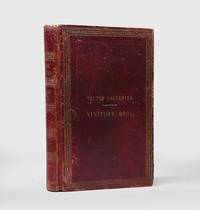
1904166196London: The Bruton Galleries Bond Street 1904-36. The blockbuster Discovery exhibition of 1904 The original visitor's book for one of the stellar red-carpet events of the season: the Bruton Galleries exhibition of artefacts and artwork from Scott's Discovery expedition a landmark in polar exploration. It includes the signatures of numerous crew members including Ernest H. Shackleton Edward A. Wilson Charles Royds Reginald Skelton and Ernest E. Joyce alongside Clements Markham and Llewellyn Longstaff a financial angel of the expedition. The exhibition which opened in November 1904 was curated by Clements Markham who had organized the expedition and launched Scott's polar career. It was remarkably extensive the catalogue listing 484 items including 150 photographs by Reginald Skelton 200 watercolours and drawings by Edward A. Wilson equipment from the expedition a model of the Discovery rations and the South Polar Times. The photographs and artwork constituted a visual record of Antarctic conditions and documented gruelling conditions bringing home "the scale magic and danger of Antarctica with a compelling immediacy" Merwe & Michell p. 66. The show proved extraordinarily popular with "Bruton Street and New Bond Street lined with motorcars and carriages" Huxley p. 141. "Persons of rank and fashion were marshalled into a long queue by a policeman. Society folk were not used to queues in those days and they protested that they had tickets; so had everyone the constable replied and kept them in line" Huxley p. 141. It fuelled the public's growing excitement about polar exploration: "an exhibit of Wilson's Antarctic art attracted over ten thousand viewers to London's prestigious Bruton Gallery. Advertisements in the gallery catalogue touted paints and binoculars used by the artist in the Antarctic" Larson p 159. The Discovery crew received an exuberant homecoming hailed for their "British grit" and Edward VII awarded each man the Antarctic medal. "Indeed for many Scott and his men became the national heroes that the Boer War had failed to supply. The explorers became celebrities. Crowds packed their public appearances" Larson p. 158. The leading actress Ellen Terry attended the event. She had been present when the expedition docked in Portsmouth later writing a postcard to Scott thanking him for letting her see the Discovery. The members of the Discovery expedition who have signed include Ernest H. Shackleton third lieutenant Edward A. Wilson assistant surgeon and artist Charles Royds first lieutenant Reginald Skelton chief engineer and photographer Ernest E. Joyce petty officer Arthur Henry Blissett steward Jacob Cross petty officer Hartley T. Ferrar geologist and Reginald C. Ford chief steward and stores officer. Curiously Scott is not among them. This might be a consequence of his resolve "to keep as quiet as possible" after the expedition Huxley p. 158. Three Shackleton family members attended: Ernest H. Shackleton's sisters Gladys and Helen besides Eileen Shackleton of Bushey. Other noted polar explorers feature among the visitors such as Robert Rudmose-Brown of the Scottish National Antarctic Expedition Scotia 1902-4 alongside its honorary secretary James G. Ferrier. Another notable voyager is Charles Ede the assistant surgeon on HMS Assistance on the British Franklin Search Expedition 1850-1 and a "Mrs. Reynolds" the great-niece of Franklin. The visitor's book serves as a record of an early 20th-century red carpet event and contains approximately 1000 signatures including the writer Walter Jerrold alongside the artists Felix Moscheles and Marietta Pallis. Robert Baden-Powell the founder of the Boy Scout movement also attended. Princess Beatrice and Maria Amelia Queen of Portugal likewise attended. Successive pages record visitors from Lancashire Yorkshire and Scotland. Moreover there are numerous admirals and military men together with a collector of Egyptian art. Two further sections in the book relate to miscellaneous exhibitions held in later years. Folio 283 x 245 mm. Contemporary dark red skiver by Jas. Truscott & Sons of London flat spine gilt-lettered direct spine and covers decorated in gilt front cover lettered "Bruton Galleries/Visitor's Book" marbled endpapers all edges gilt; 115 lined pages signed bearing approximately 2000 names and addresses all recto of which 57 lined pages with approximately 1000 signatures pertaining to the Discovery expedition. Extremities with slight wear from handling some stripping of leather minor toning general finger soiling. A very good copy. Elspeth Huxley Scott 1990; Max Jones The Last Great Quest 2004; Edward J. Larson An Empire of Ice 2011; Pieter van der Merwe and Jeremy Michell eds South: The Race to the Pole 2018. hardcover
0517800055.Ghardcover. Good. Access codes and supplements are not guaranteed with used items. May be an ex-library book. hardcover
0525462813.Ghardcover. Good. Access codes and supplements are not guaranteed with used items. May be an ex-library book. hardcover
1997Q-0756000289Teacher's Discovery 1997-01-01. Paperback. New. New. In shrink wrap. Looks like an interesting title! Teacher's Discovery paperback
1839977531.Gpaperback. Good. Access codes and supplements are not guaranteed with used items. May be an ex-library book. paperback
56401-19Fine. Fern Cave: The history of the discovery exploration and mapping of the Fern Cave System unknown
184259217Paris Bachelier 1842. 4to. No wrappers. In: "Comptes Rendus Hebdomadaires des Séances de L'Academie des Sciences" Tome 14 No. 10. Pp. 349- 378. Entire issue offered. Donné's paper: pp. 366-368. <br/><br/><em>First printing of the paper announcing the discovery of blood-platelets THE THIRD CORPUSCLES OF THE BLOOD. Platelets or thrombocytes or yellow blood cells are very small irregularly shaped clear cell fragments i.e. cells that do not have a nucleus containing DNA 2-3 µm in diameter which derive from fragmentation of precursor megakaryocytes. The average lifespan of a platelet is normally just 5 to 9 days. Platelets are a natural source of growth factors. They circulate in the blood of mammals and are involved in hemostasis leading to the formation of blood clots. Platelets release thread-like fibers to form these clots.Garrison & Morton 864. </em> unknown
173546590Paris L'Imprimerie Royale 1735. 4to. Without wrappers. Extracted from "Mémoires de l'Academie des Sciences. Année 1733". Pp. 23-39 pp. 73-84 pp. 233-254 a. 1 engraved plate pp. 457-476. With titlepage to the volume 1733/1735. Margins of titlepage with a few brownspots. <br/><br/><em>First appearance of these milestone papers in the histroy of electricity in which Dufay explains his discovery of two kinds of electricity and the relation between them attraction and repulsion shocks and sparking and the full recognition of electrostatic repulsion. He formulates the two-fluid theory of electricity. He further showed that "not all bodies can become electrified themselves" by friction and went on to show "that they can all acquire a considerable electrical virtue when the tube of rubbed glass wood metals or liquids are brought near them" provided only that they are insulated by beiing stood on "a support of glass or of sealing-wax".Dufay "TRANSFORMED A COLLECTION OF MISCELLANEOUS WEEDS INTO THE FIRST GARDEN OF EUROPE" Heilbron"Dufay's substantive discoveries - ACR the two electricities shocks and sparking - are but one aspect and perhaps not the most significant of his achievement. His insistence on the impiortence of the subject on the universal character of electricity on the necessity of organizing digesting and regulariizing known facts before grasping new ones all helped to introduce order and professionel standards into the study of electricity at precisely the moment when the accumulation of data began to require them. He foundthe subject a record of often capricious disconnected phenomena the domain of the polymaths textbook writers and prfesional lecturers and left a body of knowledge that invited and rewarded prolonged scrutinity from serious physicists." Heilbron "Electricity in the 17 & 18 Centuries" p. 260.Parkinson "Breakthroughs" 1734 P - Ronalds Library p. 145. - Not in Wheeler Gift Cat. </em> unknown
198174493Marquette University. Good. 1981. Award Booklet Celebrating Mother Teresa. Soft Cover. rb-1 . Marquette University paperback
0365647292.Gpaperback. Good. Access codes and supplements are not guaranteed with used items. May be an ex-library book. paperback
Q-0131299786Prentice Hall Pearson Education. Hardcover. New. New. In shrink wrap. Looks like an interesting title! Prentice Hall, Pearson Education hardcover
1334862095.Gpaperback. Good. Access codes and supplements are not guaranteed with used items. May be an ex-library book. paperback
1528390768.Gpaperback. Good. Access codes and supplements are not guaranteed with used items. May be an ex-library book. paperback
183248329Paris Crochard 1832. No wrappers. In: "Annales de Chimie et de Physique" 2e Series vol. 51 Cahier 4. Pp. 337-444 Entire issue offered. Faraday's letter: pp. 404-434 a. 1 engraved plate. Some brownspots. <br/><br/><em>First printing of Faraday's famous letter to Gay-Lussac in which he claim to be the discoverer of electro-magnetic induction analysed the results of the Italian philosophers pointing out their errors and defending himself from what he regarded as imputations on his character. The style of this letter is unexceptionable for Faraday could not write otherwise than as a gentleman; but the letter shows that had he willed it he could have hit hard. The letter was later translated into English and published in "Philosophical Magazine" in 1840 under the title "On Magneto-electric Induction"."In 1831 seemingly out of nowhere came the discovery of electromagnetic induction and the beginning of the experimental researches in electricity which were to lead Faraday to the discovery of the laws of electrochemistry specific inductive capacity the Faraday effect and the foundations of classical field theory." DSB. </em> unknown
183247933Paris Crochard 1832. Contemp. hcalf. Spine gilt. Light wear along edges. Stamps to verso of titlepage. In: "Annales de Chimie et de Physique" 2e Series vol. 51. Entire volume offered. 448 pp. a. 1 folded engraved plate. Faraday's letter: pp. 404-434. Internally clean and fine. <br/><br/><em>First printing of Faraday's famous letter to Gay-Lussac in which he claim to be the discoverer of electro-magnetic induction analysed the results of the Italian philosophers pointing out their errors and defending himself from what he regarded as imputations on his character. The style of this letter is unexceptionable for Faraday could not write otherwise than as a gentleman; but the letter shows that had he willed it he could have hit hard. The letter was later translated into English and published in "Philosophical Magazine" in 1840 under the title "On Magneto-electric Induction"."In 1831 seemingly out of nowhere came the discovery of electromagnetic induction and the beginning of the experimental researches in electricity which were to lead Faraday to the discovery of the laws of electrochemistry specific inductive capacity the Faraday effect and the foundations of classical field theory." DSB. The volume contains further importent papers by AMPÈRE "Note sur une Experience de Hippolyte Pixii relative au Courant produit par la Rotation d'un aimant à l'aide dün appareil imagine par M. Hippolyte Pixii" WÖHLER et LIEBIG "recherches sur le Radical de l'Acide benzoique" and "Lettre de M. Berzelius sur le Benzoyle et l'Acide benzoique" papers by Strohmeyer Gay-Lussac Dutrochet Boussingault BERZELIUS "Sur le Bleu de Prusse et le Cyanoferrure de plomb" etc. etc. </em> unknown
183244146Leipzig Johann Ambrosius Barth 1832. Contemp. hcalf. raised bands gilt spine. Light wear along edges. In "Annalen der Physik und Chemie. Hrsg. von J.C. Poggendorff" Band 25. Entire volume offered. VIII648 pp. and 6 folded engraved plates. Small stamps on verso of titlepage and plates. Faraday's papers: pp. 91-142 a. pp. 142-186. with 3 folded engraved plates. Clean and fine. <br/><br/><em>First German editions of the 2 first memoirs of Faradays groundbreaking researches on electricity constituting the first 2 papers of his "Experimental Researches in Electricity" and containing his fundamental discovery of electromagnetic induction THE FOUNDATION OF NEARLY ALL THE ELECTRICITY IN USE TODAY. In 1820 Oersted had generated magnetism from electricity Faraday here finds the opposite effect generating electricity by magnetism. He also described the first electrical generator second paper. THESE PAPERS ARE SOME OF THE GREAT CLASSICS OF CHEMISTRY AND PHYSICS."Faraday demonstrated this theory involving the lines of force.by inserting a magnet into a coil of wire attached to a galvanometer. While the magnet was being inserted or removd current flowed through the wire. If the magnet was held stationary and the coil moved over it one way or the other there was current in the wire. In either case the magnetic lines of force about the magnet were cut by the wire.If the magnet and coil were both held motionless whether the magnet was within the coil or not there was no current.Faraday hd thus discovered electricalinduction.It was to lead to great things but this was not apparent."Asimov."Although his discovery of the electric motor and the dynamo was almost entirely identical to his theoretical discoveries it laid the foundation of the modern electrical industry - electric light and power teælephony wireless telegraphy televison etc. - by providing for the production of continous mechanical motion from an electrical source and vice versa." PMM 308.Horblit 29 - Milestones 62. - Dibner 64. - PMM 308.The volume contains further notable papers. Elie de Beaumont "Zweiter geologischer Brief.an A.v. Humboldt über die relative Alter der Gebirgszüge" pp. 1-58 a. 2 plates one handcoloured papers by Döbereiner E. Lenz Moser Mitscherlich de Saussure J. Dumas F.E. Neumann Gay-Lussac Johannes Müller "Beobachtungen zur Analyse der Lymphe des Bluts und des Chylus" pp. 513-590. </em> hardcover
182543119London W. Nicol 1825. 4to. No wrappers as extracted from "Philosophical Transactions" 1825 - Part II. Pp. 440-466. Clean and fine. <br/><br/><em>First appearance of this remarkable paper in which Faraday announces his discovery of Benzene. Berzelius described this research as "without doubt one of the most importent which has enriched chemistry during 1825.""The first public announcement of the discovery of benzene the greatest chemical discovery made by Faraday. Originally named by him "bicaburet of hydrogen" benzene is the parent substance of all aromatic compounds. It constitutes the basis of thousands of organic compounds dyes perfumes and medicinal products as well as many polymers and structural materials. The discovery of benzene led to the creation of numerous chemical companies and the manufacture of materials previously unknown. This paper is a thourough study of the physical and chemical properties of benzene."Neville I p. 443. - Parkinson "Breakthrough" 1825 C. </em> unknown
183244145Paris Crochard 1832. Contemp. hcalf. gilt spine light wear along edges. In: "Annales de Chimie et de Physique Par MM. Gay-Lussac et Arago." tome 50 Series 2. Entire volume offered. 448 pp. 2 folded engraved plates. Faraday's papers: pp. 5-67 a. pp. 113-162. <br/><br/><em>First French editions of the 2 first memoirs of Faradays groundbreaking researches on electricity constituting the first 2 papers of his "Experimental Researches in Electricity" and containing his fundamental discovery of electromagnetic induction THE FOUNDATION OF NEARLY ALL THE ELECTRICITY IN USE TODAY. In 1820 Oersted had generated magnetism from electricity Faraday here finds the opposite effect generating electricity by magnetism. He also described the first electrical generator second paper. THESE PAPERS ARE SOME OF THE GREAT CLASSICS OF CHEMISTRY AND PHYSICS."Faraday demonstrated this theory involving the lines of force.by inserting a magnet into a coil of wire attached to a galvanometer. While the magnet was being inserted or removd current flowed through the wire. If the magnet was held stationary and the coil moved over it one way or the other there was current in the wire. In either case the magnetic lines of force about the magnet were cut by the wire.If the magnet and coil were both held motionless whether the magnet was within the coil or not there was no current.Faraday hd thus discovered electricalinduction.It was to lead to great things but this was not apparent."Asimov."Although his discovery of the electric motor and the dynamo was almost entirely identical to his theoretical discoveries it laid the foundation of the modern electrical industry - electric light and power teælephony wireless telegraphy televison etc. - by providing for the production of continous mechanical motion from an electrical source and vice versa." PMM 308.Horblit 29 - Milestones 62. - Dibner 64. - PMM 308. </em> unknown
183248987Paris Crochard 1832. Contemp. hcloth gilt lettering to spine. In: "Annales de Chimie et de Physique Par MM. Gay-Lussac et Arago." tome 50 Series 2. Entire volume offered. 448 pp. 2 folded engraved plates. Faraday's papers: pp. 5-67 a. pp. 113-162. Some scattered brownspots. <br/><br/><em>First French editions of the 2 first memoirs of Faradays groundbreaking researches on electricity constituting the first 2 papers of his "Experimental Researches in Electricity" and containing his fundamental discovery of electromagnetic induction THE FOUNDATION OF NEARLY ALL THE ELECTRICITY IN USE TODAY. In 1820 Oersted had generated magnetism from electricity Faraday here finds the opposite effect generating electricity by magnetism. He also described the first electrical generator second paper. THESE PAPERS ARE SOME OF THE GREAT CLASSICS OF CHEMISTRY AND PHYSICS."Faraday demonstrated this theory involving the lines of force.by inserting a magnet into a coil of wire attached to a galvanometer. While the magnet was being inserted or removd current flowed through the wire. If the magnet was held stationary and the coil moved over it one way or the other there was current in the wire. In either case the magnetic lines of force about the magnet were cut by the wire.If the magnet and coil were both held motionless whether the magnet was within the coil or not there was no current.Faraday hd thus discovered electricalinduction.It was to lead to great things but this was not apparent."Asimov."Although his discovery of the electric motor and the dynamo was almost entirely identical to his theoretical discoveries it laid the foundation of the modern electrical industry - electric light and power teælephony wireless telegraphy televison etc. - by providing for the production of continous mechanical motion from an electrical source and vice versa." PMM 308.Horblit 29 - Milestones 62. - Dibner 64. - PMM 308.The volume contains further notable papers. Elie de Beaumont "Zweiter geologischer Brief.an A.v. Humboldt über die relative Alter der Gebirgszüge" pp. 1-58 a. 2 plates one handcoloured papers by Döbereiner E. Lenz Moser Mitscherlich de Saussure J. Dumas F.E. Neumann Gay-Lussac Johannes Müller "Beobachtungen zur Analyse der Lymphe des Bluts und des Chylus" pp. 513-590. </em> hardcover
19931-077480470XUniv of British Columbia Pr 1993. Hardcover. New. reissue edition. 353 pages. 9.50x6.50x1.50 inches. Univ of British Columbia Pr hardcover
189359360Copenhagen 1893. Folio. 51 x 45 cm. Orig. printed clothbacked boards. Stamp on title-page. 28 pp. "In the present reproduction only those few pages are printed which concerns the discovery of America by the Northmen in the first years of the 11th century.". Lower right corners damaged by insect-bites no loss of text. Old Norse text English and Danish translation. hardcover
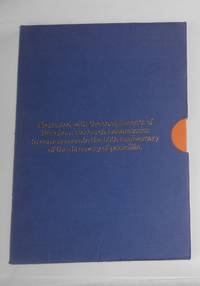
1979TN254373British Journal of Experimental Pathology / Beecham Research Laboratories London 1979. 1st Edition Thus. SOFTCOVER. Mde to commemorate the 50th anniversary of the discovery of penicillin and published by Beecham Research Laboratories in 1979. 4to in black printed orange card covers pages numbered 191 to 236 - a very nicely produced facsimile using well matched paper of the exact size of the complete issue for June 1929 which contains Flemings famous paper. Housed in a cloth backed thin card slip-case with single leaf insert on thick glossy paper with a brief history and time-line for penicillin. Fleming made his own limited edition reprint of the offprint in 1944 but this is the first reprint of the whole issue. __CONDITION : The journal and insert are AS NEW the slipcase is a little shelf rubbed and faintly sunned. Overall an excellent copy of this facsimile which has become almost as hard to find as the original. __NOTE. Depending on destination this item may require an extra payment for shipping insurance. If so orders made by card will be completed only after you have approved the extra cost. . __We always ship in PROTECTIVE CARD PARCELS British Journal of Experimental Pathology / Beecham Research Laboratories, London paperback
A9780309438841Paperback / softback. New. The field of endeavors known as aEUROoeregulatory scienceaEURO has grown out of the need to link and integrate knowledge within and among basic science research clinical research clinical medicine and other specific scientific disciplines whose focus aggregation and ultimate implementation could inform biomedical product development and regulatory decision making. Substantial efforts have been devoted to defining regulatory science and communicating its value and role across the scientific and regulatory ecosystems. Investments are also being made in technology infrastructure regulatory systems and workforce development to support and advance this burgeoning discipline. In October 2015 the National Academies of Sciences Engineering and Medicine held a public workshop to facilitate dialogue among stakeholders about the current state and scope of regulatory science opportunities to address barriers to the disciplineaEURO TMs success and avenues for fostering collaboration across sectors. Participants explored key needs for strengthening the discipline of regulatory science including considering what are the core components of regulatory science infrastructure to foster innovation in medical product development. This report summarizes the presentations and discussions from the workshop. paperback