289 résultats
0243413114.Gpaperback. Good. Access codes and supplements are not guaranteed with used items. May be an ex-library book. paperback
194250233-5: Faber & Faber. Very Good in Very Good- dust jacket. 1942. Reveiw Copy. Hardcover. Faber & Faber hardcover
Z1-C-088-07697Assn for Computing Machinery. Used - Good. Ships from UK in 48 hours or less usually same day. Your purchase helps support Sri Lankan Children's Charity 'The Rainbow Centre'. Ex-library so some stamps and wear but in good overall condition. 100% money back guarantee. We are a world class secondhand bookstore based in Hertfordshire United Kingdom and specialize in high quality textbooks across an enormous variety of subjects. We aim to provide a vast range of textbooks rare and collectible books at a great price. Our donations to The Rainbow Centre have helped provide an education and a safe haven to hundreds of children who live in appalling conditions. We provide a 100% money back guarantee and are dedicated to providing our customers with the highest standards of service in the bookselling industry. Assn for Computing Machinery unknown
186244063Leipzig Johann Ambrosius Barth 1862. Without wrappers as issued in "Annalen der Physik und Chemie. Hrsg. von J.C. Poggendorff" Vierte Reihe Bd. 27 117 Stück Zwei No. 10. The entire issue offered. Titlepage to vol. 27. Pp. 193-352 a. 1 engraved plate. Ångströms paper: pp. 290-302. <br/><br/><em>First appearance in German of Ångström's famous paper in which he announced the discovery of hydrogen in the atmosphere of the sun and in which he also confirmed the probable existence of of other elements there. The paper appeared in "Oefversigt af K. Vet. Acad. Förhandl." in 1861. The German paper here is expanded. At the same time it was translated into English and publishe as "On the Fraunhofer Lines Visible in the Solar Spectrum".Ångström was one of the early formulators of the science of modern spectroscopy; he wrote extensively on terrestrial magnetism the conduction of heat and especially spectroscopy. He published a monumental map of the normal solar spectrum that expressed the length of light waves in units of one ten-millionth of a millimeter a unit of length now known as the angstrom. He discovered that hydrogen is present in the sun's atmosphere and he was the first to examine the spectrum of the aurora borealis. </em> unknown
1334415935.Gpaperback. Good. Access codes and supplements are not guaranteed with used items. May be an ex-library book. paperback
1330058488.Gpaperback. Good. Access codes and supplements are not guaranteed with used items. May be an ex-library book. paperback
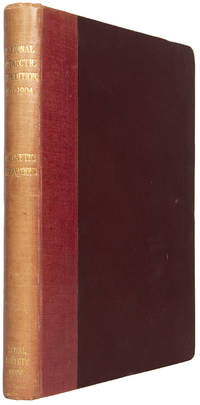
115667London Royal Society 1909. . First edition; 4to; 43 plates original red buckram-backed boards spine fade small stamps to foot of title a very good copy; vii 274 pp.<br /> From the library of Professor Otto Nordenskjöld 1869-1928 the distinguished Swedish Antarctic explorer and scientist. Nordenskjöld was on the Swedish scientific expedition to the Antarctic 1901-1903 and would have had a particular interest in the results of the Discovery expedition. The volume includes an appendix comparing magnetic observations in the Antarctic and the Arctic.<br /> Rosove 288-11.A1; Spence 841; Taurus 48. London, Royal Society, 1909. hardcover
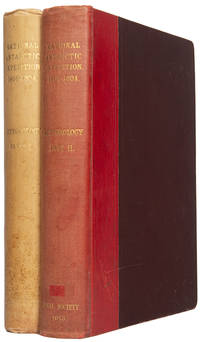
115669London Royal Society 1908-1913. . First edition; 2 vols 4to; vol. I: frontispiece 14 plate leaves large folding coloured map 1 very large chart dissected into 4 parts with title sheet; vol. II: 261 leaves of weather maps printed on one side only vol. I in red buckram backed boards vol. II in bright carmine red cloth backed boards spines faded lightly soiled a very good set; xiv 544; 26 pp.<br /> From the library of Professor Otto Nordenskjöld 1869-1928 the distinguished Swedish Antarctic explorer and scientist. Nordenskjöld was on the Swedish scientific expedition to the Antarctic 1901-1903 and would have had a particular interest in the results of the Discovery expedition.<br /><br />Meteorology is an important work providing a compendium of over a thousand synoptic charts concerning the Antarctic drawn not only from Scott's expedition but also from the Scottish Swedish and German expeditions. This was the first attempt to give an idea of the general principles underlying atmospheric circulation in the southern hemisphere.<br /> Rosove 288-9.A1 288-210.A1 binding b; Taurus 50; Spence 840. London, Royal Society, 1908-1913. hardcover
115668London Royal Society 1908. . First edition; 4to; 2 coloured maps 1 folding 21 plates including 8 lithographs photographic plates including a folding panorama; original red buckram-backed boards spine faded a very good copy; v 192 pp.<br /> From the library of Professor Otto Nordenskjöld 1869-1928 the distinguished Swedish Antarctic explorer and scientist. Nordenskjöld was on the Swedish scientific expedition to the Antarctic 1901-1903 and would have had a particular interest in the results of the Discovery expedition.<br /><br />Physical Observations is notable for the series of eight lithographs of aurora observations including seven of aurora effects on thick brown paper.<br /> Rosove 288-8.A1; Spence 839; Taurus 47. London, Royal Society, 1908. hardcover
1965332Beamsville Ontario: Discovery Women's Institute Printed by Rannie Publications 1965. First edition. Stapled Wraps. Unpaginated. pp. 64. 4to. Illustrated card covers. Profusely illustrated with maps black and white photographs portraits and illustrations. Lightest rubbing to the extremities contents clean and unmarked with tight sound binding; very good. Rare. A comprehensive local history of Discovery N.W.T. formerly a mining town with details on the Indigenous peoples of the region religious affiliations of the community and the institutions serving them schools libraries newspapers fraternal organizations etc. <br/><br/> [Discovery Women's Institute], Printed by Rannie Publications paperback
191722798London 1917. Very good condition. The salver was presented as a wedding gift to Royal Navy officer CHARLES ROYDS 1876-1931 the Discovery's first lieutenant after whom Cape Royds in Antarctica is named. The salver has specially crafted feet fashioned after penguin's feet.<br /> <br /> The Discovery expedition was the first led by Captain Robert Scott and was arranged by the Joint Antarctic Committee composed of members from the Royal Society and the Royal Geographical Society. Known as the British National Antarctic Expedition the goal of the expedition was the scientific exploration of South Victoria Land and the ice barrier as well as the interior of the Antarctic continent. Its achievements included the discovery of the polar plateau and Scott's ascent the first ever in a hot air balloon over Antarctica. It was also the first to do extensive land exploration on the continent and went the furthest south by a sledge reaching 82 16' S. One of the unexpected contributions was the introduction to the Antarctic of so many future explorers as it included Ernest Shackleton Frank Wild & Edgar & Edward Evans. Scott returned to Antarctica a second time aboard the Terra Nova. That expedition which commenced in 1910 developed into a race against the Norwegian explorer Roald Amundsen to become the first to reach the South Pole. Amundsen attained the goal on January 4 1912 beating Scott by two weeks. Scott's expedition ended tragically when he and four companions perished on their return march from the South Pole after failing to reach a supply depot.<br /> <br /> Royd's had a very distinguished list of Antarcticans attending his wedding. But there are a number of ghostly presences that might have been there. Both Scott and Edward Wilson died in 1911 in their attempt to be the first to the South Pole. Ernest Shackleton was on duty in Northern Russia as was Frank Wild. These two were to return to the Antarctic in the Shackleton's Endurance expedition which is one of the greatest stories of survival ever told. Dr. Koettlitz died in 1916. <br /> <br /> The silver salver was made by Goldsmiths & Silversmith's Co. Regent St. London in 1917. It has a scalloped rope edge and four ball and claw feet is inscribed with the seal of the Discovery Voyage depicting icebergs and a penguin encircled within a heraldic belt. Below the seal is the engraved inscription "To Captain C.W. Royds R.N. on his marriage October 5th 1918 from his old messmates in the ‘Discovery' 1901-1904." <br /> <br /> Surrounding the inscription are the engraved signatures of:<br /> <br /> Scottish Royal Navy captain ALBERT B. ARMITAGE 1864-1943; "Albert B. Armitage" was the Discovery's second-in-command. "Armitage had been second in command of the Jackson-Harmsworth expedition to Spitsbergen. In recognition of this he received the Murchison award from the Royal Geographical Society. Armitage was the oldest man in the expedition and his years of Arctic service gave him more such experience than anyone else on the Discovery except Koettlitz. The contrasts between Armitage and Scott were noteworthy. Armitage had a good deal of experience with ships under sail; Scott did not. Armitage had three years of polar work; Scott had none" Scott of the Antarctic Huxley. Cape Armitage the southernmost point on Ross Island is named in his honor.<br /> <br /> LOUIS BERNACCHI 1876-1942; "L. C. Bernacchi" was a Tasmanian physicist and astronomer of Italian extraction. His first polar journey was with Carsten Borchgrevink's Southern Cross expedition 1898-1901 along with Hodgson above. For his work on the Discovery voyage Bernacchi was decorated by the Royal Geographical Society and awarded the Légion d'honneur. Scott was the best man at his wedding. Bernacchi explored regions of Africa and South America wrote several books on the Antarctic was a member of the Royal Geographic Society and served in the British and United States military during World War I. His attempts to raise funds for a 1925 Antarctic expedition failed. Antarctica's Bernacchi Head and Bay honor his name.<br /> <br /> MICHAEL BARNE 1877-1961; "Michael Barne". Barne's responsibilities as a member of Scott's Discovery expedition was to keep records of the voyage. A recipient of the Polar Medal Barne "had been a shipmate of Scott on the Majestic. and was appointed second officer by the committee in June 1900. His duties including assisting Armitage with magnetic studies and taking charge of deep-sea temperature research" Pilgrims on the Ice: Robert Falcon Scott's first Antarctic Expedition Baughman. An Antarctic cape glacier and inlet are named after him.<br /> <br /> GEORGE FRANCIS ARTHUR MULOCK 1882-1963; "George F.A. Mulock". Mulock had joined the relief vessel Morning that resupplied Scott's ships in the Antarctic. In 1902 he came aboard the Discovery to replace Ernest Shackleton who had fallen ill. Mulock served as a surveyor and cartographer during the mission publishing his results as Survey Work of the National Antarctic 1901-04 for which he was awarded the Polar Medal. He had a distinguished career in both World War I and II during which time he was held captive by the Japanese. The Mulock Inlet and Glacier are named in his honor.<br /> <br /> Marine biologist THOMAS VERE HODGSON 1864-1926; "T.V. Hodgson" did pioneering work aboard the Discovery and was the first person to describe the Antarctic's deep sea floor. Prior to joining the Discovery he had been a member of Carsten Borchgrevink's Southern Cross expedition 1898-1901. Cape Hodgson in the Ross Archipelago is named after him.<br /> <br /> Royal Navy officer REGINALD W. SKELTON 1872-1956; "Reginald W. Skelton" was the Discovery's chief engineer and official photographer. Despite the long-standing friendship between Scott and Skelton he was passed over as second-in-command on Scott's fatal 1910 Terra Nova expedition. An Antarctic inlet and three glaciers are named in his honor.<br /> <br /> CYRIL LONGHURST "Cyril Longhurst" was the secretary of the Discovery expedition and served as best man at Shackleton's wedding. Mount Cyril in Antarctica is named after him.<br /> <br /> HARTLEY TRAVERS FERRAR 1879-1932; "H.T. Ferrar" was born in Ireland raised in South Africa and educated as a geologist in England. A relatively young and inexperienced member of the voyage Ferrar met the woman he would marry while the Discovery was docked in New Zealand. His expedition duties included making geological surveys classifying what became known as the Ferrar or Beacon sandstone layer and discovering the first Antarctic fossils. He later conducted geological research in Egypt Palestine and New Zealand. The Ferrar Glacier is named for him.<br /> <br /> Following the Discovery expedition Royds continued his career in the Royal Navy. While commanding the battleship HMS Emperor of India he was given our lovely sterling silver platter to honor his marriage to Mary Louisa Blane a widow and retired actress. After the war Royds was an instructor at the Admiralty retiring from the navy as a rear-admiral. Thereafter he enjoyed a second career as deputy commissioner of the Metropolitan Police for which he received a knighthood.<br /> <br /> A unique object. Professionally polished and in fine condition save a few very faint scuffs. unknown
0282922741.Gpaperback. Good. Access codes and supplements are not guaranteed with used items. May be an ex-library book. paperback
a16886Cambridge 1941. Vol XXI pp. 1-226 plates I-IV. Lg.4to. original printed wraps. Near Fine. . paperback
182044807Paris Crochard 1820. No wrappers as extracted fron 'Annales de Chimie et de Physique' Volume 15 2e Series. Pp. 93-102. <br/><br/><em>First appearance of this importent paper in which Arago gives an account of his discovery of how iron and steel could be magnetized by the action of the voltaic current THE FIRST STEP TOWARDS THE ELECTRIC TELEGRAPH. "Arago . made several important contributions to electromagnetism on his own. On 20 September 1820 he announced the discovery of the temporary magnetization of soft iron by an electric current which suggested to Ampère a theory about the nature of magnetic "currents" and provided the technological key to the electric telegraph. Ampère calculated that the magnetic power could be multiplied by twisting the current-carrying wire into a helix and with Arago he carried out the first experiments on primitive solenoids. In his historical articles Arago was always careful to credit Ampère with the major share of this discovery which ultimately depended upon Ampère’s mathematical theory."DSB.Arago formed a close freinship with Fresnelwhose views on the nature of light he ardently supported. He assisted Fresnel in some of his most importent work and made original discoveries in the same field.Magie "A Source Book in Physics" p. 443 ff. </em> unknown