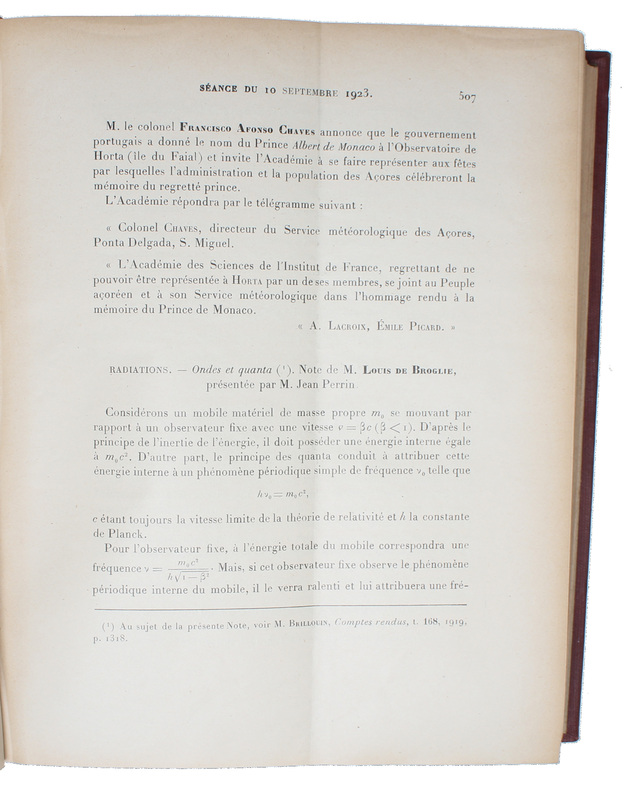
"BROGLIE (DE BROGLIE), LOUIS DE . - DISCOVERY OF THE WAVE THEORY OF MATTER AND CREATION OF WAVE-MECHANICSLivre Rare Book
1 816 résultats
192349718Paris, Gauthier-Villars et Cie, 1923. 4to. Bound in one contemp. full buckram. Spines gilt and with gilt lettering. In: ""Comptes Rendus Hebdomadaires des Séances de L'Academie des Sciences"", Tome 177. Bound with orig. printed front-wrapper to No. 1, half-title and title-page to vol. 177. 1513 pp. (Entire volume offered). De Broglie's papers: pp. 507-510, pp. 548-551 a. pp. 630-32. Clean and fine. A punched stamp on foot of title-page.
183747418London Richard and John E. Taylor 1837. No wrappers. Extracted fron "Scientific Memoirs selected from The Transactions of Foreign Academies of Science and Learned Societies. Edited by Richard Taylor." Vol. I. Pp. 540-547. <br/><br/><em>Henry's milestone paper announcing his discovery of electrical self-induction. "Henry independently discovered electro-magnetic induction and in this paper announced his discovery of electric self-induction one of the prime properies of an electro-magnetic circuit. Henry was an eminent experimenter but was casual in publishing his findings with resulting lack of recognition of his contributions."Bern Dibner.Dibner "Heralds of Sciece" No.63.It was also printed the same year in "Transactions of the American Philosophical Society New Series Vol. 5". The paper was later printed in "Philosophical Magazine" 1840."The direction of Henry’s thought became somewhat apparent in his 1835 paper refers to the papers reading before the American Phil. Soc. febr. 6th 1835 on the action of a spiral conductor in increasing the intensity of galvanic currents. The paper started out as an affirmation of Henry’s priority in the discovery of self-induction. He then combined induction proper using Faraday’s findings and his own with selfinduction to show how these produce a pattern of repulsions yielding an increased effect in spirals. He specifically linked these “magneto-electrical†results to the principles of static induction developed by Cavendish and Poisson. This explanation was then applied to Savary’s report of changes of polarity when magnetic needles were placed at varying distances from a wire in which a current was being transmitted "Mémoire sur l’aimantation" in Annales de chimie et de physique 34 1827. That is currents appeared periodically in the air surrounding a current-bearing straight wire as a result of the actions of induction and self-induction." DSB.Wheeler Gift: 2724-2725a. </em> unknown
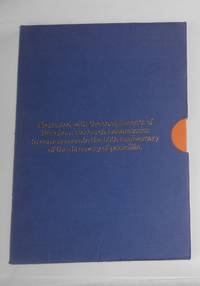
1979TN254373British Journal of Experimental Pathology / Beecham Research Laboratories London 1979. 1st Edition Thus. SOFTCOVER. Mde to commemorate the 50th anniversary of the discovery of penicillin and published by Beecham Research Laboratories in 1979. 4to in black printed orange card covers pages numbered 191 to 236 - a very nicely produced facsimile using well matched paper of the exact size of the complete issue for June 1929 which contains Flemings famous paper. Housed in a cloth backed thin card slip-case with single leaf insert on thick glossy paper with a brief history and time-line for penicillin. Fleming made his own limited edition reprint of the offprint in 1944 but this is the first reprint of the whole issue. __CONDITION : The journal and insert are AS NEW the slipcase is a little shelf rubbed and faintly sunned. Overall an excellent copy of this facsimile which has become almost as hard to find as the original. __NOTE. Depending on destination this item may require an extra payment for shipping insurance. If so orders made by card will be completed only after you have approved the extra cost. . __We always ship in PROTECTIVE CARD PARCELS British Journal of Experimental Pathology / Beecham Research Laboratories, London paperback
184242843London Richard and John E. Taylor 1842. 4to. No wrappers as extracted from "Philosophical Transactions" 1842 - Part II. Pp. 181-214 and one double-page folded engraved plate. <br/><br/><em>First appearance of a pioneer-paper in the history of early photography in which Herschel announced some of his importent discoveries of the photographic printing processes the process of photographic contact-printing in Prussian blue brought to light just three years after Louis Daguerre and Henry Talbot had announced their independent inventions of photography in silver using metal and paper substrates respectively. and the photographic properties of red ferro sesquicyanuret of potassium."This is the first recorded observation of Prussian blue being formed for a photographic purpose by the action of light on potassium ferricyanide so it represents the moment of discovery of the first cyanotype process although this name still lay in the future. The significance of this observation impressed Herschel sufficiently to mention it also in his general diary entry for 23 April 1842."Mike Ware in "John Herschel's Cyanotype. Invention or discovery ". </em> unknown
182543119London W. Nicol 1825. 4to. No wrappers as extracted from "Philosophical Transactions" 1825 - Part II. Pp. 440-466. Clean and fine. <br/><br/><em>First appearance of this remarkable paper in which Faraday announces his discovery of Benzene. Berzelius described this research as "without doubt one of the most importent which has enriched chemistry during 1825.""The first public announcement of the discovery of benzene the greatest chemical discovery made by Faraday. Originally named by him "bicaburet of hydrogen" benzene is the parent substance of all aromatic compounds. It constitutes the basis of thousands of organic compounds dyes perfumes and medicinal products as well as many polymers and structural materials. The discovery of benzene led to the creation of numerous chemical companies and the manufacture of materials previously unknown. This paper is a thourough study of the physical and chemical properties of benzene."Neville I p. 443. - Parkinson "Breakthrough" 1825 C. </em> unknown
184342662London Richard and John E. Taylor 1843. 4to. No wrappers as extracted from "Philosophical Transactions" 1843 - Part I. Pp. 1-6. <br/><br/><em>First appearance of a pioneer-paper in the history of early photography as Herschel here for the first time describes his discovery of the iron printing process with ammonio-citrate of iron by both methods namely with blue lines on a white background and white lines on a blue ground. </em> unknown
180442469London Bulwer and Co. 1804. 4to. Without wrappers as extracted from "Philosophical Transactions of the Royal Society of London." Year 1804-Part II. Pp. 419-430. Clean and fine. <br/><br/><em>First appearance of the paper in which Wollaston announced his discovery of the metallic element Rhodium."Dr. Wollaston dissolved a portion of crude platinum in qgua regia and neutralized the excess acid with caustic soda. He then added salammoniac to precipitate the platinum as ammonium chloroplatinate and mercurous cyanide to precipitate the palladium as palladium cyanide. After filteringoff the precipitate he decomposed the excess mercurous cyanide inthe filtarate by adding hydrochloric acid and evaporating to dryness. When he washed the residue with alcohol everything dissolved except a beautiful dark red powder which proved to be a double chloride of sodium and a new metal which because of the rose color of its salts Dr. Wollaston named 'Rhodium'. He found that the sodium rhodium chloride could be easely reduced by heating it in a current of hydrogen and that after the sodium chloride had been washed out the rhodium remained as a metallic powder. he also succeeded in obtaining a rhodium button."Weeks: Discovery of the Elements. p. 104-05. </em> unknown
189844238London Taylor and Francis 1898 No wrappers. In "Proceedings of the Royal Society of London." Vol.63 Nos. 399-400 both issues offered. Pp. 373-480 a. 5 plates. Ransay & Travers' paper: pp. 405-408. <br/><br/><em>First appearance of the paper in which Ramsay and Travers announced their discovery of a new element which they named "krypton" meaning hidden."Dr. William Hampson presented them Ransay & Travers with about a liter of liquid air which they used not for liquefying the argon but for obstaining sufficient skill in manipulation so that they would not risk loosing their precious fifteen liter of argon.The residue left after most of the liquid air had boliled away consisted largly of oxygen and nitrogen which Ramsay and Travers temoved with red-hot copper and magnesium. .they then examined the twenty-five cibic centimeters of residual gas and when they found it to be inerst they immediately placedit in a Pl'ucker tube connected to and induction coil and observed its spectrum. There was a bright yelælow line with a greener tint than that of the helium line and a brilliant green line that did nor coincide with any line of argon helium mercury or hydrogen. They discoverede this gas on 30 May 1898 and named it 'krypton'.they found that it belonged between bromine and rubidium in the periodic table and so great was their excitement that the younger chemist almost forgot about his examination for doctor of sciwence which had been schedules for the next day."Weeks p. 267.Parkinson "Breakthroughs" 1898 C. </em> unknown
189549284London arrison and Sons 1895. - Paris Gauthier-Villars 1895. 8vo. and 4to. Later full cloth gilt lettering to spine Ramsay and without wrappers Cleve. In "Proceedings of the Royal Society" Ramsay Vol. 58. Entire vol. offered. And in "Comptes Rendus Hebdomadaires des Séances de L'Academie des Sciences" Cleve Tome 120 No 15. Pp. 797- 850. Entire issue offered. Ramsay's papers: pp. 65-67 and pp. 81-89. - Cleve's paper: p. 834. Stamps tp edges and a few corners a bit bumped on vol. 58 otherwise clean and fine. <br/><br/><em>First printing of both papers in which Ramsay and Cleve - independently - announced their discovery of Helium on the Earth. Although Ramsay announced the discovery of Helium before Cleve had completed his research the Swedish chemist was independent discoverer of the element.Helium was discovered in the sun already in 1868 by Jules Janssen and independently by Lockyer the same year. Janssen discovered helium in the sun when he observed a total eclipse in India by studying the spectra of the suns chromosphere and Lockyer also by spectroscopy found that the new line in the spectrum did not belong to any element then known and he named it Helium for the sun.In the same volume as Ramsays paper there are 5 papers by NORMAN LOCKYER dealing with the discovery of Helium on the earth examining Ramsay's and Cleve's findings.Parkinson "Breakthroughs" 1895. </em> hardcover
182543119(London, W. Nicol, 1825). 4to. No wrappers as extracted from ""Philosophical Transactions"" 1825 - Part II. Pp. 440-466. Clean and fine.
184342662(London, Richard and John E., Taylor, 1843. 4to. No wrappers as extracted from ""Philosophical Transactions"" 1843 - Part I. Pp. 1-6.
184242843(London, Richard and John E., Taylor, 1842.). 4to. No wrappers as extracted from ""Philosophical Transactions"" 1842 - Part II. Pp. 181-214 and one double-page folded engraved plate.
183747418(London, Richard and John E. Taylor, 1837). No wrappers. Extracted fron ""Scientific Memoirs, selected from The Transactions of Foreign Academies of Science and Learned Societies. Edited by Richard Taylor."", Vol. I. Pp. 540-547.
189844238(London, Taylor and Francis, 1898) No wrappers. In ""Proceedings of the Royal Society of London."", Vol.63, Nos. 399-400 (both issues offered).. Pp. 373-480 a. 5 plates. Ransay & Travers' paper: pp. 405-408.
189549284London, arrison and Sons, 1895. - (Paris, Gauthier-Villars), 1895. 8vo. and 4to. Later full cloth, gilt lettering to spine (Ramsay) and without wrappers (Cleve). In ""Proceedings of the Royal Society"" (Ramsay), Vol. 58. (Entire vol. offered). And in ""Comptes Rendus Hebdomadaires des Séances de L'Academie des Sciences"" (Cleve), Tome 120, No 15. Pp. (797-) 850. (Entire issue offered). Ramsay's papers: pp. 65-67 and pp. 81-89. - Cleve's paper: p. 834. Stamps tp edges and a few corners a bit bumped on vol. 58, otherwise clean and fine.
180442469(London, Bulwer and Co., 1804). 4to. Without wrappers as extracted from ""Philosophical Transactions of the Royal Society of London."" Year 1804-Part II. Pp. 419-430. Clean and fine.
184245440Kjöbenhavn Bianco Luno 1842 a. 1845. 4to. Bound in one contemp. halfcalf spine gilt. A small tear to backhinge at lower compartment of spine. IV76 pp. and 3 double-page folded lithographed plates with many figs. XIV88 pp. and 2 double-apge lithographed plates with many figs. Light browning to the last leaves of the second work. <br/><br/><em>The scarce first edition of the work in which Steenstrup describes his discovery of the principle of 'ALTERNATION OF GENERATIONS'' sexual and asexual in plants and animals. "Steenstrup showed that certain animals produce offspring which never resemble them but which on the other hand bring forth progeny which return in form and nature to their grandparents or more distant ancestors." Garrison & Morton No 217. A German translation was published the same year and an English in 1845. Norman 2009 German translation. "The second major publication - the first dealing with geology - of 1842 was "Om Forplantning og Udvikling gjennem vexlende Generationsrækker." the work offered Steenstrup's comprehensive presentation of the form of reproduction that he called 'alternation of generations' that is the alternation of asexual and sexual reproduction or metagenesis. This phenomenon had previously been described by Chamisso but Steenstrup included a greater number of observations based on a significantly wider range of subjects and provided an importent chapter on its meaning. Steenstrup's growing reputation won him an appointment as professor of zoology at the University of Copenhagen where he tought from 1846 until 1885."DSB XII p. 9. </em> unknown
184245440Kjöbenhavn, Bianco Luno, 1842 a. 1845. 4to. Bound in one contemp. halfcalf, spine gilt. A small tear to backhinge at lower compartment of spine. IV,76 pp. and 3 double-page, folded lithographed plates with many figs. + XIV,88 pp. and 2 double-apge lithographed plates with many figs. Light browning to the last leaves of the second work.
124 pages. Archival black and white photos. Contents include: discovery, fur trade, mission, settlement, ranch development, Okanagan School, mail and transportation, boats and railroads, town development, commercial and social. Average wear. A sound copy of this informative work. Book
Paris, Cercle du Livre Précieux, 1966. 5 volumes in-8, format oblong, pleine reliure verte, 312-341-436-545 et 524 pages, plus une table et des notes par volume. Edition originale des Oeuvres complètes réalisée d'après les maquettes de Bruno Pfäffli pour le compte des Editions Tchou. Exemplaire sur numéroté sur vélin. Trsè bel exemplaire en PARFAIT état. Tome 1 : Récits. Les instants bien employés suivis de Jean Paulhan, voyageur et conteur ou le Monde inconnu par André Dhôtel. (Lalie. - Progrès en amour assez lents - Le Pont traversé. - Le Guerrier appliqué.- La guérison sévère. - Aytré qui perd l'habitude. - La métromanie ou les dessous de la capitale.- Les Causes célèbres. - Guide d'un petit voyage en Suisse. - L'aveuglette. - De mauvais sujets. - Une semaine au secret. - 13 Entretien à la radio avec Robert Mallet. Etc., etc...)
17049Paris, Cercle du Livre Précieux, 1966. 5 volumes in-8, format oblong, pleine reliure verte, 312-341-436-545 et 524 pages, plus une table et des notes par volume.
70173aafGenève, Pierre Cailler, 1958, in-8vo à l'italienne, 118 p., ill., non coupé, ex. numéroté blanc mat gélatiné N° 17, brochure originale
2011500058959MAGNARD 2011 160 pages 21 8x1 2x28 6cm. 2011. pocket_book. 160 pages.
10204ou cinquième parie du Monde. Revue Tome deuxième. Revue géographique et ethnographique de la Malaisie, de la Mélanésie,de la Polynésie, et la Micronésie. In 8 broché, titre en blanc sur fons bleu, dos muet. Faux-titre, titre de relais, titre, carte dépliante de Polynésie et Micronésie, 397 pages 1 vais de placement des gravures, errata du second volume. Complet des gravures hors-texte, de la carte de Polynésie. La carte de Bornéo annoncée, est manquante dans ce volume. Publié par FIRMIN-DIDOT frères 1836. L’univers histoire de tous les peuples Rousseurs, une pâle mouillure angle supérieur droit du début à la page 60
186959086Paris Gauthier-Villars 1869. 4to. In: "Comptes Rendus Hebdomadaires des Séances de L'Academie des Sciences" Tome 68 No 7. Pp. 349- 408. Entire issue offered. Janssen's paper pp. 367-376. <br/><br/><em>First printing of the paper in which Janssen announced the discovery of a new element. On August 18 1868 Janssen managed to do just that. He became the first person to observe helium an element never before seen on Earth in the solar spectrum. At the time though Janssen didn’t know what he’d seen"just that it was something new""Helium the second most abundant element in the universe was discovered on the sun before it was found on the earth. Pierre-Jules-César Janssen a French astronomer noticed a yellow line in the sun's spectrum while studying a total solar eclipse in 1868. Sir Norman Lockyer an English astronomer realized that this line with a wavelength of 587.49 nanometers could not be produced by any element known at the time. It was hypothesized that a new element on the sun was responsible for this mysterious yellow emission. This unknown element was named helium by Lockyer." </em> unknown