McKINLAY, JohnBiblio.com
5 988 résultats
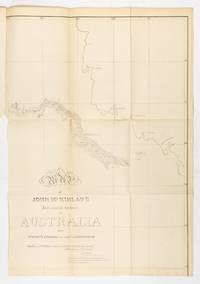
1862140416Adelaide: W.C. Cox Government Printer 1862. First Edition. Hardcover. Very Good. Adelaide W.C. Cox Government Printer 1862 first edition. Foolscap folio drop-title 56 pages plus 4 large folding maps respective maximum sheet sizes and printed surface areas are 754 × 545 mm and 739 × 521 mm; 757 × 545 mm and 724 × 520 mm; 756 × 542 mm and 730 × 517 mm; and 758 × 556 mm and 724 × 525 mm. Recent cloth lettered in gilt on the front cover; maps lightly foxed in a few spots with a few tiny tears expertly sealed and a few tiny chips to some top and leading edges; an excellent copy. South Australian Parliamentary Paper Number 12 of 1862. The earliest printing of McKinlay's journal of his Burke and Wills Relief Expedition and a rarity. 'The South Australian House of Assembly chose John McKinlay to lead the South Australian relief expedition in August 1861. Setting out from Kapunda with a well-equipped party he reached Cooper's Creek in October. From his depot at Lake Buchanan he made numerous excursions into the surrounding country and found what he believed to be the grave of one of the Burke party. Coming to the conclusion that all of Burke's men had died he sent back for instructions. When his instructions arrived he learned that Howitt had already discovered King and that Burke Wills and Gray were indeed dead. <p>McKinlay proceeded to examine the land to the north of Lake Eyre discovering much useful pastoral and grazing land. In December he set out for the Gulf of Carpentaria to rendezvous with the Northern Relief Expedition under Commander Norman. His crossing was made difficult by diminished stores and his position was critical in May 1862 when he arrived with his men at the Albert River where he expected to find relief only to discover that the "Victoria" had already sailed. Sensibly he decided to make for the Queensland coastal settlement at Port Denison 500 miles to the east. After a difficult trip of over three months McKinlay brought all his men into Port Denison by the end of August. <p>When he reached Adelaide in October 1862 McKinlay handed his journal to the South Australian Government. It was printed soon afterwards in the South Australian parliamentary papers. The text of his journal was later published for general distribution in the colonies by two Melbourne publishers' Wantrup. <p>Only the first public account published by Baillière in 1863 contained maps 'three large folding maps loose in a back endpocket' but it is 'virtually unprocurable in fine clean condition owing to the poor quality of the paper used' Wantrup. This first edition large-format parliamentary paper is far superior in every respect. McLaren 12963; Wantrup 2023 pages 317-18. W.C. Cox, Government Printer hardcover
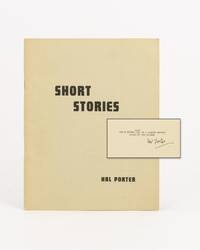
1942140203Adelaide: The Author 1942. First Edition. Paperback. Near fine. Adelaide The Author 1942. Quarto 63 pages. Saddle-stapled grey card covers lettered in black very slightly creased and marked with one trifling snag at the foot of the spine; edges slightly thumbed; a near-fine copy. Two typographical errors have been corrected in pencil by the author: on the dedication page it is now 'juvenilia' not 'juvenalia' at the end of the first line; and on page 55 'spoilation' is now 'spoliation'. However we note in passing that 'daguerrotype' in the line above got through unnoticed. Number 138 of an undated limited edition with the upper limit not stated numbered and signed by Hal Porter. This is a presentation copy of his first stand-alone work additionally inscribed and signed in ink at the head of the title page 'To dear Lucy Lockett with love and gratitude from Hal. 14 xii 1944'. The recipient Lucy Lockett Ayers 1886-1971 was a granddaughter of Sir Henry Ayers. <p>The revised edition of Porter's biography by Mary Lord 'Hal Porter - Man of Many Parts' 1993 states '"Short Stories" came out late in 1942 in a limited edition of 250 copies. Most if not all were numbered and signed then distributed randomly and recklessly by the author. The volume contained fourteen stories none of which had been published and one of which was the prize-winning "And from Madame's sic"' page 28. The precise details of the publication remain unclear. Lord's checklist indicates that the book was printed by the Adelaide 'Advertiser' and gives a date of '1942' but the very few perfunctory press notices relating to the book appear in April and May 1943 perhaps suggesting a later date of publication. Although copies are undoubtedly now extremely scarce whatever the truth of the matter this presentation inscription demonstrates that Porter still had copies to hand in December 1944. <p>The stories contained in this collection are 'The Room' 'And from Madame's .' 'The Two Bachelors' 'At Aunt Sophia's' 'No-one Knows!' 'Miss Rodda' 'Carnival Piece' 'Cafe Samovar' 'Scene: The Bend of a River' 'Otto Ruff' 'Gone Away' 'The White Rabbit' 'Miss Brockel' and '- And Nothing More'. <p>Loosely inserted is a typescript of a contemporary review of the book 1 page quarto with two of the six paragraphs struck out with pencil. We have been unable to determine whether or not it was published or if Lucy Lockett Ayers is the reviewer. 2 items. The Author paperback
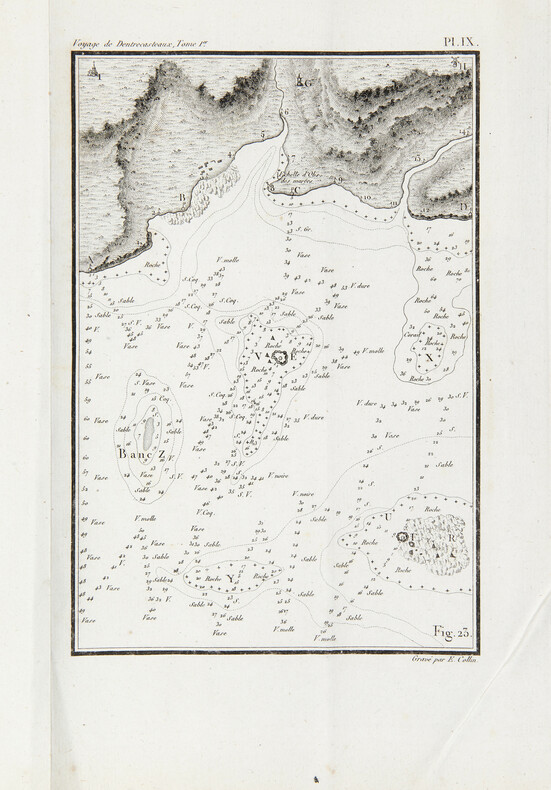
1808PHO-1626Paris, Imprimerie impériale, 1808. 2 grands et forts volumes in-4 (32x24), lvi, 704 p., 33 pl. ; viii, 692 p., relié demi basane et coins moderne, dos avec auteur, titre, tomaison, lieu et date, exlibris en page de garde, non rogné, tome 2 non coupé, petite mouillure au tome 2, petites rousseurs aux illustrations du tome 1. Exemplaire sur papier bleuté, complet de son illustration mais sans son atlas de cartes
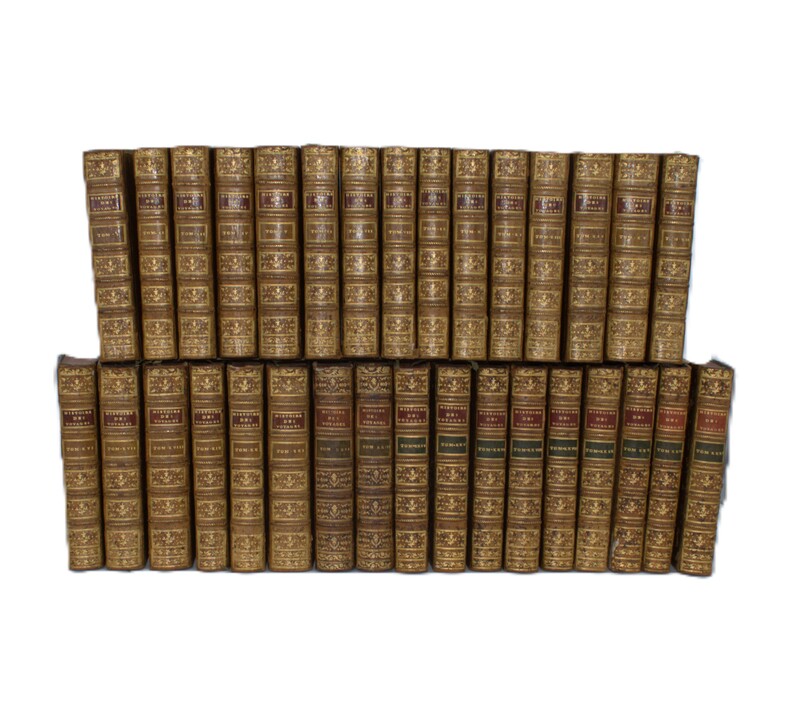
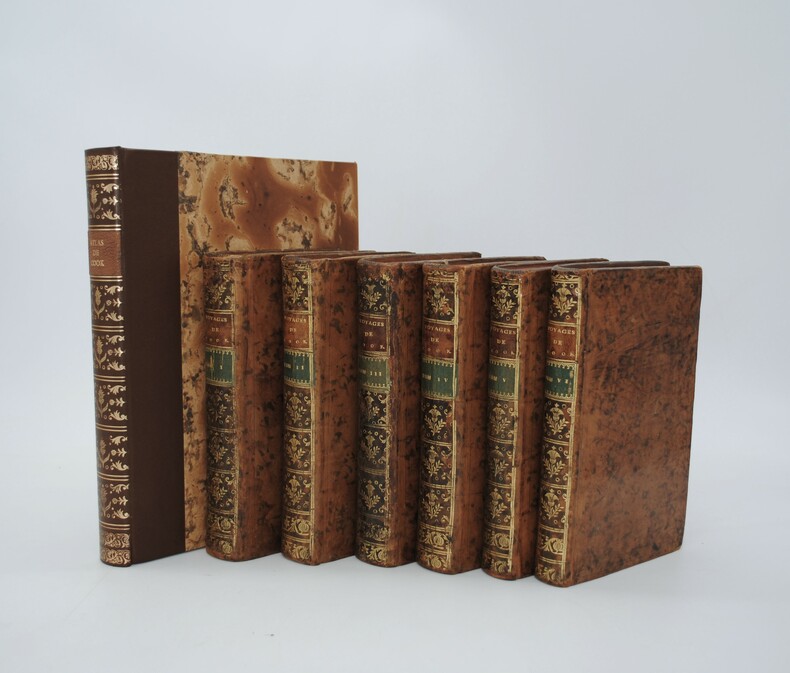
1780PHO-2387Paris, Hôtel de Thou, Laporte, Moutardier, 1780/1801, 32 volumes in-8, basane époque, guirlande sur les plats, dos ornés, pièces de titre rouge et pour les tomes 22 à 32 ; pièces de tomaison vertes, triples filets aux plats, tranches rouges, fleurons légèrement différents pour les tomes 22 et 23. Quelques accidents aux coiffes, quelques épidermures au supplément, légers manques de matières sur quelques tomes, mouillure très claire sur quelques feuillets (2 tomes), le tout sans gravité. Ex-libris du Comte de Farcy de la Villedubois au dos du premier plat. Belle édition de l’Abrégé de l’Histoire des Voyages, elle se compose des 21 premiers volumes de 1780 publiés par La Harpe à l’Hôtel de Thou, des 2 volumes publiés en 1786 consacrés au troisième voyage de Cook et formant les volumes 22 et 23, chez Laporte, et des 9 volumes de suppléments publiés entre 1798 et 1801 par Delpuech-Comeiras et imprimé chez Moutardier. L’illustration est formée de l'atlas complet des 74 (+1 en double) cartes dépliantes des diverses parties du monde, dont la Carte dépliante de l'hémisphère austral montrant les routes des navigateurs les plus célèbres par James Cook, une carte de Tahiti, d'autres du Kamtchatka, du Spitzberg, des îles Antilles, etc, et de 4 cartes pour les tomes 22 à32 ainsi que 101 planches dont certaines dépliantes, les cartes et gravures en très bel état.
1847048653London: T. & W. Boone 1847. xx 544pp frontispiece and 6 other b/w plates 1 folding 7 text illustrations 1 small advertisement bound in. Contempory marbled boards with leather spine. Spine rebacked retaining original spine several related clippings late 19th & early 20th century laid onto endpapers and rear blanks prev owner armorial bookplate on front pastedown name on verso of frontis narrow damp mark to margin of frontis not affecting image foxing to plates but text pages clean occasional pencilled notes. Minor rubbing to boards. Some black tape remains from old hinge repair but a proper repair has been performed. A nice copy of this scarce explorer's journal. The 3-sheet map issued separately is NOT present. First Edition. Hard Cover. Very Good. 8vo. T. & W. Boone Hardcover
4to [30.5 x 23.5 cm]; xxix, [ii, errata, directions leaf], 360, 47 pp, 22 plates and maps including 6 folding maps and charts, tables, with the half title page (often lacking). contemporary leather backed marbled boards, gilt spine title lettering, joints rubbed, corners worn round, some light staining to about 5 plates at rear, mostly marginal, generally clean and unmarked, very good, a tall copy with wide margins. A picture of Two ships, the King George commanded by Portlock and the Queen Charlotte, commanded by George Dixon, visited the Falkland Islands, made a long stay at Hawaii, then proceeded to survey the American coast, to more accurately map the coast and to establish a British presence in the region's fur trade. National Maritime Museum 140: 'Dixon discovered Queen Charlotte Island, named after his ship'. Buck 35. Sabin 20364. Howes D365. Wickershaam 6574. Lada-Mocarski 43. Hill 352: 'This expedition set out to establish a trade in furs in North America. Dixon visited Hawaii three times in the course of the voyage. . .discovered Queen Charlotte Islands, Port Mulgrave, Norfolk Bay, Dixon Entrance and Archipelago while continuing down the coast and trading with the Indians.. . . Dixon's contribution to the work also includes the valuable maps. The accounts of this expedition relate to the geography, ethnology, and natural history of the American coast from Nootka Sound northward'. The fine plates including many views, birds, portrait, etc. One of the detailed appendices is on the natural history encountered. Dixon had earlier sailed with Cook on the Resolution
136727aafGenève, Imprimerie de Jules-Guillaume Fick, 1868, in-8vo, 268 p. + 20 photogr. d’après les dessins de MM. G. Liquier et D. (d’après les indications de l’auteur) (10 à plein page de scènes rurales et avec aborigènes + 10 plus petites in-texte (animaux et curiosités (e.a. pyramides de pierres géantes d’Australie), reliure en d.-veau d’époque, dos à cinq nerfs orné or, pièce de titre.
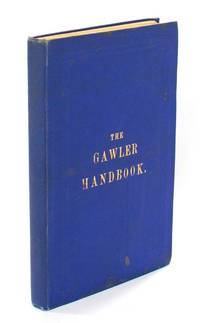
1880104186Adelaide: Goodfellow & Hele almost certainly the author: James Dally was convinced 1880. First Edition. Hardcover. Very Good. Adelaide Goodfellow & Hele almost certainly the author: James Dally was convinced 1880. Octavo 182 30 advertisements pages plus 6 lithographed plates of farm machinery by James Martin & Co. and 17 albumen paper carte de visite photographs individually mounted on tipped-in captioned leaves. Blind-decorated blue cloth lettered in gilt on the front cover; cloth slightly rubbed and bumped at the extremities a little marked and bubbled and lightly sunned on the spine; some mounts lightly creased a production flaw; a few trifling signs of use; a very good copy but internally fine with the photographs in superb condition. Ferguson 11744; Holden 70. Holden's entry is more accurate and informative although the photographs may vary slightly between copies. The photograph facing page 17 in this copy is of the 'Gawler Institute' showing the Institute building and Town Hall rather than 'Frankel's Hotel' as called for in Holden. These variations notwithstanding two separate editions were produced: one in wrappers with advertisements on the verso of the front cover and on both sides of the rear cover without photographs but with the lithographs not noted by Ferguson; the other in gilt-lettered cloth without the cover advertisements containing 17 mounted photographs plus the lithographs. Both contain 30 pages of advertisements at the rear. Rare in any state and in our view the version on offer is one of the more important and interesting photographically illustrated books produced in Australia. <p>'The handbook is illustrated with a number of views by Mr J. Taylor the local photographic artist representing the most important edifices and establishments in town' Holden quoting a contemporary review. The frontispiece is a portrait of John McKinlay 1819-1872; there are 14 pages devoted to him he married a Gawler woman in the early 1850s and was based in the town until his death. Justice is not done to the other photographs in describing them prosaically as 'the most important edifices and establishments in town'. Without exception signs of life and day-to-day activities flesh out the images and most of the businesses - butcher shop photographic studio cordial factory furnishing warehouse music emporium - feature well-stocked windows or yards and numerous staff members or customers. Holden reproduces two interesting ones including perhaps the best the butcher shop captioned merely 'Hodgson & Clements' but there are wonderful vignettes in many others. <p>Not least of these are the horse-drawn tram in front of the 'Commercial Bank' and the ornate hearse outside 'F. Fowler's Furnishing Warehouse'. While we are on the subject of death one chapter stands out. Among those to be expected say on 'Horticultural and Agricultural Progress. Gardens around Gawler' or 'The Humbug Society. Flam! Bam! Sham!' or 'The Streets - Number of Businesses - Description of Hotels' there is Chapter XI: 'The Neville and Adamson Tragedy'. Its thirteen pages describe in great detail the events surrounding the double suicide 'and its romantic accomplishment' of Neville and his partner Adamson. 'It is universally believed that Neville was the leading spirit in the suicide and so strong was Adamson's affection love friendship or whatever it may be termed for his companion that he consented to take that final leap in the dark in the wine cellar with him to visit that "bourne whence none return"'. Provenance: J. Cluny Harkness Federal President of the Chamber of Manufactures in the 1950s according to Trove with his pictorial bookplate on the front pastedown. Goodfellow & Hele [almost certainly the author: James Dally was convinced] hardcover
186380169Adelaide: W.C. Cox Government Printer 1863. First Edition. Hardcover. Fine. Adelaide W.C. Cox Government Printer 1863. Octavo 54 pages plus a large folding map and an errata slip tipped in on the contents page; the map 890 × 650 mm is of the Northern Territory itself and shows the 'exploration tracks' of Stuart Sturt A.C. Gregory McKinlay and Leichardt sic. Contemporary full morocco with decorative gilt borders front and rear and the title in gilt on the front cover a most attractive colonial binding; extremities slightly rubbed; leather slightly dusty; the map has tiny holes nibbled by silverfish along the fold of two blank panels and short splits to four intersecting folds insignificant blemishes; a fine copy. 'On 16 July 1863 the Crown annexed to South Australia "until We think fit to make other disposition thereof the Territory now known as the Northern Territory"'. Responsibility was transferred to the Commonwealth on 1 January 1911. The book reprints the Letters Patent and the relevant Acts and Regulations 20 pages together with lengthy extracts from Earl's 'Handbook for Colonists in Tropical Australia' printed earlier the same year at the 'Pinang sic Gazette' Press in the Straits Settlement 22 pages. The last section 'Interior of the Country' 12 pages is largely extracted from the journal of Stuart and the report of Waterhouse naturalist to his expedition. Ferguson 13458 the wrappers here are not stiffened and the title page is also printed within a border. <p>Provenance: The Honorable Henry Ayers CMG with his armorial bookplate. Sir Henry Ayers 1821-1897 legislator and businessman was at the time South Australian Chief Secretary under whose command the 'Northern Territory Land Regulations' and 'Appointment of Officers' printed in the book were proclaimed. Ayers has underlined in ink six lines in the Northern Territory Act relating to land orders. W.C. Cox, Government Printer hardcover
1900108066Adelaide: Paris Nesbit to Number 15 then John Newton Wood 1900. First Edition. Hardcover. Fine. Adelaide Paris Nesbit to Number 15 then John Newton Wood 1900 and 1901. Foolscap folio 242 pages. Each issue drop-title as issued in contemporary flush-cut cloth-backed papered boards; cloth renewed; boards lightly worn at the extremities and a little marked; the contents are in fine condition. Number 32 the first one in Volume 2 is a different format - shorter and wider - and the leading margins are folded back 40 mm. 'The small religious newspaper "Morning" was founded in 1900 by the gifted but unbalanced lawyer Paris Nesbit. The newspaper was initially used largely as a vehicle for his personal views on religion and Adelaide society. Nesbit unashamedly stated that the newspaper was his own voice and would be run "as Christ would if He were subject to the present limitations of my faculties" . Nesbit and his family - in particular his sister Agnes Benham - were interested in the "new thought" movement of the 1890s with its socialism and sexual reform. Early issues of the newspaper contained items commenting on Nesbit's short stint in the Parkside Mental Asylum in 1898 which he felt had been politically motivated by his enemies including the premier Charles Kingston. Kingston as well as other political and church leaders were criticised in early issues of the newspaper as were various Adelaide lawyers. Nesbit felt particularly strongly about religious hypocrisy. Benham contributed book reviews and periodic articles mostly on religious topics during the early life of "Morning". Much attention was given by various contributors many writing under pseudonyms to Benham and Nesbit's views that ideal marriage relationships were based on intellectual and spiritual connection. After just four months Nesbit handed over the editorship of the newspaper to the printer John Newton Wood who steered the newspaper towards an interest in spiritualism and vegetarianism' SA Memory online. The final issue appeared in 1909. Paris Nesbit (to Number 15), then John Newton Wood hardcover
1914010886Sydney: Angus & Robertson 1914 First edition dated July 1914 from the publishers 31 page catalogue at the rear RARE and scarce in the wrapper May Gibbs earliest 'Gumnut' style illustrations The dust jacket has edge wear and chipping and some short tears the front fold in flap is missing both the pasted on illustrations with May Gibbs art are present and intact these pasted on paper plates are also present on the book cover and spine book is tidy with small ink inscription to fep dated 1918 very slight foxing to closed edges colour frontspiece and four other full page black and white plates all by May Gibbs. x 228pp 31pp publisher's catalogue decorated cloth. First Edition. Decorative Cloth. Very Good/Fair. Illus. by May Gibbs. 8vo - over 7 - 9 tall. Angus & Robertson hardcover
4to, 8vo [33.5 x 26.5 & 23 x 14.5 cm]; 3 volumes including plate volume, xlviii, 536; iv, 332, clxxix pp,with large folding map, 92 plates including 10 finely hand-colored aquatints, large folding plan, music notation, other maps, tables, index. original red cloth with title lettering on front cover or spine, plate volume spine worn, mostly lacking, light foxing on some plates, heavier on a few, colored plates clean with tissue guards, text volumes bit faded but near fine, plate volume very good. First printed in 1817 in only 900 copies with only 66 plates, this edition being expanded to 92 plates and map. The plates are reputed to be by William Daniell. The author travelled extensively on the island. Abbey Travel 554; Tooley 391; Hill I, 245. According to Abbey, the atlas of plates was published separately for the second edition which was published in 1830 and printed in only a small number. Bastin p. 5: 'The book was got together with considerable haste and was published in 1817 in two quarto volumes. . .a total of 900 copies were published. Apart from its originality. . .the outstanding feature of the book is its 66 plates, ten or which are coloured aquatints illustrating Javanese life and costume and the Papuan boy who accompanied Raffles to England in 1816'. The plates of this edition include all the plates of the first edition plus additional plates of Javanese antiquities and topography. Prideaux: 'a monumental work. . . still a standard book'. Von Hunersdorff: 'An influential work valued for the author's firsthand observations on the customs and condition of the Javanese under his administration as Governor General during the British occupation of the Dutch East Indies'. The text volumes printed in 1830 have a great deal of data, much in tabular form including statistics, populartion, vocabularies, etc. with much of the author's text describing the people and country in great detail. from natural history and anitiquities to musical instruments, hunting methods, literature, games of skill, language, etc. All of the plates are present according to the plate list.
1822PHO-1375Paris, Leblanc, 1822 ,2 volumes in-8 de texte et un Atlas , petit in-folio (27,5x37,5cm) Texte ; 2 volumes in-8 , 2ff.-xxx-452pp. , 2ff.-506pp. , relié toile , dos lisse avec titre et tomaison. Atlas ; un volume in-folio ,2ffnch (Titre et liste des planches) et 26 planches dessinées par l’auteur dont une carte et 12 planches en couleurs d’époque, relié demi maroquin vert , dos orné avec titre et les armes royales et chiffre de Louis-Philippe, timbre de sa bibliothèque sur le titre (Neuilly) , ex-libris , exemplaire sur grand papier, frottements aux plats avec petit manque de papier , coins et coupes usés , quelques rousseurs.
230478Paris, Hachette et cie, 1866 2 vol. in-12, 352 pp. et 376 pp., demi-basane brune, dos lisse orné de filets dorés (reliure de l'époque). Dos frotté avec épidermures. Chocs sur une coupe au tome I. Rousseurs.
1955343835Sydney : A. H. Pettifer Govt. Printer for New South Wales 1955. Paperback edition. Softcover. Provenance: BBC copy. Near fine paperback copy; edges very slightly dust-dulled. Remains particularly well-preserved overall; tight bright clean and especially sharp-cornered. Physical description; v 483 pages : illustrations facsimiles ; 23 cm. Subjects; Diplomatic and consular service Soviet Australia. Espionage Soviet Australia. Espionage Australia. Espionage Russian Australia. Petrov Vladimir Mikha lovich 1907-1991. Sydney : A. H. Pettifer, Govt. Printer for New South Wales paperback
1843133575London: Printed by J.C. Hailes 1843. First Edition. Hardcover. Very Good. London Printed by J.C. Hailes 1843. Octavo 30 9 pages plus a folding map 'Plan of part of South Australia 1843' 216 × 171 mm and 2 folding survey plans 'Plan of the Two Special Surveys on the River Light 1843' 341 × 185 mm and 'Plan of the Special Survey on the River Murray 1843' 245 × 193 mm. Original blind-stamped cloth lettered in gilt on the front panel with the title later added in white ink along the spine; cloth a little sunned on the spine with light wear to the extremities; endpaper hinges cracked; residual paste along a strip at the top of the front free endpaper; occasional trifling spots of foxing; maps a little offset; nevertheless an excellent copy of an extremely rare publication relating to the early land surveys in South Australia. The first section comprises a 'Statement of the Proceedings of the Directors for the Information of the Proprietors' with the final unpaginated section consisting of a statement of accounts for the surveys of the River Light and the River Murray. This copy has the ownership signature dated 1855 of London corn factor John Burrows and contains noteworthy annotations and additional manuscript material relating to his family's land speculations in South Australia and New Zealand. John has neatly annotated both of the survey plans with details of the selections on the River Light and the River Murray owned by him and his mother Jane. These appear to have been inherited from his father Thomas and subsequently expanded in the 1860s. The rear endpapers contain detailed notes in another hand summarising the family's colonial landholdings and giving details of their agents in Adelaide and Wellington we suggest in the 1870s. A clipping from another document mounted on the rear pastedown gives similar information. Additional material comprises: <p>1. An autograph letter addressed to John Burrows from his Adelaide agent James Walsh dated 1872 regarding the lease of two blocks in the abortive township of Victoria 85 km north of Adelaide octavo; 2 pages of a bifolium affixed with sealing wax to the verso of the final page. The meagre rents received are demonstrative of Victoria's failure it is located approximately 12 km north of Kapunda and was soon eclipsed by that town after the discovery there of copper ore in 1842. A leaf from a later letter is similarly mounted inside the bifolium. <p>2. A loosely-inserted autograph letter addressed to Thomas Burrows from his agent Daniel Riddiford in Wellington dated 24 January 1841 regarding his selections in New Zealand quarto 1 page of a bifolium folded to form the cover stamped 'Ship Letter"; complete with the address panel postmark and wax seal. Riddiford was himself a pioneering runholder in Wairarapa and Hutt River. <p>3. A manuscript document outlining lands on the River Light and River Murray owned by C.J. Heath another absentee landowner and corn factor. We are unsure of the nature of his connection to John Burrows but they shared an Adelaide agent Joel Roberts see 'The South Australian Advertiser' for 27 May 1873. <p>4. A newspaper clipping with content relevant to the subject of the book with its source the South Australian 'Advertiser' 13 June 1878 written in ink in the margin by James Walsh. <p>Provenance: John Burrows as above; possibly James Walsh see above; later Charles R.J. Glover with his armorial bookplate on the pastedown. Charles Richmond John Glover 1870-1936 the first lord mayor of Adelaide public benefactor businessman and book collector; some 2787 lots of his books were sold by auction over five days in late 1970 and we know from long and unhappy experience that he is responsible for the lettering in white ink on the spine. His bookplate is mounted in the bottom left-hand corner of the front pastedown and the top right-hand corner of the plate was not glued down as it partially covers an earlier coat of arms possibly hand-drawn in black ink. It features Britannia extending a hand in greeting to an Indigenous man holding a spear with a rocky cliff and a kangaroo in the background. This image is based on the design of the emblem used on the South Australian flag between 1876 and 1904. <p>Ferguson 3706 citing a lengthy 1934 William Dawson and Sons Limited catalogue record for this particular copy. Printed by J.C. Hailes hardcover
184380073London: J.C. Hailes and S. Gilbert 1843. First Edition. Hardcover. Very Good. London J.C. Hailes and S. Gilbert 1843. Octavo 32 pages plus a small folding map 205 × 156 mm an engraving of Adelaide and 2 full-page lithographs: 'Farm of J. Barton Hack . Echiunga sic Springs Mount Barker' and two portraits on the one plate of Kertamaroo King John and Mogata his wife. Later half calf and cloth retaining the original pale yellow front wrapper lettered 'South Australia in 1842' and with numerous binder's blanks at the rear to make a more substantial object; covers slightly rubbed at the extremities and high spots; wrapper lightly stained and creased with the leading edge neatly reinforced presumably when the binding was done; first and last leaves lightly foxed with the last one lightly marked; trifling signs of handling; a very good copy. This copy contains the armorial bookplate of Henry Percival Moore and his pencilled ownership initials on an early binder's blank. Moore was the Colonial Manager for the South Australian Company from 1901 to 1929. Interestingly the lithographs are by George French Angas from the artwork of others 'a sketch by Col. Gawler' in the first instance and from drawings 'Model'd from life by Mrs Walker - cropped to Walk' in the second. There are some extracts from official reports and various statistics up to August 1842 but the book is comprised predominantly of first-hand accounts often in the form of lengthy quotes from letters from settlers. The passage of time puts things into perspective. There is a PS to Alexander Lorimer's letter: 'I have neglected to mention that vineyards are forming by many of the settlers'. The closely-printed two pages on Aborigines concludes with this paragraph: 'It is hoped that a conviction of the deep responsibility which we have incurred toward the aboriginal inhabitants of that beautiful country of which we have taken possession will render the minuteness of the preceding information not unacceptable'. Ferguson 3721 not mentioning Angas nor identifying the author. Susan Woodburn has recently alerted us to a paragraph in the 'Adelaide Observer' of 1 July 1843: 'The "South Australian News" of January last announces the publication of a pamphlet to be entitled "South Australia in 1842" not by "One who is going" but by "One who lived there four years". We understand it will contain a full true and particular account of the Colony and be embellished with views of Adelaide Mr Hack's Farm and the portraits of two natives King John and his wife. We suspect our friend David McLaren to be the author of the pamphlet'. David McLaren 1785-1850 arrived at Kingscote Kangaroo Island in April 1837 as the second colonial manager of the South Australian Company. He left Adelaide on his return to London in January 1841 'Australian Dictionary of Biography'. J.C. Hailes and S. Gilbert hardcover
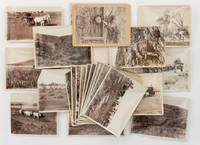
122043Original gelatin silver prints uniformly 122 × 165 mm but three have been trimmed a little all captioned in ink on the verso four are dated 1905. All prints are unmounted as produced; two have a short tear to one edge one of these and one other have a small piece missing from one or two corners; one is a little creased; two are a little marked; overall the condition is excellent. Yardea Station is a pastoral lease approximately 400 kilometres north-west of Adelaide; it was the first property taken up in the Gawler Ranges in the late 1850s. 'Lying on one of the main east-west corridors through the Ranges Yardea became the main postal depot during the late 1860s. A stone police station was erected in 1873 staffed by two police troopers who had been placed there a year earlier to keep order and to distribute rations to Aboriginal people who were increasingly attracted to Yardea. After the Yardea police were withdrawn in 1885 the building served as a post-office and telegraph station and then as a repeater station when a direct telegraph link to Western Australia was established in 1903. During the 1890s when most of the Gawler Ranges station leases including Yardea were abandoned due to a combination of high government charges drought and uncontrolled dingo numbers the building was still staffed by three telegraph station employees' Philip Jones in 'Naturally Disturbed' 2010 'an interdisciplinary collaboration between Sue Kneebone and Philip Jones. The exhibition engages with the complex history intersecting narratives and unexplained absences that relate to Yardea a pastoral property in the Gawler Ranges in South Australia once managed by Sue Kneebone's great-grandfather'. Elsewhere in her PhD thesis of the same name Sue Kneebone writes: 'In late 1903 at a time of high demand and high prices for sheep Yardea was taken up by James Grey Moseley with his station manager my great-grandfather Arthur Bailey . The Yardea lease . by then included Paney Yartoo and the old Pondana and Cacuppa stations'. A small number of these images have been located in the collection of the State Library of South Australia with some attributed to W.R. Evans who appears to have been on the staff of the Eucla Telegraph Station around this time. One of the present photographs is captioned 'A. Cole Post Master A. Bailey Manager Yardea'. Nearly all of the captions mention Yardea; Pondona Pondana and Paynea Paney are also noted. Pastoral pursuits are well-recorded: these include 'Mowing Crop' 'Hay-Stack' 'Stooking Hay' 'Hay Carting' all dated 1905 'Mustering Cattle' 'Bullock Team' 'Shearing' 'Wool Team' 'Woolly Sheep' and 'Horses'. There is also a fine image of a 'Camel Team en route for W.A. passing through Yardea'. Other scenes are 'Rock Hole Yardea' from above and below 'Dam Yardea Station' 'Stone Dam Paynea sic' and views of the Yardea Gorge Pondona Hills two views both with sheep 'Hills Gawler Ranges' and 'Deep Well Yardea' featuring a horseman and a stone hut. People are visible in seventeen of the photographs and in at least seven instances they are Indigenous men. Offered with a cabinet card photograph 145 × 105 mm mounted on plain card of the fresh grave site at Yardea of Sarah Cole wife of Alfred Cole. A notice of her death appeared in the Adelaide 'Chronicle' on Saturday 26 June 1897: 'COLE. On the 20th June at Yardea telegraph station Sarah Elizabeth Broughton née Garrett the dearly beloved wife of Alfred Cole and second daughter of C.J. and the late William Garrett late of Port Lincoln aged 33 years and 9 months'. She was the mother of six children. The presence of this poignant photograph in the collection suggests to us a Cole family provenance. 24 items. unknown
A BEAUTIFUL, UNSOPHISTICATED LARGE-PAPER COPY IN AN ELEGANT CONTEMPORARY BINDING. 4, XI, 1, 412; 4, 533; 4, 429; 4, 491 pp. Armorial ownership stamp on title-page of volume I. A large-paper copy, printed 4to on very fine laid paper, with huge margins. Beautifully bound in 18th-century speckled calf. Spines gilt in six compartments with fleurons, morocco lettering-pieces. Covers triple ruled in gilt. Light wear to extremities of bindings, internally FINE AND BRIGHT. A very attractive large-paper set of this important edition.
1837PHO-2280Paris, Arthus Bertrand, 1837, 2 volumes (3) grand in-4° (30x24,5cm), VIII pp., 742 pp., demi chagrin et coins époque, dos lisse avec auteur, titre et tomaison, frottements au dos, quelques rousseurs, défaut à la coiffe supérieure. Édition originale du texte du voyage du Bougainville autour du monde, manque l’atlas.
1778PHO-434Paris, Hôtel de Thou, 1778. 6 volumes in-8, veau marbré, dos lisse orné , pièce de titre et tomaison , tranches rouge (rel. de l'époque) avec son ATLAS (260x220mm) , relié demi cuir (reliure moderne) illustré de 65 planches H.T., nombreuses dépliantes,bords brunis , déchirure à une carte sans manque. Traduction française par Suard du récit du deuxième voyage de Cook (1772-1775), depuis l'Angleterre jusqu'aux îles de Pâques. Les Observations de Forster forment les deux derniers tomes. Ex libris C. Du Mesnil.
1799PHO-333Paris, Jansen, an VIII (1799) 2 vol. in-8 ,demi-veau havane, dos lisse orné (rel. Légt post., mors usagés et rongés) et un atlas in-folio en seconde édition (1817) brochure moderne en papier marbré. Texte :Tome I : xvi pp. (dont faux-titre et titre), 440 pp.Tome II : 332 pp. (dont le faux-titre et le titre), 109 pp., (1)f. Atlas : titre gravé, grande carte sur double page (Mer des Indes et une partie de celle du Sud, par Darbié du Bocage - volante) et 43 planches (vues, scènes, costumes, portraits et types, faune et flore) gravées sur cuivre par Dien, Copia, Pérée, etc., d'après Piron, Redouté, Audebert, etc. représentant des personnages, des scènes de vie, des armes, des vues, la faune et la flore. Nombreuses piqûres et taches d'humidité, mais papier solide, à bonnes marges.
Abundant black and white illustrations and reproductions of photos. Features: Beyond the Law - Part I of the First True Account of the Exploits of the World's Most Noted Outlaws, by Emmett Dalton, the only survivor of the "Dalton Gang" - article with photos and great cover illustration; Wonders of the Teleferica - an interesting account of the remarkable aerial lines/cableways used by the Italians to transport men, guns, and provisions in the high Alps - article with many photos; The Youngest Soldier in the French Army - photo of 11-year-old Charles Meux of the French Army; Tales of the Service - Part I - A Night in a Vat; A Woman's Journey Across Africa - Part II - Eva J. Jordan, F.R.G.S. travelled with her husband for four-thousand miles through the great Equatorial Forest of Central Africa, becoming the first woman to penetrate this area - article with photos; A Night of Terror - an associate of Izaak Walton sinks into quicksand while fishing; Buried in a Snowdrift - a mining engineer is caught in an avalanche in the Andes; "Hooshta!" - the Tragedy of an Australian camel race - a stirring story from the West Australian goldfields; Exploring the Ice-Wilds of Eastern Karakoram - Part I - Fanny and William Workman describe their Himalayan mountaineering exploits - article with map and great photos; Thrice Through the Jaws of Death - Sergeant J. Harte of the Inland Water Transport relates hair-breadth escapes at sea and on land; How We Built the Bridge - War story related by a corporal of the canadian Overseas Railway Construction Corps; Crossing the Canal - A despatch orderly attempts to cross the Suez Canal at night; Some Adventures of a Newspaper Woman - Marie Harrison provides a graphic and thrilling account of her startling adventures in search of 'copy'; The Railway Conquest of the Bay - a photo-illustrated account of the building of the Hudson Bay Railway; A Happy Family - humorous account of the antics of a number of strange pets belonging to a party of colonials in Singapore; A Modern Grace Darling - Miss Ella Trout rescues a sailor from a torpedoed ship off the coast of Devon - article with nice photos of Miss Trout; Photo of a group of Solomon Islands head-hunters reading The Wide World Magazine; Interesting four-page illustrated stock offering by Guaranteed Tractors, Inc., Edmund G. Soward, President; and more. pp. 8 [ads], [3], 4-88, 9-24 [ads]. Clean and unmarked with moderate wear. A quality vintage copy of this wonderful issue. Book
1790PHO-2072Paris, Imprimerie Royale, 1790. In-4 de (4)-XVI-309-(3)pp., illustré de 11 cartes dépliantes et 1 gravure, basane mouchetée, dos lisse avec pièce de titre en maroquin rouge, large filet doré aux plats, filets aux coupes, frottements et épidermures, bel exemplaire