9 052 résultats
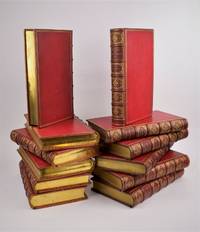
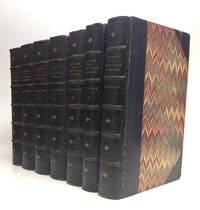
1875244190Paris: Michel Levy 1875. hardcover. very good. 7 volumes. Tall thick 8vo 3/4 blue morocco marbled boards t.e.g. a few hinges have been reinforced bookplates on marbled endpapers. Paris: Michel Levy 1875-1883. Very good.<br/> <br/> Each volume has a 1 2 or 5 page autographed letter written by the author tipped in a small 5 page letter in an separate envelope. Prince Philippe d'Orleans Count of Paris Louis Philippe Albert 1838-1894 was the grandson of Louis Phillippe I King of the French the last French ruler. A historian journalist and democrat he volunteered to serve as a Union Army officer in the American Civil War. His history of that war is considered a standard reference work.<br/> <br/> Michel Levy unknown
149062907Freiburg Kilian Fischer ca. 1490/1491. Small folio. Bound presumably in the 18th century in later marbled boards with a vellum spine. Binding with wear edges of baords worn smaller wormholes and overall wear. The spine seems to be make up of two peices of vellum with a small gap where they meet at the middle of the spine. The small wormholes go through the block causing tiny loss of parts of lettering here and there. The final leaf lacking a larger piece causing partial loss of text to ca. 20 lines. The leaf is mounted from verso. First eight leaves with a damp stain to lower margin and first and last leaves with some soiling and staining. Otehwise the block is overall clean and fresh. 58 ff. 52 lines and headline double columns. Three-and four-line initial spaces with printed guide-letters. Initials touched in red throughout and red underlinings and markings. <br/><br/><em>Scarce first edition thus being the second edition following the 1483-edition printed in Gand of William of Paris’ highly important work on the art of prayer and the first book printed in Freiburg. There has always been consensus about the book being printed around 1490 no later than 1491 but the printing place of the book has previously been contested. Earlier bibliographies Eg. Hain Grasse state that it was printed in Basel by Johannes Amerbach but it has later been proven after the thesis of BMC to have been printed by Kilian Fischer in Freiburg im Breisgau and is now considered the first book printed there. The scholastic philosopher Guillaume d’Auvergne ca. 1180 - 1249 also known under the names Guillermus Episcopus Parisiensis Wilhelm von Auvergne William of Paris etc. was the most prominent French philosopher-theologian of the early 13th century and one of the first Western scholars to attempt to integrate Classical Greek and Arabic philosophy with Christian doctrine. He was also a first mover in creating a new metaphysics that combines Neoplatonism with empiricism and ontology profoundly changing the face of medieval philosophy from the 13th century. “William of Auvergne or Paris ca.1180/90–1249 Bishop of Paris from 1228 until his death in 1249 was one of the first wave of thinkers in the Latin West to engage with the writings on natural philosophy and metaphysics by Greek Islamic and Jewish thinkers that had recently become available in Latin translation. William took these writings to pose errors dangerous to the Christian faith and his philosophical works are in large part aimed at combating their errors. Yet at the same time he recognized their philosophical value and though often confused about their meaning incorporated their teachings into his own thought. On many of the important issues of later medieval thought William is the first to provide in-depth discussions and his voluminous works are an important and still under-appreciated source for our understanding of the development of medieval philosophy.†Stanford Encycl. of Philosophy. “By the third decade of the thirteenth century there emerge the first signs of a new metaphysics. Alongside Neoplatonizing idealism we now see attempts to lay greater emphasis on the ontological density of the created world and to structure reality without resorting to the terms of a relation to the divine ideal… The two figures who did the most to promote the new metaphysics as well as a profoundly Aristotelianizing campaign to establish the criteria for knowledge were masters whose important work was done between 1220 and 1235 in the chools of theology at the new universities. Robert Grosseteste d. 1253… and William of Auvergne d. 1249.†John Marenbon Medieval Philosophy 1998 vol III p. 204. Making extensive use of Avicenna and Aristotle as they were just becoming known through translations in order to understand Christian faith and philosophy William as a bishop also had concerns that reflected the practical use of his teachings. The present work “Divine Rhetoric†is his instructive magnum opus. Here he seeks to explain and illustrate the art of prayer – or divine eloquence - listing seven characteristics and perfections of prayer. The work is equally famous for its application of Ciceronian rules of oratory to Christian oratory and prayer. For more on the Freiburger printer Kilian Fischer please see Hermann Baumeister’s “Der Freiburger Buchdruck in der Inkunabelzeit “Kilian Fischer Als „vermutlich erster Freiburger Druck' erscheint „nicht nach 1491 " aus der Offizin Kilian Fischers eine Predigtsammlung sechs ausgewählter Predigten von Ephrem dem Syrer 303- 373 in lateinischer Sprache die Kilian Fischer zusammen mit der „Rhetorica Divina†des Pariser Bischofs Guillelmus Alvemus herausgab.†p. 104; “Die Drucke Kilian Fischers sind reine Werkdrucke. Er verwendete drei verschiedene Grundchriften; ohne verzierende Initialen oder Abbildungen. Die entsprach auch dem rein wissenschaftlichen Charakter der Lehrbücher seiner Produktion.†p.107. Hain: 8303 Graesse: III:183; BMC III:693; GW: 11866. </em> hardcover
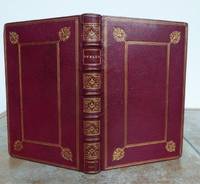
5938Engraved frontis. port. & six folding engraved plates. 2 p.l. vii 1 40 256 pp. 8vo cont. red straight-grained morocco upper cover with small ink-stain some foxing panelled in gilt outer border elaborately gilt flat spine gilt a.e.g. Besançon: Librairie de Deis 1821.<br/> <br/> The catalogue of the collection of books and antiquities of Pierre-Adrien Pâris; the greatest professional library of the early 19th century. He bequeathed it to the city of Besançon. It contained a number of the essential books on architecture about 1500 manuscript architectural designs by Pâris and paintings and drawings by Fragonard Boucher and Saint-Aubin. <br/> <br/> Pâris 1745-1819 was architect to Louis XVI designer of the royal cabinet and directed royal festivities at Versailles Marly and Trianon. The collection reflects his deep appreciation for the classical architecture of Greece and Rome where he journeyed several times. During these trips he sketched buildings and artifacts found at Pompeii Herculaneum Paestum and other sites which along with other drawings compose the 1500 architectural designs described here. These experiences prepared him to serve as director of the Académie de France in Rome under Napoleon where he was responsible for excavations at the Colosseum. The library has considerable sections on architecture history the arts of antiquity etc. <br/> <br/> The first 40 pages provide a biographical sketch of Pâris. Pages 1-146 enumerate 777 lots of books. Pages 147-222 contain a description of his cabinet 509 lots. The book concludes with an index of authors and artists.<br/> <br/> The engravings depict bronzes terra cotta sculptures marble statues and other unique items in the collection.<br/> <br/> Nice copy apart from the foxing. From the library of Bernard H. Breslauer his sale Christie’s NY 22-23 March 2005 lot 660.<br/> <br/> ⧠N.B.G. Vol. 39 cols. 209-10. unknown
16864982Toulouse: Chez Jean Boude 1686. Soft cover. Very Good. 4to - over 9¾ - 12" tall. 8 pp. Bound in marbled wrappers and housed in a fine red morocco case. $3850 Extremely rare first and only edition of this detailed popular newsletter concerning the contemporary reception of three Siamese ambassadors in Paris in September of 1686. The report gives a full description of their entrance their itinerary and the names and qualities of the individual ambassadors - whose 9-month stay in northern France between 1686 and 1687 must have provoked enormous interest. Providing the reader with some background the work notes that the King of Siam having been only recently convinced of the greatness of Louis XIV and the French nation has decided to send three more mandarins as envoys. "Ces Mandarins sont tres-honnestes les meilleures gens du monde doux civils & complaisans de tres-bonne & agreeable humeur .". According to this account they arrived at Brest on the 18th of June and reached Paris only on the 12th August. On the 'first day of this month of September' the delegation was officially presented to Louis XIV. Its centerpiece was the King of Siam's letter to Louis written on a blade of gold encased in a golden boëte bottle and poised atop a golden chalice all of which was carried aloft on a machine by 12 Swiss guards. The ambassadors themselves it is recorded took care to cover the machine with their parasols. Upon meeting the king "ils firent une profonde reverence en leur maniere se prosterant & mettant leurs mains sur leur vissage". The gifts presented by the envoys are notable for their overwhelming Japanese provenance a closed center of trade to the French and are accompanied here by occasional offhand remarks. Two vases of tombac a flexible alloy similar to brass are thought "presque aussi précieux que l'or" and are imputed to be "what the ancients called electrum"; two samurai swords presented by the King of Japan to the King of Siam are accompanied by the remark "they say that those who know how to handle these swords properly can cut a man's body in half; it's this that makes them beyond price"; etc. An antique marble sculpture apparently depicts a Chinese man whom the Siamese call To inghoing; "we belivee that this is the same as he whom we call Confuscius". The writer of the newsletter seems surprisingly well-informed and is certainly aware of the plans of the official retinue suggesting a source perhaps close to the court. "They are presently busy seeing the beauties and the riches of the Capital of our Kingdom. Around February after they have had their final royal audience they will return and recount all that they have seen and assuredly they will not forget what they have learned and understood of the suprising reunion of Protestants to the Roman religion for the King of Siam having proposed Louis le Grand as a model in all things and desiring to be able to make his entire kingdom French.has demanded that the King send him missionaries persons experienced in warfare wise men and men learned in many arts." Following this account of the ambassadors' visit is a brief 'Description du Royaume de Siam' - with much reference to Arab and Moorish settlements to the Siamese love of music to their 'superbly-dressed women' etc. Thanks to royal decree Siam enjoys public schools in which laws and religion are taught in the vernacular but the sciences are reserved for a learned tongue. Inspired no doubt by the Chinese rites controversty the commentator notes that despite their plural deities the Siamese do believe in one Creator of the Earth and the Heavens and they do maintain that the world will end in fire. The final leaf of the work is occupied with a discussion of the 'names and qualities' of the amabassadors. OCLC records only the copy at Cornell. OCLC 64004509 Chez Jean Boude paperback
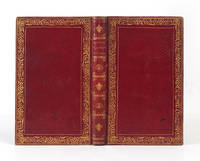
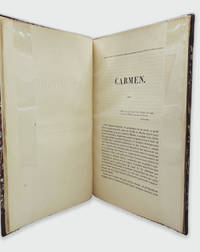
184594<p>Large 8vo mm 242x160 pp. 48; a good copy in early 20th-century half morocco spine lettered gilt the original printed wrappers and spine bound in; with stamp of the 'Société Démulation du Dept. des Vosges' to upper wrapper; bookplate of Emmy Joubert; <strong>with one page autograph ms. by Mérimée tipped in</strong>. <strong>The first appearance in print of <em>Carmen</em></strong>. Mérimée's short novel was first published in the journal <em>Revue des Deux Mondes</em> in 1845. It passed virtually unnoticed and did not receive a single review. Mérimée reworked the text before publishing it in book form alongside two other novellas the following year. In 1852 <em>Carmen</em> appeared as the first text in a collection of Mérimée's works <em>Nouvelles</em> together with Mérimée's own translation of Pushkin's <em>The Gypsies</em>. In this form it began to enjoy some success and <em>Nouvelles</em> was reprinted regularly throughout the 1850s and 1860s <strong>but it was not until 1875 with the creation of Bizet's opera based closely on Mérimée's text that the Carmen myth was created</strong>.<br /><br />A separate off-print on <em>papier vélin</em> is also known printed in a very small number of copies.<br /><br />The autograph ms. is a memo on the Revolution of 1848 with reference to the recovery of looted material from the museums and national collections in Paris: '… Des ouvriers pauvres ont rapporté au Musée du Louvre des camées d'un prix inestimable trouvés dans les appartements des Tuileries. Ils n'ont accepté aucune récompense et n'ont pas même voulu faire connaitre leurs noms. Déjà par cette improvisation de l'ordre unique chez les Français d'autres citoyens avaient eu l'heureuse idée de porter à leurs musées des objets d'art trouvés dans des résidences royales …' From 1834-1860 Mérimée held the position of inspector general of historic monuments and he published many reports in this official capacity. The present note which has been dated 1848 in pencil in a later hand is evidently a contemporary account of the events of that year.</p> Au Bureau de la Revue des Deux Mondes
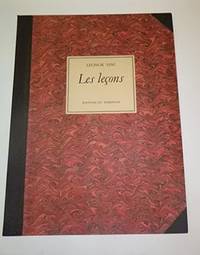
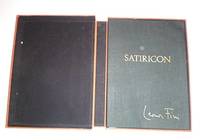
16-4298Bruxelles: Editions du Tamanoir 1976. Large folio. 27 x 20 inches. 68 x 52cm. Qtr. morocco portfolio in a slipcase with the text and 14 full sheet silkscreens. Very heavy more than 11 kilos.A few bumps on the box.12 large format silkscreen illustrations; bound in leather and marbled paper boards signed by Waldberg and Fini in matching marbled paper portfolio are contained with the book in a sumptuous matching leather and paper box. Includes many of Fini's most beautiful images such as "Vesper Express" and "Guardian of the Wells." .Edition of 175 plus 26 Artist's Copies69 par 525 cm. 44 pages non numérotés. Demi-maroquin noir avec coins d’éditeur non rogné.Mors intérieur fendu sans incidence sur la solidité du volume sinon excellent état. Avec une boite ayant un dos en maroquin noir petits défauts à la boite.Édition illustrée de 12 sérigraphies et de deux dessins de Leonor Fini. Préface et titres rédigés par Patrick Waldberg.Tirage limité à 301 exemplaires. Un des 175 exemplaires sur vélin de Rives signé par Leonor Fini et par Patrick Waldberg.Un des recueils les plus troublants de la grande artiste Leonor FINI. Chaque leçon est malgrésa beauté une source de trouble voulue par l’artiste.Expertise by Jean-Paul Veyssière 37000 Tours France. Bruxelles: Editions du Tamanoir, 1976. hardcover
16-4299Paris: Aux dépens d'un amateur 1970. Folio. 33 x 46 cm. Original red-orange buckram slipcase and black fabric chemise. . 11 color lithograph plates and 14 original lithographs in sepia. One of 275 numbered copies signed by the artist.Paris Aux dépens d'un amateur 1970.In-folio en feuilles couverture en toile noire rempliée emboîtage orange de l’éditeur.Illustrée de 25 lithographies originales de Léonor Fini.Tirage limité à 275 exemplaires un des 190 exemplaires sur vélin d’Arches le 221. Paris: Aux dépens d'un amateur, 1970 hardcover
199091101Adam Biro. New. 1990. Hardcover. FREE UPGRADE to Courier/Priority Shipping Upon Request - IN STOCK AND IMMEDIATELY AVAILABLE FOR SHIPMENT - Flawless copy brand new pristine never opened -- Text in French. 303 pages 354 illustrations including 354 in color. Catalogue Raisonne Catalog Raisonné Complete Works La Vie et L'uvre Oeuvre Raisonnee -- with a bonus offer . Adam Biro hardcover
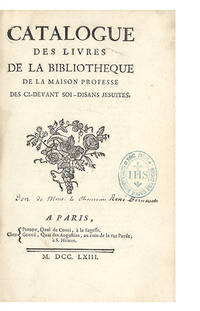
1928xx i.e. xxiv 2 448 59 pp. 8vo cont. mottled calf spine nicely gilt red morocco lettering piece on spine. Paris: Pissot & Gogue 1763.<br/> <br/> An important sale catalogue of the library of the Maison Professe des Jesuites of Paris founded in 1580. This library was comprised of many donations the most notable being that of Pierre Daniel Huet 1630-1721 bishop of Avranches and scholar. Huet whose scholarship was very well-known made considerable scientific researches as well as classical studies; he edited the famous Delphin series of the Latin classics in about sixty volumes. Huet formed a great library of books and MSS. which he donated to this Jesuit house upon his death. <br/> <br/> When the Jesuits were expelled from France in 1762 the entire library of the house was offered for sale by auction. However Huet’s books were withdrawn before the sale due to the terms of his donation and were given by his heir to the Royal Library in 1765. <br/> <br/> This was one of the best and most complete Jesuit libraries in France. It numbered 30000 volumes in 1754 this sale catalogue has 7252 lots. It must be noted that this catalogue gives us the best idea of the contents of Huet’s rich collection. <br/> <br/> Fine and handsome copy. This copy is unusually complete: it has the two unnumbered pages following the preliminary leaves “Livres en Feuilles†and the 59-page author index. Another six leaves which are not present in most copies listing the withdrawn books is not found in this copy. <br/> <br/> ⧠Franklin Les Anciennes Bibliothèques de Paris pp. 269-77–“une collection très-complète et très-bien choisie.†Grolier Club Printed Catalogues of French Book Auctions…1643-1830 181. Peignot p. 106. Taylor Book Catalogues p. 64. unknown
1512372103Paris: Philippe Pigouchet for Simon Vostre 1512. Title page printed in red and black with woodcut device of Simon Vostre; full page woodcuts of St. Jerome crucifixion old coloring. Text in gothic type in two columns ornamental initials some colored text ruled in red throughout. 15 340 28 leaves. Terminal black dd6 present. 1 vols. Folio. Modern linen conservation binding. First leaf toned ownership marks struck out early bibliopole's description in ink at bottom of title. Some minor worming at end. Very good. Title page printed in red and black with woodcut device of Simon Vostre; full page woodcuts of St. Jerome crucifixion old coloring. Text in gothic type in two columns ornamental initials some colored text ruled in red throughout. 15 340 28 leaves. Terminal black dd6 present. 1 vols. Folio. Large folio Bible printed for Simon Vostre by Philippe Pigouchet the famous printer of some of the most beautiful Books of Hours. Uncommon in institutions and in the trade. Renouard ICP II 248; Delaveau & Hillard 778 Philippe Pigouchet for Simon Vostre unknown
B68262-2<p>Paris 1947. Poster with manuscript text and portrait drawing at the center printed on salmon-colored wove stock in offset lithography. 580 x 400 mm. 22 7/8 x 15 5/8 inches. 2 cancelled taxe daffichage stamps affixed at blank portion at lower left as usual. The extremely rare graphically riveting poster for one of the most radical exhibitions in postwar France Dubuffets art brut portraits of Parisian intellectuals at the Galerie René Drouin in 1948. Initially the series was based on personalities in the literary salon of Florence Gould to which Dubuffet had been introduced by Jean Paulhan including Paulhan himself Pierre Benoit Marcel Jouhandeau and Paul Léautaud; it was then extended to include other friends and acquaintances such as Antonin Artaud Francis Ponge Henri Michaux and Jean Fautrier. Dubuffets aggressive graffiti-style caricatural portraits of 1946-47 are in part caricature in the simplest sense a mocking variant on the pantheons of artists that had become sober clichés of even radical French art as in Surrealist group portraits. But Dubuffets portraits manifest the revolt and revulsion of intellectuals: mental energy and will are now all that matter and the body can indeed must. go to hell. His writers and intellectuals are pathetic monsters their features reduced to pop-eyed scrawls their aplomb prodded into jumping-jack spasms. Yet since grotesque harshness and imbalanced disturbance are in Dubuffets view tokens of authenticity to be portrayed by him with scar-like contours and inept anatomy is perversely to be made glamorous High and Low. A few indetectible very short clean marginal tears mended on verso; a bright unfolded copy.</p> Paris, 1947.
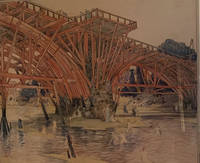
19155121<p>Watercolor with colored pencil and pen and ink drawing. 9 1/8 x 10 1/2. Signed by Gaston de Latenay lower right. Framed.</p>
1966028628Los Angeles: Felix Landau 1966. The Vienna School of Fantastic Realism was a group of artists founded in Vienna in 1946. It includes most of them were 15 at the time Ernst Fuchs Erich Now Arik Brauer Wolfgang Hutter Anton Lehmden Zeev Kun and Fritz Janschka all students of Professor Albert Paris Gütersloh at the Vienna Academy of Fine Arts. It was Gütersloh's emphasis on the techniques of the Old Masters that gave the fantastic realist painters a grounding in realism expressed with a clarity and detail some have compared to early Flemish painting combined with religious and esoteric symbolism. Older members of the group were Rudolf Hausner and Kurt Regschek. This was the first American exhibition held at Felix Landau Gallery in January of 1966. This archive from the files of Felix Landau truly demonstrates the tenacity perseverance diplomacy and sheer determination to assemble this art show into reality. Starting with the first letter from Felix Landau dated April 9 1965 to the Austrian Institute asking for addresses of the artists for the show and ending with a letter sent by Landau to Brigit Hutter on December 14 1966. The archive consists of over 350 different pieces. This includes correspondence by Felix Landau and artists involved with the exhibition. Includes shipping manifests signed by artists. Including original letters from artists Ernst Fuchs 5 ALSAutographed Letter Signed and 8 TLSTyped Letter Signed. Rudolf Hausner 2 ALS and 2 TLS. Albert Paris Gutersloh 1 ALS. Erich Brauer 1 ALS. Anton Lehmden 3 ALS. Wolfgang Hutter 1 ALS. Correspondence with media. 20 Catalogs of the show. One specially hand stiched book by legendary Los Angeles photographer Frank J. Thomas. Made to mimic the catalog of the show in size it consists of 24 original photographs documenting the show. Also included are two proof sheets with photographer's stamp. Most of the correspondence is in good to very good condition. Frank J. Thomas photography documentation has chipped clear acetate cover and foxing to lower edges. Interior and photographs are in very good condition. . Signed. First Edition. Hardcover. Good. Hardcover. Felix Landau Hardcover
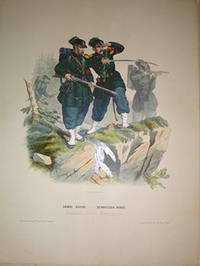
16-6177GeneÌ€ve: F. Charnaux 1862. Folio. 38.5 x 50cm. Original printed wraps with title and 15 hand-colored lithographed plates heightened with gum arabic loose as issued in original printed wrappers; neatly and sympathetically rebacked. Preserved in a modern cloth-backed and marbled boards portfolio with ties. References: Bobins 380; Colas 2318 Hiler S. 700 - Barth 25629 - Brun II 525. OCLC Number / Unique Identifier:748854414.Charles Eugène Perron from Geneva was a graphic artist engraver enamel artisan and cartographer. After graduation at the school of applied arts in Geneva he spent several years in Russia. Later he worked in La Chaux-de-Fonds and Geneva as an enamel designer. He drew topographic maps for text books and atlases e.g. the “Nouvelle Géographie Universelle†by Reclus.Sehr seltene erste und einzige Ausgabe des prachtvollen Schweizer Uniformenwerkes. Druck der Tafeln bei Lemercier in Paris. - Gezeigt werden Dragoner Scharfschützen Infanterie Jäger sowie verschiedene Offiziers-Ränge in leuchtendem Kolorit jeweils mit hübscher Staffage. - - Ohne Titelei und Tafelverzeichnis.Prima ed unica edizione molto rara di quest'opera dedicata alle magnifiche uniformi svizzere. Le tavole delle uniformi suggestive vivaci e decorative mostrano le diverse truppe con tocchi paesaggistici. Genève: F. Charnaux, [1862] paperback
20078001225PA: Scanuscryption 2007. 4 Volume 1774 total pages set of books on the Kennedy Assassination. Subtitled "the Kennedy coups d'etat : the end of an era an examination of the Jim Garrison investigations and the effects on the growing totalitarianism in the expanding hegemonic American empire". Book 1. The deaths in Dallas -- book 2. The masques of New Orleans -- book 3. Barren harvest -- book 4. Indices. Exceedingly scarce and well respected study on the JFK assassination. From the author's personal library. Rare -- only 7 four-volume sets listed on OCLC/Worldcat. The first three books are ex-reference library copies and virtually unread this from the librarian. The fourth index is as new. Exceedintly rare. First Edition. Soft Cover. Very Good /No Jacket - As Published. 8vo - over 7¾" - 9¾" tall. Scanuscryption Paperback
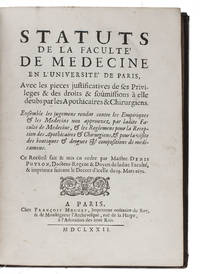
1672HCHB08RSGIM2Paris 1672. 4to. François Muguet Contemporary calf gold-tooled spine. With a few woodcut headpieces. 56 26 111 1 blank 4 20 56 22 2 blank 115 1 blank 43 1 blank 10 2 blank 16 4 16 pp. Collection of laws privileges and jurisprudence relating to the Faculty of Medicine of the University of Paris up to 1672. Most concern the publication of certain books the relationship of the Faculty with several guilds and the rules concerning the autopsy of corpses.The book opens with the university reform of 1600 which added many classical authors to the curriculum. For the Faculty of Medicine this meant the official establishment of Galen as the primary authority on botanical medicines. Interest in the work of Galen was highly stimulated by new translations from the Greek that had appeared in the 16th century and by 1600 the Paris Faculty was heavily mired in the doctrines of Galen which would remain so up until the 18th century.With a few contemporary annotations and corrections. Paper somewhat browned and with a few spots. A small corner of p. 11 of the index is cut out. Pp. 17-44 of the final part appear to be missing but this seems to be the case in every edition of this text we have located. Binding worn at the extremities with the head and foot of the spine damaged and a crack in the back hinge. A good copy.l Krivatsy 12063. unknown
38176Paris: Techener 1833-48. 8 Works in 12 vols. 8vo 187 x 110 mm printed on fine laid paper wide margins limited edition finely bound in contemporary full crushed red morocco by Kofhler marbled endpapers inner dentelles and edges tooled in gilt boards with thin triple fillet gilt border five raised bands to spine 2 compartments gilt lettered direct others gilt tooled extra all edges gilt a couple of spines with minor scuffs otherwise an excellent set. 1. Li romans de Berte aus grans Piés. 1836. Second edition one of 200 copies. 2. Li romans de Garin le Loherain. 1833. 2 vols. 400 copies facsimile plate. 3. Li Romans de Parise la Duchesse. 1836. 420 copies. 4. La Chanson des Saxons. 1839. 2 vols. 420 copies. 5. Li romans de Raoul de Cambrai. 1840. 420 copies facsimile plate. 6. La chevalerie Ogier de Danemarche. 1842. 2 vols. 420 copies 2 facsimile plates. 7. Le Romancero François. 1833. 420 copies. 8. La chanson d'Antioche. 1848. 2 vols. 420 copies. Provenance: From the library of Charles Butler 1821-1910 Warren Wood in Hatfield Hertfordshire. Vicaire VI 1185. Paris: Techener, 1833-48 hardcover
2003Q-0762727489Globe Pequot 2003. paperback. New. In shrink wrap. Looks like an interesting title! Globe Pequot paperback
1990C91101Adam Biro. As New. 1990. Hardcover. FREE UPGRADE to Courier/Priority Shipping Upon Request - IN STOCK AND IMMEDIATELY AVAILABLE FOR SHIPMENT - Flawless copy brand new pristine never opened -- Text in French. 303 pages 354 illustrations including 354 in color. Catalogue Raisonne Catalog Raisonné Complete Works La Vie et L'uvre Oeuvre Raisonnee -- with a bonus offer-- - May be EITHER: out of print OOP and extremely rare in this pristine condition; signed by author or contributor; or a first or special edition; inquire for details . Adam Biro hardcover
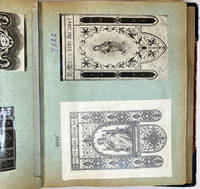
1920102930<p>No place no date but Paris c. 1920. Large 4to size: 30 x 24 cm. 3/4 bleu morocco with paste paper boards. On front cover: "L. Oliva Paris". 46 ff. Album filled with circa 230 black and white photos of ecclesiastical vestments and religious ornaments each with an identifying number and sometimes a manuscript note. one or two photos taken out.</p><p>Laurent Oliva was a supplier of religious vestments and ornaments based in Paris 59-59 bis rue Bonaparte. BNF Data gives a founding date of 1832 and Laurent Oliva seems to have taken the reigns in 1904. The present album must represent vestments that had been made and that could still be ordered. Most photos have a stencilled number others a manuscript one and some have both. Several are photos ofunproduced designs. The texts in various languages and some names of countries and cities a.o. Mexico Seattle Chicago show that the company worked internationally. There are a few dates: 1895 1907 1908 and the phrase on a liturgical banner 'Souvenir de la Grande Guerre'. An interesting document of the production throughout the early part of the 20th century of this one company.</p>
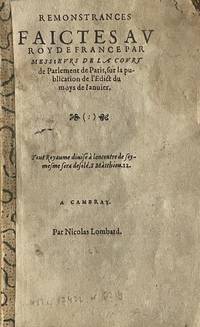
15622557Cambray: Nicolas Lombard 1562. First edition. Papered spine. With contemporary underlines throughout and occasional marginal notes in ink. Upper outer corners stained and chipped throughout first leaves with small loss. Closed tear on the title page not affecting the text. Overall in very good condition. First edition. Papered spine. ff. 14 2 blank. Sign.: A–D4 D3–4 blank. First edition of this scarce and important document of the French Wars of Religion.<p><br /> <br /> A protest against the Edict of Toleration also known as the Edict of January or Saint-Germain which was issued by the French Crown on January 17 1562 after a long series of repressive measures against the Protestant Huguenots in order to restore peace in the kingdom torn by civil and religious dissensions. <p><br /> <br /> The registration process of the edict led to the bitterest legislative struggles of the century between the Parlement and the Crown. After a vote on 7 February the Parlement very Catholic refused to verify or publish the edict and on 12 February a remonstrance the present publication was drawn up and sent to the Court. Eventually the Parlement had to capitulate and the edict was registered on March 6 five days after the Massacre of Vassy which triggered the first of the series of eight civil wars lasting some thirsty-six years in France the Wars of Religion. <p><br /> <br /> The Edict of Tolerance remained a reference for the Huguenots in the later negotiations between them and the royal power and became the foundation of the subsequent toleration edicts such as the Edict of Ambroise the resolution of the first war in 1563 and the Edict of Nantes which marked the end of the period of the French Wars of Religion in 1598.<br /> Seemingly two different editions 16- and 24-leaves were published by Lombard in 1562. Due to their substantial similarities the presence or lack of the last blank leaves and the peculiar dating “mil cinq cens soixante & un†the bibliographies list these editions under at least six different entries dated 1561 or 1562 later editions also by Lombard appeared in 1565 and 1566.<p><br /> <br /> USTC 6319 2 copies: Nîmes - Bibliothèque Carré d’art; Paris - Bibliothèque Mazarine or 17432 1 copy: La Rochelle- Bibliothèque municipale<br /> Literature: Keller A.-C. 1952. Michel de l’Hospital and the Edict of Toleration of 1562. Bibliothèque d’Humanisme et Renaissance 142 301–310. Nicolas Lombard unknown
1900108066Adelaide: Paris Nesbit to Number 15 then John Newton Wood 1900. First Edition. Hardcover. Fine. Adelaide Paris Nesbit to Number 15 then John Newton Wood 1900 and 1901. Foolscap folio 242 pages. Each issue drop-title as issued in contemporary flush-cut cloth-backed papered boards; cloth renewed; boards lightly worn at the extremities and a little marked; the contents are in fine condition. Number 32 the first one in Volume 2 is a different format - shorter and wider - and the leading margins are folded back 40 mm. 'The small religious newspaper "Morning" was founded in 1900 by the gifted but unbalanced lawyer Paris Nesbit. The newspaper was initially used largely as a vehicle for his personal views on religion and Adelaide society. Nesbit unashamedly stated that the newspaper was his own voice and would be run "as Christ would if He were subject to the present limitations of my faculties" . Nesbit and his family - in particular his sister Agnes Benham - were interested in the "new thought" movement of the 1890s with its socialism and sexual reform. Early issues of the newspaper contained items commenting on Nesbit's short stint in the Parkside Mental Asylum in 1898 which he felt had been politically motivated by his enemies including the premier Charles Kingston. Kingston as well as other political and church leaders were criticised in early issues of the newspaper as were various Adelaide lawyers. Nesbit felt particularly strongly about religious hypocrisy. Benham contributed book reviews and periodic articles mostly on religious topics during the early life of "Morning". Much attention was given by various contributors many writing under pseudonyms to Benham and Nesbit's views that ideal marriage relationships were based on intellectual and spiritual connection. After just four months Nesbit handed over the editorship of the newspaper to the printer John Newton Wood who steered the newspaper towards an interest in spiritualism and vegetarianism' SA Memory online. The final issue appeared in 1909. Paris Nesbit (to Number 15), then John Newton Wood hardcover
52527<p>Stampata in Venetia: per Gregorio de Gregoriis 1523 a di XXIII aprile. TITLE CONTINUED: Canonisti & Ecclesiastici: Opera dignissima & vtilissima ad tutti gli spiriti gentili. Early edition 1523 Italian text small 8vo approximately 140 x 90 mm 5½ x 3½ inches 152 unnumbered leaves collation: A-T8 -A8 & T8 - blanks colophon on T7v half page engraving of duel before 5 seated judges on title page woodcut initials the first heightened with gold author's name on B1r imprint from colophon. Very attractively bound by Paris binder Gruel in gilt panelled red morocco gilt corner ornaments raised bands to spine richly gilt in compartments gilt title date and name of binder all edges gilt elaborate gilt inner dentelles turn ins marbled endpapers. Small pale stain to lower cover corners slightly bumped tiny closed tear to top inner margin of title page neatly repaired neat early signature to lower margin of title page pale age-browning to signature O. A very good copy of one of the earliest works on duelling. Paride dal Pozzo 1410-1493 known as Paris de Puteo was an Italian jurist. His treatise was first printed in Latin in 1471 then in Italian at Naples by Sixtus Riessinger not before 1475. Cockle A Bibliography of Military Books up to 1642 page 225 No. 865 Note; Brunet Manuel du Libraire Vol IV 983 1518 edition; Thimm Bibliography of Fencing and Duelling page 233. MORE IMAGES ATTACHED TO THIS LISTING ALL ZOOMABLE FURTHER IMAGES ON REQUEST. POSTAGE AT COST.</p> Stampata in Venetia: per Gregorio de Gregoriis, 1523 a di XXIII aprile. hardcover
28142 p.l. 192 pp. one leaf of errata. 8vo cont. calf joints nicely repaired flat spine gilt contrasting leather lettering piece on spine. London: Edwards; Paris: Laurent 1790.<br/> <br/> A priced copy of the Paris edition of this famous sale; an English edition appeared the next year. For a fascinating account of this catalogue and sale which caused traffic jams along Pall Mall see Arthur Rau’s “Bibliotheca Parisina†in The Book Collector Autumn 1969 pp. 307-17. Amongst the buyers at this sale were Lord Spencer Douce Woodhull Cracherode and the Duke of Newcastle. <br/> <br/> Thanks to the recent researches of Milton McC. Gatch “The Bibliotheca Parisina†in The Library Seventh Series Vol. 12 Number 2 June 2011 pp. 90-118 we finally know the identity of the consignor: Antoine Marie Pâris d’Illins 1746-1809 a military man who was forced to emigrate in 1792 because of conflicts with the Revolution. Rehabilitated by Napoleon Pâris d’Illins died as a general of the infantry during the Spanish campaigns at Cocana in 1809. See the entire article to learn more about the collector his library Edwards’s additions etc. <br/> <br/> We know that not all the books came from the one library; there were books from Loménie de Brienne masquerading under another provenance probably for political reasons and Aldines which Edwards must have obtained in Italy. Nevertheless this is one of the great sales of the period. <br/> <br/> Very good copy. The Paris edition is far rarer than the English edition. <br/> <br/> ⧠Gustave Brunet Dictionnaire de Bibliologie Catholique cols. 579-80–“Ce catalogue est d’une richesse remarquable…De forts beaux ouvrages provenant de la bibliothèque du cardinal Loménie de Brienne avaient été joints à cette collection.†De Ricci p. 89. Peignot pp. 116-17. Taylor Book Catalogues p. 92. unknown
140949354No place: Scanuscryption 2007. First edition. First edition. Complete in four volumes.lxxvi 490; ii 491-1020; 1021-1428; 1429-1774 pp. Bound in publisher's yellow wraps. Very Good with a few minor scuffs and stains to edges. Small scratch to front wrap and peeling to laminate on bottom of back wrap of Vol. 1. Nice shape overall.<br /> <p>A mammoth work on the 1963 assassination of President John F. Kennedy. The author was a longtime habitue of the JFK assassination scene in addition to circulating in the UFO and sci-fi subcultures who knew most of the major researchers on the case since November 22 1963. He pays tribute to them here summarizing their work and adding some details and personal reminiscences. The second book Masques of New Orleans is arguably the strongest with some interesting insights on the Big Easy figures D.A. Jim Garrison prosecuted such as David Ferrie and Clay Shaw. These books seem to have had hardly any distribution not surprising as they were self-published in the oughts and Flammonde was a proud Luddite in his late 70s and are quite uncommon in commerce. Scanuscryption unknown