Adélaïde L.D.L [Manuscrit original - Calligraphie]Livre Rare Book

424 résultats
15871787, 489p et 454p.Texte à 15 ou 16 lignes délimité par un espace réglé au crayon. Daté 1787 sur la page de titre. 2 volumes in-8, plein maroquin rouge, plats ornés d'un triple listel en encadrement, fleurons d'angle, travail au petit fer en ornementation, dos plats richement ornés de fleurons et listel ondé, pièces de maroquin vert olive agrémentées de fer ondé en diagonale, doré sur tranche, reliure de l'époque.
27731869, Deux volumes in4 demi-vélin, dos plat pièce de titre en maroquin tabac, papier fin, abondemment truffé de courrier et documents originaux récoltés par l’auteur de cette recherche. TI : 322pp ; TII : 273pp
1511PHO-1971Florence, Sd (circa 1511 ou avant février 1513), Antonio Tubini et Andrea Ghirlandi, in-8, A8-C6, parchemin époque, page de garde détachée avec manque, vieille mouillure claire sur 2 feuillets.
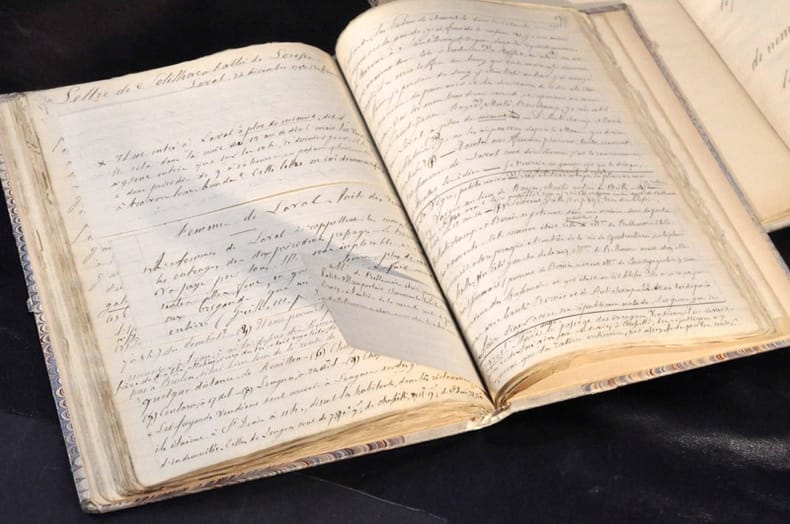
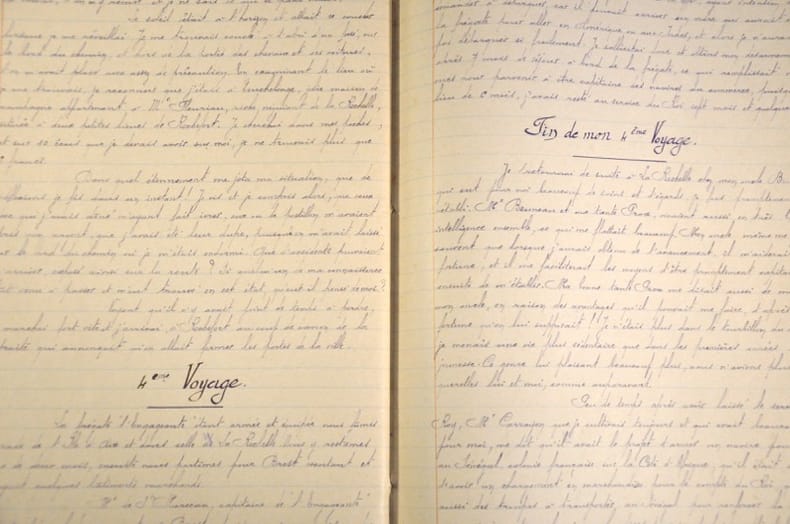
3042Vers la fin du XVIIIe siècle Cahier In 4 en couverture souple, « J.J Proa _ Mes mémoires » écrit à l’encre brune sur le plat supérieur. Manuscrit rédigé au net, certainement par un membre de la famille de J.J. Proa vers la fin du XVIIIe siècle. Manuscrit rédigé à l’encre violette très joliment calligraphiée. 1bl, 113ff, 2bl
Second edition, [2 ads], [36]pp., with printed title-page and half-title, engraved headpiece, the advert leaf includes two editions of Beckford's Vathek and A Description of Fonthill Abbey. Small 4to (235 x 145 mm), 2 works in one, recent half calf to style, marbled boards, spine tooled in gilt. A survey of the principal public and private libraries in England, listing highlights of the collections and concluding with brief accounts of 30 important English book auctions from the 17th century onwards. William Beckford assisted in the compilation of this work, particularly in the description of his own library at Fonthill. The Dialogue in the Shades is a two-part pamphlet of satirical verse is a response to Dibdin's Lincolne Nosegay and the Bibliographical Decameron. The attribution varies from William Beckford to the Clarke brothers. This second edition is issued with an additional half-title, title-page with note from 'Mr. Wynkem' on the verso, and with the addition of The Diary of Roger Payne, a work in the same vein. A rare anti-Dibdinia item. Windle & Pippin, D9.
3025Circa 1968 Tapuscrit in 4 broché de 64 ff portant en page de titre « MARGARET (titre provisoire) / Scénario original de D. Medveczki et R. Topor » .
Very Good Turkish, Ottoman (1500-1928) Original b/w map from Kitab-i Cihannuma which is one of the most important Turkish incunabula. Oblong large 4to. (31 x 37 cm). In Ottoman script. It shows Venice and Venetian Bay and Algerian shores at North Africa (Maghrib). Toponyms are in Turkish with Arabic letters. Written directions (Simal, Cenûb, Sark and Garb) on corners of the map, and decorative compass on Mediterranean Sea. Scale can be seen at left upper side (El-mikyas: Mil-i Islâmiyân Mil-i Frençe, and Mil-i Italiya]. It's one of the thirteen maps and plates from the book of Cihannuma. The story of Cihannuma can be considered as an effort to keep up with the speed that knowledge spread around the world at a time when literacy was highly limited. Kâtip Çelebi began to rewrite Cihannuma in 1654. During the next six years, he added to his books the knowledge he gained from the books he read. Kâtip Çelebi was vastly influenced by nonreligious positive knowledge, especially by the Atlas and later the Atlas Minor of Gerardus Mercator. He had the book translated from Latin to Turkish by a French recruit andenriched his own book with the new information. He brought together in Cihannuma the knowledge of geography and astronomy existing in Western sources (1654). Cihannüma has 13 charts and 27 maps. Mercator's maps are distinguished by their distinct properties. However, there are such maps which depict Istanbul, Anatolia, the Caucasus and the Orient that have to have been borrowed from other sources and there are those with relatively less detail that might have been prepared by Muslim geographers. Sources cite Ahmed El Kirimî (Ahmed the Crimean) and Galatali Migirdich as mapmakers for Cihannüma. Their names are placed on the maps. Another name that is mentioned is Tophaneli Ibrahim. Researchers agree on the fact that he is Ibrahim Müteferrika. Perhaps he wished to hasten the printing of the book. Perhaps he enjoyed making this contribution to a book he half owned. There is one map in Cihannüma which definitely does not belong to Mercator. Nor is there any information that it was originally charted by Müteferrika's team. Historians state that the 'invertedness' can be found in other maps made by Muslim cartographers. Since it is amap of Turkey, the difference can easily be perceived. The Mediterranean coasts of Turkey are at the top of the map while the Black Sea coasts are at the bottom. The compass on the map correctly indicates the North. The map seems to be inverted but it is not considered scientifically wrong to draw maps in this fashion...". (Source: Boyut; Kitab-i Cihannuma). Extremely rare.
Very Good Turkish, Ottoman (1500-1928) Original full brown morocco with traditional flap. Traditional flowers embossing on boards. Roy. 8vo. (23 x 16 cm). In Ottoman script. [3], 503 p. Hegira 1215 = Gregorian 1799. This is a classical and very important annotation in Turkish / Ottoman literature made to Sünbülzade's 'Tuhfe'. A dictionary in verse. 'Tuhfe' was a first books in Mühendishane printing house. After one year later Müderris Abdurrahman printed this annotation to 'Tuhfe'. Müderris Abdurrahman Efendi was the first director of the "Mühendishane Matbaasi" (Mühendishâne-i Berrî Humâyûn), which was opened in Üsküdar, Istanbul in 1797. Abdurrahman Efendi, who was a professor of algebra and geometry, took lessons on the techniques of fortification from the French experts for 10 years before the opening of the Mühendishane Printing House established during the 'Nizam-i Cedid' movements in 1793 and gave engineering courses in the newly established school while managing the Mühendishane Press. "Mühendishane", also known as "Üsküdar Matbaasi" under the direction of Müderris Abdurrahman Efendi has published especially "Cedid Atlas" (New Atlas) and other many important works. This first edition not in OCLC.; This Edition not in Özege; TBTK 1476.; Beydilli: Türk bilim ve matbaacilik tarihinde Mühendishâne Matbaasi ve Kütüphânesi, (1776-1826), pp. 253. First Edition. Extremely rare.
Very Good Turkish, Ottoman (1500-1928) Full leather new bdg. Original illustrated cover saved inside. Roy. 8vo. (24 x 17 cm). In Ottoman script (Old Turkish with Arabic letters). [12], 166, [2] p., b/w and color plates of Ottoman warships and scenes from naval wars, seven maps of the earliest examples of Ottoman cartography. Very rare second edition of this book on the history of Ottoman naval wars against Venetians began with the Crete campaign (War of Candia) in 1645 and lasted for years until 1656. The book was published first in 1729 in Müteferrika Printing House which was the first printing house in the Islamic world as the third printed book. This is the second edition including five maps of almost the same size (two paged) titled world map, The Mediterranean, The Archipelago (Aegean), The Adriatic Sea, and the compass-like in its first edition as well as two maps and twenty-six plates (some of them are color) and small illustrations of Ottoman ships as head of some carriage returns. Additional maps depict the city of Venice (from Kitab-i Bahriye [i.e. Book of Navigation) and the travels of Ottoman Admiral Sidi Ali Reis through the Sea of Oman. The Cretan War or the Fifth Ottoman-Venetian War, was a conflict between the Republic of Venice and her allies (chief among them the Knights of Malta, the Papal States, and France) against the Ottoman Empire and the Barbary States because it was largely fought over the island of Crete, Venice's largest and richest overseas possession. This account of Ottoman maritime warfare in Turkish, written in Safer 1067/November 1656. This date places the book in a moment of utmost danger for the Ottoman capital following the defeat of the Ottoman navy at the hands of the Venetians at the Dardanelles (4 Ramadan 1066/26 June 1656) and the subsequent loss of the islands of Lemnos and Tenedos. It is also written shortly after the appointment of Köprülü Mehmed Pasha as grand vizier (25 Dhulqada 1066/14 September 1656). Thus it is suggested to read it as a program of reform of the navy intended for a person whom Hadji Khalfa might have seen as the "man of the sword" who might revert the fate of the Empire. Of the four ulemâ [i.e. scholars] who wrote endorsements for the book, two are closely related to the Köprülü family. The first part is a history of Ottoman maritime campaigns from the beginning to 1067/1656, while the second is a systematic description of naval affairs, from administration and offices to shipbuilding, culminating in a list of 40 suggestions for the organization and strategy of the Ottoman navy, including the use of recent scientific and technological innovations. Thus the juxtaposition with history provides an argument for reform. Suggestions are largely centered around the traditional qanun-i qadim; there is no reference to high-board ships. The final pages include an important discussion of historical causality, explaining how divine omnipotence creates the consequence of historical causes, in reward for the righteous rule, or punishment of injustice. (Source: Ottomanhistorians). Özege 21273.
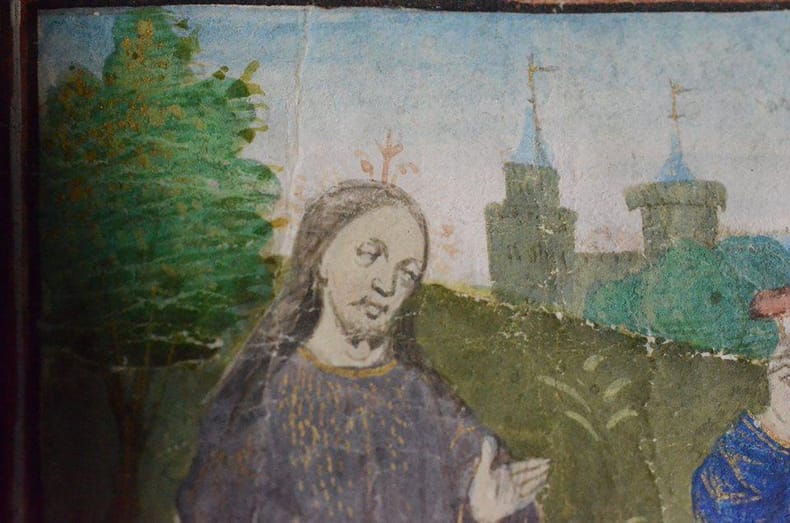
1861Belle et fraîche miniature (à vue : 7 x 7 cm) extraite d’un antiphonaire italien. Italie du Nord, dernier tiers du XIVe siècle.Le personnage se situe dans une grande initiale très abondamment rehaussée d’or à la feuille.Belle composition, dans un parfait état de conservation.
In-4 p. (mm. 283x195), p. pergamena ottocentesca (restaurata per piccole manc.), ai piatti una delicata cornice a secco, titolo impresso al dorso, 56 cc.nn., caratteri tondi. “Contiene solo il "De sermone", essendo il "De bello Neapolitano" pubblicato dal Mayr nel mese di maggio dello stesso anno”. Così Manzi “La tipografia napoletana nel '500” (1971), n. 16. Nel "De Sermone" compaiono considerazioni sull’utilità dell’arguzia e della facezia. In questo trattato l’A. propone l’ideale di una conversazione libera e aperta, capace di alleviare gli aspetti piu’ ingrati e severi della vita quotidiana. Rarissima "seconda edizione" (la prima è del 1508). Cfr. Choix de Olschki,VIII,12246 - Brunet,IV,807. Antiche scritte margin., solo qualche lieve fiorit., altrim. esempl. ben conservato. "Giovanni Gioviano Pontano (Cerreto, Umbria, 1422 o 1426 - Napoli 1503), poeta, fecondissimo scrittore e uomo politico. Padrone della lingua e del verso latini come forse nessun altro umanista, il Pontano non ebbe nel Rinascimento chi lo uguagliasse come prosatore; a lui poeta solo il Poliziano può esser messo vicino". Così Diz. Treccani,IX, p. 621.
147159416Rome: Adam Rot 1471. after 2 Oct. 1471. 8vo 12 leaves printed in black with red heading some marginal chipping in two columns good. Probably HC 14820; Pr 3433; BMC IV 42; BSB-Ink 447; GW M42586. Rules and constitution of the Apostolic Chancery. Notes on Benedict XII 1334-1342; Boniface VIII 1294-1303; Paul II 1464-1471; Calixtus III 1455-1458; Boniface VIII 1294-1303; Alexander IV 1254-1261; Gregory X 1271-1276; Clement VI 1342-1352. Adam Rot unknown books
149664508Basel, [Michael Furter], 13. März 1496. 4°. 22 nn. Bll. (2 Sp., 47 Z., Min. f. Init.), Mod. Ppbd. unter Verwendung eines alten Antiphonarblattes.
In-4 p. (mm. 280x205), cartonato rustico settecentesco, tit. ms. al dorso, 8 cc.nn., CCLXXXIII cc.num. (in effetti 281: la numeraz. salta da 23 a 26 - la prima carta è bianca). Frontesp. con titolo in rosso, inquadrato in elegante cornice composta da fronde, cornucopie e vasi, silografata su fondo nero. Nel titolo si legge: ".. e del Principio de la Cita, e de Tutte le Guere (sic) da Mare e Terra facte in Italia: Dalmacia. Grecia. e contra tuti li infideli.. volgarizate per Matheo Vesconte de Sancto Canciano..". In fine (c. V8) si legge: ".. Ad Instancia e Impensa de Oldrato Lampugnano. Spampate con Gratia e Priuilegii..". Alla c. “V9” grande marca tipografica con P G su fondo nero; al verso il Registro dell'opera.<br> "Manca" l'ultima carta che contiene un altro titolo silografato (in grossi caratteri gotici e stampato in rosso) con la stessa bordura in nero del frontesp.<br> Cfr. Sander,III,6650 che lo data ca. 1508 - Adams,II, p. 167 lo data ca. 1510 - Lozzi,II,6105 - Coleti,II, p. 238: "Pare stampato dopo il 1506, e dopo la morte del Sabellico, prima che si pubblicassero i tre libri della IV deca; poichè il Vesconte non volgarizzò che le tre prime Deche" - Choix de Olschki,V,5217: "Edition extrèmement rare".<br> Prime 16 cc. lievem. arross. (incluso il frontesp. con tracce d’uso - 1 c. con ang. sup. manc.); lievi aloni margin. interc. nel t.; la c. CXXII restaur. per ang. inf. mancante; lievi aloni rossi alla sola c. CXLI; ma complessivam. un buon esemplare.<br> "“Sabellico, nome sotto il quale è noto Marcantonio Cocci (1436 ca. - 1506). Storico tipicamente umanista, sensibile all'influenza di Flavio Biondo, scrisse fra l'altro i "Rerum Venetarum" (1487) e le "Enneades", vera storia universale che giunge fino al 1504”". Così Diz. Treccani,X, p. 663.
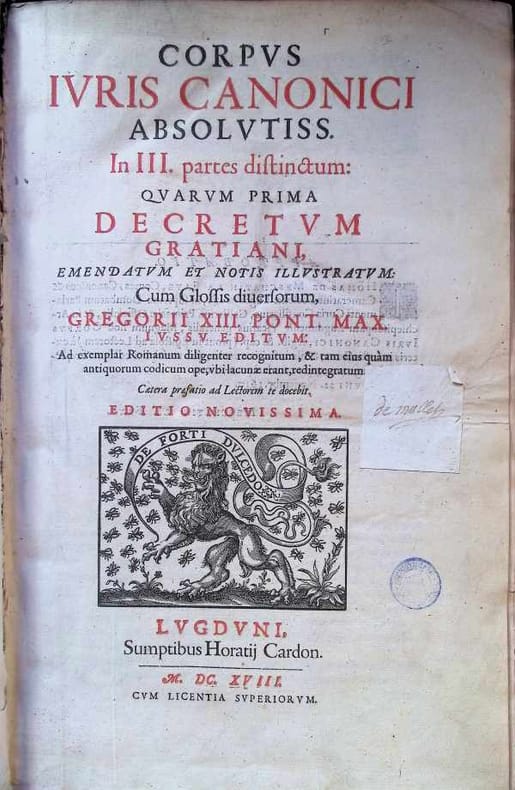
1618029923Lyon Lugduni 1618 Horace Cardon ( Ex Officina Horatii Cardon ) Vellum (Hardcover)
1938Miniature italienne sur vélin, XIVe siècleBelle et fraîche miniature (à vue : 7 x 7 cm) extraite d’un antiphonaire italien. Italie du Nord, dernier tiers du XIVe siècle. Le personnage se situe dans une grande initiale très abondamment rehaussée d’or à la feuille. Belle composition, dans un parfait état de conservation.
15606658México 1560. First Edition — Primera edición. 200x147mm. 7¾x5¾". México anterior a 1560. En 4º 200 x 147mm. 4 pp. fols. 52 y 53. Texto en mixteca. 1 xilografÃa a toda página. Hermoso grabado en madera producido en México durante la época incunable de su imprenta publicado antes de 1560. Pertenece a una Doctrina Christiana en lengua mixteca. En la hoja 52 verso gran xilografÃa a toda página representando a Dios sentado en el trono con la bola del mundo a sus pies su hijo sentado a la derecha y el EspÃritu Santo a la izquierda debajo un grupo Santos rezando y una imagen del demonio. Se trata de una de las primeras xilografÃas impresas en América. unknown
179411811794 1794, Lavis original contrecollé sur papier fort.42,5 x 45,5 cm.
2983Allemage XVe siècle Grande initiale A enluminée sur peau de vélin (150 x 125 mm) représentant Sain Laurent tenant son grill de la main gauche et un livre dans la main droite. Placé sur un fond rose pale orné de croisillons d'or liquide, Saint Laurent est vêtu d’une chasuble bleue orné de médaillons dorés. Bel effet de drapé servi bandes d’or ornant le vêtement.
2092vers 1470, 1 feuillet (20 x 24 cm)
[Incunabolo-Chiavasso] (cm.20) solida piena pergamena sec. XVIII con titolo calligrafato al dorso. -- cc. 375 (su 388) carattere gotico, 55 linee, spazi bianchi per lettere capitali. Manca la prima carta bianca, la seconda, il nostro esemplare inizia da carta 3 segnata +: "In nomine domini nostri...amen". Manca poi la c. 378 bianca e le ultime 10 carte segnate 1-5 di cui l' ultima bianca. Pertanto il nostro esemplare si compone di 4 carte all' inizio + cc. 176 segnate a-y + cc. 12 segnate z + cc. 183 segnate A-Z.Editio Princeps della famosa "Summa" opera avversata da Lutero e primo ed unico libro stampato a Chivasso nel XV secolo. Fu ristampato circa 70 volte!. Secondo l' opinione più comune Giacomo Suigo, sarebbe nato a San Germano Vercellese; ma giustamente nota il Fumagalli nel "Lexicon Typographicum" p. 371 che Giacomino si dichiara milanese, che il nome di Suico è sconosciuto nel vercellese mentre si trova spesso nelle carte milanesi dell' epoca. Le ultime 10 carte mancanti al nostro esemplare contengono la "Rubrice Juris Civilis et Canonici" Il colophon con i dati tipografici è a carta 376, presente nel nostro esemplare con al verso il "Registrum" in 5 colonne. Segue la carta 377 bianca e presente. Esemplare modesto con margini contenuti, lievi gore e antiche riparazioni, alcuni fori di tarlo ben restaurati a varie carte per lo più all' inizio che intaccano il testo. Alcune antiche chiose ai margini bianchi di alcune carte. Al primo foglio ex libris manoscritto dell' epoca: " Loci palat(i) frus capuccinorum". (Cappuccini di Palazzolo). * Hain-Cop. 5382; * Igi 559; * Bmc VII 1111; * Goff A 713; * Oates 2725; * Pellechet 3812; * Polain I 205; Proctor 7323. Vedi anche la ampia nota sul tipografo nel catalogo d' asta Hoepli 3/4 Dicembre 1929 Lotto 222. [F80] Libro
[Incunabolo] (cm. 33) mz. pelle d' epoca, 3 nervi e assicelle in legno. Dorso con difetti, un piatto rimesso in epoca successiva.-- carte 310 numerate (di 313) + carte 5 non numerate. Caratteri gotici di differenti grandezze, due colonne, 66 linee. Bei capolettera ornati e figurati grandi e piccoli a fondo nero. Uno particolarmente bello a carta 239. Incunabolo molto bello e importante per il prezioso commento ai quattro vangeli scritto dal 1261 in poi dal grande aquinate, filosofo e dottore ufficiale della chiesa cattolica. L' ultima carta (oo6) contiene il colophon, il registro e la bella marca tipografica a fondo nero dello Scoto per la quale vedi Kristeller n° 281. Incunabolo particolarmente raro. Secondo Goff nessun esemplare in America, manca a Polain, Harvard, Cat. Harper (1930) e al grande Cat. 24 di rosenthal che nel 1900 mette in vendita a Monaco ben 3500 incunaboli. Purtroppo mancano solo 3 carte iniziali numerate 1,3 e 4 con segnatura a1, a3, a4. Le ultime sei hanno lievi macchie e aloni sempre ai margini. Le prime carte presenti, numerate 2,5,6,7,8 sono staccate e difettose, la n° 2 ha un buco con perdita di testo, meritano di essere restaurate. Tutto il resto del volume da carta 9 segnata b1 a carta 313 segnata oo è in esemplare veramente bello nitido fresco e marginoso. Il verso dell' ultima carta è bianco e porta un ex libris manoscritto dell' epoca: "ad usum fratris Raphaelis de Urbino...ipse liber". * Hain 1336; * I.g.i. 9519; * Proctor 5043; * Oates 1669; * Pellechet 909; * Olschki "Monumenta" 891; * Olschki " Inc. Typ." 23; * Walters "Inc. Typ." p. 32; * Bmc V 441.[f80] Libro
13 Volumes bound in five, large 8vo printed on good wove paper, [iv], 388; xii, 363, [1]; [iv], 295, [1]; vii, [iii], 355, [1]; [iv], 257; [iv], 314; [iv], 306; [iv], 170; [iv], 195, [1]; [iv], 117, [1]; [iv], 189, [1]; [iv], 83, [1]; [iv], 82, [2]pp., parts 1-3 in orig. boards, spines chipped, covers loose, orig. printed label on upper covers, uncut, parts 4-7 cont. half calf, rubbed, spine stained and spotted, parts-8-13 cont. quarter morocco, rubbed, foot of spine torn, faint stamp of 'Mercantile Library, Philada.', front hinge shaken, title page to part 8 loose, prices and buyers' names supplied in a cont. hand, a made-up set of the complete English sale catalogues of the library of Richard Heber (the 13th volume is notoriously rare). Heber was a book collector on a monumental scale, De Ricci estimated his library between two and three hundred thousand volumes. The sales took place at a time when the market was absolutely glutted and there were practically no buyers. The total realised was ?65,774, for books which had cost their late owner a good deal over ?100,000. "The Dibdinian age may be aptly said to terminate with the dispersal of the gigantic library accumulated by Richard Heber, a bibliomaniac if there ever was one... From 1800 to 1830, he purchased at every London sale... He thought nothing of securing whole libraries... When he died, his books filled two houses in London, one at Hodnet, one at Oxford, one at Ghent and one at Paris, not to speak of smaller stores at... other Continental cities. The total number of volumes in his library must have been between two and three hundred thousand, and it is doubtful whether any private individual has ever owned so large a library... The London sales produced ?56,744, for books which had cost their late owner over ?100,000. The market was absolutely glutted and there were practically no new buyers... The Heber catalogues, although... arranged in the most inconvenient manner, are daily consulted by every bibliographer... His series of Continental books, early Italian and Spanish works, later Latin poetry, humanistic treatises... were unrivalled... The real strength... was, however, in the field of early English literature... For thirty years he... purchased nearly every item which came on the market".?De Ricci, p.102. Organised according to the residences where Heber kept his libraries, the present catalogues number 1 - 13 and were held in 1834, 1835, 1836 & 1837. Sotheby's managed the sale for parts 1- 3 and 9 - 10; R. H. Evans, for parts 4 and 6 - 8 and 11; B. Wheatley, parts 5 and 12-13.
[Incunabolo-Milano] (cm. 28) solida piena pergamena sec. XVII, nervi e titolo su tassello. Dorso danneggiato, con abrasioni.- cc. 185 nn. (di 188) carattere rotondo, 56 linee, spazi per lettere capitali. Editio Princeps di queste importanti epistole di grande valore storico, politico e autobiografico che ci danno il vero volto di S. Ambrogio Vescovo di Milano e una delle figure più brillanti del cristianesimo. Notevoli anche le addizioni di Georgius Cribellus. non comune impressione, manca ad Harvard, Oates in Cambridge, Cat. Rosenthal di Monaco 1900 e a vari cataloghi consultati come Baer, Maggs, Quaritch. Sander "Prices" riporta due sole vendite e Goff registra solo 7 copie in America. Mancano 3 carte: la prima a1, bianca al verso, la c1, e l' ultima (188) anch' essa bianca al verso. Alcune macchiette alle ultime carte di cui le ultime tre con vecchoio restauro per foro centrale con perdita di testo. Altrimenti bell' esemplare nitido e ben marginoso. * Hain-Copinger 898; * I.G.I. 424; * Goff. A 552; * GW 1600; * Proctor 5989; * Pellechet 582; * Polain 4130; * BMC VI 779. Vedi anche Cat. Olschki "Monumenta" 1903 n° 299; * Harper 1930 n° 216; * olschki "Incunabula" 1915 n° 15; * Olschki Cat. Henry Walters 1906 p. 18.[f72] Libro
14869BDEHOBV62VDWürzburg: Georg Reyser 1486. Later bound in two leaves from a 13th-century vellum theological manuscript rubricated and decorated with alternating red and blue initials with penwork. Folio. Printed in red and black in rotunda type 32 lines; printed area: 18 x 12 cm; type: 112a. With illustrations cut from 19th- or 20th-century reproductions of early woodcuts ca. 21 x 14 cm pasted on the front Annunciation and back pastedown Christophorus with the year "cccc xx tercio". Interesting example of the study of early printing in 19th-century England. The 12 leaves come from the library of the 19th-century collector Dr C. Inglis whose father boasted an impressive collection of early printed books. Inglis believed that the leaves came from an unknown work titled De vita et honestate clericorum ex consilio Moguntinum printed in 1453 by Gerhardus Episcopus. Tipped in is a letter to Inglis by the well-known bibliographer William Blades discussing this matter. Although the text opens with "De Vita et honestate clericorum ex consilio Maguntinensis Gerhardi Archiepiscipi" it was in fact part of Statuta synodalia herbipolensia printed at Würzburg by Georg Reyser in ca. 1486. The first 6 leaves are 2-d7 and the final 6 leaves are quire g.With owner's inscription of Sir Edward Coates bookplate with initials "CC" Clifford Coates the bookplate of Dr. C. Inglis and some annotations on front pastedown; an autograph letter signed by Wiliam Blades to C. Inglis tipped to flyleaf. 12 well-preserved leaves.l Cf. BMC II 572; Goff S-741; Hain 15036; Hubay Inc. Universitätsbibl. Würzburg 1953; ISTC is00741000. Georg Reyser, hardcover