[INCUNABLE - GERMANY].Biblio.com
36 résultats
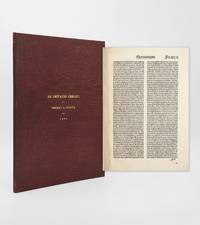
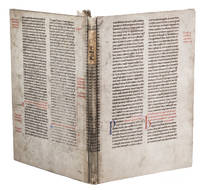
14869BDEHOBV62VDWürzburg: Georg Reyser 1486. Later bound in two leaves from a 13th-century vellum theological manuscript rubricated and decorated with alternating red and blue initials with penwork. Folio. Printed in red and black in rotunda type 32 lines; printed area: 18 x 12 cm; type: 112a. With illustrations cut from 19th- or 20th-century reproductions of early woodcuts ca. 21 x 14 cm pasted on the front Annunciation and back pastedown Christophorus with the year "cccc xx tercio". Interesting example of the study of early printing in 19th-century England. The 12 leaves come from the library of the 19th-century collector Dr C. Inglis whose father boasted an impressive collection of early printed books. Inglis believed that the leaves came from an unknown work titled De vita et honestate clericorum ex consilio Moguntinum printed in 1453 by Gerhardus Episcopus. Tipped in is a letter to Inglis by the well-known bibliographer William Blades discussing this matter. Although the text opens with "De Vita et honestate clericorum ex consilio Maguntinensis Gerhardi Archiepiscipi" it was in fact part of Statuta synodalia herbipolensia printed at Würzburg by Georg Reyser in ca. 1486. The first 6 leaves are 2-d7 and the final 6 leaves are quire g.With owner's inscription of Sir Edward Coates bookplate with initials "CC" Clifford Coates the bookplate of Dr. C. Inglis and some annotations on front pastedown; an autograph letter signed by Wiliam Blades to C. Inglis tipped to flyleaf. 12 well-preserved leaves.l Cf. BMC II 572; Goff S-741; Hain 15036; Hubay Inc. Universitätsbibl. Würzburg 1953; ISTC is00741000. Georg Reyser, hardcover
149764069New York & Strassburg: Ben Abramson Johann Gruninger 1946; 1497. 4to. 48 pp. Double-page title illustrated w/ woodcut engraving w/ 7 additional woodcut engravings. Quarter-orange cloth over illustrated boards cover art facsimile reproductions of illustrated leaves from the 1497 Buch der Cirurgia minor edgewear slight scuffing minor bumping to couple corners still VG copy; One leaf. 4to. 2 pp unpaginated. preserved in fold over flaps on front pastedown left margin repaired faint tidemark on upper third at corner still G clear artifact numbered on verso of title w/ gilt booklabel for the Aldredge Bookstore Dallas TX on rear pastedown. First editions thus No. 52 of 112 copies printed of this limited edition containing an original leaf from the 1497 edition: “the first important printed treatise in German. It combines a compilation of the ancient and medieval authorities with Brunschwig’s own extensive experience. . . and is notable for its woodcuts some of the earliest specimens of medical illustration.†The leaf included here is a survivor from Chapter Three addressing how to find veins and treat open wounds. Sigerist’s work was first published as an essay introduction with the R.Lier & Co. 1923 facsimile of Brunschwig’s Book of Cirurgia. See: Garrison & Morton 5559. Ben Abramson, [Johann Gruninger], hardcover
1492D16270Venice: Hieronymus de Paganinis 1492. Hardcover. Very Good. 7 September 1492 from colophon: “Impressa vero in felici Venetorum ciuitate sumptibus et arte Hieronymi de Paganinis Brixiensis. Anno gratie millesimo quadrigentesimo nonagesimosecundo. Septimus Idus septembris.”. 8vo 170 x 120mm. 510 leaves of 552 lacking the Interpretation of Hebrew Names 41 leaves at the end and final blank. Signatures: A10 a-z8 aa-zz8 A-P8 Q12. Title printed with “Biblia” in gothic letter in upper margin above rectangular woodcut of St. Peter holding keys within double ruled border captioned “Tu es petrus” later hand coloring to halo and garb of Peter. Title verso with the “Tabula alphabetica historiarum Bibliae” compiled by Gabriele Bruno. Text printed double column index in triple column 50 lines to a full column printed in gothic type with red rubrics and headings rubricated versal initials alternating red and blue ink printed marginal citations throughout. Modern vellum yapped edges endpapers renewed; register and first few leaves of prologue little frayed to the margins some light dampstaining near end only light intermittent stains edges lightly browned annotations trimmed close in few margins and few minor marginal repairs otherwise a sound and solid incunable edition of the Biblia Latina retaining the inaugural woodcut. Scattered period Latin annotations and manicules in margins occasionally repeating a word in Scripture like “Patientia” or names of the biblical persons from text “Helias” “Jezebel” or “Joab” and names of kings and their sons are also curiously given much attention writing in more lengthy memory devices for their relationships “Roboam filius Salamonis rex in Juda” – all seemingly the work of one scholar and another cancelled early inscription on A9 perhaps the name “Carolii”. Overall studied and plenty in inscriptions some annotations in Jerome’s prologue and later books are written in red <br />ink. This is the second octavo edition of the Latin Bible printed in Venice in 1492 containing the corrections by the Franciscan scholar Pierangelo da Montolmo named in the robust colophon as “Petrus Angelus de Monte Ulmi”; supposedly a folio edition was issued this <br />same year by the same printer Girolamo de’ Paganini or “Hieronymus de Paganinis” though not found in standard references. The earliest octavo edition of the Latin Bible also known as the “poor man’s Bible” was printed in Basel by Froben in 1491. This Venetian octavo <br />edition is the first Latin Bible to include the “Tabula alphabetica historiarum Bibliae” an alphabetical table of contents compiled by the Franciscan Gabriele Bruno or Brunus in 1489. It is also the earliest printed Bible to display a woodcut on the title – printers of <br />Bibles had previously avoided title pages to best imitate manuscript sources. This 1492 edition was reprinted in 1497 and corresponded closely to the Brescian edition of 1496; the more common 1497 reprint reused the St. Peter woodcut but omitted “Biblia” on the title page. The woodcut’s caption “Tu es Petrus” You are Peter is the formula spoken at papal coronations and the words have long been associated with arguments for papal authority. Interestingly Pope Alexander VI was ordained into the papal office the month prior to this printing on 11 August 1492. Corrected editions of the Bible abounded during the Renaissance a period of intense and progressive scholarship and increasing publishing opportunities; this edition is distinctly associated with Franciscan study and use and made revolutionary efforts to organize the Bible with Bruno’s new contents list. The new “pocket-sized” Bible was an easier and more affordable format to disseminate Scripture. Travelling clergy would have especially benefitted from its portability. This copy interesting for its somewhat heavy Latin marginalia dating closely to the period of the printing; the eager reader names biblical persons of interest and contemplates their genealogical relationships throughout. ISTC 594000. <br/><br/> Hieronymus de Paganinis hardcover books
149565314Basel, Johann Froben, ?M.cccc.xcv. sexto Kalendas Novembres? (d. i. 27. Oktober 1495). 8°. Mit einem fast ganzs. Textholzschnitt. 508 nn. Bll. (Bl. A1 weiß; Got. Typ., 2 u. 3 Kol., 54 Zeilen, rubriziert u. mit Initialen in Rot u. Blau), Ldr. d. 16. Jhds. a. 4 Bünden m. 8 Eckbeschlägen, 2 Mittelstücken u. 2 kl. Metallsternchen, marmor. Schnitt.
149365208Venedig, Bonetus Locatellus für Octavianus Scotus, 4. Juni 1493. Fol. Mit großer Metallschnitt-Druckermarke am Schluss u. einigen meist schwarzgrundigen Holzschn.-Initialen. 313 num., 5 nn. Bll. (2 Kol., 66 Z., Got. Typ.), HPgmt. d. 19. Jhds. m. marmor. Deckeln u. Schnitt.
149617350AB1496. Straßburg Grüninger I.XI. 1496 305 : 21 cm. One leaf with one woodcut. Leaf LXX 'Secundus actus' from the "Heautontimorumenos". The woodcut shows the two protagonists of the play. - With some old annotations. - Hain/Copinger 15431; Goff T-94; GW M45481. unknown
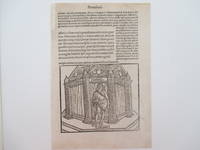
149317352AB1493. Lyon 1493. 225 : 155 cm. One leaf with one woodcut. Leaf 223 shows the Terenz editor Calliopius in front of a polygonal building. The woodcut was also attributed to the master of the Lübeck bible.' - Hain/Copinger 15424; Goff T-91; GW M45397. unknown
149165634(Köln, Heinrich Quentell, 1491). 4°. 10 nn. Bll. (Got. Typ., 38-39 Zeilen, rubriziert u. mit ausgefüllten Initialspatien), Ldr. d. 20. Jhds. m. goldgepr. Rückenschild.
149865400Brescia, Jacobus Britannicus, 24. Oktober 1498. Fol. Mit einigen Holzschn.-Initialen. 32 nn. Bll. (Rom. Typ., 45 Zeilen), Ppbd. d. 20. Jhds. m. Rückentitel.
149664508Basel, [Michael Furter], 13. März 1496. 4°. 22 nn. Bll. (2 Sp., 47 Z., Min. f. Init.), Mod. Ppbd. unter Verwendung eines alten Antiphonarblattes.
1497WB19676Strasbourg: Johann Reinhard Grüninger 26 April 1497. Hardcover. Very Good. Chancery Folio; 304 x 207mm; 490 leaves of 492 lacking blank Z6 and the final leaf of the table; a bifolium from gathering B is bound in A. It features red and blue Lombard capitals with a woodcut depicting Saint Jerome on the title page. The first bifolium has undergone extensive repair work at the gutter and outside edges with the first leaf being soiled chipped and laid down on new paper. Throughout the volume there are smaller repairs and tears with one larger tear that has been repaired affecting the text on page ss2. <br /> <br />Dampstaining and some soiling are present particularly at the ends and there is worming affecting some of the text. The final leaf has been heavily repaired resulting in loss of text at the outer edge. The book is bound in modern black blindstamped morocco with clasps in a style reminiscent of the period with gilt edges showing some signs of wear. The provenance of the book includes extensive marginalia with an inscription indicating it belonged to Georgius Wenceslaus Pastor of Olbersdorf dated 1635 who acquired it from Samuel Ursinus. <br /> <br />A Bible printed by the prolific Strasbourg printer Johann Reinhard Grüninger replete with annotations credibly by Georgius Wenceslaus the Lutheran pastor who served in Olbersdorf a town in the historical region of Silesia which is now part of modern-day Poland. It features a woodcut on the title page portraying Saint Jerome depicted both in contemplative study and in prayer at the foot of the cross. <br /> <br />HC 3122; BMC I 111; BSB-Ink B-476; GW 4277; Bod-inc B-308; Goff B-600; ISTC ib00600000. Uncommon in commence. <br/><br/> [Johann (Reinhard) Grüninger,] hardcover
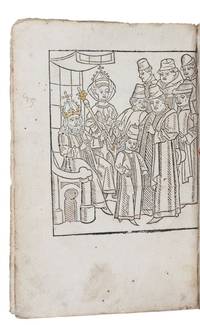
14805273Gouda: Gheraert Leeu 1480. Contemporary limp sheepskin parchment without a spine so that the sewing is completely visible. Kept in a modern brown half morocco clamshell box. 4to 20.5 x 14 cm. With 4 full-page woodcuts plus 14 repeats. The first shows King Pontianus on his throne the Queen standing next to the throne and the seven wise men standing before them with one telling a story. The last shows the same group but with the king's son Diocletianus telling his story The other two show in one case a wise man and in the other the queen telling a story to the king and are used for various stories. That with a wise man has scroll with an opening where type is set to indicate which wise man is speaking. The first illustrated edition in any language of one of the oldest and most popular texts of early European literature. It is also the first illustrated book printed by Gheraert Leeu just before his better-known Dialogus creaturarum. No copy of any edition before 1483 in any language is recorded in a Dutch library. Known in English as The seven sages of Rome it is a series of educational short stories within a "frame story" in the tradition of the Indian Panchatantra the Arabian Nights etc. and some of the stories are variations on stories told there. These stories were first published in Latin at Cologne in 1472. Leeu probably published the first edition in the Low Countries in Dutch with only a single woodcut dated 25 July 1479. That edition is known only from two incomplete copies. His present Latin edition must date between that and 3 June 1480 so it is not clear whether it preceded the unillustrated Deventer edition of 1479 or later. Our copy is preserved in its original limp parchment and only very slightly trimmed giving wide margins 1.5 4 and 5 cm. With 8 early owners' inscriptions one dated 1579 and others clearly older four small and mostly marginal worm holes running through the first leaves and the usual traces of age and handling. The parchment is stained and slightly wrinkled. Nearly untrimmed and in good condition.l Campbell 947; Goff S-448; Goudriaan Een Drukker zoekt publiek. Gheraert Leeu te Gouda 1477-1484 list of publications no. 46; Hain 3000; ILC 1952; ISTC is00448000 7 copies; Klebs Incunabula 906.4; Kok Woodcuts in Incunabula printed in the Low Countries 69. 1-4; Polain 1970; Van Thienen & Goldfinch 1952 same 7 copies; Vijfhonderste Verjaring Boekdrukkunst Nederlanden 127 with. ill.; not in BMC STC Dutch; Incunabula in Dutch Libraries; Gheraert Leeuw exhibition at Gouda 1992; cf. Lexicon des Mittelalters VII pp. 1836-1839. Gheraert Leeu, unknown
1494376720Nuremberg: Caspar Hochfeder 1494. Leaf XCII. Text in two columns 53 lines in black letter with rubricated N on verso running head Liber Sermonum. Small folio. Leaf with minor staining mounted in brown cloth folder with printed descriptive slip from 1927 Foliophiles portfolio of German Incunabula mounted opposite leaf. Leaf XCII. Text in two columns 53 lines in black letter with rubricated N on verso running head Liber Sermonum. Small folio. Attractive leaf from the Nuremberg 1494 edition of the Works of Thomas à Kempis printed by Caspar Hochfeder ISTC it00352000. Cf. Disbound and Dispersed 2005 Checklist 29. Provenance: General Theological Seminary bookplates perforated stamps Caspar Hochfeder unknown
1493D4438Venice: Johannes Rubeus 1493. Hardcover. Very Good. Venice: Johannes Rubeus 1 January 1493. Folio 315 x 225mm. 174 leaves. Collation: a 7; b-x 8; tabula 7. 61 lines Roman type capital spaces unrubricated. Contemporary notation and hand-drawn manicules indicating the text throughout many are whimsically flourished or holding objects. Final blank on watermarked paper of flying swan in pearled medallion. Content are in three parts the first is a revised and augmented version with excerpts taken from classical authors and Italian humanists and formulas for letter-writing. The second part consists of an anthology of prose writers including Cicero Lactantius Macrobuius Plutarchus etc. The third part contains selections from Petrarch dramatic poets Terence Seneca Plautus and a variety of humanist speeches by Renaissance copyists letter-writers and philosophers including Johannes Lamola Poggius Florentinus Galeatius Sforza and the author himself. Contents: Leaf 2a title: Oratorum omnium Poetarum: Hystoricorum: ac Philosophorum elegantes dicta: per Clarissimum iurum Albertum de Eiib in unum collecta faeliciter incipiunt. Leaves 120a-123b contain: Liber augustalis imperatorum Francisci Petrarchae Benvenuto Rambaldis continuation of Petrarchs Epitome vitarum virorum illustrium; Leaves 125a-129b: Francisci Petrarchae de aduersa fortuna Remedia; Leaves 129b- 132b: Francisci Petrarchae: de prospera fortuna remedia. Leaf 168b Colophon: Summa Oratorum omnium: Poetarum: Historicorum: ac Philosophorum Autoritates in unum collectae per clarissimum uirum Albertum de Eyb Vtriusque iuris doctorae eximium: quae Margarita poetica dicitur: faeliciter finae adepta est. M.CCCCLXXXXIII. Kalae. Ianuarii. Leaves 169a-175b: Tabula. totius . oprois. 18th-century three-quarter sheep over marbled pasteboards spine gilt with title silk book mark; wanting first and final original blank a few wormholes at the beginning and end some just affecting text; faint dampstaining in the upper margins few creased corners corner torn of m2 and marginal tear m8 very slightly spotted and soiled in places. From the Collection of Baron de Eyb his heraldic lithographed ex-libris dated 1899 to front pastedown an evident descendant of the author. Eyb is the name of an old Franconian noble family which is named after Eyb in Ansbach. It is likely this volume was owned by a contemporary with familial ties to the author and stayed within the family until the early 20th century. Eighth Edition of this important work of German Humanism. Albrecht von Eyb one of the earliest German Humanists was born in 1420 near Ansbach. Eyb went to Italy and devoted himself to humanistic study at the Universities of Pavia and Bologna. He returned to Germany in 1451 having been appointed Canon at Eichstätt and Bamberg. From 1452 to 1459 he was again a student at Bologna gaining the degree of doctor in 1459. That same year Eyb wrote Margarita poetica in honor of his mother Margarete von Wolmershausen. It was first published in Nuremberg by Johann Senschschmidt in 1472 and reprinted at least 13 times by 1503. It remained a popular manual of classical rhetoric by its three distinct focuses: letter-writing model orations and florilegia compilation of excerpts. The work is known for its vivid expression found within selected passages from classical and contemporary authors from Cicero to Petrarch. The Catholic Encyclopedia calls it a textbook of humanistic rhetoric consisting of a collection of passages in prose and verse from Latin authors to which are added specimens of humanistic eloquence. Of only about 40 in existence OCLC locates 13 copies of this edition in US collections. BMC V 417; Goff E177; GW 9536; HC 6824; Madsen 1547; Schmitt I 4233; Sheppard 4121; Proctor 5132 <br/><br/> Johannes Rubeus hardcover
1493D4438Venice: Johannes Rubeus 1493. Hardcover. Very Good. Venice: Johannes Rubeus 1 January 1493. Folio 315 x 225mm. 174 leaves. Collation: a 7; b-x 8; tabula 7. 61 lines Roman type capital spaces unrubricated. Contemporary notation and hand-drawn manicules indicating the text throughout many are whimsically flourished or holding objects. Final blank on watermarked paper of flying swan in pearled medallion. Content are in three parts the first is a revised and augmented version with excerpts taken from classical authors and Italian humanists and formulas for letter-writing. The second part consists of an anthology of prose writers including Cicero Lactantius Macrobuius Plutarchus etc. The third part contains selections from Petrarch dramatic poets Terence Seneca Plautus and a variety of humanist speeches by Renaissance copyists letter-writers and philosophers including Johannes Lamola Poggius Florentinus Galeatius Sforza and the author himself. Contents: Leaf 2a title: Oratorum omnium Poetarum: Hystoricorum: ac Philosophorum elegantes dicta: per Clarissimum iurum Albertum de Eiib in unum collecta faeliciter incipiunt. Leaves 120a-123b contain: Liber augustalis imperatorum Francisci Petrarchae Benvenuto Rambaldis continuation of Petrarchs Epitome vitarum virorum illustrium; Leaves 125a-129b: Francisci Petrarchae de aduersa fortuna Remedia; Leaves 129b- 132b: Francisci Petrarchae: de prospera fortuna remedia. Leaf 168b Colophon: Summa Oratorum omnium: Poetarum: Historicorum: ac Philosophorum Autoritates in unum collectae per clarissimum uirum Albertum de Eyb Vtriusque iuris doctorae eximium: quae Margarita poetica dicitur: faeliciter finae adepta est. M.CCCCLXXXXIII. Kalae. Ianuarii. Leaves 169a-175b: Tabula. totius . oprois. 18th-century three-quarter sheep over marbled pasteboards spine gilt with title silk book mark; wanting first and final original blank a few wormholes at the beginning and end some just affecting text; faint dampstaining in the upper margins few creased corners corner torn of m2 and marginal tear m8 very slightly spotted and soiled in places. From the Collection of Baron de Eyb his heraldic lithographed ex-libris dated 1899 to front pastedown an evident descendant of the author. Eyb is the name of an old Franconian noble family which is named after Eyb in Ansbach. It is likely this volume was owned by a contemporary with familial ties to the author and stayed within the family until the early 20th century. Eighth Edition of this important work of German Humanism. Albrecht von Eyb one of the earliest German Humanists was born in 1420 near Ansbach. Eyb went to Italy and devoted himself to humanistic study at the Universities of Pavia and Bologna. He returned to Germany in 1451 having been appointed Canon at Eichstätt and Bamberg. From 1452 to 1459 he was again a student at Bologna gaining the degree of doctor in 1459. That same year Eyb wrote Margarita poetica in honor of his mother Margarete von Wolmershausen. It was first published in Nuremberg by Johann Senschschmidt in 1472 and reprinted at least 13 times by 1503. It remained a popular manual of classical rhetoric by its three distinct focuses: letter-writing model orations and florilegia compilation of excerpts. The work is known for its vivid expression found within selected passages from classical and contemporary authors from Cicero to Petrarch. The Catholic Encyclopedia calls it a textbook of humanistic rhetoric consisting of a collection of passages in prose and verse from Latin authors to which are added specimens of humanistic eloquence. Of only about 40 in existence OCLC locates 13 copies of this edition in US collections. BMC V 417; Goff E177; GW 9536; HC 6824; Madsen 1547; Schmitt I 4233; Sheppard 4121; Proctor 5132 <br/><br/> Johannes Rubeus hardcover books
149565636[Paris, Pierre Le Dru für] Jacques Moerart, o. J. (um 1495). 8°. Titel m. einer fast blattgr. Holzschn.-Druckermarke. 95 (statt 96, fehlt das letzte weiße) Bll. (Got. Type, 32 Zeilen, rubriziert), Brauner Maroquin-Bd. d. frühen 20. Jhds., der Vorderdeckel m. grünen Intarsien u. reicher floraler Vergoldung, Rücken-, Deckel- u. Innenkantenverg., goldgepr. Rückentitel u. Goldschnitt.
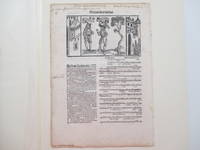
149114839Gedruckt in Nürnberg bei Koberger, 1491. 31,8 x 22 cm (Blattgröße), 24,6 x 15,6 (Druckspiegel)
149114838Gedruckt in Nürnberg bei Koberger, 1491. 31,8 x 22 cm (Blattgröße), 24,6 x 15,6 (Druckspiegel)
149114837Gedruckt in Nürnberg bei Koberger, 1491. 31,8 x 22 cm (Blattgröße), 24,6 x 15,6 (Druckspiegel)
149114836Gedruckt in Nürnberg bei Koberger, 1491. 31,8 x 22 cm (Blattgröße), 24,6 x 15,6 (Druckspiegel)
149114835Gedruckt in Nürnberg bei Koberger, 1491. 31,8 x 22 cm (Blattgröße), 24,6 x 15,6 (Druckspiegel)
149114834Gedruckt in Nürnberg bei Koberger, 1491. 31,8 x 22 cm (Blattgröße), 24,6 x 15,6 (Druckspiegel)
149114833Gedruckt in Nürnberg bei Koberger, 1491. 31,8 x 22 cm (Blattgröße), 24,6 x 15,6 (Druckspiegel)
149114832Gedruckt in Nürnberg bei Koberger, 1491. 31,8 x 22 cm (Blattgröße), 24,6 x 15,6 (Druckspiegel)
149114831Gedruckt in Nürnberg bei Koberger, 1491. 31,8 x 22 cm (Blattgröße), 24,6 x 15,6 (Druckspiegel)