48 390 résultats
1935038723Los Angeles Circa 1935 1935. Original Art Work. . No Binding. Near Fine. 17 5/8" X 15" Tempera On "Pasadena Artist's Supply" Board. Not Signed <br/> <br/> unknown
1970038720Circa 1970 1970. Original Art Work. . No Binding. Near Fine. 20 X 15" Tempera On Board. Not Signed <br/> <br/> unknown
1970038721Circa 1970 1970. Original Art Work. . No Binding. Near Fine. 20 X 15" Tempera On Board. Not Signed <br/> <br/> unknown
754091960. . Chinese paper-cuts. - Die Papierschnitte in Rot Orange Dunkelblat und Violett zeigen eine prächtige über einen breiten Fluß führende Brücke aus verschiedenen Perspektiven: aus der Ferne von den Bergen aus gesehen aus der Nähe von erhöhtem Standpunkt vom Brückenkopf aus bei einem Feuerwerk und aus der Sicht eines auf die Brücke Fahrenden. - Die Mappe mit schwachen Gebrauchssp. die Papierschnitte gut und sauber 1960. unknown

196832286Washington D.C.: Library of Congress 1968. Oblong 4to pp. 96; illustrated throughout; original white embossed wrappers; a little soiled else near fine. An account derived from the exhibition presented in the Library of Congress and opened on April 21 1968. Bookplate of Jacob Chernofsky. <br/><br/> Library of Congress unknown books
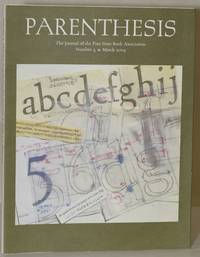
2004255506The Fine Press Book Association 2004. Near Fine binding. Near Fine binding. The Fine Press Book Association unknown books
183400283760Boston: Lilly Wait and Company 1834 Green cloth spine green engraving illustrated paper boards rear cover; Lately Published by Lilly Wait with engravings cover soiled but compete. Engraved title page of circular scientific and geographic scenes also published Portland; Colman Holden and Co. Advertisment for Those Valuable Periodicals The Edinburgh Review and The Quarterly Review. Articles; Sketches of the South No. VI. A Trip to Drummond's Lake Pgs 7 & 115 - 20 & 128. Geography- The Moon Inkstands A Fable - The Tyrant and the Philosopher travel ect. Some soiling and edgewear but complete Rare issue. 12mo - over 6¾" - 7¾" tall. 12mo - over 6¾" - 7¾" tall. First Edition. Decorative Paper. Good to Fair. Lilly, Wait and Company paperback
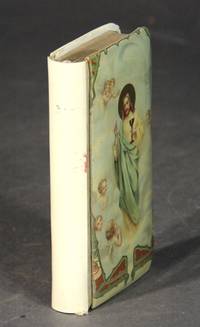
191432898Montréal: Librairie Guay n.d. 1914. 32mo approx. 100 mm pp. 5-332; pages ruled in red frontispiece; publisher's binding of full celluloid with an elaborate color stencil on the upper cover of Jesus Christ under a Corinthian arch holding a chalice and surrounded by 8 cherubs and angels; minor edge wear very good and sound. Not in OCLC. Librairie Guay, n.d. unknown
191432898Montréal: Librairie Guay n.d. 1914. 32mo approx. 100 mm pp. 5-332; pages ruled in red frontispiece; publisher's binding of full celluloid with an elaborate color stencil on the upper cover of Jesus Christ under a Corinthian arch holding a chalice and surrounded by 8 cherubs and angels; minor edge wear very good and sound. Not in OCLC. <br/><br/> Librairie Guay, n.d. unknown books
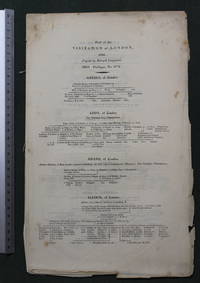
1840MH283Middle Hill : Middle Hill Press 1840 Book. Good. Disbound. 6 pages printed on thin paper which is browned and spotted edges of pages are ragged. Disbound. Covers names from Abeels to Blacknall. All issued. Holzenberg 206. [ Middle Hill Press ] unknown
1939034564Opasadena: Pasadena Water Department 1939 1940 1941 1939. 1st Edition . Soft cover. Near Fine. City-Funded And Published Local Guide For Home Gardening In Pasadena Before Its Self Designation As A City Of Gardens And Before Moronic Landscape-Less 4 Story Apartments And Condos Arose En Masse With Approval By City Planning Employees Who Largely Didn't Live In Pasadena. All 25 Issues 1939-1941 Bound By The Publishers In A Brown Wrapper With Green Printing. Helpful Information For Gardeners In Pasadena. Worldcat Locates Only Two Institutional Holdings. Unlikely To Ever Be Published Again In A Modern City. <br/> <br/> Pasadena Water Department 1939 1940 1941 paperback
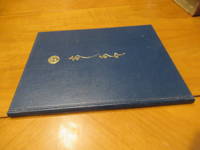
1961032321Pasadena: Pasadena Women's Buddhist Association 1961. 1st Edition . Hardcover. Fine. Photographs Throughout. Blue Cloth Gilt 11" X 8 1/2". Many Photographs Of Members And Activities. Text In English And Japanese. Fine <br/> <br/> Pasadena Women's Buddhist Association hardcover
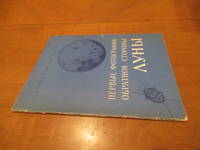
1959009269Moskba Moscow: Akademiya Nauk CCCP / Izdatelistvo Akademii Nauk CCCP 1959. First Edition . Blue Wrappers. Very Good. Photographs of the Moon. 37 pp. Originally issued in a large printing but now scarce. <br/> <br/> Akademiya Nauk CCCP / Izdatelistvo Akademii Nauk CCCP unknown
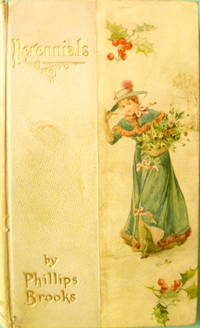
1900005337New York: E.P. Dutton 1900. This is a very rare edition published in 1900. Narrow 12mo size pictorial hardcover with bright gilt titles on spine and front cover; 160 pages. Phillips Brooks 1835 - 1893 was an Episcopal clergyman and Rector at Boston's Trinity Church. Well known during his lifetime he delivered a sermon at the funeral of United States President Abraham Lincoln. He was a requested speaker worldwide and delivered a sermon at Westminster Abbey. He was elected the sixth Bishop of Massachusetts in 1891 and served in that capacity until his death. Bishop Brooks is remembered in the Episcopal liturgical calendar on January 23. Several schools were named in his honor as was the Phillips Brooks House now the Phillips Brooks House Association a student volunteer association at Harvard College his alma mater. A statue of Brooks by sculptor Augustus Saint-Gaudens is located outside Trinity Church in Boston. The author of several volumes of sermons Brooks may be best known as the lyricist of the Christmas carol O Little Town of Bethlehem. This posthumously published book is designed in a daily meditation format starting with January first and going through to year end with a brief quotation for each day. The cover is done in a white or cream colored leatherette from the spine outward to midpoint with a smooth white panel over that. The back is plain and the front has a color illustration of a woman holding flowers and decorated with holly sprigs and berries. Our third photo shows the book under flash. Edgewear bumped and worn head and heel of spine worn bottom corners. Light colored covers have some wear and soil and there appears to be a watermark only on the top corner of back cover. The marks on the left side of cover are actually an absence or wear to "paint" not soil. Inscription on fep and a genealogical notation on inside front cover. Penciled notations on rear endpage small spot on margin of inside back cover and rear endpage. Some tiny spots or light foxing on outside pages. Genealogists and family historians: the names referenced in the notation are William Eliza and Gladys Dutton. Dealer Direct Purchase Only. . Pictorial Cover. Good/No Jacket. 12mo - over 6¾" - 7¾" tall. E.P. Dutton Hardcover
193450380Norwood MA: The Holliston Mills. Very Good with no dust jacket; Boards lightly soiled page tops foxed. 1934. Hardcover. Tan beveled boards titled in black and with cameo man's silhouette inset on front boards. A printer's specimen book showing various types papers illustrations etc. Pages unopened at bolts. ; 8vo 8" - 9" tall . The Holliston Mills hardcover
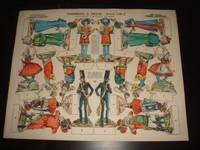
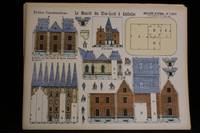
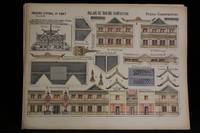
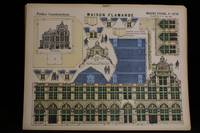
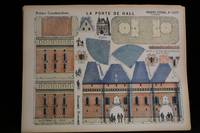
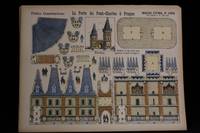
1890254641890. Fine. s. d. circa 1880-1900 39 x 49 cm Image d'Épinal color lithograph large format printed on heavy paper. Minor inconsequential stains to verso otherwise fine condition colors very well preserved. These plates are cardboard constructions or models on which a pattern was printed. This pattern must be cut out and then assembled to construct various objects or life scenes. The Épinal imagery published several series of cut-out models including the ""Grandes Constructions"" in 39 x 49 cm format the ""Moyennes Constructions"" and the ""Petites Constructions"". From 1880 to 1908 constructions were published featuring architecture costumes ships and various vehicles. During this same period paper theaters or ""home theater"" also enjoyed great success. This type of toy developed and persisted until the Second World War. Once sold by peddlers the images d'Épinal owe their name to Jean-Charles Pellerin who was the first printer to publish this type of image in series and who lived in the town of Épinal Vosges. The subjects are very varied but generally revolve around religion history French Revolution battles military uniforms or drawn from successful novels. Épinal imagery has its origins in imagery a popular art born in the 15th century intended mainly for the illiterate public of the countryside. Metz and Nancy are also cities where imagery centers with important production can be found. Originally the image is engraved on a wooden plate and printing is done using a hand press. It is then colored using stencils. In the 19th century lead castings were made from the engraved wood: stereotypes which allowed production to be increased. In 1820 lithography was adopted which induced a radical change in style with finer drawings. In 1900 coloring was still done by stencil thanks to a machine that could color 300 images per hour the Aquatype. unknown
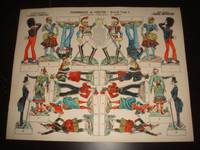
1890254551890. Fine. s. d. circa 1880-1900 39 x 49 cm Image d'Épinal color lithograph large format printed on heavy paper. Minor stains of no consequence to the back otherwise fine condition colors very well preserved. These plates are cardboard constructions or models on which a pattern was printed. This pattern must be cut out then assembled to construct various objects or life scenes. The Épinal imagery published several series of cut-out models including the ""Grandes Constructions"" in 39 x 49 cm format the ""Moyennes Constructions"" and the ""Petites Constructions"". From 1880 to 1908 constructions were published featuring architecture costumes boats and various vehicles. During this same period paper theaters or ""théâtre chez soi"" also enjoyed great success. This type of toy developed and lasted until the Second World War. Formerly sold by peddlers the images d'Épinal owe their name to Jean-Charles Pellerin who was the first printer to publish this type of image in series and who lived in the town of Épinal Vosges. The subjects are very varied but generally revolve around religion history French Revolution battles military uniforms or drawn from successful novels. The Épinal imagery takes its origins from imagery a popular art born in the 15th century intended mainly for the illiterate public of the countryside. Originally the image is engraved on a wooden plate and printing is done using a hand press. It is then colored using stencils. In the 19th century lead castings were made from the engraved wood blocks: stereotypes which allowed production to be increased. In 1820 lithography was adopted which induced a radical change in style with finer drawings. In 1900 coloring was still done by stencil using a machine that could color 300 images per hour the Aquatype. unknown
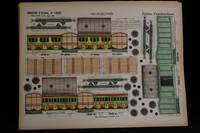
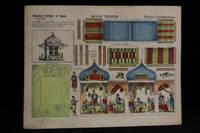
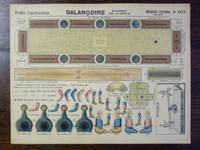
189047126Épinal: Pellerin & Cie 1890. Fine. Pellerin & Cie Épinal s. d. circa 1890 23 x 30 cm une feuille Épinal print color lithograph small format printed on flexible paper. Very handsome condition colors very well preserved. These sheets are cardboard constructions or models on which a pattern was printed. This pattern must be cut out then assembled to construct various objects or life scenes. The Épinal imagery published several series of cut-out models including the ""Grandes Constructions"" in 39 x 49 cm format the ""Moyennes Constructions"" and the ""Petites Constructions"". From 1880 to 1908 constructions were published featuring architecture costumes boats and various vehicles. During this same period paper theaters or ""theater at home"" also enjoyed great success. This type of toy developed and endured until the Second World War. Once sold by peddlers Épinal prints owe their name to Jean-Charles Pellerin who was the first printer to publish this type of image in series and who lived in the town of Épinal Vosges. The subjects are very varied but generally revolve around religion history French Revolution battles military uniforms or drawn from successful novels. Épinal imagery has its origins in popular imagery a folk art born in the 15th century intended mainly for the illiterate rural public. Originally the image is engraved on a wooden block and printing is carried out using a hand press. It is then colored using stencils. In the 19th century lead castings were made from the engraved wood blocks: stereotypes which allowed production to be increased. In 1820 lithography was adopted which brought about a radical change in style with finer drawings. In 1900 coloring was still done by stencil using a machine that could color 300 images per hour the Aquatype. Pellerin & Cie unknown
189047127Épinal: Pellerin & Cie 1890. Fine. Pellerin & Cie Épinal s. d. circa 1890 23 x 30 cm une feuille Épinal print color lithograph small format printed on flexible paper. Very handsome condition colors very well preserved. These sheets are cardboard constructions or models on which a pattern was printed. This pattern must be cut out then assembled to construct various objects or life scenes. The Épinal imagery published several series of cut-out models including the ""Grandes Constructions"" in 39 x 49 cm format the ""Moyennes Constructions"" and the ""Petites Constructions"". From 1880 to 1908 constructions were published featuring architecture costumes boats and various vehicles. During this same period paper theaters or ""theater at home"" also enjoyed great success. This type of toy developed and endured until the Second World War. Once sold by peddlers Épinal prints owe their name to Jean-Charles Pellerin who was the first printer to publish this type of image in series and who lived in the town of Épinal Vosges. The subjects are very varied but generally revolve around religion history French Revolution battles military uniforms or drawn from successful novels. Épinal imagery has its origins in popular imagery a folk art born in the 15th century intended mainly for the illiterate rural public. Originally the image is engraved on a wooden block and printing is carried out using a hand press. It is then colored using stencils. In the 19th century lead castings were made from the engraved wood blocks: stereotypes which allowed production to be increased. In 1820 lithography was adopted which brought about a radical change in style with finer drawings. In 1900 coloring was still done by stencil using a machine that could color 300 images per hour the Aquatype. Pellerin & Cie unknown
189047125Épinal: Pellerin & Cie 1890. Fine. Pellerin & Cie Épinal s. d. circa 1890 23 x 30 cm une feuille Image d'Épinal color lithograph small format printed on flexible paper. Very fine condition colors very well preserved. These sheets are cardboard constructions or models on which a pattern was printed. This pattern must be cut out and then assembled to construct various objects or life scenes. The Épinal imagery published several series of cut-out models including the ""Grandes Constructions"" in 39 x 49 cm format the ""Moyennes Constructions"" and the ""Petites Constructions"". From 1880 to 1908 constructions were published featuring architecture costumes boats and various vehicles. During this same period paper theaters or ""home theater"" also enjoyed great success. This type of toy developed and lasted until the Second World War. Once sold by peddlers the images d'Épinal owe their name to Jean-Charles Pellerin who was the first printer to publish this type of image in series and who lived in the town of Épinal Vosges. The subjects are very varied but generally revolve around religion history French Revolution battles military uniforms or drawn from successful novels. The imagery of Épinal has its origins in imagery a popular art born in the 15th century intended primarily for the illiterate public of the countryside. Originally the image is engraved on a wooden block and printing is carried out using a hand press. It is then colored using stencils. In the 19th century lead castings were made from the engraved wood blocks: stereotypes which made it possible to increase production. In 1820 lithography was adopted which induced a radical change in style with finer drawings. In 1900 coloring was still done by stencil thanks to a machine that could color 300 images per hour the Aquatype. Pellerin & Cie unknown
189047122Épinal: Pellerin & Cie 1890. Fine. Pellerin & Cie Épinal s. d. circa 1890 23 x 30 cm une feuille Épinal print colored lithograph small format printed on soft paper. Very fine condition colors very well preserved. These sheets are cardboard constructions or models on which a pattern was printed. This pattern must be cut out then assembled to build various objects or life scenes. The Épinal imagery published several series of cut-out models including the ""Grandes Constructions"" in 39 x 49 cm format the ""Moyennes Constructions"" and the ""Petites Constructions"". From 1880 to 1908 constructions were published featuring architecture costumes ships and various vehicles. During this same period paper theaters or ""théâtre chez soi"" also enjoyed great success. This toy model developed and endured until the Second World War. Once sold by peddlers the Épinal prints owe their name to Jean-Charles Pellerin who was the first printer to publish this type of image in series and who lived in the town of Épinal Vosges. The subjects are very varied but generally revolve around religion history French Revolution battles military uniforms or drawn from successful novels. Épinal imagery has its origins in popular imagery a folk art born in the 15th century intended mainly for the illiterate rural public. Originally the image is engraved on a wooden plate and printing is done using a hand press. It is then colored by means of stencils. In the 19th century lead castings were made from the engraved wood blocks: the stereotypes which allowed production to be increased. In 1820 lithography was adopted which induced a radical style change with finer drawings. In 1900 coloring was still done by stencil thanks to a machine that could color 300 images per hour the Aquatype. Pellerin & Cie unknown
189047121Épinal: Pellerin & Cie 1890. Fine. Pellerin & Cie Épinal s. d. circa 1890 23 x 30 cm une feuille Épinal print colored lithograph small format printed on soft paper. Very fine condition colors very well preserved. These sheets are cardboard constructions or models on which a pattern was printed. This pattern must be cut out then assembled to build various objects or life scenes. The Épinal imagery published several series of cut-out models including the ""Grandes Constructions"" in 39 x 49 cm format the ""Moyennes Constructions"" and the ""Petites Constructions"". From 1880 to 1908 constructions were published featuring architecture costumes ships and various vehicles. During this same period paper theaters or ""théâtre chez soi"" also enjoyed great success. This toy model developed and endured until the Second World War. Once sold by peddlers the Épinal prints owe their name to Jean-Charles Pellerin who was the first printer to publish this type of image in series and who lived in the town of Épinal Vosges. The subjects are very varied but generally revolve around religion history French Revolution battles military uniforms or drawn from successful novels. Épinal imagery has its origins in popular imagery a folk art born in the 15th century intended mainly for the illiterate rural public. Originally the image is engraved on a wooden plate and printing is done using a hand press. It is then colored by means of stencils. In the 19th century lead castings were made from the engraved wood blocks: the stereotypes which allowed production to be increased. In 1820 lithography was adopted which induced a radical style change with finer drawings. In 1900 coloring was still done by stencil thanks to a machine that could color 300 images per hour the Aquatype. Pellerin & Cie unknown
189047123Épinal: Pellerin & Cie 1890. Fine. Pellerin & Cie Épinal s. d. circa 1890 23 x 30 cm une feuille Image d'Épinal color lithograph small format printed on flexible paper. Very fine condition colors very well preserved. These sheets are cardboard constructions or models on which a pattern was printed. This pattern must be cut out and then assembled to construct various objects or life scenes. The Épinal imagery published several series of cut-out models including the ""Grandes Constructions"" in 39 x 49 cm format the ""Moyennes Constructions"" and the ""Petites Constructions"". From 1880 to 1908 constructions were published featuring architecture costumes boats and various vehicles. During this same period paper theaters or ""home theater"" also enjoyed great success. This type of toy developed and lasted until the Second World War. Once sold by peddlers the images d'Épinal owe their name to Jean-Charles Pellerin who was the first printer to publish this type of image in series and who lived in the town of Épinal Vosges. The subjects are very varied but generally revolve around religion history French Revolution battles military uniforms or drawn from successful novels. The imagery of Épinal has its origins in imagery a popular art born in the 15th century intended primarily for the illiterate public of the countryside. Originally the image is engraved on a wooden block and printing is carried out using a hand press. It is then colored using stencils. In the 19th century lead castings were made from the engraved wood blocks: stereotypes which made it possible to increase production. In 1820 lithography was adopted which induced a radical change in style with finer drawings. In 1900 coloring was still done by stencil thanks to a machine that could color 300 images per hour the Aquatype. Pellerin & Cie unknown
189047129Épinal: Pellerin & Cie 1890. Fine. Pellerin & Cie Épinal s. d. circa 1890 23 x 30 cm une feuille Image d'Épinal color lithograph small format printed on soft paper. Very fine condition colors very well preserved. These plates are cardboard constructions or models on which a pattern was printed. This pattern should be cut out and then assembled to construct various objects or life scenes. The Épinal imagery published several series of cut-out models including the ""Large Constructions"" in 39 x 49 cm format the ""Medium Constructions"" and the ""Small Constructions"". From 1880 to 1908 constructions were published featuring architecture costumes boats and various vehicles. During this same period paper theaters or ""home theater"" also enjoyed great success. This type of toy developed and lasted until the Second World War. Once sold by peddlers images d'Épinal owe their name to Jean-Charles Pellerin who was the first printer to mass-produce this type of image in series and who lived in the town of Épinal Vosges. The subjects are very varied but generally revolve around religion history French Revolution battles military uniforms or drawn from successful novels. Épinal imagery has its origins in popular imagery a folk art born in the 15th century intended primarily for the illiterate rural public. Originally the image is engraved on a wooden block and printing is done using a hand press. It is then colored using stencils. In the 19th century lead casts were made from the engraved wood blocks: stereotypes which allowed for increased production. In 1820 lithography was adopted which induced a radical change in style with finer drawings. In 1900 coloring was still done by stencil thanks to a machine that could color 300 images per hour the Aquatype. Pellerin & Cie unknown
189035338Épinal: Pellerin & Cie 1890. Fine. Pellerin & Cie Épinal s. d. circa 1890 23 x 30 cm une feuille Image d'Épinal color lithograph small format printed on soft paper. Very fine condition colors very well preserved. These plates are cardboard constructions or models on which a pattern was printed. This pattern must be cut out then assembled to construct various objects or life scenes. The Épinal imagery published several series of cut-out models including the ""Grandes Constructions"" in 39 x 49 cm format the ""Moyennes Constructions"" and the ""Petites Constructions"". From 1880 to 1908 constructions were published featuring architecture costumes boats and various vehicles. During this same period paper theaters or ""théâtre chez soi"" also enjoyed great success. This toy model developed and endured until the Second World War. Formerly sold by peddlers the Images d'Épinal owe their name to Jean-Charles Pellerin who was the first printer to publish this type of image in series and who lived in the town of Épinal Vosges. The subjects are very varied but generally revolve around religion history French Revolution battles military uniforms or drawn from successful novels. The Épinal imagery has its origins in imagery a popular art born in the 15th century intended mainly for the illiterate public of the countryside. Originally the image is engraved on a wooden plate and printing is carried out using a hand press. It is then colored by means of stencils. In the 19th century lead castings were made from the engraved wood: the stereotypes which made it possible to increase production. In 1820 lithography was adopted which induced a radical change in style with finer drawings. In 1900 coloring was still done by stencil thanks to a machine that could color 300 images per hour the Aquatype. Pellerin & Cie unknown