26 619 résultats
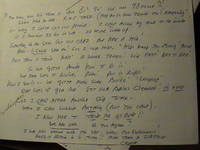
1936000125NJerusalem British Mandated Palestine. Good. 1936. Original Cloth. Evidential to the roots of Middle Eastern terror this is the extraordinary handwritten diary of Miss Doreen M. C. daughter of General and Mrs. J. C. sister of Cynthia. This British family witnesses the very beginnings of the modern era of Middle East tensions and terrorism having been residents of Jerusalem from January 1st to mid-June of 1936. Doreen writes a significant extraordinary insightful and well written diary. A young girl of 16 or 17 we estimate too young for boys - she detests them - and too old for the usual games that girls play paraphrase she writes of her time spent traveling throughout British mandated Palestine recording daily her comings and goings and all that goes on around her. She also does a great job drawing maps and other illustrations. Doreen sums it up in her own hand: in a handwritten copy of a 1963 letter to the famed Leonard Mosley of the Sunday Times found in the book Doreen admits to having in 1936 "a passion for keeping a large diary; I wrote down incidents of the strike riots and daily murders and ambushes like a recording angel!" She is modest. 1936 was a very intense very interesting and very disturbing year - Mussolini advancing against the Abyssinians in Africa Hitler on the rise in Europe Franco tearing apart Spain the King of England dies Edward VIII rises and starts to fall and Palestine is in foment as the Grand Mufti of Jerusalem has made a heinous pact with Hitler and called on the arab populous to strike - politically and through armed conflict murdering British soldiers and Jewish civilians and many many of their own people. Doreen is a "recording angel" to all this and more. From January 1st until mid-June she is for the most part based in Jerusalem living first at the King David Hotel before moving to Talbiyeh Colony in Jerusalem. There are very few idle days; many day trips visits shopping and when they move residence on 'Murhurrem' Jerusalem's famed moving days which date changes yearly and her description of the movers and hubbub are a delightful counterpoint to the atrocities she documents. Everyday she fully details her travels around the country and the news/politics of the day - even a trip to the dentist is fraught with danger given the times. Her father was highly placed at Air Headquarters research has found he ends his service a General and OBE recipient with the British Air Department. He meets frequently with generals and 'big bugs' as she calls them. She even admits that he is doing the "hush-hush work". Doreen names many of the British Colony and quite frequently makes comments - Mr. Such and Mr. Other 'complete scoundrels'. Doreen is an information and current events savant. She reads the papers listens to the radio and pumps the transient English men and women who travel throughout the Middle East and North Africa in service of Britain for the inside info and stories. A short wave ham radio operator Doreen diligently records calls and conversations as she reaches out for more news. She can quote to the day a year before when 'Mussy' promised not to go to war. Abyssinia is very important to her. The Italians the Germans and the plight of the Jews under Hitler disturbs her to no end. Many times in her writings she makes mention for example; PC 459 police constable said such and such giving her info which she then reports: "contrary to the newspaper reports" this is what really happened. She coalesced all the info and records the real story as she sees it. Here are just a very few snippets: "Mussolini is the greatest liar on earth. Hitler is number 2. Hitler is "bats" or something for he is daring to order every German Jew youth back to Germany those who have been turned out included for conscription." "I was told a few tales of storm troops that dared not to be published. They may sound a little far fetched but I do believe them as true. Poland is treating the Jews disgustingly." "I don't know what the Arabs have to grumble about.they were only too glad to sell their land to the Jews because they thought them useless and unpaying and were glad.then they saw the Jews making them pay they get wild and demand them back. More Bombs thrown." "Arab watchmen bumped off by the strikers for not stopping work." "When I look at the finely built young Jewish blokes I cannot help wondering what holds them back they could make mince meat out the Arabs. I cannot make sense of the Jews won't retaliate." "Every one of us knew there would be trouble in Acre. Two days ago the Grand Mufti was there he addressed a large crowd and said 'The Jews are doing their best to get us out of Palestine they are killing our brother Arabs and burning our homes' up to date not a single case has occurred of an Arab home being burned but tons of Jews are homeless through arson and looting. He must be stopped." "An Arab tried to blow up a bridge today up near Nazareth and blew himself up by mistake.I expect PC 239 is chasing round finding bits of ears and toes." "Big show at Acre the Jew shot early this morning had been in the police station all night for breaking curfew and had just been released." She asks the page in front of her - how can a child in this world today care about getting married and having children when the world is so full of detestable tyrants seemingly bent on war and chaos So much is happening around her to report she has taped a number of pages of paper to the days that she has run out of space. Doreen pumps her dad for info all the time: he quite pointedly informs Doreen that he 'has specific proof the Italians are funding the Arab uprising.' She adores her father but she rightly disagrees with him at times: 'Father believes the Germans are not a worry. With the way they are spending money re-arming themselves they will be bankrupt in a year or two.' Maybe her father is trying to save her from worry but Doreen is near clairvoyant in comparison. Toward the end of June Doreen her mother and sister Cynthia are off to England and though life in London is different lacking the daily horrors of terror in Palestine Doreen continues detailing her daily life and report on the conflict. Sensational significant historical diary. The book is an indexed monthly journal that she faithfully records at the start of each month the books she has read the trips she has taken. Rarely will one find as diligent as thoughtful as opinionated and as colorful a diarist as this young lady. A number of pieces of ephemera are included with the book as Doreen inserted them - one piece is a copy of a letter she writes in 1965 from her home on the Isle of Wight. Save for a loose hinge and the crack that comes with it this book is in great shape.; Manuscript; 8vo - over 7¾" - 9¾" tall; HANDWRITTEN MANUSCRIPT DOCUMENT LETTER AUTOGRAPH DIARY JOURNAL LOG KEEPSAKE WRITER HAND WRITTEN DOCUMENTS SIGNED LETTERS MANUSCRIPTS HISTORICAL HOLOGRAPH WRITERS DIARIES JOURNALS LOGS AUTOGRAPHS PERSONAL MEMOIR MEMORIAL PERSONAL HISTORY GREAT BRITAIN WORLD WAR I WW I WORLD WAR TWO II GERMANY ITALY JAPAN MIDDLE EAST T.E. LAWRENCE ARABS MUSLIM MOSLEM MUFTI SYRIA LEBANON PALESTINE BRITISH MANDATE MUSSOLINI HITLER ABYSSINIA HAILIE SELASSIE TERRORISM ISRAEL JUDAISM ZIONISM IRGUN STERN KING DAVID JERUSALEM JUDEA DEAD SEA EGYPT HAM RADIO SHORT WAVE WIRELESS KING EDWARD INTIFADA ARAB UPRISING ASSASSINATION TERROR STRIKES WORK STOPPAGE ZION ZIONISM . hardcover
1941125419Raphael Tuck & Sons Ltd. 1941. Rare lithographic broadside signed by Franklin Delano Roosevelt as the thirty-second President of the United States and Winston S. Churchill as Prime Minster of the United Kingdom at the Atlantic Conference; one of only two known examples of this broadside specially printed at Churchill's direction and signed by both world leaders at their first wartime conference. One page the lithograph features the famed Henry Wadsworth Longfellow verse first used by FDR in a letter of support to Churchill before the United States entered the war and a galleon at sea. The letter sent the day before Roosevelt's third inauguration on January 20 1941 read in full "Dear Churchill Wendell Wilkie will give you this. He is truly helping to keep politics out over here. I think this verse applies to you people as it does to us: "Sail on Oh Ship of State! Sail on Oh Union strong and great. Humanity with all its fears With all the hope of future years Is hanging breathless on thy fate." As ever yours Franklin D. Roosevelt." "R<span class="match">o</span><span class="match">o</span>sevelt never made a m<span class="match">o</span>re graceful <span class="match">o</span>r effective gesture than that" R. Sherw<span class="match">o</span><span class="match">o</span>d R<span class="match">o</span><span class="match">o</span>sevelt and H<span class="match">o</span>pkins 234. The letter and the verse were hand-carried by Wendell Wilkie t<span class="match">o</span> L<span class="match">o</span>nd<span class="match">o</span>n and given by H<span class="match">o</span>pkins t<span class="match">o</span> the Prime Minister. Churchill desperate for American support found the letter "an inspiration" had it framed and proudly displayed it at Chartwell for many years. In early August of 1941 Churchill had this dec<span class="match">o</span>rative br<span class="match">o</span>adside printed and when he arrived in Newf<span class="match">o</span>undland f<span class="match">o</span>r the c<span class="match">o</span>nference with the President he br<span class="match">o</span>ught tw<span class="match">o</span> c<span class="match">o</span>pies t<span class="match">o</span> be signed "<span class="match">o</span>ne f<span class="match">o</span>r himself and <span class="match">o</span>ne f<span class="match">o</span>r the President" Warren F. Kimball F<span class="match">o</span>rged In War: R<span class="match">o</span><span class="match">o</span>sevelt <span class="match">Churchill</span> and the Sec<span class="match">o</span>nd W<span class="match">o</span>rld War 98. Signed by Roosevelt "Franklin D. Roosevelt" and Churchill "Winton S. Churchill." Double matted and framed. The entire piece measures 22 inches by 20.5 inches. The last known example achieved $96000 in a 2008 auction. Scarce and desirable. The historic secret Atlantic Conference was held between August 9th and 12th 1941 on a warship anchored in Placentia Bay Newfoundland. At that momentous meeting the two leaders and their military aides agreed upon critical policies for the conduct of a joint war against Germany even though the U.S. was still officially neutral and would remain so until December 8. The meetings culminated in the Atlantic Charter a declaration of principles issued a few days after the conference. Often compared to Wilson's Fourteen Points the Charter also laid the foundation for the United Nations Declaration signed by 26 nations in January 1942. Raphael Tuck & Sons, Ltd. unknown books
1941125419Raphael Tuck & Sons Ltd. 1941. Rare lithographic broadside signed by Franklin Delano Roosevelt as the thirty-second President of the United States and Winston S. Churchill as Prime Minister of the United Kingdom at the Atlantic Conference; one of only two known examples of this broadside specially printed at Churchill's direction and signed by both world leaders at their first wartime conference. One page the lithograph features the famed Henry Wadsworth Longfellow verse first used by FDR in a letter of support to Churchill before the United States entered the war and a galleon at sea. The letter sent the day before Roosevelt's third inauguration on January 20 1941 read in full "Dear Churchill Wendell Wilkie will give you this. He is truly helping to keep politics out over here. I think this verse applies to you people as it does to us: "Sail on Oh Ship of State! Sail on Oh Union strong and great. Humanity with all its fears With all the hope of future years Is hanging breathless on thy fate." As ever yours Franklin D. Roosevelt." "Roosevelt never made a more graceful or effective gesture than that" R. Sherwood Roosevelt and Hopkins 234. The letter and the verse were hand-carried by Wendell Wilkie to London and given by Hopkins to the Prime Minister. Churchill desperate for American support found the letter "an inspiration" had it framed and proudly displayed it at Chartwell for many years. In early August of 1941 Churchill had this decorative broadside printed and when he arrived in Newfoundland for the conference with the President he brought two copies to be signed "one for himself and one for the President" Warren F. Kimball Forged In War: Roosevelt Churchill and the Second World War 98. Signed by Roosevelt "Franklin D. Roosevelt" and Churchill "Winton S. Churchill." Double matted and framed. The entire piece measures 22 inches by 20.5 inches. The last known example achieved $96000 in a 2008 auction. Scarce and desirable. The historic secret Atlantic Conference was held between August 9th and 12th 1941 on a warship anchored in Placentia Bay Newfoundland. At that momentous meeting the two leaders and their military aides agreed upon critical policies for the conduct of a joint war against Germany even though the U.S. was still officially neutral and would remain so until December 8. The meetings culminated in the Atlantic Charter a declaration of principles issued a few days after the conference. Often compared to Wilson's Fourteen Points the Charter also laid the foundation for the United Nations Declaration signed by 26 nations in January 1942. Raphael Tuck & Sons, Ltd. unknown
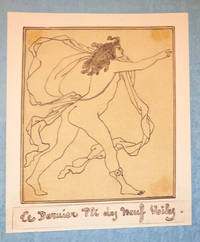
1920759331920. Fine. A priceless poetic testament from Marcel Proust's mentor hidden away and out of sight since the death of the author. s. d. ca 1920 25 x 33 cm en feuilles sous chemises The set of largely unpublished autograph poems by Robert de Montesquiou-Fezensac is brought together by the Count in a collection entitled Le Dernier Pli des neuf voiles whose composition extends from his very first collection Les Chauves-Souris 1892 to his last trilogy Offrandes 1915. Set of 620 autograph leaves. 532 unpublished first draught handwritten on the recto and numbered in pencil preserved in 3 chemises in half red contemporary morocco red morocco labels with gilt author and title; the poems are then placed in the chemises with a handwritten title and a number for publication. According to a note from the author the differences in ink have no meaning mere change of copy. Rare pages from the hand of his secretary Henri Pinard: p. 20 of Huitième voile and p. 29 of Neuvième voile. 23 pages present the printed or typewritten texts of the poems and are enriched with Montesquiou's handwritten corrections. A set of printed proofs are found at the top of the first chemise as well as a pencil tracing after Aubrey Beardsley drawn by the author and accompanied by his handwritten indications. Sublime ode to dandyism to homosexuality and beauty this worldly and poetic promenade by Montesquiou embarks the reader into the decadent fin-de-siècle Paris described in In Search of Lost Time by his friend Marcel Proust. Imbued with his legendary enthusiasm for pictorial decorative theatrical and floral art the collection also delivers hundreds of mournful verses after the disappearance of Montesquiou's lover Gabriel Yturri. Thanks to this collection of poems by Robert de Montesquiou-Fezensac all of which had been lost since 1986 it is now possible to complete the rehabilitation of the aristocratic poet who has long embodied and shaped the Parisian spirit. In May 1920 Montesquiou left handwritten instructions for the posthumous publication of the collection initially announced in two volumes and never produced. On his death a year later the poems were bequeathed to his secretary Henri Pinard who in turn sold them on an unknown date. Auctioned on 24 November 1986 they were mentioned in the LoWire-Littérature colloquium in 1989. This considerable manuscript by Montesquiou forms a veritable home of poetry like his famous aesthetic apartments described by Huysmans. The series of Voiles contain dozens of unpublished poems written in parallel with his previous collections. The author himself indicated the kinship of each voile with a published set of poems announcing here the total completion of his work by the addition of poems which still lay dormant in his papers. The three thick chemises contain rare and curious treasures sometimes drawn on colored sheets often pasted on larger sheets rigorously ordered while awaiting their publication. The poems are written without crossings-out they are fluid with rounded and precious handwriting and stand alongside other first-draught manuscripts: redactions and corrections also bear witness to the work in progress on the new poems; they were applied in the printed proofs of the work present at the top of the manuscript's first chemise. Some poems are taken as they are from collections already published but are slightly modified according to the explanations given by the author. Montesquiou also adds some handwritten notes detailing his intentions. The manuscript contains a poetic anthology of sacred art of extremely rare flowers and of antique furniture adorning his famous Parisian apartments around which so many legends were built Jacques Saint-Cère which fuelled the personalities of Des Esseintes Baron Charlus Dorian Gray and the vain peacock in Edmond Rostand's Chantecler. Moreover Montesquiou was overwhelmed by the features of these famous fictional ghosts of w unknown
1907579131907. Fine. ca.1907-2003 30 x 32 cm Maurice BLANCHOT Extraordinary collection of Maurice Blanchot's original photographs taken in the family setting the only printings C. 1907-2003 272 photographs various format Blanchot challenged photographers and caricaturists of the literary press for a long-time. His 'portraits' over so many years are minimalist and rare: in 1962 in L'Express a hand holds up a book at the bottom of the page; in 1979 in Libération a blank square is in the middle of the page with only Maurice Blanchot's name and a quote from the Entretien infini as a caption: an empty universe: nothing that was visible nothing that was invisible' C. Bident Maurice Blanchot. In 1986 at the time of an exhibition of writers' portraits he requested that his photo be replaced by a text showing his desire to appear as little as possible not to glorify his books but to avoid the presence of an author who was entitled to an independent existence. A photo taken without him knowing by a paparazzi in a supermarket carpark was used as the writer's portrait for a long time before his friend Emmanuel Levinas revealed a few rare photographs of their youth. The fact that Maurice Blanchot did not oppose this release and the fact that this was his closest friend's deed could be explained by what Bident calls the spacing of worry as the revealed portraits were not up-to-date similar to the postponed publications of his books L'Idylle Le Dernier Mot L'Arrêt de mort. Only a few photographs gathered on the central pages of the Cahiers de l'Herne issue dedicated to Maurice Blanchot and published in 2014 supplement these unique shots of the 20th-century's most secret writer. In his chapter The indisposition of the secret Christophe Bident devotes several pages to the almost total absence of images of this invisible partner questioning the intellectual and psychological motivation of the writer who was aware of the inevitable future revelation of his appearance: Everything must become public. The secret must be told. The darkness must emerge. That which cannot be said must however be heard. Quidquid latet apparebit all that is hidden is that which must appear. Maurice Blanchot L'Espace littéraire In general Maurice Blanchot refused to be photographed even in private life as confirmed by the family of his sister-in-law Anna who revealed in a letter to her nephew that she had not taken any photographs of the writer thus respecting his wishes. However the photographs taken with his close family show us a perfectly willing Blanchot and one even playing very elegantly with the image of himself that he projects to the photographer generally his brother. As such we discover an elegant man posing proudly on a boat pontoon or on the banks of the Seine or more mysteriously playing with lighting effects in the corner of an empty room. Here we see a real photographic staging and a symbolic reappropriation of image particularly in a surprising seated portrait of the writer holding the Inconnue de la Seine death mask in his arms the well-known plaster head of a young woman supposedly drowned who adorned artists' studios after 1900. A true romantic legend this sculpture with a mysterious post-mortem smile is at the heart of Aragon's novel Aurélien and haunts the work of artists at the beginning of the century including Rainer Maria Rilke Vladimir Nabokov Claire Goll Jules Supervielle Louis-Ferdinand Céline Giacometti and Man Ray who produced a worrying photographic portrait of the mask at Aragon's request. Maurice Blanchot described the unknown woman as an adolescent girl with her eyes closed but full of life with a smile so slender so rich . that we could believe that she was drowned in a moment of extreme happiness. This photograph of an impervious Blanchot cradling the white mask of the Mona Lisa of suicide asserts itself as a true deconstruction of representation. It becomes an ill unknown
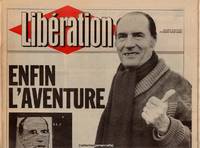
197375634Paris: Libération 1973. Fine. Libération Paris 1973-2004 6200 numéros en feuillets Complete run of the first twenty years of the newspaper Libération founded in 1973 by Jean-Paul Sartre Serge July Philippe Gavi Bernard Lallement and Jean-Claude Vernier. 6200 issues in pristine condition never opened. This unique collection comprises 6200 issues of Libération in impeccable condition never opened and is absolutely complete including all the numéros zéros promotional issues special reports thematic supplements including the entire series of the celebrated Sandwich issues and the commemorative twentieth anniversary album from Monday 5 February 1973 to Monday 3 January 1994. The collection is offered with its custom-made display unit 2.60 m high 4.20 m wide and 50 cm deep. It consists of 35 stackable compartments each measuring 84 x 36.5 x 50 cm each housing two sliding drawers. Each drawer holds approximately one hundred issues of the newspaper. Provenance: Frédéric Fredj Collection. Libération unknown
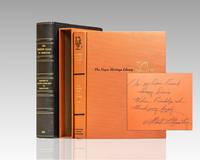
1965149476Yonkers: Educational Heritage Inc 1965. First edition of this comprehensive anthology that compiles historical documents speeches and firsthand accounts to trace the evolving struggle for African American freedom and equality. Quarto original publisher's orange cloth boards with black and white illustrations. Association copy inscribed by Martin Luther King Jr. to Sammy Davis Jr. on the front free endpaper "To my Dear Friend Sammy Davis Whose Friendship I Cherish very deeply Martin Luther King." Sammy Davis Jr. 1925–1990 was an American singer dancer and actor whose extraordinary versatility made him one of the most celebrated entertainers of the twentieth century. As the only Black member of the Rat Pack Davis broke racial barriers in entertainment while confronting segregation both on and off stage. His friendship with Dr. Martin Luther King Jr. began through Davis’s activism and fundraising for King’s civil-rights efforts and deepened during the Civil Rights Movement. Davis used his fame to raise awareness and funds for King’s initiatives performing at civil rights benefits and supporting the 1963 March on Washington. In near fine condition with a small loss to the crown of the spine. Edited by Alfred E. Cain. Illustrated by Horace Varela. Housed in the original orange cloth slipcase within a custom folding chemise within a custom half morocco slipcase with gilt titles to the spine. Martin Luther King Jr. was a Baptist minister and activist who became the most visible spokesperson and leader in the civil rights movement from 1954 through 1968. He is best known for his role in the advancement of civil rights using the tactics of nonviolence and civil disobedience based on his Christian beliefs and inspired by the nonviolent activism of Mahatma Gandhi. King led the 1955 Montgomery bus boycott and in 1957 became the first president of the Southern Christian Leadership Conference SCLC. With the SCLC he led an unsuccessful 1962 struggle against segregation in Albany Georgia and helped organize the nonviolent 1963 protests in Birmingham Alabama. He also helped organize the 1963 March on Washington where he delivered his famous "I Have a Dream" speech. On October 14 1964 King received the Nobel Peace Prize for combating racial inequality through nonviolent resistance. In 1965 he helped to organize the Selma to Montgomery marches and the following year he and the SCLC took the movement north to Chicago to work on segregated housing. In his final years he expanded his focus to include opposition towards poverty and the Vietnam War alienating many of his liberal allies with a 1967 speech titled "Beyond Vietnam". In 1968 King was planning a national occupation of Washington D.C. to be called the Poor People's Campaign when he was assassinated on April 4 in Memphis Tennessee. He was posthumously awarded the Presidential Medal of Freedom and the Congressional Gold Medal. Martin Luther King Jr. Day was established as a holiday in numerous cities and states beginning in 1971 and as a U.S. federal holiday in 1986. The Martin Luther King Jr. Memorial on the National Mall in Washington D.C. was dedicated in 2011. Educational Heritage, Inc hardcover
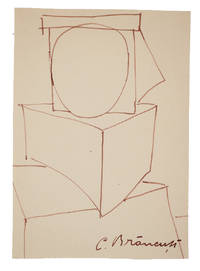
1937761711937. Fine. s. d. ca 1937 9 x 12.90 cm un dessin Eva original drawing signed ca 1937 9 x 129 cm one drawing Original drawing signed by Constantin Brâncui in brown ink on cream paper from the collection of Ion Alexandrescu a stone mason who worked with the sculptor in 1937-1938 on the creation and installation of the monumental ensemble at Târgu Jiu and more specifically on The Door of the Kiss and The Table of Silence. Brâncui's preparatory drawings for his sculptures are extremely rare as opposed to most of the few drawings by the artist seen on auctions which are mainly figurative women and anatomical studies. We submitted this unpublished work to renowned Brâncui specialist Dr Doïna Lemny who authenticated and dated it with precision. As an honorary curator of the Musée National d'Art Moderne Georges-Pompidou in Paris where she was in charge of the Brâncui collection for thirty years she is the author of numerous monographs and essays on the artist. She provided the drawing's analysis: This small drawing traced in ink with a quick hand on small paper calls out by the novelty of the composition of geometric forms: two superimposed cubes supporting an oval head framed in a square acquire a caryatid posture supporting an architrave clearly drawn at the top of the figure. The quick firm line indicates the artist's intention to note elements for a more complex composition that he would have intended to make. Although undated this drawing can be related to two other similar compositions made on 3 November 1937. The first of the same size 9 x 13 cm bears the title Eva and is enriched on the reverse with a drawing of the Kiss and a message addressed to Ion Alexandrescu. The second is larger 22 x 32 cm and has the same composition as our drawing but with proportions that more explicitly evoke a female figure see opposite. In these two other drawings Brâncui indicates the materials he plans to use for this future set of sculptures: wood in Romanian: lemn and plaster gips. The drawing we offer is untitled and does not bear indications regarding the materials but is in coherent with the tangible research of the other two compositions and could be a stylisation of the original drawing for a more abstract sculpture project. The interest in this biblical female figure crossed Brâncui's artistic career. As early as 1916 he sculpted a curvaceous Africanising wooden figure to which he gave the title Ève. Reworking it he finally created a more totemic sculpture in 1921: Adam and Eva. As a ""constructed"" work Adam and Eve already announced Brâncui's intention to take up the theme of the original woman mother and protector who is here pruned of male attributes and made into an elevation of primary and matrix forms: the block the egg and the surface. Provenance: collection of the stone mason Ion Alexandrescu friend and close collaborator of the Romanian sculptor. unknown
1995000854nENGLAND BROADMOOR PRISON PARKHURST WAKEFIELD. Very Good. 1995. On offer is an original exciting massive archive of correspondence some hand-drawn art other writings including poetry articles postcards photos greeting cards and both terrifying and humorous intimate personal letters news clippings and ephemera relating to and created by Charles Bronson - born Michael Peterson his named was changed by his boxing manager - who is considered to be Britains most feared in/famous and notorious prisoner. He is also the author of ten books a poet armed robber kidnapper philanthropist philosopher boxer award winning fitness expert and former circus strongman. Mr. Bronson was first arrested as a 19 year old in 1974 and has been in prison for 34 years and over 28 years in solitary and has been free less than 120 days in that 34 years. He has been moved over 150 times to and within different prisons. Mr. Bronson has also committed some renowned notorious acts while in prison including a number of spectacular hostage-takings; they include a two day rooftop protest at Broadmoor Prison in 1983 which caused three quarters of a million pounds damage. In a 1994 kidnapping/escape attempt he demanded a helicopter an inflatable doll and a cup of tea as ransom for the release of the guard he was holding at Woodhill Prison. There is a worldwide petition to free Charles Bronson based on the fact that he has suffered an extraordinarily lengthy incarceration while never having killed raped or molested anyone. Free in spirit Mr. Bronsons original conviction of 7 years for armed robbery has blossomed to 34 years due to his numerous prison scrapes with authority. Many organizations for prisoner's rights have declared him a political prisoner making his long term incarceration all the more untenable. This archive is the accumulation of approximately 15 years by a woman who at one time was engaged to be married to Mr. Bronson. As such the correspondence is of an intimate nature on all levels of Mr. Bronsons personal and penal life; relationships activities hardships with all of its tragedies and comedies. Further correspondence details every aspect of his life in jail his attempts to be free his physical fitness program. Mr. Bronson is an incredibly expressive and prolific writer and there are many many streams of correspondence; writings to and from his fiance lawyers publishers editors other convicts fans and friends. He is obviously intelligent and a very driven man in many ways. Some of this material is not for the weak of heart and some will have you laughing hard. Mr. Bronson also had a number of interesting friends; he is godfather to the son of Ronald Biggs of the Great Train Robbery fame; a pal to the Kray Brothers leaders of an infamous family run crime gang of whom he wrote a book based on their lives and relationship with him are but a few. We noted a Christmas card to Mr. Bronson's fiance with his and perhaps 30 autographs of other well wishers for example. This archive is the definition of 'one of a kind' as a unique unparalleled look into the essence of criminality law enforcement criminal psychology and the British government and it's penal system. It is also a one of a kind portal into the heart soul mind and demons of a long term convict a noted artist prolific writer poet with the added perspective of a romance and long distance relationship of very high intensity. There are many many hundreds if not over a 1000 pages of correspondence filling a 22 x 16 x 7 inch tub right now and will probably ship in one banker's box and will require a secure shipping method like UPS. We noticed about half a dozen pieces of original artwork a small number of large and small format postcard style paper with artwork and then doodles and drawings throughout the correspondence. Overall condition is VG.; Manuscript; 4to - over 9¾" - 12" tall; KEYWORDS: HISTORY OF HANDWRITTEN PARKHURST WAKEFIELD CRIMINALITY CRIMINOLOGISTS CRIME PRISON PRISONER STORIES PRISONER MEMOIRS PRISON DIARY CRIMINAL LIVES PENAL DELINQUENCY ILLEGALITY KIDNAPPING ARMED ROBBERS LAW LEGAL JUDICIAL CUSTODY SOLITARY CHARLES SALVADOR FITNESS IMPRISONMENT DETENTION CONFINEMENT MANUSCRIPT DOCUMENT LETTER AUTOGRAPH DIARY JOURNAL LOG KEEPSAKE WRITER HAND WRITTEN DOCUMENTS SIGNED LETTERS MANUSCRIPTS HISTORICAL HOLOGRAPH WRITERS DIARIES JOURNALS LOGS AUTOGRAPHS PERSONAL MEMOIR MEMORIAL PERSONAL HISTORY antiquité contrat vélin document manuscrit papier Antike Brief Pergament Dokument Manuskript Papier oggetto d'antiquariato atto velina documento manoscritto carta antigüedad hecho vitela documento manuscrito Papel . unknown
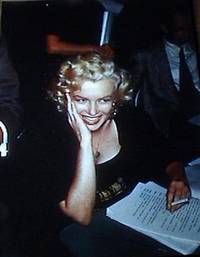
19520001038HOLLYWOOD LOS ANGELES CALIFORNIA CA. Very Good. 1952. On offer is an exceptional archive of original color slides positives featuring the most remarkable female beauty of the 20th century being Marilyn Monroe. Ms. Monroe is candidly captured during a rehearsal and live performance of Edgar Bergen's radio show October 26th 1952. The writer of the show featuring the internationally famed Bergen and his equally famous puppet Charlie McCarthy was Mr. Zeno Klinker. Mr. Klinker the character Effie Klinker is named after the man besides being a talented writer and comedian his sister also a creative talent being the renowned Death Valley artist Orpha Klinker was also a passionate photographer who photographed nearly every visiting actor actress or celebrity on the Bergen show and at this particular broadcast he had direct access to Marilyn Monroe. She is absolutely ravishing and at the height of her beauty and appears to be having a sensational time. A number of group shots include Monroe Bergen and other cast members. Collectors and historians of Monroe's life and career will recognize that as her star was ascending and she gaining some small influence due to her roles in 'The Asphalt Jungle' and 'All About Eve' at this broadcast of one of the most popular radio shows ever she was a mere three months before the 1953 film noir movie 'Niagara' would launch her to stardom. This archive is comprised of 42 different unpublished images that have been stored for more than 50 years. Klinker captured two near identical photos of each image to use in a stereographic type viewer and create a 3-D effect so while there are 42 images they are meant to create 21 'stereoviews'. The color positives have sleeves that would slip into the stereo-viewer. There is no stereo-viewer with the archive. VG.; EDGAR BERGEN CHARLIE MCCARTHY MARILYN MONROE VENTRILIQUIST MEMOIR MEMORIAL PERSONAL HISTORY NORMA JEAN NORMA JEANE BAKER EPHEMERA PHOTOGRAPHY PHOTOGRAPHIC HISTORY OF RADIO Norma Jeane Mortenson . unknown
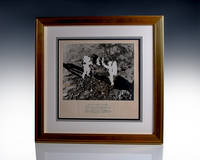
19691484731969. Rare original photograph of Neil Armstrong and Buzz Aldrin raising the United States flag at the Apollo 11 lunar landing site. Vintage matte-finish photograph of Neil Armstrong and Buzz Aldrin at Tranquility Base. Boldly signed by Neil Armstrong "Neil Armstrong Tranquility Base Moon Landing of Apollo 11 20 July 1969" and signed by Michael Collins. Armstrong added a proxy signature of Buzz Aldrin. Very few photos of Neil Armstrong on the moon exist as he was the chief photographer during the Apollo 11 EVAs. This remarkable image was taken by the 16mm Data Acquisition Camera that was mounted inside the Lunar Module. It is one of the most iconic photographs of the 20th century captured at the mission's triumphant climax when the stars and stripes were first unfurled on another celestial body. Mounted on cardstock with an affixed caption below. Triple matted and framed. In very good condition. From the collection of Norris McWhirter 1925-2004 by family descent. Norris McWhirter was a British writer political activist and television presenter known most famously for founding with his brother Ross the Guinness World Records which they wrote and annually updated together between 1955 and 1975. A remarkable example with Armstrong's uncommon inclusion of the lunar time and place. The entire piece measures 17 inches by 16.75 inches. On July 20th 1969 American astronauts Neil Armstrong and Buzz Aldrin landed the Apollo Lunar Module Eagle on the lunar surface. Six hours after landing Neil Armstrong became the first person to step onto the lunar surface; Aldrin joined him 19 minutes later and the two spent over two hours collecting lunar materials. Armstrong's first step onto the lunar surface was broadcast on live TV to a worldwide audience during which he uttered the historic phrase "That's one small step for man one giant leap for mankind." Apollo 11 effectively ended the Space Race and fulfilled a national goal proposed in 1961 by President John F. Kennedy: "before this decade is out of landing a man on the Moon and returning him safely to the Earth." unknown
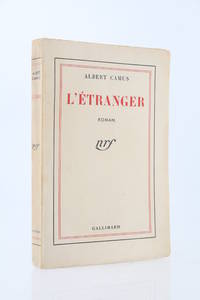
194280260Paris: Gallimard 1942. Fine. Precious Advance Copy as Issued Gallimard Paris 1942 12 x 19 cm broché sous chemise et étui First edition first issue for which no grand papier deluxe copies were printed one of the rare service de presse advance copies. Some very discreet restorations to spine paper browned some discreet traces folds at the bottom of some leaves. A handsome copy as issued. The book is housed in a slipcase signed by Julie Nadot reproducing the original design of the cover and spine. This first edition of L'Étranger was printed on 21 April 1942 with a run of 4400 copies: 400 advance copies service de presse 500 copies without statement and 3500 copies with false statements from the second to eighth edition. The advance copies not intended for sale do not include the indication of price 25 francs on the back of the cover. Paper was rare in 1942 and Albert Camus being then an unknown author Gallimard did not print any deluxe grands papiers copies as was often the case. The advance copies or copies without false statements are particularly sought after. Precious and rare unsophisticated copy under an elegant slipcase by Julie Nadot. Gallimard unknown
192979718Paris: Nrf 1929. Fine. Nrf Paris 1929 25.50 x 33.50 cm relié Voyage au Congo suivi de Retour du Tchad Nrf Paris 1929 255 x 335 cm full calf & custom chemise and slipcase First collective edition of two journeys in Africa by André Gide published successively in 1927 and 1928. First edition grand papier deluxe copy with 64 photographs by Marc Allégret printed in sepia and four maps. One of 28 numbered copies on japon impérial the tirage de tête. Our copy includes the 1928 colophon of first issue copies on japon impérial. Copies printed on Arches bear the date 1929 Bibliographie des écrits d'André Gide Arnold Naville. The high ink absorption quality of papier japon and its affinity with color make it the ideal medium for Marc Allégret's famous sepia heliographed photographs. White aniline calf with gilt titanium joints ink-painted boards and spine in green yellow and red colors of the Republic of the Congo-Brazzaville flag decoration continuing edge-to-edge on the liners loose endpapers on papier japon dyed with Kakishibu by the binder title lengthwise on the spine decorated chemise titled on the spine and matching custom slipcase. Wrappers and spine preserved. Binding signed by Julie Auzillon gilt title by Geneviève Quarré de Boiry and gilt top edge by Jean-Luc Bongrain 2022. Very scarce tirage de tête on papier japon of this masterpiece book of photographs and the first account of travel to these very remote territories of central Africa by an intellectual and outspoken critic of colonialism. Unique copy set in a stunning art binding in the colors of the Republic of Congo-Brazzaville. Nrf hardcover
194984229Paris: Gallimard 1949. Fine. The most important feminist essay in a limited first edition deluxe issue Gallimard Paris 1949 15 x 21 cm 2 volumes brochés en coffret First edition one of 55 numbered copies on pur fil paper most limited deluxe issue. Endleaves and half-title slightly and partially shaded. Exceedingly rare and handsome copy of this seminal text of modern feminism. Our copy is housed in a custom gray clamshell box square spine titled in red author's name and subtitles in black first panel hollowed revealing a black and white photograph of Simone de Beauvoir as a young woman under a plexiglass title in red author's name first volume number and subtitle in black second panel hollowed revealing a color photograph of the author in her prime under plexiglass titled in red author's name second volume number and subtitle in black box lined with burgundy paper superb work by artist Julie Nadot. Gallimard unknown
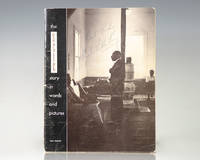
1964141073Atlanta Georgia: Southern Christian Leadership Conference 1964. First edition first printing of The SCLC Story containing one of the first appearances in print of Martin Luther King Jr.'s I Have a Dream Speech. Quarto original illustrated wrappers as issued illustrated with photographs including a full-page photograph of King photographs of the officers executive board regional and secretarial staffs of the SCLC. Signed by Martin Luther King Jr. on the front panel "Best Wishes Martin Luther King." With a letter of provenance that relays that the magazine was signed at an event where King spoke in Atlanta in 1964 and that it may have been first obtained when the Coliseum in Los Angeles hosted the Religious Witness for Human Dignity on May 31 1964. Dr. King gave a forty-minute speech at this event of which Pepperdine University Archives has a recording that can be hear online. In near fine condition. Very rare and desirable containing one of the earliest appearances of King's powerful and iconic I Have a Dream Speech. Baptist minister and activist Martin Luther King Jr. became the most visible spokesperson and leader in the civil rights movement from 1954 through 1968. He is best known for his role in the advancement of civil rights using the tactics of nonviolence and civil disobedience based on his Christian beliefs and inspired by the nonviolent activism of Mahatma Gandhi. King led the 1955 Montgomery bus boycott and in 1957 became the first president of the Southern Christian Leadership Conference SCLC. With the SCLC he led an unsuccessful 1962 struggle against segregation in Albany Georgia and helped organize the nonviolent 1963 protests in Birmingham Alabama. He also helped organize the 1963 March on Washington where he delivered his famous "I Have a Dream" speech. On October 14 1964 King received the Nobel Peace Prize for combating racial inequality through nonviolent resistance. In 1965 he helped to organize the Selma to Montgomery marches and the following year he and the SCLC took the movement north to Chicago to work on segregated housing. In his final years he expanded his focus to include opposition towards poverty and the Vietnam War alienating many of his liberal allies with a 1967 speech titled "Beyond Vietnam". In 1968 King was planning a national occupation of Washington D.C. to be called the Poor People's Campaign when he was assassinated on April 4 in Memphis Tennessee. He was posthumously awarded the Presidential Medal of Freedom and the Congressional Gold Medal. Martin Luther King Jr. Day was established as a holiday in numerous cities and states beginning in 1971 and as a U.S. federal holiday in 1986. The Martin Luther King Jr. Memorial on the National Mall in Washington D.C. was dedicated in 2011. Southern Christian Leadership Conference unknown
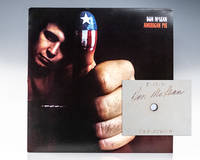
1971149880New York: United Artists 1971. Don McLean's personal test pressing of American Pie before mass production gifted in 1971 to his former sister-in-law. A 12-inch vinyl test pressing with paper labels on both sides and the album itself etched with the word "Peace" and codes "UAS-5535A" and "UAS - 5535B". Signed by Don McLean on both paper labels and dated "8-17-71" with the code "UAS - 5535A" on the verso and "UAS - 5535B" on the recto. The album is housed in its original plain brown sleeve with McLean's handwritten tracklisting of each song title. In fine condition with the sleeve in very good condition. Accompanied by two letters of provenance one from McLean's former sister-in-law and one from session bassist Rob Stoner who has offered his recollections of the session and the test pressing. Together with a new copy of the album featuring the famous cover art. A unique piece of musical history. The album was recorded in the summer of 1971 with test pressings going to McLean and United Artists in August before its October release. Recorded at the Record Plant in Manhattan McLean surrounded himself with a crack band of session musicians including Paul Griffin Rob Stoner and David Spinozza. Rob Stoner credited on American Pie as Bob Rothstein describes meeting McLean at his house to listen to this test pressing of American Pie. In that room at that moment the two men must have known they'd struck gold. Around this time the copy of the test pressing given to McLean for review was gifted to his then sister-in-law. This was before the fame that came with the album transitioning a song into a national treasure. Just one example among many: the song "American Pie" hit the Billboard 100 chart in 1972 and set a record for the longest song to hold the top position for nearly 50 years. Said McLean "There is something to be said for a great song that has staying power." Critics and fans alike raved about the album's title track which documents a uniquely American form of innocence lost. American Pie is a triple-platinum album and has gone down as a cultural touchstone covered parodied analyzed and referenced for decades. United Artists unknown
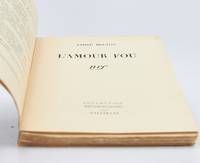
193787781Paris: Gallimard 1937. Fine. ""Convulsive beauty will be veiled-erotic fixed-explosive magic-circumstantial or it will not be"" Gallimard Paris 1937 14.50 x 19.50 cm Relié First edition one of 9 numbered copies on japon only deluxe issue aside from 35 copies on pur fil and a few on coloured paper. Full black morocco binding flat spine authors name palladium-stamped title stamped lengthwise in palladium and blind grey long-grain shagreen inlays to boards with author and title stamped lengthwise in palladium and in blind turn-ins framed in morocco light plum suede pastedowns and flyleaves three palladium decorated deckled edges outstanding custom binding by Thomas Boichot. Illustrated with 20 photographs including 7 photographs by Man Ray 4 by Brassaï one each by Dora Maar Henri Cartier-Bresson and Rogi André as well as artworks by Max Ernst and the statue of a female character by Giacometti in which the writer saw the very emanation of the desire to love and to be loved in search of its real human object in its painful ignorance. André Breton offers a meditation on love at first sight and passion drawn from his fateful first encounter in 1934 with his future wife Jacqueline Lamba this woman was scandalously beautiful. Recalling the beginnings of their romantic relationship he reflects on chance and embarks on a rereading of their love story detecting all sorts of phantasmagoric signs analysing his experiences and feelings. He concludes with an open letter to their daughter Aube born in December 1935 which ends with these words: I want you to be madly loved. A masterpiece of Surrealist literature both an extension and opposite of Nadja which was published nine years earlier also considered an objectbook in the classic surrealist style interleaved with photographs by Cartier-Bresson Brassaï and Man Ray . It proves its own startling kind of existence in the real world being not just a book not just the record of an extraordinary love that between André Breton and the artist with whom he shared his life but an object inserted madly and really now in our world Mary Ann Caws Translators note Mad Love University of Nebraska Press 1987. Gallimard hardcover
195884321Paris: Gallimard 1958. Fine. Gallimard Paris 1958-1972 14.50 x 21.50 cm 4 volumes brochés sous coffrets Mémoires d'une jeune fille rangée Memoirs of a Dutiful Daughter - La force de l'âge The Prime of Life - La force des choses Force of Circumstance - Tout compte fait All Said and Done Gallimard Paris 1958-1972 145x215cm 4 bound volumes. First edition one of 25 30 35 and 40 numbered copies on vergé de hollande most limited deluxe issue for each of the 4 volumes. A very rare and handsome set of this autobiographical and feminist tetralogy. Each volume is presented in a custom box signed by Julie Nadot reproducing the cover plates and the spine of the work. Gallimard unknown
19080001468ARGENTINA SOUTH AMERICA. Good. 1908. On offer is an exceptional massive historically significant archive of original handwritten manuscripts documents photographs and related ephemera including maps passports and research materials of noted geographer geologist explorer and expert on South America Anselmo Windhausen. Of particular interest to historians and researchers and collectors of the natural history of the continent are 10 original manuscripts: 1. Geologica Argentina; 2. Paleonto Logia I; 3. Geologia Historica Y Sudamericana II; 4. Geologia De Los Combustibles; 5. Nociones de Hidrogeologia; 6. Mineralogia Y Geologia; 7. Geologia General III III IV; 8. Geografia Fisica I; 9. Accion Coustructiva Y Destructiva Aqua Carrienta; 10. Sierra De Cordoba Hidrogeolica Y Pampeano Cordoba with hundreds of photographs in albums full of exploration photographs and a trip from Argentina to California; across the US in 1915; the Panama Pacific Exposition plus the archive boast hundreds of documents maps passports and other ephemera. BIO NOTES: Dr. Anselm Windhausen 1882-1932 Anselm Windhausen was born in Lingen Germany on April 20th 1882. He studied at the Gymnasium Josephinum in Hildesheim and successively at the universities of Berlin Munich and Göttingen where he had among his teachers such renowned scientists as Ferdinand von Richthofen Wilhelm Roentgen Karl von Zittel Wilhelm von Branca and Adolf von Koenen. He began his scientific work at the Unicorn Cave in the Harz mountains of Germany under a scholarship from the Virchow Foundation conducting geological and paleontological studies whose basic conclusions were confirmed many years later. In those early years he worked for Göttingen's Geological-Paleontological Institute and the Roemers Museum in Hildesheim. In 1907 he obtained his Ph. D. in Geology at the University of Göttingen and that same year he was appointed to take care of the geological and paleontological collections at the Provincial Museum in Hanover. On April 20th 1909 when he was turning 27 he was hired by the Mines and Geology Division of Argentina's Ministry of Agriculture as a staff geologist. He moved to Argentina shortly thereafter. His first geological surveys in Argentina where conducted in the southern area of the province of Mendoza between 1909 and 1910. In 1910 he was in charge of organizing the mineralogical collection at the Centennial Exposition in Buenos Aires. Commissioned by the Argentine government he organized the Mines and Geology Division exhibition at the Industries and Labor Exposition in Turin and Roubaix in 1911 in which he obtained a "Grand prix." Between 1912 and 1913 he began his first explorations in northern Patagonia to investigate the oil outcrops that had been reported in the late 19th century in the Cerro Lotena area of the province of Neuquén. In September of 1913 he recommended the exploitation of oil in what is today the Plaza Huincul field during a lecture he gave at the Sociedad Científica Argentina in Buenos Aires. However the merit of having discovered that oil field was wrongly attributed to one of his superiors Dr. Hans Keidel and it wasn't until 1972 some 60 years later that Windhausen's achievement was finally recognized. In 1916 he resumed his explorations in the areas of Río Negro and Neuquén to define the limits between the Cretaceous and the Jurassic. His conclusions were first published in 1918 in the American Journal of Science. In that study he established the concept and nomenclature of the so-called 'Jagüel layers'. Subsequently he extended his expeditions to the area south of Lake Nahuel Huapí the Chubut River Puerto Camarones Puerto Madryn and other parts of Patagonia. He published his research on the Neocomian fauna at the National Academy of Sciences in Córdoba Argentina of which he became a member a few years later in 1922. He maintained important scientific correspondence on the controversy surrounding the theories of Florentino Ameghino with such renowned colleagues as Herman von Ihering director of the Museo Paulista and W. D. Matthew of the American Museum of Natural History. In 1919 he was transferred to the newly-created Dirección General de los Yacimientos Petrolíferos Fiscales which later became the state-owned oil company YPF. Windhausen was commissioned to conduct a complete geological survey of the oil areas of Chubut and Santa Cruz whose partial conclusions he published in Argentina and Germany. In 1920 Windhausen took the Argentine citizenship. After a strong argument with the Director of YPF Col. Enrique Mosconi about the prospects for the exploitation of Patagonian oil which he defended against other opinions he returned to Mines and Geology in 1923. In 1924 he published a landmark geological study of the Bay of San Jorge which for decades was the basis for the exploration and exploitation of oil in that zone of Patagonia. Besides he brought back to public attention the importance of the Jaramillo Petrified Forest now known as the Cerro Cuadrado Petrified Forest in the southern province of Santa Cruz. He sent samples of area fossils like the " Araucaria mirabilis " to his German colleague Walter Gothan a celebrated paleontologist with a recommendation for further studies in Germany. Windhausen also recommended the exploitation of what was later known as the lignite fields of Río Turbio and extensively explored the Lake Argentino area of Santa Cruz. In 1923 he cooperated with renowned South African scientist A. du Toit during his visit to Argentina closely working with him on the geological correlations of Patagonia and Southern Africa. He then published a milestone article titled "El nacimiento de la Patagonia" The birth of Patagonia in 1924. In it he pioneered the idea of using Alfred Wegener's theory of continental drift for the study of South American geology. His ideas about the tectonic plates of South America were confirmed some 30 years later with the use of satellite photography. In 1925 as a member of the Argentine Geographical Society GAEA he actively cooperated with the expedition of the German oceanographic ship " Meteor " which mapped the South Atlantic floor with the use of sonar. Along with his brother-in-law the German topographer Fritz Graef he co-edited GAEA's scholarly journals. In 1926 he was appointed Geology and Paleontology professor of Graduate Studies at the School of Natural Sciences of the National University of Córdoba. In 1928 the Berlin Geographical Society in its centennial granted him the Gustav Nachtigal medal ex aequo with the noted German geographer Fritz Kühn for his contributions to Earth Sciences. In 1929 he published the first volume of his landmark work 'Geología Argentina' Ed. Peuser Buenos Aires. Dr. Windhausen working circa 1926. At that time he also worked as a private consultant for the U.S. company Electric Bond and Share Co. for building a dam in Anisacate Córdoba. He was one of the founders of the Mining and Geology Society of Argentina. He traveled to Germany in late 1929 invited by the famous German geographer Albrecht Penck to finally receive the Nachtigal medal. In January of 1930 he lectured on " Bau und Bild Patagoniens " at the Society in Berlin presented by Penck himself.In 1931 he published the second volume of his " Geología Argentina " devoted to regional and historical geology. For decades the two volumes of this work were an obligatory source for scholars and a textbook on the subject. The book incorporated his visionary application of Wegener's theory of continental drift to the geological interpretation of South America. In April of 1931 through the University of Córdoba he proposed to YPF the establishment of a scholarship program for students of natural sciences which benefited several generations of Argentine geologists as of 1932. After making a trip to Southern Patagonia in the summer of 1931-32 he suffered a stroke. Anselm Windhausen died at the German Hospital in Buenos Aires on April 2 1932 just eighteen days before turning 50. In 1935 a jury of which later Nobel Prize winner Bernardo Houssay was a member gave him a posthumous National Science Prize for his "Geología Argentina." There are also some early German papers when Dr. Anselmo Windhausen leading up to his taking on the position in Argentina. Overall G.; Spanish German English; KEYWORDS: HISTORY OF LATIN AMERICA SOUTH AMERICA GEOLOGY GEOGRAPHY GERMANY GOTTINGEN ARGENTINA ANSELMO WINDHAUSE NATURAL HISTORY PALEONTOLGY VOLCANO MINERALS MINERALOGY PANAMA EXPOSITION HANDWRITTEN MANUSCRIPT DOCUMENT LETTER AUTOGRAPH KEEPSAKE WRITER HAND WRITTEN DOCUMENTS SIGNED LETTERS MANUSCRIPTS HISTORICAL HOLOGRAPH WRITERS AUTOGRAPHS PERSONAL MEMOIR MEMORIAL PERSONAL HISTORY ARCHIVE DIARY DIARIES GEOLOGIA DE LOS COMBUSTIBLES GEOLOGIA HISTORICA Y SUDAMERICANA MINERALOGIA CARRIENTA SIERRA DE CORDOBA HIDROGEOLICA Y PAMPEANO CORDOBA SOCIEDAD CIENTÍFICA CERRO LOTENA PATAGONIA CÓRDOBA ARGENTINA JARAMILLO PETRIFIED FOREST . unknown
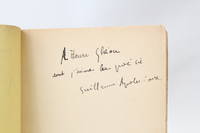
191371213Paris: Mercure de France 1913. Fine. “To Henri Ghéon whose poetry I love Guillaume Apollinaire” Mercure de France Paris 1913 11.50 x 18.50 cm broché First edition one of the first-issue copies press-numbered from a total limitation of just 23 deluxe copies on Holland paper. Illustrated with a frontispiece portrait of Guillaume Apollinaire by Pablo Picasso. Spine sunned with discreet restorations.Our copy is preserved in a red half morocco chemise spine with five raised bands date lettered at the foot paper-covered boards matching paper slipcase edged in red morocco the whole signed by Boichot. Rare signed autograph inscription by Guillaume Apollinaire: « à Henri Ghéon dont j'aime la poésie Guillaume Apollinaire ». Our copy further contains five manuscript corrections in ink by Apollinaire on pages 71 77 92 110 and 189. Also included is an autograph satirical quatrain by Apollinaire composed two years earlier offering a caustic critique of René Fauchois's mediocre play 'Rivoli' devoted to Napoleon. Apollinaire presented this copy to Henri Ghéon literary critic for La Nouvelle Revue Française. The poet took care to correct himself the typographical errors still present in this very first edition corrections likewise found in other presentation and review copies distributed by the author. Upon receiving his copy Ghéon devoted an article to Alcools «Alcools par Guillaume Apollinaire» Nouvelle Revue Française no. LVI 1 July 1913 describing the collection as a «démarche aventureuse». Presentation copies of this work inscribed by Apollinaire are rare and highly sought after. The small autograph satirical quatrain by Apollinaire composed two years earlier offers a caustic critique of René Fauchois's mediocre play 'Rivoli' devoted to Napoleon. Although it makes no claim to the poetic ambition of Alcools the poem nevertheless shares with that celebrated collection several features that illuminate the genesis of Apollinaire's masterpiece. Published under the pseudonym « Montade » in the Mercure de France of April 1911 with five commas the manuscript of the poem is written entirely without punctuation just like the avant-garde poems of Alcools. The very form of this brief poem reveals Apollinaire's curiosity and his constant search for the renewal of poetic expression as evidenced by the introductory note accompanying its publication in the Mercure: « Chantecler a été l'occasion pour les poètes français de reprendre un genre délaissé l'épigramme. . Le Rivoli de M. Fauchois a aussi inspiré des épigrammes. En voici deux qui sont bien tournés. L'une a été insérée dans l'Intransigeant :Après Beethoven Amen ! Après Rivoli au lit !La seconde parce qu'il y a plus de ruelles court les brasseries :Le grand Napoléon au jour de Rivoli Avait fait par ma foi une belle trouvaille Inutile vraiment puisque partout on lit Qu'à l'Odéon Fauchois a perdu la bataille » One also notes the poet's own assessment of his work and his desire for a poetry that wanders freely through the streets and cafés liberated from the constraints of print punctuation and formal rigidity much like the cascading calligraphy of these handwritten verses composed nine years before Calligrammes. Mercure de France hardcover
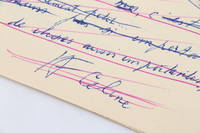
195483743s. l. Meudon 1954. Fine. Céline's Ars Poetica: ""I capture all the emotion on the surface! I cram it into my metro! s. l. Meudon s. d. 1954 10 x 21 cm 34 feuillets Manuscript pages from Conversations with Professor Y' n.p. Meudon n.d. 1954 various sizes from 10x21 cm to 27x21 cm 34 sheets. Autograph manuscript by Louis-Ferdinand Céline 34 sheets of various sizes written in blue and sometimes pink ballpoint pen. Some of the pages are numbered by Céline at top left. The last folio numbered 159 is signed by the writer at the bottom. Two leaves contain previously unpublished passages: the first a few lines long refers to the Professeur. The second leaf numbered 136 features another full-page text on the verso which we did not find in the Professeur Y' or in any of the published works of Céline. Céline refers in this unpublished passage to article 75 of the penal code condemning to the death penalty any French citizen found guilty of intelligence with the enemy. It also mentions a certain ""Me Johann Niels Borggensen"" no doubt a pseudonym for his lawyer Thorvald Mikkelsen: "".supposedly to protect me from police curiosity! holy cow! he was having a ball.when you've got the warrant up your arse crossed out: article 75 anyone can do what they like with you! what a joke! we can do what we like with you.it wouldn't have been Borggensen perhaps someone else would have been worse.give me article 75 and I'll put the whole of France in a Mouse hole for you! and Germany with it! and England such a nag and Europe with it! no bomb needed! H ! Y ! Z ! I'll make you fit the atom into a."" Important set of working manuscripts bearing witness to the writing of Conversations with Professor Y' Céline's true Ars poetica. Since the first part of Féerie pour une autre fois' Fable for Another Time was not as successful as expected Céline wanted to give the release of the second part - Normance - as much publicity as possible and restore his reputation after his years of exile in Germany and Denmark. Instead of writing the usual promotional note prière d'insérer he suggested to publisher Gaston Gallimard this eulogy written in the style of an imaginary interview between himself and Professor Y alias Colonel Réséda a prostatic old man. This zany ""interviouwe"" was published in several parts in the Nouvelle Revue française in 1954 and the finished work through Éditions Gallimard the following year. Céline speaks fervently of his style and his conception of literature and vehemently criticizes the world of letters and public taste. Unlike Céline's other works the genesis of this text crucial to the understanding of his oeuvre is poorly documented and its manuscripts are rare. The Pléiade edition of Celinian novels contains only a few pages of an earlier version very close to the published text. This set of pages covering every passage of the text contains both heavily crossed-out sheets and neatly rewritten notes. It bears witness to the different stages of the writer's work: drafting an initial sheet crossing out and rewriting on the same page then transcribing short passages on separate notes. The last page of the text is extensively crossed out and rewritten resulting in a slightly different version of the published version. The manuscript also contains the famous metaphor of the metro typical of the writer's emotive style compared here to the ""dry language"" of his peers: ""Did you see Have you noticed All caught up in my metro!. what do I leave on the surface. the worst rubbish in cinema!. foreign languages then!. translations!. retranslations of our worst rubbish that they use for their ""parlants"" talking pictures superb foreign languages!. in addition to the psychology! the psychological mumbo jumbo!. all the crap. . Me it's something else! me I'm much more brutal! me I capture all the emotion!. all the emotion on the surface! all at once! I decide! I stick it in the metro! my metro! all t unknown
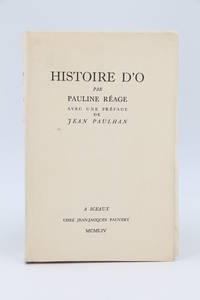
195484226Sceaux: Jean-Jacques Pauvert 1954. Fine. Masterpiece of Eroticism with a Capital O Jean-Jacques Pauvert Sceaux 1954 12 x 19 cm en feuilles sous chemise et étui First edition one of 20 copies on Arches paper most limited deluxe issue tirage de tête. Like all copies on Arches it is wrapped in a double dust jacket in yellow and white and bears the rare sanguine vignette drawn and engraved by Hans Bellmer. Preface by Jean Paulhan. Our copy is housed in a custom clamshell box featuring an original design signed by Julie Nadot. Beautiful first edition copy of this masterpiece of erotic literature in its most limited deluxe issue. Jean-Jacques Pauvert unknown
1920NNMV718NPERSIA IRAN. Very Good. 1920. Hardcover. On offer is an absolutely sensational original set of three 3 historic photo albums circa 1920 with one album identified specifically as 'October 11-29 1920'. This is an outstanding irreplaceable one of a kind collection of approximately 158 period photographs each about 2-1/2 x 1-1/2 inches wherein the photos include: Uman summit of Latakuh Pass the Gilan jungle Lahijan a super photo of a sailing barge on the Chamkhaleh scenes around the Caspian gypsies a Ford vehicle stuck in a pond a mosque in Kasvin the Shah's Palace in Tehran scenes of Baghdad the bringing in of Bolshevik prisoners a shikarchi a muzzle loading rifle the Tomb of Esther and Mordechai a caravan of camels the Persian Army a display of corpses and heads on posts an oil refinery at Abadan Nodeh Shah Suvar and Muskrat plus many many more which makes for one part diary-like experience following this officer and his group and another part an historic photgraphic evidence of the ancient world meeting the modern world and the difficult collision. Careful reading suggests while unidentified the photographer and original owner of the albums was a British officer assuredly future famed author on the Middle East Cecil James Edmonds whose initials are present on most of the pictures and there is a picture of the man himself who has a portrait of his 'batman' and provides many more clues that will assuredly assist researchers in confirming his ownership. Historians collectors and researchers of old Persia and the roots of contemporary Iran will understand that these albums are of no small historic value: in 1920 Persia was at the crossroads of history being the end of one era in their history and the beginnings of another. 1920 saw the new raw Communist regime now the Soviet Union marking the end of old imperial Russia invade northern Persia and establish Soviet satellite states in Gilan the northernmost province of Persia where an independent Soviet Republic was established there under Kuchik Khan with Soviet recognition and military assistance Kurdistan Azerbaijan and Khorasan. With great cynicism a march on Teheran was initiated though supposedly repudiated by the Soviet Government. This was also the start of the Persian Revolution in 1921 wherein Reza Khan Pahlavi overthrew the corrupt Shah Ahmad Mirza and crushed the separatist regimes in Gilan Kurdistan Azerbaijan and Khorasan. Following the coup of Persian General Reza Khan Pahlavi in February of 1921 a peace treaty with the Soviets was ratified and Soviet forces withdrew. This collection of photographs offers an unusual and unique perspective for historians as it is in these photos we see the old world's demise and the modern era conceived. Most of the photos are in excellent condition being sharp and clear. The photo albums are approx. 6 x 4/5 inches ; Photo Album; 6.5 X 4.5 IN.; KEYWORDS: PERSIA PERSIAN HISTORY OF PERSIA IRAN IRANIAN QAJAR SHAH TEHERAN FARSI RHA R.H.A. ROYAL HORSE ARTILLERY THE CHESTNUT TROOP MIDDLE EAST SOVIET INVASION OF PERSIA BEHEADINGS TRAVEL HANDWRITTEN MANUSCRIPT DOCUMENT LETTER AUTOGRAPH DIARY JOURNAL LOG KEEPSAKE WRITER HAND WRITTEN DOCUMENTS SIGNED LETTERS MANUSCRIPTS HISTORICAL HOLOGRAPH WRITERS DIARIES JOURNALS LOGS AUTOGRAPHS PERSONAL MEMOIRPHOTO ALBUM PHOTOGRAPHIC ALBUM MEMORIAL PERSONAL HISTORY antiquité contrat vélin document manuscrit papier Antike Brief Pergament Dokument Manuskript Papier oggetto d'antiquariato atto velina documento manoscritto carta antigüedad hecho vitela documento manuscrito Papel Arabs of Khuzistan Azeris Baluchis Uman Latakuh Pass Gilan jungle Lahijan Chamkhaleh Caspian gypsies mosque Kasvin Shah's Palace Tehran Baghdad Bolshevik Abadan . hardcover
19050009182ABOARD THE HMS PEGASUS AUSTRALIA STATION. Good. 1905. On offer is a sensational historically significant manuscript relic of British naval history being the handwritten journal of F. G. Hedingham a sailor on the British Royal Navy cruiser the HMS Pegasus working in the Australian Station. The back of the front cover reads: Rough notes on the Commission of H.M.S. Pegasus. On the Australian Station. F. G. Hedingham. January 31st 1905. The journal begins Commissioned in Sheerness dockyard on 31st January. 1905. Left the dockyard on the 24th of Feb after repairs to boilers were finished.proceeded straight up to Chatham and into Dry dock the same day.Took in 250 tons of coal in the morning of the 9th and went down the River to Saltpan reach in the afternoon. Raised steam on the morning of the 10th and left Sheerness at 2.20pm and proceeded down Channel. The ship faces rocky weather almost immediately: .had a rough passage all the way out at times in the Bay of Biscay we were only doing about 2 knots an hours. The ship arrives in Gibraltar takes on more coal and see the Duke and Duchess of Connaught. On the way down to Australia the ship stops in Malta Aden Suez Colombo and Batavia. Hedingham gives pretty quick and to-the-point accounts of each day stating larger and more straightforward observations such as weather events ships seen ports left from or sailed to rate of the ship's progress etc. In Batavia a man on the Pegasus dies: Weds: May 10th. We were going to sea at Daybreak this morning but the stoker in the steam-boat got sun-stroke and was carried inboard about 6pm last night he died at 9am this morning. I went to his funeral on shore this afternoon he was buried about 3pm about 1/4 mile from the harbor. The next day it is back to normal going on towards Albany Australia described as a large harbor but not very deep water. With hills all around. The ship moves on to Sydney where the Pegasus gets a number of repairs done on it a process that takes about six weeks. In the meantime Hedingham spends his days in town going to see sports walking around the city going to the National Gallery taking day trips to places like Manley. His days are easy and enjoyable. On September 26 Admiral Arthur Fanshaw hoised his flag as full admiral on the flagship for the first time this morning and the ships in harbour fired the salute. The ship leaves Sydney and goes to Jervis Bay for military exercises then back to Sydney. The ship leaves again a couple weeks later for Noumea the capital of New Caledonia which Hedingham reports: Noumea it has a population of 6000 of which 2000 are blacks. The majority of the houses have only one story can hardly call the town pretty but the country about is very nice. The cemetery is large and well kept with a lot of expensive wreaths. A fire starts on the dock shortly after the Pegasus arrives in Noumea and there are a number of days of a court of inquiry into the cause of the fire. The ship moves on to Port Sandwich at one of the Islands in the New Hebrides. Hedingham continues We have 5 nrs on board as prisoners since we were at Noumea we are taking them down to the Islands for exile as they have committed a murder. The ship leaves Port Sandwich and arrives at the Island of Mallicolo. The Pegasus joins a French ship on the island. What happens next is a sad legacy of European colonialism. Hedingham and a party of about 80 men and officers land on the island and proceed to massacre the local population as revenge for alleged recent murders of French members of the schooner Lily by the natives of this small island. The event is harrowing but is written with the same cool and calm demeanor as all the other entries: .we carried two Maxim guns and the men armed with rifles and bayonets and some with cutlass and revolvers each man carried 120 rounds a small party landed at the same time from the French ship we all line up on the beach and the whole marched off together into the bush the party passed through a friendly village about a mile from the beach and about two miles further on they came to another village a halt was made and about 100 rounds fired from the Maxim and when they came into the village it was deserted.again to another village with the same result the natives firing one or two shots. The village which was called Billias was then set on fire cokeonut trees and fruit trees were cut down and all the wooden idols blown up after.the party marched back again to the other village which was also burned down.steep hills all the while. The ship then moves on to another part of the island landing another armed force on the village and threatening that we would blow the village up if they do not fetch off two others that escaped this afternoon. The natives deliver the men the next day. The ship leaves and goes back to Noumea where Hedingham reports: one of the last two nr prisoners that we took on board jumped overboard in the night and tried to escape but they lowered a boat and brought him back. About a month later another raid and massacre on the natives occurs: As soon as the natives saw that they had got to go with us they started resisting one of the broke away and they shot him down as soon as they heard the shot all the lot made a rush in all directions down the hill they fired at them as quick as they could and several of them fell they ceased firing and all we had was four men and two women. We left those that were shot where they fell and marched back about 2pm. On the way down 2 of the men broke away at different places and were shot. So when we got to the beach we only had two men and two women. The French take the prisoners off with them. Another landing happens a few days later at the town of Atchin in Malekula island. They demand the natives give up their pigs and rifles and the natives give in bringing all together about 24 pigs and about 60 Snider Rifles. This is the last landing as the ship soon goes back to Sydney harbor. There is shore leave in Sydney where Hedingham takes the train to Menangle Australia to shoot rabbits. 1906 begins with more of the same patrolling the Australian station doing military exercises with other ships and remarking on the occasional shore leave regatta or holiday. In April Hedingham gets appendicitis and is holed up in the sick bay for a couple days. There is more patrolling and the occasional landing in New Hebrides or Vanuatu to capture alleged criminals. For example: Wed. June 5th. Landed an armed Party this afternoon and brought off two chiefs to be punished for stealing canoes. Gave them a dozen strokes each in their own village. Beginning in November 1906 the ship begins to head back to England arriving at the end of January 1907. The book is approximately 260 pages in length of which close to 200 pages have writing in them. The covers are marbled paper over board and are faded and speckled especially at the corners. The spine is in fair condition showing wear and tear at the top and bottom. No pages are fully detached from the book but many are detached from the spine. The book still holds together but should be handled with care. The paper especially in the beginning and end shows some foxing and age-toning but not enough to affect the legibility of the content. The handwriting is crisp and clean throughout and the ink is still quite dense fading only at a few points throughout. Background: The HMS Pegasus was one of 11 Pelorus-class protected cruisers ordered for the Royal Navy in 1893 under the Spencer Program and based on the earlier Pearl class. The ship was sunk at the Battle of Zanzibar in 1914. OVERALL: G; Manuscript; 8vo - over 7¾" - 9¾" tall; KEYWORDS: HISTORY OF F. G. HEDINGHAM H.M.S. PEGASUS AUSTRALIA STATION BRITISH ROYAL NAVY PRE WORLD WAR 1 BRITISH NAVY COLONIALISM IN OCEANIA VANUATU NEW HEBRIDES NOUMEA ENGLISH COLONIAL EMPIRE DOWN UNDER OZ AUSSIE SOUTH PACIFIC ANGLO-FRENCH JOINT NAVAL COMMISSION ENGLISH SUBJUGATION OF NATIVE PEOPLES PELORUS-CLASS PROTECTED CRUISER ENGLAND UNITED KINGDOM BRITISH NAVAL DOMINANCE PRE-WW1 OCEANIA BRITANNICA HANDWRITTEN MANUSCRIPT DOCUMENT LETTER AUTOGRAPH WRITER HAND WRITTEN DOCUMENTS SIGNED LETTERS MANUSCRIPTS HISTORICAL HOLOGRAPH KEEPSAKE WRITERS AUTOGRAPHS PERSONAL MEMOIR MEMORIAL ARCHIVE DIARY DIARIES JOURNAL LOG ANTIQUITÉ CONTRAT VÉLIN DOCUMENT MANUSCRIT PAPIER ANTIKE BRIEF PERGAMENT DOKUMENT MANUSKRIPT PAPIER OGGETTO D'ANTIQUARIATO ATTO VELINA DOCUMENTO MANUSCRITTO CARTA ANTIGÜEDAD HECHO VITELA DOCUMENTO MANUSCRITO PAPEL . unknown
19470008116Jerusalem Israel British Mandated Palestine. Good. 1947. On offer is a unique historically significant journal handwritten during the final days of British Mandated Palestine most entries made immediately prior to the Declaration of Independence. This is a one-year page a day journal for the Jewish year of 5708 September 1947 to October 1948 has about 50 entries with most entries made between September 1947 and December 1947 and few brief records scattered over the next few months - the last one is dated June 7. It measures 7' by 5' the hardcover is slightly soiled but otherwise the journal is in very good condition. The text is in Hebrew the handwriting is mostly legible. Author's name is not identified but there is a note on the front page: "Vaad Hakehilla. Hanala Klalit" Local Community Council. General Management. It is clear from this note and from the context that the journal was kept by a member of the Hebrew Community Council in Jerusalem the body that was established in 1917 and coordinated and represented different groups of Jerusalem Jews during the British Mandate. Vaad Hakehila was responsible for different aspects of Jewish life in the city including economic and social assistance to the residents. It had a social services department and a society of assistance to kindergartens issues related to them are mentioned in the journal several times. Most entries are the minutes of the Council meetings. Some entries deal with organizational and financial matters taxes elections complaints dispute settlement work of social services purchase of fire engines but most meetings reflect increasingly tense situation in the city and concern food and fuel supply food rationing security and organizing Mishmar ha'am National Guard - unit of volunteers established in September 1947 in Jerusalem for maintenance of public order. The Council was constantly in contact with the state authorities political and religious leaders various Jewish organizations trying to solve various problems facing Jewish community in the city. Among the names mentioned in the journal are Yitzhak Ben-Zvi David-Zvi Pinkas a Zionist activist politician a signatory of the Declaration of independence and a future minister Mordechai Shatner a signatory of the Declaration activist and politician one of the founders of Yad Va-Shem who then was a member of the Jewish National Council Ben-Zion Meir Hai Uziel the Sephardi chief rabbi of Mandatory Palestine who appeared before the Mandatory government as representatives of the Jewish community and on missions on its behalf Itzhak HaLevi Herzog the first Chief Rabbi of Ireland and then the Ashkenazi Chief Rabbi of Mandatory Palestine and of Israel Menashe Elassar a noted Jerusalem businessman and many other. The first entry is dated September 15 and mentions a meeting with Mr. Ben-Zvi who had been the President and a member of the Vaad Haleumi the National Council a post in which he served as the chief representative of the Jewish community vis-a-vis the mandatory authorities. His name is mentioned several times throughout the journal in relation to various matters. A council meeting on September 17 dealt with several issues including social work and house confiscation order of the Babayoff family: "Military Commander refused a request to postpone confiscation order for the Babayoff's House till after the holidays . Chief Rabbi Uziel was asked to speak with the commissioner about postponement of the confiscation order. Rabbi Herzog was also asked to speak with the Military Commander regarding the same matter". Many entries mention searches conducted by the British Army in Jewish neighbourhoods one of such searches on Yom Kippur Eve finished with desecration of a synagogue: "Search in Nachlat Zvi Jerusalem neighbourhood. After we received information regarding the desecration of the synagogue by the army during their search R' Nattan and I went to check if the information was correct. We reached the location after the search had finished and the army left the place. All the synagogue benches the tables chairs and pillows were upside down. All of the study books Mishnayot Zohar Gemaras were scattered on the floor. The holy ark was open and the Torah scrolls were open ." Some of the entries refer to property damage caused by bombings that the council members were assessing: "After the two nights that passed in Jerusalem Shabbat night and Motzei Shabbat when tens of thousands of bullets were shot towards the all the Jewish areas of the city I got up early . to visit the places that were the primary targets of the bullets of the police and soldiers. The primary target was again the homes near the police dormitory in the hospital of the English Mission. The view of the horrifying sight of the destruction caused to these homes and the miracle that nobody's life was taken . testimonies were collected from dozens of people."Nov. 16. One of the constant subjects was ensuring food and fuel supply in the city: "Meeting of the supply committee with bakery owners to ensure sufficient flour supply in case of emergency" ".To bring all wholesalers and demand from them to increase supplies in Jerusalem." they meet with members of the Jewish National Council JNC and devote many meetings to this matter. As part of their activity they meet with mukhtars heads of Arabic neighbourhoods. Va'ad had limited means to cope with the worsening situation and in December the Jerusalem Emergency Committee was set up that took upon itself civil administration of Jewish Jerusalem which explains why there are almost no entries after November. Though it includes only about 50 entries of varying length the journal provides a lot of details from the months preceding the Declaration of Independence and contains names of many people who played an important role in creation of the Israeli State. Overall it's a fascinating document of the life of Jewish community in Jerusalem during the last months of the British Mandate and activity of the Jewish Community Council in Jerusalem.; Manuscript; 12mo - over 6¾" - 7¾" tall; KEYWORDS: HISTORY OF 20TH CENTURY 1940s POST-WW2 ERA MIDDLE EAST ISRAEL JERUSALEM JEWISH QUARTER CREATION OF ISRAEL JEWS OF JERUSALEM BRITISH MANDATE DECLARATION OF INDEPENDENCE MANDATORY PALESTINE BATTLE OF JERUSALEM 1947 BOMBINGS IN JERUSALEM JEWISH SELF-GOVERNING BODIES IN MANDATORY PALESTINE MISHMAR HA'AM NATIONAL GUARD IN JERUSALEM LOCAL COMMUNITY COUNCIL IN JERUSALEM VA'AD HAKEHILA VAAD HAKEHILA JERUSALEM LOCAL AUTHORITIES LEADERS OF JEWISH COMMUNITY OLD CITY PARTITION BRITISH ARMY IN MANDATORY PALESTINE SOCIAL SERVICES DURING THE BRITISH MANDATE ISRAEL BEFORE INDEPENDENCE SELF-GOVERNMENT OF JEWS IN JERUSALEM JEWISH COOPERATION WITH BRITISH ADMINISTRATION IN PALESTINE YITZHAK BEN-ZVI DAVID-ZVI PINKAS MORDECHAI SHATNER END OF THE BRITISH MANDATE FOOD RATIONING IN JERUSALEM FOOD SUPPLY TO JERUSALEM ZIONISM ZIONIST ACTIVISTS JEWISH NATIONAL COUNCIL JNC VAAD HALEUMI 1947 JERUSALEM RIOTS JERUSALEM RELIGIOUS LEADERS HEBRAICA JEWISH HISTORY HANDWRITTEN MANUSCRIPT DOCUMENT LETTER AUTOGRAPH WRITER HAND WRITTEN DOCUMENTS SIGNED LETTERS MANUSCRIPTS DIARY DIARIES JOURNALS PERSONAL HISTORY SOCIAL HISTORY HISTORICAL HOLOGRAPH WRITERS AUTOGRAPHS PERSONAL MEMOIR MEMORIAL ANTIQUITÉ CONTRAT VÉLIN DOCUMENT MANUSCRIT PAPIER ANTIKE BRIEF PERGAMENT DOKUMENT MANUSKRIPT PAPIER OGGETTO D'ANTIQUARIATO ATTO VELINA DOCUMENTO MANOSCRITTO CARTA ANTIGÜEDAD HECHO VITELA DOCUMENTO MANUSCRITO PAPEL . hardcover