Hamilton, AlexanderBiblio.com
43 665 résultats
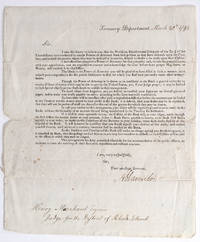
1793135218March 30 1793. Partially printed United States Treasury Department circular signed by Alexander Hamilton as the first secretary of the treasury. Folio partially printed the document is dated March 30th 1793 addressed to Henry Marchant Judge of the Rhode Island District Court. The document reads in full: Sir I take the liberty to inform you that the President Directors and Company of the Bank of the United States have consented to accept Powers of Attorney from such persons as may have demands upon the Treasury and to hold the monies which they may be authorised to receive subject to drafts to be made upon their Cashier. I have therefore prepared a Power of Attorney for that purpose; and in case the proposal meets with your approbation you are requested to execute and acknowledge the same before some proper Magistrate or Notary and transmit it to this Office. … To avoid risque from forgeries you are desired to transmit your signature on several pieces of paper and to make your drafts payable to order according to the form herewith transmitted. As some time will be necessary after your compensation falls due before the accounts can be settled at the Treasury and the money placed to your credit in the Bank it is desired that your drafts may be so regulated that they will not be presented until ten days after the end of the quarter for which they may be drawn. In case you consent to this arrangement your salary will be regularly placed to your credit in the Bank without the formality of an account thereof being transmitted to the Treasury for settlement. … As the President and Directors of the Bank will make no charge against you for their agency it is expected by them that the postage on such letters as you may have occasion to address to their Cashier will be paid at the offices in which they may be lodged. This arrangement has been concerted essentially for the accommodation of the public officers to facilitate to them the receiving of their dues with expedition and without expence. I am very respectfully Sir Your obedient Servant "A. Hamilton." In very good condition. Housed in a custom half morocco clamshell box made by the Harcourt Bindery. The document measures 9.5 inches by 8.75 inches. As the first secretary of the treasury Alexander Hamilton was the main author of the economic policies of the administration of President George Washington. He took the lead in the federal government's funding of the states' American Revolutionary War debts as well as establishing the nation's first two de facto central banks i.e. the Bank of North America and the First Bank of the United States a system of tariffs and the resumption of friendly trade relations with Britain. His vision included a strong central government led by a vigorous executive branch a strong commercial economy support for manufacturing and a strong national defense. unknown
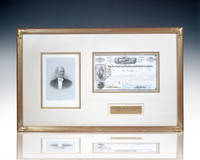
1864146773New York: American Bank Note Co 1864. Rare New York and Harlem Rail Road Company stock certificate signed by one of the wealthiest Americans in history Cornelius Vanderbilt. Oblong octavo one page partially printed and accomplished in manuscript the certificate is dated April 12 1864 and grants John M. Dobin 500 shares in the New York and Harlem Railroad Company. Signed by Cornelius Vanderbilt on the verso. In near fine condition. Matted and framed with a portrait of Vanderbilt and an informational placard. The piece measures 17.6 inches by 28 inches. "Contemporaries too often hated or feared Vanderbilt or at least considered him an unmannered brute. While Vanderbilt could be a rascal combative and cunning he was much more a builder than a wrecker . being honorable shrewd and hard-working" H. Roger Grant. From adolescence Cornelius Vanderbilt showed signs of entrepreneurial spirit starting his own ferry service at just 16. In those starting years Vanderbilt's voraciousness earned him the nickname "The Commodore" telegraphing what the future might bring for such an industrious young man. With enough time "The Commodore" succeeded in organizing a steamboat freight empire and began expanding into the railroad industry with his purchase of stock in the New York and Harlem Rail Road Company line one of the first railroads in the United States. His goal was to take the railroad which was generally considered worthless and make it valuable. Five years later after much work he consolidated it with the Hudson River RR to form the New York Central and Hudson River Railroad one of the first giant corporations in United States history. "Vanderbilt vastly improved and expanded the nation's transportation infrastructure contributing to a transformation of the very geography of the United States. He embraced new technologies and new forms of business organization and used them to compete.He helped to create the corporate economy that would define the United States into the 21st century" T. J. Stiles 'The First Tycoon'. American Bank Note Co unknown
18900002593SOUTH AMERICA PERU BOLIVIA VENEZUELA CHILE. Good. 1890. On offer is an original historically significant 1890 to 1891 manuscript diary handwritten by prominent New York businessman and author E.C. White E.C. White was the son of Dr. Emerson White who was president of Purdue University. His brother was Albert Blakeslee ''A. B.'' White he was West Virginia's 11th governor serving from 1901-05 who traveled and lived in South America. The keen eyed and erudite diarist Mr. White does a superb job detailing his adventures by steamship horseback Alpaca and train. But his experiences and downright good fortune to be in the right place at the right time to witness and participate in some extraordinary events in South America most particularly the civil war in Chile. White was in Venezuela Peru Chile Bolivia and points in between and among his experiences are the finding an Incan "ruined city" on top of a mountain in Peru spies hiding on board a steamship remains of a torpedoed ship and travel by train through the Andes. As noted on the cover of the diary is "South American Notes - E C White. Kal- Blanco" casual research finds E.C. White was a wealthy businessman he owned E.C. White Co in New York City. White traveled the world and spent most of his time in South America. In fact he spent so much time there that he was offered the appointment as Minster to Chile by President Harrison. He declined the offer due to business considerations. He had a close association with McKinley who at the time was his main supporter for the position. McKinley wrote of White to President Harrison "Mr. White has spent several years in Spanish- America. He is a gentleman of high character education and refinement". The book contains about 150-165 typed and handwritten pages sketches mimeographed bulletins business contacts in South America. He may have been in the pharmaceutical business there are lists of doctors pharmacists herbal medicines and cures are noted. We note some pages are onion skin and faded but all can be read with patience. As an expert on South America he periodically wrote articles in a number of publications. He wrote under his pen name "Kal- Blanco" and some of his original articles are on the web. There are several typed stories in this diary that appear to be rough drafts he later published. These stories are about his observations and travels and are nonfiction and include original corrections. There is even an original story he did for the Home Maker Magazine titled "Among the Venezuelans" with some hand written notations in the margins. This story includes photos. Entries begin in New York Oct 8 1890 as White boards the Steamship Muriel in route the ship stops at St George St. Kitts Dominca Martinique Granada and Trinidad. He would eventually reach Columbia Venezuela Peru Chile and Bolivia. Included are three mimeographed bulletins 2 titled" Manavi's Bulletins" and one titled "The Esk's Daily Bulletin". Historians and researchers will find a treasure trove of material. White writes about the socio political aspects of each country and examines cultural traits with a keen eye for observation. His diary entries as well as his articles are extensive and in many cases fill the entire sheet. Other items found between the sheets are advertising flyers one photo negative and travel notes. Here are snippets: Note: interestingly White writes in the third person throughout the diary. Peru - March 8 1891 We had our first earthquake this morning. The servants thought that it was quite severe to M. It seemed quite a respectable shake. M.was tired and did not feel like going to church and Mr. W. Allowed his wife's indisposition to impose him so both stayed at home and Mr. W. bad man printed blue prints. In the afternoon we studied a little Spanish and took a walk. Retired early as usual. Peru - March 10 1891 Mr. W. Worked all day on the type- writer and M. extremely busy cleaning up everything after the journey to Huaca Puno In the evening we went to the circus by Mr. Pacigalupi's invitation and found it very good and that the theatre was very pretty. Peru -March 26 1891 Mr. W. Went to Callao in the morning to arrange to go on Saturday but found that there was no steamer left until the next week. In the afternoon there was a procession of 250 of the militia the army numbers 15000 all Indians & these Indians control the country. In the evening everybody promenading the streets: the ladies dressed their best. Children men woman all Going to church. Peru -March 27 1891 Great feast day. The militia surrounded the plaza and expect a grand procession. The people devote themselves to fasting and prayer what time they are not on the street and Mr. Basigalupi is very much put out about it as it is a check to all business. Bolivia - April 14 1891 Arrived at Chililaya - in Bolivia last night but on account of the Cana could not enter the port until daylight The town has about 40 houses and the chief export is potatoes silver and tin ore. The Grand Hotel where we stopped for the night is kept by a lady in high heeled shoes short dress and log earrings. The Amiras wear lose under drawers from the knee down and pants with a slit in the back of each leg. They bundle up their heads and necks with knitted goods and go barefoot. The women wear skirt a little below the knee and never change their clothes from one years end to the other. They very rarely wash. All dress in bright colors. Bolivia - April 23 1891 Left Puno for Arequipa early in the morning and arrived in the pm Mr. McCord has everything arranged for us to stay there. The ride was rather tedious as the scenery was the same as before except when we reached Arequipa- The moon rising between Mista- & Potosi was a beautiful sight. Bolivia April 24 1891 Took the train for Mollendo- after bidding Mr. McCord goodbye. Had a crowded car and rather unpleasant journey as it was very dusty. Arrived at 3 pm and found Mr. Turner waiting for us at the station to tell is that the" Bolivia " would sail that night and that they could not tell when there would be another steamer. We went up the company house and rested for an hour and than went to the steamer. The Purser gave is his room as the S. Was full but it was small and uncomfortable when we got to the S. We found Mr. Allen A. Swimmingly awaiting us. Chile- May 11891 Stopped at Autofogasta- and went ashore with Mr.S. and Mr.W. and appointed agents for all parties.Had a good time.At all of these ports there have been officers of the Revolution on board to search the ship for Government officials and we carry spies with us. It is supposed that there is one man hidden in the ship who is an officer of Balmaceda's. His wife is very cool collected even sleeping in the same cabin with the woman spy.There have been several parties arrested on suspicion and brought back but one was arrested and kept because he was known to have 50000 dollars concealed in his cabin. We are now past the Congressionalist's District. Discovery of the Ruins of a Pygmy city in the Andes. On the 26th day of April 1885 I arranged with a friend of mine who lived in Callao Peru to ascend Huaca Puno Dead Point and explore a ruined city said to be at its summit. The descendants of the Children of the Sun warned me against such an undertaking. Their superstitious ideas of Huaca Puno were not pleasant I must admit. They informed me that this was the home of bad spirits and that wild beasts only were allowed to exist there prowling around the streets day and night. They told me that no white man or Indian had ever been in this city since it was depopulated during the pre - Inca times by the cannibalistic tribes who leagued themselves with Satan against these wicked people who had rebelled from Satan and exterminated them. As we ascended our guide seemed to gain courage and decided to accompany us to the city. We found it walled egg shaped about one mile in length and one eighth of a mile in width and admirably fortified. Huaca Puno is in the Pacific range of the Andes and about 15000 ft. In elevation the tropical ocean breeze melting white frost that comes in July. I heard my friend hallooing for me to come up the Citadel Then it dawned upon us that it was a pygmy city. Columbia- Dec 1 & 2nd 1890 I contracted with the following papers viz. El FonografoLas Noticias El Zulia Illustrarado M Los Escos del Zulla. All of which I send to C.H.Gould. On the evening of the 2nd I left for Curacoa by the steamer Maracaibo. The cost of a passage is $ 15.00. Dec 3rd& 4th - I arrived in Curaacoa on the 4th and went to the hotel De Leon. Paid $ 1.60 per day and the food was so poisoned could hardly stand it. The maggots crawled out of the warmed over beef when brought on the table. I watched to see how many partook of the same and saw them all eat it the same as if it had not been alive. I went on the Philadelphia as soon as the steamer arrived. Mrs. Chambers and Miss Randolph were with the Caption Chambers. I met a druggist from Cucuta Gonzales Bona Hermanos who gave me the following doctors: List of doctors in Cucuta Columba. Among the Curacoans & The Maracaiboans excerpts from a 3 page story written in Venezuela The poor of Curacoa live entirely by their commerce as the Island produces only limited products. The island produces only a limited amount of agricultural products. The houses are constructed as in Holland roofed with red tile and very quaint in appearance. The people of this country believe that all North Americans are wealthy they know that our people tip them freely and from this they draw the rather erroneous conclusion that we are all millionaires. To them a little money means great luxury. For the lower classes are very destitute. Traveling is expensive in these countries on account of the excessive rates on steamers and the continual robbing of the boatmen and custom house officials. The later we might dispense without the former we must have the steamers being compelled to anchor one to five miles from shore. What a contrast: This evening I am writing on a table in the hotel parlor which has an old brick floor and naked whitewashed walls but lighted with an excellent Edison Electric light the only mark of advanced civilization around me. In one corner are crickets singing joyful songs under the new Star in Maracaibo- In another corner the lovers of evening light the lizards are blinking and twisting their heads to see if any person is intruding upon their possessions. Frequently these little innocent cold blooded vertebrates amuse themselves by running over your shoulders or the table where you are writing. However they are perfectly harmless and the larger species the Iguanas are eaten by the natives. In the early morning the market and the streets are full of Iguana vendors who are very persistent in their endeavors to sell you a string of live Iguana for the small sum of one real. There are 6 sketches. Two small sketches are executed in pencil: One mimeographed sketch titled "This Great Sea- Monster discovered by the Captain of the Muriel Oct 10 1890 off St Kitt's Island". The diary is bound in a leather folio sized journal 10.5 x 8.5 inches and overall G.; Typed Manuscript; 4to - over 9¾" - 12" tall; KEYWORDS: HISTORY OF E.C. WHITE CHILE LOST INCA CITY PERU BOLIVIA COLOMBIA ESPIONAGE STEALTH DIPLOMACY LATIN AMERICA SOUTH AMERICA VENEZUELA PYGMY CITY IN THE ANDES INCA INCAN CHILEAN CIVIL WAR PHARMACEUTICALS MEDICINE IN SOUTH AMERICA PURDUE DR. EMERSON WHITE ALBERT BLAKESLEE ARCHAEOLOGY PALEONTOLOGY EXPLORATION KAL BLANCO HANDWRITTEN MANUSCRIPT DOCUMENT LETTER AUTOGRAPH WRITER HAND WRITTEN DOCUMENTS SIGNED LETTERS MANUSCRIPTS DIARY DIARIES JOURNALS PERSONAL HISTORY SOCIAL HISTORY HISTORICAL HOLOGRAPH WRITERS AUTOGRAPHS PERSONAL MEMOIR MEMORIAL ANTIQUITÉ CONTRAT VÉLIN DOCUMENT MANUSCRIT PAPIER ANTIKE BRIEF PERGAMENT DOKUMENT MANUSKRIPT PAPIER OGGETTO D'ANTIQUARIATO ATTO VELINA DOCUMENTO MANOSCRITTO CARTA ANTIGÜEDAD HECHO VITELA DOCUMENTO MANUSCRITO PAPEL . hardcover
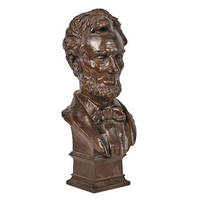
133797Patinated bronze portrait bust of Abraham Lincoln marked "GEO. E. BISSELL Sc GORHAM CO. FOUNDERS copyrighted" and stamped "G 47." This is one of a series of popular desktop busts of Lincoln produced by the Gorham foundry in the early part of the 20th century. In fine condition. The piece measures 18 inches in height. An exceptional piece of American history. unknown
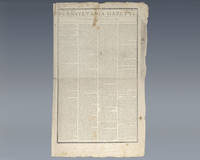
1518126803Philadelphia: Hall & Sellers January 15 1800. Exceedingly rare first appearance in print of Washington's Funeral Oration featured on the front page of the Wednesday January 15 1800 issue of the Pennsylvania Gazette. Folio four pages the headline reads "A Funeral Oration in Honor of the Memory of George Washington. Late General of the Armies of the United States. Prepared and Delivered at the Request of Congress at the German Lutheran Church on Thursday the 26th of December By Major-General Henry Lee One of the Representatives from the State of Virginia." Washington's eulogy was delivered by Major-General Henry Lee to both Houses of Congress and a crowd of 4000 at the first President's funeral on December 26 1799. This printing of the eulogy in the Pennsylvania Gazette precedes the first official Congressional printing Evans 37797 Sabin 39744. In very good condition. Exceedingly rare being one of two copies to have appeared in existing auction records the other in 1889. The father of his country" and the first president of the United States General George Washington died on December 14th 1799 and was buried at Mount Vernon in Virginia. In his Last Will and Testament written only months before his death Washington left explicit directions for the emancipation of each of his 123 slaves to be carried out after the death of his wife Martha. Legislature was passed in Virginia toward the end of the American Revolution in 1782 making it legal for slave holders to emancipate their slaves without an special action by the government. In his will Washington left a detailed slave census as well as stipulations regarding the treatment of the emancipated slaves who were sick and elderly orphaned children and the binding of children to masters and mistresses who would provide them with an education. Upon his death memorial processions were held in every major city and thousands wore mourning clothes for months; Martha Washington was known to have worn a mourning cloak for over a year. Hall & Sellers hardcover
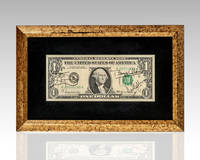
19691506101969. Series 1969 dollar bill from the United States of America the year Armstrong and Aldrin touched the moon. Boldly signed by Apollo 11 crew members Neil Armstrong Buzz Aldrin and Michael Collins on the portrait side in black felt tip. Mounted and framed. In fine condition. The entire piece measures 9.5 inches by 6 inches. Rare and desirable signed especially as this "Series 1969" Federal Reserve Note was issued in the year of their historic mission. On July 20th 1969 American astronauts Neil Armstrong and Buzz Aldrin landed the Apollo Lunar Module Eagle on the lunar surface. Six hours after landing Neil Armstrong became the first person to step onto the lunar surface; Aldrin joined him 19 minutes later and the two spent over two hours collecting lunar materials. Armstrong's first step onto the lunar surface was broadcast on live TV to a worldwide audience during which he uttered the historic phrase "That's one small step for man one giant leap for mankind." Apollo 11 effectively ended the Space Race and fulfilled a national goal proposed in 1961 by President John F. Kennedy: "before this decade is out of landing a man on the Moon and returning him safely to the Earth." unknown
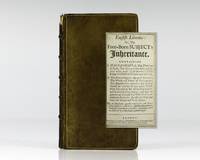
168024087London: Printed by G. Larkin for Benjamin Harris at the Stationers Arms and Anchoy in the Piazza under the Royal Exchange 1680. First edition of one of the very first law books printed in colonial America contains the first American printing of Magna Carta and other fundamental documents of individual liberty in Anglo-American law. Small octavo contemporary calf. In excellent condition with light wear to the crown of the spine. Auction records show that there has not been a first edition offered in the twentieth century. A rare landmark work which significantly influenced the American colonies. Care intended his English Liberties to provide uneducated and inexperienced English persons with documents and information about the law and their rights… praising England’s ‘fundamental laws as coeval with government’ and describing the Magna Charta as ‘Declaratory of the principal grounds of the Fundamental Laws and Liberties of England.’ Celebrating law in another piece as second only to the gospel he described it in English Liberties as ‘the Best Birthright the Subject hath… Care regarded the essence of this birthright as the ‘privilege not to be exempt from the law of the land but to be freed in Person and Estate from Arbitrary Violence and Oppression†Morrison & Zook Revolutionary Currents 46-7. First issued in England in 1680 English Liberties had a “longer and more significant reach in the American colonies… It played an important role in spreading concepts about English law history government liberties and especially juries… Colonists found in Care’s English Liberties support of their views about the Saxons Magna Charta as a reaffirmation of old laws guaranteeing the rights of all freemen and ways to protect themselves against oppression. Printed by G. Larkin, for Benjamin Harris at the Stationers Arms and Anchoy in the Piazza under the Royal Exchange unknown
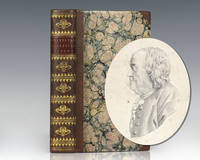
1779125035London: Printed for J. Johnson 1779. First edition of "the only edition of Franklin's writings other than his scientific printed during his lifetime" Ford. Octavo bound half diced calf over marbled boards with elaborate gilt tooling to the spine red morocco spine label lettered in gilt. With the engraved frontispiece portrait of Franklin three engraved plates one folding and folding table of the reformed alphabet. In near fine condition. Complete with index addenda and corrigenda. An exceptional example. "The only edition of Franklin's writings other than his scientific which was printed during his lifetime; was done with Franklin's knowledge and consent and contains an 'errata' made by him for it" Ford 342. Edited by his close friend Benjamin Vaughan and published in London while Franklin was serving as America's ambassador this seminal collection contains many of his writings on the rebellious American colonies and incendiary British measures such as the Stamp Act. Of particular interest is The Examination of Dr. Benjamin Franklin 255-301 a record of his 1766 appearance before Parliament. In Franklin's answers to the over 150 questions posed him in an afternoon of "highly charged testimony he would turn himself into the foremost spokesman for the American cause" Isaacson. Printed for J. Johnson hardcover
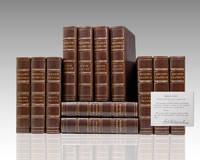
1887151459New York: G.P. Putnam's Sons 1887. The Federal edition number one of 1000 numbered copies signed by the publisher of the works of Benjamin Franklin. Octavo 12 volumes bound in full morocco with gilt titles to the spine blue morocco doublures framed by elaborate gilt tooling complemented by matching blue moiré silk free endpapers raised bands top edge gilt illustrated with engraved frontispiece portraits protective tissue guards. In near fine condition bookplate. Compiled and edited by John Bigelow. A stunning set rare and desirable. Benjamin Franklin earned the title of "The First American" for his early and indefatigable campaigning for colonial unity initially as an author and spokesman in London for several colonies. As the first United States Ambassador to France he exemplified the emerging American nation. Franklin was foundational in defining the American ethos as a marriage of the practical values of thrift hard work education community spirit self-governing institutions and opposition to authoritarianism both political and religious with the scientific and tolerant values of the Enlightenment. In the words of historian Henry Steele Commager "In a Franklin could be merged the virtues of Puritanism without its defects the illumination of the Enlightenment without its heat." To Walter Isaacson this makes Franklin "the most accomplished American of his age and the most influential in inventing the type of society America would become." G.P. Putnam's Sons hardcover
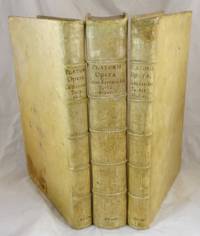
1578620Geneva: Henr. Stephani 1578. First Edition. vellum. Very good. The STEPHANUS Plato <br />The Book That Established the UNIVERSAL REFERENCE System for Platos Writings <br /><br />PLATO. Platonis opera quae extant omnia. The Complete Works of Plato Title also in Greek Henr. Stephani Geneva 1578. First Greek/Latin Edition. <br />Volume 1: TP 16 unnumbered leaves handwritten replacement preliminaries circa 18th c = Dedication to Queen Elizabeth Studioso Lectori Platone Epigrammata Catalogus Dialogorum half title with first page of text - unnumbered - on the verso 1 469 471 471 542. <br /><br />Volume 2: Half-title blank leaf lettered AA.i. 3 unnumbered leaves printed replacement preliminaries circa 18th c. = Dedication to King James the Sixth of Scotland later James the First of England Two Poems 3-701 672 673 704 992. <br /><br />Volume 3: Half-title 3 unnumbered leaves handwritten replacement preliminaries circa 18th c. = Dedication to the Republic of Bern Poem AAAA.i. = Contents Page 3-374 375 368 377-416 1-139; Folio. <br /><br />Three vols. 10.25 x 15.5 in. text block sheets are 10 x 15 in. Folio. <br /><br />"A great Renaissance author and scholar as well as a member of one of Europe's most illustrious families of printers Henri Estienne II himself edited his grand Plato for which he commissioned a new Latin translation by Jean de Serres. Together with his monumental 1572 Thesaurus graecae linguae the lavish Plato was responsible according to Schreiber for securing both Estienne's scholarly reputation and his financial ruin" Garden Ltd. #40. <br />First Greek/Latin edition printed in parallel text with translation and commentary by Jean de Serres noted French historian and advisor to King Henry IV during the reformation. The famous Stephanus edition which has served as the universal reference system for all other editions of Plato's writing since its publication. In every translation of Plato there are small numbers in the margin which refer to the pagination in this edition affording scholars the opportunity to cross-reference each other's work in any language - they are called the "Stephanus numbers." For example Socrates major speech in the Symposium completes at 212c. <br /><br />Some preliminary pages dedication poems etc. are not original but rather were printed and inserted sometime in the 18th century. Because the preliminary pages included dedications to Queen Elizabeth copies of the Stephanus Plato circulating in countries hostile to the throne at the time of publication 1578 often had these pages removed. Some copies of the Stephanus Plato have appeared at auction lacking preliminaries altogether. In 2008 Sokol Books Ltd. catalogued the missing prelims: their absence is the works most common defect. Others like this copy had the preliminaries replacedsometimes by hand other times by a local printeronce relations with England had improved. This is one of those rare copies with replacements. Thus not only is this an important and rare antiquarian book The Stephanus Plato! but also an important historical artifact given its unique history and provenance. <br /><br />CONDITION: Very Good in uniformly bound contemporary possibly early 17th c. vellum with manuscript lettering to spines. Minor repairs to vellum on head and heel of spine mostly on volume 3. Expert old paper repairs to title page of volume I and half-titles of vols. II & III with bookplates on all three pastedowns: Inter Libros Josephi Mariae Parascandolo Antecessoris Regii A.L.N. of Naples. Woodcut-engraved printers vignette on title woodcut-engraved decorated initials head-pieces & tail-pieces. Large paper 15 x 10. Handwritten and printed preliminaries replaced sometime in the 18th c. A tightly bound historically important copy of one of the most important books in the history of philosophy. Henr. Stephani hardcover
1903116342c. 1903. Olga Roosevelt's autograph book lengthily inscribed and signed by Theodore Roosevelt as President of the United States William Howard Taft as Vice President of the United States and several other famous figures of the era including naturalists John Muir and John Burroughs and financier Bernard Baruch. Octavo bound in full vellum with hand painted decorations to the spine and panels patterned endpapers. Inscribed and signed by Theodore Roosevelt with a lengthy quotation "No one quality by itself makes a good man or woman; many are essential; but three especially - courage straightforward honesty and common sense. Theodore Roosevelt July 23rd 1903." Inscribed by William Howard Taft "For Miss Olga Roosevelt with best wishes of William H. Taft May 23 1910." Inscribed by American naturalist John Burroughs "The most precious things of life are without money & without price John Burroughs Sept 8 1903." Inscribed by the President of Cornell University and United States Ambassador to Germany Jacob Gould Schurman "Beauty graceful manners good temper common sense and a kind heart: these are the qualities that make a woman to be beloved and powerful. J.G. Schurman East Hampton September 14th 1903." Additionally inscribed by Alfred W.S. Garden American diplomat Robert Underwood Johnson American screenwriter Daniel Carson Goodman and American naval officer Leigh Carlyle Palmer. Signed by John Muir and signed and dated by Bernard Baruch "B. Baruch Jan 20th 1920." From the collection of Theodore Roosevelt's niece Olga Roosevelt. Roosevelt was the heiress to a fortune of several million dollars left her by her mother. She made her debut in Washington in 1908 and married Dr. Breckenridge Bayne in 1911. In very good condition. An exceptional collection of signatures with noted provenance. Theodore Roosevelt was an American statesman author explorer soldier naturalist and reformer who served as the 26th President of the United States from 1901 to 1909. As a leader of the Republican Party during this time he became a driving force for the Progressive Era in the United States in the early 20th century. hardcover
1926125163Boston and New York: Houghton Mifflin Company 1926. First edition of Franklin Delano Roosevelt's first book being the text of a lecture delivered by him at Milton Academy on the Alumni War Memorial Foundation on May 18 1926. Octavo original cloth. One of one thousand copies printed. Association copy inscribed by the author on the title page on the occasion of publication and within a month of the delivery of the lecture to his son "For my son Elliott Roosevelt This copy of his Dad's first book Franklin D. Roosevelt June 1926." Additionally signed by Roosevelt on the title page "Franklin Roosevelt." Elliott was the fourth of Roosevelt's six children and Eleanor's acknowledged favorite. His future career included military service involvement in aircraft procurement and roles as author rancher radio station owner and Mayor of Miami Beach. Near fine in the rare original dust jacket which is in good condition. Housed in a custom cloth chemise and half morocco slipcase. Small bookplate to the pastedown. An exceptional association. American statesman and political leader Franklin Delano Roosevelt served as the President of the United States from 1933 to 1945. A Democrat he won a record four presidential elections and dominated his party after 1932 as a central figure in world events during the mid-20th century leading the United States during a time of worldwide economic depression and war. Houghton Mifflin Company hardcover
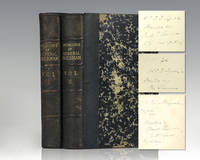
1875103400New York: D. Appleton and Company 1875. First edition of this memoir from one of the most well regarded generals “oft-consulted and much-quoted reminiscences . Sherman wrote as he fought; dynamically and bluntly†Nevins II 89. Octavo bound in publishers three quarters morocco over marbled boards gilt titles to the spine illustrated. Presentation copy inscribed by General Sherman three times: on the front free endpaper of Vol. I "Mrs. E.J. Lynch Presented by Gen. W.T. Sherman 1876 New York City"; on the front free endpaper of Vol. II "Mrs. E.J. Lynch Presented by Gen. W.T. Sherman 18"; and the second free endpaper of Vol. II “Mrs. Eleanor D. Lynch New York 1876 Presented by General Sherman to Mrs Lynch By order.†The recipient Eleanor D. Lynch of New York City was the mother-in-law of Brigadier General J. Worden Pope and “had many friends in the Army.†With Eleanor Lynch's ownership signature to the second free endpaper of Vol I. In very good condition small loss to the folding map. Signed examples of Sherman's memoirs are rare with only a handful of examples appearing at auction of the trade edition with no publishers morocco ever appearing desirable signed and inscribed three times. "Penned with intelligence and passion Sherman's Memoirs cover the periods of birth to the Meridian Expedition early in 1864 Volume I and the remainder of the war to the commander's first decade following the war Volume II… The memoirs frankly describe the rights and wrongs of the Civil War campaigns Sherman experienced without regard to stepping on the feelings of others. The work is not unduly harsh but is unwaveringly honest as the author viewed these events… The writing in this work is enjoyable more so than the average soldier's memoirs and the enlightened opinions of the second-ranking Federal officer on a multitude of operations make the work invaluable" Eicher 576. D. Appleton and Company hardcover
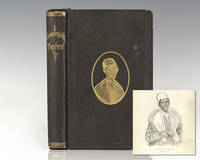
1875133297Boston: Published By The Author 1875. Rare first revised edition of the book that brought Truth's remarkable story to the world and the first edition of The Book of Life. Octavo original cloth gilt titles to the spine illustrated frontispiece portrait of Truth. In very good condition contemporary ownership inscription on front free endpaper. Rare and desirable. “A legend in her own time Truth’s indomitable will has won her a permanent place in American History. Her evangelic fervor and plain wit helped to advance the causes of emancipation and women’s rights†Blockson 29. Evangelist abolitionist reformer and women’s rights advocate Sojourner Truth was born to James and Elizabeth Baumfree both slaves of a Dutch family in Ulster County New York. Named “Isabelle†by her parents she developed deep religious feelings from her mother from whom she was separated at age nine. After a number of new masters and four children later she escaped her last servitude shortly before the mandated New York State emancipation took effect on July 4 1827. “I did not run off for I thought that wicked but I walked off believing that to be all right.†In 1843 she renamed herself “Truth†for God and “Sojourner†because she intended to “travel up and down the land†preaching and testifying. She became associated with such renowned abolitionists as William Lloyd Garrison Frederick Douglass and David Ruggles and toured the country speaking out against slavery. Her Narrative dictated to her friend Olive Gilbert and subsidized by Garrison gave Sojourner an income and increased her speaking engagements where she sold copies of the book. In 1854 at the Ohio Woman’s Rights Convention in Akron Ohio she gave her most famous speech— with the legendary refrain “Ain’t I a Womanâ€: “That man over there says that women need to be helped into carriages and lifted over ditches and to have the best place everywhere. Nobody ever helps me into carriages or over mud puddles or gives me any best place and ain’t I a woman… I have borne thirteen children and seen most all sold off to slavery and when I cried out with my mother’s grief none but Jesus heard me— and ain’t I woman†Blockson 3434; Schomburg 326. Published By The Author hardcover
19670002590ISRAEL THE HOLY LAND ERETZ YISRAEL. Good. 1967. On offer is a superb significant original manuscript diary of a visit to Israel mere weeks after the Six-Day War in 1967 when the State of Israel was compelled to attack her threatening Arab neighbours and thusly destroying their armies and repatriating her ancient homelands of Judea and Samaria and most importantly the Old City of Jerusalem. For a historian this is an exceptional primary-source document. Not only does it deal with the immediate aftermath of the war it opens the door to examining the role of Christian groups in the United States vis-a-vis Israel and the rise of the religious right in American politics. In her trip she confronts circumstances that underlie the critical issues that beset the region to this today. Mary Beth Foland is a 55 year old American tourist who travels to Israel 7 weeks after the conclusion of this war. Born in 1912 she was 55 years old when she made this trip Foland passed away in 1988 at age 76. She was part of a church group that organized this tour - the Eggleston Missionary Tour. For many Christians in the United States Israel has a special draw and the Six-Day war made many more biblical sites accessible. Her trip encompasses visits to Tel Aviv Haifa Akko a Kibbutz Jerusalem Rome Athens Create Rhodes Istanbul Belos Mykonos Lucerne Dublin and Cork Ireland. Foland's travel journal is packed with details. She is a keen eyed erudite observer and prolific note taker. She is free with her opinions and observations - even if they are at times less than accurate and coloured by her religious views Her comments fully reflect the social circumstances of the late 1960s in affluent merica/California. She writes about war torn sections of cities the ever-present military and refugee camps. She also writes about the historic aspects of each area with emphasis on religious sites and practices. In addition to her own observations she notes conversations with local people who experienced the conflict first-hand. She begins her trip account after flying from Los Angeles to Washington DC: Enroute to Intern'al airport of Wash DC. Talk with chauffeur negro of limousine are serving God avoiding nervous breakdown by going to church his idea He's Baptist. . Barbara told she was Schiziod - used Thorazine to come out of voices & Shock - still "sees" people they were "inside" now are "outside" Aug 1 Her day ends with a prayer group meeting. . In Boeing 707 with 129 others aboard. We rec'd a menu printed for Eggleston Missionary Tour and a red rose on tray of our grp . A grp of orientals from Hawaii with us enroute . Aug 2They stay in London for 2 days before heading off to Paris. Her notes are replete with descriptions of what she saw mentioning Hogarth's House Baden Powell statue Buckingham Palace a description of her visit to St. Pauls Cathedral Parliament St. James Palace and Westminster Abbey among many others. She comments that the Tower of London was "The Bastille of England" . She certainly packed a great deal into those 2 days. There is a longer passage summarizing a talk on the history the Jewish people including a reference to Thoedor Hertzl recognized as the "spiritual father of the Jewish State" Israeli Declaration of Independence. She spends a day and a half in Paris and is as much the active tourist as she was in London. Then on to Tel Aviv. 'Our carrier at Tel Aviv was rather disorganized and we were the last through the customs. We followed a thin ascetic Jew we had seem in Paris at 11:00 am with his Phylacteries- on head & wrist & wrapped in black & white prayer shawl. At customs he was declaring several wigs etc some of his bags broke under the load. 2 taxis took 10 of us to Dan Hotel - rather shabby and county looks poor drab & brown. We stopped in route to see where some of Gen. Patton's tanks were sold to Jordan & King Hussein had been stopped by Israel. Saw 6 or 8 there Cabby couldn't understand why L.B.J. sold them to Jordan in the first place. Aug 7 Her descriptions over the next few days are detailed noting meals eaten the geography of various locations archaeology history and conversations. Learn of pilgrimages of Israelis to places where their men reversed the tide of those coming during the 6 day war. They go to touch places saved. Tell of tanks in desert in sand of the naval base in Syria deserted by troops when Isr came in. Of the Kibbutz fired on by tanks & Israel building a road around them in the rear. Of fact that Isr. literate whereas Arabs can't read to fix machines when break down. I see buses filled with younger people in uniforms or partial uniform - very few oldsters out and about. On Old Joppa Street men play backgammon . Aug 8 Haifa - Megiddo - Nablus Jerus Road block of soldiers customs to enter Jordan & former Samaria. Bedouin black tents 1 pix in distance. See refugee camp with block houses out in rocky area. US pays 70 % of their bill via UN. They said 1 1/2 mill but counted dead and brot Egyptians to swell no 15 mill dollars. US to build Jordan airport now in Israel hands. Guide asked Arab why Jordan didn't help refugees more & he said if we did it would solve your problem Israel probl Propaganda better this way. . Aug 11 Jerusalem - Jerico Aug 12 1967 Meet at 8:20 to go to Collegiate Church of St. Geo the Martyrs Episc for welcome service Read psalm 122 & I weep. At oh pray for the peace of Jerusalem they shall prosper that love thee. This church been thru wars 1914 - 1948 etc. In 1899 it founded - William II visited recently Prince Phillip. school hit as it on Israel side. Shelled hard 48 hrs. got phosphorous bomb thru roof 6" in floor windows out. Had chapel services every day during war & still very uneasy. Both Jew & Arab Chris ask why Christians did not help them. Used to pray for King Hussein now they pray " Oh Lord save this land" sch will open in Sept - ot all out safety. Most Jordanians not hostile to Jews. Only thing notice Israelis say "those dirty Arabs" . Aug 12 Men at hotel shop say they well off as Christians & can work for either Jordanians or Israelis. But Holy places defiled Muslims not allowed in Holy places but Christians & Jews intermingle. In Church of Sepulchre a young Isr. girl in with only shorts & priest asked her to cover up - She talked back priest upset hit her - police called to take her to jail. They smoke loud talk go uncovered into holy places. The US must settle this - make an international city out of Jerusalem - this Arab Christian would like that "We depend on you & Pres Johnson to help us out "To save the city". I said we must depend on God & work out forgiveness for our brother. He said "You in U.S. more forgiving & don't know our problems here." . Aug 14 She leaves Jerusalem for Rome on Aug 15th. As in her other entries she makes detailed notes of what she observes. This is an outstanding first-hand account of the early days following the Six-Day War. The conversations she records such as the ones quoted above are eerily similar to comments made today over a half century later. The journal measures 6.5 inches by 4 inches. It contains 160 pages and is 60% complete. The cover binding and pages are all in good condition. The handwriting is dense but legible. HISTORICAL NOTES: The Six-Day War was the third military conflict between Israel and her surrounding Arab neighbours. Faced with their stated objective of destroying the Israeli state and the immediate circumstance of Egypt closing the Straits of Tiran to Israeli shipping Israel struck back and in 6 days smashed the combined armies of Egypt Syria and Jordan. The ramifications continue to this day. ; Manuscript; 16mo - over 5¾" - 6¾" tall; KEYWORDS: HISTORY OF MARY BETH FOLAND; SIX-DAY WAR; ISRAEL; BRITISH MANDATED PALESTINE; JERUSALEM; STRAITS OF TIRAN; KIBBUTZ; THEODORE HERTZL; CITY OF GOLD THE WAILING WALL JUDEA SAMARIA WEST BANK EGGLESTON MISSIONARY TOUR CHRISTIANS IN ISRAEL THE HOLY LAND JUDAISM JUDAICA JEWISH HOMELAND HANDWRITTEN MANUSCRIPT DOCUMENT LETTER AUTOGRAPH WRITER HAND WRITTEN DOCUMENTS SIGNED LETTERS MANUSCRIPTS DIARY DIARIES JOURNALS PERSONAL HISTORY SOCIAL HISTORY HISTORICAL HOLOGRAPH WRITERS AUTOGRAPHS PERSONAL MEMOIR MEMORIAL ANTIQUITÉ CONTRAT VÉLIN DOCUMENT MANUSCRIT PAPIER ANTIKE BRIEF PERGAMENT DOKUMENT MANUSKRIPT PAPIER OGGETTO D'ANTIQUARIATO ATTO VELINA DOCUMENTO MANOSCRITTO CARTA ANTIGÜEDAD HECHO VITELA DOCUMENTO MANUSCRITO PAPEL . unknown
18650012130Havana Cuba Macao China. Good with no dust jacket. 1865. Non-Book. On offer is a rare and tightly focused five-day administrative archive created between March 2024 1865 documenting the Cuban colonial states full processing of the Spanish barque Encarnación and the 283 Chinese indentured labourers she carried from Macao. The archive contains thirteen manuscript documents all docketed to File No. 539 tracing every step of the arrival-to-assignment cycle: arrival notice medical inspection mortality reporting judicial review of contractual status police authorization sanitary clearance internal administrative circulation and the early phase of labour distribution. The Encarnación is well documented in scholarship. As John Asome notes in Coolie Ships and the Chinese Diaspora 18461874 the vessel made eight coolie voyages between 1853 and 1871 transporting 2547 migrants with an average mortality rate of 4.91%. Her 186465 voyage departed Macao on November 23 1864 and reached Havana on March 16 1865 landing 274 survivors from the 283 who embarked. The Mariel medical reports describe a voyage marked by ophthalmia dysentery ulcers anasarca pulmonary fevers and a single death from tuberculosis. This archive records with unusual precision how Cuban authorities evaluated certified and redistributed this human cargo upon arrival. Despite being unified under one file number the documents originate from at least six separate offices: Junta Local de Sanidad de MarielJunta de Sanidad de La HabanaGobierno PolíticoGobierno Superior CivilDirección de AdministraciónMerino Gilledo y Cía. And Gelledos y Cía. consignees and brokers What survives is not a stray fragment but a working colonial dossier showing in real time how the Encarnación moved from newly arrived vessel to a documented source of indentured labour within Cubas plantation economy. The Chinese coolie trade 18471874 brought over 125000 Chinese labourers to Cuba under contracts that although legally framed as free often masked coercion restricted movement and conditions approaching slavery. By the mid-1860s under intense diplomatic criticism Spain developed an elaborate regulatory apparatus intended to prove that these workers were free contractual migrants. That apparatus medical inspection judicial evaluation mortality accounting manifest verification and authorization for disembarkation is captured here with exceptional completeness. Within this archive the two Mariel medical actas the mortality note the judicial referral the police authorization and the four-folio passenger manifest together reveal the lived administrative reality of the trade: illnesses documented in precise categories; the single death noted; consignees defending their conduct; and Chinese names transliterated paired with imposed Christian names and absorbed into Cubas indentured labour regime. For institutions or collectors building holdings in Chinese diaspora history Cuban colonial history transpacific migration Caribbean labour systems or the slavery-to-post-slavery transition this archive offers an unusually rich and granular look at how the coolie system was operationalized. For collectors it is a rare survival: a concentrated administrative file created over just five days showing the entire process from arrival to assignment. March 20 1865 is the most active date in the archive when both Mariel and Havana offices processed the Encarnación simultaneously. On that single day were produced: the Havana arrival notice; the Guanajay telegram; the internal forwarding memorandum; the formal Merino Gilledo petition; the four-page certified Mariel medical report; the separate one-page Mariel acta; the mortality declaration; and the fully signed four-folio passenger manifest. The subsequent days continue the administrative cycle: judicial review on the 21st police authorization and final Mariel clearance on the 22nd departmental forwarding on the 23rd and labour assignment orders on the 24th. Together these documents form a sharply coherent internally consistent file tracing the Encarnación from first notices of arrival through medical and legal examination and onward to the issuance of cédulas for the first group of 36 labourers. Document Overview by DateMarch 20 1865Arrival notice from the Havana Junta de Sanidad reporting the Encarnación from Macao. Telegram from Guanajay declaring the ship del todo perdida condemned/unseaworthy. Internal administrative note circulating the telegram within Havana. Formal petition of Merino Gilledo y Cía. reporting 283 embarked / 274 arrived nine lightly ill requesting exemption from Article 15 deposit. Four-page certified Mariel medical report summarizing voyage conditions provisioning ventilation one death and 39 medical cases ophthalmia ulcers dysentery anasarca pulmonary fever. Signed by Dr. Luis José Márquez. Separate one-page Mariel acta Acta No. 110 confirming observation-period findings and listing 38 sick colonos. Mortality note from Merino Gilledo y Cía. Summarizing deaths and illness patterns. Four-folio fully signed passenger manifest listing all 283 colonos by Chinese and assigned Christian names with ages. 21 March 1865Judicial referral ordering determination of whether the colonos qualify as libre contratación. 22 March 1865Authorization from the Political Governor instructing police not to obstruct disembarkation or residence. Final Mariel sanitary clearance affirming no contagious disease and permitting the ship to proceed. 23 March 1865Forwarding note transmitting the Mariel papers to the Section of Agriculture Industry & Commerce. 24 March 1865Labour-distribution order from the Superior Civil Government assigning 36 colonos through Gelledos y Cía. And ordering the issuance of cédulas. Condition: Very good for active nineteenth-century administrative material. Expected folds docketing and edge wear; ink consistently strong and legible. The four-folio manifest is complete and structurally sound; both Mariel actas clear and fully legible; no text loss. ; Manuscripts; 15 pages; Signed by Author . unknown
19100002591COLORADO TO BROOKLYN BY RAIL. Good. 1910. On offer is a most unusual and utterly unique original 1910 manuscript diary detailing the adventures escapades and lifestyle of Fred Alexander and Roy Pinegar two young American men likely in their 20s who live as hobos travelling across the United States. Researchers and historians will find a trove of many first-hand accounts of unique experiences of a group of people unarguably a cultural phenomenon who existed on the fringes and in the shadows of normal life. To the Romantic this is a classic example of the 'quest theme' in literature referencing the cities and towns they wander too and through. And it is a thoroughly American experience part of the fabric of American life. Today it is a way of life that has for all intents and purposes vanished. Contrary to common opinion hobos were not simply aimless drifters. There was a hierarchy - hobos were men who travelled to find work essentially migrant workers; tramps worked if they were forced to and at the bottom of the scale were 'bums' who simply refused to work. The term originated in the western United States around 1890. The origins of the term itself are uncertain. By 1911 it was estimated that there were more than 700000 hobos travelling the railways and roads of America. The United States was experiencing a depression in 1910-11 which forced many men to travel seeking work. The life of a hobo was far from the romantic image presented in early silent movies or books. Hobos were exposed to serious risks of injury and ill-health often hungry poorly clothed and exposed to the elements. They faced violence from railway workers and distrust and hostility in many towns. This is the world that these two young men entered as they leave Denver CO heading to New York City. It is a trip full of adventures and escapades. Fred seems to be the recorder of their experiences. The ledger style journal is inscribed as found this book in Lamar Hotel Quincy IL the book had some pages both at the front and back torn out the remaining ledger pages repurposed as a journal. The pages are numbered and entry dates are noted: Left Denver on 9/19 - 10 On Cushions passenger train. Had a good time on train and arrived at Kansas City Missouri. Got a room at McGee St. ate in World Restaurant & went to Kansas City Kansas on 9/21. Staid all morning. Went to show at Empress Theatre and left K.C. on 9/22 arrived in Moberly Illinois at 1:30 P.M. Played pool and hung around the park all afternoon. Left Moberly at 8:30 P.M. on cushions . Arrived at Quincy at 12:30 P.M.on the morning of 9/23. p 21 In Quincy they seek out and find work. Fred is not happy with his 10 hour daily shifts in the steel foundry where he is working so he quits. However he can't find another job. Roy has changed jobs and as luck would have it is working in the freight yards. In nearby Fowler they have friends and family Spare time is spent hanging around with other people especially girls in local parks or downtown. They are back and forth between Fowler and Quincy where they work odd jobs. Eventually they decide to keep on moving towards family in Schenectady NY. They send their bags ahead to St. Louis and on Oct 3rd they are on their way again: Hate to leave Fowler had a good time there; the girls. Visited Uncle Fred's store in Fowler. Arrived in Quincy and it is raining like H.Got a room at 3rd and Vermont 2nd floor and took it for a week. Left our grips in the room and walked to the Post Office. Only 1 letter from the folks and from Dutch . pp 27-8 St. Louis is not as promising as it seemed and work is scarce. The work they do find is hard physical labour. In short order they are looking to move on: . came up to room. Played mouth harp and sang & talked then retired. Think we will ship our suit cases to Brooklyn Sat. afternoon unless we hear from Schenectady NY and then we will ship them to Albany. We intend to leave Saturday night. . Pin quit his job but he can't get his money til 5:00 tomorrow aft. Will keep us going some to get money and make 6:00 train .I walked over to & Palm sts to get my overalls and someone stole them. We walked back to the depot and went into yards to see how we would make the 24 hour New Yorker out of here. Think it will be easy to make but hard to get up to Engine as they don't watch it but there are so many ark lights it is awful bright. . Then took suit cases to Express Co and shipped them to Brooklyn . pp 37-9 He also notes: This book along with them his suitcases Can't write any more until we reach Brooklyn & get our suit cases out. p 39 Page 40 opens with them in Brooklyn. What Fred does is he then records his experiences from memory of the trip. And what a trip!. They hopped an east-bound train and hid in the space between the engine and baggage car - called a 'blind'. Out of town they climbed to the roof of the car and rode for 100 miles to a town called Effingham. In the yards they were caught by railroad police or 'bulls': . a railroad bull saw us and told us to come down off of there and as we would rather walk or climb down than be shot down we climbed down . p40 Over the next few hours they played a cat and mouse game with the bull including a chase through town. Eventually they eluded him and caught a night train leaving town: Ran quite a risk as it was going pretty good. . p 41 Eventually they reached Indianapolis and the train stopped with them right in front of the depot building. Eventually they were discovered: Just then a car inspector came up with a torch & saw us. I frowned at him and shook my head in a plea to not give us away. And he sure was a good fellow as he not only didn't give us away but closed the trap door and told us to close the top door. We did & were then pretty safe as the only way anyone could get in was thru the coach end. And it wasn't very likely that anyone would come thru there. Well we rode all night and ½ the next day and rode that same train a distance of 400 miles making a total of 500 miles in one night. Not so bad eh!. p 44 On another occasion he was nearly yanked off a moving train by a pursuing 'bull' but managed to hang on and escape. Coming in to Altoona his luck changed: as the train stopped we jumped right into the arms of a Rail Road Bull. He had an awful big pistol that he stuck in our faces and said "don't you run - halt." And as we didn't want the top of our heads blew off we didn't run. Guess we could have knocked the Devil out of him if he would only put away that big smoke-wagon gun but he didn't put it away until he had us handcuffed. He took us up 2 or 3 blocks to the City jail & there he locked us up. There was a bunch of fellows in there for the same thing as we were and we sure raised the dickens. We sang & hollered all night & almost all of the next day. Until the Detective came and got us and took us up to the Alderman for a hearing. The Alderman he wanted to know where we came from and then said being as we were a long way from home he would be lenient and give us 20 days apiece in the Hollidaysberg jail or a fine of $10.00 & costs. Wasn't he kind. Well we paid the fine and the handcuffs were taken off and we were free . pp48-9 And so it goes - one adventure after another until they arrive in Brooklyn. In November of 1910 Fred and Roy both started working at General Electric. Measuring 7.5 inches by 4.5 inches this journal has 146 pages and is approximately 90% complete. The cover is intact. The first 20 pages have been torn out as well as 43 pages at the back. The remaining 146 are complete. A few of these pages have separated from the binding and are loose. All however are in good condition. The handwriting is legible.; Manuscript; 12mo - over 6¾" - 7¾" tall; KEYWORDS: HISTORY OF HOBO; HOBO'S IN AMERICA; AMERICAN RAILROADS; FRED ALEXANDER ROY PINEGAR VAGRANTS VAGRANCY RIDING THE RAILS HOPPING TRAINS BULLS MIGRANT WORKERS TRAMPS ECONOMIC TRAVELERS BUMS HOMELESS DRIFTERS DEPRESSION OF 1910 DENVER COLORADO AMERICANA HANDWRITTEN MANUSCRIPT DOCUMENT LETTER AUTOGRAPH WRITER HAND WRITTEN DOCUMENTS SIGNED LETTERS MANUSCRIPTS DIARY DIARIES JOURNALS PERSONAL HISTORY SOCIAL HISTORY HISTORICAL HOLOGRAPH WRITERS AUTOGRAPHS PERSONAL MEMOIR MEMORIAL ANTIQUITÉ CONTRAT VÉLIN DOCUMENT MANUSCRIT PAPIER ANTIKE BRIEF PERGAMENT DOKUMENT MANUSKRIPT PAPIER OGGETTO D'ANTIQUARIATO ATTO VELINA DOCUMENTO MANOSCRITTO CARTA ANTIGÜEDAD HECHO VITELA DOCUMENTO MANUSCRITO PAPEL . hardcover
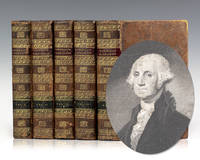
1804131234Philadelphia: C.P. Wayne 1804-1807. First edition first issue of the first biography of George Washington with the scarce atlas volume and list of subscribers. Octavo six volumes bound in full contemporary tree calf with elaborate gilt tooling to the spine morocco spine labels lettered in gilt tissue-guarded engraved frontispiece portrait of Washington to volume I. With the scarce atlas volume which is bound in three quarter calf over marbled boards and contains 10 engraved maps 9 folding and the 22-page list of subscribers. In very good condition. A rare and complete set in an attractive contemporary binding. John Marshall's description of the life character and achievements of the "Father of America" is unparalleled by any other author. As a contemporary and peer of Washington he has a unique and intimate perspective on the man that no other historian can claim. If you want a first hand description of this history changing figure John Marshall's work is essential. The work “is political history as well as biography… the only comprehensive account by a great statesman of the full founding of the United States— of the founding of an independent people as well as of its government… There is no other concentrated history of the essentials by such an authority on American institutions†Robert K. Faulkner. C.P. Wayne hardcover
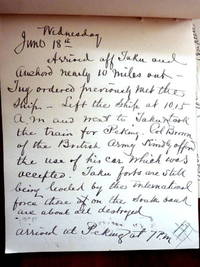
19020002347ABOARD THE USS NEW YORK. Good. 1902. On offer is a superb fascinating original soft bound 1902 China Station diary and personal log handwritten by Admiral Frederick W. Rodgers 1842 - 1917. Rodgers was a Rear Admiral in the United States Navy. He fought in the American Civil War and ascended to be the last commander of the Asiatic Fleet. He was a grandson of U.S. Navy Commodore Matthew Perry. In May 1901 Rodgers became Senior Squadron Commander within the Asiatic Squadron. On March 1st 1902 he became the commander of the entire Asiatic Squadron which was engaged in combat during the Philippine-American War at the time. He was the Squadron's last commander. At the end of his tour on 29 October 1902 the Asiatic Squadron was abolished and its responsibilities were assumed by the new United States Asiatic Fleet. This logbook documents his ship the U.S.S. New York while stationed in Amoy China and Nagasaki Japan during a critical time in the area's history. The log begins March 27th with a final entry on - July 26th 1902. The log recounts the daily workings of the ship and personnel deployments lists of repairs to various ships within the Asiatic Fleet. What is of real importance is Rodgers encounters with the Emperor of China and Prime Minister of Japan. He also mentions other naval vessels from Britain Germany and Japan listing the ship's numbers and armaments. This log contains important information about the fleet in this very historical period when the United States emerges as a world naval power. The 60 pages of handwritten narrative and notes make for some revealing entries regarding American efforts at diplomacy in the area; Rodgers' diplomatic contacts with the Emperor and Dowager of China are well noted as are intelligence reports on fortifications in China. He mentions brief reports from missionaries concerning conditions in the interior of China contact with British troops who are guarding parts of Peking. While in Peking Rodgers meets the British Foreign Minister and writes about the looting that took place at the summer palace blaming it on Russian and Italian troops during the Boxer Rebellion. Furthermore he discusses positioning gunboats along the rivers near Peking due to further disturbances. Rodgers also mentions meeting the Prime Minster of Japan encounters with the Japanese navy and various dignitaries princes and barons. Here are some snippets: U.S.S. New York -March 27th 1902 Cable arrived from Hong Kong French Cruiser Arriau called on the American Consul no information from him - he informed me that there was nothing new to report here. A missionary who had just returned from an extensive trip into the interior had informed the consul that he had been treated with much consideration. U.S.S . New York - March 31st 1902 Woosung China - Visited Chinese Cruiser Hai Chai cable from Widdes asking change of officers from G.C.M. not practicable - one case of Cholera in Cavite - condition in Manila improving. Glaicer arrived Cavite - Drake commanding Muntrey officially visited ship brought in 3 cases for G.C.M. U.S.S. New York April 2nd 1902 Left ship at 3 pm for Shaug Hai 30 min from ship to station Woosung road is bad anchorage . The tides were up to more than four knots - ships at single anchor are liable to drag. Went to French hotel De Collmines - it is fairly good but the rooms are most uncomfortable - Captain Tah of the Chinese navy accompanies us. Friday April 1902 Intelligence reports from Monterey Fortifications of the Yangsee River - Forts on Silver Island Black Dragoon forts -Forts at Chu San Knan Forts at Kiaung Yri Required examination of the county between Woosung and Shanghi copy of railroad maps mark chart examination of Woonsung river regards fortifications. U.S.S. New York- April 22nd 1902 New York sailed for Yokahma at 9am Weather raining: A German steamer came in last night with Prince Imperial on board - made preparations for a national salute address ship but found steamer had carried no distinctive flag boarding officer at 4am countermanded order for salute and dressing ship. U.S.S. New York Yokahama Japan Monday April 28th 1902 Rear Admiral Evens hoisted his flag exchanged salutes Went to Tokio Made official visits to US. Minister To Prime Minister of Japan To Minister of War Called on Baron Kaneko. Wednesday June 18th 1902 Arrived off Tokio and anchored nearly 10 miles out - Tug ordered previously met ship - left the ship at 10:15 am and went to Tokio took the train to Peking. Col Brown of the British Army Kindly offered the use of his car which was accepted. Taku forts are still being leveled by the international force those on the south side are all destroyed. Arrived at Peking at 7pm.was meet by a gentleman from the legation and a guard of honor from the 9th infantry. Went to the U.S. legation with my personal staff as a guest of Hon E.S.Conger. Thursday June 19th Visited the temple of Heaven discussed affairs with minister he informed me that the principal questions now between the Chinese Government and the internationals are: First as regards the transfer back to civil administration of the Tuiu Suen and Peking rail road and 2 the return of the city of Tien Sien to civil administration. The rail road is now under English military management. Called on the various foreign ligations - only met two personally the German and the Japanese. Friday June 20th 1902 Visited the Summer Palace of the Emperor. A special permission from the Foreign office was required to visit the Palace it is the most interesting place about Peking but the effects of the results of the trouble in 1900 is very apparent and the destruction was very great - Repairs have been made to a very limited extent this place was occupied by the Italians and Russians who must have looted it to the fullest extent. Peking Sunday 22nd 1902 Diplomatic dinner at the legation - meet the English Minister than the Austrian Charge of Affairs also the Russian Minister. Peking Tuesday June 24th 1902 By Previous arrangements was given was audience by the Empress Dowager and the Emperor at the Winter Palace. The logbook has one torn page one page detached from the binding and four blank pages and is overall G.; Manuscript; 8vo - over 7¾" - 9¾" tall; KEYWORDS: HISTORY OF ADMIRAL FREDRICK W. RODGERS ASIATIC SQUADRON LOGBOOK CHINA STATION JAPAN. TURN OF THE CENTURY EARLY TWENTIETH CENTURY NAVAL MARINE MARINERS WARSHIPS SOUTH CHINA SEA UNITED STATES NAVY USN FLAGSHIPS DIPLOMACY NAUTICAL PHILIPPINE-AMERICAN WAR POST SPANISH AMERICAN WAR COMMODORE MATTHEW PERRY U.S.S. NEW YORK EMPEROR OF JAPAN EMPEROR OF CHINA DOWAGER EMPRESS OF CHINA TOKIO TOKYO AMERICANA HANDWRITTEN MANUSCRIPT AUTOGRAPHED AUTHORS DOCUMENT LETTER AUTOGRAPH KEEPSAKE WRITER HAND WRITTEN DOCUMENTS SIGNED LETTERS MANUSCRIPTS HISTORICAL HOLOGRAPH WRITERS AUTOGRAPHS PERSONAL MEMOIR MEMORIAL PERSONAL HISTORY ARCHIVE DIARY DIARIES JOURNAL LOG PRIMARY SOURCE FIRST HAND ACCOUNT SOCIAL HISTORY PERSONAL STORIES LIVING HISTORY ANTIQUITÉ CONTRAT VÉLIN DOCUMENT MANUSCRIT PAPIER ANTIKE BRIEF PERGAMENT DOKUMENT MANUSKRIPT PAPIER OGGETTO D'ANTIQUARIATO ATTO VELINA DOCUMENTO MANOSCRITTO CARTA ANTIGÜEDAD HECHO VITELA DOCUMENTO MANUSCRITO PAPELBIOGRAPHY BIOGRAPHICAL AUTOBIOGRAPHICAL AUTOBIOGRAPHY PERSONAL NARRATIVES . paperback
18990002596BOLIVIA PERU SOUTH AMERICA. Very Good with no dust jacket. 1899. On offer is a superb pair 2 of original manuscript diaries handwritten by an unidentified American adventurer and gold prospector in Bolivia and Peru circa 1899 - 1901. The diaries inscribed #4 and #5 with the others lost to history tell the incredible story of the author's adventures and encounters with Indigenous Bolivians thieves highwayman soldiers and expatriates. In many ways the times and places nted evoke Butch Cassidy and the Sundance Kid. Historians and researchers will be delighted given the long detailed and keen-eyed observations of the author. While this is non-fiction and a personal account it reads like an old-fashioned novel full of intrigue and adventure. For example our author actually pulls his revolver on a group over a mining claim. In another entry he believes he is being followed and writes his location for friends in case he is murdered and his body is found. In another entry he finds an Indigenous man who fell off a treacherous mountain trail into a box canyon and helps in his recovery. Almost every entry mentions his interactions with the Indigenous people of the area and he is often asked to administer help or supply medicine to those he encounters. He also mentions the Federal Revolution of 1899 in Bolivia and battles in the mountains towns etc. There is so much more. In addition to those events he writes about his mining explorations in the Andes on foot with mules and his battle with the elements and fellow miners. There is lots of cheating and double crossing taking place from those he encounters which makes for intense drama. In most cases the author hires Indigenous guides and travels with Anglo companions. They are frequently on the lookout for gold and attempt to make contacts with the local population. Our author had some connection with and worked directly for The Inca Mining Co and Santo Domingo gold mine in Peru. He mentions both several times the diaries also a mill. RESEARCH INFO: "The Santo Domingo mine is located in that zone of the great rivers known in Peru under the name of 'Montana' and situated on the east of the great Andes Cordillera. During the bonanza Mr. W. L. Hardison from California a well-known American engaged in the oil industry happened to pass Santo Domingo on his way to other mines further in the interior and seeing the great output of the mine he made a contract with the owners to buy it. Six months afterward the Inca Mining company a corporation organized under the laws of the state of West Virginia with a capital of $1000000 acquired the property and began workings on a larger scale. Nearly 18 months were devoted to the proper development of the mine and in July 1898 the old mill was completely modified and started continuous running giving good profits and insuring the success of the enterprise." The diaries contain approximately 140 very well-filled pages each. The 1900 diary begins April 7 1900 with a final entry May 14 1901. The 1899 diary begins March 5 1899 with a final entry April 5 1900. Both diaries are bound in hardbound covered boards with red marbled paper and measure 5 x 3 inches. The handwriting is immaculate and easy to decipher. Here are some snippets: "March 5 1899 Borrow twenty four Bolivianos of Recardo. He can give me mule but no Indian. Want to sell him farm to Adams or don't think he would be as accommodating as he is. Also urges me again to employ his daughters husband and he offers me his sisters son of 9 years to cook & do chores for board or an adopted boy. Water reported high on Juliaco- road and likely impassable. Hire Indian to go with me and Bonito to finish drying peaches and prepare garden." "March 7 1899 I can get neither breakfast or mule and in noon before I get started stop with pleasant gentleman in Charzani- He informs me the revolution is not over and Alonzo is still supported by the army showed me good gold ore and offers me half to prospect it for him. Takes no pay." "March 11 1899 Wait long but finally start without breakfast. Bring bread at Jrancame- Pay Indian to let mule feed on her grass. Cross river in boat called balsa- and swim the mule. Road under water and return for guide. Again swim mule much difficulty in reaching Taracos Accommodation with Governor Sugar for two cups of coca. Early start swim two more rivers and hire guide where road is under water. Egbert has not been here. Mr. Carmichel gives me interesting details of the war and present doings of our glorious country." "March 15 1899 Mr. Carmukel arrives from Arizona to take charge of the Santo Domingo Mill. We help him find Mr. Pool ask for the Santo Domingo mine. Attend business. Go to Depot to help Mr. Carmichel get off. Also see an officer and wife off. See Dr. Hunter who advises us to be vaccinated. Pool boys draft with draft on Jose Sanchez. Much interested in information I give him and invite us back tomorrow." "March 191899 Rise early and take train for Juliaca- Gentleman reports battle at Charizami and all killed by the Indians. It startles me but when I learn date I know its a false report for it is since I passed Charizami later on other reports the battle near La Paz. Call on Mr. G. Cannon who expresses interest in out prospecting and wants us to allow him a second chance of good." "March 27 1899 Egbert tried and wants to sleep late. Sanchez brothers start for Puno for school. They especially Philipi very friendly to me. Indian woman sells us burros and I take them from the purchaser. See Governor to get Indian who tries to and called on another price. Calls in a friend and ridicules me because I cant speak good Castillano. I soon lose control of myself and want to fight them both and two Indians that enter but Indians turn tail. Firm all over and the curs want to make amends but I move them aside and walk out." "March 29 1899 Indian steals my old poncho sheep skin and rope from back saddles. Jose warms me to have no business transactions of importance with Frederico Franch. Mule and burro escaped from the corral. Indian started in pursuit but returns with them late for which I compensate him. However it causes a late start. Hire Indian on the road who knows the river crossing. Put clothes on top of cargoes and cross river. Cold as the snow mountains it come from. Find some of our bread was stolen at Cojata. Stop at Indian house and well smoked." "April 9 1899 Many little things to be done today but interruptions result in my accomplishing nothing. Bonito comes with potatoes send medicine to a sick woman hunt the mule Indian comes to sell cheese and guinea pig and wants treatment for what appears to be a light paralytic stroke. Bonito comes again and wants medicine for a burro and so the day passes and all I get done is the washing of my clothes. Bonito tells me a man fell of the bridge just below here and was swept away by the current." "April 16 1899 Egbert sleeps late while I wash clothes Bonito helps get mule across river. Hire him to show me good timber tomorrow Bonito describes trouble between Recardo & Flores most empathically Saze Florio was whipping his wife and would have shot Recardo had the latter shown his heels." "May 1 1899 Blast blown out in crevice and Recardo cries because it did no good. Send Indian for dynamite and pull Recardo back in time to keep stone from hitting him. Go to work without breakfast and by noon can eat two dinners. Blast does little good and Recardo cries again disappears and finally returns and tells me next blast will do better for he went into bush and prayed but the next one also blows out in a crevice. Run a line for him. He wants me to help him sell his finca to Winslow or Glass. Sent mutton down to camp for which I paid well." "June 6 1899 Glass sees one deer. Glass delays travel by leading way himself instead of letting Benito who knows the country lead. Leads us over a dangerous mountain peak. G shoots Piscacho- for supper." "June 241899 Glass leaves us in evident depressed spirits. Pass Recardo and almost have to strike him to make him settle fairly. Thinking he has called on his Indians for help draw my revolver to make them stand aloof in which I committed a grave and foolish error for my temper should not be trusted with the control of my revolver. Egbert and I discuss pro and con the advisability of seeking work and decide to go to Santo Domingo mine but first prospect the Nuicor- so we will know if it will pay us to return to it when we have saved up some cash." "June 301899 Continue washing Egbert returns and reports being well entertained. Girl puts her arm around his neck to induce him to remain for breakfast. Glass has reported us as taking out lots of gold and the whole town is excited. A jug full of gold is credited to us. Numbers of papers and letter from uncle Scott and very friendly one from Mr. Laughlin in which he relates winning the title sent of Easton grant over T. B. Canton." "Sept 29 1899 A letter from Al Lee written last June in answer to my letter and hinting for interest in my claim as he hears I have a good claim on Camata. Want a companion but on experience is enough. Leave Savage rifle with Marcos. Marco's child dies at noon. Indian music and dances going on since sundown yesterday. Three bands of Indian masqueraders appearing on the plaza in turns and at intervals all together when child is entered. All bands in different forms of dress and having brand of music and clowns. Want to describe dress as too varied for short description. This lasts till Monday morning without cessation night and day." "Oct 3 1899 Cold and get late start stop on good grass some time. Mazordoma- of Accacunco pay $5.00 for Indian to linbani- I won't pay it and he wont give me directions so I go it alone and as former directions were take right had trail at Acconco and trail six leagues to Linbani I take trail right. Travel till night and am told in yet another 15 leagues to Limbani- trade for Indian guide for $ 2.00 and instructed to wait 400 yards further on till Cholorizomi near there. Wait till long after dark have been warned repeatedly and am afraid something is up so travel on half a mile and seek camping place. Arrange call with care so it is difficult for anyone to get near without making noise or fuss and am not afraid of any of them when awake. Don't think trouble is intended but no harm to prepare for it . Will write up diary every day at evening and if I do fall a victim to foul play this may perhaps fall into the hands of another or countryman if so tell where I last camped am now below the trail and above the little settlement the first on the East side for mountain track." VG. ; Manuscript; 32mo - over 4" - 5" tall; KEYWORDS: HISTORY OF; AMERICAN GOLD MINER PROSPECTOR BOLIVIA INDIANS BOLIVIAN ARMY REVOLUTION PERU INCA MINING CO & SANTO DOMINGO GOLD MINE ADVENTURERS BUTCH CASSIDY AND THE SUNDANCE KID LATIN AMERICA SOUTH AMERICA CENTRAL AMERICA ANDES BANDITS BANDITO INCA INCAN MAYAN AZTEC ANCIENT PEOPLES OF THE ANDES AMERICANA HANDWRITTEN MANUSCRIPT DOCUMENT LETTER AUTOGRAPH WRITER HAND WRITTEN DOCUMENTS SIGNED LETTERS MANUSCRIPTS DIARY DIARIES JOURNALS PERSONAL HISTORY SOCIAL HISTORY HISTORICAL HOLOGRAPH WRITERS AUTOGRAPHS PERSONAL MEMOIR MEMORIAL ANTIQUITÉ CONTRAT VÉLIN DOCUMENT MANUSCRIT PAPIER ANTIKE BRIEF PERGAMENT DOKUMENT MANUSKRIPT PAPIER OGGETTO D'ANTIQUARIATO ATTO VELINA DOCUMENTO MANOSCRITTO CARTA ANTIGÜEDAD HECHO VITELA DOCUMENTO MANUSCRITO PAPEL . hardcover
187883249Paris: Léon Vanier 1878. Fine. Léon Vanier Paris s. d. 1878-1899 & 1886-1892 19.50 x 28.50 cm 5 volumes reliés First edition of Les Hommes d'aujourd'hui 33 issues lacking out of 469. Five volumes bound in light blue half-cloth smooth spines blue morocco title labels decorated with double filets marbled paper boards 4 volumes. The color title pages have been preserved and bound in. Marginal tears without damage to the text no. 163; no. 165; no. 184 p. 2. Marginal restorations without damage to text on 8 leaves between nos. 214 and 223. Two leaves of no. 224 backed. Marginal tear with some paper missing no. 345 p.1. Format of quires in the first volume varies; some are trimmed more than others. First edition of Les Femmes du jour very rare complete collection in 11 issues published between 1886 and 1892 the last very rare Réjane issue appeared in 1892 six years after the other 10. Bound in half red cloth smooth spine midnight-blue morocco title labels framed in gilt gilt title lengthwise marbled paper boards. An impressive gallery of prominent 19th century women and men caricatured and described by the foremost avant-garde artists and writers of the time. Created by writer Félicien Champsaur and illustrator André Gill in 1878 this exceptional literary and satirical review was later directed by Léon Vanier the publisher of the Parnassiens poets from 1885 to 1899. Each issue is a portrait of a contemporary figure in the world of arts and letters politics science or technology. The full set includes 469 monographs written by some of the most provocative voices of the time: Jules Laforgue Gustave Kahn Joris-Karl Huysmans Jean Moréas Félix Fénéon. The only contributor Vanier ever paid for those written portraits was Paul Verlaine famously always short of money. Each issue includes on the front page a large and fine color lithographed caricature by artists such as Manuel Luque André Gill and Félix Régamey but also world-renowned painters: Toulouse-Lautrec Steinlen Pissarro Seurat Signac to name a few. The actress Sarah Bernhardt was so famous she appeared both in the men-issue Hommes d'aujourd'hui as well as one of the very rare women-issues Femmes du jour! The literary issues cover every school and movement of the second half of the 19th century including Buveurs d'eau Vilains bonshommes Hydropathes Parnassiens Naturalists Decadents Symbolists and Incohérents. There is also a number of avant-garde painters belonging to the Pont Aven school Schuffenecker Pissarro Emile Bernard Maximilien Luce the circle of the Montmartre Affichistes Chéret Willette Caran d'Ache Georges Auriol Job Steinlen as well as Post-Impressionnists Cézanne Toulouse-Lautrec Anquetin Pointillists Signac Seurat and Symbolists Redon. Musicians are also featured with fine portraits of Gounot Massenet Verdi Camille Saint-Saëns Rubinstein and Reyer. An exceptional and rare set bearing witness to the free spirit of 19th century French intellectuals and artists. Léon Vanier hardcover
191778126Paris 1917. Fine. Paris 1917 6.30 x 8.60 cm une photographie Original photograph likely unique and unpublished of Pablo Picasso at the Casa di Marco Lucrezio Pompeii spring 1917 Paris 1917 63 x 86 cm one photograph Original photograph depicting Pablo Picasso in the spring of 1917 at the Casa di Marco Lucrezio in Pompeii holding a twig in front of a wall on which there is a Pompeian fresco. Contemporary silver print perhaps unique from Jean Cocteau's personal archives then the Maurice Sachs collection. Exceptional almost undiscovered and probably unpublished photograph taken by Jean Cocteau during the stay. On 16 April 1917 Picasso visits Pompeii accompanied by Jean Cocteau and Léonide Massine to prepare the ballet Parade the first work described as surrealist by Guillaume Apollinaire for the new season of Serge de Diaghilev's Ballets Russes. On his return this initiatory journey inspired his monumental painting: the Parade stage curtain a real visual signature of the ballet marking the beginnings of Picasso's neo-classical period and today preserved at the Musée national d'Art Moderne Georges Pompidou. Pierre Daix in his bibliography dedicated to the painter recounts the aesthetic shock caused by the discovery of the Pompeian frescoes: Giovanni Carandente to whom we owe the best studies on this trip highlights that Picasso was strongly struck by the animation and the sensuality that the cataclysm of the year 79 AD had brutally destroyed. If it is true as he wrote to Gertrude Stein that he immediately drew many Pompeian fantasies which are a little daring attracted as he was by the erotic elation that emerges from these licentious paintings . these memories settled in him to emerge with force thereafter. . Everything that had made up the Pompeian universe was preserved on the site as well as in the National Archaeological Museum of Naples . In its singularity this universe contributed to enriching Picasso's cultural heritage with something more alive more trembling than he had gained from his museum visits until then. He particularly loved the conciseness of the paintings: two or three years later the impressions felt in Pompeii were to translate into a real creative explosion a series of paintings which all bore traces of these never buried memories. This source was to remain alive until La Danse of 1925. Pierre Daix Picasso. Unique and early original photograph of Picasso taken and printed by his friend Jean Cocteau in a mythical place that will influence his aesthetic for the long-term. Provenance: Jean Cocteau's personal archives then the Maurice Sachs collection and Max-Philippe Delatte. unknown
191678127Paris 1916. Fine. Paris 12 août 1916 6.30 x 8.60 cm une feuille Original photograph likely unique taken by Jean Cocteau showing Pablo Picasso and Co in Montparnasse in front of the café La Rotonde the 12 August 1916 Paris 12 august 1916 63 x 86 cm one photograph Original photograph by Jean Cocteau taken on 12 August 1916 showing Manuel Ortiz de Zárate Moïse Kisling Max Jacob Pablo Picasso and the model Pâquerette his girlfriend at the time posing in front of the famous café La Rotonde on Boulevard du Montparnasse in Paris. Contemporary silver print probably unique from Jean Cocteau's personal archives then the Maurice Sachs collection. This image was published in Billy Klüver's book entitled A day with Picasso: twenty-four photographs by Jean Cocteau 1997. However Klüver states that he didn't know the original photograph and used a modern reprint from the negative in the Cocteau archives for his work. We have not found any other copy of our original photograph in international public collections. Billy Klüver has assembled and commented on the twenty-one photographs taken by Jean Cocteau on 12 August 1916 in Montparnasse close to this intersection of the Boulevard Raspail and the Boulevard du Montparnasse which was named Place Pablo-Picasso in 1994. They take us to the café La Rotonde before which a beaming Picasso in a cap speaks with Max Jacob whose baldness shines in the sun behind them Henri-Pierre Roché in uniform and Manuel Ortiz de Zarate sit at a table on the terrace of the same café where Pablo is next to the glowing Pâquerette and the young Polish painter Moïse Kisling. Pâquerette with her hair in a headband a chic dress is the queen of the encounter. . It's the relaxed life at the back. Pâquerette or rather Émilienne Pâquerette Geslot was then a star model of the fashion designer Poiret who was all the rage at the time. A real one-day film of Picasso outside of his studio. Pierre Daix Picasso In his book Klüver questions the presence of all these artistic authorities in the making in a Paris that is deserted by war. The answer is according to him to search in the direction of the Salon d'Antin an exhibition organized by André Salmon in July 1916 in which all the protagonists of our photograph took part with the exception of Pâquerette. It is also on this occasion that Picasso reveals his Demoiselles d'Avignon to the public. This extremely rare image taken by Jean Cocteau with his mother's Kodak camera immortalizes a moment of joy that depicts the artistic all-Montparnasse of the early 20th century. Provenance: Jean Cocteau's personal archives then the Maurice Sachs collection and Max-Philippe Delatte. unknown
194687213Paris: Les Editions du Scorpion 1946. Fine. Les Editions du Scorpion Paris 1946 12 x 19 cm broché First edition one of 120 numbered copies on Lafuma pure wove paper the only large-paper issue. Endpapers very slightly and marginally toned two small tears at foot of spine. A rare and much sought-after copy in original state. Les Editions du Scorpion unknown
154682797Paris: Robert Estienne 1546. Fine. Robert Estienne Paris 1546 7 x 11.50 cm 5 volumes reliés TORAH Quinque libri legis BIBLE IN HEBREW ESTIENNE Robert Estienne Paris 1546 16mo 7x115cm 5 bound volumes. First 16mo edition of the Torah in Hebrew by Robert Estienne. Printer's woodcut device on each title page with book titles set within woodcut cartouche head-pieces. Only the title page is in Latin-Hebrew. Slightly later brown morocco bindings 1590-1615 two of the volumes with a smooth spine the three others with gilt raised bands gilt tooled boards all edges gilt. Some wormholes on the fifth volume not affecting the text. Numerous contemporary Latin marginalia mainly in the first two volumes. This five-volume Torah includes Genesis Exodus Leviticus Numbers and Deuteronomy. ""This little edition said to be very accurate is a true typographical jewel and perhaps the most beautiful one ever printed in the Hebrew language. Cette petite édition que l'on dit fort exacte est vraiment un bijou typographique et peut-être ce qui a jamais été imprimé de plus beau en langue hébraïque"" A. A. Renouard Annales de l'imprimerie des Estienne Brown morocco later binding 1590-1615 smooth spine with gilt fillets double gilt borders on covers all edges gilt. Some wormholes to the fifth volume not affecting the text. Joints corners and spine-ends expertly restored. Numerous contemporary marginal annotations in Latin manly in the first two volumes. This little edition said to be very accurate is a true typographical jewel and perhaps the most beautiful one ever printed in the Hebrew language.A. A. Renouard Annales de l'imprimerie des Estienne Exceptional copies of the Books of the Bible in Hebrew in first 16mo edition published by Robert Estienne. This pocket edition was printed in 17 volumes between 1544 and 1546 after the success of the four-volume quarto edition printed from 1539 to 1544. Based on the Hebrew Soncino princeps published in 1488 it was established by Humanist François Vatable. The text in Hebrew follows the Masoretic tradition and presents diacritics that facilitate its vocalization. Talented exegete François Vatable 1495-1547 early scholar of Hebrew studies during the French Renaissance was a member of the 'Cénacle de Meaux' founded by Jacques Lefèvre d'Étaples and translated for him in 1509 the Hebraicum one of the five psalters of the Quincuplex Psalterium published by Henri Estienne. After founding the Collège de France in 1530 King Francis I appointed him chair of Hebrew studies. As a Royal lecturer he actively participated ten years later in a Hebrew edition of the Bible with Robert Estienne 1503-1559 printer to the King in Latin and Hebrew. This edition is undoubtedly a real typographical feat for a small format text in Hebrew lettering. It was certainly intended for scholarly use by Sorbonne and Collège Royal students given its pocket size sold in separate individual volumes. The presence of numerous contemporary marginal notes further indicates its educational purpose as is the numbering of lines of several pages in some of our volumes. A very beautiful and scarce collaborative work by two of the greatest figures of Parisian humanist scholarship a fine example of the renewed interest in classical texts and their study in the original language. Provenance: library of Charles John Dimsdale 1801-1872 fifth baron of the Russian Empire with his bookplate on each pastedown endpaper. Robert Estienne hardcover