43 665 résultats
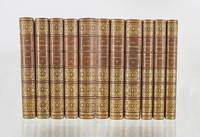
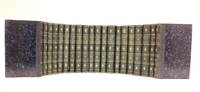
184273008Paris: FurneDubochetHetzel & Paulinpuis Alexandre Houssiaux 1842. Fine. Furne Dubochet Hetzel & Paulin puis Alexandre Houssiaux Paris 1842-1855 14.50 x 22 cm 20 volumes reliés Honoré de BALZAC & Honoré DAUMIER & Charles Constant Albert Nicolas d'Arnoux de Limoges Saint-Saëns dit BERTALL & Paul GAVARNI & Tony JOHANNOT & Célestin NANTEUIL uvres complètes de H. de Balzac Complete Works Furne Dubochet Hetzel Paulin puis Alexandre Houssiaux Paris 1842-1855 14.5 x 22 cm 20 volumes in contemporary half shagreen First collective edition sold as the Works comprising as well as numerous texts published for the first time a new version of the Human Comedy reviewed and revised by Balzac. This is also the first illustrated edition. Contemporary half blue shagreen over marbled paper boards spines slightly sunned in five compartments with thin raised bands decorated with gilt dots and compartments with triple blind-ruled frames gilt fleurons to centre marbled endpapers and pastedowns. A little foxing in some volumes a very small stain to page 119 of volume 4 another to page 321 of volume 8 a tear to half-title of volume 9 a small damp stain to corner of pages 449 and following of volume 10 stain to pp. 173-74 of volume 14 stains to pages 303 to 307 of vol. 16. The full set of 152 hors-texte plates by the best artists of the age including Bertall Daumier Gavarni Johannot Nanteuil as well as illustrations to text. Four rejected plates have been added bringing the number of plates in this copy to 156. There are so many reasons for emphasising the interest of this edition one of the most important in French literature. Having had a turbulent existence and confused and having been several times republished in a great number of copies it is very rare in its first form and in this first version even rarer in a contemporary uniform binding than with a modern binding and the wrappers preserved cf Clouzot. A very good and rare copy in a contemporary uniform binding ca 1855 with all the plates called for by Clouzot and four additional ones. FurneDubochetHetzel & Paulinpuis Alexandre Houssiaux hardcover
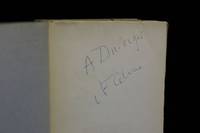
195445261Paris: Gallimard 1954. Fine. Gallimard Paris 1954 14 x 21 cm relié sous chemise et étui First edition one of 45 numbered copies on Hollande paper the tirage de tête Autograph inscription from Louis-Ferdinand Céline to his friend Pierre Duverger the only photographer to have taken color photographs of Céline Quality blueish paper covers sunned as is often the case Ex libris pasted onto foot of half-title This copy has a half black morocco chemise spine in six compartments date to foot and a slipcase edged in black morocco both by Goy & Vilaine. Gallimard unknown
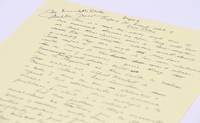
1983822701983. Fine. There is a long-standing myth that if two economists discuss any topic they will have at least three opinions about it. s. d. septembre 1983 21.50 x 28 cm une page sur un feuillet Autograph manuscript signed one a page written in black ink on a sheet of yellow lined paper and titled by the author: Draft 8 Preface for French edition 8 Price Theory; numerous erasures and corrections. At the top left of the sheet in ballpoint pen autograph signed: For Bernadette Platte Milton Friedman. Extremely rare autograph manuscript signed by the 1976 Nobel Prize winner one of the most influential economists of the 20th century whose entire archives are now kept at the Hoover Institution Library & Archives Stanford University. The few Friedman manuscripts still in private hands are particularly desirable and sought-after. Important theoretical text of the first two paragraphs of the preface to Price and Economic Theory first French translation of Price Theory published in 1983 by Economica editions. Completed on September 7 1983 at Stanford University this original version in English is completely new. Price Theory Friedman's major work Chicago Aldine Press 1962 whose definitive version was published in 1976 the year Friedman won the Nobel is a fundamental essay directly inspired by his lectures at Chicago University. For his first publication in France seven years later Friedman therefore undertook to compose a completely new preface intended for this public less naturally won over to monetarist ideas than the Americans. Our manuscript the final version of a text that required eight rewrites as evidenced by the exergue still bears multiple modifications underlining the attention paid by Friedman to the reception of his work by the French readership. Spearhead of Ronald Reagan's economic policy Friedman's theory of prices comes from a long tradition of French and Anglo-Saxon thinkers whom the economist takes care to quote in this manuscript: From the French physiocrats and Adam Smith to Léon Walras and Alfred Marshall to Maurice Allais and Paul Samuelson a body of theory has been elaborated and refined that essentially all economists accept and use in their analysis of the problems for which it is relevant. As a connoisseur of the French spirit Friedman thus insists on the connection between the economic liberalism of his famous school of Chicago and the philosophy of the Enlightenment dear to the intelligentsia of the old continent. It is moreover in homage to this French critical spirit that he opens his preface with an ironic anecdote on the relativity of economic theories: There is a long-standing myth that if two economists discuss any topic they will have at least three opinions about it. We note however that he replaces the real author of this trait who is none other than Churchill with an anonymous long-standing myth. The repetitions and redactions on our manuscript show Friedman's temptation to analyze the origin of this myth: This myth rests like most myths is crossed out and replaced by an irrevocable Whatever small element of validity this myth may have with respect to some topics it has none whatsoever with respect to the core of economics. price theory. The second paragraph of our manuscript is a promotion of his monetarist theories which at the beginning of the 1980s had just borne fruit: their application by the American Federal Reserve led to a sharp decline in inflation and a historic rise of the dollar. At the height of his influence Friedman then saw his works including Price Theory republished taught around the world and translated into several languages. He emphasizes here the central importance of his theory for understanding the world market: For price theory seeks to understand how the actions of hundreds of millions of people spread around the surface of the globe interact through a market to determine the price of one good or service relates to unknown
184077055Paris: Léon Curmer 1840. Fine. Léon Curmer Paris 1840-1842 18 x 26.50 cm 11 volumes reliés Les Français peints par eux-mêmes. Encyclopédie morale du dix-neuvième siècle Le Prisme with Les Anglais peints par eux-mêmes The French painted by themselves The English painted by themselves Léon Curmer Paris 1840-1842 18 x 265 cm 11 volumes in half morocco First edition one of the grand papier deluxe copies with two states of the illustrations for the 8 volumes of Les Français peints par eux-mêmes: one in black on tinted paper and one enhanced by hand using the so-called coloris gommé technique with watercolour and varnish on white paper. Les Anglais peints par eux-mêmes includes the engravings in black. No deluxe copies in colour have been made for this rare set of Les Français. Bound in half brown morocco spine in five compartments enhanced with stipple engraving and double gilt panels richly decorated with gilt floral motifs framing a mosaic medallion of green morocco with a gilt rose stamped in the center cartouches at the top decorated with a gilt garland framing the place and publication date some light minor rubbing on some compartments gilt fillets on the marbled paper boards comb-patterned endpapers top edges gilt. Elegant late nineteenth century bindings signed Durvand-Thiret. Complete with all engravings along with added engravings i.e. 930 engravings including 415 in colour. Title pages dated 1841 for all volumes of Les Français except for volume 5 of Les Parisiens and volume 3 of La Province dated 1842. Les Français peints par eux-mêmes has 415 engravings in black including that of Napoleon on horseback instead of the 405 announced and 415 in colour including a double page map of France in volume III of the Province. The English volume illustrated by Kenny Meadous is complete with 100 plates in black. This unique set contains in total almost a thousand black and coloured engravings and more than 1500 in-text illustrations. Famous gallery of woodcut portraits depicting the social classes of the 19th century by the greatest artists of the time: Gavarni Daumier Delacroix Grandville Johannot Bellangé Charlet Daubigny etc. The portraits are all accompanied by original texts from the most famous Romantic authors including: Balzac Nodier Gautier Nerval Gozlan Janin Karr etc. Scarce foxing affecting mainly the Prism and the Anglais. The texts and illustrations of the book paint a lively picture of inhabitants and their trade in metropolitan France and its colonies. It sets the tone for panoramic literature a new genre coined by Walter Benjamin in Charles Baudelaire. A lyric poet at the height of capitalism. In addition to these portraits of the Français the contribution of a whole areopagus of great and small authors and illustrators S. Le Men La 'littérature panoramique' dans la genèse de la Comédie Humaine: Balzac et Les Français peints par eux-mêmes L'Année balzacienne 2002/1 No. 3 CAIRN includes some of the most renowned authors and cartoonists of the time each of whom made an original creation for the project. This protean fresco was directed by editor Léon Curmer already known for the publishing success of Paul et Virginie between 1836 and 1838. Curmer is represented here by an article L'éditeur in volume IV written by Elias Regnault. The latter takes example in Louis-Sebastien Mercier's Tableau de Paris published in 1781 whose vision is even further extended by the representation of French provinces in Les Français. Thanks to Curmer the work finds an even deeper meaning: the editor has widened his frame and instead of letting a few fleeting portraits get lost in the immense daily whirlwind that engulfs all things he has sought to bring together the most salient physiognomies of that time. S. Le Men Ibid. Curmer selected the authors and illustrators closest to the ones they depict: It is therefore a question of calling upon authors and illustrators who are wel Léon Curmer hardcover
189072241et ne se vend nulle part Fictional Place Bruxelles Brussels: Imprimé sous le manteau Henri Kistemaekers 1890. Fine. Imprimé sous le manteau Henri Kistemaekers et ne se vend nulle part Fictional Place Bruxelles Brussels 1890 13.50 x 22 cm relié First edition clandestinely printed in 175 numbered copies ours being one of the 25 lettered copies from the head of the print run. Bradel binding in half bordeaux morocco smooth spine gilt date at foot marbled paper boards marbled paper endpapers and pastedowns original wrappers preserved. A very rare and handsome copy. Provenance: from the library of Dr. Lucien-Graux with his ex-libris mounted on a pastedown. Imprimé sous le manteau[ Henri Kistemaekers] hardcover
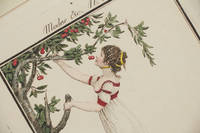
179887502A Paris: Au Bureau du Journal des Dames Rue Montmartre N° 183 au coin du Boulevart 1798. Fine. Au Bureau du Journal des Dames Rue Montmartre N° 183 au coin du Boulevart A Paris s.d. 1798-1808 10.80 x 17.60 cm 52 planches en feuilles montées sous marie-louise en étui Set of 52 original plates etched and enhanced with watercolours at the time numbered 1 to 52 mounted in pairs under mats. Leaves in red half calf slipcase early 20th century red shagreen boards. The plates vary in size 10.8 x 17.6 cm to 28.1 x 18.8 cm and paper stock as was often the case with La Mésangère's publications. Unbound engraved title on a bifolium printed separately absent from most copies. It is replaced here by its identical reprint by Gosselin 1893-1903 on antique watermarked paper and bears the publisher's 'G' mark characteristic of this reprint a century later. All the plates however are in their first edition without the G mark added by Gosselin to the lower corners of the engravings in the figure or the bowl occasionally accompanied by a date. Some foxing a few rare engravings showing traces of pasted tabs on the reverse. Plate 42 restored without missing. A green stain in plate 11 probably due to the watercolour of the landscape. Twelve plates are trimmed to the plate mark: pl. 12 12.7 x 19.2 cm pl. 15 12.4 x 18.7 cm pl. 19 11.9 x 19.8 cm pl. 29 11.9 x 19 cm pl. 30 12.5 x 19 cm pl. 39 12.1 x 18.4 cm pl. 41 12.5 x 19.1 cm pl. 42 12.5 x 19.1 cm pl. 48 11.9 x 18.3 cm pl. 49 12.9 x 19.9 cm pl. 51 12.5 x 18.4 cm and pl. 52 12 x 18.1 cm. Plate 37 is trimmed around the black border 10.8 x 17.6 cm. More pronounced foxing in the margins of plates 4 28 30 31 35 44 45 and 47. A rare and precious complete suite of 52 original costume prints from the Directoire and First Empire periods. Deemed ""unfindable"" by Gaudriault in his study of women's fashion engravings in France this is the only complete set of first editions currently available. This series of elegant silhouettes was published on the initiative of the bookseller Sellèque and Pierre La Mésangère a clergyman who returned to the press after the turmoil of the Revolution. In 1800 La Mésangère took over the management of the renowned Journal des Dames et des Modes a pioneering publication in the history of the women's press and produced a few standalone series such as this one aimed at 'a category of connoisseurs with an interest in a more refined and luxurious interpretation of fashion than that offered by the plates in the newspapers' Philippe Séguy Histoire des modes sous l'Empire. The plates are the work of Philippe-Louis Debucourt a painter of French elegance since 1787 and a regular contributor to the Journal des Modes. The first 38 date from Year VIII the next 12 from Year IX and the last two from 1808. Through these 52 costumes unfolds a veritable grammar of dress a precious alphabet of the gown and hat - a language in which Parisian women were particularly well versed. Shepherdesses sultanas Etruscan princesses. the trend leaned towards exoticism even eroticism with the occasional bare breast. We find the fashions brought to the fore by the Merveilleuses following the Revolution inspired by Antiquity and mythology - gowns of iridescent muslin light and form-fitting alongside coats bandeau hairstyles and Grecian tunics. The captions accompanying the etchings often provide detailed descriptions of the attire hairstyles and headwear meticulously enhanced with watercolour. Some figures even double as biting social commentary verging on caricature featuring characters such as the ludicrously pretentious Turcaret a recurring theatrical figure since the early 18th century or genre scenes teeming with amorous intrigues. The significance of this series in the history of colour engraving is noteworthy albeit underappreciated by bibliographers. Some plates bear tiny black dots in the margins indicating the process of colour engraving by superimposing intaglio plates. These mark Au Bureau du Journal des Dames, Rue Montmartre, N° 183, au coin du Boulevart hardcover
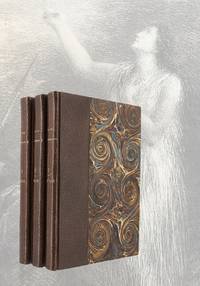
188584667Paris: Imprimeries MorelletBoyer & Cie 1885. Fine. Wagner's influence on literary and artistic avant-garde Imprimeries Morellet Boyer & Cie Paris 1885-1888 16.80 x 24.60 cm 3 volumes reliés Complete collection in 36 issues including three double issues bound in three volumes - First year: 12 issues from 8 February 1885 to 6 January 1886 - Second year: 12 issues from 8 February 1886 to 15 January 1887 - Third year: 12 issues from February 1887 to January 1888. Illustrated with 4 full-page lithographs by Fantin-Latour: L'Évocation d'Erda - Odilon Redon : Brünnhilde - Jacques-Emile Blanche : Tristan et Isolde and Le pur-simple. Three quarter brown morocco binding smooth spine titled in gilt marbled paper boards marbled paper endpapers and pastedowns orignal wrappers preserved binding signed by Dupré. Numerous contributions from some of the most prominent writers critics poets and musicians of the late 19th-century including Wagner himself: Charles and Pierre Bonnier Jules de Brayer Alfred Ernst Joris-Karl Huysmans Fourcaud René Ghil Stuart Merrill Stéphane Mallarmé Catulle Mendès Éphraïm Mikhael Pierre Quillard Jean Richepin Émile Hennequin Charles Vignier Charles Morice Paul Verlaine Villiers de l'Ilse Adam Teodor de Wyzewa Stewart Chamberlain Gerard de Nerval Souvenirs sur Lohengrin Jean Ajalbert Gabriel Mourey Adolphe Jullien Tola Dorian Swinburne Evenepoel Franz Liszt. A very valuable complete collection of this avant-garde journal both literary and aimed at presenting Wagner's works through a new aesthetic. Imprimeries MorelletBoyer & Cie hardcover
196084581Paris: Gallimard 1960. Fine. Gallimard Paris 1960 15 x 21 cm relié First edition one of 30 numbered copies on Holland paper the deluxe issue.Bound in full ebony morocco smooth spine decorated with small inlays of garnet morocco and pearl-grey box calf the latter framing the authors initials and the title; the first numeral of the date given in Roman numerals appears within a square of pearl-grey box calf. Morocco boards framed with wide panels of chocolate suede the upper cover with a large granulated paper panel lettered with the title and date of the edition set in garnet morocco the initials framed by a rectangle of paper taken from a map of Haute-Savoie; bluish paper endpapers and pastedowns original wrappers and spine preserved top edge gilt; housed in a chemise with a rhodoid-backed spine and slipcase trimmed with ebony morocco. Binding signed by Pierre-Lucien Martin and dated 1964. These memoirs-autobiography by Simone de Beauvoir trace her life from her success at the agrégation prepared with Jean-Paul Sartre to the Liberation of Paris in August 1944. A superb and celebrated binding produced in a few copies each differing slightly by Pierre-Lucien Martin one of the masters of twentieth-century French bookbinding. Gallimard hardcover
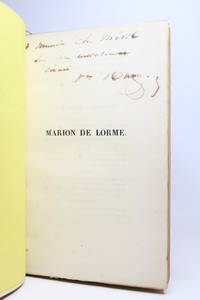
183173562Paris: Eugène Renduel 1831. Fine. Eugène Renduel Paris 1831 14 x 22.50 cm relié First edition rare copy with no statement of print. Full blue morocco binding spine with raised bands in the Jansenist style endpapers and pastedowns of combed marbled paper gilt dentelle framing the pastedowns double gilt fillets and gilt tooling to headcaps and board edges top edge gilt with untrimmed margins preserved original front wrapper bound in binding signed by Marius Michel. Monogrammed bookplate mounted on the verso of the first endpaper. This copy is enriched with four hors-texte plates by Louis Boulanger and Alfred Johannot. Signed autograph inscription by Victor Hugo on the half-title: « À Monsieur Charles Mévil son bien cordialement dévoué Victor Hugo. » Valuable and intriguing presentation inscription to the administrator and principal shareholder of the highly influential Revue de Paris publisher of Balzac whom the young Hugo was likely hoping to win over. It was only in 1834 two years after the success of Notre-Dame de Paris that Hugo would publish a text in the Revue Claude Gueux alongside his prolific rivals Le Père Goriot. Presentation copies of this title by Victor Hugo are exceedingly rare. In his Chronologie des livres imprimés de Victor Hugo published in 2013 Éric Bertin records only nine such inscriptions in this edition: to Sainte-Beuve Taylor Paul Lacroix Charles Mévil this copy Charles Nodier Loève-Veimars Armand Bertin H. Romand and the faithful Paul Meurice. The work also notes that this copy appeared in the Latour sale 1885 and more significantly the Noilly sale 1886. Magnificent copy bound by Marius Michel enriched with engravings and a signed autograph inscription by the author. Eugène Renduel hardcover
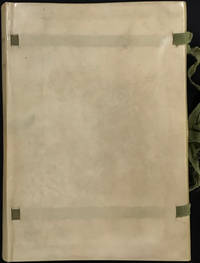
18941206<p>London/Hammersmith: Kelmscott Press 1894. Limited First Edition. limp vellum. Very Good. 8vo: 8 1/4" x 5 3/4" 21 x 14.6 cm.</p><p>First Printing. Edited by Frederick Startridge Ellis. Printed by William Morris. Bound in publisher's original by J. & J. Leighton with silk ties supplied by Morris & Co. with gilt titles to spine. One of 300 at thirty shillings paper copies plus 7 at 9 guineas on vellum. Printed on fine hand-made Batchelor with the second version of the Primrose watermark paper with yapped edges. Uncut deckled edges. Colophon and the smaller rectangular printer's device designed by Morris no. 1. viii 384 1 colophon vii pp.</p><p>Printed in black with shoulder notes and chapter heads in red in the Golden type designed by Morris for his press. Woodcut frontispiece title within a floral border and facing page with full woodcut floral page-border borders 10a and 10. Numerous 10- 7- 6- and 4-line woodblock initial capitals all designed by Morris engraved by William Harcourt Hooper.</p><p>Keats -- especially his "La Belle Dame sans Merci" -- was an icon of the Pre-Raphaelites and how deeply Morris felt about the publication of this book is illustrated by his reaction when he discovered some initial mistakes in the text of "La Belle Dame sans Merci." According to Sidney Colvin in his John Keats 1918 p. 470: "I was with him when he happened to open the sheet on which La Belle Dame sans Merci was printed. He began to read it and was suddenly aware of unfamiliar words. Great was his indignation. He swiftly altered the words and then read the poem to me remarking that it was the germ from which all the poetry of his group had sprung -- The sheet was reprinted and the earlier and better version restored."</p><p>Dated March 7 issued May 8 1894. "This is now Jan. 1898 the most sought after of all the smaller Kelmscott Press books. It was announced as in preparation in the lists of May 27 and August 11893 and as in the press in that of March 31 1894 when the woodcut title still remained to be printed." Cockerell in Sparling 36 Peterson A24</p><p>From the library of Harry Mansfield.</p><p>All four silk ties present and intact. Condition overall: Very Good.</p> Kelmscott Press hardcover
19200001929Europe 1920. On offer is an original massive archive of 1000 of formulas recipes and chemical breakdowns for fragrances and related cosmetic products such as perfumes scented soaps colognes toilet water face cream shaving soap . The archive is comprised of ten 9 x 7 inch binders filled with up to 200 pages each and one index binder making for as many as 1500 or more pages filled with specifics for creating a host of fragrance and fragrance products. The recipes were compiled from early to mid 1900s and then secreted to a safety deposit box until recently rediscovered a few years ago attesting to the importance and value placed on these chemical formulae. The mostly handwritten recipes include many exclusive products for famous perfume shops in major cities all over the world including North and South America: Columbia Peru Havana New York etc. Many formulas show the name and location of special shops which have private labels and scents. Research and anecdotal information leads us to believe that these recipes were created by an unknown top Jewish chemist who brought these out of Europe just prior to World War II. While the chemist is unknown we are certain in depth research and careful scrutiny of the names mentioned may yield enough clues to identify the creator of this precious archive. Overall G. Good. 8vo - over 7¾" - 9¾" tall. Manuscript. unknown
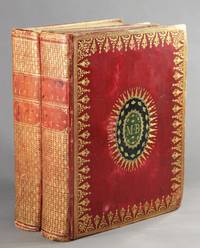
176728878London: Mark Baskett . and by the assigns of Robert Baskett 1767. Large paper copy measuring nearly 5 centimeters larger than that cited in Darlow & Moule large 4to 1 volume expanded to 2 unpaginated; sectional title page for the N.T.; contemporary full red goatskin elaborate borders on covers incorporating a Greek key design enclosing lilies with birds and vases with flowers an with a central monogram "MB" on an oval green morocco onlay surrounded by a black morocco onlay tooled with cherubs the whole surrounded by a flame tool smooth spines richly gilt and gilt-lettered direct a.e.g.; light overall rubbing slight sunning of the spines but generally a very good sound handsome and sumptuous binding. Facing the first leaf in each volume is the following inscription: This Book was presented to me by my Son in Law Coll. Stephen Delancy and at my decease I bequeath it to my beloved grand daughter Miss Phila Delancy as witness my hand Maria Barclay. New York 15 August 1786." The Delancys were a prominent New York loyalist family. Stephen Delancy remained in New York throughout the Revolution but left for Nova Scotia in 1783. Presumably he commissioned these bindings from England at some prior date cf. his mother-in-law's initials on the central onlays. The binder has not been identified but it is similar to a binding described in Maggs catalogue 966 item 154 the onlay decoration being almost identical. Also included beneath the above inscription is a further one dated 1834 from Phila Delancy to her nephew William de Lancey Lawson. Darlow and Moule mention an engraved title page for those on regular paper but no such mention in the Darlow & Moule citation for the L.P. copy nor for that matter in any of the OCLC records. Darlow & Moule 1181. Mark Baskett ... and by the assigns of Robert Baskett unknown
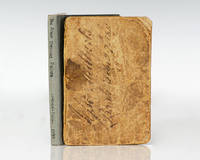
17500001563Good. 1750. On offer is an absolutely sensational ancient original 1750s manuscript sailor's vade mecum or reference manual handwritten by and or for a mariner over 260 years ago. The name William Wine appears on the rear inside cover dated March 4th 1788. The handwriting is similar throughout to the signature but it is inconclusive if Mr. Wine is the author original owner or a later owner. The first page detached but present is dated November 1750. There are many many tables of information illustrations charts drawings etc. that are indexed and with over 420 pages written in a small meticulous hand there are within these pages everything that a mid-18th Century senior officer or mate would require being filled with geographical mathematical financial navigational and geometric information and there are also sections detailing carpenter's work joiners painters glaziers lavers masons plus foreign exchange and monetary info and conversions in foreign countries. There are sections for algebra calculus trigonometry all manners of measurement whether liquid or dry and even how to calculate the contents of a globe with many of the mathematical sections deal with measuring heights and distance from afar measuring and surveying dealing with casks all information that a Lieutenant 1st mate or Ship's Master or even a Captain would need. We conclude that the information and the quality of the manuscript book vellum which double folds and creates an envelope that would protect the pages from the elements plus a metal clasp broken give further credence that this book was owned by a senior officer and most certainly of English origin as evidenced by the section regarding Oxford and Cambridge terms plus a chart that helps one establish the dates of the Easter season leap years tides . The volume begins with a few pages of indices and in the first section one finds pages of geographical place names and distances from one to another: "the coast of Carolina Virginia etc. to Newfoundland" and the "Bohema Islands" and another "The Coast of y.e main Continent in y.e West Indies" and the degrees of longitude and latitude are listed alongside each listed place. The standard depth and sheer volume of information also leads us to conclude that the seaman was likely an officer of a merchantman as opposed to a casual traveler. This is an absolutely unique manuscript relic of ancient seafaring and the age of sail. The 7 x 4.5 x 1.5 inch book is generally soiled on the covers but the interiors are good save for the loose page and the odd stains to the inner pages. The cover is stiff somewhat fragile and has some cracks/tears but overall the book is G. ; 12mo - over 6¾" - 7¾" tall; KEYWORDS: HISTORY OF GREAT BRITAIN ENGLAND BRITANNIA RULES THE WAVES NELSON HORNBLOWER AUBREY RAMAGE REFERENCE MANUAL HANDBOOK NAVIGATION MARINE NAUTICAL NAVAL TIDES VADE MECUM SAILOR SAILING AGE OF SAIL SEVEN YEARS WAR TRAVEL ASEA SURVEYING LONGITUDE LATITUDE MATHEMATICS GEOMETRY GEOGRAPHY PORT OF CALL HARBORS SEAFARING SEAFARERS HANDWRITTEN MANUSCRIPT DOCUMENT LETTER AUTOGRAPH DIARY JOURNAL LOG KEEPSAKE WRITER HAND WRITTEN DOCUMENTS SIGNED LETTERS MANUSCRIPTS HISTORICAL HOLOGRAPH WRITERS DIARIES JOURNALS LOGS AUTOGRAPHS PERSONAL MEMOIR MEMORIAL PERSONAL HISTORYantiquité contrat vélin document manuscrit papier Antike Brief Pergament Dokument Manuskript Papier oggetto d'antiquariato atto velina documento manoscritto carta antigüedad hecho vitela documento manuscrito papel. . hardcover
19600001561Liao Village Yong Qing County HeBei Province PEO. Good. 1960. On offer is an extraordinary original historically significant 139 page manuscript archive of Mao Zedong's Cultural Revolution handwritten by a man named Liao Zi Yu of Liao Village Yong Qing County HeBei Province was born in 1912 worked as a proof-reader at the printing works the HeBei Agriculture University from 1951 to 1973. The Liao family owned 1400 Mu of the land before 1937 and it also owned a shop selling fabrics. Liao ZiYu inherited properties including land of 710 Mu brick house with 30 rooms mud house with 3 rooms 6 large animals and 2 man-powered vehicles. He started to manage the family affairs in 1934 together with his brother who was killed by the Japanese in 1938. He then worked alone till 1946 when the Land Reform reached the area. At the onset of Mao Zedong's Cultural Revolution landlords and capitalists in the urban and rural centres were identified and accused of exploiting and oppressing the working class. Overthrowing the exploiting and oppressing class was a primary concern of Chairman Mao and the Communist Party of China. Mao pushed the Chinese into a civil war in order to overthrow the Republic of China which succeeded and the result People's Republic of China in 1949. Mao then began to liquidate and suppress those persons who belonged to the exploiting class. This was known as the 'Movement of Suppressing Counter-Revolutionaries' in early 1950's in China. In this archive we follow Liao Zi Yu's attempt to avoid being suppressed as a member of the exploiting class and a counter-revolutionary by moving and concealing his real identity. He lived hidden and got work as a common labourer for more than ten years from 1949. But early on in the Cultural Revolution his real identity was disclosed as was his former life as a landlord. From that time on his was a doomed life: investigated jailed and forced to confess his crime this file recorded the complete process. RESEARCH NOTES: He was accused of 1 Exploitation of the workers: He employed 7 long term workers 6 monthly ones 4 to 5 short term ones and 4 others for the house duties. He owned 5 pieces of gun. He exploited the workers brutally. 2 Exploitation of the land rental: He rented out over half of his land holdings with rent up to 4 Yuan per Mu. The rent must be paid before October for next year's rental. He forced the peasants to pay the rent using the power of his uncle who was the town's Reeve. 3 Serving the enemy: He was the town secretary of AnCi County for a month by making anticommunist slogans such as "Welcome the Nationalist Army". 4 Escaping the supervised labour: He got a job at the HeBei Agriculture University by falsifying his résumé and hiding the fact that he was a land owner. He was put into the supervised reform by the revolutionary mass in 1966 soon after the exposure of him as a landowner. He was moved by the policies of the communist party and was able to admit his crime and made confession. He was not classified as the landowner but would be expelled from the University and be sent back to his home village to work as a farmer. The decision was reached by the committees of the communist party at the levels of the printing works the University and the District of BaoDing in a period from 1970 to 1973. The archive includes: comprehensive files regarding the investigation evidence confession 80 pages!! handwritten on People's Republic of China stationary. Overall G. HISTORICAL NOTES: As one online source succinctly sums up the times: "People's Republic of China from 1966 through 1976. Set into motion by Mao Zedong then Chairman of the Communist Party of China its stated goal was to enforce socialism in the country by removing capitalist traditional and cultural elements from Chinese society and impose Maoist orthodoxy within the Party. The most important yet naturally unstated reason for the revolution was the return of Mao Zedong to a position of political power after he lost most of his political influence after his failed Great leap forward."; Chinese Language; 4to - over 9¾" - 12" tall; KEYWORDS: HISTORY OF GREAT PROLETARIAN CULTURAL REVOLUTION CULTURAL REVOLUTION CONFESSIONS RECENT ANTI SOCIALIST ACTIVITIES ANTI CAPITALISM MAO ZEDONG MAO TSE TUNG GREAT LEAP FORWARD MAOIST SOCIALISM COMMUNISM MOVEMENT OF SUPPRESSING COUNTER-REVOLUTIONARIES MIAO ZI YU COMMUNIST CHINE CHINESE SINO POLITICS JIANG QING GRASSROOTS SOCIALISM PROPAGANDA POST FIVE YEAR PLAN 5 YEAR PLAN GANG OF 4 GANG OF FOUR LIN BIAO BEIJING PENG LUO LU AND YANG ZHONGFA 267 INDOCTRINATION RED CHINA CHAIRMAN MAO MARXISM-LENINISM MAOISM LIN YURONG HANDWRITTEN MANUSCRIPT AMERICANA DOCUMENT LETTER AUTOGRAPH DIARY JOURNAL LOG KEEPSAKE WRITER HAND WRITTEN DOCUMENTS SIGNED LETTERS MANUSCRIPTS HISTORICAL HOLOGRAPH WRITERS DIARIES JOURNALS LOGS AUTOGRAPHS PERSONAL MEMOIR MEMORIAL PERSONAL HISTORY antiquité contrat vélin document manuscrit papier Antike Brief Pergament Dokument Manuskript Papier oggetto d'antiquariato atto velina documento manoscritto carta antigüedad hecho vitela documento manuscrito Liao Village Yong Qing County HeBei Province . unknown
19350009004Yangtze River Shanghai Hankow China. Good. 1935. Unbound. On offer is a fascinating and significant handwritten diary that was found with other military items from a US 4th Marine Veteran George Mower who served in China WW II and Korea. The very unique diary was written by five Marines their rank and last names listed on the first page while on duty in China from Dec. 28 1934 through Feb 1 1935. The very first words of the journal are as such: "This diary of facts concerning a trip made up the Yangtzie River into the interior of China that mysterious and forbidding land of the Green and Yellow Dragon - by five marines detailed as armed guards for the Yangtzie Rapid Steamship Co. - an American owned and operated Co. - was conceived and written by Oscar Nelson and George Mowers with the help of the remainder of the detail. The trip and what is said about the country is described by Mowers. Nelson was the he located the different points of interest learned their names and their distances apart. All members of the group added the human interest which is committed to the pages. This diary was not kept for material gain but only as a souvenir. It is written in the simple words of those who made the trip so that as they ramble through its pages so they may live over again in the memory those days spent on the Yangtzie River." The men on detail are referred to as Lt. Hussa Sgt. Stevens Cpl. Nelson Pvt Mowers and Pvt. Sours. On December 28 they gather their supplies and embark "at 5:15 PM aboard Yangtze River Steamship Co. Ship I'Fung". During the detail there are many details on their trip often in the military way of breaking down the events by the time they happened "At 1700 it begins to darken - a cold rain makes visibility poor. The bleak and dreary banks of the river is now relieved by several hills crowned by pagodas and tall trees." On another day the diary states "The weather is cold and the wind still too high to allow us to venture out on deck to observe much of the country along the banks of the river. What I can see of the short from my cabin window looks to be cold beak bare and desolate. Occasionally I can pick out a small grass shack from which drifts a small lazy column of smoke. Then at other times I can see a Chinese farmer scurrying along the banks of the river or perhaps he's a fisherman. What a perfect setting for one who likes nature in the raw. I'll take mine after it has been refined." There are plenty of details about life on the ship and the dreary and rainy conditions which seem to be ever present. As well the authors of the diary seem to be slightly interested in Chinese history as there are some small passages on the history of China: "At the close of the Sung dynasty it was founded by refugees who fled from other parts of the country to escape the conquering Mongols." There is also writings about the little time off in Shanghai and Hankow. "Arrived at Hankow and anchored at 1600. Clean well built city from the river. Went ashore after dinner and walked up the - clean and well policed. Rickshawed and walked thru the city. A big prosperous city - modeled after Shanghai - but did not see much of interest. Their famed "Cabaret Row" was a flop. Was sober and the girls looked old and their teeth were dirty. The liquor was bad." There are also run ins with bandits and pirates "Now when you get on the land opposite your ship you run into some of the famous Yangtzie River Pirates in the guise of men. They demand 40 cents big money to bring you a hundred yards to your boat. And they get it or you swim." One of the trips ashore is described as "By chance we were witness to a very interesting sight this afternoon. We saw a number of Chinese soldiers forcing a number of Chinese civilians into service in the army. They must have had about a thousand of these recruits and they marched them down the streets four abreast. Some of the recruits were greasy and dirty looking as though they had been taken from shops or factories while others were a little seedy looking and indicating that they were farmers or fishermen. What a strange site they formed as they marched along.In age and size they ranged from mere boys to full grown men. Each one of them carried on his back a blanket or rag in which was roped all of his worldly possessions as a whole they resembled a herd of wild sheep being herded to the slaughter house. Such is life in China some Chinaman with a little money who has had the privilege of gaining a little knowledge and an education declares himself a general recruits himself an army - either willing or otherwise - and procedes to make himself master of all he surveys." The diary is full of these fascinating little observations of life and nature in China along the banks of the Yangtze River. There are also details on the military strife happening in China in the mid-1930s. "National Chinese soldiers are being sent up the river to Wanhsien and other towns in the Szechuan province for very obvious reasons. Szechuan theoretically is supposed to be a part of the Republic of China but in practice it is not. It is controlled by General Lu an influential and powerful General. Szechuan is the richest province in China is isolated from the rest of China due to the fact that it lies in the remote western part of the country and is surrounded by mountain boundaries which are almost inaccessible except by way of the Yangtzie river through the gorges . It is to this isolation and natural defence formed by the mountains General Lu in the past with aid of his powerful and well equipped army has been able to maintain control over Szechuan and levy and collect the taxes. The armored detail eventually switches from their original boat to the I'Ping and then to the I'Chang. The diary ends on Feb. 2nd with no mention of any transfer or change in duty only that they were close to Shanghai. It is unclear whether this diary is complete or not. Each page is numbered at the top so they are very easy to keep in order as the pages are loose and unbound. It ends with "We anchored for the night at 2200. Lt. Shaw said that the Captain told him we would be in Shanghai about 1000 tomorrow. Nelson is becoming more and more restless. He is longing for the dear old Shanghai nights." All pages of the diary are easily readable in a very accessible script. There are spelling mistakes consistently throughout the diary but they are not a barrier to understanding the words. Each page is in excellent condition.; Manuscript; 9" x 12"; KEYWORDS: HISTORY OF STORIES OF UNITED STATES MARINES EXTRA-MILITARY DUTY CHINA PRE WORLD WAR TWO PRE CHINESE COMMUNIST REVOLUTION YANGTZE RIVER HANKOW SHANGHAI BANKS OF THE YANGTZE RIVER GREEN AND YELLOW DRAGON YANGTZE RIVER STEAMSHIP COMPANY YANGTZIE THE SAND PEBBLES LIEUTENANT HUSSA SERGEANT STEVENS CORPORAL NELSON PRIVATE MOWERS PRIVATE SOURS USMC I'PING I'CHANG AMERICANA HANDWRITTEN MANUSCRIPT DOCUMENT LETTER AUTOGRAPH WRITER HAND WRITTEN DOCUMENTS SIGNED LETTERS MANUSCRIPTS HISTORICAL HOLOGRAPH WRITERS AUTOGRAPHS PERSONAL MEMOIR MEMORIAL AMERICANA ANTIQUITÉ CONTRAT VÉLIN DOCUMENT MANUSCRIT PAPIER ANTIKE BRIEF PERGAMENT DOKUMENT MANUSKRIPT PAPIER OGGETTO D'ANTIQUARIATO ATTO VELINA DOCUMENTO MANOSCRITTO CARTA ANTIGÜEDAD HECHO VITELA DOCUMENTO MANUSCRITO PAPEL . unknown
000024NEDINBURGH SCOTLAND: WILLIAM F. CLAY. Good with no dust jacket. Half-Leather. HERALDIC CREST MANUSCRIPT. Large thick Folio late 18th century marbled boards and 1/2 sheep crack to spine and partial unhinging of front board age worn but otherwise well-preserved. A handsome and imposing manuscript of 1000s of engraved crests including numerous crests drawn by hand arranged by the famed engraver David Deuchar 1743-1808 interestingly organized according to device type i.e. hands lions etc. Carefully compiled and researched manuscript seemingly intended for publication with numerous markings accorded to known and unknown heraldic crests and their corresponding family names. Pasted to first blank is a letter dated 1884 from the Edinburgh bookseller William F. Clay explaining how he "secured a unique collection of several thousand heraldic crests and devices engraved and drawn in ink by the celebrated engraver David Deuchar and his son." He offers the manuscript for 30 shillings 1884. Clearly a working manuscript of the well regarded "Dance of Death" engraver and of great use for research. ; English Language; Elephant Folio - over 15" - 23" tall; KEYWORDS: HISTORY OF SCOTLAND HERALDRY HERALDIC BRITAIN MANUSCRIPT HANDDRAWN HANDWRITTEN ENGRAVED DEUCHAR HOLBEIN DANCE OF DEATH SCOTTISH NOBILITY HALLMARKS INSIGNIA EMBLEM COAT OF ARMS SIGNET ARMORIALS GENEALOGY ORNAMENTFAMILIAL PEERAGE VIGNETTE WOODCUT ENGRAVINGS CHIVALRY DEVICES CHEVRON DECORATIVEantiquité contrat vélin document manuscrit papier Antike Brief Pergament Dokument Manuskript Papier oggetto d'antiquariato atto velina documento manoscritto carta antigüedad hecho vitela documento manuscrito papel. . WILLIAM F. CLAY hardcover
19420002595THE HUMP TAKORADI ROUTE. Good. 1942. On offer is a sensational historically significant manuscript and photographic relic of World War II service with the unusual and unique perspective of a 'blue collar' aviation machinist's mate who was employed by one of America's most important and key strategic resources: Pan American Airlines. Harry W. Snyder Jr. was an aviation machinist's mate for Pan American Airways - Africa Ltd. He created and compiled an absolutely rare and detailed retelling of his work service travels and observations and Harry proves to be a sensational keen eyed diarist. Adding further depth is a scrapbook filled with fascinating images. Of particular interest to historians and researcher to this vastly important historical niche of strategic resource relationships during WWII will understand Pan American's key involvement creating Pan American Airways - Africa Ltd. in 1941 between. It flew materials and personnel from Miami to South America across the Atlantic to Africa where it crossed the Sahara Dessert onto the Middle East and British India where it flew over the Himalaya Mountains "The Hump" as it was called into China. Harry is in an inviable position to witness history: the diary riod when the United States was just beginning its African campaign. He begins writing in June as he leaves the states and then spends some brief time in South America. His entries begin June 24 1942 with a final entry Dec 25 1942. The diary entries mention the issues with Pan American and how the lines were often blurred between civilian and military operations. It seems the company in Africa was going to be taken over by the U.S. Army. He also mentions many plane crashes or "crack ups" as he called them some with horrible results. An entry from the diary mentions a fighter plane losing control the pilot bailed out but his parachute failed to open and he dies on impact. His plane blew up on the runway ammunition exploded into the night. This is just one of the entries there are more crashes air raids and practice drills in case the Germans bombed having to carry a gun native troops with tanks machine guns etc. Snyder also writes about life in the Africa and the West Coast city of Accra Capital city of Ghana the bars and other establishments nightclubs prostitutes native people soldiers there is so much more. In addition to the diary there is an excellent photo album depicting scenes from Accra showing life among the native people local soldiers street scenes etc. The album contains 71 photos after his service with Pan Am Harry then joined Navy and earned several medals for his service in WW II. Here are some snippets: June 30 1942 Flight to South America than Africa. Up at 4:45 am breakfast & than to the airport. Plane checked up or 2 guys took off at 7:55 Flew through storms most of the way sighted boat once during break in storms. Over Brazil & hours of nothing but jungle. Some small huts along Amazon River only signs of life. Almost dark when we landed. Just missed a crash when we had to pull up to miss a boat. Circled again and landed at 5:45 pm Raining when we landed. One mans over night hit went overboard & had to be recovered. Took bus to Grand Hotel in Belium. Pera Everyone speaks Portuguese had trouble getting dinner using Mil Res= to about 0.5 took watch tonight and girls Both rode the trolley. This is a funny place to write this because I never forget it anyway. The hotel is lousy ants & lizards all over. Lizards will crawl up and down walls. I wrote to Sally & mom to tell them about the lousy dump censors will probably cut out half of the letters. I will tell them again when I get to Africa. I want to get mosquito nets tomorrow; they will cost 100 Mal I hate to go to bed here as I am afraid of getting jiggers or something worse. There are a lot of us sailors here they told us places to go. They are all liquor dives. Went to the "Wonder Bar" Its a wonder all right that anyone can stand it. Beer women don't like either. Women will hang all over you if you don't chase them. I kept moving around until we left so that could not sit down near me. They are all filthy I cant wait to leave here. July 6 1942 Africa Assigned to " Equipment" Easy job check flares pistols rations etc. Start in at 6:30am and finish at 4:00pm landed job today and checked plane out ok'ed by Lawson. Not hard to make the "Wogs" do all the dirty work. Rumors about army taking over are still persistent and I believe this to be true. Maybe here for duration yet. I hope not. Wrote 4 letters tonight saw movie "Ice Follies 39" old but good. Saw a Bristol Bear fighter on field today it as pained black. Sweet looking plane. July 10 1942 Africa Up at 5:45 ate breakfast than to airport worked on a couple of planes that had to go out and tan took it easy. Came in for dinner and found Tommy Olsen in Rec Hall he just got in late last night. The others are still in Natal. Back to field but nothing to do took it easy all afternoon al the near quitting time got a plane to ready for morning. A native boy killed a deadly viper under the Goodman's & brought it out on the field. Very ugly looking. July 13 1942 Africa Up into work at 7:00 We started new hours today I felt lousy all day. Very weak & had a stiff neck. Only 3 ships on field for us to check so I was lucky & didn't have to work hard. There were 5 B 24's on field today but 4 flew out. Two of out ships cracked up over weekend 085 flew out on Sat cracked up at Khatouw- and another ship cracked & burned some other place. Bad weekend for P.A.A. Army took over pilots today they were made Capt's & first Louis I supposed I will find out were I stand in a couple of weeks. July 17 1942 Africa Up breakfast & airport lots of work this mourning & found out they were expecting the 40's they had both fire eng. & meat wagon ready & also asbestos suits. However the 40s didn't get here. Ate lunch & got letters from Ma. July 21 1942 Africa Up and breakfast than airport. Read notes & went to work. Lunch and than back to work a bunch of B-24's have been coming in all day. English show this afternoon. Wrote to Sally & folks. Listened to phonograph & started talking with some B-24 pilots on their way out to Cairo. Lost a couple B-24s on way one at Roberts went in ocean 2 out of eight alive. I am wondering if I'll ever get home again ever. H. Told me that if we do go home we will be marked and drafted back into service right away if the army wants us. Don't know but what should try for Specialist. But I think I 'll go home if I get a chance. Join the navy if I have no other choice but draft. July 27 1942 Africa Up breakfast field worked morning on ships going out today and tomorrow- B 24's went out today & night noon time mail in but none for me. Heard rumor that Seattle was bombed but no proof. Back to field & worked until 4:00. A lot of B-25's came in today. Collected the ck after 4:00 pm than down to Barracks & shower. Aug 1 1942 Africa I have been away over 1 month now here in Accra for almost 1 month. This place is fairly nice the food is not so bad except once in a while when we got goat or something worse. This month has been hectic in that we hear so many rumors etc. It is a fact that the army is taking over but we don't know it what capacity & what our status will be. So there's nothing do to but wait. I never knew before how much mail can mean to a person & am glad for the friends who write me. Aug 21942 Africa Up at 8:45 breakfast -my day off so I decided to go to Accra went in rented a bicycle went to lumberyard - docks - got wet riding than along breakwater saw drummers wet out to Christian log castles saw dungeons went to court building & police station than native market & than back to Accra saw a chiefs procession. Than got on bus & went back to camp. Aug 31 1942 Africa This month sure has been a trying one. First were going to severe contracts than are not than were going home & latest rumor had it that we'll stay here either in the army of the U.S. or else in civil service I guess we'll get the real lowdown eventually whew they'll really tell each if us just what we can be if we stay here or if we can ho home at all. Every day brings a new confidential story on the set up and each one as far fetched as the other. Everyone has been broke for about a week already as they are holding up our pay checks for some reason. Rumor still has it that we will get a hell of a strafing here some night. Particularly since they bombed the convoy at Lagos. Well its almost 2 months Ive been in Africa and I'm not crazy about it. The food is getting worse every day and I miss my gal. Hope for better information in the coming month. Sept 13 1942 Africa An air raid siren woke me at 5:30 up & went out to see the score. Decided it was a practice when nothing showed up than breakfast and work. At 10:00 a couple of Blenkeims Hudsons & Beam fighters staged a raid on the field. Boy what a sight. Zooming lovely above the ground & between the hangers. We all made for the bush saw 100 native troops on maneuvers all clean & on for chop no meal back to field. The whole place is crawling with native troops tanks machine guns everything. Off early so back to camp. No lights no water bad situation. Nov 8 1942 Africa Up breakfast - wash Heard the American troops landed in French Morocco. All planes are grounded expecting air raid - everyone with a gun must carry it. Cleaned & loaded guns on all planes. Installed bomb racks lunch and back to field. Rumors of all kinds from Italy to Doha etc. Went to 4;00 movie fleets in "Saw it back home with Sally chop and shower than wrote Sally. Total black out tonight keep up until we see where we stand. Funny to be here & yet not know what goes on. People at home probably all know. Bed at 11:00.' HISTORICAL NOTES: Pan American Africa: Pan American Airways-Africa Limited proved to be one of the Allies' most important strategic resources during World War Two. The company was formed in July 1941 after negotiations between the governments of the U.S. and the U.K. following earlier British overtures to Juan Trippe. By 1942 Pan Am Africa's crews and aircraft were flying from Miami down to South America across the Atlantic to Africa's West Coast across the Sahara to the Middle East on to what was British India and across the mighty Himalayan Mountains the "Hump" to western China. They carried strategic materiel and personnel and kept an absolutely vital line of communication open between global theaters of war. Each leg of that route presented challenges to both humans and machines. The route across the fabled Sahara Desert had its own particular issues: brutal heat extreme isolation primitive or non-existent infrastructure and sandstorms to name a few. The route across Central Africa had been pioneered through British civil aviation efforts starting in the 1920's but the scale was limited. With the coming of the Second World War operations and infrastructure had to increase dramatically. In some ways opening and operating those remote airfields resembled the work Pan Am had undertaken when opening the transpacific route in the mid-1930s. Aviation fuel had to be trucked in from great distances over primitive roads. Food and water were scarce. Success demanded ingenuity and an ability to take advantage of local resources. Like the opening of the "Hump" route the success of the "Takoradi Route" as it was called remains one of the truly impressive achievements of Pan American Airways' contributions to ultimate victory of the Allied cause which by the close of the war was being identified as that of the "United Nations."; Manuscript; 4to - over 9¾" - 12" tall; KEYWORDS: HISTORY OF; HARRY W. SNYDER HISTORY OF FLIGHT AVIATION PAN AMERICAN AIRWAYS - AFRICA LTD. WWII WW2 ACCRA GHANA STRATEGIC RESOURCES AFRICAN CAMPAIGN TAKORADI ROUTE THE HUMP HIMALAYAS AMERICANA HANDWRITTEN MANUSCRIPT DOCUMENT LETTER AUTOGRAPH WRITER HAND WRITTEN DOCUMENTS SIGNED LETTERS MANUSCRIPTS DIARY DIARIES JOURNALS PERSONAL HISTORY SOCIAL HISTORY HISTORICAL HOLOGRAPH WRITERS AUTOGRAPHS PERSONAL MEMOIR MEMORIAL ANTIQUITÉ CONTRAT VÉLIN DOCUMENT MANUSCRIT PAPIER ANTIKE BRIEF PERGAMENT DOKUMENT MANUSKRIPT PAPIER OGGETTO D'ANTIQUARIATO ATTO VELINA DOCUMENTO MANOSCRITTO CARTA ANTIGÜEDAD HECHO VITELA DOCUMENTO MANUSCRITO PAPEL . unknown
17500001419Very Good. 1750. Full-Leather. On offer is a superb original 18th Century Latin and some Greek manuscript book of over 328 hand-numbered and some unnumbered leaves of handwritten writings being a treasure trove of ancient medical and alchemy lore and history epitomizing the state of post Renaissance sciences the book includes various charts indices remedies tinctures other pharmacological and chemical recipes alchemy observations treatments and astrological notes. Circa 1730 to 1750s as evidenced by the marbelized end papers and separator pages in this premium 6.25 x 5.5 x 2 inch oblong leather bound clasp enclosed book was an esteemed doctor's medical book or more likely a rich monastic hospital or library given there is are remnant of a paste-down label on the edges though the spine portion of the label is gone. There is a small heart encased by filigree stamped in gilt and a gilt frame on the cover. Research suggests this book was written by 2 or maybe 3 different but similar in style and quality hands giving further credence to a monastic effort. There is a stylized graphic border on each page framing the handwriting. Titles capital letters section headings important notes or comments are in red with the balance in period brown ink. The book has approximately 500 pages handwritten as the numbering accounts for each leaf but the writings are many times on the reverse of the leaf too or 2 pages in other words. Shallow interior vertical crack to the rear cover chipping to the tips of the spine some rubbing and general ageing do not detract from this awesome work of ancient medical and alchemy history. Interior pages and text block is VG.; Latin Greek; 6.25 X 5.5 X 2 IN.; KEYWORDS: HISTORY OF ANCIENT MEDICINE MEDICAL CHEMISTRY LATIN GREEK MEDICAL LORE PHARMACOLOGY CHEMISTRY PHYSICS MONASTIC MEDICINE ASTROLOGY ASTROLOGICAL DOCTORS DOCTORING EARLY PHYSICIANS LATIN REMEDIES TINCTURES EARLY MEDICINE HOMEOPATHIC HANDWRITTEN MANUSCRIPT DOCUMENT LETTER AUTOGRAPH WRITER HAND WRITTEN DOCUMENTS SIGNED LETTERS MANUSCRIPTS HISTORICAL HOLOGRAPH WRITERS AUTOGRAPHS PERSONAL antiquité contrat vélin document manuscrit papier Antike Brief Pergament Dokument Manuskript Papier oggetto d'antiquariato atto velina documento manoscritto carta antigüedad hecho vitela documento manuscrito Papel Alquimie Alchimia spagyric art . hardcover
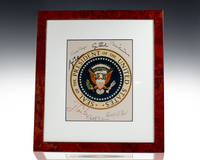
148492Rare photograph of the official seal of the president of the United States signed by seven American presidents. Color glossy photograph of the official seal of the president of the United States covering 40 consecutive years of presidential administrations. Boldly signed by Richard Nixon Gerald R. Ford Jimmy Carter Ronald Reagan George Bush Bill Clinton and George W. Bush. The Clinton and George W. Bush signatures were signed as president during their respective incumbencies. The signatures were all personally obtained by former California congressman James E. Rogan. A sheet to the frame backing lists the locations and dates of each signature: Richard Nixon New York September 15 1989 Gerald R. Ford Los Angeles April 12 1989 Jimmy Carter Plains Georgia July 9 1988 Ronald Reagan Beverly Hills May 28 1989 George Bush Sacramento October 15 1995 Bill Clinton The White House March 16 1997 and George W. Bush The White House March 30 2002. Matted and framed. In fine condition. The entire piece measures 15.25 inches by 17 inches. From the collection of California congressman James E. Rogan. The Seal of the President of the United States serves as a symbol of the executive authority and institutional continuity of the American presidency. Officially adopted in its current form by President Harry S. Truman in 1945 the seal features an American bald eagle clutching an olive branch and arrows signifying the nation's commitment to peace and readiness for defense. The eagle's head faces the olive branch reflecting a preference for diplomacy. Encircled by fifty stars representing the states the seal visually reinforces the president’s role as both a national leader and a representative of the federal union. While its design draws from the Great Seal of the United States the presidential seal has evolved in both form and function appearing on official documents lecterns and the presidential flag thereby reinforcing the ceremonial and symbolic stature of the office. unknown
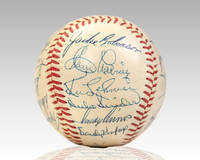
149854Rare Official National League baseball signed by 22 members of the 1956 Brooklyn Dodgers. Signed by Jackie Robinson in his last season a rookie Don Drysdale Roy Campanella in his second to last season Pee Wee Reese Gil Hodges Carl Furillo Don Newcombe Jim Gilliam Walter Alston and more. The signatures of Charlie Neal Duke Snider Sandy Amoros and Sandy Koufax have been deemed clubhouse versions. In fine condition. Housed in a custom acrylic display case. Accompanied by a letter of authenticity from PSA. From the collection of Steve Forbes. The 1956 Brooklyn Dodgers season marked the closing chapter of Jackie Robinson’s storied tenure with the club as Brooklyn once again asserted its dominance in the National League. That year the Dodgers edged out the Milwaukee Braves to capture the NL title demonstrating the resilience of the “Boys of Summer†core in a fiercely competitive late-1950s pennant race. In the World Series rematch against the New York Yankees Brooklyn pushed the contest to seven games but ultimately fell short underscoring both the enduring rivalry and the narrowing margins between the two teams. For Robinson 1956 thus stands as a final emblem of his dual legacy: a veteran leader still contributing to championship-level baseball and a transformative figure whose decade with Brooklyn had permanently altered the social and athletic landscape of the sport. unknown
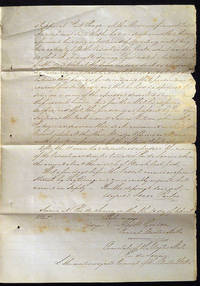
18450002564Good. 1845. On offer is a sensational remarkable group of 1845 manuscript depositions detailing the mutinous activity and desertions during a voyage of the whaling Bark Alto between 1844 - 1845. The eyewitness testimonies are comprised of 37 pages or so of handwritten fair copies; five 5 complete and one 1 incomplete deposition all by various crew members the five complete copies each personally attested and signed at the conclusion by George William Gordon American Consul at Rio de Janeiro May 20 1845. Blunt facts display the ferocity of emotions and simmering violence provide snippets like 'Palmer said to deponent that . . . he would put one of those dirk knives into him' abound throughout the testimonies. The depositions paint a picture of unbridled upset on the ship: lawlessless violence suspicions of poisoning desertion and a final critical comment from nature itself: a calamitous lightning strike makes for a final exclamation point to the awful whaling voyage. The vessel at the center of the events described herein the Alto was built in Tiverton Rhode Island we note that research indicates the Alto was in fact the only such vessel ever built at Tiverton in 1826 and was lost near the Falkland Islands in 1870. The National Maritime Digital Library date the events related in the documents occurred during the Alto's fourth voyage under the direction of Captain Nehemiah West whose deposition is included and which lasted from September 1844 to April 1847. A successful voyage commercially as the records further note that the Alto collected 339 barrels of sperm oil 304 barrels of baleen oil and 2700 lbs. of whale bone. As a group the depositions--from the Captain First Second and Third Mates and two boat helmsmen paint a vivid often harrowing picture of a voyage fraught with tension and danger. Researchers and historians will note that at least two of the depositions document an ominous shipboard discussion of the earlier well-documented mutiny aboard the vessel Globe out of Nantucket which took place in 1827. While the general outline of the events remains consistent throughout each of the deponents provides a unique personal perspective on what transpired often with the addition of unexpected or surprising details omitted by the others. Virtually all of the crew involved are identified by name multiple times throughout the documents two however are repeatedly described only as "Portuguese". In broad overview complaints from crew members that the vessel is leaky and unseaworthy leads to refusal to perform duties; the captain administers punishment including placing crew members in irons and striking them with a piece of "rattling" ratline; a small group of crew desert with one of the boats but are caught and jailed at St. Jago Cape Verde and shipped back to the U.S. on the U.S. Sloop of War Decatur; after a few months of relative calm unrest breaks out again this time with threats of violence to fellow crew members with clubs and "dirk knives"; in the most dramatic event eleven crew members desert with the remaining two boats taking with them a large store of the whaling equipment. The Alto its crew and equipment drastically reduced suffers the final indignity of a lightning strike "breaking and splitting" the mainmast but is able to hobble into Rio de Janeiro where these eyewitness accounts were given to the American Consul and preserved in the present documents. Here is a snippet from the deposition of helmsman William Williams approx. 8 pages on two pairs of conjugate leaves: "William Williams . . . deposed as follows. . . . That he was born in the County of Essex in England is 29 years of age and a naturalized citizen of the United States was naturalized at Boston Mass. in July 1842. That he shipped on board the Barque 'Alto'--Nehemiah West Master at New Bedford in August 1844 as Boat steerer to proceed on a Whaling Voyage. That the Vessel sailed on the 3rd September following. That 14 or 15 days after the Vessel went out to sea all the foremost hands refused duty--alleging that the Vessel was leaky. On their refusing duty Captain West interrogated each of them separately and three of them returned to duty and eleven still refused and were sent below where they were kept about 48 hours. While the eleven men were below as aforesaid they experienced two very heavy squalls but none of said men offered to return to duty--but on the other hand made sport of them that were at work. After they had been below deck 24 hours the Master went forward and requested four of the men to come on deck. They refused to come unless all were allowed to some on deck at a time--and after a good many threats on the part of the men the Master told them that if the men he had called did not come on deck that he would have the forecastle smoked to force them out. Soon after four came on deck as the Master had directed and still refusing to go to duty on being called upon the deck and refusing duty were put in Irons and the others one being called upon deck and refusing duty were seized in the rigging there being no Irons to put upon them. That at New Bedford before sailing one of the men named Spencer who had shipped deserted and another man named Charles Shane came on board in his place--but Shane's name was not put on the Papers. That when the men were called up as aforesaid said Shane took the ground that his name was not upon the Shipping Paper and therefore he would not go to duty and obey the Master--upon which the Master gave him four blows with a piece of Rattling i.e. part of the ratline. George Ritter also who was supposed to be the instigator in the men's refusing duty and who was insolent to the Master also receive three strokes with the Rattling. Another man the steward named James Wilson also got three blows with the Rattling for insolence to the Captain. He said that he never was flogged on board of a Blubber Hunter although he had been on board of a Man of War. No others were flogged or punished in any way and they all returned to duty." Scattered light soiling a bit of staining and handling wear creases; some tears tiny holes and small chips mostly confined to edges; no substantial losses; otherwise very good to fine overall the writing dark and distinct. Overall G.; Manuscript; 4to - over 9¾" - 12" tall; KEYWORDS: HISTORY OF WHALING SHIP MUTINY BARK ALTO NEW BEDFORD MASSACHUSETTS WHALERS MUTINEERS DESERTERS BARQUE MARINE NAUTICAL NAVAL GEORGE WILLIAM GORDON AMERICAN CONSUL AT RIO DE JANEIRO CAPTAIN NEHEMIAH WEST TIVERTON RHODE ISLAND MUTINY ABOARD THE VESSEL GLOBE NANTUCKET AMERICANAHANDWRITTEN MANUSCRIPT DOCUMENT LETTER AUTOGRAPH WRITER HAND WRITTEN DOCUMENTS SIGNED LETTERS MANUSCRIPTS HISTORICAL HOLOGRAPH WRITERS AUTOGRAPHS PERSONAL MEMOIR MEMORIAL AMERICANA ANTIQUITÉ CONTRAT VÉLIN DOCUMENT MANUSCRIT PAPIER ANTIKE BRIEF PERGAMENT DOKUMENT MANUSKRIPT PAPIER OGGETTO D'ANTIQUARIATO ATTO VELINA DOCUMENTO MANOSCRITTO CARTA ANTIGÜEDAD HECHO VITELA DOCUMENTO MANUSCRITO PAPEL . unknown
1909000668Washington DC USA 1909. On offer is a superb early archive of 450 U.S. Patents from Washington DC beginning 1909. All regarding aviation aeronautics airships flying machines blimps dirigibles etc. all different 6" x11" four or more pages each some as many as nine pages with exact reproductions of the inventor's drawings and specifications. This archive even with cursory glance will find many familiar names in early aviation including Orville and Wilbur Wright G.H. Curtiss and many many hundreds more see a partial listing at the end of this description. The largest category is flying machines but also patents steering propeller parachutes helicopters dirigible hanger etc. etc. Overall in very good condition save for some age-toning and rust from old pins and staples. The small number have folds crunches and rips and tears. All patents include very detailed drawings of the invention. Names of inventors include: Timmons Hendrickson Whitlach Rydberg Bourdelles Beskow Lauer Muller Webster Carey Hawkins & Ogilvie Kellogg BlondinVachon Wilde Coffman Arnoux Curtiss Essig Bond Heylman Nilson Filiasi Albright Riblet Stein Sturgess Deperdussin Fischer Paulal Nordstrom. Incredible file of early aviation history given the fact the Wright Brothers first patents were in 1909 a full six years after their initial flight. . Very Good. 8vo - over 7¾" - 9¾" tall. Manuscript. unknown
1795135238London-Derry: Published by G. Douglas 1795. Second edition of this scarce 18th century spelling primer. 16mo original limp paper boards illustrated with twenty-six small text woodcuts illustrating the Prince's Alphabet followed by an ABC poem The Alphabet in Rhime syllables of two and three letters easy words easy reading lessons the Lord's Prayer and a publisher's advertisement leaf aimed at children mentioning four other titles: The Ladder to Learning; Manson's Spelling Primer; Manson's Spelling Book; and The Universal Spelling Book. In good condition. Ownership name to the front panel. Housed in a custom folding case. Exceptionally rare with no other copies traced in auction records nor any of the titles mentioned in the advertisement leaf listed in any institutions. Published by G. Douglas hardcover
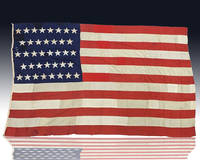
1877149349c. 1877. Rare thirty-eight star American flag in use between July 4 1877 when the state of Colorado was admitted into the Union as the 38th state and July 4 1890 when North Dakota South Dakota Montana Washington and Idaho were admitted as the 39th 40th 41st 42nd and 43rd states. In very good condition. The flag measures 14.5 feet by 9.5 feet. One of the nation’s most widely recognized symbols the flag of the United States of America has been officially modified a total of 26 times since its first appearance in 1777. The flag’s initial design bearing thirteen stars and thirteen stripes has been credited to several historic figures including naval flag designer Francis Hopkinson Elizabeth “Betsy†Ross and flagmaker Rebecca Young. On June 14 1777 the Second Continental Congress passed the Flag Resolution which stated: “Resolved That the flag of the thirteen United States be thirteen stripes alternate red and white; that the union be thirteen stars white in a blue field representing a new constellation.†"And truly no modern replica can either do justice to the artistic character or render the ‘patina’ of one of these antique flags†Mastai & Mastai 124. unknown
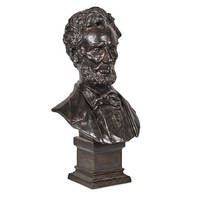
131044Patinated bronze cast of Abraham Lincoln by George Bissell one of only three commissioned by Ralph Newman for THE USS AL. Boldly signed by the artist in the back Geo. E. Bissell Sc. George Bissell was an important American sculptor working in the late 19th and early 20th centuries. He produced two full length statues of Lincoln: one in Edinburgh and one in Clermont Iowa. According to the letter from Lincoln College Curator Paul Beaver the present item is one of three copies made from the school's original Bissell bronze bust of Lincoln by the Van Dyke Galleries of Chicago in the summer of 1989. One copy was presented to the USS Abraham Lincoln commissioned in 1989 one copy was sold to Mel Smith and the third to Barry and Louise Taper. In fine condition. The piece measures 25.5 inches in height. An exceptional piece. unknown