Biblio.com
48 402 résultats
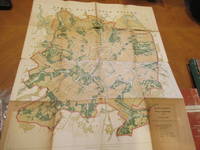
1935029571Moscow 1935. 1st Edition . No Binding. Good. Color Map Of Moscow In 1935. Single Sheet Approximately 26" X 30" Printed On One Side In Black Text Green Parks Tan Public Areas/0 And Brown City Blocks Red Outlines For City Limits Red Dotted Lines For Administrative Security Area. Scale 1:50000. An Important Map Of Moscow Showing All Streets And Depicting The New General Plan For The City. 1935. Light Wear Torn Along Many Folds Browning To Exposed Lower Right Panel. One Of 50000 Copies Printed But Now Scarce. <br/> <br/> unknown
1963009520Italy: Citta Di Torino 1963. This is a very good complete 3 volume set of this massive exhibition on Piemontese baroque architecture set design painting sculpture and furniture and decorative arts held in Torino Italy from June through November of 1963. All volumes in original publisher's illustrated wrappers. Corners of volumes 1 & 3 bumped. Very clean inside and out one short neat name inside vol.1 on front endpaper. Text in Italian. Volume 1: Architettura e Scenografia first section: Architettura xix 87 text pages 201 plates second section: Scenografia 56 text pages 66 plates. Volume 2: Pittura Scultura Arazzi first section: Pittura 128 text pages 227 plates second section: Scultura 59 text pages 86 plates third section: Arazzi 28 text pages 30 plates. Volume 3: Mobili e Intagli Tessuti e Recami Maioliche Porcellane Argenti Libri e Rilegature Monete e Medaglie. First section: Mobili e Intagli 27 text pages 412 plates second section: Tessuti e Ricami 16 text pages 27 plates third section: Maioliche 7 text pages 47 plates fourth section: Porcellane 8 text pages 56 plates fifth section: Argenti 32 text pages 71 plates sixth section: Libri e Rilegature 28 text pages 17 plates seventh section: Monete e Medaglie 44 text pages 20 plates. Most plates in black & white but generally at least one or two color plates per section sometimes more. Appendices on Casa di Caccia and Palazzo Reale. Massive documentation of the Piemontese Baroque. 9" high X 7" wide. These books will be securely wrapped and packed in a sturdy box and shipped with tracking. Original Wraps. Very Good. Citta Di Torino Paperback
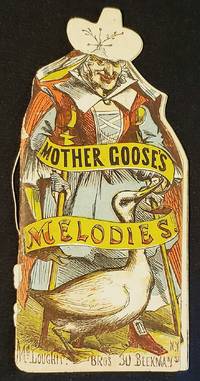
1864011572New York: McLoughlin Bros 1864. Paperback. Good. 12 pages: chromolithographed illustrations; 16.2 cm. Chromolithographed illustration of Mother Goose on the cover with a goose on the front and using crutches. Cover title. Die cut throughout in the shape of Mother Goose. No date of publication. The publisher was located at the address on the front cover 30 Beekman St. from 1864 to 1870. Each page is a full-page illustration with two or three verses inset. Former owner's name in pencil on inside of front cover: Lockwood Carpenter. Very scarce. In Good Condition: lacking Mother Goose's hat from front and back cover the top 1 to 2 cm.; cover is partially separated along the spine from the lower edge; pages are clean and solid; colors are bright throughout. McLoughlin Bros paperback
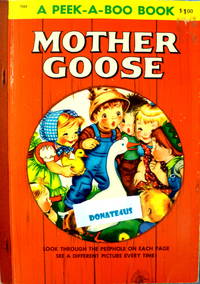
1968005219New York: Wonder Books/Grosset & Dunlop 1968. Vintage New Old Stock Childrens Book - A Peek-A-Boo Book - Mother Goose "Look through the peephole on each page; see a different picture every time." Wonder Books/Grosset & Dunlop; New York; 1968 8vo size staple bound pictorial softcover; red cloth spine covers staples. Unpaginated about 14 pages. From back: "All Peek-a-Boo Books have double pages creased through the center the long way. To play Peek-a-Boo open the book and separate the each right hand double page as you come to it near the center crease at the bottom.the double page will open up.and you will be able to look through the peephole and see all sorts of surprising and funny things!" Complete directions are on back cover. This volume is unused and the pages have not been prepared. Edgewear and some adhesive residue from price sticker. . Soft Cover. Very Good/No Jacket. 8vo - over 7¾" - 9¾" tall. Wonder Books/Grosset & Dunlop Paperback
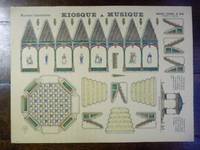
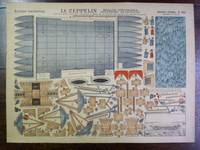
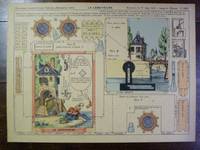
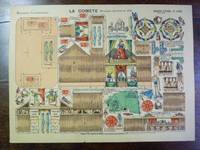
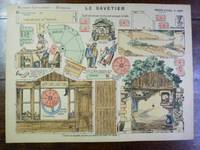
189035342Épinal: Pellerin & Cie 1890. Fine. Pellerin & Cie Épinal s. d. circa 1890 29.50 x 40.50 cm une feuille Image d'Épinal color lithograph medium format printed on heavy paper. Corners very slightly bumped otherwise very fine condition colors very well preserved. These plates are cardboard constructions or models on which a pattern was printed. This pattern must be cut out then assembled to construct various objects or life scenes. The Épinal imagery published several series of cut-out models including the ""Grandes Constructions"" in 39 x 49 cm format the ""Moyennes Constructions"" and the ""Petites Constructions"". From 1880 to 1908 constructions were published featuring architecture costumes boats and various vehicles. During this same period paper theaters or ""théâtre chez soi"" also enjoyed great success. This toy model developed and endured until the Second World War. Formerly sold by peddlers the Images d'Épinal owe their name to Jean-Charles Pellerin who was the first printer to publish this type of image in series and who lived in the town of Épinal Vosges. The subjects are very varied but generally revolve around religion history French Revolution battles military uniforms or drawn from successful novels. The Épinal imagery has its origins in imagery a popular art born in the 15th century intended mainly for the illiterate public of the countryside. Originally the image is engraved on a wooden plate and printing is carried out using a hand press. It is then colored by means of stencils. In the 19th century lead castings were made from the engraved wood: the stereotypes which made it possible to increase production. In 1820 lithography was adopted which induced a radical change in style with finer drawings. In 1900 coloring was still done by stencil thanks to a machine that could color 300 images per hour the Aquatype. Pellerin & Cie unknown
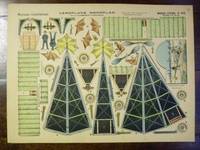
189035345Épinal: Pellerin & Cie 1890. Fine. Pellerin & Cie Épinal s. d. circa 1890 29.50 x 40.50 cm une feuille Image d'Épinal color lithograph medium format printed on heavy paper. Pen cross in upper right corner otherwise very fine condition colors very well preserved. These sheets are cardboard constructions or models on which a pattern was printed. This pattern should be cut out then assembled to construct various objects or life scenes. The Épinal imagery published several series of cut-out models including the ""Grandes Constructions"" in 39 x 49 cm format the ""Moyennes Constructions"" and the ""Petites Constructions"". From 1880 to 1908 constructions were published featuring architecture costumes boats and various vehicles. During this same period paper theaters or ""théâtre chez soi"" also enjoyed great success. This toy model developed and endured until the Second World War. Once sold by peddlers the images d'Épinal owe their name to Jean-Charles Pellerin who was the first printer to publish this type of image in series and who lived in the town of Épinal Vosges. The subjects are very varied but generally revolve around religion history French Revolution battles military uniforms or drawn from successful novels. The Épinal imagery has its origins in imagery a popular art born in the 15th century intended mainly for the illiterate public of the countryside. Originally the image is engraved on a wooden board and printing is done using a hand press. It is then colored using stencils. In the 19th century lead castings are made from the engraved woods: stereotypes which allow production to be increased. In 1820 lithography was adopted which induced a radical change in style with finer drawings. In 1900 coloring was still done with stencils using a machine that could color 300 images per hour the Aquatype. Pellerin & Cie unknown
189035323Épinal: Pellerin & Cie 1890. Fine. Pellerin & Cie Épinal s. d. circa 1890 29.50 x 40.50 cm une feuille Image d'Épinal color lithograph medium format printed on heavy paper. Creases at the upper and lower right corners slight tear in the right margin not touching the print colors very well preserved. These sheets are cardboard constructions or models on which a pattern was printed. This pattern must be cut out and then assembled to construct various objects or life scenes. The Imagerie d'Épinal published several series of cut-out models including the ""Grandes Constructions"" in 39 x 49 cm format the ""Moyennes Constructions"" and the ""Petites Constructions"". From 1880 to 1908 constructions were published featuring architecture costumes boats and various vehicles. During this same period paper theaters or ""théâtre chez soi"" also enjoyed great success. This toy model developed and endured until the Second World War. Once sold by peddlers the images d'Épinal owe their name to Jean-Charles Pellerin who was the first printer to publish this type of image in series and who lived in the town of Épinal Vosges. The subjects are very varied but generally revolve around religion history French Revolution battles military uniforms or drawn from successful novels. The Imagerie d'Épinal has its origins in imagery a popular art born in the 15th century intended primarily for the illiterate rural public. Originally the image is engraved on a wooden board and printing is carried out using a hand press. It is then colored using stencils. In the 19th century lead castings were made from the engraved woods: stereotypes which allowed production to be increased. In 1820 lithography was adopted which brought about a radical change in style with finer drawings. In 1900 coloring was still done by stencil using a machine that could color 300 images per hour the Aquatype. Pellerin & Cie unknown
189035316Épinal: Pellerin & Cie 1890. Fine. Pellerin & Cie Épinal s. d. circa 1890 29.50 x 40.50 cm une feuille Image d'Épinal color lithograph medium format printed on heavy paper. Tear to lower margin not affecting the print colors very well preserved. These plates are cardboard constructions or models on which a pattern was printed. This pattern is to be cut out and then assembled to construct various objects or life scenes. The Épinal imagery published several series of cut-out models including the ""Grandes Constructions"" in 39 x 49 cm format the ""Moyennes Constructions"" and the ""Petites Constructions"". From 1880 to 1908 constructions were published featuring architecture costumes boats and various vehicles. During this same period paper theaters or ""théâtre chez soi"" also enjoyed great success. This toy model developed and lasted until the Second World War. Once sold by peddlers the images d'Épinal owe their name to Jean-Charles Pellerin who was the first printer to publish this type of image in series and who lived in the town of Épinal Vosges. The subjects are very varied but generally revolve around religion history French Revolution battles military uniforms or drawn from successful novels. The imagery of Épinal has its origins in imagery a popular art born in the 15th century intended primarily for the illiterate rural public. Originally the image is engraved on a wooden plate and printing is carried out using a hand press. It is then colored using stencils. In the 19th century lead castings are made from the engraved wood blocks: the stereotypes which make it possible to increase production. In 1820 lithography was adopted which induced a radical change in style with finer drawings. In 1900 coloring was still done with stencils thanks to a machine that could color 300 images per hour the Aquatype. Pellerin & Cie unknown
189035320Épinal: Pellerin & Cie 1890. Fine. Pellerin & Cie Épinal s. d. circa 1890 29.50 x 40.50 cm une feuille Image d'Épinal color lithograph medium format printed on heavy paper. Very fine condition colors very well preserved. These sheets are cardboard constructions or models on which a pattern was printed. This pattern must be cut out then assembled to construct various objects or life scenes. The Épinal imagery published several series of cut-out models including the ""Grandes Constructions"" in 39 x 49 cm format the ""Moyennes Constructions"" and the ""Petites Constructions"". From 1880 to 1908 constructions were published featuring architecture costumes boats and various vehicles. During this same period paper theaters or ""théâtre chez soi"" also enjoyed great success. This type of toy developed and lasted until the Second World War. Once sold by peddlers Images d'Épinal owe their name to Jean-Charles Pellerin who was the first printer to publish this type of image in series and who lived in the town of Épinal Vosges. The subjects are very varied but generally revolve around religion history French Revolution battles military uniforms or drawn from successful novels. Épinal imagery takes its origins in imagery a popular art born in the 15th century intended primarily for the illiterate rural public. Originally the image is engraved on a wooden block and printing is done using a hand press. It is then colored using stencils. In the 19th century lead castings are made from the engraved wood blocks: stereotypes which allow production to be increased. In 1820 lithography is adopted which induces a radical change in style with finer drawings. In 1900 coloring is still done by stencil thanks to a machine that can color 300 images per hour the Aquatype. Pellerin & Cie unknown
189035319Épinal: Pellerin & Cie 1890. Fine. Pellerin & Cie Épinal s. d. circa 1890 29.50 x 40.50 cm une feuille Image d'Épinal color lithograph medium format printed on heavy paper. Very slight tear to upper margin not affecting the print otherwise very fine condition colors very well preserved. These plates are cardboard constructions or models on which a pattern was printed. This pattern must be cut out and then assembled to construct various objects or life scenes. The Imagerie d'Épinal published several series of cut-out models including the ""Grandes Constructions"" in 39 x 49 cm format the ""Moyennes Constructions"" and the ""Petites Constructions"". From 1880 to 1908 constructions were published featuring architecture costumes boats and various vehicles. During this same period paper theaters or ""théâtre chez soi"" also enjoyed great success. This toy model developed and lasted until the Second World War. Once sold by peddlers the Images d'Épinal owe their name to Jean-Charles Pellerin who was the first printer to publish this type of image in series and who lived in the town of Épinal Vosges. The subjects are very varied but generally revolve around religion history French Revolution battles military uniforms or drawn from popular novels. The Imagerie d'Épinal has its origins in imagery a popular art form born in the 15th century primarily intended for the illiterate rural public. Originally the image was engraved on a wooden block and printing was done using a hand press. It was then colored by means of stencils. In the 19th century lead castings were made from the engraved wood blocks: stereotypes which allowed production to be increased. In 1820 lithography was adopted which brought about a radical change in style with finer drawings. In 1900 coloring was still done by stencil using a machine that could color 300 images per hour the Aquatype. Pellerin & Cie unknown
189035299Épinal: Pellerin & Cie 1890. Fine. Pellerin & Cie Épinal s. d. circa 1890 29.50 x 40.50 cm une feuille Épinal print color lithograph medium format printed on heavy paper. Very fine condition colors very well preserved. These sheets are constructions or cardboard models on which a pattern was printed. This pattern must be cut out and then assembled to construct various objects or life scenes. The Épinal imagery published several series of cut-out models including the ""Grandes Constructions"" in 39 x 49 cm format the ""Moyennes Constructions"" and the ""Petites Constructions"". From 1880 to 1908 constructions were published featuring architecture costumes boats and various vehicles. During this same period paper theaters or ""théâtre chez soi"" also enjoyed great success. This toy model developed and lasted until the Second World War. Once sold by peddlers Épinal prints owe their name to Jean-Charles Pellerin who was the first printer to publish this type of image in series and who lived in the town of Épinal Vosges. The subjects are very varied but generally revolve around religion history French Revolution battles military uniforms or drawn from successful novels. Épinal imagery has its origins in popular art imagery born in the 15th century mainly intended for the illiterate rural public. Originally the image is engraved on a wooden plate and printing is done using a hand press. It is then colored using stencils. In the 19th century lead castings were made from the engraved wood blocks: stereotypes which allowed production to be increased. In 1820 lithography was adopted which induced a radical change in style with finer drawings. In 1900 coloring was still done with stencils thanks to a machine that could color 300 images per hour the Aquatype. Pellerin & Cie unknown
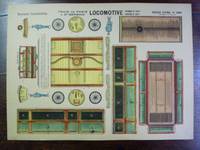
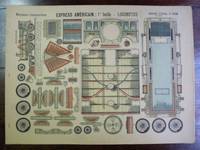
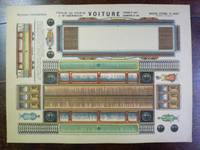
189035325Épinal: Pellerin & Cie 1890. Fine. Pellerin & Cie Épinal s. d. circa 1890 29.50 x 40.50 cm une feuille American Express: 1st sheet - Locomotive; 2nd sheet - Tender and baggage car; 3rd sheet - Wagon. Image d'Épinal color lithograph medium format printed on heavy paper. 3 sheets stapled together. Left corners of the three sheets very slightly bumped colors slightly faded. These sheets are cardboard constructions or models on which a pattern was printed. This pattern must be cut out and then assembled to construct various objects or life scenes. The Imagerie d'Épinal published several series of cut-out models including the ""Grandes Constructions"" in 39 x 49 cm format the ""Moyennes Constructions"" and the ""Petites Constructions"". From 1880 to 1908 constructions were published featuring architecture costumes boats and various vehicles. During this same period paper theaters or ""théâtre chez soi"" also enjoyed great success. This toy model developed and endured until the Second World War. Once sold by peddlers the images d'Épinal owe their name to Jean-Charles Pellerin who was the first printer to publish this type of image in series and who lived in the town of Épinal Vosges. The subjects are very varied but generally revolve around religion history French Revolution battles military uniforms or drawn from successful novels. The Imagerie d'Épinal has its origins in imagery a popular art born in the 15th century intended primarily for the illiterate rural public. Originally the image is engraved on a wooden board and printing is carried out using a hand press. It is then colored using stencils. In the 19th century lead castings were made from the engraved woods: stereotypes which allowed production to be increased. In 1820 lithography was adopted which brought about a radical change in style with finer drawings. In 1900 coloring was still done by stencil using a machine that could color 300 images per hour the Aquatype. Pellerin & Cie unknown
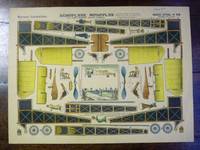
189035344Épinal: Pellerin & Cie 1890. Fine. Pellerin & Cie Épinal s. d. circa 1890 29.50 x 40.50 cm une feuille Image d'Épinal color lithograph medium format printed on heavy paper. Light creases at the upper corners pen inscription in the upper right corner otherwise very fine condition colors very well preserved. These sheets are cardboard constructions or models on which a pattern was printed. This pattern should be cut out then assembled to construct various objects or life scenes. The Épinal imagery published several series of cut-out models including the ""Grandes Constructions"" in 39 x 49 cm format the ""Moyennes Constructions"" and the ""Petites Constructions"". From 1880 to 1908 constructions were published featuring architecture costumes boats and various vehicles. During this same period paper theaters or ""théâtre chez soi"" also enjoyed great success. This toy model developed and endured until the Second World War. Once sold by peddlers the images d'Épinal owe their name to Jean-Charles Pellerin who was the first printer to publish this type of image in series and who lived in the town of Épinal Vosges. The subjects are very varied but generally revolve around religion history French Revolution battles military uniforms or drawn from successful novels. The Épinal imagery has its origins in imagery a popular art born in the 15th century intended mainly for the illiterate public of the countryside. Originally the image is engraved on a wooden board and printing is done using a hand press. It is then colored using stencils. In the 19th century lead castings are made from the engraved woods: stereotypes which allow production to be increased. In 1820 lithography was adopted which induced a radical change in style with finer drawings. In 1900 coloring was still done with stencils using a machine that could color 300 images per hour the Aquatype. Pellerin & Cie unknown
189035317Épinal: Pellerin & Cie 1890. Fine. Pellerin & Cie Épinal s. d. circa 1890 29.50 x 40.50 cm une feuille Image d'Épinal color lithograph medium format printed on heavy paper. Very fine condition colors very well preserved. These plates are cardboard constructions or models on which a pattern was printed. This pattern must be cut out and then assembled to construct various objects or life scenes. The Imagerie d'Épinal published several series of cut-out models including the ""Grandes Constructions"" in 39 x 49 cm format the ""Moyennes Constructions"" and the ""Petites Constructions"". From 1880 to 1908 constructions were published featuring architecture costumes boats and various vehicles. During this same period paper theaters or ""théâtre chez soi"" also enjoyed great success. This toy model developed and lasted until the Second World War. Once sold by peddlers the Images d'Épinal owe their name to Jean-Charles Pellerin who was the first printer to publish this type of image in series and who lived in the town of Épinal Vosges. The subjects are very varied but generally revolve around religion history French Revolution battles military uniforms or drawn from popular novels. The Imagerie d'Épinal has its origins in imagery a popular art form born in the 15th century primarily intended for the illiterate rural public. Originally the image was engraved on a wooden block and printing was done using a hand press. It was then colored by means of stencils. In the 19th century lead castings were made from the engraved wood blocks: stereotypes which allowed production to be increased. In 1820 lithography was adopted which brought about a radical change in style with finer drawings. In 1900 coloring was still done by stencil using a machine that could color 300 images per hour the Aquatype. Pellerin & Cie unknown
183111987Paris: Au bureau du Globe 1831. Fine. Au bureau du Globe Paris 1831 13.50 x 20 cm broché First edition. Minor worming to boards otherwise handsome copy. Rare. Au bureau du Globe hardcover
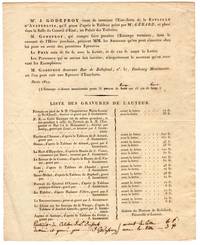
181251114Paris 1812. Broadside approx. 9¾" x 8¾" 13 lines at the top detailing the illustration size price availability etc. beneath which a list of the engravings in double column; 2 small manuscript corrections to the text at the top and two additional engravings listed in manuscript at the bottom. Not found in OCLC. unknown
181251114Paris 1812. Broadside approx. 9¾" x 8¾" 13 lines at the top detailing the illustration size price availability etc. beneath which a list of the engravings in double column; 2 small manuscript corrections to the text at the top and two additional engravings listed in manuscript at the bottom. Not found in OCLC. <br/><br/> unknown books
1861MH294Middle Hill : Middle Hill Press 1861 Book. Very Good. Disbound. 2 pages. On a single sheet measuring approximately 17 x 10cm. A small margin at he left has been folded over where it was once bound into a volume. The purchasers' names include Payne Dibdin and the Marquis of Blandford who spent 687 pounds on the Bedford Missal. Holzenberg 42. [ Middle Hill Press ] unknown
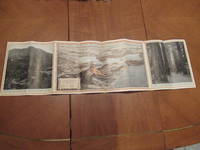
1917057800Mt. Tamalpais & Muir Woods Railway 1917. 1st Edition . No Binding. Very Good. Single Sheet Folded Repeatedly Horizontally To Form 16 Pages With 4 Pp Color Overhead View At Center Of Verso <br/> <br/> Mt. Tamalpais & Muir Woods Railway unknown
184018304Naples Naples: Imp. de l'Observatoire de médecine 1840. Fine. Imp. de l'Observatoire de médecine Naples Naples 1840 10.50 x 18 cm relié First edition detailing the works presented in this museum. Full black cloth binding smooth spine unidentified arms stamped in blind to front cover. Occasional small foxing. Rare. Imp. de l'Observatoire de médecine hardcover
1864004173Philadelphia: King & Baird 1864. Hardcover. Very Good -. Printed for the U.S. Sanitary Commission." 15 3 17-283 1 p. 4 leaves of plates: 1 full-page map of the prison at Andersonville Ga.; 23 cm. Contemporary half calf with marbled paper over boards; the leather spine covered a metal spine Howard M. Hoyt's Indestructible Binding identified by a circular stamp on front fixed endpaper dated 1876. The hinges were strengthened later with dark brown cloth book repair tape. The 4 plates are copies of photographs of Union soldiers after their return from imprisonment at Belle Isle. Howard M. Hoyt's Indestructible Binding was advertised in 1878 and 1879 in school and library journals and in Publishers Weekly and The American Bookseller. Examples of this type of binding are very scarce. In Very Good- Condition: lacking the leather over the metal spine; boards are rubbed; front free endpaper chipped; a few pages soiled; otherwise clean and tight. King & Baird hardcover
19290016711929. 8vo size softcover with interior stapled binding and color illustrated covers; 228 pages with numerous vintage advertisements some with black and white illustrations or photographs. Contents include: Officers Directors and Executive Committee Judges and Ring Stewards Occupants of Arena Boxes Program for each day November 7 8 9 11 12 13. Catalogue of Entries Hackney Horses and Ponies Commercial Vehicle and Draft Horses Trotters and Roadsters Harness Horses Saddle Horses: Three Gaited and Five Gaited Ponies Under Saddle Mounted Police Hunters Jumpers Military Classes We note that one of the owners of a Saddle Horse has the surname of Gallop. There is a multi-page Index of Advertisers. Vintage Advertisements include: Glyco Toilet Soap color Cadillac/LaSalle/Fleetwood Motor Cars color Camel Cigarettes color Brunswick Salon Red Star Line/White Star Line Saks-Fifth Avenue Greenbrier and Cottages Crichton & Co. Ltd Alfred Nelson Plaza Art Galleries Seaton Hackney Farm White Rock Peco Peat Moss Steinway & Sons Hotel Delmonico Fox Chapel Farms Hamburg American Line Michael J. Knoud F.A.O. Swartz Toys Old Gold Cigarettes Wear to covers with a crease on front cover. Some wear and creasing to spine cover with a half inch tear on bottom of spine. Impression marks on covers from stapled binding. Inch tear on top of page 173/174; some curled page corners. Thanks for shopping with us. 100% of your purchase benefits charity and supports literacy and life-long learning. . Soft Cover. Good/No Jacket. 8vo - over 7¾" - 9¾" tall. Private Press. Paperback
19300016721930. 8vo size softcover with interior stapled binding and color illustrated covers; 232 pages with numerous vintage advertisements some with black and white illustrations or photographs. Contents include: Officers Directors and Executive Committee Judges and Ring Stewards Occupants of Arena Boxes Program for each day November 6 7 8 10 11 12. Catalogue of Entries Hackney Horses Hackney Ponies Trotting Horses Heavy Harness Horses Saddle Horses: Three Gaited Saddle Horses: Five Gaited Saddle Ponies Mounted Police Hunters Corinthian Class Jumpers Military Classes Vintage Advertisements many full page include: Stadler & Stadler color B. Altman & Co. Hermes of Paris Hotel and Restaurant Elysee Seaton Hackney Farm Aquascutum Coats Pierce Arrow Whippy Steggall Canada Dry F.A.O. Schwarz Purina Mills Emerson's Bromo-Seltzer for Headache Rollston 4-Passenger Victoria Penciled price on cover; edgewear wear light soil and several creases to covers front hinge fragile on the inside; light creases to bottom tip of last 50 or so pages crushed top tip on first 32 or so pages. Thanks for shopping with us. 100% of your purchase benefits charity and supports literacy and life-long learning. Soft Cover. Good/No Jacket. 8vo - over 7¾" - 9¾" tall. Private Press. Paperback
1969288754Covington Ky.: Privately Printed 1969 Gold/Blue Paper Covers Creased. Organized July 1915 Covington Kentucky Miss Mary Florence Taney Founder. 288 Pgs Rare Copy. 4to - over 9¾ - 12" tall. 1st Edition. Soft cover. Very Good. Privately Printed paperback
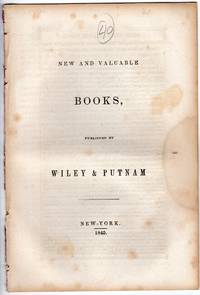
184551078New York: Wiley & Putnam 1845. Small 8vo pp. 20; removed from binding mild dampstain to fore-edge throughout light spotting and foxing. Whether this is a stand-alone publication or not is not known but with such a title page it's likely some of the edition was distributed as is likely gratis. Twenty-one titles listed. Not found in OCLC. [Wiley & Putnam] unknown