(CZECH MUSIC SHEETS)Biblio.com

8 829 résultats
1081930-1960. Popular and indigenous music published from 1946-1960. All in very good condition.8vo. Housed in a contemporary clam shell box. unknown
a53562NY 1910 Shapiro. Music no lyrics. 4to. 70pp. original illustrated wraps. Numewrous photo illustrations on front of composers. Good wraps chipped and soiled a few interior leaves stained in margins. paperback
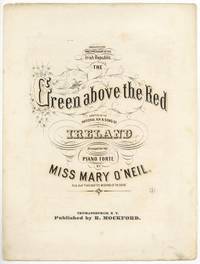
1866586352Trumansburgh NY: R. Mockford 1866. Softcover. Very Good. First edition. Folio. Single bifolium with a single sheet insert making six pages. foxing and offsetting throughout and edgewear still a very good and complete copy. For voice and piano. Plate number 3912 - 3. Although published 72 years before Ireland would elect their first president Douglas Hyde the cover nonetheless states that this song is "dedicated to the first president of the Irish Republic." This is not an uncommon dedication to find on Irish sheet music of the late 19th and early 20th century. Though it should not be read today as a statement of prescience but as it would have been read in 1866 as a statement of hope and resilience in Ireland's fight for independence for the day "they proudly set the Irish Green above the English Red." Unrecorded by OCLC and it appears to be equally scarce in the trade. A rare and early example of this celebrated Irish poem set to music. R. Mockford unknown
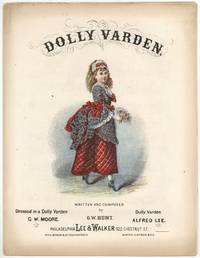
1875584591Philadelphia: Lee & Walker 1875. Softcover. Very Good. First edition. Folio. Two nested bifolia making eight pages. Light foxing and offsetting throughout toning to the exterior and light bumping to the corners still a very good and complete copy. For voice and piano. Plate number 13189 - 4. The cover illustration shows a young woman in a style of dress that was popular at the time known as "Dolly Varden" named after the Charles Dickens character from Barnaby Rudge. The song speaks playfully of the new fashion stating "Have you seen my little girl She doesn't wear a bonnet/She's got a monstrous flip-flop hat with cherry ribbons on it/She dresses in bed furniture just like a flower garden/A blowin' and a growin' and they call it 'Dolly Varden.'" The front cover of this piece features a beautiful example of the style. OCLC locates only two holdings and it appears to be equally scarce in the trade. Lee & Walker unknown
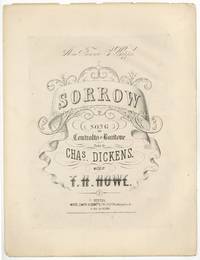
1868594960Boston: White Smith & Compy 1868. Softcover. Very Good. Presumably the first edition. Folio. A single bifolium with a single-sheet-insert making six pages. Edgewear including some nicking to the top and bottom of the fold light offsetting throughout and rubbing to the unprinted back cover affecting the printed verso though the music remains clear and legible. Song for voice contralto or baritone and piano with pedal marks. Plate number 10. The piece credits the words to Charles Dickens but they are actually written by Adelaide Anne Procter who had poems published in Dickens' periodicals Household Words and All the Year Round. The lyrics to this song are from her poem "The Cradle Song of the Poor" which was published in her collection Legends and Lyrics: First Series which had an introduction by Dickens. Procter was a very popular poet in her time and a dedicated philanthropist. Both on the page and off her work focused on poverty and homelessness and in particular the women who were forced to navigate these obstacles. OCLC locates only two holdings of this song and it appears to be equally scarce in the trade. White, Smith & Compy unknown
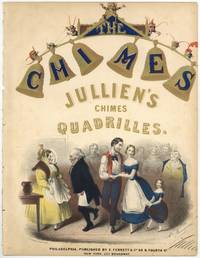
1845595109Philadelphia: E. Ferrett & Co 1845. Softcover. Very Good. Unknown edition. Cover illustration by A. Newsom. Lithograph by P.S. Duval. Folio. 7pp. Wrappers. Notched and worn along the spine from once being bound within an album light foxing and offsetting throughout light bumping to the corners and the rear wrapper is partially detached along the top of the spine still a very good copy. Plate imprint "Jullien's Chime Quadrilles page number." An instrumental piece for piano and chimes broken into five parts: "The Chimes" "Meg and Melinn" "Toby Veck's Dream" "The Wedding" and "The Dance." A note states "The part for the chimes can be played by a flute violin or almost any other instrument." Featuring an absolutely stunning cover illustration with bold rich colors and reflective gold foil in the bells and text. The piece takes its name and inspiration from Dickens' novella The Chimes: A Goblin Story of Some Bells that Rang an Old Year Out and a New Year In which is the second of Dickens' five "Christmas books." OCLC locates only four holdings of this piece and it appears to be equally scarce in the trade. E. Ferrett & Co unknown
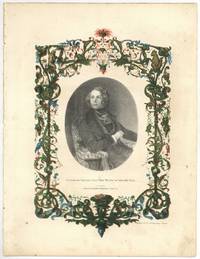
1842595246Boston: Henry Prentiss 1842. Softcover. Good. First edition thus. Lithograph by Thayer & Co. Folio. 6pp. Wrappers. Rear wrapper which serves as pages five and six is detached but present notched and worn along the spine from once being bound within an album light foxing and offsetting throughout a complete and good or better copy. For voice and piano. Plate number 225. Above the music it's stated that the words were "adapted to the favourite Scotch Air 'Gramachree.'" The front cover states "The friend and benefactor of poor 'Oliver' 'Nicholas' and sweet little 'Nelly'" underneath a portrait of Dickens. Another version of this song was published the same year by W.H. Oakes also in Boston. The dinner referenced in the title took place in Boston on February 1st 1842 Dickens gave a speech on international copyright law and other literary figures gave speeches as well including Washington Allston George Bancroft and Nathan Hale Jr. The writers Thomas Gill and William English published a 66 page report of the dinner in which many of the printed speeches were revised by the authors themselves. OCLC locates only six holdings of this Henry Prentiss edition and it appears to be equally scarce in the trade. Henry Prentiss unknown
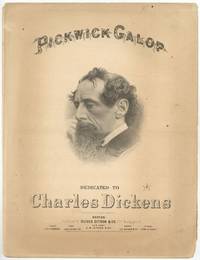
1867595742Boston: Oliver Ditson & Co 1867. Softcover. Good. First edition. Lithograph by John H. Bufford. Folio. Single bifolium with a single sheet insert making six pages. Bifolium neatly separated along the fold but both leaves are present light offsetting to the verso of the front cover and the recto of the insert some very light offsetting to the front cover offsetting to the back cover and toning to the exterior a complete but good only copy. An instrumental piece for piano. Plate imprint "PICKWICK GALOP." OCLC locates only two holdings and it appears to be equally scarce in the trade. Oliver Ditson & Co unknown
1842602107Boston: Henry Prentiss 1842. Softcover. Very Good. Unknown edition. Folio. Single bifolium making four pages. Separating along the bottom of the fold notched and worn along the fold from once being bound within an album light offsetting throughout and light edgewear still very good. An instrumental piece for piano. Plate number 223. Above the music is printed "As performed in the Melo Drama of the Nalade Queen." The front cover states "The friend and benefactor of poor 'Oliver' 'Nicholas' and sweet little 'Nelly'" underneath a portrait of Dickens. This is the same portrait shown on the cover of the 1842 publication of "The Stars Their Early Vigils Keep" which was sung at the complimentary dinner held for Charles Dickens in Boston on February 1st 1842 upon his first visit to the United States; this being the same visit referenced in the title "'Boz' in Boston" Boz of course being Dicken's childhood nickname for his little brother which he adopted as his pen name. OCLC locates only six holdings and it appears to be equally scarce in the trade. Henry Prentiss unknown
1857603204London: Cramer Beale & Chappell 1857. Softcover. Very Good. Presumed first edition. Folio. Wrappers. 6pp. Notched and worn along the spine from once being bound within an album gift inscription on the front wrapper very light offsetting to the wrappers very good. An instrumental piece for piano. Plate number 6311 ½. OCLC locates no physical holdings of this piece and only one digital holding Yale and it appears to be equally scarce in the trade. Cramer, Beale & Chappell unknown
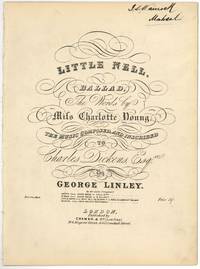
1841605021London: Cramer & Co 1841. Softcover. Very Good. Unknown edition. Folio. Originally two nested bifolia making eight pages. Notches in the spine from once being bound within an album as a result of which the bifolia are attached along the fold owner name on the front cover light soiling to the exterior and the back cover nearly detached still a very good and complete copy. For voice and piano. Plate number 4388. "A song inspired by The Old Curiosity Shop" Podeschi H781. We know of an edition published by Cramer Beal & Co. as well but we are unsure which version came first; OCLC locates eight holdings of the "Cramer Beal & Co." edition but only a single holding of this "Cramer & Co." edition. Cramer & Co unknown
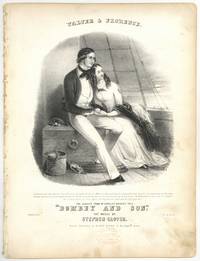
1857526714Boston: Oliver Ditson 1857. Softcover. Good. Unknown edition. Lithograph by J.H. Bufford. Folio. 5pp. Wrappers. Rear wrapper detached along the upper half of the spine notched and worn along the spine from once being bound within an album music shop stamp on the front cover and light foxing and offsetting throughout still a complete and good or better copy. For voice and piano. The front wrapper features a black and white illustration of Walter and Florence from Dickens' Dombey and Son along with an edited passage from the book. OCLC locates only six holdings and it appears to be equally scarce in the trade. Oliver Ditson unknown
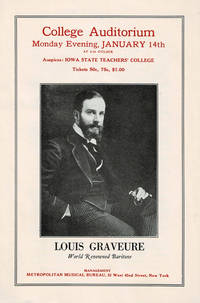
192498954New York: Metropolitan Musical Bureau 1924. 1924. Very good. - Octavo 9 inches high by 6 inches wide. Softcover self-wraps titled in red & black with a black & white portrait of the singer on the front wrap. A 4 page pamphlet including the covers with a brief biography and promotional material printed within and an advertisement for his recordings on the Columbia Graphophone Co. label printed on the rear wrap. Near fine. <p>An original pamphlet for Louis Graveure's January 14th 1924 recital in Cedar Falls Iowa.<p>Known as "The Mystery Man" he was born in London as Wilfrid Douthitt in 1888 but took on the name of Louis Graveure from his mother's maiden name and claimed to be Belgian. Though he first studied architecture at the Royal College of Art in South Kensington Louis Graveure 1888-1965 studied under the Welsh Soprano Clara Novello-Davies. He made his New York debut as a baritone opposite Eleanor Painter in the operetta "The Lilac Domino" under his birth name and subsequently had yet another debut recital in New York as Louis Graveure in 1915. His voice captivated the public and he had a successful career producing over 40 recordings for Columbia. He married the soprano Eleanor Painter in 1916 though they were divorced in 1930. In 1928 Graveure decided to sing tenor roles though critical reactions were mixed. He taught singing at Michigan State University before emigrating to Berlin in 1931. He primarily sang 5 roles those of Faust Rodolfo Pagilacci Don Jose and Lohengrin and and also made 4 films including one with Camilla Horn with whom he had a liaison. Graveure left Berlin for Paris before war broke out and claiming he was a spy the Gestapo searched Horn's home and destroyed her car seeking nonexistent incriminating material. He fled France in 1940 and ended up in England. He returned to the United States with his new wife Patricia and daughter Viola in 1947 but was unable to make much of a comeback. He and his family lived in comfort for the remainder of his years. New York: Metropolitan Musical Bureau, [1924]. paperback
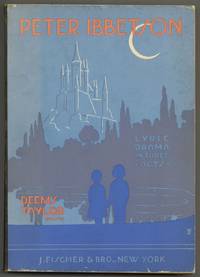
1930584711New York: J. Fischer & Bro 1930. Softcover. Very Good. First edition. Quarto. 8 329pp. Illustrated wrappers. Spine a bit cocked front wrapper separating a bit at the foot of the spine rubbing to the wrappers and edgewear very good. An opera based on the novel of the same name by George du Maurier it premiered February 7 1931 at the Metropolitan Opera starring Lucrezia Bori and Edward Johnson. J. Fischer & Bro unknown
194732994New York February 1947. 1947. Fine. - sc - A powerful 14 inch high by 11 inch wide photograph by Emmerich Gara depicting the great Romanian composer and conductor from the chest up standing at the podium in three-quarter profile. Attired in a dark suit and tie over a striped shirt the disheveled conductor looks up from a score into the dark distance. His furrowed brow belies the softer look of his features as he gently holds a baton between his two hands. Photographed by Cellist Emmerich Gara with his name & address stamped on the verso of the photograph. Signed by Gara in pencil on the verso. Fine. <p>The Romanian composer violinist and conductor and teacher George Enescu 1881-1955 was born in the village of Liveni. Known as Georges Enesco in France Enescu was a child prodigy who created his first composition at the age of five. His works influenced by Romanian folk music include the two Romanian Rhapsodies his opera "Oedipe" five symphonies a symphonic poem "Vox Maris" and much more including chamber music. He made his American debut as a conductor at Carnegie Hall in 1923 and made several recordings as a violinist. He was considered as a possible successor to Toscanini. The town of Liveni where he was born was later renamed "George Enescu" in his honor.<p>Emmerich Gara b.1901 d.1963. Born in Vienna Austria in 1901 Gara established lifelong careers as a portrait photographer and professional cellist. Before the outbreak of the Second World War he and his wife emigrated to the United States where he was hired as cellist for the NBC Orchestra led by Arturo Toscanini. He performed with the orchestra later called The Symphony of the Air until his death.<p>From his seat in the front row of the orchestra Gara was in the unique position to photograph all the great conductors and soloists who appeared with the orchestra during this extraordinary period of musical activity. His subjects were captured in performance rehearsal and in candid moments during recordings and while socializing.<p>Gara's action portraits were used for record covers for the Book of the Month Club and in articles in Time Life and other major magazines around the world. (New York, February), (1947). unknown
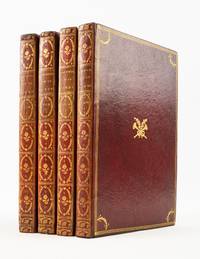
1773ST20891Paris: Chez de Lormel Imprimeur de l'Academie Royale de Musique 1773. FIRST EDITION First Issue with pencilled correction of "affreux Serpent" on p. 54 of Vol. II. 237 x 160 mm. 9 1/4 x 6 1/4". Engraved throughout. Four volumes. <br/> Tasteful contemporary crimson morocco gilt covers with triple fillet border floral garland at corners crossed trumpets with laurel branches at center smooth spines in gilt compartments with floral sprig within an oval catkin wreath two tan morocco labels gilt turn-ins marbled endpapers all edges gilt restorations to head of two spines. ENGRAVED THROUGHOUT: Engraved decorative title page and dedication page in volume I three engraved frontispieces by Le Bouteux and Le Barbier in volumes II-IV one of these a portrait of the dedicatee La Dauphine Marie Antoinette and 100 FULL-PAGE PLATES the 25 in volume I designed and engraved by Moreau le jeune all with tissue guards those in volumes II-IV engraved by Masquelier and Née after designs by Le Barbier Le Bouteux and Saint-Quentin about one-third of the plates with original tissue guards. Without the separately printed portrait of Laborde issued in 1774 and found in some copies. Cohen-de Ricci pp. 534-38; Ray 49 pp. 90-91 p. 76; Lewine pp. 266-68. Spines slightly and evenly sunned a hint of wear at corners but the bindings otherwise beautifully preserved with only the most trivial imperfections; internally with isolated inconsequential foxing or small stains. A VERY FINE CONTEMPORARY SET the lovely bindings scarcely worn the margins extremely ample the contents clean and fresh and THE ENGRAVINGS RICHLY IMPRESSED.<br/> <br/> Dedicated to the crown princess Marie Antoinette this opulent production--offered here in fine contemporary morocco--beautifully displays the music fashion and aristocratic antics of Louis XV's court perfectly encapsulating the French Rococo. According to Cohen-de Ricci "This book—one of the most beautiful of the 18th century—is perhaps along with 'Contes de La Fontaine' the most delightful by virtue of the grace of its subjects and the variety of the costumes depicted therein." It contains some of the most elegant and memorable engravings to be seen in any French work of the period and they transform a book of perhaps more than occasionally vapid songs into a profoundly pleasurable visual experience. The author Benjamin de Laborde or Jean-Benjamin de La Borde 1734-94 was the hunchbacked valet of King Louis XV. In consequence of the monarch's indulgence of his favorite de Laborde's songs were given a presentation described by Ray as being of "the utmost sumptuousness" the entire work having been produced by engraving. The first volume which Cohen-de Ricci Ray and Lemire unanimously proclaim a "masterpiece" is graced by plates that were both designed and cut by Jean-Michel Moreau called Moreau le jeune 1741-1814. Ray says that the work done by Moreau le jeune during the 1760s "showed him to be the equal of the established rococo masters Boucher Eisen and Gravelot" and that in his work during the 1770s "he carried all before him." So Moreau was in his prime then when he executed these charming scenes often of courtship set in pastures pleasure parks and elegant interiors; they represent the culmination of the Rococo style delicate and lush without being cloying. Because of a quarrel between the artist and the author the final three volumes were illustrated by Le Bouteux and by Jean-Jacques-François Le Barbier 1738-1826. Le Barbier was one of the first great French neoclassical illustrators and Ray declares the engravings here his "most sustained and accomplished series of illustrations apart from that for Gessner's 'Oeuvres'" and laments that the present work "has not received the attention it deserves." Le Barbier's compositions are characterized by charm grace and elaborate and convincing detail. This first printing presents the engravings at the height of their richness and power which has been undimmed by the intervening centuries. With any copy of this work the engravings will always take center stage but here the tasteful contemporary red morocco bindings deserve a prolonged bow: they are perfectly elegant and elegantly perfect. Chez de Lormel, Imprimeur de l'Academie Royale de Musique unknown
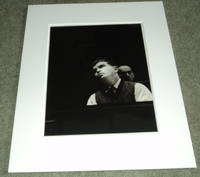
195832984New York January 1958. 1958. Fine. - A powerful 14 inch high by 11 inch wide photograph by Emmerich Gara depicting the legendary pianist attired in a dark vest over a white shirt and tie. Photographed from the chest up against a dark background from the dark piano's lid which frames him at the front. As he plays Gilel appears to be looking up with soulful intensity. Another musician can be glimpsed in the background looking from over Gilel's left shoulder. Photographed by Cellist Emmerich Gara with his name & address stamped on the verso. Signed by Gara in pencil on the verso. Fine. <p>In January of 1958 Gilels performed a cycle of the Beethoven piano concertos at Carnegie Hall. Alfred Wallenstein conducted the Symphony of the Air.<p>Emmerich Gara b.1901 d.1963. Born in Vienna Austria in 1901 Gara established lifelong careers as a portrait photographer and professional cellist. Before the outbreak of the Second World War he and his wife emigrated to the United States where he was hired as cellist for the NBC Orchestra led by Arturo Toscanini. He performed with the orchestra later called The Symphony of the Air until his death.<p>From his seat in the front row of the orchestra Gara was in the unique position to photograph all the great conductors and soloists who appeared with the orchestra during this extraordinary period of musical activity. His subjects were captured in performance rehearsal and in candid moments during recordings and while socializing.<p>Gara's action portraits were used for record covers for the Book of the Month Club and in articles in Time Life and other major magazines around the world. (New York, January), (1958). unknown
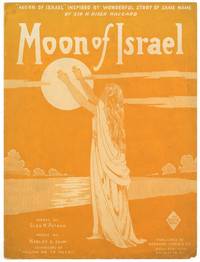
1919583171Rochester NY: Bernard Scheib & Co 1919. Softcover. Very Good. Presumably the first edition. Quarto. Single bifolium making four pages. Owner initials on the front cover soiling and rubbing to the exterior and some edgewear including a small tear along the fold still a very good and complete copy. For voice and piano. Plate imprint "M. Of I. 2." A song inspired by the novel of the same name by Sir H. Rider Haggard. The novel is a retelling of Exodus while the song reads more like a love poem "In Egypt or along the Nile/No maiden has your pretty winning smile/Deep in my heart I love you/Moon of Israel." OCLC locates only a single holding and it appears to be equally uncommon in the trade. Bernard, Scheib & Co unknown
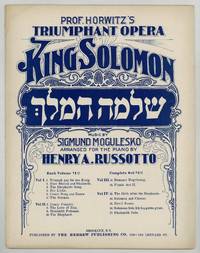
1900619797New York: The Hebrew Publishing Co 1900. Softcover. Very Good. Sheet music. Folio. Five nested bifolia making 20 pages. Minor edgewear including some nicking pages age toned and exterior rubbed still a complete and very good copy. Contains violin arrangements for 17 pieces no lyrics. The Hebrew Publishing Co unknown
1889596042London: E. Ascherberg & Co 1889. Softcover. Very Good. Unknown edition. Folio. Three nested bifolia making 12 pages. Outer bifolium separated along the fold but both leaves are present middle bifolium with some separation at the top and bottom of the fold light edgewear some bumping to the corners and a name stamp on the front cover a complete and very good copy with the cover illustration bold and bright. An instrumental piece for piano. Plate imprint "E.A. & Co. 420." The music in this piece is from the production Ruy Blas and The Blasé Roué which was based off of Victor Hugo's play Ruy Blas. The musical opened in Birmingham and London in 1889 and was written by A.C. Toor and H.F. Clarke with music by Meyer Lutz. This piece has notes that correspond to scenes in the musical such as "Ladies Chorus 'Who ordered the sweeps'" and "Chorus 'Here's a jolly lark.'" OCLC locates only a single holding of this piece and it appears to be equally scarce in the trade. E. Ascherberg & Co unknown
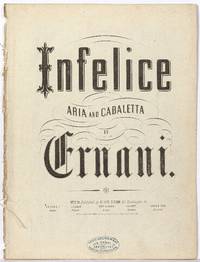
1855620621Boston: Oliver Ditson 1855. Softcover. Very Good. Sheet music. Folio. Two nested bifolia with a single-sheet-insert making ten pages. Notched and worn along the fold from once being bound within an album as a result the bifolia and insert remain bound together with page numbers stamped in the top right corners light offsetting and light soiling throughout and music shop stamp on the front cover still a complete and very good copy. For voice and piano. Plate number 7807. OCLC locates only a single holding of this 1855 edition. From the operetta Ernani based on the 1830 play by Victor Hugo Hernani. Oliver Ditson unknown
a892231920 - 1939. first edition. 62 different songs. All 4to. wraps. All have bright colorful covers designed by Holley Im-Ho Starmer Barbelle Sydney Leff etc. About half have photo illustrations on cover of singer or performer. About one quarter neatly signed by previous owner on front. All piano scores most with Ukelele arrangement included and lyrics. All in VG condition with no splits no tears but all have some minor wear. All text clean. Includes: Let's Sail to Dreamland; Casablanca with photo illustration of Bogart and other stars; All of Me; Mary Ann; Mary Lou Here Comes Heaven Again; Linda; Was that the Human Thing to do ; I'm All Dressed up with a Broken Heart; and so on. Great Collection! Pictures available on request. . paperback
1836041575New York: The New York Mirror Co 1836 1837 1836. 1st Edition . Hardcover. Very Good. Full Page Plates. 52 Issues Complete In Publisher's Binding Marbled Boards With Leather Spine Gilt. Full Page Plates And Musical Melodies In Some Issueswear Paper And Leather Worn At Edges Of Boards But Binding Solid Contents Clean Except For Light Foxing At Edges Of The Full Page Plates. P. 119/120 Has Upper Corner Torn Away Removing About 1/2 Of Text. Long Closed Tear Pp 303/304. Pp 215/216 Excised.Includes The First Appearance In America Of An Up-And-Coming Young British Writer Charles Dickens Writing As " Boz" Or As "Excerpts From Dickens": "The Fashionable Dancing Academy" P. 122; "Miss Evans And The Eagle" P. 134; "The Bloomsbury Christening" Pp. 146-47; "The Steam Excursion" Pp. 162-63; "Meditations In Monmouth Street" Pp. 177-178; "The Great Winglebury Duel" Pp. 186-87; "A Christmas Dinner" Pp. 202-203; "Excerpt From 'Pickwick;" P. 294; "Minns And His Cousin" Pp. 305-306; "Our Next Door Neighbors" Pp. 314-315; "The Parlour Orator" Pp. 322-323. P. 328 Has Short Review Of Mary Shelley's "Falkner" "By The Author Of Frankenstein. This Work Exhibits A Greater Range Of Her Powers Than The Book By Which Mrs. Shelley Is Best Known But It Must Not Be Denied That It Lacks All That Strange And Terrible Interest Which Give Its Particular Character To Frankenstein. <br/> <br/> The New York Mirror Co 1836 1837 hardcover
192476385Berkeley: V.p. 1924-1932. Seven Indian Songs from the Yosemite Valley. Berkeley: National Society of Colonial Dames; 1924. First edition. Folio 9 x 12 inches. 18 2 pp. Publisher's printed tan wrappers.Five Songs from the Tundras: An Eskimo Song Cycle. Berkeley: D. N. Lehmer 1932. Folio 9 x 12 inches. 910 2 pp. Publisher's printed white wrappers.Indian Songs from the Mesas. Berkeley: D. N. Lehmer 1932. Folio 9 x 12 inches. 1314 2 pp. Publisher's printed white wrappers.Derrick Norman Lehman was a multifaceted man of great learning. Lehmer was awarded his Ph.D. in mathematics in 1900 from the University of Chicago for his thesis Asymptotic Evaluation of Certain Totient-Sums. He went on to publish a number of important papers in the field of advanced mathematics the most famous of which was his "Factor Stencils" that was published in 1929. But oddly and like many mathematicians he had a real penchant for writing music. Over a period of years he published many collections of songs which he composed including Seven Indian Songs from the Yosemite Valley 1924 Down the stream and other Indian songs 1927 Indian camp-fire songs 1930 Indian songs from the Northland 1931 Fingers of the sun and other Indian songs from the Sierra slopes 1931 Songs from the Mesas 1932 Songs from the Tundras 1932 The Ballad of San Francisco Bay 1937 and Five Little songs 1937. These are not transciptions of actual songs but Lehmer's interpretations. V.p. unknown
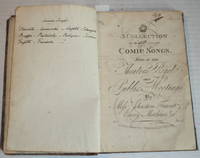
181234438London: Printed for C. Wheatstone circa 1812. 1812. Fair. - Octavo 9-1/4 inches high by 6-1/4 inches wide. Bound in marbled boards backed with a brown calf spine with a leather title label and gilt rules on the spine. The covers are heavily rubbed with substantial wear to the corners. The leather is splitting at the top and bottom of the front joint and the gilt title has rubbed away. Title pages 1-40 1 title pages 41-80 1 title and pages 1-36. The second book is lacking pages 55-58 "The Bottle". Illustrated with 3 engraved title pages and engraved music with lyrics. The front hinge is cracked. An early owners name is penned at the top of the front pastedown with another owner's name penned at the top of each title page. Remnants of a red wax seal adhere to the front endpaper. Early annotations are penned in ink on the verso of the front endpaper and lyrics are penciled on the rear blank. Tears and damage to the first title page show evidence of early repair with paper & paste. An annotation on the second title page has been crudely crossed out with ink and there is a long tear to the bottom inner edge of the third title. There is some occasional soiling throughout with occasional short tears to the edges which do not affect the contents. <p>Three books in one volume as issued each with its own title page. The pagination is continuous through books one and two.<p>The work includes 59 of 60 songs with engraved music & lyrics lacking the one entitled "The Bottle".<p>Included among the songs are "A Tight Irish Boy" "Kittle of Coleraine" "Murphy Delany" "Sprig of Shillelah" "The Bold Dragoon" "The Corsican Fairy" "Fiddle dum dee" "Love sick Frog" "Lundun is the Devil" etc.<p>RARE. WorldCat locates only the British Library copy. London: Printed for C. Wheatstone, circa [1812]. hardcover