17 332 résultats
159860123Wandesburg (i.e. Wandsbeck, for the author by Philip Ohrs), 1598. Small folio. In the original blue silk binding with richly gilt ornamentation to boards. Professionally recased in the 1970'es with 90% of the original silk boards preserved over new blue silk. Green silk ties. A small, neat restoration to the border of the title-page, barely noticeable. A4 and H2 restored and at margins with newer paper margins in perceftly matching paper. The restoration touches the outer borders, most significantly on H2, where the inner border is almost covered by the new paper. The lower blank border of A4 cropped. Otherwise in splendid condition. 42 ff. With 22 magnificent full-page illustrations, of which 4 are engraved and the rest are woodcut. Title printed in red and black and all pages, including the title-page, printed within woodcut ornamental border. Large woodcut device to title-page, with spere and compass, and allegorical woodcut to colophon. Title-page (which is printed in red and black) is uncoloured, but all other leaves are in magnificent contemporary handcolouring, and many of the illutstrations are illuminated in gold. All woodcut borders couloured in green and greeninsh blue, and large initials, head-and tail-pieces and devise on colophon are coloured in various colours, as are all illustrations.The word ""INGENIOSE"" of the imperfectly printed headline on G3 supplied on manuscript (as in most known copies), presumably in Brahe's own hand.
LCS-991L’édition originale d’un ouvrage fondamental dans l’histoire des mathématiques, l’un des textes fondateurs de la théorie des probabilités par « le Newton français ». Paris, Mme Ve Courcier, 1812 [-1820].In-4 de (3) ff., 464 pp., (1) f. d’errata, 34 pp., 50 pp., 36 pp. Des rousseurs. Relié en demi-maroquin aubergine à grain long, à coins, dos lisse orné de filets dorés. Coins et mors frottés. Reliure de l’époque fatiguée. 254 x 203 mm.
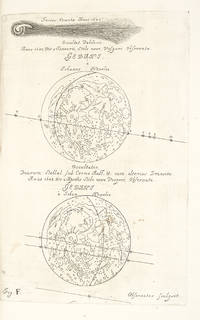
16853340Danzig:: Sumptibus auctoris typis D.F. Rhetii 1685. SOLE EDITION. Folio:. 34.8 x 22.5 cm. 6 lvs. 24 196 pp. Collation: 6 4 4 4 A-Z4 AA6. With engraved title page vignette and 7 1 double-page engraved plates. Bound in 18th c. half calf and marbled boards with very slight wear. Spine with citron morocco label gilt. A nice copy with a few early marginal paper repairs no loss. The final two leaves of the table with repaired tears the second of these with a small natural paper flaw costing a few letters. Complete with the seven plates engraved by Hevelius himself. "Annus Climactericus" was the last of Hevelius' works published in the author's lifetime. The book comprises observations of the planets sun moon and fixed stars many of which were made alongside the English astronomer Edmond Halley. The observations were made from 8 January until 25 September 1679 subsequent to the publication of the second volume of Hevelius' "Machina Coelestis" almost the entire press run of which was lost in the fire that destroyed Hevelius' observatory on 26 September 1679. Hevelius also included new observations of the binary star Omicron Ceti which Hevelius had been observing for 25 years and which he had named "Mira" and grappled with the problem of its changing size and color. In addition the book includes Hevelius' observations of the Great Comet of 1680 illustrated by a magnificent double-page plate engraved by Hevelius the total lunar eclipse of February 1682 the comet of 1682 the solar eclipse of July 1684 each also accompanied by a plate "Observator Sculpsit." observations of several Great Conjunctions etc.There are also numerous letters to and from members of the Royal Society of England: Henry Oldenburg John Wallis John Flamsteed Nehemiah Grew and Halley as well as several European astronomers among them Ismaël Boulliau. The letters deal primarily with Hevelius' feud with Robert Hooke over the merits of the use of telescopic sights for celestial observation vide infra.The "Climactic Year" to which the title of the book refers is 1679 the year in which Hevelius published his "Machinae Coelestis pars Posterior" which comprised 49 years worth of Hevelius' celestial observations; and the year in which his observatory burned to the ground. In the introduction Hevelius gives his own account of the fire that consumed not only the observatory building itself but also Hevelius' instruments "tam astronomicis quam opticis" his library his printing press and print making workshop and the irreplaceable stock of his self-published works. He also describes the psychological and emotional toll that the fire took on him and thanks God that at last his spirit "in cineribus hactenus fere supultum" was revived by the arrival of the Great Comet of 1680 and that he was able to make new observations.Hevelius Hooke and Halley: The Controversy over Open-Sight Instruments vs. Telescopic ObservationThe "Annus Climactericus" is of great importance in the history of science marking as it does the climax of a contentious debate between Hevelius who argued that his "open-sighted" instruments employing fore- and near-sights but no lenses or cross-hairs were more accurate than those fitted with telescopic sights micrometers with telescopic lenses and cross-hairs and Robert Hooke who argued against that position.Hooke and Hevelius had been arguing politely over the relative merits of both kinds of instruments since the 1660s but matters came to a head in 1673 with the publication of Hevelius' "Machinae Coelestis Pars Prior" in which Hevelius forcefully enumerated the limitations of telescopic sights and Hooke's critique of the book in which he wrote that readings taken with Hevelius' instruments could not be more accurate than ½ minute of arc. Moreover he mocked Hevelius' instruments which Hooke asserted were no better than the antiquated ones used by Tycho almost a century earlier his observations and methods. Moreover he asserted that Hevelius was not only providing the scientific community with incorrect data but was impeding scientific progress itself.Hevelius responded with a letter to Henry Oldenburg in which he asserted that his observations were in fact accurate to within 5 seconds of arc that he had never seen data that proved Hooke's assertions and that he resented Hooke's ad hominem attacks. Inevitably the astronomer John Flamsteed was drawn into the controversy and though he had great respect for Hevelius and voiced his disapproval of Hooke's attacks felt compelled to note some of the errors in Hevelius' observations. Hevelius responded and the two men carried on a correspondence in which they argued over the data and during which Hevelius leveled charges of jealousy against Flamsteed and voiced his conviction that Flamsteed and Hooke were now conspiring against him. Fortunately the rift was eventually healed. Part of the correspondence is included in the "Annus Climactericus".1679: A Comparative Test:The arrival at Danzig of Edmond Halley who brought with him his portable 2 –foot quadrant fitted with telescopic sights presented an opportunity to compare results obtained with both types of instruments. The two men made observations side-by-side from 26 May to 18 July 1679 using Halley's instrument and Hevelius' own quadrant "with which he made regular observations of the Sun the large sextant for angular distances between stars planets and the limbs of the Moon and his 12-foot telescope for occultations." Hevelius' wife Elizabeth Hevelius' personal printer and two other observers also participated.Before Halley left Danzig he wrote at Hevelius' request what amounted to a testimonial to the accuracy of Hevelius' open-sighted instruments. Halley wrote that he could testify "to the certainty of the instruments against all who would cast doubt on Hevelius' observations. He had seen with his own eyes that not just occasional observations but many by different observers with the large sextant agreed incredibly well together and any discrepancies were very small which he greatly admired."Cook p. 100In the introduction to the "Annus Climactericus" Hevelius excoriated Hooke and boasted that his calculations demolished Hooke's assertions of the inferiority of Hevelius' methods. The book was reviewed in the Philosophical Transactions of September-October 1685 by Hooke's antagonist John Wallis who censured Hooke for his behavior toward Hevelius and took pains to rehearse each of Hevelius' criticism of Hooke and to summarize the 27 letters of support that Hevelius printed in the "Annus". Hooke responded to Hevelius in February 1686 in an effort to vindicate himself and Hevelius in turn wrote that he would publish his long-awaited star catalog "Uranographia" to furnish proof of the superiority of his methods but Hevelius' death the following year put an end to the dispute.Postscript: Hevelius and HalleyHevelius printed Halley's positive assessment of the Danzig astronomer's instruments and calculations in the "Annus Climactericus" p. 101-102 and thereby drew Halley into the controversy with Hooke. Moreover Hevelius misrepresented the reason for Halley's visit stating that he had invited Halley to Danzig the visit was Halley's own idea that he had asked him to bring the telescopic quadrant which Halley had actually brought with him to make observations of the southern constellations on St. Helena and that Halley came to Danzig as an official representative of the Royal Society of which Halley was not yet a member.This all irritated Halley who in order to extricate himself from the Hevelius-Hooke controversy downplayed his original estimation of the accuracy of Hevelius' calculations. Halley also realized that while attesting to the accuracy of Hevelius' instruments he seemed to side with Hevelius against Hooke whose belief in the superiority of telescopic sights was in fact Halley's own.While he never attacked Hevelius he put it forth that his earlier enthusiasm had been in part motivated by a desire to placate a "peevish old man." In the end there was a poetic resolution to the tension between the two men: When Elizabeth Hevelius had her husband's star catalogue printed in 1690 three years after Hevelius' death She included Halley's own catalogue of the stars of the southern hemisphere which was based on Halley's observations made on St. Helena with the 2-ft quadrant just before his visit to Hevelius in 1679. VD17 39:125045B; DSB 6 363; Honeyman 1675. For a thorough discussion of the Hevelius-Hooke controversy see Saridakis "Converging Elements in the Development of Late Seventeenth-Century Disciplinary Astronomy: Instrumentation Education and the Hevelius-Hooke Controversy" p. 129 ff.; For an assessment of the relative accuracy of Halley's and Hevelius' computations at Danzig see Cook "Edmond Halley: Charting the Heavens and the Seas" p. 93 ff.; For Hevelius' work on the binary star Mira Ceti see Hatch "Hevelius- History and Identity" in "Change and Continuity in Early Modern Cosmology" p 158 ff.; For D. Capellus' contemporary account of the fire and a detailed inventory of Hevelius' losses see MacPike "Hevelius Flamsteed Halley" Appendix I. London 1937 Sumptibus auctoris, typis D.F. Rhetii, books
LCS-18343Un grand livre de science au XVIe siècle. A Paris, Chez Martin le Ieune, à l'enfeigne du Serpent, deuant le college de Cambray, 1580. In-8 de (8) ff., 361 pp., (23) pp. de table. Marge ext. du f. de titre restaurée sans atteinte au texte. Plein maroquin rouge janséniste, dos à nerfs, double filet or sur les coupes, tranches dorées. Reliure signée de Trautz-Bauzonnet. 156 x 106 mm.
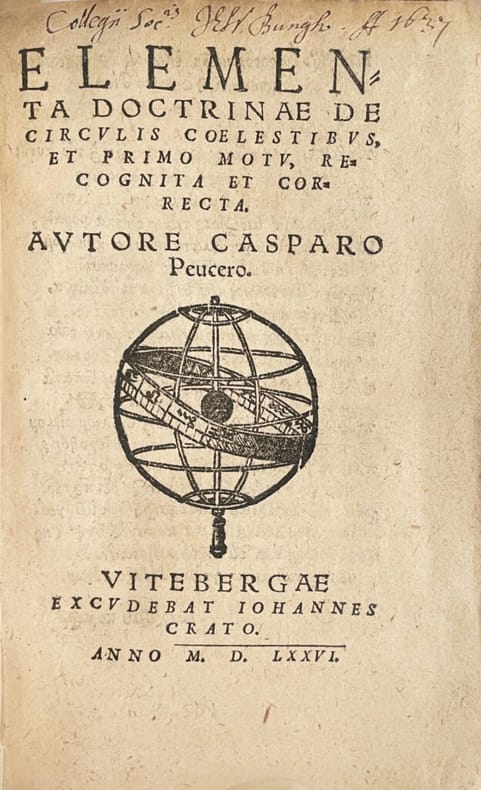
LCS-17871Précieuse et rarissime édition originale de « l’Epitome Astronomiae », l’œuvre majeure du maître de Johannes Kepler (1571-1630), l’astronome Michael Maestlin (1550-1631). Heidelberg, Jacobus Milius, 1582. (17) ff., (1) f.bl., 495 pp., (1) p. et 6 planches dépliantes. [Précédé de :] I - Peucer, Caspar. Elementa doctrinae de Circulis coelestibus et primo motu, recognita et correcta. Wittenb., Joh. Crato, 1576. (8) ff., 304 pp. (saut dans la pagination sans manque), 8 planches dépliantes. Soit deux ouvrages d’astronomie reliés en 1 volume in-8, plein vélin ivoire à recouvrement, traces de liens, dos lisse peint à l’époque avec auteur, titre et marques de bibliothèque calligraphiés à l’encre noire, tranches jaspées. Reliure de l’époque. 155 x 98 mm.
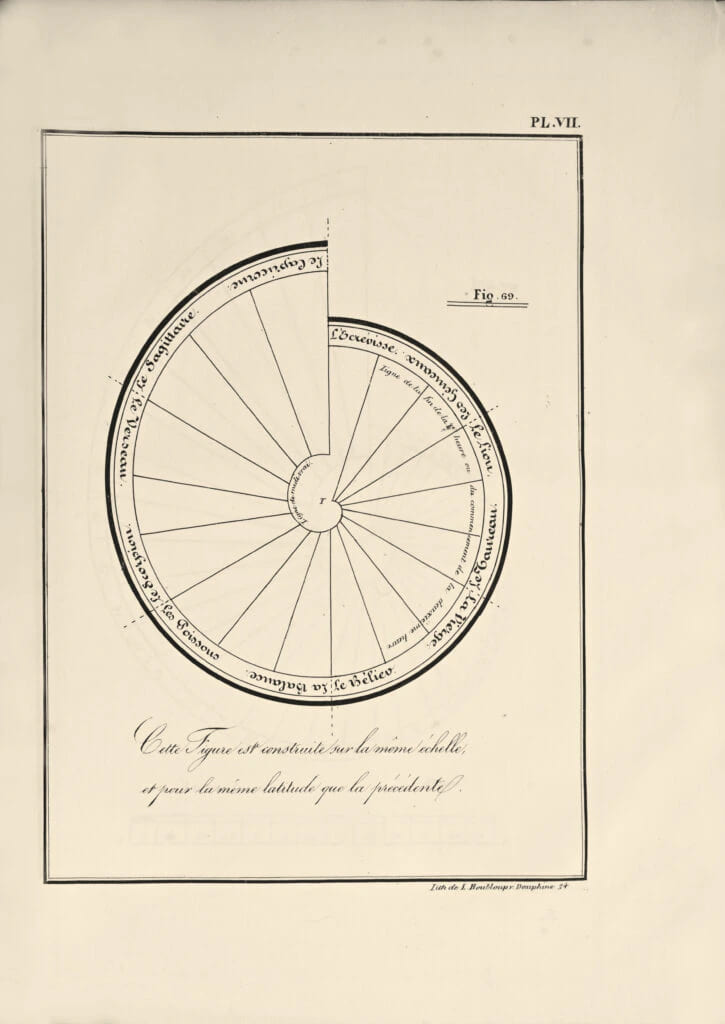
LCS-A70Notre exemplaire est somptueux, à l’état neuf, en superbe reliure de l’époque. Paris, Imprimerie Royale, 1834-35. 2 tomes en 1 volume in-4 de (4) ff., 15 pp. Introduction, [pp. 16-19]: Observations, Table, pp. 21-55: texte arabe en regard du texte français, pp. 57-61: préface, pp. 62-368 Première partie, (4) ff., pp. 369 à 630, Traité tome deuxième, 37 planches numérotées 1 à 38 (la planche n° 25 n'existe dans aucun exemplaire). Complet. Demi-chagrin rouge, dos à nerfs richement orné. Reliure de l’époque. 264 x 210 mm.
Venice, Erhard Ratdolt, 1482 (on Colophon). 4to. 31 line to a page. 18th century full calf boards, expertly recased around 1900, with lovely gilt spine. Fist leaf with a small expertly repaired hole to the top, affecting the name of the author in the title and two words on the verso (name of the author presumably attempted removed on purpose). A small, barely noticeable restoration to the blank upper, inner margin of the first leaf. Apart from that an excellent copy with only light scattered brownspotting. A couple of contemporary corrections in the text. Title printed in red. Large woodcut diagrams to first and last leaf. Lovely woodcut initials and tables in the text. Good margins. 32 ff.
162254159Amsterdam, 1622. 4to. 18th century full calf with double gilt line-borders to boards and five raised bands to richly gilt spine. Neatly rebacked with 90% of the old spine preserved. Corners very neatly restored. Old owner's inscription (Madrolle) to inside of front board, dated 1840, a small Jesuit stamp to front free end-paper and verso of title-page, and a stamp to blank outer margin of title-page (École Sainte Geneviève). Neat note about the author, in French (""one of the greatest men of his century and one of the founders of astronomy""...), to title-page by previous owner Madrolle. All leaves ruled around the text. A very nice copy with some even browning of some leaves and occasional very light dampstaining or brownspotting. F.*3 with a very neatly closed tear (16), 159, (1)"" 342 + (8), 44 pp. Woodcut title-vignette, woodcut initials, and numerous woodcut diagrams and illustrations in the text as well as many tables.
Amsterdam, 1622. 4to. 18th century full calf with double gilt line-borders to boards and five raised bands to richly gilt spine. Neatly rebacked with 90% of the old spine preserved. Corners very neatly restored. Old owner's inscription (Madrolle) to inside of front board, dated 1840, a small Jesuit stamp to front free end-paper and verso of title-page, and a stamp to blank outer margin of title-page (École Sainte Geneviève). Neat note about the author, in French (""one of the greatest men of his century and one of the founders of astronomy""...), to title-page by previous owner Madrolle. All leaves ruled around the text. A very nice copy with some even browning of some leaves and occasional very light dampstaining or brownspotting. F.*3 with a very neatly closed tear (16), 159, (1)" " 342 + (8), 44 pp. Woodcut title-vignette, woodcut initials, and numerous woodcut diagrams and illustrations in the text as well as many tables.
Norimbergae [Nürnberg], (Apud Ioannem Petreium), 1535. 4to. Bound in a beautiful contemporary full blindstamped vellum binding over wooden boards. Boards with blindstamped borders with portraits of Marcus, Johannes, Mattheus, Lucas, inside which large square blindstamped centre-piece with floriated decorations and small portriats. Three raised bands to back. Brass clasps to boards partially preserved. A bit of overall wear and general use. Overall a very nice and tight copy. Internally very nice and clean with only a bit of occasional minor brownspotting and soiling. Two leaves with a spot to outer margin (looks like remain of wax or lacquer), far from affecting text. Last four leaves of Greek text with dampstaining. First leaf of Latin text with coloured initial and a couple of red and green underlinings. Woodcut initials. First ab. 10 leaves of text with neat contemporary annotations in Latin and Greek. (6),59, (4) ff. + 84, (24) ff. (The four leaves in between the Greek and the Latin text being the title page: ""Librorum de Iudiciis Astrologicis quatuor, duo priores conuersi in linguam Latinam à Ioachimo Camerario Pabergense. Annotatiunculae in eosdem. Aliquot loci translati de tertio & quarto libro Ptolemaei, per eundem Camerarium."", two leaves of preface/dedication, dated 1535, one blank).
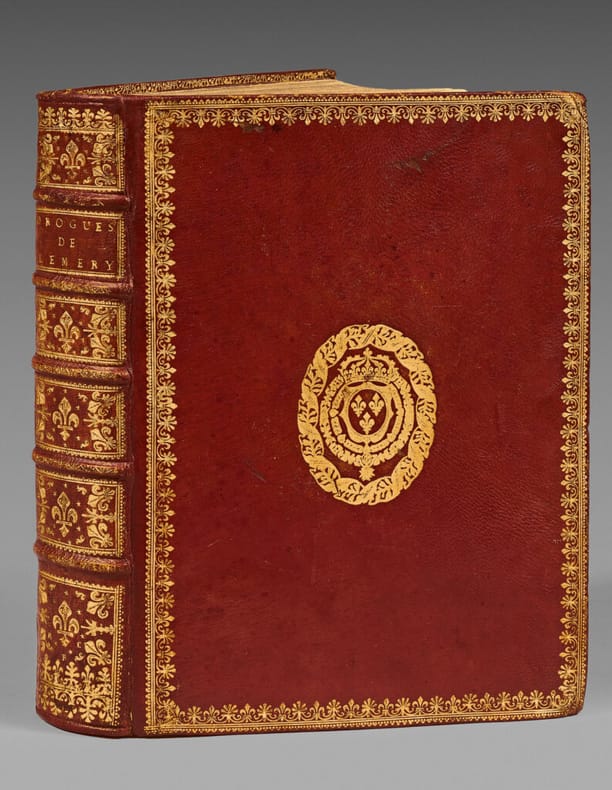
LCS-18157L’exemplaire du roi Louis XIV relié en maroquin à ses armes et pièces d’armes. Paris, Laurent d’Houry, 1698. In-4 de (8) ff., 838 pp., (31) pp. Maroquin rouge, guirlande de fleurs de lys autour des plats, armes au centre, dos à nerfs orné de grosses fleurs de lys dorées, lettres RBC en pied, roulette intérieure et tranches dorées. Reliure de l'époque. 254 x 185 mm.
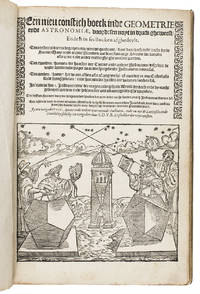
1608ABC_47602Colophon: Rees 1608. Folio 30 x 19.5 cm. Abraham Wijlicx Contemporary vellum sewn on four supports laced through the joints. With a half-page woodcut illustration and some decorations built up from typographic ornaments on the title page 74 woodcuts of various sizes in text many near full- and half-page with some woodcut decorated initials various series a headpiece built up from typographic ornaments and an ornamental woodcut tailpiece. 111 1 pp. A very rare early seventeenth-century Dutch book on astronomy compiling the knowledge of the German astronomer mathematician and cartographer Peter Apian 1495-1552. A great work on cosmography astronomy perspective and many related subjects. The book is subdivided into six parts highlighting the scales and course of planets the principles of the zodiac signs and their correct identification the calculation of heights and distances as well as the instruments used for calculation and measurement. All of this rendered in readable explanations and numerous clarifying woodcut illustrations. The book showcases marvelous woodcut illustrations of volvelles which are rotating parts of a paper construction known as a wheel chart used to illustrate the position and movement of celestial bodies. Volvelles are recognized as early versions of paper analogue computers and have been utilised in various fields for organization and calculation. The origins of volvelles can be traced back to astronomy books as well as certain Arabic treatises on humoral medicine and the Persian astronomer Abu Rayhan Biruni circa 1000 who played a significant role in their development. Throughout the book the author compiled images taken from Apians influential works. It is unclear who compiled this work as the title page states only the initials S.D.V.B. The work later found its way into the German language in an Ingolstadt edition from 1533 titles Instrument buch here clearly putting the emphasis on the tools rather than the calculations and practical astronomy.With the bookplate of Buijnsters-Smets on the front paste-down. The base of the spine is slightly damaged the boards are slightly dust-soiled internally very slightly browned and foxed throughout. Light damage to spine and book block slighty detached at bottom some browning and foxing. The first and last few leaves are slightly water stained. Otherwise in good condition.l Bierens de Haan 94; Hoogendoorn BSo1; Houzeau/ Lancaster 2909; STCN 86331306X 7 copies; USTC 1035104 6 copies; Van Ortroy Apian 114; WorldCat 65713062 10 copies. ABE CAT Astronomy & Cosmography hardcover
In-8°; 1) cc. (104) e 2 tavole ripiegate; nel testo legni e tabelle. 2) pp. 269, (1) 1 cb., pp. (16), 229, (1), il testo è in latino e in greco. Legatura in piena pergamena con titolo in oro al dorso e tagli in azzurro. 1) Edizione originale, rara, della prima opera di Johannes Garcaeus/Gartze (1530-75) che testimonia in modo chiaro dell’influenza delle teorie copernicane nella letteratura del XVI secolo. Siamo nel pieno Cinquecento, quando il termine astrologia indica genericamente lo studio delle stelle. Garcaeus nella definizione dei cieli per gli oroscopi insiste particolarmente sulle basi matematiche e astronomiche per i calcoli delle posizioni dei pianeti. Nel testo vengono diffusamente citati Copernico e Tolomeo, e costantemente messe a confronto le tavole Pruteniche – copernicane, con quelle astronomiche dette Alfonsine redatte alla metà del Duecento sulla scorta dei calcoli di Tolomeo. Tra gli scienziati citati anche Schoener, Regiomontano e Alchabitius (astrologo arabo del X sec., la cui opera a stampa apparve con il commento di John of Saxony): una figura illustra lo schema del cielo secondo quest’ultimo. In fine anche il metodo per calcolare le eclissi di luna e di sole secondo le tavole Pruteniche. Sono evidenti in questa opera i debiti che Garcaeus deve agli insegnamenti di Melantone, che attorno agli anni 40 teneva lezioni proprio sul Tetrabiblos di Tolomeo all’Univeristà di Wittenberg. Gartze fu dottore in teologia all’Università di Wittenberg, astrologo allievo di Erasmus Reinholt (nel testo “mei praeceptoris… Astronomiae peritissimae artificis”) e di Caspar Peucer, menzionato nell’Epilogo, professore di matematica e astronomia all’Università di Wittenberg, epigono di Melantone, seguace della Riforma. Deve la sua fama alla più tarda Astrologiae methodus del 1576. L’opera è dedicata a Giovanni Federico di Pomerania. Robert S. Westman, the Copernican Question, 2011: Prognostication, Skepticism and Celestial Order, p. 166 e ss. “The need for a work that would show how to use the Prutenics for casting nativities must have been more urgent after Reinhold’s death in 1553. Peucer himself was busy writing astronomical textbooks and a work on divination. The task of adding the final link in the rebuilding of a reformed heavenly science fell to Johannes Garcaeus, a valued student of Peucer and Reinhold… The Brief and Useful Treatise illustrates the range of kinds af works that constituted the science of the stars. It is a handbook for calculating nativities… It apparead in 1556 from a major Wittenberg publishing house, the heirs of Georg Rhau, with a dedicatory poem from Caspar Peucer. The epilogue says that “the true foundations of astronomy” and “astrology, as it is now called”, lie the basis of this work… This little work took place in this pedagogical reformation of science of the stars. In the second half of the sixteenth century, these Wittenberg astronomical-astrological textbooks became the most influential models for instrucion in safe predictive knowledge based on natural causes”. 2) Prima edizione della traduzione dal greco di Melantone. Nella Lettera di dedica Melantone ricorda la traduzione del suo amico Joachim Camerarius (1500-74), ma solo dei primi due libri (1533), da lui rivista e ricorretta. Il Tetrabiblos, o Quadripartitum, è il libro delle predizioni astrologiche in cui Tolomeo nel II secolo getta le basi dell’astrologia classica e più in generale occidentale. E’ considerato la Bibbia dell’astrologia poiché rappresenta la tradizione astrologica antica. Affronta per la prima volta l’argomento dell’influenza dei movimenti degli astri sulla vita umana in maniera assolutamente scientifica, servendosi della geometria e dei calcoli numerici per studiare gli influssi dei pianeti in base alla loro posizione nello zodiaco. Herbst, già editore di Andrea Vesalio, propone in questa edizione tutti e quattro I libri: il testo originale in greco, la traduzione latina di Filippo Melantone e il Centiloquium nella traduzione di Gioviano Pontano. Melantone (Philip Schwarzerd 1497-1560), umanista, assai vicino a Martin Lutero fu la colonna portante del pensiero e della teologia della Riforma. Da teologo, non vedeva conflitti tra la religione e l’astrologia. Cantamessa, 6436. Robert S. Westman, The Copernican Question: Prognostication, Skepticism, and Celestial Order, California, 2011. In-8 °; 1) cc. (104) and 2 folded plates; in the text woodcuts and charts. 2) pp. 269, (1) 1 cb., Pp. (16), 229, (1), the text is in Latin and Greek. Full vellum binding with gilt title on the spine and blue edges. 1) Original edition, rare, of the first work by Johannes Garcaeus / Gartze (1530-75) which clearly testifies the influence of Copernican theories in the literature of the sixteenth century. We are in the middle of the sixteenth century, when the term astrology generically indicates the study of the stars. Garcaeus in defining the heavens for horoscopes particularly insists on the mathematical and astronomical basis for the calculations of the positions of the planets. In the text Copernicus and Ptolemy are widely cited, and the Prutenic - Copernican tables are constantly compared with the astronomical ones called Alfonsine drawn up in the mid-thirteenth century on the basis of Ptolemy's calculations. Among the scientists mentioned also Schoener, Regiomontano and Alchabitius (Arab astrologer of the 10th century, whose printed work appeared with the comment of John of Saxony): a figure illustrates the pattern of the sky according to the latter. Finally, also the method for calculating the eclipses of the moon and the sun according to the Prutenic tables. In this work, the debts that Garcaeus owes to the teachings of Melanchthon are evident, who around the 40s gave lectures precisely on Ptolemy's Tetrabiblos at the University of Wittenberg. Gartze was a doctor of Theology at the University of Wittenberg, an astrologer student of Erasmus Reinholt (in the text "mei praeceptoris ... Astronomiae peritissimae artificis") and Caspar Peucer, mentioned in the Epilogue, professor of Mathematics and Astronomy at the University of Wittenberg, epigone of Melanchthon, follower of the Reformation. It owes its fame to the later Astrologiae methodus of 1576. The work is dedicated to John Frederick of Pomerania. Robert S. Westman, the Copernican Question, 2011: Prognostication, Skepticism and Celestial Order, p. 166 e ss. “The need for a work that would show how to use the Prutenics for casting nativities must have been more urgent after Reinhold’s death in 1553. Peucer himself was busy writing astronomical textbooks and a work on divination. The task of adding the final link in the rebuilding of a reformed heavenly science fell to Johannes Garcaeus, a valued student of Peucer and Reinhold… The Brief and Useful Treatise illustrates the range of kinds af works that constituted the science of the stars. It is a handbook for calculating nativities… It apparead in 1556 from a major Wittenberg publishing house, the heirs of Georg Rhau, with a dedicatory poem from Caspar Peucer. The epilogue says that “the true foundations of astronomy” and “astrology, as it is now called”, lie the basis of this work… This little work took place in this pedagogical reformation of science of the stars. In the second half of the sixteenth century, these Wittenberg astrnomical-astrological textbooks became the most influential models for instrucion in safe predictive knowledge based on natural causes”. 2) First edition of the Latin translation from the Greek of Melanchthon. In the letter of dedication, Melanchthon recalls the translation of his friend Joachim Camerarius (1500-74), but only of the first two books (1533), which he revised and repeated. Tetrabiblos, or Quadripartitum, is the book of astrological predictions in which Ptolemy in the second century laid the foundations of classical and more generally Western astrology. It is considered the Bible of astrology since it represents the ancient astrological tradition. It tackles for the first time the topic of the influence of the movements of the stars on human life in an absolutely scientific way, using geometry and numerical calculations to study the influences of the planets based on their position in the zodiac. Herbst, former editor of Andrea Vesalio, proposes all four books in this edition: the original text in Greek, the Latin translation by Filippo Melanchthon and the Centiloquium in the translation by Gioviano Pontano. Melanchthon (Philip Schwarzerd 1497-1560), humanist, very close to Martin Luther was the pillar of the thought and theology of the Reformation. As a theologian, he saw no conflict between religion and astrology. Cantamessa, 6436. Robert S. Westman, The Copernican Question: Prognostication, Skepticism, and Celestial Order, California, 2011.
LCS-17639Très séduisant exemplaire de cette rare édition originale, pur et grand de marges, conservé dans son vélin souple de l’époque à recouvrement, bien complet du frontispice dépliant qui manque souvent. Lugduni Batavorum [Leyde], Iodocum a Colster, 1616. 2 parties reliées en 1 volume in-4 de: I/ (12) ff. y compris le titre imprimé en rouge et noir et le portrait de l’auteur au verso, 270 pp., 1 frontispice dépliant et 34 gravures dans le texte; II/ (1) f. de titre, 128 pp., 2 planches dépliantes et 25 gravures dans le texte. Petit trou de vers dans les pp. 9 à 55 du second texte, 2 ex libris manuscrits sur le titre, note manuscrite ancienne dans la marge de la p. 177. Relié en plein vélin souple à recouvrement de l’époque, restes de liens de cuir, dos lisse avec le titre manuscrit. Reliure de l’époque. 200 x 140 mm.
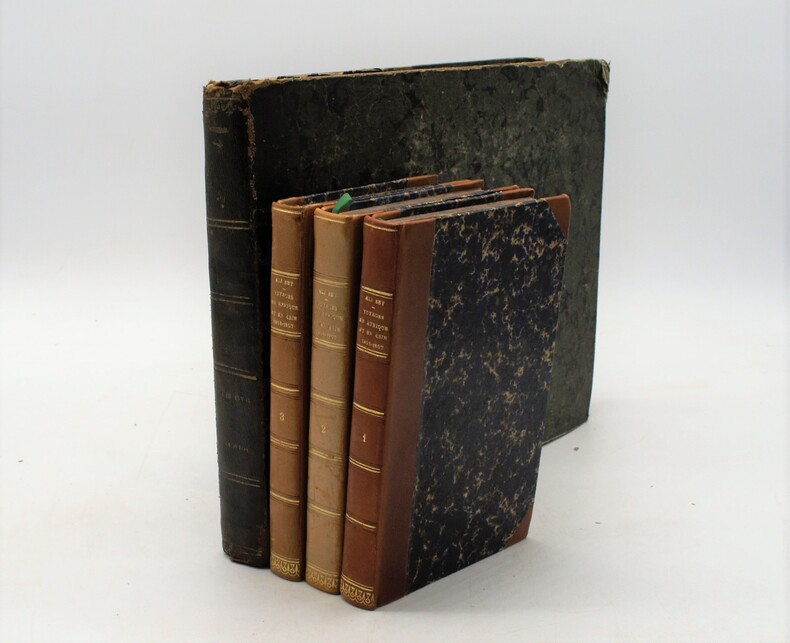
1814PHO-1225Paris , imprimerie Didot l’ainé , 1814 , 4 volumes composé de 3 tome de texte et un Atlas. TEXTE , 3 vol. in-8 (210x135) , relié demi maroquin et coins ,dos lisse avec auteur , titre et tomaison ,tranches marbrées, portrait de l’auteur en frontispice ,xix-395pp-1f (errata), 2ff-464pp-1f (errata),2ff-410pp-1f (errata) , dos et gardes refaits , cachets répétés , premiers feuillets brunis , quelques rousseurs , dos insolés. ATLAS , in-4 (330 x 260) Relié demi basane époque Portrait frontispice XIV-pp-texte 90 planches, dont 14 dépliantes ou sur double page, 5 grandes cartes d après les dessins de l auteur , les cartes Chypre, Maroc, Afrique du Nord, Cote d Arabie, El Cassaba ou le château de Tanger, Temple. Mission d Ali Bey à Tripoli. quelques rousseurs ,Pas de déchirures, coins usés, salissures , les gravures sont de Adam d’après les dessins de l’auteur. Très rare avec le texte
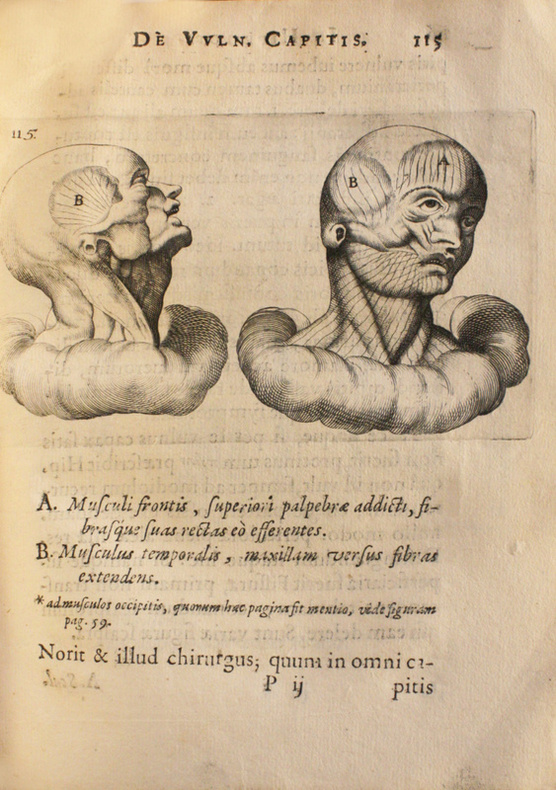
5 voll. Folio. viii pp. (incl. frontespizio inciso) + 596 + 607–638; + 252 (ultima carta bianca); + 244 + 84 + 184 (ultima carta bianca); + viii + 340 (ultima carta bianca) + 348 + xx (ultima carta bianca); + viii + 552 + xii + 60 + 244; + xii + 624 (ultima carta bianca) + 124 (ultima carta bianca) + 60 + 20 + 24 pp. Numerosi legni e diagrammi nel testo. Legatura in pelle coeva, dorso dorato. Bruniture omogenee della carta. The evidence of the attempts to leave the Aristotelianism for the modern method and an important proof of the Galileian revolution.Clavius's work includes in addition to commentary on arithmetic and algebra one on Euclid, Teodosio and Sacrobosco; his contribution to the study of trigonometry and astronomy; his work on the calendar. Clavius has been for mathematics in Renaissence a real turning point: “Probably the man who did the most of all the German scholars of the 16th century to extend the knowledge of mathematics… was Cristopher Clavius, a Jesuit, who passed the later years of his life in Rome. He was an excellent teacher… His Algebra appeared in 1608 and was one of the best textbooks on the subject that had been written up to that time… (he was) engaged in the reform of the calendar…” (Smith). Opera Mathematica in his third volume contains the Sphaera in his last editorial, to which Clavius worked during 1610 and which was printed in 1611. Shortly thereafter, in February 1612, Clavius was dying after a period of illness. In March 1610 following his comments on the telescope, Galileo published in Sidereus Nuncius his latest astronomical discoveries. These findings, perhaps only for a lucky snap of dates, are among the topics covered in the review of Sphaera, where Clavius shows to recognize the meaning. Clavius and the Jesuits in those years had to go back to seriously consider the observations of Galileo, and had to acquire the telescope also to repeat the observations and then verify their accuracy. Clavius led directly the observations (especially on the phases of Venus and the moons of Jupiter, but also on the lunar spots) along with a group of young Jesuit mathematicians and astronomers, first of all Grienberger, thus removing, towards the end of his life and following a long friendship with Galileo, his skepticism about the Copernican theory. Galileo himself in a letter to Madame Christina of Lorraine in 1615 wrote that “altri matematici, i quali mossi da gli ultimi miei scoprimenti, hanno confessato essere necessario mutare la già concepita costituzione del mondo, non potendo in conto alcuno più sussistere”. Galilei continues that one of them was just Clavius, and the reference is certainly to the pitch of the Opera Mathematica Tomo III, p. 75, where as the result of the list of Galileo's discoveries, the Jesuit ends “Quae cum ita sint, videant Astronomi quo pacto orbes coelestes constituendi sint ut haec phaenomena possint salvari”. It 's an extraordinary moment in the history of cosmology and Church, which has marked the highlight of the heliocentric theory, which no major scientists, mathematicians and astronomers of the Society of Jesus, thought no more be able to object. As D'Elia notes (pp. 14-15): "The confirmation from him on the discoveries of the astronomer from Pisa and on the copernican interpretation he deduced, had definitive influence and perhaps even dominate, to ensure the discoveries the almost universal acceptance in the intellectual world, even if the disappearance of the old professor and that of several of his closest disciples could not prevent the ecclesiastical Authority’s precept of 1616 and the condemnation of 1633 ". Clavius had even got that Galileo was received at the Roman College, and was himself to "explain" to Cardinal Bellarmine scientific discoveries of Galilei. So while the academic and obviously ecclesiastical circles did not leave officially by the Aristotelian position, a scientist of them, for evidence and intellectual honesty, was preparing the way for the acceptance of Galileo's discoveries, and could do so given the authority of his position, achieved mainly thanks to its capital contribution asked by Gregory XIII to reform the Julian calendar, which led to the drafting of the Gregorian Calendar. Christoph Clavius (Bamberg 1538-1612) Jesuit and mathematician, astronomer, he entered the Jesuit College in Rome in '55 and then went to Coimbra, where he studied mathematics and science; back to Rome to study theology, he remained as a professor for fortyfive years. He became a pivotal figure for the general mathematical and scientific renewal that had in the Compagnia di Gesù a driving force, entering into the main controversies of the time, from the squaring of the circle to the comparison between the Ptolemaic and Copernican theories. He was the master, among other things, of Matteo Ricci, who with the help of his students, translated many works of Clavius in China, including the six books of Euclid's Elements (1574), which had several editions and updates; a work who had an enormous influence, providing a compendium of knowledge on geometry. His other important works were the Commentaries on Sphaera di Sacrobosco, a treatise on spheres’ geometry and astronomy, and work on the astrolabe. He determined the subsequent development of algebra. De Backer & Sommervogel, 2, cols. 1222–3 (with details of contents). DSB, 3, pp. 311–2. D’Elia, Pasquale, Galileo in Cina, Roma, Università Gregoriana, 1947. Jardine, Nicholas. "The Forging of Modern Realism: Clavius and Kepler against the Sceptics." Studies in History and Philosophy of Science 10 (1979): 141-73. Lattis, James M. Between Copernicus and Galileo: Christoph Clavius and the Collapse of Ptolemaic Cosmology. Chicago: University of Chicago Press, 1994 Proceedings of the Symposium on Christoph Clavius (1538–1612), July 21, 2005, University of Notre Dame, Edited by Dennis Snow. D. E. Mungello, Curious land. Jesuit accomodation and the Origins of Sinology, 1985, p. 26. Eberhard Knobloch, Christoph Clavius – Ein astronom zwischen Antike und Kopernikus”, in Cvortrage des ersten Symposions des Bamberger Arbeitskreises Antike Naturwissenschaft und ihre Rezeption, 113-40, Wiesbaden, 1990.
in-4, ff. (56, segn. a-g8), leg. modern m. marocch., dorso a nervetti con tit. oro. Al verso del primo f. figura della sfera astronomica, framezzate al testo 47 belle figure allegoriche delle principali costellazioni, dei pianeti e dei segni zodiacali, per lo più legni in controparte di quelli usati nelle edizioni di Ratdolt del 1482 e 1485; due grandi iniz. e molte altre più piccole ornate su fondo nero, al v. del f. a4 iniz. in inchiostro rosso mano poster., testo in car. rom. Quarta edizione (la prima Ferrara, 1475) di questo testo di mitologia astronomica desunto da fonti greche ed in particolare dai ''Phaenomena'' di Arato, prima raffigurazione delle costellazioni che per oltre un secolo influenzò l'iconografia degli atlanti celesti. Dell'autore (I secolo d.C., detto lgino l'Astronomo per distinguerlo da un altro Igino detto il Bibliotecario) si sa assai poco; egli dedica l'opera ad un certo M. Fabio (forse M. Fabio Marcellino). Ottimo esempl. a pieni margini, in alcuni dei quali si leggono delle chiare postille di mano coeva. ''The woodcuts derive from medieval sources, and depict figures in medieval European costume. these figures were reprinted, and copied in numerous incunable editions, and were the source for the engraved images of Jacon de gheyn and via the latter many of the images in Johannes Bayer.'' Watson, Celestial cartography in book form, 1482-1801.. BMC V ,318. HC 9065. Klebs 527.4. Polain (B) 2041. Proctor 4765. IGI 4961. Essling 287. Sander 3474. Cantamessa I, 2202, note..
In-4°; pp. B, (8), 120, B, cartonato. E’ uno dei più rari testi di Liceti: fra le prime pagine il libro contiene un catalogo delle opere dell’autore dal 1602 al 1640. In quest’opera Liceti studia i fenomeni luminosi e alcuni argomenti di astrologia, continuando a confrontarsi con le illustri speculazioni di Galileo, che ricorre con frequenza tra le principali citazioni dell’autore, accanto ad Aristotele, anche in questo lavoro; fra i temi affrontati, la riflessione e rifrazione dei raggi solari, le comete, le nubi, la luna, ecc. In particolare il pensiero di Galileo trova spazio nel brano di Fromondus (Libert Froidmont) riportato da Liceti per illustrare il terzo capitolo, sulle galassie, e ancora in quello in cui si discute se una cometa possa avere un’eclissi. In una lettera del 1641, anno di pubblicazione di quest’opera, Liceti scrive a Galileo in risposta a una sua lettera che commenta questi scritti. Riccardi I, 39; Carli Favaro 185 In-4 °; pp. B, (8), 120, B, cardboard. It is one of the rarest texts by Liceti: In the first pages the book contains a catalog of the author's works from 1602 to 1640. In this work Liceti studies the light phenomena and some topics of astrology, continuing to confront the illustrious Galileo's speculations, which recurs frequently among the author's main citations, alongside Aristotle, also in this work; among the topics addressed, the reflection and refraction of solar rays, comets, clouds, the moon, etc. In particular, Galileo's thought finds space in the passage by Fromondus (Libert Froidmont) reported by Liceti to illustrate the third chapter, on galaxies, and again in the one in which we discuss whether a comet can have an eclipse. In a letter of 1641, the year of publication of this work, Liceti wrote to Galileo in response to a letter from him commenting on these writings. Riccardi I, 39; Carli Favaro 185
In-4°; XII, LXXVIII cc.; titolo entro bella cornice xilografica, marca tipografica in fine, 19 grandi diagrammi incisi in legno nel testo, parti mobili applicate alle figure delle cc. B3v, C4v e D3r (assente quella alla carta A6v), 15 illustrazioni nel testo raffiguranti misure e prospettive, 6 xilografie di dimensioni inferiori, 5 carte astrologiche; belle iniziali decorate impresse su fondo nero. Legatura del tempo in tutta pergamena di riuso, titolo manoscritto al dorso. Alcune note marginali di mano coeva. Minimi rinforzi al margine bianco delle prime quattro carte, assai lievi macchioline alle carte iniziali e una gora non grave alle ultime 4 carte. Prima edizione. L'opera di Johann Stoeffler è considerata il più significativo trattato del Rinascimento sull’uso e la progettazione degli astrolabi ed ebbe un successo e un’influenza straordinari. Il volume è ampiamente illustrato da xilografie che descrivono lo strumento ed il suo impiego pratico, anche con parti mobili. Il testo fu pensato come riferimento per astronomi, naviganti, astrologi, studenti: lo strumento poteva localizzare la posizione dei pianeti e delle stelle, calcolare le distanze nella misurazione agraria e nella navigazione, fare gli oroscopi. Nella seconda sezione del volume l’autore si occupa delle misure e delle prospettive. Johann Stoeffler (1452-1531) fu un matematico, astronomo e costruttore di strumenti scientifici incaricato della cattedra di matematica e di astronomia all’Università di Tubinga Adams S-1886. Houzeau & Lancaster 3256. Stillwell 892. Wellcome 6099. Zinner 991. Cantamessa 7713.
1950ZA-0945London 1820 - 1950. Angeboten wird hier eine nahezu komplette Reihe der britischen Ausgabe des "Nautical Almanac" von 1822/24 bis 1830 sowie von 1837 bis 1951 (lediglich Jg. 1846 fehlend, vol. 1846 missing). Blaue Halbleinenbände mit goldgeprägten Rückentiteln sowie (ab 1934) beige Halbleinenbände mit originaler Titelprägung auf Buchrücken und Vorderdeckel. Jeder Band mit ca. 500 Seiten (alte Jahrgänge im Umfang schmaler). Offizielles Astronomisches Jahrbuch der internationalen Astronomie (International Astronomical Union) und der Geowissenschaften (International Union of Geodesy and Geophysics). Wichtigster Inhalt des Almanachs sind präzise Vorausberechnungen aller größeren Körper des Sonnensystems. Zweck des Jahrbuchs war es ursprünglich, eine raschere Astronavigation auf See zu ermöglichen. Die Erstausgabe von "The Nautical Almanac and Astronomical Ephemeris" erfolgte für das Jahr 1767 in England, das amerikanische Pendant "The American Ephemeris and Nautical Almanac" wurde erstmals für das Jahr 1855 herausgegeben. Die britische Ausgabe erschien unverändert bis 1959 und wurde dann in "The Astronomical Ephemeris" umbenannt. Von 1981 an erscheinen britische und amerikanische Ausgabe gemeinsam unter dem Titel "The Astronomical Almanac".
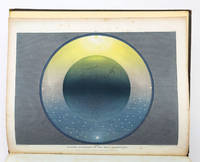
1846ST19286London: Printed by Catchpool & Trent for Simpkin Marshall & Co 1846. FIRST EDITION. 320 x 255 mm. 12 1/2 x 10". xiii 3 96 pp. <br/> Publisher's original blind-decorated dun-colored cloth gilt titling to upper cover smooth spine newer endpapers. WITH 11 COLOR ENGRAVINGS after Frost by W. P. Chubb & Son printed in oil colors by George Baxter all with original tissue guards. Front free endpaper with small ink signature of John Hill. See: Francis Reid "Isaac Frost's 'Two Systems of Astronomy' 1846: Plebeian Resistance and Scriptural Astronomy" in "The British Journal for the History of Science" Vol. 38 No. 2 Jun. 2005 pp. 161-177. Cloth rather spotted corners bumped but the binding solid with no wear to joints or hinges. A few spots of foxing to title page half of the tissue guards with overall very faint foxing/browning the illustrations with minor foxing at edges and in margins but the images themselves clean and bright and all in all a really excellent copy the text wide-margined and quite clean and fresh and the plates with rich coloring.<br/> <br/> Illustrated with beautiful color plates this anti-Newtonian work promotes a view of the universe based on the backward-looking beliefs professed by a Protestant sect known as the Muggletonians. Named after co-founder Lodowicke Muggleton the Muggletonians emerged in London in 1651 based on the claims of two tailors who professed to be the "Last Witnesses" described in the Book of Revelation. Rejecting the new directions in philosophical reason Muggletonians believed in a purely scriptural interpretation of the universe. According to E. P. Thompson's 1994 "Witness Against the Beast" the Muggletonians had curious notions quite contrary to other Protestant denominations: they believed that the soul is mortal that Jesus and God are one and the same that Heaven was left without divine supervision from Jesus' death until the day of judgment that Heaven resides six miles above the Earth that God stands between five and six feet tall and other unconventional things. Although the sect initially avoided both worship and evangelizing during the 19th century some followers became more outspoken about their beliefs and even published books appealing to the general public. Our author Isaac Frost 1793-1858 was a prominent Muggletonian and successful owner of a brass foundry who along with his brother Joseph invested large sums to promote their belief system--the present work being an especially notable example. Divided into two main sections the text first describes the Newtonian system of heliocentric astronomy and then turns to Frost's scriptural interpretation and geocentric views. As Reid tells us "According to Frost Scripture clearly states that the Sun the Moon and the Stars are embedded in a firmament made of congealed water and revolve around the Earth that Heaven has a physical reality above and beyond the stars and that the planets and the Moon do not reflect the Sun's rays but are themselves independent sources of light. Our book was apparently written as a reaction against the lecturers who expressed Newtonian astronomy--which was often for them and their audiences simply shorthand for heliocentrism." The 11 plates that illustrate these extraordinary ideas are the work of George Baxter a pioneering printer who revolutionized color printing techniques by combining metal engravings with woodblock printing using oil-based inks to produce high-quality affordable prints. The plates here are appropriately ethereal and otherworldly utilizing a beautiful palette with subtle gradations and esoteric figures to create memorable pseudo-scientific imagery. Although this work appears at auction with some regularity it is almost always incomplete no doubt because the attractiveness of its plates encourages harvesting. Useful price comparisons include a complete copy said to be in fine condition selling for £7500 in 2016 and six loose prints from the book fetching £6875 in 2015. [Printed by Catchpool & Trent for] Simpkin, Marshall, & Co unknown
1995ZA-08333Dordrecht, D. Reidel Publishing Company, 1968 - 1995. Blaue Halbleinenbände bzw. (ab Vol. 183) Ganzleinenbände mit goldgeprägten Rückentiteln. Format 24 x 15,5 cm. Renommierte international Fachzeitschrift zur Astrophysik.
in-4, ff. 60, raffinata leg. 800esca di Capé (firma al verso della sguardia ant.) in vitellino biondo, al centro dei piatti armi di Henri, Marchese de Villeneuve-Bargemon, entro bordura vegetale e col motto ''A tout, premier marquis de France'', triplice riquadro di filetti in oro ai piatti, titolo in oro al dorso a nervi, dentelle e tagli dorati (Guigard, II, 469). Edizione con titolo figurato (l'autore, rappresentato a figura intera), 44 splendide silografie (1 delle quali, al f. A3 verso a piena pag., le altre di varie grandezze), numerose grandi iniziali figurate su fondo nero; tutte tratte da precedenti edizioni. L'opera di Lichtenberg (1440?-1503) è costituita da una serie di profezie che sarebbero state indotte dall'inconto di Saturno e Giove nel 1484 e dall'eclisse solare del 1485. In realtà, essendo stato l'Autore l'astrologo ufficiale dell'Imperatore Federico III, l'opera esprime dei voti di riforma degli affari pubblici ed ecclesiastici sotto forma di predizione. L'opera (prima ed. Heidelberg 1488) ebbe comunque grande fortuna tra la fine del XV e l'inizio del XVI secolo. Bellissimo esempl. di noto testo figurato rinascimentale, entro preziosa legatura.. Adams L-660. Manca al BMC.Fairfax Murray, German books, II, 239 e 240 (ediz. Precedemti)..
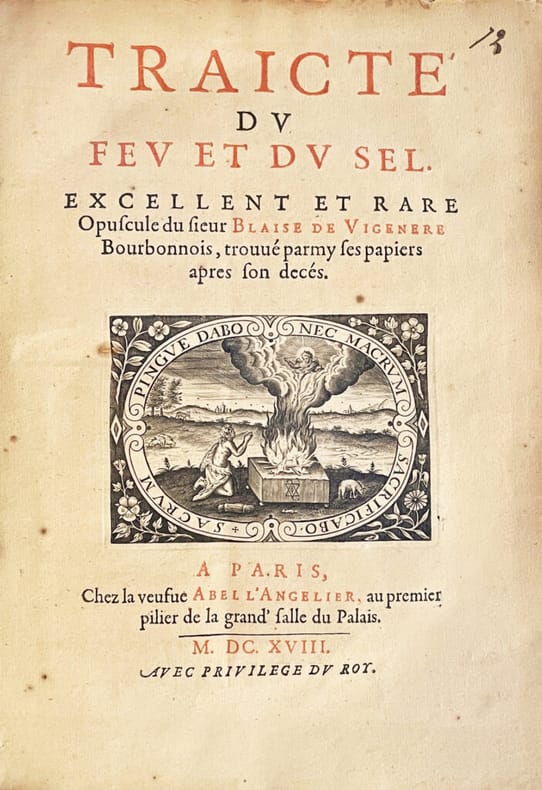
LCS-17899Rarissime édition originale de ce « traité recherché, mélange curieux d’alchimie, de Kabbale, de mysticisme, et où l’on trouve la manière de fabriquer de l’or » (Caillet, III, 11161). Paris, chez la Veuve Abel L’Angelier, 1618. In-4 de (2) ff., 267 pp., qq. brunissures et piqûres. Vélin souple de l’époque, restes de liens, dos lisse avec le titre manuscrit. Reliure de l’époque. 231 x 165 mm.
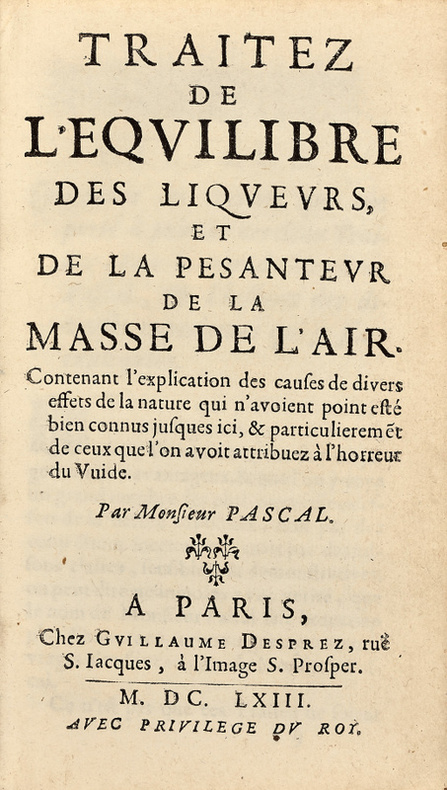
LCS-17938Edition originale du Traité de l’équilibre des liqueurs de Pascal parue six ans avant Les Pensées chez le même imprimeur, conservée dans sa reliure parisienne de l’époque. Paris, Guillaume Desprez, 1663. In-12 de (14) ff., 232 pp., (4) ff. et 2 planches hors texte repliées. Plein veau brun granité, dos à nerfs orné, coiffes anciennement restaurées, coupes décorées, tranches jaspées. Reliure de l'époque. 144 x 91 mm.