Austen, Jane; [Rebora, Sol]Biblio.com
10 092 résultats
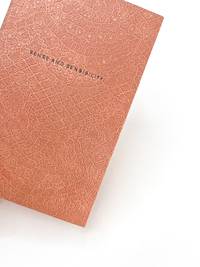
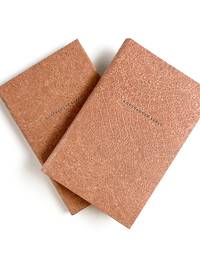
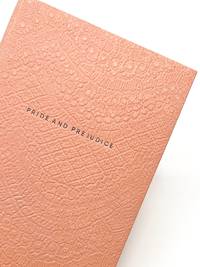
183250106Philadelphia: Carey & Lea 1832. First printing. Near fine. First US edition in a stunning fine art binding by the acclaimed Argentinian design bookbinder Sol Rébora. Austen's most beloved novel is simultaneously a unique production of profound artistic confidence and an entertaining popular love story: it builds on a long-established tradition of English courtship novels in conversation with many women authors before her like Frances Burney from whose book CECILIA Austen may have borrowed the very phrase "pride and prejudice". Austen admitted in a letter that she thought her book's heroine Elizabeth Bennett "as delightful a creature as ever appeared in print" 29 January 1813 - and generations of readers have agreed with her. First published in 1813 in three volumes this is the first edition to appear in the United States published in two volumes by Carey & Lea in an edition of only 750 copies. <br /> <br /> Sol Rébora is an internationally recognized design bookbinder based in Buenos Aires. Her works embody a minimalistic elegance that is nevertheless subtly complex as in the carefully structured multiple layers used here. They are not only visually stunning but supremely tactile. From Rèbora's artist statement: "The cloth texture is achieved using silk with a patterned design that evokes the aesthetic of the time period in which the original edition was produced creating a visual connection with antique paper. This design also appeals to the collective memory of how custom bindings from the early 19th century might have appeared complete with deep-relief hot-stamping impressions." A magnificent unique copy of an Austen first. Two 12mo volumes 6.75'' x 4.25'' each. Modern full peach design binding by Sol Rébora in Can Can structure with one layer of cotton cloth and two layers of Japanese paper each element hand-painted with acrylics and textured with a patterned design impressed with deep-relief hot-stamping from silk; spines and boards stamped in dark grey. Cotton and abaca handmade paper peach endpapers. Publisher's catalogue bound at front of Vol. I. 199 1; 209 1 pages. Vol. I with early pencil inscription of the Portsmouth Athenaeum to fly leaf; early newspaper clipping on "Jane Austen's Genius" archivally tipped onto rear fly leaf. Some browning light staining to text block a few early marginal pencil notes. Bright. Carey & Lea unknown
183353550Philadelphia: Carey & Lea 1833. Very good plus. First US edition of Austen's first novel - in a stunning fine art binding by the acclaimed Argentinian design bookbinder Sol Rébora. Austen's first novel uses the love stories of two sisters to explore the complexities and contradictions in the gendered expectations of the Regency era: a woman will be praised for her capacity to feel emotion her sensibility but not too much; a woman will be praised for her independent and responsible nature her sense but not too much. First published in late 1811 in three volumes this is the first edition to appear in the United States published in two volumes by Carey & Lea in an edition of only 1250 copies. <br /> <br /> Sol Rébora is an internationally recognized design bookbinder based in Buenos Aires. Her works embody a minimalistic elegance that is nevertheless subtly complex as in the carefully structured multiple layers used here. They are not only visually stunning but supremely tactile. From Rèbora's artist statement: "The cloth texture is achieved using silk with a patterned design that evokes the aesthetic of the time period in which the original edition was produced creating a visual connection with antique paper. This design also appeals to the collective memory of how custom bindings from the early 19th century might have appeared complete with deep-relief hot-stamping impressions." A magnificent unique copy of an Austen first. Two 12mo volumes 6.75'' x 4.25'' each. Modern full grey-pink design binding by Sol Rébora in Can Can structure with one layer of cotton cloth and two layers of Japanese paper each element hand-painted with acrylics and textured with a patterned design impressed with deep-relief hot-stamping from silk; spines and boards stamped in dark grey. Cotton and abaca handmade paper grey-pink endpapers. 199 1; 189 1 pages. Light pencil notation to fly leaf of Vol. I. Some offsetting marks to endpapers from earlier binding archival paper repair to fly leaf; light browning to leaves some staining. Solid. Carey & Lea unknown
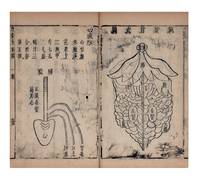
1660103901660. title at the beginning of the text or Yi xue ru men dan tai yu an 醫å¸å…¥é–€ An Introduction to Medicine: The Red Platform and the Jade Desk title on cover page. 73 woodcut illus. Six juan in six vols. 8vo bamboo paper a few leaves missing from Preface in the first vol. new wrappers new stitching. China: Wu feng lou 五鳳樓 1660.<br /> <br> <br> <br /> <br /> Second edition of this influential medical work. “The book assembles material from Huangdi neijing 黃å¸å…§ç¶“ The Yellow Emperor’s Inner Canon Nanjing 難經 The Classic of Difficult Issues and Zhang Zhongjing 張仲景 Liu Hejian 劉河間 Zhu Danxi 朱丹溪 and Li Dongyuan æŽæ±åž£ excerpting their essentials and deleting the obtuse and contradictory parts†Wang p. 103. <br /> <br> <br> Our work contains theoretical discussions as well as recipes. The section on women’s medicine for example opens with an abstract discussion of the origin of the male in the qian trigram of the Yijing 易經 Change Classic and of the female in the kun trigram. The discussion then becomes more concrete with a description of the stages of pregnancy. This is followed with a note on taking the pulse followed in turn by a list of prescriptions. One prescription is for a “liquid remedy for adjusting the menses and stabilizing the blood. It is to be administered when the color of the menstrual discharge is light and it is thick and sticky accompanied by a pain in the abdomen.†This recipe contains ten ingredients including red tangerine peel peeled herbaceous peony root and the root of the three-nerved spicebush. There are also lists of medications and foodstuffs that women should not ingest when pregnant. For example eating crab might lead to transverse presentation of the fetus. Birth with transverse presentation is separately covered in a note. Post-natal issues are covered as well including an outbreak of malaria as can happen in the seventh and eighth lunar months we read post-natal cold damage disease and incessant bleeding.<br /> <br> <br> Pediatric medicine is discussed after gynecology in the last volume of the work. As with the section on gynecology this section starts with a general discussion: “The illnesses of men and women can be ascertained by asking questions†but “a small child while still being carried in the arms might suffer but not be able to express it.†Alternative methods were necessary such as observing the child’s face. An illustration of a child’s face with the different parts marked accompanies the discussion. As with gynecology numerous prescriptions are also listed in the area of pediatrics.<br /> <br> <br> Sun Wenyin was from Xiuning in Anhui in central China. Sickly as a child he read the Change Classic and recited classical Chinese poetry paying considerable attention to how to nurture a healthy life. Sun advocated that nutrition should be the first priority with prescription medications coming second Ding & Wu p. 54.<br /> <br> <br> Regarding the writing and printing history of our book Sun writes in the Preface that he had worked on collecting material for the book for 20 years. Then “the book was finished in the bingzi year of the Ming 1636; I printed it in 1638 judging by the dates of the Prefaces to the first edition and showed my friends of a similar inclination. After the destruction of war that accompanied the change of the cauldrons i.e. the Manchu conquest of the Ming only one or two blocks remained.†The blocks thus had to be re-carved creating a second edition of the work.<br /> <br> <br> Our copy appears to be missing a few leaves of the Preface which ends mid-sentence and without a date. The Princeton University copy is from the same edition and it is dated to 1660 Shunzhi 17. Our book does not observe the taboo for the character xuan 玄 so we know that it must have been printed before 1661 when the Kangxi emperor Xuanye çŽ„ç‡ r. 1661-1722 ascended to the throne.<br /> <br> <br> Very good set occasional stains and split fore-edge folds preserved in a new cloth-backed dropbox.<br /> <br> <br> ⧠Ding Qing’ai ä¸é’艾 & Wu Housheng ä¼åŽèƒœ eds. Yangsheng baijian da cidian 养生ä¿å¥å¤§è¾žå…¸ Dalian: Dalian chubanshe 1997; Wang Peng Anhui Zhongyi guji zongmu tiyao 安徽ä¸é†«å¤ç±ç¸½ç›®æè¦ Hefei: Anhui kexue jishi chubanshe 2021. unknown
183253547Philadelphia: Carey & Lea 1832. Near fine. First US edition of Austen's third published novel - in a stunning fine art binding by the acclaimed Argentinian design bookbinder Sol Rébora. Morally upright Fanny gets pulled into a neighbor's scheming via an adaptation of Elizabeth Inchbald's well-known play LOVERS' VOWS. Among Austen's works MANSFIELD PARK especially demonstrates how careful contrasts of characters and plot twists can bring out subtle ironies. First published in 1814 in three volumes this is the first edition to appear in the United States published in two volumes by Carey & Lea in an edition of only 1250 copies. <br /> <br /> Sol Rébora is an internationally recognized design bookbinder based in Buenos Aires. Her works embody a minimalistic elegance that is nevertheless subtly complex as in the carefully structured multiple layers used here. They are not only visually stunning but supremely tactile. From Rèbora's artist statement: "The cloth texture is achieved using silk with a patterned design that evokes the aesthetic of the time period in which the original edition was produced creating a visual connection with antique paper. This design also appeals to the collective memory of how custom bindings from the early 19th century might have appeared complete with deep-relief hot-stamping impressions." A magnificent unique copy of an Austen first. Two 12mo volumes 6.75'' x 4.25'' each. Modern full pink design binding by Sol Rébora in Can Can structure with one layer of cotton cloth and two layers of Japanese paper each element hand-painted with acrylics and textured with a patterned design impressed with deep-relief hot-stamping from silk; spines and boards stamped in dark grey. Cotton and abaca handmade paper peach endpapers. Publisher's catalogue bound at front of volume I. 4 200; 204 pages. Vol. II with pencil inscription of the Portsmouth Athenaeum to fly leaf. Some browning a few spots of staining to text block some early pencil notes. Tight. Carey & Lea unknown
183353548Philadelphia: Carey & Lea 1833. Near fine. First US edition of the most bookish of Austen's novels - in a stunning fine art binding by the acclaimed Argentinian design bookbinder Sol Rébora. Often misread as critical of the gothic novels that were popular at the period of its first composition NORTHANGER ABBEY is a more complex exploration of the genre that is especially notable for its passages in defense of the novel form - written uncharacteristically in first person directly from the narrator. First published in late 1817 in three volumes this is the first edition to appear in the United States published in two volumes by Carey & Lea in an edition of only 1250 copies; it includes the famous "Biographical Notice of the Author" that first revealed Austen's name to the public as the author as her books were all published anonymously in her lifetime. <br /> <br /> Sol Rébora is an internationally recognized design bookbinder based in Buenos Aires. Her works embody a minimalistic elegance that is nevertheless subtly complex as in the carefully structured multiple layers used here. They are not only visually stunning but supremely tactile. From Rèbora's artist statement: "The cloth texture is achieved using silk with a patterned design that evokes the aesthetic of the time period in which the original edition was produced creating a visual connection with antique paper. This design also appeals to the collective memory of how custom bindings from the early 19th century might have appeared complete with deep-relief hot-stamping impressions." A magnificent unique copy of an Austen first. Two 12mo volumes 6.75'' x 4.25'' each. Modern full grey-lavender design binding by Sol Rébora in Can Can structure with one layer of cotton cloth and two layers of Japanese paper each element hand-painted with acrylics and textured with a patterned design impressed with deep-relief hot-stamping from silk; spines and boards stamped in dark grey. Cotton and abaca handmade paper grey-pink endpapers. 195 1; 196 pages. Light pencil notation to title of Vol. 2. Some offsetting marks to endpapers from earlier binding; light browning to leaves a few small stains. Bright. Carey & Lea unknown
2081502111904842Guangdong People's Publishing House N.A. Soft Cover. Fine. The book is in fine condition. Guangdong People's Publishing House paperback
19319281Paris: Black Sun 1931. First edition. Hardcover. Fine. 8vo. Translated from the French by Kay Boyle. Illustrated by Max Ernst. One of 200 copies on Bristol paper this being copy number 52. Although not called for this copy is signed by Max Ernst on the frontispiece illustration. Furthermore it is in the deluxe 50-copy black binding with black endpapers. Finally the book is housed in the publisher's slipcase which was intended only for the deluxe edition. Such discrepancies were not uncommon for this aristocratic press whose attention to bibliographical accuracy can generously be described as casual. The 19 photograms that illustrate the book constituted a pioneering artist's technique by Ernst who was assisted in the endeavor by fellow Surrealist Man Ray. Carefully pencil-rubbed what the French call "frottage" translucent papers were employed as negatives to create the photograms. In essence then a photogram is a photograph made without the use of a camera. The three principals of this _Livre de Artiste were unlikely collaborators. Crevel whose 1927 novel "Babylone" was the source for "Mr Knife Miss Fork" which is the novel's first chapter committed suicide at the age of 35 after an unhappy existence as a radical political activist and closeted homosexual; Boyle an American author at the epicenter of the expatriate colony in Paris was gamely trying to deal with her financial short-fallings; while Ernst an acknowledged pioneer of the burgeoning Dada and Surrealist movements in art was likewise motivated by the opportunity to earn a few francs. All in all an anomalously desirable volume. <br /><br /> Black Sun hardcover
1206Extraordinaire ensemble de 201 lettres autographes signées, le plus souvent rédigées à l’encre noire ou bleue sur papier blanc, parfois enrichies de poèmes et dessins en noir ou en couleurs. Une correspondance lyrique, amicale, inédite, échelonnée sur une période de 48 ans, entre les deux inventeurs de la poésie électrique, signataires du Manifeste électrique aux paupières de jupes (Le Soleil noir, 1971).Au "Moulin du Pays de Trêlles" (Doubs), le poète envoie ses premières lettres comme des poèmes hallucinés, déstructurés, hermétiques. Il évoque la genèse et la publication de ses recueils : XXIII poèmes, Les Laines penchées, Les Grands poèmes faux, Orant, Faut payer pour voir, Poème pour les étoiles, La Songeraie, Les Chants tenses, Le Dernier des immobiles, L’Épée sans trêve, Exuvies électriques, etc. Aux lettres de jeunesse, écrites comme des proses poétiques, succèdent les projets et la marche d’Electric Press (dont il fut cofondateur avec le destinataire en 1970), souvent mêlés à des sensations fugitives, inspirées par une grande observation des cycles de la nature. Quelques extraits, parmi les plus beaux :(24/4/1971) : « Michel, Il faut cirer les phoques / seuls les poètes et les cowboys savent ; hier il pleut jusqu’aux lésions de mon cerveau, je mourrai d’hémorragies de lettres, toi seul le sais, sais-tu ? Je touche les angles des carrés et rectangles qui m’entourent (de plus en plus louche). Ne ris pas, je n’en peux plus, dans la gorge des étoiles. » (20/8/1971) : « J’écris une nouvelle plaquette : Je récitatif de sang est chez l’imprimeur. De nerf à la vue des nuages privés de fées ou violet du frêne tenté des hautes algues. (…) Linge fondu en larmes. Écris, ma tristesse est infinie. » (1/1972) : « Maintenant de toi mes yeux allument des reflets dans l’eau noire, leurs ventricules d’étoile content encore je te rapporterai ton manuscrit la mort du prince des gouttes d’émeraude je téléphone dès arrivé sans doute le 10 janvier, conte que les aisselles du miroir de pluie ont été la veine parcourue du texte. A toi précieusement, Matthieu. Et une poignée de neige pour Adeline. » (10/2/1972) : « Te dire toujours mes yeux te couvriront de poèmes le long des corridors engourdis des regards. Ta préface borde ‘Les Laines penchées’, enfin comme après l’épuisement, comme une mer de cils sur la grève du texte. Toi seul pouvais entourer de gestes et de talc les rites funèbres de la chambre adolescente où je dépose mes textes, pour enfin reposer, après cette longue obscurité où j’ai tenu ta main. » (4/4/1972) : « L’herbe blessure d’orthographe ; j’ai détourné leur rêve leur chlorophylle j’ai cabossé de ma tristesse leurs papiers, leurs journaux, après. Là, Poème A (effraction-laque) m’accompagne rituellement dans les épaules du crépuscule. J’ai peur qu’ils me lapident. Outre-printemps, Michel, les itinéraires salis du disant. » (19/6/1972) : « Michel, je pleure loin de toi déjà tendu de prière en paumes mon alerte sage socle interné des rites de songe en songe nos sanglots évitant les franges ta main en somme me répète des mésanges je te couvrirai de poèmes accoudés en tes dentelles je te couvrirai de poèmes un peu tremblés aux genoux mon affection éplorée, de Matthieu. » (Sans date) : « Michel, cent de langue roi mon livre se blesse au plateau de bois je peux qu’il devra à réciter le sang intense la main blanche de poésie à l’attention de corps (…). Je me nomme épaules au nerf de vent qui vont cible éteinte des langes te dire combien sapins de nous deux. Précieusement, Matthieu. » (Sans date) : « Mon cher Michel, Pour toi des cahiers tristes, après le sacre, je détache un réseau de larmes équilibré dans la paupière ; mon agonie pour tes yeux du précipité se répétant qui est un songe inversé qui se chante fendu des averses. Je t’embrasse en pleurs de Matthieu. » (21/6/1972) : « Mon cher Michel, sous d’autres estampes sur le bruit mat et les douleurs en septembre je te visiterai et nous serons d’infinies précautions contre l’odeur des livres, des cahiers et des pommes en 1967. Pour l’heure je pense que je veux me faire croire que mon roman occupe mon âme. Tes yeux ne trompent pas, un grand plaisir de savoir que tu sais qu’après tout nous ne sommes jamais vraiment loin l’un de l’autre. Je suis peut-être fatigué et pourtant je tressaille au moindre chuchotement du vent. » (19/10/1975) : « Je te téléphonerai aux environs de 14 heures, 14 heures 30. ‘Sanctifié’ est un livre qui me fait encore beaucoup de mal tandis que je le tape à la machine à écrire. » (23/12/1982) : « Mon livre est dans de tels échafaudages que je ne pense pour l’instant t’en envoyer une partie, comme je le désirais. Tout cela est à la fois tellement clair et confus, et rien ! (…) « Envoie moi tout ce que tu fais, nous nous verrons sûrement bientôt et, d’ailleurs, avons-nous jamais cessé de ‘nous voir ? » (31/3/1984) : « Je compte plus de 20 livres dans ta bibliographie. Tu m’as dépassé mais ne perds rien pour attendre. Bientôt : 'Orant’ à mi-chemin entre une émission italienne de variétés ‘vulgaires’ et l’apogée d’une geste initiatique de Trêlles par les biais du pays de Valancé. Salue pour moi les mélancolies vaincues de la fontaine Médicis. » (6/9/1985) : « Merci pour le livre. Les étoiles ne se parlent pas mais elles se savent. » (18/1/1988) : « An … 88 (l’encre… et au delà) … Orant… l’aventure touche à sa fin, l’aube objective est proche. Le livre doit sortir en octobre. (…) » (Sans date) : « Intermède : devant ma fenêtre : cette nuit grand froid -10°, chierie, mes muscles consultent leur éclat de rire, graines de tournesol, les oiseaux les mangent devant la dite fenêtre et leurs becs font avec le chauffage électrique une symphonie rigolote. Je regarde attentivement le ciel (bien dans les yeux) et je suis heureux parce que je n’en connais pas tout. (…) » (1/12/1988) : « Mon cher Michel, merci pour ton livre. Ah ! comme j’aime nos chemins disparates, et qui mènent au même ciel. » (Sans date) : « Pour toi Michel, ces jouets des gestes, nous nous connaissions à dix ans, ils te reviennent. » (9/1990) : « Les amitiés indéfectibles se communiquent des forces insoupçonnées. Nous avons encore de grandes choses devant nous, les enfants absolus que nous sommes devenus ont le regard encore plus clair et plus pur que jamais. Donc je prépare le manuscrit des ‘Grands poèmes faux’ avec d’autant plus de plaisir que c’est toi qui t ‘en occupes car c’est un livre délicat et complexe et moderne qui n’est pas à mettre entre toutes mains. Orant est enfin sorti le 1er septembre en librairie, en même temps que Duprey, le vieux frère tortionné, quelle fatigue et quelle joie (?) Le petit pré de Gémarance est à son comble de Rien, et je repense à quelque poème du futur qui glisse sur le ventre de l’esprit des vairons et sur la joue d’un amour inconnu et définitif. A toi. Je t’embrasse. » (Sans date) : « Au matin les fraîcheurs pures d’octobre promis me disent qu’il faut absolument en arriver au calme. Voici les livres. J’aurai achevé (à bout portant bien sûr) sans faute le manuscrit pour le mois de mars prochain. Je t’embrasse. »(Sans date) : « Mon cher Michel, Peu de mots en moi – plutôt regarder les merles et les grives me communiquer quelque joie perdue. Je t’embrasse vieux frère. » (Sans date) : « Voici les ‘Grands poèmes faux’. Vrai, c’est la première fois que c’est comme si je confiais un manuscrit à moi-même, agréable sensation. Le petit retard est dû à une crise de goutte aigüe et très douloureuse (le mal des notaires et des généraux – au moins je sais maintenant à quel monde j’appartiens… D’ailleurs je pense ouvrir une étude.) » (12/12/1991) : « Mon cher Michel, Vieux blues de l’automne qui va entrer en hiver en volumineuse et silencieuse lumière (paradoxe… c’est en hiver que mon cœur révise ses lumières de printemps). Froid sec. Activité ralentie. Le ‘doux rien faire’ qui ne peut être pratiqué que par ceux qui ont tout donné. Oui, je sais ce que tu ressens, et que nous n’avons ni l’un ni l’autre besoin de cette infirmité des mots pour le faire savoir. Arcueil… souvenirs vivaces, depuis la gare du Luxembourg jusque dans la langueur intense des routes pavées aux pavillons aux âmes toutes dites par arbres et arbustes perchés sur les grilles mystérieuses. Douleurs superposées comme des strates. Nous savons… Et ces abrutis fêtent Rimbaud de ce qu’il souhaitait ne pas avoir fait !... (…) Il faut que tu écrives maintenant, car nos poèmes sont de plus en plus nécessaires à ce monde cerné de médiocrités agissantes. » (21/2/1992) : « Mon cher Michel, Les glaces bientôt s’excuseront dans un froissement de lingerie ottomane et peut- être mes jambes se réchaufferont au chant sacré du merle du soir dans le chahut des giboulées chaudes. Coup de téléphone de Blaise Gautier… » (24/4/1994) : « Le vieux fauve sort de l’hiver, blessé mais pas encore foutu, attentif comme au premier jour de frotté au monde. Tant de choses à voir en 1 centimètre carré ! Nous devrions ouvrir tous les deux un cabinet bancaire dans les fleurs de pommier. Qu’en penses-tu ? Nous pourrions raisonnablement briguer un salaire mensuel de 30 f, ce qui serait toujours aussi bien que cette saleté de poésie qui pourrit son homme à coup sûr. J’aurais dû faire banquier. » (24/4/1994) : « Le vieux fauve sort de l’hiver, blessé mais pas encore foutu, attentif comme au premier jour de frotté au monde. Tant de choses à voir en 1 centimètre carré ! Nous devrions ouvrir tous les deux un cabinet de voyance par téléphone sans téléphone et avec compte bancaire dans les fleurs de pommier. Qu’en penses-tu ? Nous pourrions raisonnablement briguer un salaire mensuel de 30 f, ce qui serait toujours aussi bien que cette saleté de poésie qui pourrit son homme à coup sûr. J’aurais dû faire banquier. » (24/4/1997) : « Pâques est passé dans un tourbillon de fleurs de Saint-Georges et de pissenlit à l’aune de transfigurations intransigeantes. Ta belle lettre m’a fait plaisir. Je suis en train (tchouk… tchouk… !) de faire construire une pièce, bateau-sarcophage bien réfléchie pour mes vieux jours. (…) Je compte y réceptionner beaucoup de femmes à poil. » (27/9/1999) : « Merci pour ce beau petit livre. La broyeuse comme tu le dis si bien a parfois des hoquets abyssaux mais il semble qu’elle ne s’enraye pas. Je t’embrasse. A bientôt. » (22 :3/2001) : « Merci pour cette ‘Reine du Pop’, magnifiquement précis et sans complaisance. (…) Tu as su rendre parfaitement à Warhol ce qu’il est : un poète exilé au pays du Pop Art… » (5/2002) : « Oh oui… ta lettre me transporte en mélancolies nées d’un ailleurs du Fonds-des-Mélancolies. Il nous reste toujours – ce que peu de gens savent au fond - ce comble irréversible du parfum des paysages aux voitures, transportés par nos parents (ou grands-parents pour toi),dont nous étions surtout cette aiguille d’un phonographe des nerfs qui enregistrait en silence, béatifié-liante, ce que nous continuons aujourd’hui d’offrir… Je t’embrasse. » (20/6/2002) : « Ah ! comme moi aussi j’ai été content de te voir ! Il semble que, malgré ‘poids’ (euphémisme…) des années déflagrées au seuil d’un portique poétique filant, notre stock d’émerveillements tienne encore le coup…. Et je jubile déjà à l’idée de notre nouveau coup fourré sorti des strates modernes. » (15/9/2002) : « Cher Michel, Seules notes… Mais nous étions entraînés par les fleurs… Senti, l’autre jour au téléphone dans ta voix, tant de tristancolie fondamentale et… et… ne t’inquiète pas… pareil je suis alourdi de noirs devant, mais non ! non et non ! lumières qui ne nous échappent/ échapperont plus du tout, lumières et encore lumières ! Je t’embrasse. » (27/6/2003) : « Encore quelques pages. Ce livre est un lavoir céleste, et très humain. Les saules bougent un peu. Si loin des rêves ! si proche du nomade… J’aime tellement cet instant où juin hésite encore un peu devant juillet. Je t’embrasse. » (21/7/2003) : « L’été est déjà de deux mois plus loin que ses ombres. Tout est instantané mais aussi âpre sous les appels à résurgence et le souffle court des livres qui ne sont jamais terminés, des matins qui oublient leur mémoire. J’écoute (un peu) Bobby Previte et aussi Joe Baron et le toujours élégant Jackie McLean. » (10/2004) : « Notre livre me plaît de plus en plus, haletant tel un feuilleton littéraire du 19ème (ou bien avant) dans un grand quotidien. (J’avais, tandis que j’écrivais ORANT, envoyé les premières pages au journal Libération pour qu’ils le publient en feuilleton – porté par Roussel et Le Gaulois ? – Bien sûr, je n’eus aucune réponse… inconscience originelle que je serais capable de refaire aujourd’hui (…) mais trêve de vieux souvenirs putréfiés, voici 4 pages (…). » (28/6/2005) : « PS : J’apprends avec émotion la mort de François Di Dio… et je nous revois, fébriles et arrogants au café Rostand de la place du Luxembourg, tous deux devant lui nous annonçant qu’il publiait le Manifeste… il y a à peine un mois, et à l’article de la mort, sa voix au téléphone faisait Fond de troisième œil un de ses rayons nécessaires. Il me manque. » (11/2009) : « 3 pages de plus… il faut continuer, je ne sais pas trop pourquoi mais il le faut. L’automne est magnifique quoiqu’un peu malade de la prolifération des techniques grotesques, et il s’amuse en son tréfonds des images qui ont tenté de l’humilier par-delà ses réponses à ses songes, ses réponses que personne n’écoute jamais… » (4/2014) : « 3 petites constellations arrachées aux ravissements désespérés de ces jours d’avril. Tout semble immuable, suspendu, mais je sens tout au fond comme un malaise indicible et sournois qui dit que la Nature souffre des abjections conjuguées que le genre humain lui impose. Il me tarde de te voir. » (26/10/2015) : « Cher Michel, les jours s’écoulent dans le bois carré des faux bonnets d’évêque toujours à la lisière entre une haute intensité poétique et des nausées technologiques rampantes. N’était cette fatigue consubstantielle… Oui, nous devons nous voir cette année, cet hiver, ce tout le temps, tout est neuf tout le temps. Les matins ne se comptent pas en matins. Vive l’absence d’idées ! Octobre remue dans les friches : il me comble quelques minutes par jour, tout est là. » (1/4/2016) : « Mon cher Michel, de l’époque, c’est sûr, je ne sens même plus les os. Loin de ses commerces en esprit accrochés aux soupes en vers. Je t’embrasse fraternellement. Matthieu » (Sans date) : « Fatigues, mais sursaut, jusqu’à quand ? »"
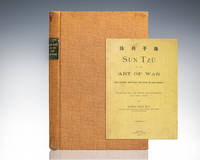
1910149882London: Luzac & Co 1910. First complete English translation of arguably the best twentieth-century translation of Sun Tzu's seminal work on military strategy preceded only by the first translation into French of 1772 by French Jesuit Jean Joseph Marie Amiot and partial translation into English by British officer Everard Ferguson Calthrop of 1905. Royal octavo original printed yellow wrappers bound into full contemporary cloth-covered boards gilt-lettered morocco spine label. Provenance: William George's Sons bookseller's label affixed to front wrapper. Lionel Giles the leading Sinologue of his day was not fond of either of his predecessor's translations of the work declaring Amiot's translation an "imposture" of the original and Calthrop's knowledge of Chinese "far too scanty." It was not until the publication in 1963 of Samuel Griffith's translation that Giles met any sort of challenge at all. In very good condition. A very rare and desirable example of this definitive cornerstone of military strategy. The Art of War attributed to Sun Tzu is a foundational text of Chinese strategic thought composed in the late Spring and Autumn period c. 5th century BCE. Structured into thirteen succinct chapters each addressing a discrete principle of warfare the treatise synthesizes tactical philosophical and psychological insights into a coherent and enduring strategic doctrine. Firmly established as the preeminent work among the Seven Military Classics of imperial China—officially codified in 1080 CE during the reign of Emperor Shenzong of Song—The Art of War has exerted a sustained influence on the development of military theory throughout East Asia for over two millennia. Its emphasis on indirect strategy deception and the integration of political economic and moral dimensions of conflict has rendered it indispensable not only to military commanders but also to scholars and statesmen. The treatise's strategic paradigms have long transcended their original martial context. In modern times The Art of War has been appropriated across disciplines informing Western and Eastern approaches to diplomacy corporate strategy legal theory competitive sports and organizational leadership. Its adaptability and intellectual rigor continue to make it a critical reference point in discussions of power conflict and human behavior. Luzac & Co hardcover
20142081502111904580national library 2014. Soft Cover. Fine. The book is in fine condition. national library paperback
1930WRCLIT64620Paris: The Black Sun Press 1930. Oblong small quarto. Printed wrappers. A fine nearly untouched copy without foxing in glassine wrapper and somewhat worn and soiled publisher's slipcase and chemise with split at one joint. First edition in this format American deluxe issue. Illustrated with six original color lithographs by Marie Laurencin printed by Desjobert of Paris. From a total edition of 790 copies this is one of twenty copies of the American issue specially printed on Hollande Van Gelder with a duplicate suite of the six lithographs in sanguine bound at the end. Five of the six lithographs in the suite are signed by the artist with the sixth signed in the plate. Laurencin has also signed the limitation page. Neither the copies on Rives nor the special copies on Japon were issued signed either on the colophon or on the lithographs. MINKOFF A39. MONOD 2304. The Black Sun Press unknown books
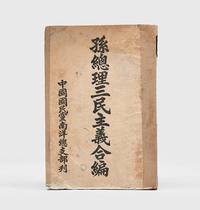
1924180007China: Zhongguo guomindang nanyang zongzhibu c.1924. A fundamental text of modern Chinese political thought A rare early edition of the official Kuomintang anthology of Sun Yat-Sen's 1924 lectures on the 'Three Principles of the People' which became the defining exposition of his famous political theory following his death the following year. This example was issued by the party's Nanyang headquarters the branch covering the Chinese south coast and south-east Asia the sheets likely printed in China. The lectures delivered between January and August at Guangdong Higher Teacher's College "were given on Sunday mornings to audiences of two thousand to three thousand people. The audience packed into the hall consisted of government and party officials students and 'people from all walks of life.' Sun's listeners were generally attentive though sometimes distracted by fatigue or hunger one attendee recalled rushing to the dining hall once Sun concluded his remarks for the day" Strand pp. 255-6. Of the 16 talks 6 each were devoted to the principles of "nationalism" and "democracy" and 4 expounded on "the people's livelihood." They crystallized his three decades of political theorizing and activism serving as a last testament that could be readily used and abused by the different political factions that claimed throughout the 20th century to be the true custodians of his legacy. As Sun spoke without a prepared text his talks were transcribed by Zou Lu a Kuomintang official. After Sun had made edits and corrections the transcripts were issued separately one booklet per principle and then as one volume at the end of 1924. Institutional holdings of early Kuomintang printings of the lectures are low. For the booklets the National Library of China holds a copy of each with different paginations to the relevant sections here. The present edition was reproduced in Volume 45 of the 2023 Taibei 268-volume edition of Sun's writings suggesting copies are held in the depositories of Sun's writings and manuscripts in Taiwan and Guangzhou but otherwise it is entirely untraced. Around the time of Sun's death Shanghai's Minzhi Shuju published a trade edition of the lectures. This is a little more common institutionally. Octavo 245 x 170 mm. Vignettes and diagrams in text; text in Chinese. Original buff wrappers later brown paper backstrip and reinforcement to front cover front wrapper lettered in black. Contemporary red ink stamp on front cover; mid-century purple ink annotations on rear wrapper and internally. Wear and soiling contents browned as usual for paper of this period: a very good copy showing heavy signs of use. Marie-Claire Bergère Sun Yat-sen 1998; David Strand An Unfinished Republic: Leading by Word and Deed in Modern China 2011. unknown
19622409180259xbvkJamaica, Island Worcester [and Things] - Ceramics, 1962. Material: Ceramic / Total height (Pot with lid): ca. 39 cm; diameter at foot: ca. 15 cm, largest diameter (open top of 'pot'): ca. 24 cm. / Colour: lightbrown-rosé with white partly gilt-lined embossments and partly gilt inscriptions; foot and pineapple-top: white. / Weight: ca. 3 kg.
20182081502111907509national library 2018. Soft Cover. Fine. The book is in fine condition. national library paperback
20162081502111906077national library 2016. Soft Cover. Fine. The book is in fine condition. national library paperback
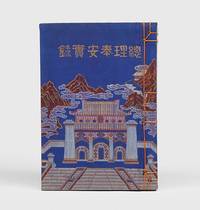
1929172181Nanjing: Zongli fengan huakan bianzuan weiyuanhui 1929. Bidding China's "National Father" farewell First and only edition and printing of the official commemorative publication for Sun Yat-Sen's state burial distributed as a gift by the Chinese Ministry of Foreign Affairs. Over one hundred photographic illustrations record the elaborate multi-day ceremony and the appearance of Sun's mausoleum; these are accompanied by several folding architectural plans. Loosely inserted is the ministry's printed presentation card. Following Sun's death on 12 March 1925 the Kuomintang formed a 12-man committee tasked with overseeing the construction of a massive mausoleum on Mount Zijin in Nanjing. The stakes were high: amidst the breakdown of the Kuomintang's relations with the Chinese Communist Party and Chiang Kai-Shek's tightening grip on the party-state exerting control over Sun's legacy and image was paramount. The design of the site was opened to public tender the committee requiring the winning design to combine traditional Chinese styles with modern concepts of adaptive architecture. The winning architect Lu Yanzhi 1894-1929 died before construction finished and his vision was seen through to completion by his colleague Poy Gum Lee 1900-1968. Lu and Poy's American training is reflected in such design elements as the layout of the site which draws on the Mall in Washington and the Liberty Bell and the design of a statue of Sun seated in Lincoln-esque fashion. In spring 1929 the internment ceremony began with the transfer of Sun's body from Beiping to Nanjing on a special train named the "Soul Train" in Chinese. "The transfer was designed as a long drawn-out mobile media event that was to spiritually mobilize modernize and unify the population around the spirit and body of Sun Yat-sen". The internment ceremony held on 1 June 1929 after the body had lain in state for three days was a lavish and highly regulated spectacle. The body was escorted by a 3-mile-long procession to the echoes of a 101-gun salute from a gunboat moored on the Yangtze River. At midday as Song Qingling and Sun Ke Sun's wife and son closed the metal door on the tomb the ceremony closed with a national three-minutes silence. This is the most important printed record of one of 20th-century China's defining political events. The majority of copies are now housed in institutional collections and we have traced no others in commerce. Accompanying this copy are two contemporary typescript translations into English of the book's captions. Large octavo. With 73 plates 4 collotype and 35 half-tone plates 7 maps and plans 6 folding ornate title page after calligraphy by Han Minjing. Original lavish silk brocade lettered in gold orange thread xianzhuang stitching spine and covers lined with tan silk. With original blue cloth folding case xylographic label on front panel reproducing calligraphy by Chiang Kai-Shek lined with decorative blue paper bone toggles. Brocade bright some losses to silk on spine rear cover silk lining worn and feathering where sometime damp text and illustrations very well preserved one folding plan with small hole not affecting printed area: a very good copy the binding having lost none of its lustre in very good case with rubbing a little soiling and cockling to lining. Rudolph G. Wagner "1925-1928: Enshrining the Father of the Republic" China Heritage Annual available online. hardcover
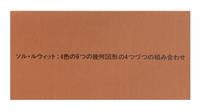
108941 oblong leaf of explanatory text & 4 color woodcut plates 222 x 457 mm. each signed & numbered by the artist loose as issued housed in orig. handmade paper wrapper orig. publisher’s portfolio. Tokyo: Galerie Watari 1980.<br /> <br> <br> An extremely rare suite of four woodblock prints all numbered and signed by Sol LeWitt 1928-2007. These prints were finely executed on Echizen-Kizuki-Hosho paper by the Adachi Institute in an edition of 40 copies 10 A.P. The same year Shizuko Watari’s Galerie Watari also published a scarce LeWitt artist’s book with a slightly shortened title All Four Part Combinations of Six Geometric Figures. Both publications coincided with the artist’s exhibition at Watari’s gallery which opened 1 March 1980.<br /> <br> <br> Boldly printed in blue black red and yellow our set of this print suite features a circle square triangle and rhombus matching the combination of shapes of 1980.08 in the catalogue raisonné see below. Based on the portfolio title there are probably four distinct shape combinations with 10 copies printed of each.<br /> <br> <br> The portfolio and the four prints are in pristine condition in the publisher’s original cardboard enclosure and slipcase. Unrecorded by WorldCat. We did locate examples of the present portfolio at these two American institutions: Carnegie Museum of Art and Ohio University’s Kennedy Museum of Art.<br /> <br> <br> ⧠Sol LeWitt Prints Catalogue Raisonné online 1980.07-.09 with title as Four Part Combinations of Geometric Figures in Four Colors. unknown
1928228991Paris The Black Sun Press 1928. 1928. 4to. Illustrated with one double-page facsimile. Original cream wrappers printed in red and black. Original glassine dust jacket slight wear. Fine. Enclosed in a later 1/2 black morocco over black cloth slipcase with folding chemise. Number 13 of 16 copies on Japan paper with an original Typed Letter Boldly Signed "Henry James" Sussex Lamb House Rye October 18 1912. 8 1/8" x 10 1/8"; 3 pages 2 separate leaves. With two small ink corrections by James. To Walter Berry: Letter written in anticipation of Berry's upcoming visit to James. In part: "I welcome your generous compassion and am really not far from thinking that I rather deserve it. I have had a weary dreary sordid squalid time and don't even yet feel the tide to have very decidedly turned. Still I do get up - though I don't get further and I am at this moment in the depths of a demoralized loll the armchair most intimately acquainted with the imprint of my figure aiding whence I weave and try to waft to you these vague symbols of hope and trust." Walter Van Renssalaer Berry was the scion of an old New York family and close friend of both James and Edith Wharton. Minkoff A 16. Edel and Laurence C 8 - This letter was previously unpublished. Soft cover. Fine/Fine. Paris, The Black Sun Press, 1928. hardcover books
701380 woodcut illus. in the text. 100; 89 folding leaves. Two vols. 8vo orig. wrappers minor foxing & rubbing orig. block-printed title labels on upper covers label on Vol. I no longer present new stitching. Kyoto: Murakami Kanbei 1668. First Japanese edition in Chinese with Japanese reading marks of the Yin hai jing wei a Chinese ophthalmological classic with 80 woodcut illustrations of various eye diseases. Some Chinese authorities have suggested that Simiao Sun 581-682 the famous physician of the Tang dynasty was the author of this work but other evidence supports a later date for the work at least during the Song Dynasty and perhaps afterwards. Sun known as "the King of Medicine" was a "great alchemist as well as an eminent physician and medical writer."-Lu & Needham Celestial Lancets p. 121. This was one of the chief texts used in the ophthalmological practice of Japanese physicians of the "middle ages" in Japan. It includes therapeutics operations and the use of moxa in ocular disorders. It is based on the theory of wu lun ba kuo showing the illustrations of a variety of eye diseases and explaining the causes and prescriptions of each disease. A fine set. ❧ Mestler A Galaxy of Old Japanese Medical Books IV p. 328-& illus. on Plate 1. Needham et al. Science and Civilisation in China Vol. 5 Part III pp. 132-39. Unschuld Medicine in China. A History of Ideas p. 160-"At the beginning of the seventh century Sun Ssu-miao a scholar versed in all humanistic endeavors compiled an extensive collection of prescriptions in which he combined as already indicated the concepts of systematic correspondence with Taoist techniques of demonic exorcism as well as with certain Buddhist notions.". unknown books
701380 woodcut illus. in the text. 100; 89 folding leaves. Two vols. 8vo orig. wrappers minor foxing & rubbing orig. block-printed title labels on upper covers label on Vol. I no longer present new stitching. Kyoto: Murakami Kanbei 1668.<br/> <br/> First Japanese edition in Chinese with Japanese reading marks of the Yin hai jing wei a Chinese ophthalmological classic with 80 woodcut illustrations of various eye diseases. Some Chinese authorities have suggested that Simiao Sun 581-682 the famous physician of the Tang dynasty was the author of this work but other evidence supports a later date for the work at least during the Song Dynasty and perhaps afterwards. Sun known as “the King of Medicine†was a “great alchemist as well as an eminent physician and medical writer.â€â€“Lu & Needham Celestial Lancets p. 121.<br/> <br/> This was one of the chief texts used in the ophthalmological practice of Japanese physicians of the “middle ages†in Japan. It includes therapeutics operations and the use of moxa in ocular disorders. It is based on the theory of wu lun ba kuo showing the illustrations of a variety of eye diseases and explaining the causes and prescriptions of each disease.<br/> <br/> A fine set.<br/> <br/> ⧠Mestler A Galaxy of Old Japanese Medical Books IV p. 328–& illus. on Plate 1. Needham et al. Science and Civilisation in China Vol. 5 Part III pp. 132-39. Unschuld Medicine in China. A History of Ideas p. 160–“At the beginning of the seventh century Sun Ssu-miao a scholar versed in all humanistic endeavors compiled an extensive collection of prescriptions in which he combined as already indicated the concepts of systematic correspondence with Taoist techniques of demonic exorcism as well as with certain Buddhist notions.â€. unknown
19081191031908. First Edition . SUN TZU. The Book of War. The Military Classic of the Far East. London: John Murray 1908. Octavo original gilt- and red-stamped green cloth. $8500.Rare first British edition of this essential military treatise""a text of matchless wisdom""dating back to the 5th century BCE featuring the translation into English by Calthrop a lovely copy in original cloth.Better known by the more popular translation of the title Art of War this seminal book of military strategy was written in the 5th or 6th century BCE and is attributed to Sun Tzu who ""is regarded as the first Chinese to have written about military affairs and as the founder of strategy"" Cornelli Sun Tzu and the Indirect Strategy. While there remains dispute over his life the work's profound influence is uncontested. ""It has been consulted by military figures and business strategists"" from Napoleon to Mao Zedong. General Douglas MacArthur stated ""I always kept a copy of Art of War on my desk"" and West Point uses it in a seminar on military strategy. To Sun-Tzu ""war was an extension of politics and required a coherent strategic and tactical theory and a practical doctrine governing intelligence planning command operational and administrative procedures To fight and conquer in all your battles is not supreme excellence; supreme excellence consists in breaking the enemy's resistance without fighting"" Ancient History Encyclopedia.The work remains pivotal to leaders in business the law professional sports and diplomacy. Its essential message is: ""Ripeness is all. That is he or she who takes a strategic approach to business lifewho is fit in mind body and spirit who is always ready for just about anythingis the player most likely to win the ongoing war that is life."" In effect the goal is to be ""so prepared for battle that battle has been rendered unnecessary"" Wall Street Journal. It is ""a text of matchless wisdom"" New Statesmen. Sun Tzu's work is a ""classic not just a military classic in the same sense that Thucydides' Peloponnesian War is a classic rather than a military classic like Thucydides it conjures the entire spectrum of human motivations that lead the already ultra-powerful to seek more power through violence. this classic returns us time and time again to the human scale and the extraordinary deeds that men and women find themselves capable of given the right situation"" Literary Hub. Each chapter is devoted to a unique aspect of warfare and treats it comprehensively. First translated into European languages about 200 years ago; this translation by Captain E.F. Calthrop was completed in the aftermath of the Anglo-Japanese and Russo-Japanese Wars. His translation served as the only one available until it was supplanted by that of Giles a British scholar. While Calthrop was treated as an interloper into the field of translation the importance of his endeavor should not be underestimated. Indeed Calthrop's achievement was made even more impressive by a later discovery that his mistakes were due in part to the source of his translationa Japanese version of Sun Tzu which was apparently corrupt. The first edition in English was published as Sonshi in Tokyo in 1905 Samuel Sunzi Art of War. Initially issued in 1905 this revised edition is the first British edition. Minor toning to spine. A very nearly fine copy. hardcover books
In-4, [12] ll. (incl. frontispiece), 689 pp., [9] ll., engraved title-page, full-page coat of arms of the dedicatee on the verso of the title, 12 copper-engraved plates; contemporary vellum, ms. title stamp, one clasp remaining, blue edges (tiny stain touching some margins, very rare sporadic browning, small cover defects). Genuine beautiful copy.
192922389Paris: Black Sun Press 1929. First edition. One of 150 copies printed. Minkoff A25. Presentation copy inscribed by the publisher Harry Crosby to his father: "SVRC Stephen Van Rensselaer Crosby from Harry" with an accompanying sketch of his personalized sun symbol and the Black Sun Press's emblem. "In August Harry Crosby delivered one hundred and fifty copies of 1450-1950 to Brown who quickly sent most of them on to publishers and friends sixty of whom he listed opposite the title page under the heading "Free Copies." In return Brown hoped for a few kind words that might be useful in reviving a writing career that had been quiescent for close to fifteen years. 1450-1950 is an amusing mixture of ideography and calligraphy examples of which Brown had been amassing - with obvious pleasure - for many years. "I like looking back / at the / Illuminated manuscripts of / 1450 / And forward / to the / more Illuminations / Movie Scripts of / 1950 I like to see / Fly Specks / on yellowed pages / I like too / Leaving my own on / New ones / My Fly Speck." In his dedication to "all monks all early oriental artists . . . " Brown playfully attempted to locate his work in the history of innovative printing and himself among those authors celebrated as much for their matter as for their manner of expression. By early fall he had gathered a garland of testimonials from among others Gertrude Stein H. L. Mencken and William Carlos Williams." Harry Crosby was found dead in his New York studio on December 10th 1929 evidently a casualty of a suicide pact: in one hand he held a pistol and in his other arm his twenty year old lover Josephine Noyes Rotch Bigelow also dead of a bullet to the temple. - Hugh Ford Published In Paris N. Y.: Macmillan 1975 p. 200- 210. On the same day Crosby had made his last entry in his diary: "One is not in love unless one desires to die with one's beloved. There is only one happiness it is to love and to be loved." When Jonathan Williams reissued 1450-1950 as Jargon 29 in 1959 the publisher observed: "That it should take him JW thirty years to locate a copy of Bob Brown's utterly charming and singular book is a measure of the almost cultish regard 1450-1950 has commanded from its contemporaries. If you didn't own a copy you were automatically cast into either of the modern outer darknesses then beginning to pullulate: Squaresville or Beat City. The virtues of 1450-1950 are publicly attested by many luminaries on the back cover blurb - among them Geltte Burgess who invented the word blurb." Among those quoted on the back cover are Gertrude Stein Marcel Duchamp Carl Van Vechten William Carlos Williams Carl Sandburg Walter Lowenfels James Johnson Sweeney Gelett Burgess Stuart Davis and Caresse Crosby who wrote to Brown: "We show your book to everyone who comes to the house and they always find some page that so especially delights them that soon we will have to chain it down like an ancient missal. A fine copy of a rare book with the "Crosby Cross" bookplate and the Black Sun Press blindstamp on the endpaper in the publisher's gold foil folder which is somewhat worn. 8vo original printed wrappers publisher's glassine dust jacket publisher's foil folder. A fine copy of a rare book with the "Crosby Cross" bookplate and the Black Sun Press blindstamp on the endpaper in the publisher's gold foil folder which is somewhat worn. Black Sun Press unknown
1908140941539London: John Murray 1908. First English-language edition. Very Good. First British edition. First in the English language as well. Never reprinted and there was no American edition of Sun Tzu until World War II. 132 pp. Publisher's green cloth stamped in red and lettered in gilt. Very Good with a little staining to cloth light wear two former owners' names on paste down pages toned with age offsetting to a few preliminary pages' text with a little discoloration a few easily erasable penciled tic marks to margins. Scarce.<br /> <br /> <p>A foundational text of military strategy written in the 5th or 4th centuries BC attributed to Chinese military general Sun Tzu. Its focus is on outsmarting opponents without resorting to physical conflict which has inspired countless works on strategy business and game theory. John Murray unknown books
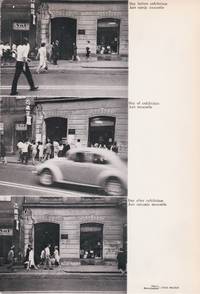
54371Belgrade: Galerija SKC 1971. Quarto 30.5 × 21 cm. Original blind-stamped folder with transparent title page; 32 plates on glossy card stock. Folder with slight signs of wear; preface with a few highlighter marks; else very good. First and only edition of the extremely rare catalog of the first two important international exhibitions of conceptual art in Yugoslavia which saw participation by renowned artists such as Robert Barry Joseph Beuys Daniel Buren Sol LeWitt and Lawrence Weiner. In April 1971 the exhibition "At the Moment" was shown in Zagreb and then continued in Belgrade under the title "In Another Moment". In Zagreb the exhibition of works by 16 international artists and 3 artist groups did not take place in a prestigious museum or gallery space not even in a white cube but in the gateway of an ordinary apartment building on a busy street in the old town. Three photographic images in the catalog document this simple inconspicuous gateway on the "Day before exhibition" "Day of the exhibition" and "Day after exhibition". The catalog makes it impressively clear that the choice of location was itself conceptual in its randomness and simplicity by placing the photographs prominently at the beginning. Apart from this seemingly random driveway the pictures show nothing more than passers-by and on the day of the exhibition a somewhat larger group of visitors and a VW Beetle driving past.<br /> <br /> The foreword by Nena Dimitrrijević also begins with the sentence "An international exhibition organized in a hall-gate of an ordinary apartment house ." Last but not least the aim was to desacralize art. The works were to be literally removed from their pedestals and taken out of the temple of art and onto the street. The "conception were the negation of the gallery as a constant and 'consacrated' exhibition space" according to the introduction. The duration of the exhibition was also unusual. The works were only shown for three hours. Although the Belgrade continuation took place in a gallery a disruption of conventions was also built into this location. The exhibition was interrupted twice to create new constellations. The crucial point however was that it was not the curators or artists who were responsible for the rearrangement but one member of the technical team in each case. In this way the two exhibition organizers Nena and Braco Dimitrijević continued the working principle of conceptual art of delegating as many steps as possible in order to interrupt the fetishization of art and the continuity of the work with the artist. The door was literally opened to chance. The present catalog also continues this concept. Instead of the usual bound book pages the catalog consists of loose plates placed in a folder which can be rearranged as desired. Although the plates are numbered on the back they are not arranged according to content but merely alphabetically according to the names of the artists and groups.The cardboard-like plates in the catalog can therefore be placed in relation to each other in a variety of ways. Thanks to the excellent print quality each panel is not merely a reproduction but an individual work in its own right. The folder thus resembles a transportable exhibition that can be rearranged by anyone. The greatest possible flexibility was the declared aim of the two exhibition organizers. Cf. Seraina Renz Kunst als Entscheidung: Performance- und Konzeptkunst der 1970er Jahre am Studentischen Kulturzentrum Belgrad München 2018 pp. 123-132.<br /> <br /> The catalogue documents works by Giovanni Anselmo Robert Barry Joseph Beuys Stanley Brouwn Daniel Buren Victor Burgin Jan Dibbets Braco Dimtrijević Barry Flanagan Grupa / E KOD Grupa OHO Douglas Huebler Alain Kirili Jannis Kounellis David Lamels John Latham Sol Lewitt Goran Trbuljak Lawrence Weiner Ian Wilson.<br /> <br /> As of April 2024 OCLC lists only 2 copies in North America MoMA and Clark Art Institute. unknown