11 903 résultats
72429aafFribourg, 5 b Grand Fontaine / Paris, Librairie de la société bibliographique, 1878 - 1879, gr. in-8vo, demi-toile (bibl.).
19902210310315xbvkOslo, Chr. Schibsteds Forlag, 1990. 240 pages, few illustrations. - Publisher's silver-titled blue leatherette binding with colour-illustrated dustjacket; 8vo.(ca. 21,5 x 16 x 2 cm).
Derek E. Ostergard and NiIn Pristine Condition. unknown
1867MC6-932Chemnitz, Focke Verlag, 1867. Halbleinenband der Zeit, 8?, 2 Blatt, 71 S. und 8 Tafeln mit Abbildungen und mehreren Tabellen; Exemplar gestempelt; Zustand: gut
184210075Paris Imprimerie de Mme vve Bouchard-Huzard 1842 1 Paris, Imprimerie de Mme vve Bouchard-Huzard, 1842, in-4, cartonnage vert à la bradel, couverture vertes cons., (cart. post.).
Torino Tip. Chirio e Mina, 1837. (cm. 20 x 12,5). Cartonato coevo muto. Pp. 79 e IX tavole f.t. più volte ripiegate. L’opera descrive diversi macchinari tessili introdotti in Piemonte e ragiona sulla loro efficienza meccanica e convenienza economica. Le nove tavole illustrano le macchine ed il loro funzionamento. Splendido esemplare. Bibl: Manno I, 2351.
1835013806Wilh. Langewiesche, Iserlohn, Barmen 1835. Pappe Solide
196452322AB1964-1979. Ca. 29,5 x 21 cm (Buch und Handschrift), ca. 21,5 x 16 cm (Grabrede). Buch: 237 Seiten + umfangreicher Bildteil; Handschrift: 30 einseitig beschriebene Blätter; Grabrede: 12 Seiten. Originalkartonierte Einbände bzw. Halbleinenband.
1861SB-15791Kiel, F. Mohr / Akademische Buchhandlung, 1853 - 1861. Neuerer schwarzer Halbleinenband mit goldgeprägtem Rückentitel; Buchdeckel mit anthrazitfarbenen Leinenbezügen; farbige Vorsätze.
29,5 x 21 cm. Vervielfältigtes Typoskript mit 83 einseitig bedruckten Blatt Text sowie 12 Blatt mit 20 aufmontierten Fotoabzügen und diverse Faltpläne und Tabellen am Schluß. Bedruckte Orig.-Broschur. *Ein Privatdruck der Firma in wohl kleinster Auflage, enthält den umfassenden Untersuchungsbericht des Fachingenieurs L. Kollbohm aus Lübeck über die große Explosion eines Turbosatzes im Großkraftwerk "Stettin". "Am 5. November 1933 ist bei einer Schnellschlussprobe der Turbosatz V in der Zentrale II [...] zerstört. Ueber Ursache und den Verlauf dieses Schadensereignisses bestehen zwischen den bisher tätigen Sachverständigen Meinungsverschiedenheiten. Um eine einwandfreie Beurteilung durch Dritte zu ermöglichen, soll diese Denkschrift eine umfassende Darstellung des Schadensfalles geben" (Vorwort). - Enthält neben der am Schluß handschriftlich von Kollbohm unterzeichneten Denkschrift anschauliche originale Fotoabzüge der zerstörten Anlage. - Diese Denkschrift ist im KVK weder in einer öffentlichen Bibliothek verzeichnet noch gibt es im Internet zu dieser Denkschrift oder zu dieser Explosion heute noch Informationen. Es dürfte sich heute wohl um ein Unikat handeln, denn ein weiteres Exemplar dieser Denkschrift ist nicht bekannt bzw. in den mir zugänglichen Quellen nicht verzeichnet. - Vorsatzblatt mit handschriftlicher Geschenkwidmung der Ehefrau des Verfassers Kollbohm an ihren Sohn. Bücher de
192928992ABBerlin, Maximilian-Gesellschaft, 1929. 4°. 27 x 20 cm. Unpaginiert. Original-Halbpergamentband. Mit goldgeprägtem Rückentitel auf braunem Lederschildchen. Kopfgoldschnitt. Im Original-Pappschuber. [3 Warenabbildungen]
Gr. 4°. (ca. 32,5 x 24 cm). Around 200 p. (Danish Language). Half cloth volume with mounted title label to spine. (= Nordisk Haandvaerker - og Industritidende: 1872/1873). Archive volume with few small stamps and notes inside. Boards with some signs of use. Paper inside a bit browning, otherwise well preserved. Appropriate to its age and use still in good condition. 48 issues in one volume. With numerous technical illustrations and interesting contemporary advertising. Probably no more numbers appeared.- - - ACHTUNG! Dieses Buch kann wegen seines Gewichts oder seiner Größe nur als PAKET verschickt werden. Innerhalb Deutschlands 5,80 Euro. (Portokosten ins Ausland bitte erfragen.) / ATTENTION! Due to its weight or size this book can only be sent as a PARCEL. Within Germany 5,80 Euro (For shipment abroad please ask).
Publication anonyme de Philippe MACQUER, homme de lettres et avocat (1720-1770), réunisant des articles d'auteurs divers sur "plus de deux cents arts": "arts", très variés, traités (domaines de la chimie, de la physique, de la pharmacie, de la confiserie, de la distillerie, de la parfumerie, d'arts décoratifs divers, de la verrerie, des perles, de la métallurgie et des mines, des teintures et impressions, de l'architecture, de l'acoustique et de la lutherie, de l'horlogerie, de la peinture et des arts graphiques, de l'agriculture et de l'élevage, des vêtements et accessoires, des métiers et fabrications divers, sucre, tabac, savon, etc ) et auteurs et sources éventuelles précisés dans l'avertissement. Edition en 3 volumes: 1/ Aciérie - Eventailliste; 2/ Facteur de clavecins - Mines; 3/ Miroitiers - Vuidangeur. Exemplaire bien complet. Français
196991607Chemical Publishing Co., New York 1969. 382 S. mit zahlreichen Abbildungen, 8°, Original-Pappband (Hardcover), Bibliotheks-Exemplar (Privatbibliothek) mit Rückenschild, Stempel auf Vorsatz und Titel, Einband in selbstklebende transparente Schutzfolie eingeschlagen, insgesamt gutes und innen sauberes Exemplar, (library sample in good condition),
198891655North-Holland, Amsterdam 1988. zusammen 1801 S. mit zahlreichen Abbildungen, 4°, Original-Pappbände (Hardcover), Bibliotheks-Exemplare (Privatbibliothek) mit Rückenschildern, Stempel auf Vorsatz und Titel, Einbände in selbstklebende transparente Schutzfolie eingeschlagen, insgesamt gute und innen saubere Exemplare,
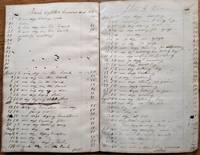
1851859Bellefonte PA 1851. <p>Large 4to.  305 x 200 mm. 12 ¼ x 8 inches. 170 pp. Well used manuscript written in ink. Contemporary calf backed boards; rubbed and a bit worn spine chipped.</p> <br /> <p>This is a ledger account book belonging to John Robison a Pennsylvania shoemaker. Like many artisans in Nineteenth century America Robison found income not only in his trade but also through other sources. Robison farmed the land he lived on selling products such as grain wheat and potatoes. Robison also ran a general store providing neighbors with commodities such as butter flour wool salt and vinegar. Shoemaking however proved to be Robison's most lucrative form of income and there are accounts for heeling. mending "half soaling" and "soaling."</p> <br /> <p>The exact location of Robison's business is difficult to determine although two Pennsylvania towns Bellefonte and Elk Township are both mentioned in the book. Most of the entries are ledger lines naming a customer the service provided or item sold to them and the amount received. In some cases the ledger details wages Robison paid to laborers hired to work his fields who provided services such as plowing and mowing hay. It also seems that Robison occasionally let a spare room in his house to boarders charging two dollars per week.</p> <br /> <p>The most interesting entries do not deal with Robison's business transactions. On one page a "spiritual song" is transcribed. On the facing page is a "cure for the splint" a malady effecting horses. The following page recounts an adventure of Robison in Elk Township in which he assisted a "subscriber" in catching a five year old mare that had escaped his property.</p> <br /> <p>This ledger is a very interesting record of the daily activities of a craftsman in a rural nineteenth century town. It provides a unique look into the means by which such people made their living as well as the workings of rural Pennsylvania markets.</p> <br /> <p> </p> . unknown books
In folio, mm 320x235, pp. 16, con 9 belle tavole fotografiche fuori testo. Brossura editoriale a stampa con titoli blu incorniciati al centro del piatto. Fioriture sparse ai margini della brossura, lievi, altrimenti ottimo esemplare. Si tratta della prima pubblicazione aziendale della società Edison, stampata per l'inaugurazione della centrale di Paderno d'Adda, fu la prima centrale idroelettrica costruita dalla Edison che già l'anno prima aveva inaugurato la centrale termoelettrica di Porta Volta e nel 1883 quella di Redegonda. Le macchine generatrici installate (9.500 Kw) sono per l'epoca le più potenti d'Europa. La centrale è collegata a Milano con una linea elettrica lunga 32 km. è la prima volta che una tensione di tale potenza, elevatissima per l'epoca (13.500 Volt), percorre una tale distanza per essere sfruttata in un luogo diverso da quello di produzione. In queste densissime 16 pagine vengono percorse tutte le tappe della costruzione della centrale, con dovizia di particolari: sono citate tutte le aziende italiane che contribuirono alla costruzione della Centrale: Pirelli per i cavi elettrici, Guzzi Ravizza per il motore; Riva Monneret e C. per le turbine, Richard Ginori per gli isolatori, eccetera. Tra i numerosi ingegneri che collaborarono all'impresa vengono nominati Angelo Bertini, Carlo Esterle, Guido Semenza, Enrico Carli e Paolo Milani. La centrale è in funzione ancora oggi. Raro, 2 copie nelle biblioteche italiane, nessuna all'estero (ICCU e Worldcat).
1872152571872 demi-chagrin vert, titre sur le Ier plat (rousseurs, qq. planches détachées, mouillure au 2eme plat atteignant la derniere photo). in-4 oblong, 23ff. , 19/20 planches photographiques montées sur carton, P. Symonds ca. 1872
2091502133539146Toyo Keizai Shimposha N.A. Soft Cover. Fine. Number of books: 1 Toyo Keizai Shimposha paperback
19902091502133533902Kyoiku shoseki 1990. Soft Cover. Fine. Number of books: 1 Kyoiku shoseki paperback
In 4°; (166) pp. e (6) p. bianche .Vari disegni nel testo ed alcuni inserti di tessuti di seta. Legatura coeva in mezza tela con titolo impresso in oro al dorso. Magnifica grafia di metà ottocento di questa raccolta inedita di appunti, raccolti dallo studente Carlo Biraghi, di uno scritto del professore Luigi Bossi dedicato alla teoria e fabbricazione delle Stoffe di seta, secondo, probabilmente, le lezioni tenute dallo stesso Bossi. Il noto professore di tessitura serica ed ingegnere Luigi Bossi, autore di uno dei più celebri manuali sulla tessitura della seconda metà dell'ottocento (edito nel 1874) fu anche colui che costruì ed attivò la macchina a vapore con una potenza di 2 cavalli che riscaldò e mosse i 60 aspi, a partire dal 1846, della Filanda del Rag. Andrea Bossi. Luigi Bossi mise le proprie conoscenze al servizio della tessitura e dell'industria tessile del nord Italia, divenendo figura di riferimento per le nuove generazioni di imprenditori tessili. Partendo dalla teoria della seta, l'autore prosegue descrivendo il molinaggio, la trama, l'organzimo, varie qualità di sete lavorate come la granatina, l'ovale, il plate, la fantasia o Chappe, il fioretto, la crepe, il marabout, per proseguire poi con il titolo della seta, il perimetro o assaggiatore della seta, la stagionatura della seta, la cappiatura e assortitura della seta, la tintura della seta, i prodotti ottenuti dalla seta tinta in diversi colori per ogni Kg. Di seta cruda, la purga della seta, la tinta in cotto e a colori, la tinta in nero fino e minerale, la tinta in raddolcito o souple, la tinta in nero biscotto, tinta delle trame ingallate, la tinta a crudo, la tinta delle seti cotte e caricate, l'aspetto che presentano le sete tinte nei diversi processi, la cura per la conversazione della seta in magazzino, l'incannaggio delle seti, le precauzioni da usarsi nell'incannaggio, l'orditura, le precauzioni da usarsi nell'orditura, i rocchetti, l'imbancaggio, ordimenti-ombreggianti, l'imbancaggio per ombreggiati di 6 gradazioni primitive, l'avvertenza sull'incarnaggio delle sete per ompreggiati, gli schemi della regola per ottenere 21 gradazioni derivate da 6 gradazioni prmitive oppure 22 gradazioni d 8 gradazioni primitive. Segue un saggio o guidana con esempi, le regole per gli ordinamenti rigati, il piegaggio, il modo di fare il calcolo per disporre l'organzino alla tinta, il modo di calcolare la quantità di trama greggia da disporre alla tinta o già tinta, altri risultati che si possono ottnere coll'uso del divisore cost.se, il modo di calcolare la quantità di filato, la regola per il tessimento, vari esercizi o conti di fabbrica. Alla fine dell'opera seguono 60 pagine dedicate alla macchina Jacquard con un bel disegno spaccato dello stesso ed un attenta analisi delle sue parti e del suo utilizzo. Nel 1801 il francese Joseph-Marie Jacquard presentò questo tipo di telaio, dotato di un macchinario che permette, con l'ausilio di una scheda perforata, la movimentazione automatica dei singoli fili di ordito e che rivoluzionò il campo dell'industria tessile. Rarità bibliografica in perfette condizioni di conservazione.
19946Nimes, imprimerie Soustelle-Gaude, 1853 et Nimes, imprimerie Ballivet et Fabre, 1841, 1 pleine percaline. 1 volume in-8 de 195 pages et relié à la suite: (4)-246 pages + 1 feuillet d'errata ;
1960101539BBLindau, 1960er Jahre. 23,5 x 30 u. 20 x 17,5 cm.
Z1-F-021-01047Spon Press. Used - Good. Ships from UK in 48 hours or less usually same day. Your purchase helps support Sri Lankan Children's Charity 'The Rainbow Centre'. Ex-library so some stamps and wear but in good overall condition. 100% money back guarantee. We are a world class secondhand bookstore based in Hertfordshire United Kingdom and specialize in high quality textbooks across an enormous variety of subjects. We aim to provide a vast range of textbooks rare and collectible books at a great price. Our donations to The Rainbow Centre have helped provide an education and a safe haven to hundreds of children who live in appalling conditions. We provide a 100% money back guarantee and are dedicated to providing our customers with the highest standards of service in the bookselling industry. Spon Press unknown
versch. Formate. 21 Photographien (schwarz/weiss). Original-Klarsichthülle mit vorderseitigem blauen Titel-Aufdruck ("Krupp-Fotos") und dem Firmenzeichen. Aufnahmen rückseitig mit Beschriftung und Datierung. Hülle mit leichten Gebrauchsspuren, Photos sehr gut erhalten. Altersentsprechend sehr guter Zustand. Die Photographien (1960, schwarz/weiss) aus der Krupp-Presseabteilung liegen in zwei Formaten vor. 16 Photographien im kleineren Format 13 x 18 cm und 5 Photographien im größeren Format 18 x 24 cm. Alle haben eine Beschreibung auf der Rückseite, jeweils in deutscher und englischer Sprache. Die Ansichten tragen folgende Titel: Alfried Krupp von Bohlen und Halbach vor einem Porträt seines Urgroßvaters Alfred Krupp / Probelauf eines 6250-PS-Schiffsdiesels / Fahrbare Trinkwasserquelle / Krupp-Kugel wurde zur Weltsensation / Gigantische Technik: Schaufelradbagger im rheinischen Braunkohlengebiet / Berthold Beitz / Alfried Krupp von Bohlen und Halbach / 4 Millionen Tonnen Rohstahl ... / Einer der Selbstbedienungsläden der Krupp-Konsum-Anstalt / Seit rund 100 Jahren baut Krupp Wohnungen für seine Mitarbeiter / Der Zweck der Arbeit soll das Gemeinwohl sein / In den Zeichensälen / Hafen, Möllerung und Hochofenfront des Hüttenwerkes in Rheinhausen / Fertigmachen von Radsätzen für Waggons bei Krupp in Essen / Metallographin an einem Elektronenmikroskop / Krupp untersucht Bodenschätze in aller Welt / BBC/KRUPP-Atomreaktor / Neue Krupp 2500-t-Presse mit Manipulator / Lokomotivfabrik Krupp Essen / Mechanische Werkstatt Krupp Essen / Brücken von Krupp in vielen Ländern. Hochinteressante Sammlung aus der Firma Krupp im Jahre 1960!