152 résultats
19892092902143901403Osaka Association of Architects 1989. Soft Cover. Fine. Number of books: 1 book Osaka Association of Architects paperback
19782091202133209362Not Available 1978. Soft Cover. Fine. Volume: 1 Not Available paperback
191645078Chicago and New York:: Paris Garters made by A. Stein & Co. ca. 1916. Some light foxing; but extremely attractive. Consisting of a sample men's garter and men's arm band each with original printed cardboard mounting set into the original box illustrated in color with two attractive young ladies gathering roses. The garter "No metal can touch you" was patented in 1908 and 1914; the armband was patented 1916. Paris Garters, made by A. Stein & Co., unknown
192028350LES SABLES D'OLONNE 1920 un PLAN ORIGINAL aquarellé en lavis de couleur rouge et manuscrit à l'encre brune, sur papier crème, Format : 54,5 centimètres de haut par 69,5 centimètres de large, plan à l'échelle de 0,01 cm par mètre, bordant d'une part : LA RUE BASSE, LA RUE DES DAMES ET LA RUE DU COEF, sans date (1920) ,
19782091202133101534Sanseisha 1978. Soft Cover. Fine. Volume: 1 Sanseisha paperback
19205789Aden /Germany, SD (Circa 1920). 1920 18 cartes postales en tirage sépia (90 x 140 mm), dont 9 sur bristol et 9 sur papier albuminé. Chemise à rabats de papier neutre.
193946634Shanghai: Nishimura Company 1939. Edition not stated. Quarto 26.5cm; black simulated leather stamped in red and gilt in brown paper slipcover; unpaginated photo-illustrated plates w/ rice paper overlays. Wear minor scuffs and soiling to boards; toning and foxing intermittent throughout text especially on overlays; some overlays creased or torn. Slipcover worn and chapped with abrasions and two large one repaired tears across front panel. Photo-illustrated pastedowns and endpapers. Very Good in Good slipcover. All text in Japanese with some obsolete/antiquated kana/kanji oriented right to left. This is a privately-issued commemorative yearbook-type photo album shashin-cho published on behalf of the Imperial Japanese Army medical forces during the Second Sino-Japanese War 1937-1945. Specifically it was produced for those who served under military physician captains/commanding officers Nobuo Isa and Tetsuo Fukaya who were stationed in or near Shanghai at the time.<br /> <br /> By July 1939 the Imperial Japanese Army was beginning to feel the impact of its own mounting casualties and costs; the Chinese Red Army would launch a major offensive later that November. While the Japanese occupation of Shanghai was notably brutal there is little evidence of violence in this album. However some photographs do depict the aftermath of battle with ruined buildings and soldiers being treated for injuries. Other subjects are mundane in nature: Staff and group portraits hospitals and other facilities physicians at work company events and ceremonies. Also includes photographs of Shanghai and a fold-out map of the Hangzhou Bay area. Apparently not cataloged in OCLC or available commercially as of November 2019. Nishimura Company unknown
193946634Shanghai: Nishimura Company 1939. Edition not stated. Quarto 26.5cm; black simulated leather stamped in red and gilt in brown paper slipcover; unpaginated photo-illustrated plates w/ rice paper overlays. Wear minor scuffs and soiling to boards; toning and foxing intermittent throughout text especially on overlays; some overlays creased or torn. Slipcover worn and chapped with abrasions and two large one repaired tears across front panel. Photo-illustrated pastedowns and endpapers. Very Good in Good slipcover. All text in Japanese with some obsolete/antiquated kana/kanji oriented right to left. This is a privately-issued commemorative yearbook-type photo album shashin-cho published on behalf of the Imperial Japanese Army medical forces during the Second Sino-Japanese War 1937-1945. Specifically it was produced for those who served under military physician captains/commanding officers Nobuo Isa and Tetsuo Fukaya who were stationed in or near Shanghai at the time.<br/><br/>By July 1939 the Imperial Japanese Army was beginning to feel the impact of its own mounting casualties and costs; the Chinese Red Army would launch a major offensive later that November. While the Japanese occupation of Shanghai was notably brutal there is little evidence of violence in this album. However some photographs do depict the aftermath of battle with ruined buildings and soldiers being treated for injuries. Other subjects are mundane in nature: Staff and group portraits hospitals and other facilities physicians at work company events and ceremonies. Also includes photographs of Shanghai and a fold-out map of the Hangzhou Bay area. Apparently not cataloged in OCLC or available commercially as of November 2019. Nishimura Company unknown books
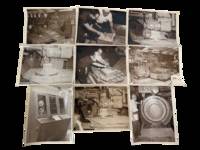
1960233821960. Industrial factory photograph archive documenting large scale machining systems automated tooling equipment and precision manufacturing processes during the height of postwar American industrial expansion circa 1960s. Several scenes feature Sundstrand branded machinery associated with the Sundstrand Corporation a major Rockford Illinois manufacturer of machine tools aerospace components and industrial automation systems during the Cold War industrial economy. By the 1960s American factories increasingly relied on massive numerically controlled machining equipment capable of producing aircraft parts turbine components and heavy industrial hardware with levels of precision unattainable in earlier manually operated machine shops. These photographs record the physical scale of that transition capturing the integration of computerized or semi automated production systems into factory environments that formed the backbone of aerospace defense transportation and heavy manufacturing industries during the period.<br /> <br /> Photo archive of 9 Large Silver Gelatin photographs each 8" x 10" circa 1960s. Interior factory scenes show enormous industrial machining centers occupying tiled production floors beneath overhead lighting and exposed structural systems. Multiple photographs depict large circular indexing tables rotary cutting assemblies suspended tooling heads and enclosed control units bearing visible "Sundstrand" identification. Engineers and machinists wearing shop coats and protective glasses appear adjusting tooling mechanisms calibrating machine components and servicing cutting assemblies surrounded by heavy cables hydraulic systems and banks of industrial controls. Several machines are shown actively engaged in metal cutting operations with curled metal shavings accumulating beneath rotating tooling heads and across surrounding platforms. One scene captures technicians removing or fitting a large machined component beneath a circular cutting apparatus while another documents reel based electronic control equipment integrated into the production system reflecting the growing use of automated process control in industrial manufacturing during the decade.<br /> <br /> The 1960s marked a decisive transformation in American manufacturing as industries shifted from conventional machining toward automated and numerically controlled production methods capable of supporting aerospace engineering military procurement automotive manufacturing and mass industrial output. Companies such as Sundstrand played a central role in supplying the specialized tooling and machine systems that allowed factories to machine increasingly complex metal components at industrial scale. Some curling scattered edge and surface wear as well as foxing to margins; images remain sharp with strong detail. Overall in good condition. The photographs preserve direct visual evidence of the machinery labor practices and production environments that defined late midcentury industrialization before many such facilities were modernized outsourced or dismantled during later waves of deindustrialization. unknown
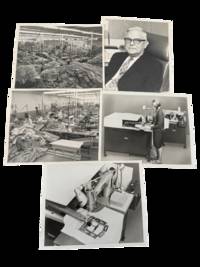
1950233261950. Garment factory photographs documenting women's industrial sewing labor machine based apparel production and managerial oversight in the postwar United States circa 1950s with direct evidence of how mass clothing manufacture depended on large sewing rooms specialized equipment and gendered factory work. Archive documents the production floor as a working system rather than a single portrait scene placing rows of women at Pfaff machines beside piles of cut or partly finished garments while a separate executive portrait and staged equipment views link shop floor labor to administration and industrial sales culture. The group matters because postwar clothing production relied heavily on women's wage labor in factories where speed repetition and machine specialization turned fabric into standardized output for a growing consumer economy.<br /> <br /> Photo archive of 5 Large silver gelatin photographs each 8" x 10" circa 1950s. Two photographs show the main sewing room from wider angles with long rows of women seated at machine stations beneath suspended electric lines and task lighting while large heaps of striped fabric or finished garments spill across tables and benches in the foreground. The workers are positioned close together in a dense production space organized around straight runs of tables and sewing heads with little separation between labor stations and material flow. One photograph isolates a woman operating a large Pfaff industrial unit in a cleaner demonstration setting while another gives a close technical view of a Pfaff machine head and work plate. A fifth photograph shows an older male executive or manager seated in an office.<br /> Postwar apparel production expanded through factories that combined assembly line logic with skilled but repetitive needlework and women formed a large share of that labor force in garment plants across the United States. The Pfaff machines represent the technological side of production while the sewing room views show the human structure that made the machines profitable with women handling fabric continuously at closely arranged stations under managerial control. Light handling wear and minor curling to edges. Overall very good condition. The archive preserves the relationship between labor machinery and output at a moment when industrial clothing manufacture still depended on concentrated factory work before later shifts toward overseas production transformed the industry. unknown
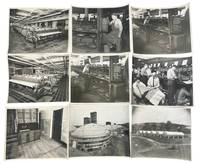
1945234071945. Reading Pennsylvania factory photo archive documenting textile machinery production and hosiery manufacturing work circa late 1940s to early 1950s at or near the Wyomissing industrial complex associated with Textile Machine Works and Berkshire Knitting Mills. Reading became one of the major American centers for full fashioned knitting machinery after Ferdinand Thun and Henry Janssen founded Textile Machine Works in 1892 and the equipment seen here belongs to the world of stocking manufacture before seamless nylon hosiery reshaped the industry in the 1950s.<br /> <br /> Photo archive of 17 large silver gelatin photographseach 8 x 10 inches Reading or Wyomissing Pennsylvania circa 1940s to early 1950s. Rows of large knitting machines fill long factory rooms under fluorescent lighting; workers stand beside circular or braiding machinery marked with chalked Greek words; an engineering office includes men studying large technical drawings; machine tools metal stock exterior factory buildings tanks and utility structures place the scenes within a large industrial plant. Several versos are stamped "Paul Bauer Photographer 608 Franklin St. Reading Pa." and "Photo by Paul Bauer." Several shop-floor views include a chalked Greek vocabulary list beside the machinery a striking detail in a Reading industrial region that had an established Greek immigrant community by the early twentieth century.<br /> <br /> The archive records the machinery workers drafting practices and plant environment behind Pennsylvania's textile machinery economy at the point when American hosiery manufacturing still depended on large specialized mechanical systems and skilled shop labor. Documenting the production floors machine details engineering rooms workers and exterior plant views. Minor edge and curling; images remain clear and well preserved. Overall in very good condition. unknown
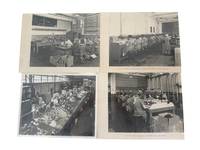
1940235071940. Women's wartime factory labor photo archive depicting rubber molding inspection precision trimming packing and bench production in the United States during the World War II era. More than six million women took wartime jobs in American factories and wartime labor needs moved women into industrial work involving machinery inspection aircraft parts laboratory work and other production roles previously coded as male labor. The captioned Parker views place women inside a rubber parts operation where quality control hand finishing and distribution preparation were treated as essential production work. The archive records the practical shop-floor labor behind the larger wartime shift: long tables stools bins boxed parts inspection lamps trimming tools and women working in sequence across a factory interior.<br /> <br /> Photo archive of 4 large silver gelatin photographs each measuring 8" x 10.75" United States circa 1940s. One caption reads "View of inspection of Parker-molded rubber parts" with women seated along a long worktable examining parts before distribution. Another caption reads "Operators with equipment for precision-trimming of mold rubber parts" showing women working at a row of bench stations with overhead cords boxes and factory equipment. Additional scenes show women packing sorting and assembling small molded components at long tables surrounded by stacked cartons metal containers industrial windows and production shelving.<br /> <br /> During and after World War II women's factory labor did not simply fill temporary vacancies; it proved women could perform skilled industrial tasks in defense-related production even as many employers pushed women out of those jobs when men returned from military service. Light handling wear corner wear minor creasing and curling; photos generally clean and clear and captions remain legible on two mounts. Overall in very good condition. This archive shows the wartime demand for women's labor in order to keep American production moving during the war. unknown
19692081402109803362Koyu-sha 1969. Soft Cover. Fine. Volume: 1 Koyu-sha paperback
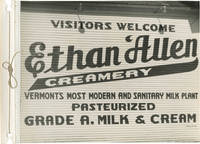
1930149350N.p.: N.p. 1930. Archive of six double weight borderless photographs of the Ethan Allen Creamery in Essex Junction VT circa 1930s. The photographs contain images of both the creamery buildings and interior of the facilities including the vats used to pasteurize milk at what the creamery's sign claims is "Vermont's most modern and sanitary milk plant."<br /> <br /> Photographs roughly 9.75 x 7.75 inches. Fine. Tipped onto linen on the left edge and bound with a string. Housed in a contemporary card folder with a vintage photography studio label to the rear pastedown. N.p. unknown
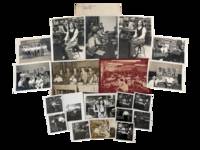
1940233241940. Dictaphone Corporation factory photographs documenting women and men manufacturing dictating machines in Bridgeport Connecticut circa 1940s showcasing the postwar expansion of women's employment inside a growing communications technology industry. The group centers on Dictaphone's Bridgeport plant at 335 Howard Avenue where workers appear at long rows of benches with recording and transcription equipment tool drawers lamps wiring and partly assembled machines placing this archive within the larger World War II and postwar reorganization of American factory labor. Several photographs give women a central place within that system not as incidental figures but as seated operators bench workers and posed employees inside the production rooms themselves grounding the archive in the history of women's industrial employment as office technology manufacturing expanded beyond clerical use into large scale commercial production.<br /> <br /> Archive of 21 pieces including 20 black and white and one red photographs ranging from 2" x 2" to 5" x 7" and original envelope. Bridgeport Connecticut circa 1940s. One original company envelope is printed "DICTAPHONE CORPORATION / 335 HOWARD AVENUE / BRIDGEPORT CONN." fixing the factory location. Interior views show crowded production rooms under fluorescent strip lighting with dozens of workers seated at benches operating or assembling dictating machines and related components; in the largest image male workers fill a deep factory floor while several men in the foreground lean into handsets or testing devices at stations packed with equipment. One view shows a male worker alone at a bench in a long machine lined room with belts tools and suspended mechanisms overhead; several smaller prints show women seated at desks or worktables women and men posed together on the shop floor and mixed groups of workers assembled outdoors or around demonstration tables with supervisors and visiting men in suits. The images repeatedly emphasize rows of benches machine bodies cords lamps and standardized work positions while the envelope and repeated factory interiors tie the lot to Dictaphone's manufacturing operation rather than to sales or office promotion alone.<br /> <br /> During World War II and the immediate postwar years firms producing office equipment occupied an important place in the broader American communications and business machine economy supplying devices that organized dictation transcription record keeping and administrative workflow for corporations law offices and government users. This archive makes that industrial system visible at the level of labor showing how the growth of business technology relied on factory discipline gendered employment patterns and the integration of women into production space during a period when wartime labor demand altered who worked at the bench and who appeared in the industrial workforce. Light edge wear envelope toned. Overall very good condition. A concentrated visual record of 1940s office machine manufacturing placing women's industrial labor inside the production history of one of the leading American dictation companies. unknown
197645761Stuttgart Germany: Porsche KG 1976. Original Porsche red vinyl 4 ring binders with printed title label in spine compartment. General wear & soiling. Some foxing to paper. Some leaves detached some dividers chipped. Overall Very Good. 4 volumes. Divers paginations. Plastic tabbed section dividers. Illustrated with photographic images drawings schematics graphs etc. 12-1/8" x 10" <br/><br/>Covers Assembly Groups: 1 2 3 4 5 6 7 8 9 0. Essential reference for 1970s Porsche 911 enthusiasts. Porsche KG unknown books
1930149350N.p.: N.p. 1930. Archive of six double weight borderless photographs of the Ethan Allen Creamery in Essex Junction VT circa 1930s. The photographs contain images of both the creamery buildings and interior of the facilities including the vats used to pasteurize milk at what the creamery's sign claims is "Vermont's most modern and sanitary milk plant."<br/><br/>Photographs roughly 9.75 x 7.75 inches. Fine. Tipped onto linen on the left edge and bound with a string. Housed in a contemporary card folder with a vintage photography studio label to the rear pastedown. N.p. unknown books
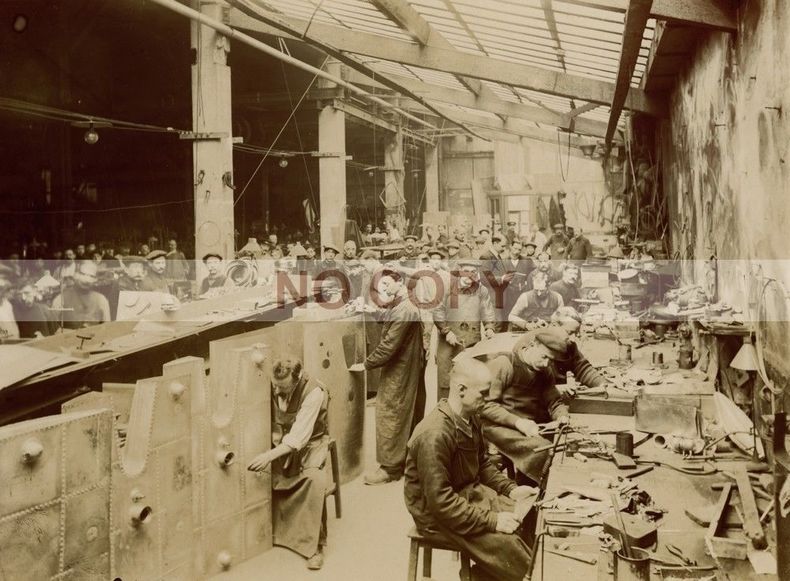
1920AMO-2999Très belle et très rare photographie originale ancienne (vers 1920) de l'intérieur de l'atelier Louis Blériot à Paris, rue Henri Chevreau. Photo par Yvon à St-Mandé (cachet au verso) Dimensions du tirage : 23 x 17 cm Très bon état, bon contraste, sépia. Grand format. Voir photo. Filigrane NO COPY évidemment absent de la photographie originale vendue dans cette annonce. thème : avion aviation aéronautique industrie usine ouvriers atelier
1981149836Manchester: Factory Records 1981. Vintage promotional sticker announcing upcoming releases from Factory Records from July through December 1981. Included are the release dates Factory Records number artist and title information and format. Featuring the rarely seen FCL Factory Records Division designation and logo. <br/><br/>The period covered by the sticker includes releases by Joy Division the double album of studio and unreleased material "Still" and the video album "Here are the Young Men" New Order's debut album "Movement" and second single "Procession / Everything's Gone Green" and the 12" single "Waterline / Funaezekea" and a video called "Untitled" by A Certain Ratio. <br/><br/>4.5 x 5.5 inches. Unpeeled with backing intact. About Near Fine with a diagonal crease to the top edge and light rubbing to the edges. Factory Records unknown books
19692091502135202851Kyo bunsha 1969. Soft Cover. Fine. Size: 37cm Number of books: 1 Kyo bunsha paperback
1940233861940. Marathon Paper Mills and later American Can Company industrial safety archive documenting workplace medicine accident prevention campaigns first-aid training and factory safety administration in Menasha Wisconsin from the 1940s-60s. The album records how Midwestern paper and graphic arts manufacturers attempted to reduce industrial injuries during a period when paper mills and printing plants remained physically hazardous workplaces filled with heavy rollers cutting machinery chemical exposure steam systems and high-speed industrial presses. During the postwar decades American manufacturers increasingly institutionalized safety committees plant nursing departments and employee first-aid instruction in response to rising workers' compensation costs union pressure and national workplace safety campaigns promoted by organizations such as the National Safety Council. Marathon Paper Mills was acquired by American Can Company in 1957 placing the Menasha Graphic Arts plant within one of the nation's largest packaging and industrial printing corporations.<br /> <br /> Photo and scrapbook archive of over 100 pieces with approximately 75 black-and-white photographs including twelve 8 x 10 inch prints with typed programs corporate memoranda newspaper clippings conference photographs official correspondence and safety-related ephemera Menasha Wisconsin 1940-1969. Group portraits identify attendees at the Fox River Valley and Lakeshore Safety Conferences of 1940 1941 and 1942. Numerous mounted photographs depict factory nurses treating workers administering oxygen equipment conducting examinations teaching first-aid procedures inspecting washrooms and sanitary facilities and leading emergency-response instruction for plant employees. Workers stand beside industrial presses and mechanical equipment while captions stress housekeeping sanitation accident reporting and machine safety. Several pages preserve newspaper coverage celebrating "one million safe man hours" and "three consecutive years of safe working without a disabling injury" alongside a 1969 letter signed by Wisconsin Governor Warren P. Knowles congratulating the American Can Graphic Arts Plant on its safety record. A 1953 letter from the National Safety Council thanks Marathon Corporation for photographs displayed at the Industrial Nursing Section exhibit during the National Safety Congress in Chicago directly tying the album to nationally circulated industrial safety programming.<br /> <br /> The album preserves a narrower glimpse into ground level industrial plants with the emergence of workplace medicine and safety management as formal corporate systems. The main photographs focus on the Marathon First Aid Department where nurses supervisors and workers collaborated in organized training programs intended to reduce accidents and standardize emergency response inside hazardous production environments. Captions repeatedly emphasize sanitation inspections accident prevention emergency transport and employee instruction demonstrating how industrial safety became both a managerial program and a public relations tool during the postwar era. Photographs mounted with corner tabs throughout; scrapbook pages retain mounted newspaper clippings letters and typed documentation; light toning occasional adhesive discoloration and minor edge wear present. Overall in very good condition. unknown
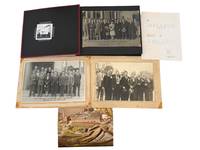
19083618Hauptversammlung des Vereins Deutscher Ingenieure. Bezirksverein Dresden. Dresden 1908. 25 Orig.-Photographien im Format ca. 22 x 28 cm. Aufnahme mit Apparaten u. Objektiven der Hüttig AG, Dresden. Kopiert auf "Schwerter-Platino-Mattpapier Chamois" der Vereinigten Fabriken photographischer Papier, Dresden. Jeweils einzeln montiert in Papierumschlag, innen mit Seidenhemdchen, außen mit Bezeichnung u. kurzer Beschreibung. Lose in Orig.-Leinwandmappe mit geprägtem Deckeltitel.
19082201030038xbvkBlackburn, R. Denham & Co. / Southport, Shackerley Literary Agency; 1908. viii pages incl. foretitlepage, photographic frontispice-plate on glossy paper, titlepage, Dedication, 'Prelude', 'Contents' and prefaces to the first (''Feb. 16th, 1907.'') and this second edition (''Jan. 1st, 1908.''); 92 pages, except the photoplate printed on untrimmed handmade rag-paper throughout. - Publisher's illustrated cardboard-wrapper, titled in red and black, ornamentally framed; 8vo.(ca. 19,5 x 13,5 cm).
19671458751967. Archive of eight vintage borderless photographs three typescript essays and a carbon typescript of the first essay and first page of the second by photographer Jerry Bauer circa 1967 with the photographs corresponding to the topics of the essays. <br/><br/>Bauer was an American photographer best known for his photographic portraits of writers with his portraits of Samuel Beckett being held in particularly high regard. Much of his work resides in the collection of the National Portrait Gallery in London.<br/><br/>The first essay "The American Underground: Mind Expansion A Messiah 'Love'" is an examination of Timothy Leary and the "League for Spiritual Discovery" LSD a communal organization carrying out studies in the religious use of psychedelic drugs as well as the effects of LSD. Two photographs are of the New York Millbrook estate mentioned in the essay one of the centers for the group one photograph of the estate itself and the other of two participants on the porch. Another photograph shows three young people lounging on a bed a young man with beads in his hand matching the description in the essay of a subject's focus on "a set of beads" and a description of the living quarters being ". . . simple: mattresses on the floor." <br/><br/>The second essay "American Underground : Mind Expansion The Poets 'Love' 2" is broken into three sections. The first is about the musical group The Fugs who Bauer describes as "the Beatles of the American underground." Two of the photographs in and around Washington Square Park feature members of The Fugs one of a gleaming Ed Sanders and Geoff Outlaw with two unidentified young women. In a second photograph the same group is on the grass along with Ken Weaver and a third unidentified young woman.<br/><br/>The second section of the essay is about "the two stars" of the underground film movement Andy Warhol stars Baby Jane Holzer and Edie Sedgewick with a corresponding photograph taken in Warhol's Factory showing Ingrid Superstar sitting on a mattress Baby Jane Holzer on the floor with her back to the camera along with several unidentified subjects. Holzer is identified from a published photograph by Bauer titled "Baby Jane Holzer" taken at the same time as the one in the archive.<br/><br/>The final section of the essay is a about American youth and drug culture in Greenwich Village as well as the neighborhood itself. Here the related photographs are of several young people seated on the grass one playing the guitar in Washington Square Park and one of several people standing around a Greenwich Village intersection.<br/><br/>The third essay "Andy Warhol: Film Director of America's Underground" is a study of Warhol's early experimental films. Beginning with a brief summation of Warhol's early career Bauer goes on to postulate about Warhol's films discussing the director's various regulars including Elekro Baby Jane Holzer Sally Kirkland Nico here spelled "Nicot" and others.<br/><br/>Photographs: Six photographs 10.75 x 8.25 inches two photographs 10.75 x 8 inches. Near Fine overall.<br/><br/>Ribbon typescript essays: 8.25 x 10.75 inches. Typescript on onionskin stock six leaves bound with a silver corner clip. Near Fine.<br/><br/>Carbon typescript essays: 8.25 x 10.75 inches. Carbon typescript on onionskin stock three leaves bound with a silver corner clip. Near Fine. unknown books
192453007Rochester NY: Consolidated Machine Tool Corp. 1924-1953. Two vols. 4to. 147; 131 leaves all w/ 278 silver gelatin photos sized 8.5 x 11 in. all preserved in archival mylar sleeves and nearly all with typed captions dated and often pen & pencil annotations on versos most with hole punches at gutter blank margin from being bound originally in 3-ring factory binders. Uniformly bound in recent black cloth post-binders gilt lettering stamped on covers & spines NF set. This remarkable factory photo archive documents the durable and invaluable machine tools which built American industrial production through the 1920s and the post-World War II era. The Colburn drill presses turning lathes boring machines and boring mills were essential for such companies as Ford Motor Co. Maxwell Motorcar Co. John Deere Oakland Motor Car Co. Delco Light Co. International Harvester Nash Motors Co. Allis Chalmers Manufacturing Co. Caterpillar Tractor Co. Monarch Tractors Co. Hughes Tool Co. of Los Angeles part of Hughes Aviation Westinghouse and so many others. Many of the images show the connecting rods gears bearings engine blocks and other parts manufactured by these massive machines. A large number of the photos in the first volume show machines built and installed for the first National Machine Tool Builders’ Exposition which was held Sept. 19-23 1927 in the Cleveland Auditorium and attracted over 12000 attendees including Henry Ford the Dodge Brothers Durant George Westinghouse and many other automotive and industrial innovators and builders at the time. A number of these machines were also sold to Railroad companies including the Missouri Pacific the International & Great Northern Railway in Palastine TX the Chesapeake & Ohio Railway Co. in Huntington WV and more. The second volume includes Newton duplex milling machines cold saws and hot saws for metal especially aluminum and more. These photos show Newton machines being sold to Dodge Chrysler Buick General Motors Ford Bendix Wright Aeronautical Corp. ALCOA as well as photos showing engine blocks being milled and the internal works of many of the machines. Newton was originally founded in 1880 by Charles C. Newton who specialized as a twist drill manufacturer in Philadelphia and continued to expand operations until merged with Betts Machine Co. and Colburn Machine Tool Co. in 1922 to form the Consolidated Machine Tool Corp. of Rochester NY. Colburn Machine Tool Co. was founded sometime in 1890 by Henry J. Colburn and after his death in 1902 was run by his son Leslie who died in 1918. The Company which maintained a number of machinery patents for drill presses and table saws was merged later with Consolidated in 1922. Consolidated Machine Tool Corp. operated on Blossom Road in Rochester NY producing tools and machinery used in metal and plastics manufacturing. In 1951 they were acquired by the Farrel-Birmingham Co. operating until 1983 when they were sold to the Conlon Corp. See: Directory of American Toolmakers: Early American Industries Association 1999; Betts Machine Co. Manufacturers Index Vintage Machinery 2017; Colburn Machine Tool Co. Franklin PA Manufacturers Index Vintage Machinery 2017. Consolidated Machine Tool Corp., hardcover