Sermones de sanctis et de commune sanctorum Sermons for the Sanctorale and for the Common of SaintsABAA

4 092 résultats
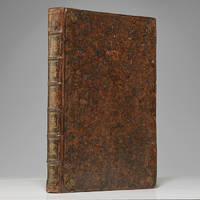
TM 767MEDIEVAL SERMON MANUSCRIPT IN A FIFTEENTH-CENTURY CHAINED BINDING CHAIN INTACT decorated manuscript on parchment in Latin Austria Vienna or Southern Germany c. 1275-1300. 182 x 127 mm. 190 folios complete written in a rapid Gothic hand with cursive influence in two columns of thirty-two to thirty-seven lines justification 141-143 x 96-100 mm. parchment ruled in brown ink quire signatures guide notes for rubrication red rubrics capitals and names of cited authorities stroked in red rhymed phrases underlined in red red paraphs two- to three-line plain red initials two-line red initial with pen flourishing in red f. 131v occasional scribal corrections and marginalia. BINDING: Fifteenth-century blind-tooled and -stamped red calf with eight engraved and bossed cornerpieces intact fore-edge clasp and chain hasp with intact chain with two manuscript fragments serving as front flyleaf and lower pastedown. Chained libraries were a late medieval solution to the problem of providing access to needed books in an institution while at the same time preventing theft and we can assume many late medieval volumes were once chained. Most however have been rebound or survive without the chain and other metalwork and intact chained bindings such as this one are uncommon. TEXT: This extensive collection includes more than one hundred sermons from the <i>Sermones de sanctis et de communi sanctorum</i> of the early Franciscan writer Conrad of Saxony d. 1279 together with his very popular text the <i>Speculum beatae Mariae virginis</i> all copied not long after their composition. This is however not simply a copy of Conrad's sermon cycle since some of his sermons are omitted and six sermons by contemporary Dominican authors Martinus Polonus Aldobrandinus de Calvacantibus and Antonius Azaro de Parma as well as eight sermons by unidentified authors were also included. It seems likely this is an example of a re-working of Conrad's texts for a Dominican audience who would have prized it as a preaching aid and for its pronounced Marian focus. Marginal annotations attest to the early use of these sermons most likely by preachers. PROVENANCE: Written in Southern Germany or Austria at the end of the thirteenth century as suggested by evidence of spelling script and decoration. Belonged to the Dominican house attached to the Church of St. Maria Rotunda in Vienna as indicated by two fifteenth-century inscriptions; here it was probably part of the house's chained library. Belonged to a Dominican convent at KosiÄe in present-day Slovakia as indicated by a sixteenth-century inscription. Belonged to Maurice Burrus 1882-1959 Alsatian philatelist; his ex libris on the front pastedown. CONDITION: Slight rust stains and corrosion in the outer margins of ff. 184-188 margins trimmed away overall in good condition. Full description and photographs available TM 767. books
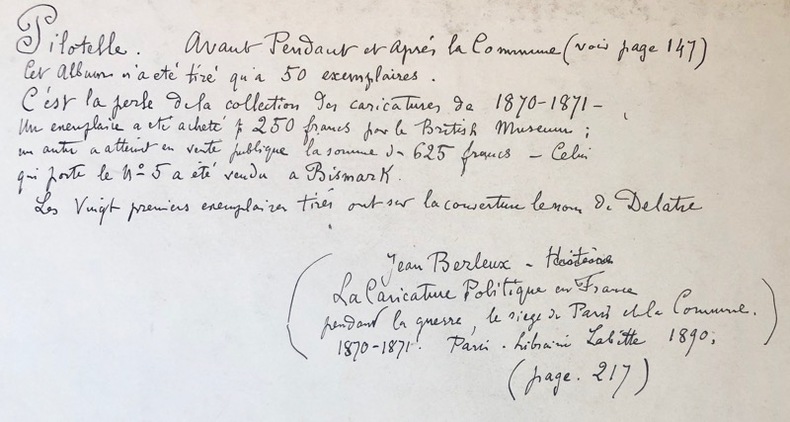
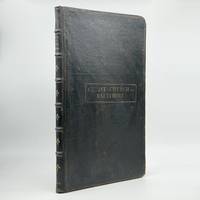
187910407Londres, Imp. Delatre, Howland st. 23, 1879. 1 vol. in-folio de 1 titre, 19 planches et 1 table gravés, maroquin rouge, dos lisse orné, large roulette dorée d'encadrement sur les plats, titre frappé au centre (reliure anglaise de l'époque).
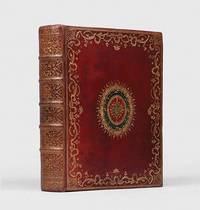
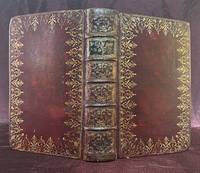
17151067831715. London: printed by John Baskett and by the assigns of Thomas Newcomb and Henry Hills 1715. <br /> <br /> Folio 380 23 3 pp. unpaginated text ends on Aaa4 as per ESTC. Engraved frontispiece by Loggan after Caspars. Title-page printed in red and black ruled in red throughout. Contemporary red morocco covers tooled in gilt with a wide scrolled border central gilt block of the arms of the Duke of Chandos backstrip richly gilt gilt edges a lovely binding of the period in the style of Mearne skillfully restored at head and foot and along joints. Armorial bookplate of John van Hatten.<br /> <br /> § Lovely prayer book bound for James Brydges 1st Duke of Chandos 1674-1744. It once rested on an embroidered cushion in the Duke and Duchess's private pew in his magnificent chapel at Cannons described by the architect Gibbs as "the finest in England." The centerpiece of the elaborately-tooled binding is the Duke's gilt arms supported by two otters beneath a ducal coronet. Four other bindings with the block are recorded by the British Armorial Bindings database. Full description and provenance available on request. ESTC T81463. unknown
106783London: printed by John Baskett and by the assigns of Thomas Newcomb and Henry Hills 1715. Folio 380 23 3 pp. unpaginated text ends on Aaa4 as per ESTC. Engraved frontispiece by Loggan after Caspars. Title-page printed in red and black ruled in red throughout. Contemporary red morocco covers tooled in gilt with a wide scrolled border central gilt block of the arms of the Duke of Chandos backstrip richly gilt gilt edges a lovely binding of the period in the style of Mearne skillfully restored at head and foot and along joints. Armorial bookplate of John van Hatten. § Lovely prayer book bound for James Brydges 1st Duke of Chandos 1674-1744. It once rested on an embroidered cushion in the Duke and Duchess's private pew in his magnificent chapel at Cannons described by the architect Gibbs as "the finest in England." The centerpiece of the elaborately-tooled binding is the Duke's gilt arms supported by two otters beneath a ducal coronet. Four other bindings with the block are recorded by the British Armorial Bindings database. Full description and provenance available on request. ESTC T81463. printed by John Baskett unknown books
17231197771723. BOOK OF COMMON PRAYER. The Book of Common Prayer and Administration of the Sacraments. London: John Baskett and the Assigns of Thomas Newcomb and Henry Hills 1723. Tall folio 10-1/2 by 16 inches contemporary full mottled calf expertly rebacked with original spine neatly laid down corners and spine panels with gilt device of the crown of King George I raised bands renewed endpapers all edges gilt. $8250.Beautiful early 18th-century tall folio edition of the venerable Book of Common Prayer the treasury of ritual prayer and Scripture that has indelibly shaped the piety and literature of the English-speaking worldwith fine engraved frontispiece handsome in nicely restored contemporary calf featuring the gilt device of King George I in the corners and spine panels.Born of Thomas Cranmer's desire for liturgical texts upon which all of Europe's Protestant English-speaking churches could agree the beautiful and dignified language of the Book of Common Prayer first issued in 1549 has considerably influenced not only ecclesiastical practice but also literature in English. ""The language of the Prayer Book is now part of the whole language and as a source of spiritual inspiration it is for most Englishmen second only to the Bible"" PMM 75. This 1723 London edition is handsomely bound in full mottled calf with King George I's gilt monogram cipher in each corner of the boards as well as in each spine panel. Ornamented with fine engraved frontispiece dated 1710 decorative headpieces and woodcut initials. Griffiths 1723:1. A few ink corrections and marginal annotations.A few short wormtraces; text clean. Evidence of cloth ties corners expertly restored. A very handsome volume. hardcover
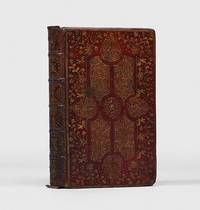
1769160645Oxford: Printed by T. Wright and W. Gill Printers to the University and sold by R. Baldwin and S. Crowder in London; and by W. Jackson in Oxford 1769. Extra-illustrated with a complete suite of engravings A handsome binding made for the Bible trade in contemporary red morocco. This style is sometimes called "Chippendale" acknowledging the contemporary trend towards the use of decorations on bookbindings resembling those popular in other forms of decorative art. This copy has been extra-illustrated with a complete suite of 59 engraved plates The Liturgy of the Church of England London printed by Edward Ryland 1755. The designs are by Samuel Wale 1721-1786 one of the most prolific book illustrators of the 18th century this suite being mentioned in Wale's biography in ODNB though not listed in ESTC. Among the engravers was the eldest of the copperplate printer Edward Ryland's seven sons William Wynne Ryland 1733-1783 a highly skilled engraver who was hanged for issuing two forged bills drawn on the East India Company. Provenance: John William Beaumont Pease Lord Wardington 1936-2019 bookplate; Sotheby's Wardington Library of English Bibles 12 July 2006 lot 126. Large quarto 275 x 210 mm. Extra-illustrated with a suite of 59 plates including title engraved by François Ravenet Charles Grignion Louis Gérard Scotin Walker and William Wynne Ryland after Samuel Wale. Contemporary red morocco spine gilt all over within six compartments between raised bands sides richly decorated in gilt with wide border of rococo scrollwork flowers and insects enclosing a central green morocco onlay enclosing the Sacred Monogram "J.H.S." surrounded by an oval red morocco onlay tooled with stars and dots within an oval onlay of blue morocco tooled with cherubs' heads stars dots and swags the whole surrounded by a gilt gloriole gilt turn-ins marbled endpapers gilt edges. Bookplate of Jeremy & Penny Martin. Small areas of rubbing to joints sig. A4 with marginal tears at upper inner corner and outer edge neatly closed I4 with closed tear at foot entering 10 lines of text but without loss a few minor blemishes still very good overall. ESTC T81296. hardcover
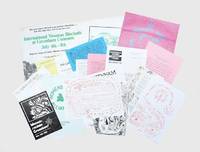
166932Newbury: 1982-c.2000. Positive creative energy will change the world This engaging collection of colourful and optimistic materials encapsulates the camp's ethos of compassion non-violence and female solidarity in its pivotal years of direction action. Included are handouts providing guidance for the "Embrace the Base" demonstration of 13 December 1982 and the "Reflect the Base" event that occurred a year later. The camp at Greenham was founded in 1981 and protested the British government's decision to allow 96 cruise missiles to be stored at the base; it remained at the base for 19 years. Its residents and other temporary attendees engaged in non-violent direction action which one handout describes as "using creative ideas and methods for closing this factory where nuclear warheads are built without threatening or abusing the workforce or the police". The flyers handbills and booklets from Greenham in this collection date between 1982 and 1983 which were the most widely attended years at the camp attracting tens of thousands of women. Greenham was run in a non-hierarchical cooperative manner and its political communications were designed to be accessible. However they contain serious content including advice on how protesters should proceed if arrested. One handout warns that "Non-violence on your part unfortunately does not mean people will treat you non-violently". Several items in the collection demonstrate the movement's importance to mothers and the effort made to be inclusive of them. One poster advertises a children's party on the Common in May 1983. The items in this archive were collected by a peace activist named Andrea. Along with materials from Greenham Common it contains similar communications from later women-centred direct-action movements and letters from peace organizations. There are also several feminist magazines from the 1980s including Lysistrata: A Wimmin's Peace Magazine which focusses on the experiences of Black and Jewish women. Similar material from the Greenham Common Peace Camp are held at the London School of Economics Women's Library. Together over 50 items mostly colour printed containing 26 handbills mixture of single- double-sided and bifolium page size ranging from 208 x 146 to 300 x 210 mm 10 pamphlets 4 posters ranging from 600 x 420 to 210 x 300 mm and other ephemera including white poppies newspaper clipping and bumper sticker. Housed in an archival box. Occasionally lightly damp-stained creased and foxed scattered nicks and short tears to edges: overall in very good condition. unknown
17541216301754. BOOK OF COMMON PRAYER. The Book of Common Prayer Cambridge: Printed by Joseph Bentham printer to the University by whom they are sold and by Benj. Dod in London 1760. Tall folio 10-1/2 by 16-1/2 inches full contemporary dark green morocco rebacked with elaborately gilt-decorated spine laid down with crowned monogram of George II in compartments covers with elaborately gilt-tooled borders and gilt centerpiece featuring the arms of King George II raised bands later marbled endpapers evidence of silk ties. $7500.Splendid folio Cambridge edition of the Book of Common Prayer in a beautiful armorial George II binding with broad gilt-tooled borders elaborate royal cypher in spine panels and splendid gilt centerpiece on each cover featuring the arms of King George II and text hand-ruled in red throughout.Born of Thomas Cranmer's desire for liturgical texts upon which all of Europe's Protestant English-speaking churches could agree the Book of Common Prayer first issued in 1549 with its magisterial liturgical language is ""as a source of spiritual inspiration for most Englishmen second only to the Bible"" PMM 75. This finely printed Cambridge editionset in large type with wide margins and hand-ruled in red throughoutboasts an impressive royal binding bearing the gilt monogram and crown device of King George II in the spine compartments and his gilt embossed armorial design on both boards within an ornate floral border. Griffiths 1754:1. Owner ink signature.Some faint foxing a very few leaves with light edge-wear. Expert restoration to lovely royal binding. hardcover
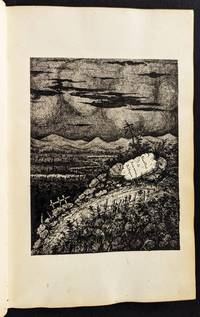
1158<p>8vo. 186x 119 mm. 7 ¼ x 4 ½ inches. 1-14 1 15-19 21-24 1 25-29 1 30-36 1 37-90; folios 74 and 83-90 blank except for page numbers and 4 lines on fol. 85 verso; plus 18 blank leaves at the end followed by 1 leaves containing 3 index pages and 1 final blank leaf. Manuscript section tiles in outline capitals on separate leaves included in foliation. Complete the gap between folios 19 and 21 is a foliation error. Ruled borders throughout. Text in brown ink in a flowing cursive hand varying lines numerous insertions and deletions.                                    </p> <br /> <p>The manuscript on wove paper is illustrated with 20 pen-and-ink drawings of which 7 full-page on rectos with verso blank the first five not included in the foliation and 13 half-page or smaller plus 2 small ornaments.  Bound in black straight-grain morocco covers gilt paneled central panel with arabesque tooling at corners smooth spine with gilt title cartouche lettered “Bluettes†from which extend triple gilt fillets terminating in ornaments at head and tail gilt edges with moiré satin endleaves; binding a bit rubbed with corners bumped.</p> <br /> <p>A manuscript of poems and short prose pieces all in a romantic vein illustrated with quite accomplished pen-and-ink drawings presumably by the author whose name and the date of the manuscript are supplied on the verso of the front free endpaper: “Le Baron Achille de Cholet / Officier á l’Etat-Major / 1836â€.</p> <br /> <p>In the first poem Aux Dames the poet calls himself a “novice Ecolier†implying youthfulness and the date of 1836 on the front fly leaf is probably at the time of writing although some of the many corrections and deletions may have been added later. The titles of the other poems or groups of poems are : Le Rin Le Déserteur L’Isolement L’Impiété Un Croix sur la Montagne La Mère du Prisonnier L’Avenir / á Melle Francine d’Hurbal Rheyms Séparation L’Enfant perdu L’Adieu au Plaisir La Campagne / á Mr le Vicomte Alfred de R. . . Le Cloches du Soir La Neige Les Pauvres and Le Jour des Rois . . .</p> <br /> <p>These stolid sentimental poems and prose impressions reflect the prevailing Romanticism of the period as do the far more skillfully executed pen-and-ink drawings that illustrate them. Somber or dreamlike with dark cross-hatching contrasting with lighter areas the drawings show a dark tunnel under a rocky mountainside a soldier in a garret or prison a cloaked barefoot man an emblematic trophy with musical instruments and weaponry a raven perched on ruined tombstones and columns a domestic scene of father and daughter a women on her knees the façade of Reims Cathedral surrounded by swirling clouds architectural details of cathedrals several surrounded by decaying facades and vignettes of crumbling chateaux pastoral churches and snow-covered gatehouses all of which reflect the vogue for l’ancienne France and the “pittoresque†as notably popularized by Nodier and Taylor in their Voyage pittoresque et romantiques dans l’Ancienne France 23 volumes 1820-1878.</p> <br /> <p>Achille de Cholet was descended from an ancient Anjou noble family according to his obituary in 1888 in the Bulletin héraldique de France vol. 7 235-6. He became an officer in the Légion d’honneur and was well known for his important topographic researches in the south of France. A few of the pieces in the manuscript are dedicated to aristocrats mainly female. It seems likely that the Baron shared his family’s Royalist views: his father had died in exile and his brother whose first name is not given in the obituary was an “ardent champion of the Royalists press†and author of a book title Madame en Vendée relating the attempted coup in 1832 of the duchesse de Berry mother of the Prentender the Comte de Chambord which was pursued and effectively banned by the tribunals indeed the work appears not be recorded in OCLC or other online OPACs. Thanks to Nina Musinsky for this description.</p> . unknown
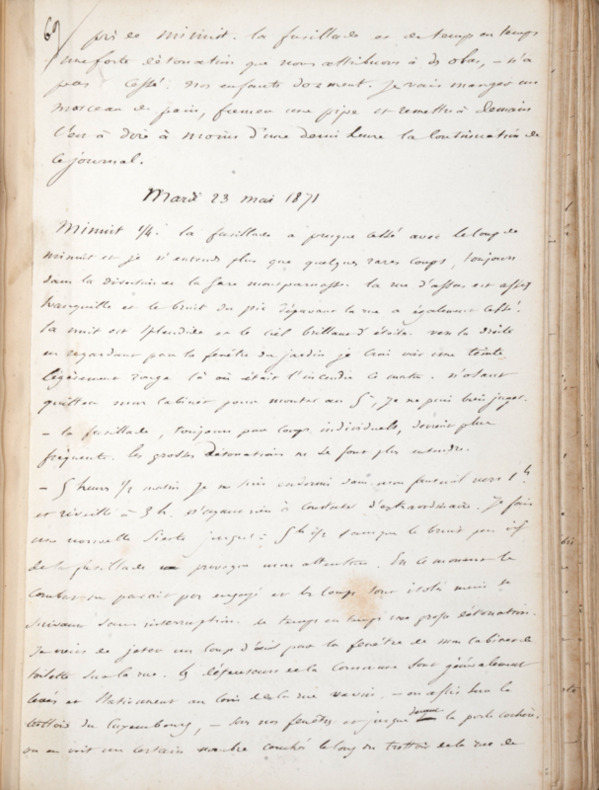
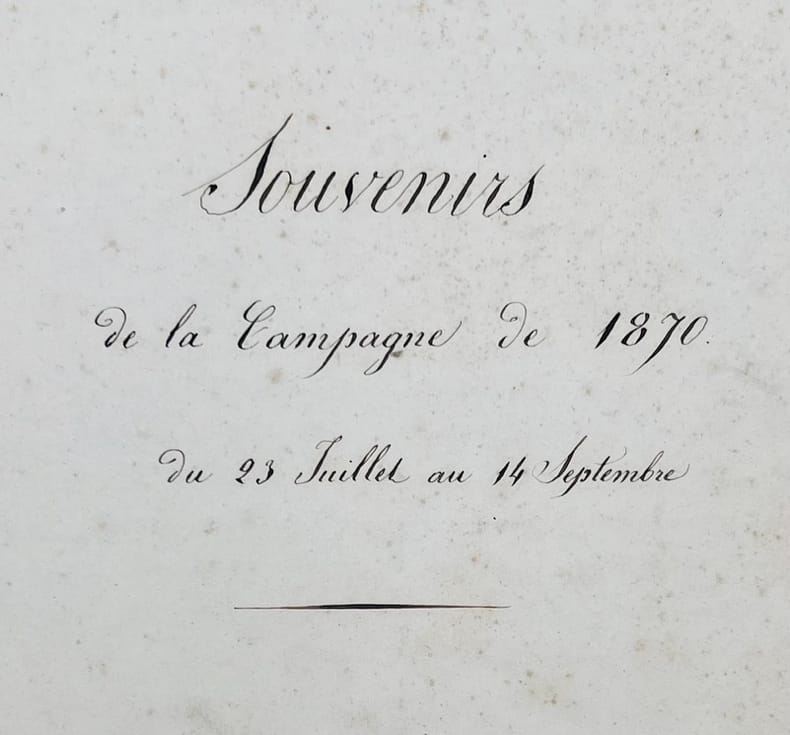
187141289Paris, , 1871. In-8 manuscrit en belle page (15 x 21 cm) de (2)-131 ff. montés sur onglet à 30 lignes par page, demi-chagrin vert, dos à nerfs, titre doré (reliure de l’époque).
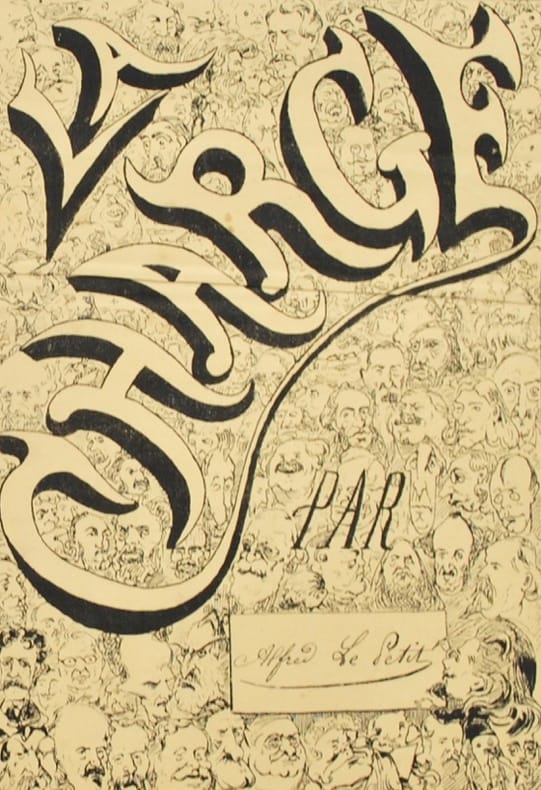
187042347Paris, Typ. de Rouge frères et comp., 1870. 2 séries de 13 et 24 livraisons montées en 1 vol. in-folio, demi-percaline verte, dos lisse, couverture illustrée conservée portant Album de la Charge (reliure de l'époque).
1553371814London: Thomas Gaultier imprimeur du Roy en la langue francoise i.e. printed by N. Hill 1553. First edition of the translation of the Book of Common Prayer into French. Calendar printed in red and black. Ornamental initials throughout. Collation: a-e4 f2 A-ZZ4 -ZZ1-4 lacks the four leaves of final gathering ZZ. 1 vols. 4to. Eighteenth century brown calf spine with gilt monogram BDM. Some worming at bottom margins. First edition of the translation of the Book of Common Prayer into French. Calendar printed in red and black. Ornamental initials throughout. Collation: a-e4 f2 A-ZZ4 -ZZ1-4 lacks the four leaves of final gathering ZZ. 1 vols. 4to. A translation by François Philippe of the 1552 Book of Common Prayer for use in Calais and the Channel Islands.<br /> <br /> OCLC records only Cambridge and John Carter Brown; Griffiths cites copies at Lambeth and Harvard. ESTC adds Boston Public Huntington U. Liverpool Liverpool Hope Bodleian Keble.<br /> <br /> Though lacking the final gathering this book is uncommon in institutions and RARE in the trade. ESTC: S108734; Griffiths French 36:1. Provenance: Coll. Aqu. Soc. Iesu Cat. Insc. 1659 at head of title; ink stamp on title page of Bibliotheque de Marseille foot of a2 stamped: Vente 1845; armorial bookplate of A.rthur Brölemann Thomas Gaultier, imprimeur du Roy en la langue francoise [i.e., printed by N. Hill] unknown
189351275Printed for the Committee 1893-01-01. Hardcover. Very Good. Folio title-page in red & black. Bound in full vellum over beveled boards with working brass clasps at the fore-edge; elaborate gilt rose designs and title on the spine and front cover designed by B. G. Goodhue; gold-printed rose & thistle design endpapers top-edge gilt silk bookmarker ribbon bound in; deckle-edged paper. With a copy of the 1893 4pp. pamphlet: "On the Decorations of the Limited Edition of the Standard Prayer Book of 1892" by D. B. Updike printed at the De Vinne Press laid in along with original postcard receipt that was supposed to be returned to J. Pierpoint Morgan and never was. This copy with the foliated margins. Tight and very well preserved oversized and overweight. Please email for photos. Printed for the Committee hardcover
17182514The Hague: C. Fritsch 1718. Very good. 8vo. xliv 728 2 pp. text lightly foxed. Collation: a-b⸠cⶠA-2Y⸠2Zⶠ-2Z6 a blank as per the Emory Pitts copy. Bound in 18th-century red morocco boards elaborately gilt à la dentelle spine elaborately gilt with raised bands morocco label a.e.g. spine and extremities somewhat rubbed. Bookplate of the Washington Cathedral Library inside upper cover. Title-page trimmed at top removing the name of an early owner and backed with later paper. Preserved in a protective cloth case. AN ENIGMATIC BINDING AT ONE TIME ATTRIBUTED TO ROBERT AITKEN OF PHILADELPHIA THE MOST FAMOUS OF ALL EARLY AMERICAN BOOKBINDERS. CERTAINLY IT SHARES THE EXTREMELY DISTINCTIVE SPINE TOOL WITH THE NYPL-LENOX COPY OF AITKEN'S 1782 BIBLE WHICH WE EXAMINED PERSONALLY AND YET THE DENTELLE TOOLS ARE SIMILAR TO THOSE EMPLOYED BY RICHARD MONTAGU FOR THOMAS HOLLIS. <br /> <br /> This is the first complete German edition of the Book of Common Prayer including the Lections and Ordinals. It was probably translated into German by J.J. Caesar chaplain to King Frederick I of Prussia who had attempted to united the Lutheran and Reformed churches of Germany into a single episcopal church in communion with the Church of England.<br /> <br /> Published in 1718 our binding belongs certainly to the latter half of the 18th-century; it is therefore this book's second binding. The spine label reads "Prayer Book" and not "Gebet-Buch" and thus it was bound either in America or England and not in Germany or The Netherlands. Based on tool identification our binding may have been made in the same workshop as that which bound the Lenox-NYPL 1782 Aitken Bible. In 1902 the NYPL binding was attributed Aitken's own shop William Loring Andrews Bibliopegy in the United States p. 59 with a poor reproduction on plate XIV. Whereas the Lenox copy is by comparison relatively plain it shares with ours the unmistakable deformed bird / floral ornament in the spine compartments. The repeated tools on the covers have so far resisted identification despite extensive searching over a period of several years through innumerable reference works on early American and British bookbinding printed and online. Concerning the former there is a very serious lack of published scholarship and so we set our sights on the largest collection of unpublished notes on American bookbinding in the world namely Willman Spawn's gargantuan hopelessly disorganized archive of rubbings and files at the American Philosophical Society. We proceeded through Box 28 and yet more than 100 boxes remain to be explored. Whatever his nationality our binder was inspired by the work of Richard Montagu specifically his work for Thomas Hollis ca. 1758-1761 see Howard Nixon's Five Hundred Years of English Bookbinding nos. 68 and 69 although the tools are NOT identical to ours. <br /> <br /> According to a typed note from the American Cathedral Library where the present volume resided for at least 60 years until it was purchased by William Reese it was bound possibly for presentation to William White 1748-1836 the first Bishop of Philadelphia. On this card the identity of the binder is confidently assigned to Robert Aitken himself. Whether or not the binding originated from Aitken's shop or if indeed it is even American there can be no doubt that it was in Philadelphia at a very early date and its provenance is unbroken since that time see below. Certainly William White would have had need for a German language Book of Common Prayer to administer to his already significant German-speaking congregation. White knew well his Philadelphia neighbor Robert Aitken and as one of the Chaplains of the Congress of the United States he examined Aitken's Bible when it was in 1782. White was also the first President of the first Bible Society in the United States founded in Philadelphia in 1808. <br /> <br /> That Aitken printed and published the 1782 Bible does not automatically imply that he was the binder of the Lenox-NYPL copy or any others but the names of several of his former employees are known including James Muir who remained in Philadelphia and William Andrews who relocated to Boston. Another copy of the 1782 Aitken Bible remains unstudied namely that in the John Carter Brown Library which features a similarly decorated spine. <br /> <br /> Our binding was no doubt an expensive commission; that the tooling on it has remained so fresh is perhaps due to a paper or fabric covering that seems to have once surrounded it: inside the boards are traces of adhesive near the gutter margins at the top and bottom precisely where a covering would have been attached. <br /> <br /> Of this first edition of the German Language Book of Common Prayer there are copies at Huntington Lancaster Theological Seminary Colgate Rochester Crozer Divinity United Lutheran Seminary Philadelphia and Emory. <br /> <br /> ¶ PROVENANCE: William White Bishop of Philadelphia -- old presentation inscription excised from title-page no doubt written in English in the 18th century with one remaining word clearly visible: "To" -- Suffrage Episcopal Bishop of Pennsylvania Samuel Bowman 1800-1861 -- by descent to his daughter Ellen Ledlie Bowman married Thomas Hubbard Vail Episcopal Bishop of Kansas -- by descent to their daughter Kellen Sitrgreaves Vail Motter 1870-1952 -- donated to the National Cathedral Library of Washington DC -- purchased by William Reese who sold it to us on behalf of a private collector -- bought back by us in 2023. <br /> <br /> For an account of Robert Aitken's bindery see Willman and Carol Spawn's "The Aitken Shop: Identification of an Eighteenth Century Bindery and its Tools" in: PBSA LVII 1963 pp. 422-437 although the title is misleading as the images are unnecessarily few in number ditto Willman Spawn's "Extra-Gilt Bindings of Robert Aitken 1787-88" in: Proceedings of the AAS pp. 415-417. The dentelle tools on the covers of our binding appear to be reproduced here for the first time. C. Fritsch unknown
1795371094New York: Hugh Gaine 1795. Printed in two columns. 208pp. A-d2 A-3B2. Folio. Contemporary black morocco gilt rebacked marbled endpapers gilt edges. Staining to title and first few leaves losses at lower outer corners of A1-C2 partly supplied in early manuscript Provenance: Christ Church Baltimore in gilt on upper cover. Printed in two columns. 208pp. A-d2 A-3B2. Folio. Very rare first folio edition of the 1789 United States Book of Common Prayer the second standard American prayer book beautifully printed by Gaine and designed for lecturn use. Most extant examples with the leaves containing the morning and evening daily prayers defective from overuse A1-C2 as here. Evans 29362; Griffiths Book of Common Prayer 1795:11; ESTC W29998 Hugh Gaine unknown
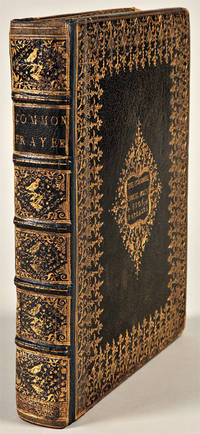
1769WRCAM36078Oxford: Printed by T. Wright and W. Gill Printers to the University 1769. 206 leaves printed in double columns plus fifty-nine full-page engraved plates. Extra- illustrated with fifty-nine full-page engraved plates. Tall quarto. Contemporary black morocco almost imperceptibly rebacked with original backstrip laid down elaborately gilt spine gilt with raised bands gilt inner dentelles a.e.g. contemporary marbled pastedowns and free endpapers. On the front cover the center of the diamond-shape design is lettered "The Honorable Samuel Rous Esq. Barbados" surrounded by a stylized fern border. On the rear cover the center of the diamond-shape design is lettered "One Thousand Seven Hundred & Seventy Two" also surrounded by a stylized fern border. Two corners rubbed and two corners almost imperceptibly repaired otherwise in fine condition. A few minor dampstains on a few leaves at front and rear and occasional minor foxing absolutely not affecting text or images. bound with: Brady N. and N. Tate: A NEW VERSION OF THE PSALMS OF DAVID FITTED TO THE TUNES USED IN CHURCHES. London: H. Woodfall 1768. 26 leaves printed in triple columns. A fine copy. A magnificently bound and extravagantly extra- illustrated copy of The Book of Common Prayer prepared for presentation to or perhaps commissioned by Samuel Rous President of His Majesty's Council and Commander-in-Chief i.e. governor of Barbados from 1766 to 1768. He also served again in 1772 the year indicated on the rear cover. The Rous family Quakers residing in Barbados were leading planters on the island since the late 1630s. <br> <br> The fifty-nine plates bound in this volume to complement the text were originally executed for THE LITURGY OF THE CHURCH OF ENGLAND; ILLUSTRATED WITH FIFTY NINE HISTORICAL AND EXPLANATORY SCULPTURES ENGRAVED BY MESS. RAVENETT GRIGNION SCOTIN CANOTT WALKER AND W. RYLAND printed in London in 1755 by Edward Ryland. According to the titlepage included here as one of the extra-illustrated plates this work was published according to an act of Parliament on May 1 1755. However no copies of this 1755 title are recorded in OCLC or ESTC. In addition to The Book of Common Prayer and the engravings from THE LITURGY OF THE CHURCH OF ENGLAND this copy also contains a 1768 edition of A NEW VERSION OF THE PSALMS OF DAVID first printed in 1698. <br> <br> Considering the recipient and the combined contents of the volume these two texts and the extensive suite of engravings are bound in an appropriately sumptuous binding. Prepared for Samuel Rous who served as governor of Barbados the binding is a marvelous example of later 18th-century British bookbinding with extensive gilt decoration on the covers and spine as described above. A fine copy of an elaborately decorated and illustrated volume with a remarkable colonial-era provenance. GRIFFITHS BOOK OF COMMON PRAYER 1769.5. Printed by T. Wright and W. Gill, Printers to the University hardcover books
1708164124Oxford: University Printers Psalms: London William Pearson for the Company of Stationers 1709 1708. Contemporary red morocco gilt An attractive Oxford prayer book in a characteristic red morocco binding of the period. A closely related binding is recorded in Davis Gift 143 with a similar overall design and also with small stag stamps which is identified as a London binding from c.1693. The design is similar to those employed by the Spaniel Binder. Two parts in one vol. octavo 197 x 118 mm. Text ruled in red. Contemporary red morocco sides elaborately gilt including stags and small urns with flowering stems spine similarly gilt in compartments marbled endpapers gilt and gauffered edges. Extremities slightly rubbed headcaps pulled at ends; occasional light browning quire S in first work brittle with a few small holes and tears slight loss of text to lower outer corner of sig. S5 a few small marginal tears elsewhere very good. ESTC T87322 & T87301; Griffiths BCP 1708/4. unknown
187344265, , 1873. Cahier petit in-4 manuscrit (20,5 x 17 cm) de (1)-144-(1) pp., titre manuscrit en long « Campagne 1870-1871 (Mémoires) ».
xv, [1], 124, 3 [ads] pp. Index. Text in German. "Beitrage zur Konjunkturforschung - Herausgegeben vom Osterreichischen Institut Fur Konjunkturforschung Nr. 3" - front cover. "A collection of four lectures covering theories of the influence of money on prices, the conditions of equilibrium between the production of consumers' goods, the working of the price mechanism in the course of the credit cycle, and the case for and against an 'elastic' currency." - Jacob Cohen. Unread as most pages uncut. Average wear to original brown wrappers which are partially separated from textblock. Bit of writing at base of spine. 1939 New York Times Book Review of Schumpeter's 'Business Cycles' laid in. A sound copy of this, Hayek's second book. Machlup B-2, Cody & Osrem B-2, Hutchinson 912, Cohen 183. Book
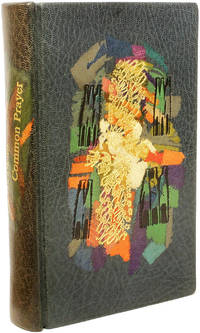
1960002141London: Society for Promoting Christian Knowledge n.d. c.1960 1960. BOUND BY PHILIP SMITH. 1 vol. 5-7/8" x 3-7/8" bound in full blue morocco multi-color morocco onlays to spine and front cover title gilt to spine gilt decoration of people in gilt and blind around gilt stars and suns blue paper pastedowns pastedowns and endpapers with gilt stars all edges gilt housed in an open ended multi colored felt lined slipcase Philip Smith's binders stamp to upper edge of front pastedown dated 1963 inner and outer hinges fine head and foot of spine fine spine slightly darkened internally clean and bright no previous ownership markings inscriptions or bookplate A VERY GOOD COPY. Born in 1928 Philip began his career in bookbinding and book art in 1949 graduating from the Royal College of Art in London with First Class Honours in 1954. He was an internationally renowned designer bookbinder and book artist. He designed and created intricate and fascinating bindings for well over 50 years and was awarded gold and silver medals in several international competitions. In 2000 he was awarded an MBE for services to Art. Philip was a great innovator having invented and pioneered several ground-breaking and influential techniques and structural developments. His work is represented in many private collections and can be seen in several public collections overseas and in the UK including the V&A National Art Library and the British Library. London: Society for Promoting Christian Knowledge, n.d. (c.1960) unknown
1910WRCLIT65767London: Eyre and Spottiswoode 1910. Two volumes. 356;357-5873pp. Large thick octavo. 260 x 195 mm. Publisher's half pigskin raised bands and wooden boards t.e.g others untrimmed. Private bookplate on each pastedown. 1959 presentation t.l.s. affixed to first free endsheet joints rubbed with some narrow cracks but quite sound text-blockS quite fine. A deluxe issue of the Book of Common Prayer marking the accession of King George V printed on real vellum. The colophon on the verso of the title denotes this as copy #5 of six copies thus. However Griffiths reports that there were two issues of six copies each and notes the title-page is printed in red & black -- it is here printed in black only. Whether actually one of six or one of a total of twelve copies on vellum a very scarce format for this edition. GRIFFITHS 1910.1. Eyre and Spottiswoode hardcover books
1762WRCLIT67594Cambridge: Printed by Joseph Bentham Printer to the University . 1762. Not paginated. ¶2A-2Z4A-C4. Folio signed in 4s. 40 x 25cm. Contemporary mottled calf six raised bands gilt monogram device of King George III in each spine compartment and in the extreme corners of the boards within a triple-ruled border four ribbon ties at fore-edge one nearly detached but otherwise intact a.e.g. Joints cracking but cords sound early amateurish repairs to spine ends and fore- corners edgeworn faint tidemark at extreme lower fore-corners of 3Z4 to end occasional marginal smudges but otherwise very good. An uncommon variant of Bentham's folio printing of 1762 with the separately signed Articles at the end concluding with C4. ESTC locates but one copy of this variant Queen's College Oxford as opposed to a dozen with the final leaf being 3A2. This copy has an interesting provenance: it is inscribed in the upper margin of the title: "GH Governor of Minorca 1766." After an active and successful military career George Howard 1718-1796 sat in the House of Commons for Lostwithiel from 1761 until 1766 when he was appointed Governor of Minorca -- the British had reclaimed the island in 1763 as a consequence of the Treaty of Paris. After holding the post for two years he returned to political and military pursuits and continued to flourish. His second marriage in May 1776 was to Elizabeth of the Beckford family. Given the Royal ornamentation of the binding and the nature of the inscription it seems probable that this represents a Royal gift to Howard if not on the occasion certainly in the year of Howard's appointment to the Governorship. On the front pastedown appears the bookplate two lions and "Virtus Mille Scuta" associated with the Howards of Effingham. In 1762 Bentham published editions of the Prayer Book in quarto octavo 12mo and folio the latter evidently in two issues -- the form recorded by Griffiths as 1762:2 and this form which is unrecorded by Griffiths. ESTC N67552. Printed by Joseph Bentham Printer to the University .. hardcover books
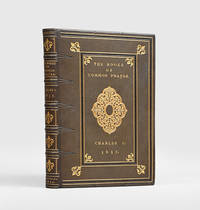
1844187219London: William Pickering 1844. Among the most beautiful specimens of typography that have appeared since the invention of printing First Pickering edition a triumph of Victorian book design; this splendidly bound copy was presented by John Pierpont Morgan to the Church Club of New York. Pickering a champion of the highest standards of typography and design produced a series of six facsimiles of famous Tudor and Stuart prayer books. This is a facsimile of the Scottish edition of 1637 which sought to impose Episcopal liturgy on the Presbyterian Church of Scotland deepening religious tensions and helping to spark the Civil War. It was called by Keynes "a monument of what could be achieved by good taste and craftsmanship" p. 32 and by Warren "among the most beautiful specimens of typography that have appeared since the invention of printing" p. 164. Morgan founder of the Morgan Library in New York ranks among the greatest of all book collectors and was a founder of the Church Club established in 1887 as an Episcopal forum. The Club's bookplate noting presentation is on the front pastedown and their shelf label is on the rear. Folio 338 x 226 mm. Printed in black and red in Old English type by Charles Whittingham of Chiswick on Pouncy's handmade paper. Near-contemporary brown morocco by Riviere endpapers watermarked 1854 spine and front cover lettered in gilt covers panelled in black and gilt with gilt centrepieces gilt turn-ins gilt edges. Light rubbing at extremities toning to endpapers: a very attractive copy. Geoffrey Keynes William Pickering 1969; Arthur Warren The Charles Whittinghams 1896. unknown
19722080202105100034San'ichishobo 1972. Soft Cover. Fine. Volume: 24 volumes San'ichishobo paperback
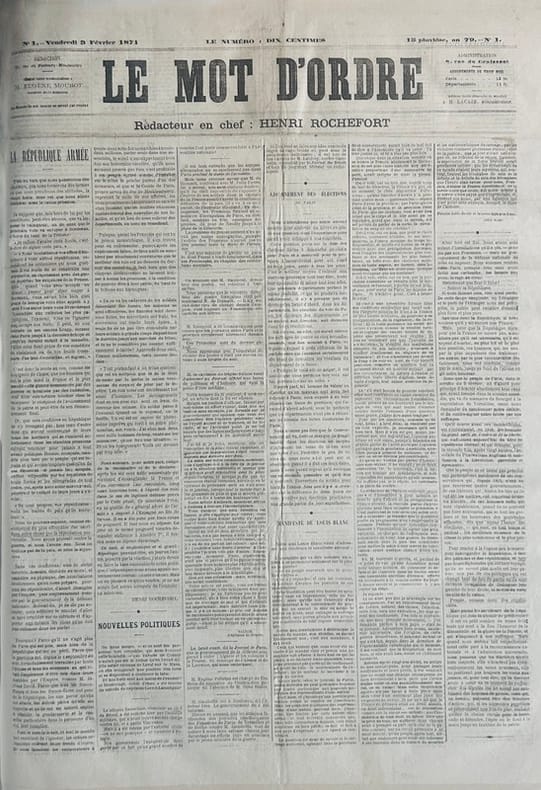
18718263Paris, Imp. Schiller, 1871. 86 livraisons reliées en 1 vol. grand in-folio, demi-veau blond.