4 079 résultats
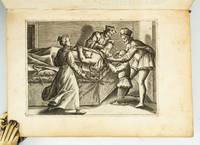
1584ST20779Rome: Bartolomeo Bonfadino & Tito Diani 1584. FIRST EDITION. 215 x 150 mm. 8 1/2 x 6". 6 p.l. 106 pp 1 leaf errata. <br/> 17th century sprinkled vellum raised bands leather spine panels with gilt lion ornaments red morocco label. Engraved title page woodcut initials and headpieces and 11 engraved plates of bloodletting. Title page with ink owner inscription of "Joann De Ville Chirurgo Lugdunesse 1629"; a couple of neat marginal annotations in Italian apparently by the same hand; four ink numbers on lower cover. Wellcome I 3959; EDIT16 CNCE 46661; Mortimer Italian II 267 second edition; USTC 839623. Boards a bit splayed gilt on spine a little rubbed moderate wear and soiling to the vellum text slightly browned at edges and with occasional minor foxing half a dozen leaves slightly browned but still an excellent unrestored copy quite fresh internally the engravings sharp and the binding completely solid.<br/> <br/> This is a 17th century surgeon's copy of a strikingly illustrated and centrally important 16th century treatise on bloodletting. Piacenza physician Pietro Paolo Magni's detailed discussion of the use of leeches and cupping-glasses long served as the standard work on the topic. Its 11 well-executed engravings are visually compelling as well as providing a rich source of information on the details of 16th century medical practice. There is some debate about their creator: Wellcome and Hirsch attribute them to Adamo Ghisi also Scultori ca. 1530-85 who executed the illustrated title page of this edition; Graesse and Mortimer on the other hand assign them to Cherubino Alberti 1553–1615 who was responsible for the engraved title in the second edition. Either way they are as evocative to modern-day viewers as they must have once been useful to surgeons and physicians of the 16th century. The dramatically lit scenes feature focused doctors armed with lancets and bowls to catch the blood attending to patients who grimace wilt or look away in stoic resignation. Our former owner Jean de Ville identifies himself as a Lyonnaise surgeon on the title page in an inscription dated 1629. His occasional notes on the text and illustrations indicate he was consulting this book as a reference for his own practice he writes above one illustration for example that "this operation should be performed on the left arm". This seems to be a rare work in institutional collections USTC finding only one copy in North America. Bartolomeo Bonfadino & Tito Diani unknown
1833557691833. Contemporary morocco. Very good. Two parts octavo 24.2 by 14.3 cm. 280 unnumbered leaves. Manuscript on polished cream paper. Persian text recto and verso in black and red ink; triple-ruled inner text borders 15.4 by 7.9 cm in red and blue single-ruled outer border 21.7 by 11.3 cm in blue. The second part of the manuscript opens with an illuminated full-page double suite composition Arab. unwan in polychrome and gilt; marginal illumination appears on two other leaves in this section. Contemporary paneled tan morocco lightly rubbed at extremities elaborately tooled in blind. Some marginal annotations in black ink at several early leaves. Intermittent mild smudges mostly marginal; bottom corner of first leaf excised resulting in loss of several words. Very good.<br /> <br /> Compendium of medical tracts used by prominent physicians of the Muslim world written in superb Persian calligraphy by 'Ali Muhammad in A.H. 1249 = 1833. Much of the work deals with herbal remedies used by famous Persian physicians including Avicenna 980-1037. A treatise on anatomy is included along with commentaries penned between the two sets of borders which discuss various matters including diagnosis from urine; hygienic practices drawn from the treatises of famous physicians; prescriptions and recipes derived from the book Tuhfat al-mu'minin a work on materia medica by Muhammad Muʼmin Husayni d.1698 dedicated to the Safavid ShÄh SulaymÄn. Husayni was considered the greatest herbalist of the Mazandaran region of Persia. Four pages in the second part present various alphabets in black ink; comments and correspondences with the Arabic/Persian alphabet are noted in red ink. <br /> <br /> Provenance: Stamps of "Mohd. Halim Salimi Library Kandahar-Afghanistan" in blue ink at opening and closing leaves. In the late 1950s Mohammed Halim Salimi of Kandahar worked in an administrative capacity for the International Cooperation Administration a United States government agency and precursor of the U.S. Agency for International Development USAID. A smaller elliptical owner's stamp in red with text beneath at blank recto of the opening leaf. unknown
1869885781869. MEDICINE SUGITA Gempaku. RANGAKU KOTO HAJIME. Tokyo Tenshinro Meiji 2 1869. 22.5 x 15.1 cm. 2 vols. srting-bound Japanese-style fukuro-toji. Original covers and printed paper title labels. This memoir by the scientist behind the ground-breaking KAITAI SHINSHO was originally completed in Gempaku's old age in 1815. It was transmitted via manuscript until the fall of the ancien regime when Fukuzawa Yukichi and Gempaku's grandson arranged to have it published in a woodblock edition. The book was written in a very clear and simple style and reveals the great lengths of ingenuity the KAITAI SHINSHO author/translators went to to uncover the secrets and understand the esoteric Dutch vocabulary of Kulmas' anatomy that they translated therein. The RANGAKU KOTOHAJIME is often cited as perhaps the earliest Japanese text to explain techniques of cryptoanalysis from a practical and logically rigorous point of view. It is also a compelling story of scientific investigation in isolated traditional Japan. Finally despite its relatively late publication date the RANGAKU KOTOHAJIME is vanishingly rare. Our copy is in very good condition enclosed in a custom-fitted clasped chitsu case. unknown
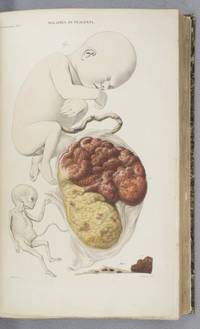
1829CJW1310Paris: J. B. Baillière 1829-42. FIRST EDITION IN BOOK FORM bound from the original parts. 486 x 337 mm. 19 1/8 x 13 1/4". Two volumes. <br/> Contemporary marbled boards backed with recent calf raised bands flanked by gilt fillets black morocco labels. WITH 231 LITHOGRAPHED PLATES two folding OF WHICH 167 ARE IN COLOR many heightened with gum arabic later tissue guards. Garrison & Morton 2286; "Heirs of Hippocrates" 863; Norman 538. ◆Corners and edges somewhat rubbed with some loss of paper as expected with large picture books text with variable foxing persistent but usually light never severe and principally confined to margins a handful of black & white plates with moderate spotting additional small defects internally otherwise quite a commendable copy of a book always found foxed browned and worse our volumes solidly restored now the spines unworn and the text and remarkable plates with no fatal condition problems.<br/> <br/> Garrison & Morton declares that "the fine illustrations of gross anatomy seen here make this one of the greatest works of its kind." The inaugural professor of pathological anatomy in Paris anatomist and pathologist Jean Cruveilhier 1791-1874 provided in the present work the first description of multiple sclerosis and an early identification of Cruveilhier's palsy. Hypertrophic pyloric stenosis and ulceration of the stomach due to hyperacidity were also detailed for the first time here. In "Doctrine of the Nerves" John A. Spillane called Cruveilhier "the prince of physician-pathologists" and this work a "treasure chest of neurology." "Heirs of Hippocrates" notes that "this atlas contains some of the finest illustrations of gross pathology ever made." The plates were done by anatomical illustrator Antoine Chazal 1793-1854 a French painter engraver art teacher at Muséum National d'Histoire Naturelle and great-uncle of Paul Gauguin. This work was originally issued in 40 parts at nine francs each over a period of 13 years. The parts were ultimately bound together into two volumes as here in a print run that based upon the subscriber's list was likely just more than 400 copies. While no stranger to auction rooms the book--a practical reference book heavily used by professionals--is all too often found with missing plates and/or parts and in condition that leaves much to be desired. J. B. Baillière unknown
108981 p.l. 38 folding leaves. 8vo 280 x 174 mm. orig. wrappers with cover wrappers old stitching. Thần Xá: An Thái French colonial period.<br /> <BR> <BR> An extremely rare woodcut book printed by nuns in a rural monastery in northern Vietnam. “An eponymous MahÄyÄna sutra that recounts the qualities vows and pure land of the buddha Bhaiá¹£ajyaguru — the Master of Healing also known as the Medicine Buddha or the TathÄgata of Lapis-Lazuli Light. The scripture was most likely written in northern India during the early centuries of the Common Era. In this sutra Bhaiá¹£ajyaguru vowed that his name if merely uttered would cure diseases free prisoners secure food and clothing for the impoverished and produce other similar benefits. He also vowed that his body would be as resplendent as lapis lazuli itself so that it might illuminate the world†Donald Lopez & Robert Buswell The Princeton Dictionary of Buddhism “Bhaiá¹£ajyagurusÅ«traâ€.<br /> <BR> <BR> The Scripture of the Medicine Buddha T. 450 translated from Sanskrit into Chinese by Xuanzang 602–664 in the year 650 C.E. has been a popular text in East Asian and Tibetan Buddhist traditions. In our copy the sutra itself is bookended by a liturgical opening including the “Incense Praise†praises for the Buddha and a “sutra-opening gÄthĆand a final homage to the Medicine Buddha. According to the colophon bound at the beginning of the volume the scripture was printed for a specific occasion by three bhikkhuni or ordained Buddhist nuns affiliated with the An Thái temple 安泰寺 in the Thần Xá village 神èˆæ‘ of the An Lại commune 安賴社 in the Thanh Khê canton 清溪 Äại An district 大安縣 Nam Äịnh province å—å®šçœ of northern Vietnam. <br /> <BR> <BR> Only the names of two of them are fully legible: they are Quảng Thuáºn å»£é † and Quảng Thà nh 廣æˆ. They printed and disseminated this Scripture of the Medicine Buddha with a sincere mind when the statues of three of their masters were completed and placed into stupas. In their colophon they traced the lineage of themselves and their masters to the bhikkhuni An DÆ°Æ¡ng Tháp 安陽塔 dharma name Nguồn Hạnh æºå¹¸ and pseudonym Minh Lâm 明ç³. <br /> <BR> <BR> Despite the country’s long history of Buddhist and Confucian learning woodblock-printed books published within Vietnam itself are far fewer in number than their Chinese or Japanese counterparts. This scarcity is owed to the high cost of domestic production: according to the estimate of Kathlene Baldanza as late as the 19th century “the labor cost of printing in Vietnam was five to ten times higher than in China. Even ink and brushes were more expensive to produce in Vietnam.†Extensive international trade between northern Vietnam and southern China — where plentiful books were printed at very low costs — meant that “it was generally cheaper to purchase books from China than to buy them locally†“Publishing Book Culture and Reading Practices in Vietnam†Journal of Vietnamese Studies 13.3 2018 pp. 10–11. <br /> <BR> <BR> Beyond the limited cases of official and temple-based publishing Vietnamese publishers were pushed toward niche genres such as Sino-Vietnamese dictionaries ritual manuals or morality books. Regardless of genre woodblock-printed books from Vietnam are very difficult to find today outside a few major collections such as the Institute of Sino-Nôm Studies in Hanoi and l’École française d’Extrême-Orient in Paris. We will not focus on the humid climate of the country or the massive destruction of the nation’s cultural heritage during its long war of independence in the post World War II period.<br /> <BR> <BR> The catalogue of materials kept at the Institute of Sino-Nôm Studies mentions two copies VHv.1071 AC.116 of the Scripture of the Medicine Buddha printed in 1911 and it is unclear if those were printed with the same woodblocks as ours. We know for certain however that no material at the Institute of Sino-Nôm Studies gives the An Thái temple as the place of publication despite the large numbers of temples and monasteries listed. This copy being an example of Vietnamese women’s printing in a rural monastery is extremely rare.<br /> <BR> <BR> Fine copy. First leaf a little frayed and the outer wrappers are quite frayed.<br /> <BR> <BR> ⧠Li Guimin æŽè²´æ°‘ “Zaizhi yu bianyi: Yuenan hanchuan fojiao dianji de zhuanhua å†è£½èˆ‡è®Šç•°â€”—越å—漢傳佛教典ç±çš„轉化†Foguang xuebao 佛光å¸å ± 7 No. 1 2021: pp. 111–37. Yuenan Hannan wenxian ziliaoku 越å—漢喃文ç»è³‡æ–™åº« Academia Sinica. unknown
1742ST16000London: Printed for the author 1742. FIRST EDITION. 205 x 130 mm. 8 x 5". xxiv 285 1 pp. 3 leaves index. <br/> Contemporary sprinkled calf covers with double gilt-ruled borders raised bands flanked by gilt rules neatly rebacked preserving original backstrip one corner restored. Front flyleaf with ink inscription of Wm. Barber dated 1790. Weinberger "Introduction to the History of Dentistry" p. 330; Garrison-Morton 3672; Wellcome II 320; ESTC T63467. ◆Joints lightly rubbed corners a little bumped and worn but the binding solid and perfectly satisfactory; a handful of creased corners and a couple of trivial blemishes but the contents in very fine condition the paper clean and bright and obviously read very little.<br/> <br/> This is a fresh appealing copy of the first modern book on teething and the second book on dentistry in English. Weinberger says that "as far as English dental literature is concerned it began with Joseph Hurlock in 1742. Hurlock was a strong advocate of lancing the gums of infants to permit teeth to erupt more readily and thus prevent convulsions. His treatise was a plea for parents and nurses to allow him to carry out this procedure." The book documents symptoms of dentition difficulties and reports on cases in which our author lanced the gums of children whose health problems he attributed to teething trouble--not always with happy outcomes. The book does contain advice that was more beneficial. Weinberger notes "Hurlock apparently was a keen observer of dental conditions then found in children noticing that the havoc wrought by caries in the deciduous teeth was undoubtedly due to diet and recommended that such youngsters be sent to the country where fresh air and better food could be obtained." Little is known of the author who has no other works recorded in libraries or bibliographies. It has been suggested that he was related to the Joseph Hurlock 1715-93 who was a director of the East India Company. We are fortunate that Mr. Hurlock did not stint when it came to the quality of paper on which his treatise was printed; the text here has come down to us crisp and bright as a result. Printed for the author unknown
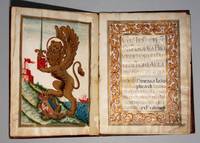
17175670<p>4to manuscript on vellum 23.5 x 17.1 cm 7 ff. 4 ff. vellum blanks including a full-page frontispiece illumination of Venetian Lion of St. Mark each text page with foliate borders in gold ink headings and initials in gold ink. Bound in contemporary Venetian morocco elaborately gold tooled gold block-printed foliate pastedowns. Edge wear and minor rubbing to spine and boards manuscript loose in binding oxidizing to edges of pastedowns. Marginal flaws to frontispiece illumination just touching border in places a few small wormholes elsewhere minor handsoiling.<br /></p><p>Finely illuminated early 18th-century Venetian manuscript issued by the city's Magistrato alla Sanità Health Department as a license to certify the physician Antonio Damugliano d. 1747 to practice medicine in the Venetian Republic using his propriety formula for topical salves <i>balsami</i> to treat "wounds and ulcers" f. 3v-3r. The manuscript ornately written out and decorated in gold and colored ink opens with a full-page image of the winged Lion of San Marco in the Venetian landscape which serves as an official seal of the document's authenticity and is inscribed by five <i>Provveditori</i> of the Magistrato and one notary who witnessed the certification.</p><p>This pharmaceutical license represents a rare material survival of how Venice's Magistrato alla Sanità regulated the practice of medicine in its territories even down to the level of controlling how individual practitioners could work with specific drugs. Damugliano presumably was required to keep the document on his person while plying his trade and to present it to the relevant authorities or even to his patients should his practice be called into question. The text of the document is written out twice – first in Italian and then in Latin – to suit the linguistic preferences of both the common Venetian citizen and the professional medical class.</p><p>Damugliano also known as Antimo Damulianos is noted in the document dated April 1717 as being a native of the Ionian island of Zante or Zakynthos at the time a Venetian colony and having recently returned from Moscow "where with good success and for a long time he practiced medicine with full official permission of many noteworthy people" f. 2v. Damugliano is said to have studied medicine in Europe likely in Italy specializing in contagious diseases and eventually practicing in Asia Minor Persia India China Egypt Constantinople and Trieste and to have been ordered by Emperor Charles VI 1685-1740 to treat the sick of a plague outbreak in Corinth see L. Zoes passim. Damugliano's name is also associated with a 1725 treatise entitled 'Medicina' which circulated in manuscript form in Venice and dealt with the use of salves pills and stones to treat hydrophobia see L. Zoes; we have been unable to locate a copy of this treatise. Damugliano is also recorded as having worked in Vienna where an April 1746 news magazine comments that the "very famous" Damugliano having traveled through numerous kingdoms has arrived to demonstrate the curative powers of "the wondrous Chinese stone called Bezoar" which is effective against fevers snake bites fatigue colic etc. <i>Nachtrag</i> p. 64. The bezoar stone an indigestible mass formed in the digestive tract of ruminants was lauded from the middle ages as a universal antidote to poison.</p><p> R. Palmer "Pharmacy in the Republic of Venice in the Sixteenth Century" in A. Wear et al. eds. <i>The Medical Renaissance of the Sixteenth Century</i> pp. 100-17; <i>Epeteris: Hetaireia Byzantinon Spoudon</i> vol. 43-44 1977 p. 417; H. Schmuck <i>Grieschischer Biographischer Index</i> vol. 1 p. 247; L. Zoes <i>Lexikon historikon kai laographikon Zakynthou</i> vol. 1; S. Carbone <i>Provveditori e sopraprovveditori alla Santità della Repubblica di Venezia</i>; P. Selmi "Il Magistrato all Sanità" in <i>Difesa della Sanità a Venezia Secoli XIII-XIX</i> pp. 28-50; <i>Nachtrag zu denen wöchentlich-kurtzgefaßter historischer Nachrichten Der neuern Europäischen Begebenheiten auf das Jahr 1746</i> p. 64.</p>
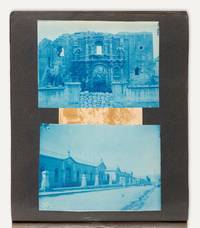
1918List2982Peru and Panama 1918. Approximately 364 photos; album and unmounted photos silver prints cyanotypes and printing-out-paper prints. Photos measure 3 x 4 to 8 x 10 inches with about half measuring 3 x 5 ½ inches. Some with photographer’s hand-stamp or credit in pencil; others with manuscript notations verso or recto; some captions to album pages. Offered in partnership with Daniel / Oliver.<br /> <br /> Rich and extensive photographic archive of Walton T. Burres of Stockton California showing his time in Peru c. 1904 as an amateur explorer and doctor for the Inca Mining and Rubber Company and his later work in Panama c. 1918 with the Rockefeller Foundation’s International Health Division.The collection consists of a large number of loose photos acquired by the gallery in 2021 and a recently discovered photo album showing some of the same subjects and containing a few duplicate images some printed in different sizes or formats as well as hundreds of previously unseen prints. Together this material makes up the largest extant archive of Burres’s photographic work. Though his work was published at the time both in Peruvian and American publications much of it was lost when he dropped it in a river that he was attempting to ford.<br /> <br /> Burres was educated at California’s Cooper Medical College the first school of medicine on the West Coast and was a prominent member of the Stockton community before sojourning to Peru around 1900 to help the Inca Mining and Rubber Company address the deadly diseases endemic to the region such as malaria and yellow fever. To encourage economic infrastructure in remote areas the Peruvian government began granting land concessions to any company that would build roads bridges or river ports. As a result the Inca Mining Company an American outfit based in Tirapata purchased the rights to mine gold along the upper Inambari River in 1896 and soon became the richest gold producer in Peru.<br /> <br /> A large portion of Burres’s Peruvian images document his 1903–1904 excursion from Arequipa 150 miles into “rubber country.†The journeys were well-recounted in U.S. papers and a number of the anecdotes described in print are seen in the present images.<br /> <br /> There are many dynamic views of Burres and his party trekking through the dense jungle and summiting the high mountains as well as shots of flora fauna and native Peruvians. Burres’s travel companions for this trip included the famed adventurer Harriet Chalmers Adams later dubbed “America’s greatest woman explorer†by the New York Times. Adams and her husband Frank both fellow Stocktonians joined up with Burres during their own multi-year expedition through South America. There are a number of portraits of a woman who bears a striking resemblance to Adams though it is possibly another person.<br /> <br /> Other Peruvian material includes numerous views of Cusco Arequipa and the surrounding environs including a beautiful interior of a chapel a Martin Chambi-esque detail shot of a stone wall and portraits of local townspeople some identified as Quechua people. There are a number of lush large-format cyanotypes rich printing-out-paper views and many handsome small-format panoramas. These were printed on Inca Mining Company surplus stationary which speaks to the makeshift nature of photo-development under the circumstances. One particularly striking image shows the top of Misti volcano barely visible above the clouds. This image was reproduced in Burres's account of his travels published in 1909 in Outing magazine.<br /> <br /> The photographs from Burres’s time in Panama document his more serious work as a virologist and health administrator in the area. One interesting photo shows a pair of recently-shot iguanas with a caption noting that “blood of these reptiles was found infected with Haemogregarina.†Another image is that of a new style of privy built from concrete and wire-mesh designed to better keep out rain water. There are also keenly-shot views of main streets and local culture in Los Santos Chiriquà and elsewhere including a number of humanistic group portraits taken at a girl’s school. unknown
1916055955Istanbul: Istanbul Darülfünunu Tip Fakültesi Yayinevi Matbaa-i Âmire. AH 1332 1916 CE - 1928. 1916. Hardcover. Very Good. 8vo - over 7¾ - 9¾" tall. Contemporary black clothes and separate fascicles. Roy. 16x24 cm. In Ottoman script Old Turkish with Arabic letters. Richly illustrated. A good collection. Vol. 1: March 1332 / 1916 - August 1334 / 1918 = Complete set of issues 1-7 no 4 is not inserted into the volume; it is present separately as a fascicle. Vol. 2: August 1335 / 1919 - June 1336 / 1920 = Complete set of nos 1-6. Vol. 3: Between August 1336 / 1920 and April 1337 / 1921 five issues were published; of this volume the first number August 1336 / 1920 and the no 5 April 1337 / 1921 are missing. Nos. 2 3 and 4 are present in fascicle form. Vol. 4: August 1337 / 1921 - December 1338 / 1922 = Complete set of nos 1-9. Vol. 5: January-February 1339 / 1923 - December 1339 / 1923 = Complete set of nos 1-12. Vol. 6: January 1340 / 1924 - December 1340 / 1924. Vol. 7: January-February 1341 / 1925 - May-December 1341 / 1925. Vol. 8: Of this volume only the first number dated January 1926 is present; the remaining 11 issues are missing. Vol. 9: January 1927 - December 1927 = Complete set of nos 1-12. Vol. 10: Between January and February 1928 and November 1928 12 issues were published; nos 1-7 and 11-12 are present while issues 8-10 are missing. Extremely rare collection including 83 issues of 99 of this journal of the Istanbul University Faculty of Medicine. This is one of the seven important periodicals published starting in 1916 by the Istanbul Darülfünun which was the first Turkish academic institution in the modern sense. Due to World War 1 this journal was published at irregular intervals and after the Alphabet Reform 1928 it switched to the new script starting from the January-June 1929 issue. Therefore this collection consists entirely of early issues printed in Ottoman Turkish using the Arabic script. The journal published by the professors of the Faculty of Medicine included many prominent figures in its editorial board: Ziya Nuri Dean of the Faculty of Medicine and Professor of Laryngeal and Otic Diseases Ismail Dervis General Secretary of the Faculty of Medicine and Professor of Obstetrics and Midwifery Tevfik Recep Professor of Histology and Embryology and Sevki Professor of Philosophy. In the same issue Sadettin Vedat Assistant Professor of Surgery is also recorded as the Secretary. Over time these names underwent some changes. For example in Year XV No. 1-2 1933 under the heading of Editorial Board Nasir Heyeti the names Akif Sakir Akil Muhtar Hamdi Suat Ihsan Hilmi Kenan Tevfik M. Hayrullah Necmettin Rifat Neset Ömer Server Kamil Süreyya Ali Tevfik Recep Ziya Nuri Fazil Serafettin and Tevfik Remzi appear. In this issue Behçet Sabit and Muzaffer Esat Bey are also listed under the title of Editors-in-Chief Tahrir Müdürleri. Again on the inner title page of this issue there is a list of the Editorial Board Tahrir Heyeti composed of 36 members. Some examples of articles in the collection that can be considered scientific contributions to the literature: The first article published in the first issue How Digitalis Takes Effect by Akil Muhtar 1877-1949 immediately draws attention. In this important study known as the "Usskof Experiment" and recorded in Turkish medical literature Akil Muhtar Özden proved for the first time in the world that digitalis when taken orally begins to take effect after one and a half hours and reaches its maximum effect after three and a half hours. A summary translation by Mustafa Hakki of Celal Muhtar Özden's 1865-1947 famous article titled On the Trichophytosis of the Hands and Soles Rahatü'l-yed ve ahmasü'l-kadem trikofisisi originally published in Annales de Dermatologie et de Syphiligraphie No. 8 August 1892 was printed in AH 1340 Issue 78. In this renowned article Celal Muhtar identified the Trichophyton fungus as the cause of a skin lesion observed on the hands and feet and presented the cases of trichophytosis he had followed. Ad <br/> <br/> Istanbul Darülfünunu Tip Fakültesi Yayinevi, Matbaa-i Âmire., AH 1332 [1916 CE] - 1928. hardcover
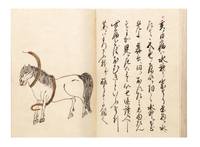
7052Seven vols. 8vo 218 x 160 mm. orig. wrappers each with an individual title label on upper cover new stitching. Japan: all late Edo.<br/> <br/> A fascinating collection of texts on equine medicine all bound in a similar fashion:<br/> <br/> Vol. 1: Manuscript label on upper cover entitled “Basho hijutsu den†“Horse Book Secret Methods Passed Onâ€. Nine brush & ink illus. in the text. 31 folding leaves. This text is concerned with exercising horses in each season and includes “32 Rules of Exercise.†At the end we find a date of 1825 the name of the person who provided this information Seizaimon Sekiguchi and the name of the copier Hanemon Hasegawa.<br/> <br/> Vol. 2: Manuscript label on upper cover entitled “Basho yakuho den†“Horse Book Medicine Passed Onâ€. 12 most unusual brush ink & wash drawings. 23 folding leaves. Each illustration depicts an unwell horse and 12 symbols of ill health demons snake ogre monkey female deity Buddhist practitioner archer bird etc. relating to the horse’s disease with recipes for medicines. These illustrations are all finely colored. The rest of the text is devoted to how to maintain a horse’s health in each of the four seasons. At the end there is the date 1596 and the information was given by Ichiraku Obata who lives in Kyoto.<br/> <br/> Vol. 3: Manuscript label on upper cover entitled “Basho hiden shu†“Collection of Horse Medicine Secrets Passed Onâ€. Seven brush & ink illus. in various colors. 15 folding leaves. This manuscript is concerned with methods of keeping a horse healthy while travelling. Herbal medicine recipes are given. At the end we find the following names: Ogasawara Taizen Taifu Ofusa Yawata Takeyori Ason and Kunai Taifu.<br/> <br/> Vols. 4 & 5: Manuscript label on each upper cover entitled “Basho ryoji den†“Horse Book Diagnoses & Treatments Passed Onâ€. 18; 13 folding leaves. Vol. 4 ends with the date 1858 and the statement that “Sokyu passed on this information to Ittai Sekiguchi.†Vol. 5 ends with the same date and a note that “Aikyu who lives in Ecchu in today’s Toyama Prefecture gave this information to Sekiguchi.â€<br/> <br/> Vol. 6: Manuscript label on each upper cover entitled “Basho juniyaku†“Horse Book. 12 Medicines. A Partâ€. Ten folding leaves. The text describes symptoms of various illnesses and provides 12 herbal medicine recipes. We believe the next part is contained in Vol. 7.<br/> <br/> Vol. 7: The label is no longer present but the beginning of the text states that there are 12 ingredients for medicines described. 17 folding leaves. The text is concerned with diseases common in each of the four seasons and the theory of the five organs and six intestines.<br/> <br/> In fine condition. Vol. 4 and 5 each have some marginal worming. unknown
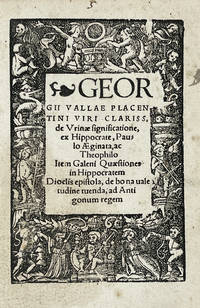
103<p>Rare 16th century work on uroscopy</p><p>the analysis of urine and its relation to health and disease</p><p>by the Italian Humanist Giorgio valla</p><p>from the most important medical treatise from the past</p><p>First Edition untrimmed</p><p>Valla Giorgio<em> Georgii Vallae . De Vrinae significatione ex Hippocrate Paulo Aeginata ac Theophilo. : Item Galeni Quaestiones in Hippocratem. </em><em>Dioclis Epistola de bona valetudine tuenda ad Antigonum Regem. </em>Argentine Strasbourg: Per Henricum Sybold 1528.</p><p>8vo 15 x 10 cm untrimmed copy printer paper binding pp. 46 signature A-C7 title with decorative woodcut border of putti woodcut initials imprint; date supplied from British Museum. <em>Short-title catalogue of books printed in the German-speaking countries . from 1455 to 1600</em>. London 1962 p. 883.</p><p>Rare and important collection of medical text about the analysy of urine and its relation to human health translated by the renowned Italian Humanist Giorgio Valla from text by Galen Hippocrates Paulo Aegineta Theophilus Medicus.</p><p>At the end of the book we find the <em>Epistola de bona valetudine tuenda the Letter on the Preservation of Health </em>written by Diocles of Carystus the well-regarded Greek physician said to be "<em>second only to Hippoctates</em>" to Antigonus the king of Asia concerning " <em>the prognosis of the diseases and extemporaneous remedies for the same throught garden herbs</em>".</p><p>Giorgio Valla 1430 - 1499 was an Italian physician and mathematician who practised in Milan Venice Padua; he belonged to the cultural circle of Ermolao Barbaro and held a professorship of grammar and rhetoric at the Scuola di San Marco Venice from 1485 until his death.</p><p>The studies conducted on an impressive amount of Greek and Latin codes and a solid training both in the humanities and in the sciences are the basis of the project pursued by Valla to bring together in a single volume the entire system of the arts: in 1501 it was printed posthumously a monumental encyclopedic work in forty-nine books in Latin entitled <em>De expetendis et fugiendis rebus</em> intended to exhaust all branches of knowledge from mathematics to astronomy from medicine to economics from philosophy to rhetoric up to music based on the works of large number of authors mostly Greek on whom the author had exercised his assiduous activity as a translator and exegete. Valla is the author of numerous other works on philosophy rhetoric and medicine and among them the present treatise.</p><p>Henricum Seybold a professor of medicine as well as a printer printed several medical texts all of which are rare.</p><p>Conditions: light staining to title and first few leave final blank missings; lower edge uncut.</p><p>Provenance: old ink underlining to first few lines and tracing of initial to verso of</p><p>dedication</p><p>References: Adams V150; Durling 4488; Not in Wellcome Osler or Graesse.</p> Henricum Sybold
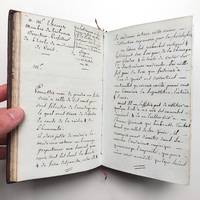
180319744<p><strong>A very interesting collection of around 80 copies of letters from the correspondence of Rouen physician Jean-Baptiste Vigné 1771-1842 a pioneer in the practice of vaccination in Rouen.</strong> He was head of the city's General Hospice and one of the first full members of the Académie de Rouen when it was re-established in 1803. He was also active in Paris as a corresponding member of the Académie de Médecine and the Société de Médecine Clinique.</p><p>This correspondence brings together the most important letters he sent between 24 Nivose An XI January 14 1803 and July 8 1806.<br />His correspondents were mainly doctors and members of learned societies in Paris and Rouen including leading medical figures of the period such as "shis ami" Jean-Etienne Esquirol 1772-1840 8 letters Michel-Augustin Thouret 1749-1810 6 letters François Chaussier 1746-1828 4 letters Philippe Pinel 1745-1826 2 letters J. J. le Roux b. 1749 1 letter and Henri-Marie Husson 1772-1853.</p><p><strong>Among the most interesting items are three letters relating the early beginnings of vaccinia in Rouen.</strong><br />One is addressed in his capacity as Corresponding Member of the Paris Academy of Medicine to Henri-Marie Husson 1772-1853 secretary of the central vaccinia committee in Paris dated 26 Pluviose an XI 1 page: "<em>Do not doubt Sir the pleasure I would have in communicating to you some observations favorable to vaccinia inoculation which I believe against the feeling of its detractors to be powerfully anti-smallpox</em>".<br />Two are addressed to Monsieur G. Robert pharmacist at the Hôtel Dieu in Rouen and secretary of the correspondence office of the central vaccinia committee of that city dated 8 brumaire an XIII 1 page and 3 pluviose an XIII 8 pp.<br />They concern the shipment of vaccine fluid taken from a 12-year-old child and give detailed observations on the vaccinations he carried out in Rouen reporting a few special cases such as the vaccination of a 9-month-old baby surrounded by sick people.<br />"<em>I have vaccinated only 26 people since Messidor Year XI three of whom were unsuccessfully. In twenty-two others I have seen all the symptoms of true vaccinia develop successively with a reddish superficial aureole forming around the injections as soon as they have been given and disappearing in a few moments.</em> "</p><p>Other letters concern the distribution of his own works or articles such as his analysis of Philippe Pinel's treatise on insanity his <em>Essai sur la petite vérole </em>his <em>Essai sur l'utilité de l'anatomie </em>1803 or <em>De la Médecine légale</em> 1805.</p><p>The volume also contains interesting observation letters and reports on a variety of subjects: care of wounds obstetrical observations peritonitis digestive tumors the case of a person with live salamanders coming out of his anus convulsions etc. There are 23 sheets of observations reported to the Paris Society of Clinical Medicine on Mr. Loger's illness.<br />Some letters are addressed directly to patients with instructions for their care and medical certificates and attestations.</p><p><strong>An important source on the activities of a particularly active corresponding member of several medical societies and a pioneer in the practice of vaccination.</strong></p>
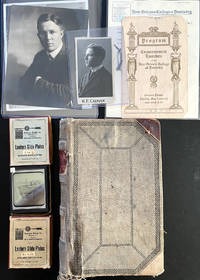
190562457New Orleans LA Salt Lake City UT & Cleveland OH: George Frank Carman New Orleans College of Dentistry; National Mouth Hygiene Association of America 1905-1915. Two parts. 1st - Tall thick 4to. 8.5 x 12.5 in. Approx. 700 pp most ruled pages w/ stamped contiguous numbering. ruled paper w/ over 100 pp. of mimeographed & dittoed answers questions exams either laid-in or mounted transverse w/in the pages the majority is in bold ink manuscript cursive by Carman of over 100000 words several manuscript original anatomical art drawings a tipped-in anatomical manikin by Yaggy & West w/ colour chromolithograph overlays dated 1885 for head and school w/ facing leaf of manuscript ink notes 2 photographs of George Carman Sr. and 1 of Frank Carman 1907 Commencement Exercises program for NOC of Dentistry Dittoed TLS on NOC of Dentistry letterhead signed by Louis D. Archinard and other occasional pieces of ephemera. Contemporary tan buckram raised bands gilt & red morocco spine label leather corners edgewear rubbing warping to covers from inserted leaves fraying to fore-edges of a few leaves some scuffing creasing to inserted mimeograph and dittoed quizzes and lesson plans still a good exemplar w/ Utahnah Dental Co. tooth-shaped advertisement mounted on front pastedown; 2nd - Three Lantern Slide Plates boxes holding 33 glass magic lantern slides sized 3.25 x 4 in. all w/ black tape at fore-edges number lables at lower left information w/in negative at lower fore-edges of images all in excellent condition w/ only 1 box lacking the lid all from the library of George F. Carman D.D. This original Progressive Era dental/medical manuscript documenting the three years of courses lectures and quizzes at the New Orleans College of Dentistry together with Dr. Carman’s visual aid Fletcherism National Mouth Hygiene Association glass plate slide lecture course provide an historically essential group documenting the advances in dentistry dental surgery and oral hygiene in the first 15 years of the 20th- Century. The New Orleans College of Dentistry was founded in 1899 by Drs. Andrew Friedrichs 1857-1921 pioneering oral surgeon and dental specialist; Dr. Louis D. Archinard 1869-1911 an excellent New Orleans dentist focused on offering medical care to the indigent and poor in New Orleans and his brother Dr. John J. Archinard 1870-1909 physician and oral surgeon who was a Spanish-American War veteran. By 1903 the New Orelans College of Dentistry had purchased and outfitted their first building at 831 Carondelet Street where they would operate until a 1908 fire gutted the building forcing the New Orleans College to affiliate and move to Tulane University. Carman 1886-1948 had studied in Houston TX and entered the New Orleans College of Dentistry in 1905 intending to study and learn the latest advances in the field of dentistry. The opening decade of the 20th-Century oversaw tremendous advances including the adapting of electric motorized drills for dentists X-Ray machines for patients awareness of the dangers of bacteria and bacteriological infections new methods of anesthesia for extraction and the revolutionary use of Vulcanized Rubber as base for artificial dentures. The “Index†or contents by Carman detail his divisions and lecture courses into Prosthetic Dentistry including extensive details on Vulcanization Vulcanizing Rubber preparing and constructing bridges and more; Pathology taught by Archinard with emphasis on hereditary diseases descriptions of inflammation assorted diseases necrosis and suppuration; followed by Anatomy - featuring anatomical manikin and original drawings by Carman; as well as Materia Medica Operative Dentistry Physiology Histology by Dr. J.J. Archinard “The Man that Cleaned up Havana Cuba 1898†chemistry metallurgy bacteriology clinical dentistry operative dentistry continued and more. He also includes the dittoed notes on histology with dittoed sections on tooth enamel nervous system tissues retina and crystlline lens and the preparation of tissues for examination with a microscope. Also included in the courses were embryology dental pathology and more. Carman has incorporated the very first test questions as well as printed examples of medical board questionnaires of States from Ohio to Oregon California and the rest of the West. Upon graduation Carman moved to Salt Lake City where he married Nina Richardson 1890-1965 daughter of the first physician in Salt Lake City and operated a successful practice for nearly 40 years out of the “Judge Building†in SLC up to his death of a heart attack in Los Angeles while on vacation. The Tulane School of Dentistry over seen by Dr. Friedrichs operated at Tulane until June 1928 emphasizing oral hygiene and continuing the original mission of providing care to the poor. Unfortunately it always teetered on the brink of financial ruin and closed in 1928. Horace Fletcher 1849-1919 was known during the Victorian and Progressive Eras as “The Great Masticator†and was a well known and influential food and health quackery specialist and author self-promoter and fanatic on his doctrine of “Fletcherism†which believed that all food had to be deliberately masticated and chewed until it turned to liquid. These glass plate slides emphasize and promote his four main advisories on chewing and swallowing but also the results of examining school children’s teeth in Andover MA indicating that nearly 60% of the children had poor or rotting teeth. Slides show the teeth of young children X-Rays of the skulls abscesses proper brushing and care of teeth with two specifically showing entire classrooms properly brushing their teeth. This cataloguer could find no similar manuscript course book or work for the NOC Dentistry in Worldcat or of the Fletcher Oral Hygiene Glass Lantern Slides; See: James Whorton Physologic Optimism: Horace Fletcher and Hygienic Ideology in Progressive America Bulletin of the History of Medicine Vol. 55 No. 1 Spring 1981 pp. 58-87; History of Dental Schools in Louisiana LSU Health New Orleans School of Dentistry 2024; Tulane University of Louisiana New Orleans College of Medicine School of Dentistry New Orleans College of Dentistry 1898-1909 Announcement for 1921-1922. George Frank Carman, New Orleans College of Dentistry; National Mouth Hygiene Association of America, hardcover
192063452Auburn & Skaneateles NY Cranston CT Providence RI & Puyallup WA: Arthur Foot Resting Company Arthur Antibody Production Theory Co-op ca. 1920-1955. Two vols. 1st - Folio. 11.5 x 14.5 in. 48 pp unpaginated. on thick acidic contemporary 1930’s paper. With 126 original silver gelatin photos sized from 2.25 x 3.25 in. up to 11 x 10 x 12 in. some mounted on boards some die-cut to shape of untreated and treated feet and 2 clipped to sales literature w/ 1 bearing manuscript information on verso as well as clippings foot impressions TLS & ALS endorsements business promotions and printed patent awards in 1932 and 1933. Contemporary black textured boards post-binder Arthur Foot Resting co. sample promotion mounted on front cover wear scuffing chipping to fore-edges of leaves some lifting occasional tears & thumbing; 2nd -- Folio. 12.5 x 14.5 in. With 126 original silver gelatin photos sized from 2.25 x 3.25 in. up to 11 x 14 in. many mounted with orthopedic medical strapping tape and others just mounted on pages after being removed from perished previous sales albums others on card stock and over 100 ephemera pieces including TLS ALS diagrams illustrations newspaper & magazine clippings promotional literature original anatomical diagrams printed patent documents Gilbert foot wrapping samples testimonials and more. Dark brown embossed covers post-binder screw-posts at gutter margin chipping edgewear some soiling & wear to covers chipping and minor tears to fore-edges of some leaves toning to leaves as usual still a G pair of exemplars w/ 4to. 55 leaves typescript/carbon/mimeograph MS laid-in. An historically fascinating and intriguing pair of medical scrapbook/photo sales albums revealing the history and development of an entrepreneurial massage/hydrotherapist’s patented podiatry treatment rescuing feet all over the Northeast marketing of orthopedic footwear along with the gradual formation of his chiropractic and quackery “Arthur Antibody Phenomenon†“Arthur Lympocytic Theory†and “Alladdenism†to cure everything from the common cold to polio following World War II. The first album focuses primarily on the “History of the Arthur Foot Treatment†details his efforts of setting up the Arthur Foot Resting Company to treat foot sufferers in and around upstate New York through a technique for applying adhesive tape in new ways and aid potential patients in avoiding “various kinds of braces supporters shoes massages etc.†and how his “Fast Strap†method “actually cured the condition of his feet.†According to the photographs and extensive original documentation supplied in the albums he began developing his treatments at the sanatarium in Hot Springs Virginia and by 1931 was offering clinics and demonstrations at such places as the Auburn City Hospital in Auburn NY as well as securing support from such companies as the Enna Jettick Shoe Co. and Dunn & McCarthy Inc. on Arthur foot straps and producing and selling patented Arthur orthopedic shoes. Arthur has included strapping exercises for the feet proper ways in which to wrap them together with photographs demonstrating how to apply the straps properly before & after foot diagrams and even a mock-up advertisement declaring “Famous Health Resorts using this treatment recommend -- John Smith Shoes Dealers Listed Here.†Of particular interest is the laid-in brass split-pin clipped sales photos & diagrams complete with display photo of shoes “designed for this work and are still selling very strongly after 15teen years as a leader in the line.†The second album with analogous dating includes demonstrations of applying the orthopedic tape straps the photo advertising sign outside of Arthur’s clinic as well as treatment progress photo series. Arthur claimed his massage/strap treatment could also be used to cure wars as well as arthritic conditions. Included within the second album are actual straps having been applied as well as pasted out example to show potential clients podiatrists and chiropractic clinics. Arthur 1893-1982 was a podiatrist holistic chiropractic medical practitioner medical device manufacturer and salesman as well as founding member of quack medicine/chiropractic holistic co-op in Washington State. He began working initially as a machinist for a Rhode Island automobile manufacturer but by 1917 had became a hydrotherapy and massage therapy specialist at the White Sulver Springs Sanatarium in Virginia served as a hydrotherapist and ambulance driver with the Ambulance Company 20 6th Sanitary Training Regiment during World War I and followin the War for the Connecticut State Asylum and the Rhode Island Hospital for Mental Diseases. By the 1920’s he was operating his own consulting and manufacturing business for his “Arthur Foot Resting Co.†between Hot Springs VA and Skaneateles NY selling his patented food appliences and treatment devices. In the early 1950’s he moved to Puyallup WA where he began pushing his medical theories and later as foot specialist and physical therapist in Vancouver WA. This cataloguer could find no other similar collections archives or even published trade literature related to the patented medical devices and practices of the Arthur Foot Resting Co. Arthur Foot Resting Company, Arthur Antibody Production Theory Co-op, hardcover
44211<p>Japan and Western Medicine. Oranda jin Geka ryoji no zu Dutch Surgery in Nagasaki. Original pen ink and watercolor drawing on light brown-toned silk with 4 vertical lines of Japanese characters in the upper left corner. Japan: late 18th or early 19th century. 483 x 363 mm. mounted as a scroll at a modern date on light grey silk backed with paper with a half-round hanging rail with braided ribbon attached at the top and a suspension bar at the foot measuring 914 x 443 mm. overall; preserved in a custom-made wooden box. A few tiny pinholes in upper corners of image but fine with the coloring fresh and bright.</p> <p> This striking image showing an amputation carried out by a Dutch surgeon in Japan was most likely painted in the late eighteenth or early nineteenth century during Japan's self-imposed period of national isolation. The hand-painted image is related but by no means identical to a Nagasaki woodblock print titled "Surgery by a Dutch Physician" one of many popular souvenir prints depicting scenes unique to Nagasaki which at the time was the sole point of contact between Japan and the outside world. See our reproduction of the print. It may be that our scroll is the original of the image; however it is also possible that both hand-painted and woodcut versions of the image were produced simultaneously.</p> <p> Western surgery came to Japan in the sixteenth and seventeenth centuries via the Portuguese who in 1543 became the first Europeans to make direct contact with Japan and the Dutch who became the only European nation allowed to trade with Japan after Japan's expulsion of the Portuguese in 1639. Surgeons attached to the Dutch East India Company established practices at the island of Dejima in Nagasaki Bay which led to the formation of several Japanese schools of surgery based on European methods. "This aspect of Western medicine known as K m -ry geka or 'Surgery of the Red-Haired' has had a profound effect on the development of surgical practice in Japan" Van Gulik p. 37. Van Gulik "Dutch surgery in Japan" in Red-Hair Medicine: Dutch-Japanese Medical Relations ed. Beukers et al. pp. 37-50. </p> <p>. unknown
1700K8L0EZ7PGV23The Netherlands 1700. Large agenda 8vo 20.5 x 12 cm. Recased ca. 1720 in its own original ca. 1700 blind-tooled parchment sewn on 3 tapes but previously on 5 cords leaving raised ridges in the parchment of the spine with a large centrepiece on each board in a frame of double fillets. Manuscript in dark brown ink on laid paper with 1 printed and 10 manuscript slips with recipes loosely inserted late 18th & early 19th centuries. pp. 15 16 23-188 197-386 387-412 minus 16 scattered pp. including integral paste-downs and about 160 pp. blank except for the page number. A recipe book in Dutch probably written beginning around 1720 but with additions to at least 1758. Most of the recipes are medicinal but about 15 written pages near the end separated from the others by numerous blanks contain culinary recipes. Among the medicinal recipes one also finds a few for ink shoe polish and other things. The medicinal recipes include treatments for the plague rabid dog bites jaundice worms warts scurvy toothache headache and many other ailments. Unusually the complier cites about a dozen sources for the medicinal recipes. The culinary recipes include several kinds of pancakes waffels and "poffertjes" a popular Dutch treat like tiny puffy pancakes tarts cookies and other sweet treats.A small number of leaves had been used for something else before the present text but they were removed and the rest recased in the original binding to begin the present manuscript. The only remaining clue to this earlier text is in the index leaves at the end where a small number entries at the heads of the pages are written in a different hand and in Latin with references to leaf numbers that are no longer present. They are clearly religious/theological.The manuscript as it now stands has minor marginal defects at the foot of about 40 leaves not affecting the text and occasional minor spots but is still in good condition. The binding is slightly loose due to the removed leaves and the parchment shows a few wrinkles and small spots but the tooling of the centrepiece is clear. A charming manuscript recipe book in Dutch both medicinal and culinary. unknown
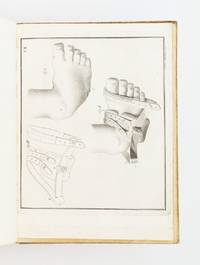
1803ST18718Pavia: Appresso Giuseppe Comini 1803. FIRST EDITION. 309 x 225 mm. 12 1/8 x 8 7/8". 42 pp. without the blank called for by Norman. <br/> Contemporary paper boards patterned to look like tree calf smooth spine. WITH FIVE ENGRAVED PLATES THREE OF THEM FOLDING BY FAUSTINO ANDERLONI. Norman 1900; Garrison-Morton 4308. See also: Heirs of Hippocrates p. 292; DSB XII pp. 136-39. ◆Two-inch dampstain to upper right corner of front cover also slightly affecting margins of first 10 leaves extremities a little worn but still a nearly fine copy--clean fresh and bright internally with excellent impressions of the plates in a sturdy contemporary binding.<br/> <br/> In excellent unsophisticated condition this is a rare copy of the first edition of what Garrison-Morton tells us is the "first accurate description of the pathological anatomy of congenital club-foot." In addition to correctly describing the anatomy of this common birth defect surgeon Antonio Scarpa also devised a brace for treating the malformation--detailed engravings of which are shown on the accompanying plates. A student of Morgagni Scarpa 1852-1932 quickly rose to prominence becoming a professor at the age of 20 and authoring several important works in the fields of otology cardiology ophthalmology and neuroanatomy among others. As DSB relates "his fame was so great that in 1805 he was personally complimented by Napoleon." According to Heirs of Hippocrates Scarpa was "a brilliant artist as well as a brilliant anatomist" who included his own anatomical drawings engraved by Faustino Anderloni in many of his published texts including the present work. The images here go beyond simply depictive to evoke an emotional response from the viewer who is invited to identify with the distress of the afflicted. Our first edition is a rare book: we could trace just two copies sold on RBH. Appresso Giuseppe Comini unknown
1903elala1301Dublin: Fannin And Company Imprint Varies 1883-1903. 1903. Including index volume XXI. a complete series except for Vol. II. 8vo. numerous plates incl. lithographs & photographs & text illus. original cloth covers of Vols. IX X XI XII & XX stained. Including papers Vol. I on a locomotor ataxy by H.C.Tweedy a case of dissecting aneurism of the aorta by J.F.Knott a case of trephining of the skull for abscess of the brain by J.JKilgariff on excision of the hip by J.K.Barton on replantation and transplantation of teeth by R.T.Stack on induction of abortion by W.J.Smyly on carcinomatous sarcoma by H.R.Swanzy on penetrating wounds of the bladder by W.Stokes &c. Hardcover. Dublin: Fannin And Company [Imprint Varies], 1883-1903. Hardcover
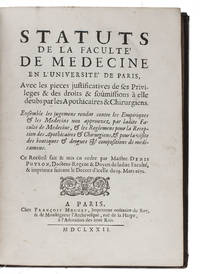
1672HCHB08RSGIM2Paris 1672. 4to. François Muguet Contemporary calf gold-tooled spine. With a few woodcut headpieces. 56 26 111 1 blank 4 20 56 22 2 blank 115 1 blank 43 1 blank 10 2 blank 16 4 16 pp. Collection of laws privileges and jurisprudence relating to the Faculty of Medicine of the University of Paris up to 1672. Most concern the publication of certain books the relationship of the Faculty with several guilds and the rules concerning the autopsy of corpses.The book opens with the university reform of 1600 which added many classical authors to the curriculum. For the Faculty of Medicine this meant the official establishment of Galen as the primary authority on botanical medicines. Interest in the work of Galen was highly stimulated by new translations from the Greek that had appeared in the 16th century and by 1600 the Paris Faculty was heavily mired in the doctrines of Galen which would remain so up until the 18th century.With a few contemporary annotations and corrections. Paper somewhat browned and with a few spots. A small corner of p. 11 of the index is cut out. Pp. 17-44 of the final part appear to be missing but this seems to be the case in every edition of this text we have located. Binding worn at the extremities with the head and foot of the spine damaged and a crack in the back hinge. A good copy.l Krivatsy 12063. unknown
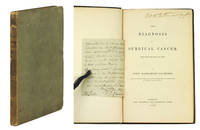
18551250181855. London: John Churchill 1855. <br /> <br /> Slim 8vo 77pp. 2 plates at the end then 28 pp. ads for Churchill's "Publications in Medicine Surgery and Science". Original green cloth hinges repaired at front and back cloth dull and backstrip with some wear.<br /> <br /> § First edition of the author's first book; presentation copy inscribed on the title-page by the author "With the Author's best complts" and a 4pp. mostly illegible ALs from the author to Dr. Long tipped in facing the title-page. A little known but apparently quite early and important study by this ophthalmic surgeon best known for his recognition of Laurence-Moon syndrome and his research on retinitis pigmentosa. The essay won the Liston prize for 1854. In the Journal of Ophthalmology for 1932 there is a long essay on Laurence who died at the age of 42 entitled "A Belated Tribute" by Arnold Sorsby pp. 727-740 with a bibliography of his writings. Laurence was a brilliant student and later ophthalmologist who founded the South London Ophthalmic Hospital now the Royal Eye Hospital. Among many other unrecognised achievements he was the first to describe macular degeneration. The tribute concludes: "the work that he started and did not see completed is today a living force. He has become an integral part of modern ophthalmology as founder of an important hospital as a pioneer in ophthalmic journalism and as one of the forerunners of that growing school of thought which correlates ocular defect with bodily structure." Not in Garrison-Morton. Armorial bookplate of Richard Long M.D. unknown
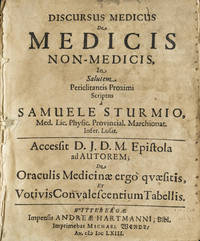
1684264562v.p. Strasbourg Heidelberg Marburg Wittenberg etc. 1684. 1 vols. 4to. Later vellum-backed boards. Front joint split some foxing browning marginal stains. 1 vols. 4to. A collection of 26 medical dissertations mostly published in Strasbourg 1637-1684 related to various topics including dysentery gunshot wounds the plague kidney stones psychological ailments sleeplessness surgery on tumors tooth rot and other maladies. The book includes a manuscript index note at the beginning of the volume and each pamphlet is numbered in manuscript. <br /> Most of the titles are quite rare OCLC showing 3-5 institutions as holding the individual titles. The variety of topics suggests that a physician documenting current research or academic activity in medical studies in Strasbourg compiled the volume. The unique French title in the collection closes the volume and discusses the use of the earliest eau de toilette L'eau de la Reine de Hongrie as an antiseptic tonic for the plague. <br /> <br /> The following is a list of the titles herein:<br /> STURMIO S. Discursus medicus de medicis non medicis in salutem periclitantis proximi. Wittenberg 1663. 16 42 pp.<br /> LOMBARDIUS C. Centum Theses de Officio Medici. Marburg 1655. 44 pp.<br /> HEINTZ J. Disputatio inauguralis medica De affectibus soporosis. Strasbourg1677. 40 pp.<br /> ISRAEL J. Dissertatio inauguralis medica de ligatione vulgo von Nestel Knopffen. Heidelberg1672. 24 pp. OCLC: Cornell and NML.<br /> KUEFFER W. C. Galaktologian Seu Dissertationem De Lacte Inauguralem Sub Auspicio Divino . Strasbourg1672. 8 40 pp. OCLC: only Cornell in North America.<br /> WILLIUS J.V. Disputatio medica inauguralis de dysenteria. Strasbourg 1640. 16 pp.<br /> WILLIUS J.V. Auxiliante pacis authore affectuum vehementissimum vehementissimorum affectuum effectum et causam Iram dissertatione. Strasbourg 1671. 4 44 pp.<br /> TACKIUS J.M. Disputatio inauguralis Medica Juvenem Phthisi Incipiente Laborantem. Giessen 1684. 16 pp.<br /> NIEMAND H. Disputatio medica inauguralis de suffusione. Strasbourg 1676. 2 28 pp.<br /> BIX J.U. Sphygmographia; seu Dissertatio De pulsu inauguralis. Strasbourg 1677. 28 pp. <br /> HERTEBRODT J.M. Dissertatio inauguralis medica de peste. Strasbourg 1667. 16 pp. <br /> NICOLAI H. Disputatio Inauguralis Medica. De Vulneribus Sclopetorum. Strasbourg1675. 4 40 pp.<br /> WIDT J.R. S.S. Triade Fortvnante Et Praesidente Phthisiologia Decreto Et Avthoritate Magnifici Nobilissimi Gratiosissmi Collegii Medici Universitatis Argentinensis. Strasbourg 1637. 32 pp.<br /> SEBISCH J.A. Disputatio cheirurgica de tumoribus praeter naturam in genere. Strasbourg 1669. 2 40 2 pp.<br /> SALTZMANN L. Disputatio inauguralis medica qua abscessum internum insignis magnitudinis. Strasbourg 1671. 28 pp.<br /> SCHERBIUS C. Disputatio medica inauguralis de renum calculo. Ultrajecti 1669. 16 pp OCLC: BL only.<br /> PHILIPPUS JACOBUS. Disputatio medica inauguralis. Strasbourg 1673 8 56 pp.<br /> MAPP M. and SCHEID J.V. Zetematon peri phusog dekas h. e. De flatibus quaestiones decem.Strasbourg 1675. 2 34 pp.<br /> SCHEID J.V. Visus vitiatus ejusque demonstratio mathematico-medica. Strasbourg 1677. 8 70 2 pp.<br /> MAPP M. Disputatio de fistula genae terminata ad dentem cariosum. Strasbourg 1675. 28 pp.<br /> WIETZEL J.C. Disputatio inauguralis medica De morsibus et puncturis animalium. Strasbourg 1676. 30 pp.<br /> SCHERPFF M. Disputatio medica inauguralis exhibens febrem petechialem. Strasbourg 1676. 8 28 pp.<br /> SENCKENBERG J.H. Disputatio medica inauguralis De ptyelismo. Strasbourg 1676. 28 pp.<br /> DULCKEN J.H. Disputatio Inauguralis De Nakir Id est Nakir Arabum.Heidelberg 1684. 20 pp.<br /> AMELUNG J.C. Der Röm. Käyserl. Majestät Und Churfürstl. Durchl. zu Sachsen Allergnädigst- Und Gnädigst-ertheiltes Privilegium. Leipzig 1680. 12 pp.<br /> Les vertus de l'eau de la reine d'Hongrie. Paris c1670s. 3pp. unknown
2952<p><strong>A meticulously-detailed account of clinical practice and research at a pioneering paediatric hospital in St. Petersburg. Illustrated with numerous tables graphs and reproductions of hand-drawn charts.</strong></p><p>The Elizavetinsky also called Princess Elisabeth Clinical Hospital for Young Children was founded in 1844 as a private charitable organisation at the behest of Grand Duchess Elena Pavlovna two of whose daughters had died as infants and named in honour of Grand Duchess Elizaveta Mikhailovna a granddaughter of Tsar Paul I. After the Bolshevik Revolution it was renamed the Louis Pasteur Clinical Hospital. The first paediatric hospital in Russia also in St. Petersburg had been founded a decade earlier; but the Elizavetinsky was the first in the world to focus on the treatment of children under the age of three 'Formirovanie'.</p><p>The report describes the development of the hospital including details on buildings and facilities and various departments such as ambulatory care surgery and infectious diseases. It offers copious patient statistics and a section devoted to the problem of the high mortality rate among children suffering from tuberculosis. The authors also include discussions of various digestive respiratory and infectious ailments as well as a list of research publications by doctors on staff and an expense report for 1893. The preface is by Thomas Woldemar von Reitz who had been heading the Hospital for 25 years since 1869.</p><p><strong>Rare</strong>: we couldn't find any other copy going through the market in recent times. We could trace two copies in the US NYPL and NLM and one in both main Russian libraries RGB and RNB.</p><p>Description<br />Large 8vo 24.5 x 18.5 cm. Title 2 preface and 224 pp.<br />Binding<br />Contemporary full dark brown morocco gilt lettering to upper cover and flat spine patterned endpapers.<br />Condition<br />Rebound with brown leather retaining most of the contemporary binding the latter significantly chipped at spine and corners; some upper outer corners shaved or chipped some restored light recent pencil annotations on upper flyleaf and title otherwise very clean.<br />Bibliography<br />"Formirovanie klinicheskikh tsentrov" online medfox.ru. ref: 2952</p> Goppe, Skt. Peterburg, 1894. hardcover
2090502130601441Shun'yo-do shoten N.A. Soft Cover. Fine. Number of books: 28 Shun'yo-do shoten paperback
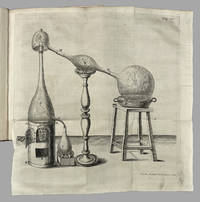
173685<p>EXTREMELY RARE ILLUSTRATED FIRST EDITION OF THE RENOWNED "PHARMACOPOEA TAURINENSIS"</p><p>MEDICAL/GASTRONOMICAL RECEIPT BOOKS PRINTED IN TORINO CONTAINING NUMEROUS RECIPES OF SPIRITS AND LIQUORS</p><p>THE FIRST APPEARANCE OF THE <em>VERMOUTH </em>RECIPE<br /><em><br />Pharmacopœa Taurinensis nunc primum edita jussu augustissimi regis. </em>Augustae Taurinorum : in Aedibus Academicis apud Joannem-Baptistam Chais typographum regium 1736.<br /><br />4to 238 x 180 mm contemporary stiff vellum title on leather label at spine pp. 8 246 16 Coat of arms of the House of Savoy at title page woodcut head-pieces and head-letters woodcut <em>cul-de-lampe<br /><br /></em>TWO LARGE ENGRAVED FOLDING PLATES 46X34 CM BY THE FRENCH ARTIST GEORGES TASNIERE ACTIVE IN TORINO AND WIEN DEPICTING THE DISTILLATORY APPARATUS NECESSARY FOR THE <em>SPIRITUS SULPHURIS</em> PLATE I AND <em>THE SPIRITUS VINI</em> PLATE II. THE PLATE II IS EXYTREMELY RARE BEING NOT PRESENT IN THE majority of the COPIES OFFERED ON THE MARKET IN THE LAST YEARS.<br /><br />The two plates were in fact meant to be used as project drawings to develop the instruments to perform distillation and so very often detached from the book.<br /><br />Officially presented in Turin by Antonio Battista Carpano in 1786 and based on the receipt of "<em>Vinum Absinthites</em>" Absinthe Wine described for the first time in the present book the <em>Vermouth</em> quickly become one of the best known liquor in the world and Vittorio Emanuele III di Savoia Victor Emmanuel III of Italy immediately appointed it as the "Official Aperitif" of the Court of Savoy.<br /><br />The <em>Pharmacopœa Taurinensis </em>is a complete and detailed illustrated spagyrical manual containing the most important and renowned receipts of the Savoy tradition and many spirits including the first receipt of the Vermouth. Many of the receipts originally meant to be used a medicine have also a great interest from a gastronomical point of view.<br /><br />The manual is formed by two parts; the first contains a list in alphabetical order of all the most important medicinal substances known at the time while the second composed by 21 chapters contains a rich and complete list of receipt regarding Essences Brews Decoctions Conserves Syrups Powders Liquors Oils Ointments Poultices<br /><br /></p><p>In the second half of the 18th century the town of Torino Piedmont Italy was already the main market in the production of flavored sweet wines to be used use as simple drugs. Pandering this market the <em>Pharmacopoea Taurinensis</em> gives a large list of recipes recommended for many diseases. It is also described for the first time the original recipe of vermouth that will have a great spread not only as medicinal elixir but also as a delicious drink.</p><p>Its diffusion was so great that the Duke Vittorio Amedeo III of Savoy declared the vermouth the "Court's Official Aperitive" preferring it to the "rosolio" the so far favorite liquor of Piedmont aristocracy.</p><p>Many local liqueurs makers claimed its making but as shows its presence in this book the proceeding was diffusely applied in Torino for many years before Benedetto Carpano in 1786 claimed its fabrication. Carpano developed his own recipe to face the increasing tax imposed by French and Spain on drugs so far used to produce sweet wines in Italy followed by all the other vermouth maker among them Martini e Cinzano.</p><p>The most important producers had their shop in the center of Torino where the bourgeoisie of the town went to celebrate the rite of the aperitive. From Torino the vogue of vermouth spread all over Europe as a typical Piedmont drink and contributed to the great industrialization process of Torino.</p><p>Provenance: I. Ownership signature <em>Rumianus Michael Antonius Chirurgus 1797</em> at title page and flyleaf. II. Paper <em>exlibris "Biblioteca di Pier Paolo Vaccarino"</em> pasted at front inside board</p> Joannem-Baptistam Chais hardcover
2495Baylor College of Medicine Houston 1957. SIGNED by both Michael E. DeBakey and Denton A. Cooley below their respective photographs on the Department of Surgery page. The photograph of a young-looking Dr. Cooley Associate Professor is located just below the photograph of Dr. Michael E. DeBakey Professor and Chairman. Stamped/textured silver-colored cloth-covered boards 10 3/4 x 8 inches color photo-illustrated endpapers aerial photograph of the Texas Medical Center unpaginated heavily illustrated. Very near fine very minor wear to lower spine end; else fine. 3214018. Signed by Authors. F. Hardcover. Baylor College of Medicine, Houston, 1957. hardcover