ROSSELLO TimotheoMareMagnum

98 839 résultats
In-16 p. (mm. 150x98), 2 parti in 1 vol., mz. pelle settecentesca, filetti e tit. oro su tassello (rifatto) al dorso, 8 cc.nn., 152 cc.num.; 8 cc.nn., 152 cc.num., marca ai due frontespizi, ornato da grandi iniziali silografate. Nella Prima parte vi sono contenuti i "Secreti" “Si per huomini, & donne d’alto ingegno, come ancora per Medici, & ogni sorte d’Artefici industriosi, & ad ogni persona virtuosa accomodate” - Nella Seconda i "Secreti" “Ne’ quali si contengono i rimedi utili à l’infermità, & altre cose bellissime, ingeniose & artificiose, come nella Tavola potrai vedere”. Vi sono contenute ricette assai curiose. Opera non comune, più volte ristampata. Cfr. Wellcome,5573 che cita l’ediz. di Venezia, 1561 (probabilmente la prima) - Adams,II, p.160 e Durling,3948, un’ediz. del 1575 - Krivatsy, p. 1009 e Michel,VII, pp. 51 e 52 citano 4 ediz. del XVII sec. - Caillet,III,9602. Leggerm. corto del margine super.; una carta sapientemente restaur. per fori di tarlo e con trascriz. di alcune parole del testo; lieve alone margin. solo su alc. carte, altrimenti ben conservato.
in-8, pp. XIX, (1), 175, (1), leg. in cartonato rustico coevo. Marca editoriale in rame al titolo e a p. 127, vignette in rame come testatine; tre grandi tavole incise in rame raffiguranti strumenti chirurgici. Importante trattato sulla chirugia da traumi al cranio, tradotto dall'edizione originale francese pubblicata a Torino nel 1720 e composta dal Rouhault (fl. 1720-1743), chirurgo di Vittorio Amedeo e professore di chirurgia all'Università di Torino. La traduzione italiana si deve al torinese Giuseppe Giacinto Buzani, membro del Collegio di Chirurgia nella Regia Università di Torino, autore anche dell' ''Esposizione iconologica degli strumenti per trapanare il cranio'', aggiunto di seguito al trattato del Rouhault che, invece, tratta dei colpi senza frattura e con frattura e dei modi per porvi rimedio. Ottimo esempl.. Wellcome IV, p. 564. Leclerc 525..
In folio; due opere in un volume: (8), 396, (28) pp. e 143, (9) pp. Bella legatura seicentesca in piena pergamena con titolo in oro al dorso che si presenta a sei nervi, qualche lieve segno del tempo ma nel complesso in buone condizioni di conservazione. Bella marca tipografica di Guillaume Rouillé (1545-1589) al frontespizio di ogni volume. Alcune pagine leggermente ed uniformemente brunite a causa alla qualità della carta, ininfluente. Un leggerissimo alone ininfluente al margine esterno bianco delle ultime 10 carte del secondo volume e nel complesso ambedue le opere si presentano in buone-ottime condizioni di conservazione. Testatine, iniziali e finalini xilografici. Bell’edizioni stampate da Rouillé di queste due celebri opere del grande scrittore, medico e filosofo originario di Riva del Garda, Giulio Cesare Scaligero, latinizzato in Julius Caesar Scaliger (1484-1558). Di origine italiana, trascorse in Francia parte della sua vita, e la parte più fruttuosa della sua carriera. A dispetto del suo atteggiamento arrogante e incline alla polemica, era alta la sua reputazione tra i contemporanei, che lo giudicavano così distinto nel suo sapere e talento, che, secondo Jacques Auguste de Thou, nessuno degli antichi poteva essere collocato sopra di lui, e che l’età in cui visse non presentò nessun sapiente paragonabile a lui. Nelle proprie note biografiche, Scaligero si spaccia per un discendente del casato dei Della Scala (che furono, per 150 anni, i signori di Verona) e si dice nato nell’anno 1484 a Rocca di Riva, sulle rive del Lago di Garda. Era forse figlio di Niccolò della Scala, a sua volta figlio di Guglielmo.Quando era dodicenne, il suo protettore, l’imperatore Massimiliano I d’Asburgo, lo nominò tra i suoi paggi. Rimase per diciassette anni al servizio dell’imperatore, distinguendosi prima come soldato e poi come capitano. Ma non dimenticava di coltivare né le lettere, nelle quali aveva avuto come precettori alcuni tra i più eminenti studiosi del tempo, né le arti, che aveva studiato con considerevole successo sotto la direzione di Albrecht Dürer. Nel 1512 prese parte alla battaglia di Ravenna. Ma poco in verità è provato della vita dello Scaligero fino al 1525 quando divenne medico personale del vescovo di Agen, in Francia. Definiva i suoi studi classici come un gradevole rilassamento da compiti più severi. Qualsiasi siano state le sue vere faccende nei suoi primi 40 anni di vita, sicuramente queste lo resero un osservatore accurato e ravvicinato, e lo avevano reso edotto di molti fenomeni curiosi e poco noti, che aveva pienamente registrato in una tra le più tenaci memorie della storia. E’ celebre anche per aver in un certo modo anticipato il metodo induttivo. I due trattati qui presentati sono considerati fra i suoi più originali. In essi metteva a frutto le proprie dirette esperienze nel campo della botanica ed erboristeria, esperienze sia maturate nella sperimentazione diretta sia nella ricerca erudita di descrizioni di piante in fonti letterarie e artistiche, tanto classiche che moderne in parte mutate da Teofrasto ed Aristotele. Importante opera di botanica, farmacia ed erboristeria. Due rare edizioni. Good copies, rare. Bibliografia: I opera Pretzel 8090, II opera 8088.
Octavo. Pp. vi, 326, 46 publisher's catalogue. With 1214 illustrations to the text, partly photographic and partly hand-drawn. Hardcover, bound in new brown full cloth, with the original publisher's stiff front wrapper, nicely illustrated, printed in brown and black, bound-in, small signature, dated 1940, to top corner of first blank. In mint condition. A splendid copy. ~ First edition. Of utmost rarity in the original publisher's illustrated wrappers, so much so in such fine condition. "Victor Veau (1871-1949) was one of the great cleft surgeons of all time. Through his voluminous cases, as seen in his Bec-de-lièvre, published in 1938, he not only had extensive experience with many designs but a remarkable influence on cleft surgery throughout a great part of Europe and Britain." (Millard, "Cleft Craft"). Garrison & Morton 5763 ("Division palatine" 1931). This particular copy includes the elegant 46-page Publisher's catalogue "Ouvrages de médecine récents", Février 1938, printed in light blue on tinted paper and bound at end.
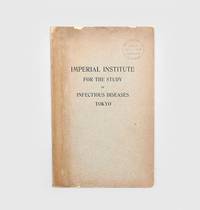
1914191180Tokyo: printed at the Tokyo Tsukiji Type Foundry 1914. First edition of this history of the institute and the medical developments it pioneered. This included the discovery of a serum treatment for diphtheria the isolation of the cause of dysentery and the formulation of antivenoms from Okinawa's habu snakes. A portrait of its director Kitasato Shibasaburo was placed onto the 1000 yen note in 2024 in honour of his contributions to medicine. The Imperial Institute was founded in 1892 by Kitasato as the first private research centre in Japan focusing on infectious diseases. Over the following 22 years it gained a reputation as one of the world's most foremost medical research facilities alongside the Pasteur Institute and the Rockefeller Institute discovering causes and cures for a wide variety of ailments. Its famous researchers Kitasato a student of Rober Koch and the person who discovered the bubonic plague bacillus; Dr Shiga who isolated the bacterial cause of dysentery; and Hata Sahachiro the man who discovered an arsenic-based injection for syphilis. This volume also features a list of the institution's publications from 1894 to 1914. Tall octavo. Half-tone photographic portrait with tissue guard 2 maps 1 folding 1 with highlights in orange half-tone photographic illustrations and tables in text; errata slip tipped in at front colophon in Japanese. Original buff paper wrappers front wrapper lettered in black. Purple stamp of Northwestern University Medical Library on front wrapper and punch-hole stamps internally. Wrappers browned spine refurbished inner hinges and a few closed tears repaired with Japanese tissue paper contents lightly toned and foxed: a very good copy. unknown
175635560Paris, de Bure, 1756. 8vo. Beautiful cont. full mottled calf w. five raised bands on richly gilt spine, gilt red title-label. A very nice copy w. only minor occasional brownspotting. xxviij, 483, (2, -errata & Approbation) pp.
180060689Nürnberg, 1800. 8vo. In contemporary half calf with gilt lettering to spine. Small paper-label pasted on to top of spine. A fine copy. XII, 132 pp.
182852406Verviers, Chez M. -R. Beaufays, 1828. 8vo. Bound in two nice contemporary uniform half calf bindings with black leather title-label with gilt lettering and green leather tome-label. Ex-libris pasted on to pasted down front free end-paper and small stamp of previous owner (same as ex-libris) to verso of title-page. Front hindge on vol. 1 a bit. A very fine and clean set. (2), 254 pp. (4), 281, (1), 23 [supplement], (4) pp.
Paris, de Bure, 1756. 8vo. Beautiful cont. full mottled calf w. five raised bands on richly gilt spine, gilt red title-label. A very nice copy w. only minor occasional brownspotting. xxviij, 483, (2, -errata & Approbation) pp.
Verviers, Chez M. -R. Beaufays, 1828. 8vo. Bound in two nice contemporary uniform half calf bindings with black leather title-label with gilt lettering and green leather tome-label. Ex-libris pasted on to pasted down front free end-paper and small stamp of previous owner (same as ex-libris) to verso of title-page. Front hindge on vol. 1 a bit. A very fine and clean set. (2), 254 pp. (4), 281, (1), 23 [supplement], (4) pp.
1955108369München, 1955-71. In gleichm. Hlwd.-Bdn. St. a. Tit. Bd. 6 Rücken locker. Es fehlt: Bd. 9 H. 2.
18263100861826. 37 ff. written on rectos only. 4to. Wrappers titled in manuscript. Covers worn and stained with some wear and chipping to the text. 37 ff. written on rectos only. 4to. Unpublished manuscript on the ancient Egyptian and Greek roots of medicine by the early American physician Charles Alfred Lee 1801-1872. Lee graduated from Williams College in 1822 and received his M.D. at Berkshire Medical College. He was connected with the Northern Dispensary of New York City chair of materia medica and general pathology at Geneva Medical College New York and taught at a series of eastern United States medical schools. Lee helped found the New York Journal of Medicine and the Collateral Sciences in 1843 and in 1850 he co-founded the Buffalo Medical School. His most famous work was the American edition of Dr. James Copeland's Dictionary of Practical Medicine 1848. He published several medical textbooks including the popular Human Physiology for the Use of Elementary Schools 1843. He also edited Bacchus: an Essay on the Nature Causes Effects and Cure of Intemperance 1840 by Ralph Grindrod.<br /> The present manuscript which appears to be unpublished is a survey of early Egyptian and Greek medicine and draws from sources quoted in the original Greek. unknown
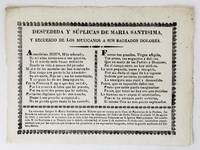
18336283Mexico City 1833. Near fine. Broadside 6.25 x 8.5 inches. Very minor soiling and wear. Cholera was a genuine scourge in 19th-century Mexico and the present work comes out of the epidemic that broke out in August of 1833. According to parish records it is estimated that a total of five percent of the population of Mexico City died as a result with the number of deaths causing overcrowding in both hospitals and cemeteries. The present document describes how the image of Our Lady of Sorrows was venerated in the Casa de los Ejercicios de la Profesa and carried in solemn procession to the church of the convent of the nuns of the Lord of Santa Teresa on Saturday August 17 1833 only eleven days after the first case of cholera was detected in Mexico City. After the conclusion of the novena held in the Metropolitan Church the image of the Most Holy Mary was returned to its temple on September 9 1833; through the supplications made by the faithful to the aforesaid images the great epidemic of cholera morbus was thereby calmed. An ephemeral piece not traced in OCLC. unknown
18263100861826. 37 ff. written on rectos only. 4to. Wrappers titled in manuscript. Covers worn and stained with some wear and chipping to the text. 37 ff. written on rectos only. 4to. Unpublished manuscript on the ancient Egyptian and Greek roots of medicine by the early American physician Charles Alfred Lee 1801-1872. Lee graduated from Williams College in 1822 and received his M.D. at Berkshire Medical College. He was connected with the Northern Dispensary of New York City chair of materia medica and general pathology at Geneva Medical College New York and taught at a series of eastern United States medical schools. Lee helped found the New York Journal of Medicine and the Collateral Sciences in 1843 and in 1850 he co-founded the Buffalo Medical School. His most famous work was the American edition of Dr. James Copeland's Dictionary of Practical Medicine 1848. He published several medical textbooks including the popular Human Physiology for the Use of Elementary Schools 1843. He also edited Bacchus: an Essay on the Nature Causes Effects and Cure of Intemperance 1840 by Ralph Grindrod.<br/>The present manuscript which appears to be unpublished is a survey of early Egyptian and Greek medicine and draws from sources quoted in the original Greek. unknown books
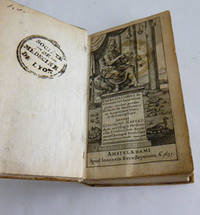
51-6330Amstelodami:apud Joannem Ravesteynium 1651. . 12mo. 7 x 12.5cm. Full contemporary vellum binding ivory color. Ribbed spine decorated with gilt. Frontispiece 26 388 3 pp. for the Table of Contents. Engraved frontispiece showing Jupiter seated on a pedestal opening an egg to release all creation.Renowned physician and scientist William Harvey is best known for his accurate description of how blood circulates through the body. While his published work on the circulation of blood is considered the most important of his academic life Harvey also made significant contributions to embryology with the publication of his book Exercitationes de Generatione Animalium in 1651. In this book he established several theories that would set the stage for modern embryology and addressed many embryological issues including conception embryogenesis and spontaneous generation. In this famous collection of observations on embryology and generation Harvey formulates “the first fundamentally new theory of generation since antiquity†by “shifting the focus to the egg itself as the primary generative agent.†The fruit of a lifetime of experience the treatise contradicts traditional Aristotelian views on generation by asserting that all life develops epigenetically either literally in an egg or according to the analogy of the egg. This principle has had great importance in the history of embryology and led to the search for the mammalian ovum.OOCLC Number / Unique Identifier:560965412.Keynes no. 35. Amstelodami,:apud Joannem Ravesteynium, 1651. hardcover
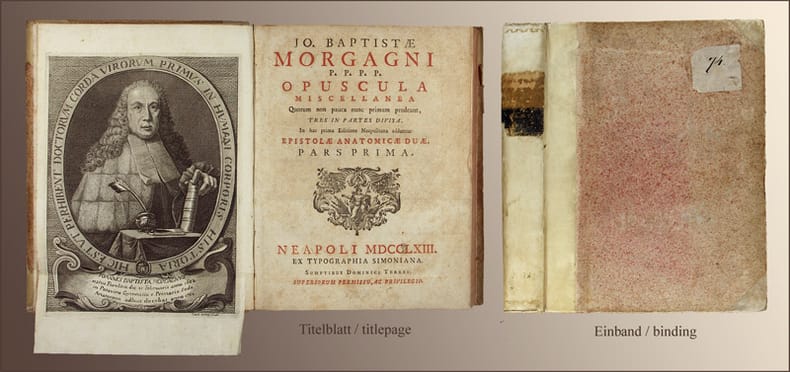
176340489BBNeapel, Typographia Simoniana, 1763. 4°. 4 n.n. Bl., 226 (recte 228) S., VI, 133 S.; 156 S., XIV, 191 S. Mit einem gestochenen gefalteten Porträt als Frontispiz. Halbpergamentbände der Zeit. 4 Teile in 2 Bänden.
176355272BBVenedig, Typographia Rimondiniana., 1763. Folio. VI S., 1 Bl., 120 S., 75 S., 84 S. Pergamentband der Zeit mit handschriftlichem Rückentitel. 3 Teile in Band.
176340489DB4 Teile in 2 Bänden. Neapel, Typographia Simoniana, 1763. 4°. 4 n.n. Bl., 226 (recte 228) S., VI, 133 S.; 156 S., XIV, 191 S. Mit einem gestochenen, gefalteten Porträt als Frontispiz. Halbpergamentbände der Zeit.
176355272BB3 Teile in Band. Venedig, Typographia Rimondiniana. 1763. Folio. VI S., 1 Bl., 120 S., 75 S., 84 S. Pergamentband der Zeit mit handschriftlichem Rückentitel.
176340489BB4 Teile in 2 Bänden. Neapel, Typographia Simoniana, 1763. 4°. 4 n.n. Bl., 226 (recte 228) S., VI, 133 S.; 156 S., XIV, 191 S. Mit einem gestochenen gefalteten Porträt als Frontispiz. Halbpergamentbände der Zeit.
Cm. 21,5, pp. (8) 570. Con 55 affascinanti incisioni xilografiche nel testo, molte delle quali a piena pagina. Leg. orig. in cart. alla rustica ricoperto da carta dipinta e con titolo ms. al dorso. Esemplare solo un po' slegato, peraltro genuino e ben conservato. Si tratta della prima traduzione italiana di questa celebre opera del medico francese Saint-Hilaire del quale lo stesso stampatore aveva pubblicato, nel 1709, la versione italiana del: "Trattato de' rimedj per le malattie del corpo umano...". La traduzione e le ampie aggiunte finali sono di Agostino Saraceni, medico e fisico di Desenzano. Opera non comune e corredata di un apparato iconografico ricco ed interessante.
Cm. 34, pp. (16) preliminari seguite da 100 splendide tavole a colori, ciascuna protetta da velina ed accompagnata da due pagine di testo esplicativo. Leg. edit. in tela con titoli a piatto e dorso. Esemplare in ottimo stato di conservazione. Celebrato capolavoro della scienza oftalmografica. Cfr. Garrison and Morton (5988.1): "The first atlas of ophtalmoscopy published in Italy, considered by many to be the most beautiful atlas ever published.".
Pp. (8) 366 (2). Stemma di papa Alessandro VII al frontespizio. Unito a: DIEMERBROECK ISBARNDI (de). De peste libri quatuor, truculentissimi morbi historiam ratione et experientia confirmatam exhibentes. Arenaci, Ex Officina Joannis Iacobi Bibliopolae, 1646. Pp. (12) 337 (11). Due opere in un volume di cm. 20, legatura coeva in piena pergamena rigida con unghie. Dorso parzialmente mancante, peraltro esemplare genuino ed in ottimo stato di conservazione. Bell'insieme di due prime edizioni dedicate alla peste. La prima, assai rara, e non citata da molta bibliografia; la seconda è l'edizione originale del testo che, più volte ristampato, fece scuola per vari decenni in cui dopo una lunga trattazione scientifica si riporta un interessante elenco di casi in cui la peste ha colpito con particolare aggressività ed altri in cui la malattia non si è presentata affatto. Curiose le affermazioni in cui l'autore invita all'utilizzo del tabacco come metodo per tener lontana l'epidemia di peste.
In-folio (cm. 34), pp. (12) 590. Grande marchio tipografico al frontespizio. Legatura coeva in piena pergamena rigida. Mancanze superficiali al dorso, qualche macchietta sparsa, ma complessivamente esemplare genuino, marginoso e ben conservato. Edizione originale italiana di questa celebre farmacopea.
Cm. 15, cc. (12) 251 (10) di cui la penultima con i dati tip. completi e l’ultima bianca. Bella legatura d’inizio ‘800 realizzata con un manoscritto quattrocentesco. Ex libris. Carte appena un po' brunite e con qualche nota manoscritta coeva. Esemplare fresco, marginoso ed in ottimo stato di conservazione. Copia appartenuta al celebre storico della medicina Ludwig Choulant (1791-1861) di cui appare la firma di possesso datata Dresda 1829. Si tratta della prima edizione latina che segue l'originale italiano del 1572. Opera prevalentemente divulgativa, indirizzata agli speziali ed in cui il Maranta espone i poteri curativi e prodigiosi della theriaca. Cfr. Durling, 2949 e Wellcome I.