Antiquariat.de
Livre Rare Book
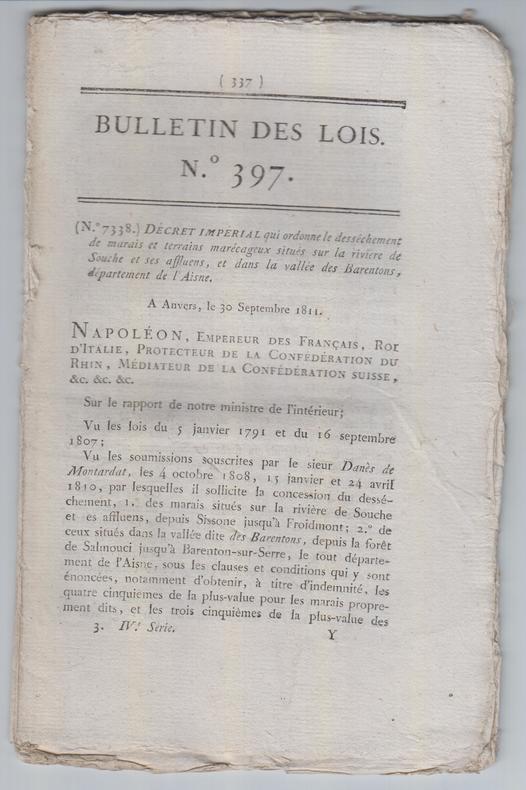
BULLETIN DES LOIS N°397 / Octobre 1811.
1811SPN-783Paris : Imprimerie impériale, 29 octobre 1811. Brochure de 32 pages en feuilles (337-368).
Librairie Bois d'Encre · Moulins la Marche, France5,00 €
493 résultats
18504769AGHildburghausen, BI, 1850 (ca.). Stahlstich, Darst. 10,7 x 15,5 (excl. Text), Bll. 18,7 x 26,4 Auf Wunsch Digitalaufnahme in jpg-Format erhältlich- photo in jpg-format available. Je nach Versandart können die Portokosten bis zu 2 ? weniger als angegeben betragen.+
185030AGHildburghausen BI. 1850 (ca.). Stahlstich v. Rottmann, 15.5 x 11 (H) 26 x 18,5 Auf Wunsch Digitalaufnahme in jpg-Format erhältlich- photo in jpg-format available. Je nach Versandart können die Portokosten bis zu 2 ? weniger als angegeben betragen.+
18501473AGNY, Meyer, 1850 (ca.). Stahlstich n. Fröbel, 16 x 11 Auf Wunsch Digitalaufnahme in jpg-Format erhältlich- photo in jpg-format available. Je nach Versandart können die Portokosten bis zu 2 ? weniger als angegeben betragen.+
18565336AGHildburghausen, Bibliographisches Institut, 1856. Stahlstich, aus "Meyers Universum", Darst. (excl. Text) 15,4 x 10,4; Bll. 25,7 x 18,6. Auf Wunsch Digitalaufnahme in jpg-Format erhältlich- photo in jpg-format available. Je nach Versandart können die Portokosten bis zu 2 ? weniger als angegeben betragen.
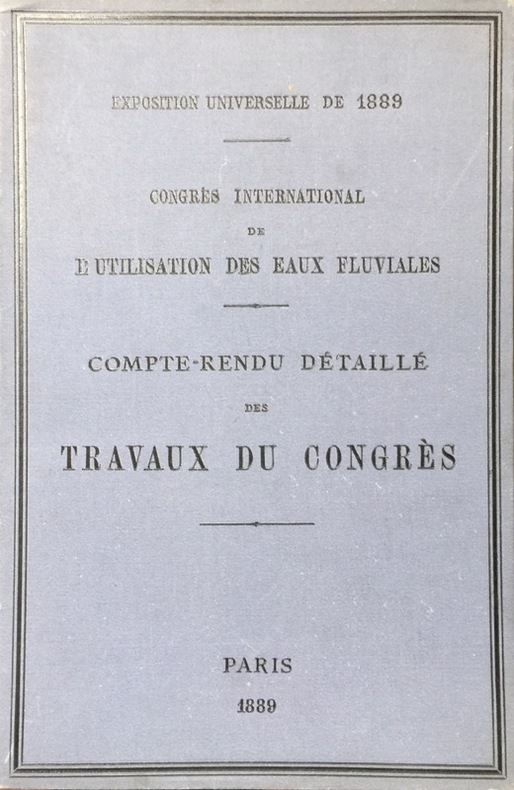
1811SPN-783Paris : Imprimerie impériale, 29 octobre 1811. Brochure de 32 pages en feuilles (337-368).
188519041Auxerre et Paris Au Secretariat De La société, Masson et Claudin 1885 Fort In-8 540 + 102 + CIV + 8 planches dont 1 carte
1816019837, 1816. Sehr gut
190010713Paris, Imprimerie Nationale, 1900 ; fort in-8, broché ; VII (1 bl.), 703 pp., 173 figures, 35 planches hors-texte essentiellement de photographies.
188910732Paris, Lahure, 1889 ; in-8 ; cartonnage d'éditeur de percaline bleu-pétrole, titrage noir et doré ; (4), XXI, (3), 556 pp., nombreuses figures, 6 planches hors-texte dont 4 dépliantes, grande carte dépliante en couleurs de navigation entre Paris et Rouen.
186710772Paris, E. Thunot, 1867 ; in-8, broché ; (4), 548 pp., couverture bleue décorée.
18364425AG1836. Lithographie von Gjöthström & Magnusson, Darst. 16 x 9,7 (excl. Text), Bll. 27,2 x 21,7 Auf Wunsch Digitalaufnahme in jpg-Format erhältlich- photo in jpg-format available. Je nach Versandart können die Portokosten bis zu 2 ? weniger als angegeben betragen.+
186630082Paris L'univers illustré 1866 in folio du N°499 au N° 550 , 414 pp et un ff de tables, premier semestre 1866 seul
1883ABE-383828364016 PAGES FORMAT A4-EN COUVERTURE "VUE D'UN PAYSAGE ANNAMITE DESSINE PAR LE LIEUTENANT RIVIERE EN 1863"-LE COMMANDANT RIVIERE/GRAVURE-AU TONKIN/LA MORT DU COMMANDANT RIVIERE/HAI PHONG/BA HOA-CARTE PAGE CENTRALE "LE TONG KIN ET LE BASSIN DU FLEUVE ROUGE D'APRES LES DOCUMENTS DE J.DUPUIS"-LE CENTENAIRE DES MONTGOLFIER EN FRANCE (PJ11)
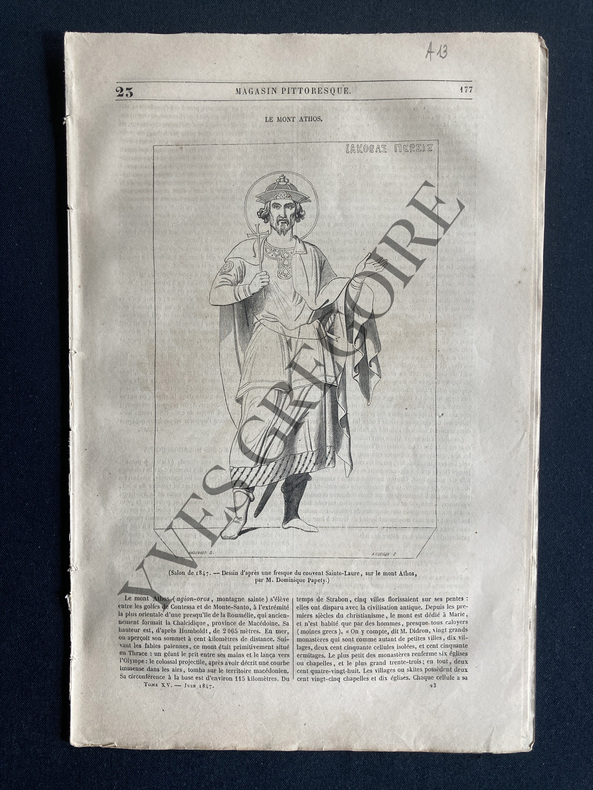
1844ABE-16493792487468 PAGES-21 CM X 30,5 CM-LE MUSEE DU LOUVRE UN JOUR D'ETUDE, 1P, GRAVURE-NOURRITURE DES CULTIVATEURS-DES CANAUX DE NAVIGATION (PREMIER ARTICLE), 3 PAGES ET DEMIE, 2 GRAVURES (PARTAGE D'UN COURS D'EAU EN ETAGES SUCCESSIFS, VUE D'UNE PARTIE DU CANAL SAINT MARTIN)-RECRUTEMENT MILITAIRE CHEZ LES GAULOIS-L'ORPHEE ANTIQUE ET L'ORPHEE AMERICAIN, 2 PAGES-CABOCLES OU INDIENS CATHOLIQUES DU BRESIL, GRAVURE
1847ABE-45417694648 PAGES-LE COUSIN ET SES METAMORPHOSES/3P/GRAVURES-RIO JANEIRO/2P/GRAVURE BARQUE DE PASSAGE
189010592Paris, Imprimerie Nationale, 1890 ; in-8, broché ; (4), 371 pp.
18860103# AUTEUR: A Melandri # ILLUSTRATEUR: Henri Rivière # ÉDITEUR: A Quantin imprimeur éditeur - Paris # ANNÉE ÉDITION: 1886 # COUVERTURE: demi toilé rouge - monté sur onglet - composition en couleur sur le 1er plat - bords biseautés # DÉTAILS: In 4° relié 2ff + 33pp + 2ff. Edition originale . 1er tirage des lithos de H Rivière en plusieurs tons qui avait 22 ans lorsqu'il illustra cet album où l'influence japoniste est sensible (Huret) # PHOTOS visibles sur www.latourinfernal.com
185959904Hildburghausen. Uten Ã¥r. 1859-63. OriginaltstÃ¥lstikk fra “Meyers Universumâ€. Motivets størrelse : 154 cm X 10 cm. Medfølger tekst pÃ¥ tysk. Tysk. unknown
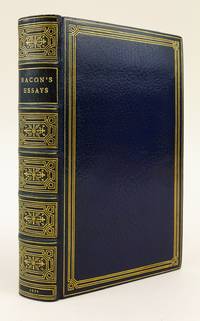
1891ST16866fLondon and New York: Printed by Cambridge University Press for Macmillan and Co 1891. From the "Golden Treasury" series. 210 x 133 mm. 8 1/4 x 5 1/4". xxiii 1 388 pp.Edited with notes and glossarial index by W. Aldis Wright M. A. Trinity College Cambridge. <br/> HANDSOME NAVY BLUE MOROCCO GILT BY RIVIERE AND SON stamp-signed on front turn-in covers with border composed of five plain rules and incorporating a scalloped corner configuration containing a pentagonal element raised bands spine intricately gilt in compartments outlined by plain and stippled rules enclosing an inner frame repeating the cover design and at the center an elaborate fleuron emanating from a floral tool and punctuated by many tiny dots turn-ins densely gilt maroon glazed endpapers top edge gilt other edges untrimmed. Engraved frontispiece in three states and the title page with the same image in a fourth tissue guard before title page. A Large Paper Copy. Spine just slightly and uniformly sunned toward blue-green title page with faint offsetting from tissue guard another page with a small area of darkening from laid-in piece of paper one leaf with two tiny marginal tears expertly repaired one page with trivial foxing but all of these imperfections insignificant and in general a very fine copy in a most attractive binding the text uniformly fresh bright and clean and the binding lustrous and virtually unworn.<br/> <br/> This is a special luxury copy of a late 19th century edition of Bacon's famous "Essays" first printed in 1597. As Oxford Companion indicates the text here comprises Bacon's "collections of reflections and generalizations and extracts from previous authors woven together . . . into counsels for the successful conduct of life and the management of men." Some of the essays "deal with questions of state policy . . . some with personal conduct . . . some on abstract subjects such as 'Truth' 'Death' and 'Unity' . . . and some reveal Bacon's delight in Nature such as the pleasant essay 'Of Gardens.'" Day says that "in Bacon's hand the essay is an impersonal gem of worldly wisdom" and most of the essays reflect an intention to provide "cold-blooded instruction on how to get ahead in life." In short incisive prose modeled after Tacitus "the aphoristic skill and wise experience of Bacon unite to form some of the most memorable and penetrating phrases in English." DNB indicates that this is an important edition pointing out "the accuracy of Wright's text and the concise learning of its notes." In very fine condition our volume gives special pleasure from the handsomely decorated Riviere binding to the high quality laid paper to the carefully printed text within enormous margins. <br /> <br /> Riviere is one of the foremost names in English binding partly because the firm did consistently fine work and partly because it was so long in business. Robert Riviere began as a bookseller and binder in Bath in 1829 then set up shop as a binder in London in 1840; in 1881 he took his grandson Percival Calkin into partnership at which time the firm became known as Riviere & Son and the bindery continued to do business until 1939. [Printed by Cambridge University Press for] Macmillan and Co unknown
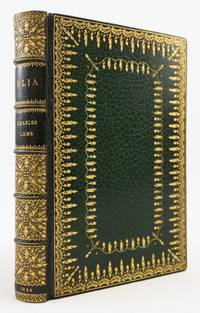
1823ST19567-072London: Taylor and Hessey 1823. FIRST EDITION First State imprint with single address for publisher. 200 x 125 mm. 8 x 5". 2 p.l. 341 1 pp. 3 leaves ads. <br/> VERY PRETTY DARK GREEN CRUSHED MOROCCO ELABORATELY GILT BY RIVIERE & SON stamp-signed on front turn-in covers with double frames formed of floral sprigs drawer handles and other small tools raised bands spine panels densely gilt with stippling floral tools radiating from small central flower gilt lettering turn-ins with floral garlands at corners olive green watered silk endleaves top edge gilt other edges untrimmed. Ashley III 50; Tinker 1457. Spine darker green than the covers though not at all noticeable in the four compartments that are almost solidly gilt front joint a little rubbed and with two-inch thin crack at top final leaf of ads with repaired curving two-inch tear into text isolated small stains or faint foxing but still very attractive--clean and fresh internally in a very lustrous binding sparkling with gilt.<br/> <br/> This is a handsomely bound copy of Lamb's largely autobiographical essays that embrace the broad subject of mankind at large as seen through the author's own experience and impressions. As Oxford Companion says Lamb's essays "present with exquisite humor and pathos and in a brilliant and inimitable style characters that the author has known . . . the productions of a playful or melancholy fancy . . . and general comments and criticism." The name "Elia" as Lamb says was "clapt down" on these essays in honor of a fellow clerk at South Sea House a building of commercial offices and the subject of the first essay. A second collection "The Last Essays of Elia" appeared in 1833. Charles Lamb 1775-1834 worked in the office of the East India Company and wrote poetry essays and plays. With his sister Mary he was the author of "Tales of Shakespeare" a flowing and lucid prose rendition of 20 of the bard's dramas that helped rekindle 19th century interest in the plays. The strikingly attractive binding done in an elaborately gilt style reminiscent of the Roger Payne era is the work of Riviere one of the foremost names among English binderies partly because the firm did consistently fine work and partly because it was so long in business. Robert Riviere began as a bookseller and binder in Bath in 1829 then set up shop as a binder in London in 1840; in 1881 he took his grandson Percival Calkin into partnership at which time the firm became known as Riviere & Son and the bindery continued to do business under the Riviere name until 1939 when it was acquired by Bayntun. Taylor and Hessey unknown
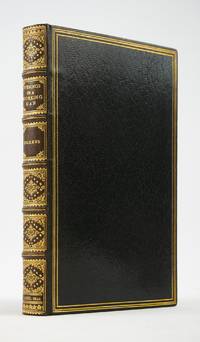
1844ST20685-2London: T. C. Newby 1844. FIRST EDITION. 170 x 102 mm. 6 3/4 x 4". 1 p.l. xiii 3 205 1 pp. 1 leaf ads.Preface by Charles Dickens. <br/> VERY PLEASING GREEN CRUSHED MOROCCO BY RIVIERE & SONS stamp-signed on front turn-in covers framed with gilt rules densely tooled cornerpieces with floral sprigs on a stippled ground raised bands spine panels lavishly gilt with a starburst of floral tools emanating from a central medallion all on a stippled ground gilt lettering turn-ins gilt ruled with floral garlands at the corners all edges gilt original tan cloth wrappers bound in at rear. Title page printed in blue and red. Eckel pp. 146-47; Podeschi B-121. Sheila M. Smith "John Overs to Charles Dickens: A Working-Man's Letter and Its Implications" Victorian Studies 18 no. 2 1974: 195–217. Spine just slightly sunned though hard to tell because of the heavy gilt a few trivial spots internally but A VERY FINE COPY in quite a pretty binding.<br/> <br/> This attractively bound volume of a working class poet's verse and prose represents one of Dickens' charitable efforts in the spirit of social reform. A carpenter by trade John Overs 1808-44 had become acquainted with Dickens in 1839 when he submitted poetry for publication in "Bentley's Miscellany" then under Dickens' editorship. Over the next several years Dickens became a literary mentor and something of a friend to Overs providing writing advice lending books and helping Overs to secure a position at Drury Lane Theatre when his tuberculosis became too severe to continue his work as a carpenter. Literary scholar Sheila M. Smith has suggested that Overs may have served as an influence for "The Chimes" Dickens' penultimate Christmas book; she writes that Overs "was neither a political agitator nor a trade unionist. . . yet he was bitter and exulting in the idea of social revolution. A working man of this kind goaded to such feelings would have aroused Dickens's sympathy at a period when the novelist was experiencing his most violent indignation about his country's poor." To whatever degree that sympathy proved a literary inspiration for Dickens it directly led to the publication of the present work. When it was clear by the spring of 1844 that Overs would not survive his illness Dickens suggested to him that he publish a collection of his writings to help provide for his family after his passing. And so the present anthology was published only months before Overs' death on September 28 1844 with the proceeds from the book along with an additional charitable collection taken up by the publisher allowing his widow to make a living by opening a small milliner's shop. T. C. Newby unknown
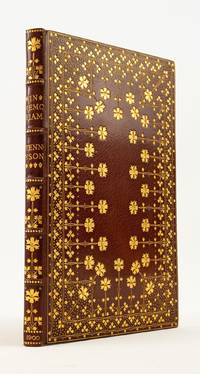
1900ST20797New York; London: Printed at the Bankside Press for M. F. Mansfield 1900. No. 83 OF 100 COPIES reserved for Great Britain from a total edition of 500. 244 x 155 mm. 9 1/2 x 6 1/8". CXXXI pp. 1 leaf colophon. <br/> LOVELY HONEY BROWN MOROCCO ELABORATELY GILT BY RIVIERE & SONS stamp-signed on front turn-in covers framed by delicate gilt chains the outer edge punctuated with tiny heart and dot tools the space between the gilt rules filled with many gilt dots and with 86 trefoils the central panel with 28 irises extending from the edge of the frame on alternating two and three chain link stems corner pieces with an oblique iris stem on a background of gilt dots accented by trefoils and small leaves raised bands spine panels with an iris rising from a cluster of small leaves gilt lettering gilt-ruled turn-ins with trio of irises on a stippled ground at corners top edge gilt other edges untrimmed. In the original felt-lined leather chemise with gilt lettering on spine and in a marbled paper slipcase bottom panel carefully reinforced with cellotape. With decorative initials from designs by Blanch McManus printed in orange. A FINE COPY--internally clean fresh and bright and THE BINDING SPARKLING AND UNWORN.<br/> <br/> This is a famous poet's most famous poem offered in elegantly vigorous binding from a pre-eminent English workshop. First published in 1850 the elegy "In Memoriam" is a tribute to Tennyson's college friend Arthur Henry Hallam 1811-33 son of the famous historian Henry Hallam 1777-1859. Tennyson 1809-92 had been publishing verses for seven years before Hallam's death but after the loss of his friend nothing from his pen appeared for nearly a decade. During that period he was working on the present poem the product of protracted meditation. Written in rhyming quatrains the poem moves from grief and doubt to certainty that the universe is purposeful. It was a sensational bestseller striking a deep note of resonance with Victorian readers. The queen herself told the poet "Next to the Bible 'In Memoriam' is my comfort." The design of our binding is especially intricate and the tooling is impeccable resulting in a notable aesthetic achievement. Riviere is one of the foremost names in the field partly because the firm did consistently fine work and partly because it was so long in business. Robert Riviere began as a bookseller and binder in Bath in 1829 then set up shop as a binder in London in 1840; in 1881 he took his grandson Percival Calkin into partnership at which time the firm became known as Riviere & Son and the bindery continued to do business until 1939. The condition of our volume is impressive; the original chemise has kept the binding safe from the fading of sunlight so that it looks virtually as it did when it left the bindery. [Printed at the Bankside Press for] M. F. Mansfield unknown
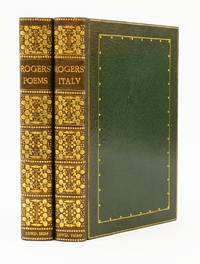
1830ST17640vLondon: Printed for T. Cadell 1830 1834. First Illustrated Editions. 202 x 135 mm. 8 x 5 1/2". iv 2 284 pp.; viii 295 1 pp. Two separately published works bound in two volumes but often found as companion volumes. <br/> VERY ATTRACTIVE GREEN MOROCCO BY RIVIERE & SON stamp-signed on front turn-in BEAUTIFULLY GILT-TOOLED BY FINISHER CHARLES MCLEISH covers with frame of two gilt rules with gilt dots along the inner frame raised bands spine lavishly gilt in compartments with complex design formed by trefoils sprouting from a central branch along with clusters of berries the background with gilt pointillé gilt lettering gilt-rule-and-dot frame repeated on turn-ins maroon endpapers all edges gilt. The two volumes with a total of four plates 20 illustrations in the text and more than 100 fine steel-engraved headpieces and tailpieces after designs mostly by J. M. W. Turner and Thomas Stothard. Italy with A HANDWRITTEN NOTE SIGNED BY ROGERS bound in at front. Ray 13 15. Spines evenly sunned to a light brown as usual with green morocco a hint of sunning to top inch of three covers faint offsetting from engravings other trivial imperfections but A FINE SET clean and fresh internally IN LUSTROUS UNWORN BINDINGS.<br/> <br/> In handsome morocco finished by one of the finest binders of the day this is an extremely appealing set of two poetic works with illustrations of considerable interest. Born in 1859 finisher Charles McLeish was apprenticed to Andrew Grieve in Edinburgh then came to London to work for the prestigious Riviere firm. When Cobden-Sanderson founded the Doves Bindery in 1893 he hired McLeish as the firm's finisher; McLeish held that estimable position until 1909 when he left to go into partnership with his son also named Charles who had apprenticed under Roger de Coverly. McLeish's expertise in applying the gilt decoration to bindings is evident here in the intricate tooling of the spine compartments which required applying individual small tools dozens of times and doing so with such exactness that only the most careful inspection will spot a couple of minute variations between one compartment and another.<br /> <br /> The scion of a wealthy banking family Samuel Rogers 1763-1855 first achieved fame with the publication in 1792 of "The Pleasures of Memory." After Italian travels during which he met Shelley and Byron in Pisa Rogers produced a first version of "Italy" in 1822 and issued a sequel in 1826 both of which sold poorly. He destroyed the unsold copies revised the poems and published them at his own expense in the present edition of 1830 our first volume embellished this time by illustrations. These were the work of two artists with very different propensities--Stothard 1755-1834 who did demure figure scenes and Turner 1775-1851 who provided landscape vignettes. The success of this edition was perhaps due as much to the artists as to the poet. <br /> <br /> Britannica describes Rogers as a "witty conversationalist" who "maintained an influential position as a leading figure in London society and as a generous host to brilliant company." Bound in here is an invitation to tea at his lovely home at 22 St James's Place: "Dear Katherine / If you & Miss Mallet / & Wm. have nothing better to do / pray come & drink tea with me / next Sunday the earlier the better. / Yours very truly Saml Rogers / St. James's Place / Thursday Evg." It is possible "Katherine" was London socialite Katherine Jane Canning daughter of British diplomat Stratford Canning 1st Viscount Stratford de Redcliffe; Rogers inscribed a copy of the 1845 edition of his poems to her according to auction records. Printed for T. Cadell unknown
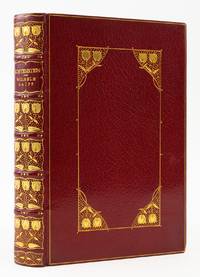
1900ST17635London and New York: Ernest Nister; E. P. Dutton & Co ca. 1900. 194 x 125 mm. 7 5/8 x 4 7/8". 304 pp.Adapted for English readers by L. L. Weedon. <br/> EXTREMELY ATTRACTIVE CONTEMPORARY RED MOROCCO BY RIVIERE & SON stamp-signed in gilt on front turn-in covers with gilt-ruled border and panel the panel corners each with two tulips stems on ground stippled in gilt raised bands one compartment with gilt titling the others densely gilt with three tulip stems on ground stippled with gilt and within a curving gilt-ruled border gilt ruled turn-ins with gilt tulips and stippling at each corner red watered silk pastedowns and endleaves all edges gilt. With frontispiece seven plates several in text-illustrations and head- and tailpieces by T. H. Robinson. AN ALMOST PERFECT COPY the binding especially lustrous and virtually pristine internally.<br/> <br/> This is a beautifully bound English translation of a popular German historical romance set in 16th century Württemberg. Inspired by the novels of Sir Walter Scott poet and novelist Wilhelm Hauff 1802-27 set his tale in Swabia during the reign of Duke Ulrich 1487–1550 a volatile nobleman dubbed "the Swabian Henry VIII" for his scandalous exploits. The novel appeared in German in 1826 just a year before the author's untimely death from typhoid and was a huge success. Duke Ulrich's descendant Duke Wilhelm of Ulrach was so taken with the story that he restored the eponymous Lichtenstein Castle. With prominent gilt blossoms against a stippled ground our especially pretty Riviere binding is done in the style of the Doves workshop which was flourishing under the direction of Thomas J. Cobden-Sanderson at the time of publication. The long-lived Riviere firm began with Robert who set up as a bookseller and binder in Bath in 1829 then established a bindery in London in 1840; in 1881 he took his grandson Percival Calkin into partnership at which time the firm became known as Riviere & Son; the bindery continued to do business until 1939 when it merged with Baytun of Bath. Rivere's work has consistently been of the highest standard throughout its long years of operation. The binding here is little changed since the day it left the workshop and the glossy brilliant white leaves of the text look like new. Ernest Nister; E. P. Dutton & Co unknown
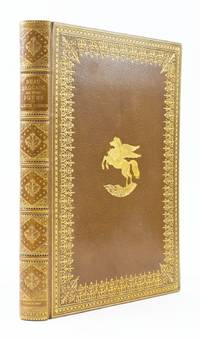
1892ST17864eLondon: Kegan Paul Trench Trübner & Co 1892. No. 10 OF 450 LARGE PAPER COPIES 250 for England and 200 for America SIGNED by the author on the limitations page. 253 x 178 mm. 10 x 7". xiii 3 83 9 pp. <br/> ELEGANT CONTEMPORARY TAN MOROCCO GILT BY RIVIERE & SON stamp-signed on front pastedown "Bound by Riviere & Son for L. Samuel Montagu 1893" covers with gilt rule and bead-and-star roll border intricate dentelle frame Pegasus ornament at center raised bands spine compartments with central fleuron enclosed by a lozenge of star tools curling cornerpieces gilt lettering densely gilt turn-ins marbled endpapers top edge gilt other edges untrimmed. Original ivory cloth binding bound in. With 50 illustrations by Hugh Thomson 25 of these plates printed on Japanese vellum. Signed on title page by the artist. AN IMMACULATE COPY.<br/> <br/> This collection of 18th century-style ballads by a poet of the Aesthete School comes in a refined binding that captures the elegance of that time. Described by Day as a "genteel bureaucrat" who specialized in "the graceful insouciance of 'vers de société' rather than the 'flowers of evil'" favored by others of his cohort Henry Austin Dobson 1840-1921 wrote light witty verse that reflected his fascination with the 18th century. Day notes that "he could write heroic couplets with much of Pope's conversational ability" and "could reproduce the elaborate French stanzas" of triolet ballade and rondeau with a finesse matched by few Englishmen. Dobson's extensive knowledge of the 18th century was so respected that DNB says "any publisher intending to reissue an eighteenth-century work went to Dobson for an introduction." Our binder Riviere is one of the foremost names in English binding partly because the firm did consistently fine work and partly because it was so long in business. Robert Riviere began as a bookseller and binder in Bath in 1829 then set up shop as a binder in London in 1840; in 1881 he took his grandson Percival Calkin into partnership at which time the firm became known as Riviere & Son and the bindery continued to do business until 1939. This binding was done for L. Samuel Montagu perhaps Louis Samuel Montagu 1869-1927 son of financier Liberal MP and philanthropist Samuel Montagu 1st Baron Swaythling. While the delicate filigree tooling is very characteristic of Riviere's finishing the Pegasus centerpiece is not a regular Riviere tool and was perhaps particular to this client. In any case the brilliant gilt and intricate finishing make for a memorable piece of work. Kegan, Paul, Trench, Trübner, & Co unknown