493 résultats
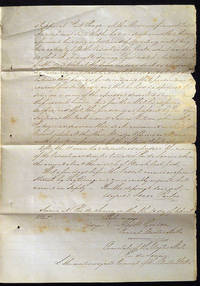
18450002564Good. 1845. On offer is a sensational remarkable group of 1845 manuscript depositions detailing the mutinous activity and desertions during a voyage of the whaling Bark Alto between 1844 - 1845. The eyewitness testimonies are comprised of 37 pages or so of handwritten fair copies; five 5 complete and one 1 incomplete deposition all by various crew members the five complete copies each personally attested and signed at the conclusion by George William Gordon American Consul at Rio de Janeiro May 20 1845. Blunt facts display the ferocity of emotions and simmering violence provide snippets like 'Palmer said to deponent that . . . he would put one of those dirk knives into him' abound throughout the testimonies. The depositions paint a picture of unbridled upset on the ship: lawlessless violence suspicions of poisoning desertion and a final critical comment from nature itself: a calamitous lightning strike makes for a final exclamation point to the awful whaling voyage. The vessel at the center of the events described herein the Alto was built in Tiverton Rhode Island we note that research indicates the Alto was in fact the only such vessel ever built at Tiverton in 1826 and was lost near the Falkland Islands in 1870. The National Maritime Digital Library date the events related in the documents occurred during the Alto's fourth voyage under the direction of Captain Nehemiah West whose deposition is included and which lasted from September 1844 to April 1847. A successful voyage commercially as the records further note that the Alto collected 339 barrels of sperm oil 304 barrels of baleen oil and 2700 lbs. of whale bone. As a group the depositions--from the Captain First Second and Third Mates and two boat helmsmen paint a vivid often harrowing picture of a voyage fraught with tension and danger. Researchers and historians will note that at least two of the depositions document an ominous shipboard discussion of the earlier well-documented mutiny aboard the vessel Globe out of Nantucket which took place in 1827. While the general outline of the events remains consistent throughout each of the deponents provides a unique personal perspective on what transpired often with the addition of unexpected or surprising details omitted by the others. Virtually all of the crew involved are identified by name multiple times throughout the documents two however are repeatedly described only as "Portuguese". In broad overview complaints from crew members that the vessel is leaky and unseaworthy leads to refusal to perform duties; the captain administers punishment including placing crew members in irons and striking them with a piece of "rattling" ratline; a small group of crew desert with one of the boats but are caught and jailed at St. Jago Cape Verde and shipped back to the U.S. on the U.S. Sloop of War Decatur; after a few months of relative calm unrest breaks out again this time with threats of violence to fellow crew members with clubs and "dirk knives"; in the most dramatic event eleven crew members desert with the remaining two boats taking with them a large store of the whaling equipment. The Alto its crew and equipment drastically reduced suffers the final indignity of a lightning strike "breaking and splitting" the mainmast but is able to hobble into Rio de Janeiro where these eyewitness accounts were given to the American Consul and preserved in the present documents. Here is a snippet from the deposition of helmsman William Williams approx. 8 pages on two pairs of conjugate leaves: "William Williams . . . deposed as follows. . . . That he was born in the County of Essex in England is 29 years of age and a naturalized citizen of the United States was naturalized at Boston Mass. in July 1842. That he shipped on board the Barque 'Alto'--Nehemiah West Master at New Bedford in August 1844 as Boat steerer to proceed on a Whaling Voyage. That the Vessel sailed on the 3rd September following. That 14 or 15 days after the Vessel went out to sea all the foremost hands refused duty--alleging that the Vessel was leaky. On their refusing duty Captain West interrogated each of them separately and three of them returned to duty and eleven still refused and were sent below where they were kept about 48 hours. While the eleven men were below as aforesaid they experienced two very heavy squalls but none of said men offered to return to duty--but on the other hand made sport of them that were at work. After they had been below deck 24 hours the Master went forward and requested four of the men to come on deck. They refused to come unless all were allowed to some on deck at a time--and after a good many threats on the part of the men the Master told them that if the men he had called did not come on deck that he would have the forecastle smoked to force them out. Soon after four came on deck as the Master had directed and still refusing to go to duty on being called upon the deck and refusing duty were put in Irons and the others one being called upon deck and refusing duty were seized in the rigging there being no Irons to put upon them. That at New Bedford before sailing one of the men named Spencer who had shipped deserted and another man named Charles Shane came on board in his place--but Shane's name was not put on the Papers. That when the men were called up as aforesaid said Shane took the ground that his name was not upon the Shipping Paper and therefore he would not go to duty and obey the Master--upon which the Master gave him four blows with a piece of Rattling i.e. part of the ratline. George Ritter also who was supposed to be the instigator in the men's refusing duty and who was insolent to the Master also receive three strokes with the Rattling. Another man the steward named James Wilson also got three blows with the Rattling for insolence to the Captain. He said that he never was flogged on board of a Blubber Hunter although he had been on board of a Man of War. No others were flogged or punished in any way and they all returned to duty." Scattered light soiling a bit of staining and handling wear creases; some tears tiny holes and small chips mostly confined to edges; no substantial losses; otherwise very good to fine overall the writing dark and distinct. Overall G.; Manuscript; 4to - over 9¾" - 12" tall; KEYWORDS: HISTORY OF WHALING SHIP MUTINY BARK ALTO NEW BEDFORD MASSACHUSETTS WHALERS MUTINEERS DESERTERS BARQUE MARINE NAUTICAL NAVAL GEORGE WILLIAM GORDON AMERICAN CONSUL AT RIO DE JANEIRO CAPTAIN NEHEMIAH WEST TIVERTON RHODE ISLAND MUTINY ABOARD THE VESSEL GLOBE NANTUCKET AMERICANAHANDWRITTEN MANUSCRIPT DOCUMENT LETTER AUTOGRAPH WRITER HAND WRITTEN DOCUMENTS SIGNED LETTERS MANUSCRIPTS HISTORICAL HOLOGRAPH WRITERS AUTOGRAPHS PERSONAL MEMOIR MEMORIAL AMERICANA ANTIQUITÉ CONTRAT VÉLIN DOCUMENT MANUSCRIT PAPIER ANTIKE BRIEF PERGAMENT DOKUMENT MANUSKRIPT PAPIER OGGETTO D'ANTIQUARIATO ATTO VELINA DOCUMENTO MANOSCRITTO CARTA ANTIGÜEDAD HECHO VITELA DOCUMENTO MANUSCRITO PAPEL . unknown
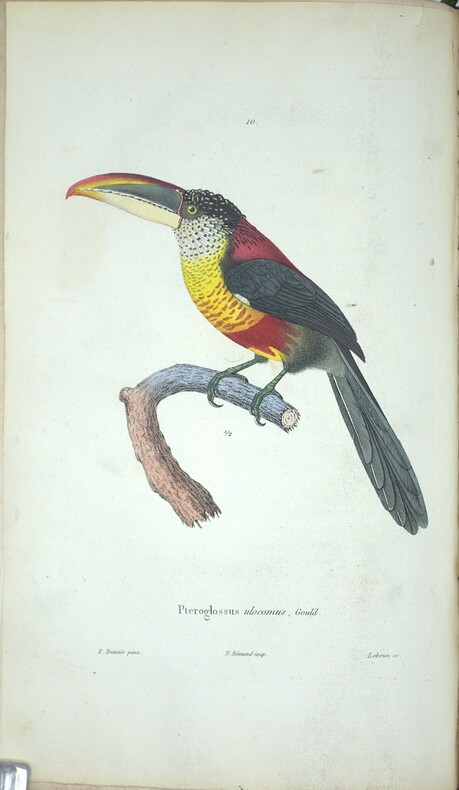
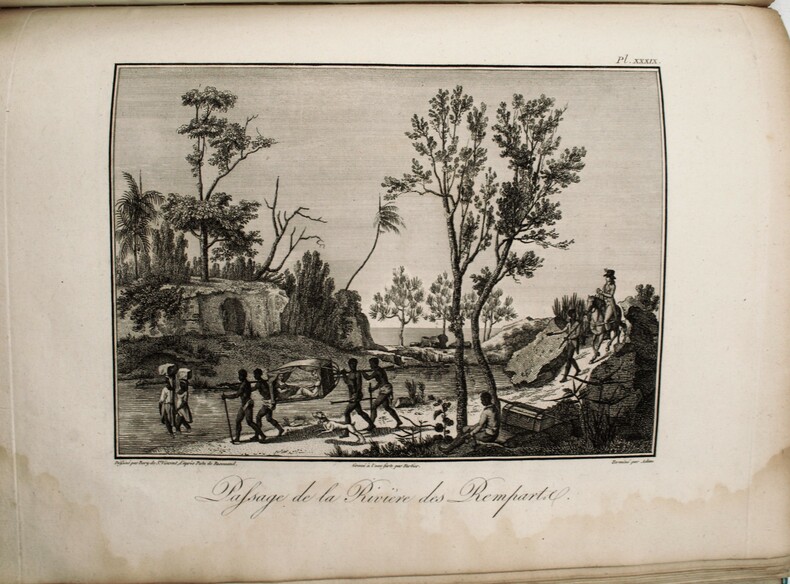
1833PHO-2302Paris, Imprimerie Royale, Arthus Bertrand, au dépôt général de la marine, 1833-1839. 5 vol. in-8 (25,5x16,5cm) demi-chevrette rouge, dos à nerfs orné (reliure de l'époque), supplément lépidoptères broché de I. [2] ff.-xli-558-[1] pp. ; II. [2] ff.-481-[1] pp., grande carte dépliante (piqûres, coupures aux pliures sans manque) ; III. [2] ff.-510-[1] pp. ; IV. [2] ff.- 480 pp. ; V. [2] ff., 195-200 pp., Supplément Lépidoptères 30pp., 70 planches dont 61 soigneusement aquarellées. Rousseurs touchant principalement le texte et très peu les planches, mouillures claires par endroits au texte, feuillets volants pour le supplément. Sans les deux grands atlas historique et hydrographique, mais bien complet du très rare 5e volume d'histoire naturelle, paru ultérieurement qui manque presque toujours et complet des planches. Ce rarissime cinquième et dernier volume de texte, qui comporte 2 parties, renferme le rapport fait à l'Académie des sciences le 4 février 1833 sur les collections d'histoire naturelle recueillies pendant le voyage de la corvette La Favorite…, les Recherches sur les marsupiaux par Fortuné Eydoux et Laurent, la 2e partie Zoologie par Fortuné Eydoux et Paul Gervais, le supplément sur les Lépidoptères nouveaux par Feisthamel.
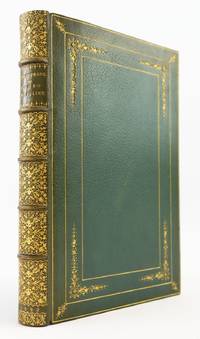
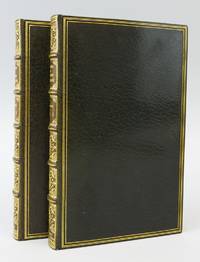
18726405London: John Camden Hotten and George Routledge and Sons 1872. First editions. Two octavo volumes 7 1/4 x 5 1/4 inches; 184 x 133 mm. & 7 x 5 3/8 inches; 179 x 137 mm. ix 2 14-222 4 adv.; viii 1 14-224 4. adv. pp. Black and white frontispieces with original tissue guards black and white text illustrations throughout. Bound c. 1920 by Rivière & Son for the Gardenside Bookshop Boston in full emerald crushed levant morocco with a gilt decorated broad inlaid border of maroon morocco enclosing an elaborate gilt frame surrounding a maroon morocco border and decorated sunken central panel within which are figures from the text pictorially depicted with multi-colored padded morocco onlays. The Bab Ballads with the onlaid figures of Babette and Jacot page 67 and More Bab Ballads with the onlaid figures of Sir Berkely and William Lee page 122. Lower boards with gilt ruled maroon morocco border surrounding an elaborate gilt border with decorative gilt corner pieces. Spines with five raised bands decoratively tooled and lettered in gilt in compartments gilt ruled board edges elaborate gilt turn-ins cream watered silk liners and end-leaves all edges gilt. Original gilt decorated green cloth covers bound in at end of each volume. Outer front joint of volume 2 with subtle repairs. Housed together in the original felt-lined green cloth slipcase. A fine set.<br /> <br /> This publication evidences how a writer's work is never done. First published as a humorous column in Fun magazine in 1876 Gilbert collected fifty of his favorite poems for the book Fifty "Bab" Ballads:Much Sound and Little Sense it contained one poem collected for the first time titled "Etiquette" and excluded 25 previously published poems. As Gilbert explained: "The period during which they were written extended over some three or four years; many however were composed hastily and under the discomforting necessity of having to turn out a quantity of lively verse by a certain day in every week. As it seemed to me and to others that the volumes were disfigured by the presence of these hastily written impostors I thought it better to withdraw from both volumes such Ballads as seemed to show evidence of carelessness or undue haste and to publish the remainder in the compact form under which they are now presented to the reader" Gilbert. However "Gilbert's readers were not happy with the loss and in 1882 Gilbert published all of the poems that had appeared in either The "Bab" Ballads or More "Bab" Ballads once again excluding "Etiquette." Some twentieth-century editions of More "Bab" Ballads include "Etiquette" Ellis. The poems range from satire to absurdist texts and will surely entertain all who read them.<br /> <br /> "The Riviere Bindery was one of the most notable and prolific shops in London's West End from about 1840 through 1939" Princeton. Bath-based Bayntun Bindery acquired the firm in 1939 transforming into the "Bayntun-Riviere bindery" which is still in existence and family owned. John Camden Hotten [and] George Routledge and Sons unknown
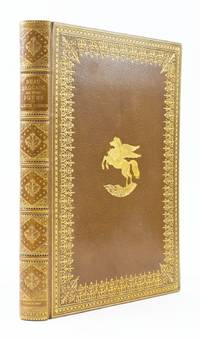
1892ST17864eLondon: Kegan Paul Trench Trübner & Co 1892. No. 10 OF 450 LARGE PAPER COPIES 250 for England and 200 for America SIGNED by the author on the limitations page. 253 x 178 mm. 10 x 7". xiii 3 83 9 pp. <br/> ELEGANT CONTEMPORARY TAN MOROCCO GILT BY RIVIERE & SON stamp-signed on front pastedown "Bound by Riviere & Son for L. Samuel Montagu 1893" covers with gilt rule and bead-and-star roll border intricate dentelle frame Pegasus ornament at center raised bands spine compartments with central fleuron enclosed by a lozenge of star tools curling cornerpieces gilt lettering densely gilt turn-ins marbled endpapers top edge gilt other edges untrimmed. Original ivory cloth binding bound in. With 50 illustrations by Hugh Thomson 25 of these plates printed on Japanese vellum. Signed on title page by the artist. AN IMMACULATE COPY.<br/> <br/> This collection of 18th century-style ballads by a poet of the Aesthete School comes in a refined binding that captures the elegance of that time. Described by Day as a "genteel bureaucrat" who specialized in "the graceful insouciance of 'vers de société' rather than the 'flowers of evil'" favored by others of his cohort Henry Austin Dobson 1840-1921 wrote light witty verse that reflected his fascination with the 18th century. Day notes that "he could write heroic couplets with much of Pope's conversational ability" and "could reproduce the elaborate French stanzas" of triolet ballade and rondeau with a finesse matched by few Englishmen. Dobson's extensive knowledge of the 18th century was so respected that DNB says "any publisher intending to reissue an eighteenth-century work went to Dobson for an introduction." Our binder Riviere is one of the foremost names in English binding partly because the firm did consistently fine work and partly because it was so long in business. Robert Riviere began as a bookseller and binder in Bath in 1829 then set up shop as a binder in London in 1840; in 1881 he took his grandson Percival Calkin into partnership at which time the firm became known as Riviere & Son and the bindery continued to do business until 1939. This binding was done for L. Samuel Montagu perhaps Louis Samuel Montagu 1869-1927 son of financier Liberal MP and philanthropist Samuel Montagu 1st Baron Swaythling. While the delicate filigree tooling is very characteristic of Riviere's finishing the Pegasus centerpiece is not a regular Riviere tool and was perhaps particular to this client. In any case the brilliant gilt and intricate finishing make for a memorable piece of work. Kegan, Paul, Trench, Trübner, & Co unknown
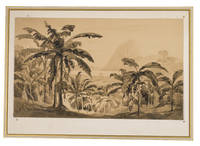
1837ABC_47967Rio de Janeiro 1837. Ad 1: 19 x 32 cm. Passe-partout: 365 x 47 cm. Sepia ink on paper. Ad 2: 245 x 34 cm. Passe-partout: 37 x 44 cm. Sepia ink on paper with blue and sepia ink washes. Two ink drawings on paper depicting the same view of Guanabara bay with a banana plantation and the Pao de Açucar near Rio de Janeiro in Brazil. This scene has also been included in Flora Brasiliensis as plate LV in volume 1.1. Plate LV is lithographed after a drawing by Belgian artist and botanist Benjamin Mary 1792-1846 made in 1837. The largest drawing of the two present here ad 1 is believed to be this drawing by Mary.Flora Brasiliensis is a 15-volume work on Brazilian plants edited by botanist Carl Friedrich Philipp von Martius and others. It was published between 1840 and 1906 and systematically categorised the known plants in the region. The numerous plates were designed by many different artists including Benjamin Mary. He lived in Rio de Janeiro from 1832-1837 so his Brazilian drawings were based on his own observations. Although the present drawing is unsigned it can be attributed to Mary due to stylistic similarities with his other works its exact likeness to the litho in Flora Brasiliensis and its provenance both drawings are from the collection of the Von Martius family.The second drawing depicts the same scene but is clearly made by a different artist. It is signed "A. L." in the lower left corner. This work has been attributed to Carl August Lebschée 1800-1877 a German artist who also made drawings for the Flora Brasiliensis. However this is uncertain because he typically monogrammed his work with C. L.Both drawings in very good condition.l Cf. for the Flora Brasiliensis: Borba de Moraes 525 f; Nissen BBI 2248; Stafleu & Cowan 5538. ABE CAT Art History unknown
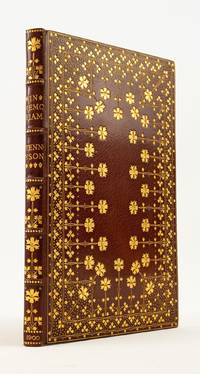
1900ST20797New York; London: Printed at the Bankside Press for M. F. Mansfield 1900. No. 83 OF 100 COPIES reserved for Great Britain from a total edition of 500. 244 x 155 mm. 9 1/2 x 6 1/8". CXXXI pp. 1 leaf colophon. <br/> LOVELY HONEY BROWN MOROCCO ELABORATELY GILT BY RIVIERE & SONS stamp-signed on front turn-in covers framed by delicate gilt chains the outer edge punctuated with tiny heart and dot tools the space between the gilt rules filled with many gilt dots and with 86 trefoils the central panel with 28 irises extending from the edge of the frame on alternating two and three chain link stems corner pieces with an oblique iris stem on a background of gilt dots accented by trefoils and small leaves raised bands spine panels with an iris rising from a cluster of small leaves gilt lettering gilt-ruled turn-ins with trio of irises on a stippled ground at corners top edge gilt other edges untrimmed. In the original felt-lined leather chemise with gilt lettering on spine and in a marbled paper slipcase bottom panel carefully reinforced with cellotape. With decorative initials from designs by Blanch McManus printed in orange. A FINE COPY--internally clean fresh and bright and THE BINDING SPARKLING AND UNWORN.<br/> <br/> This is a famous poet's most famous poem offered in elegantly vigorous binding from a pre-eminent English workshop. First published in 1850 the elegy "In Memoriam" is a tribute to Tennyson's college friend Arthur Henry Hallam 1811-33 son of the famous historian Henry Hallam 1777-1859. Tennyson 1809-92 had been publishing verses for seven years before Hallam's death but after the loss of his friend nothing from his pen appeared for nearly a decade. During that period he was working on the present poem the product of protracted meditation. Written in rhyming quatrains the poem moves from grief and doubt to certainty that the universe is purposeful. It was a sensational bestseller striking a deep note of resonance with Victorian readers. The queen herself told the poet "Next to the Bible 'In Memoriam' is my comfort." The design of our binding is especially intricate and the tooling is impeccable resulting in a notable aesthetic achievement. Riviere is one of the foremost names in the field partly because the firm did consistently fine work and partly because it was so long in business. Robert Riviere began as a bookseller and binder in Bath in 1829 then set up shop as a binder in London in 1840; in 1881 he took his grandson Percival Calkin into partnership at which time the firm became known as Riviere & Son and the bindery continued to do business until 1939. The condition of our volume is impressive; the original chemise has kept the binding safe from the fading of sunlight so that it looks virtually as it did when it left the bindery. [Printed at the Bankside Press for] M. F. Mansfield unknown
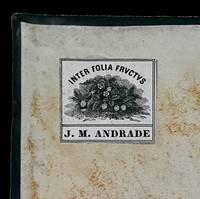
1842LL 513<p><strong>El Museo de ambas Américas.</strong></p><p>Polished black morocco paneled in blind spine titled and decorated in gilt. Subscribers' lists in volumes 1 & 3. Provenance: Bookplate of Jose Maria Andrade 1807-1883 the famous Mexican bibliophile and publisher. FIRST EDITION AND A COMPLETE RUN of all 36 issues of this very early and important Chilean periodical. The year 1842 marked a "before" and an "after" in the intellectual development of Chile. Along with the creation of the University of Chile one of the most significant milestones of that year was the crystallization of a literary movement that would end up acquiring a foundational character not only in regard to Creole intellectual output but also to link it with political discourse. At the head of this project were José Victorino Lastarria and Francisco Bilbao among other thinkers who sought to infuse society with the revolutionary ideals of freedom equality and fraternity using above all the periodical press. The cultural activity in the crucial year 1842 was matched in by appearance of three publications that would mark the course of the intellectual movement: Revista de Valparaíso El Semanario de Santiago and El Museo de ambas Américas The Museum of both Americas. This triad reflects the fundamental role that the port of Valparaíso played as the transfer point for European ideas which then radiated to the capital. El Museo de ambas Américas shows the state of the social political and economic views of the Chilean intellectual culture of the period. Its cosmopolitan spirit is evident in the declaration of principles of the magazine and is also reflected in the themes developed there. Edited by the Colombian Juan García del Río the publication played a central role in the controversy between Chileans and Argentines and in the creation of the intellectual movement that would reach its consolidation with the Revista de Santiago. The magazine contains numerous articles on the continental spirit and on the idea of America forged since Discovery and Conquest. It also highlights the concerns about education which for those years was a central issue in the discussions of the intellectual movement as well as public hygiene policies and their link with the development of the Republic. The reflection on history and culture became more and more intense as the century progressed and El Museo de ambas Américas reflects this concern. The erudite character of the magazine is shown in its "Efemérides" and its "News and curious facts". Scarce. We could locate only one at auction in the last 50 years. Sabin 51564. Palau 186430. WorldCat US Libraries: 11 copies. Yale Stanford Harvard BL Universities of Stony Brook Michigan Iowa S. Illinois N. Carolina Houston and Texas at Austin.</p> Imprenta de M. Rivadeneyra
1804PHO-1187Paris, F. Buisson, 1804. 3 vol. in-8 de texte et 1 atlas de planches .Texte : I/ xv-[1]-408 pp. ; II/ [2] sq., 431 pp. ; III/ [2] sq., 473 pp. ; Atlas de 4 pp., 58 planches et cartes , relié demi basane époque (atlas reliure moderne) , coiffes usées, mouillure et quelques rousseurs dans l'atlas . Édition originale avec l'atlas complet des 58 cartes et planches dont 1 en couleur ,gravées en taille douce par Adam, Blondeau, Fortier, Dorgez, B. Tardieu d'après les dessins de l'auteur.
1893160511893 PARIS, Alphonse Picard, CAEN,Henri Delesques, 1893, N° 1, 3, 5 & 6 - Broché - In-8 - Couverture imprimée avec médaille au nom d'Arcisse de CAUMONT - Importante iconographie : nombreuses planches PP Ht & illustrations en texte - 85 pages & Pagination 191 à 589 - Bon exemplaire, Intérieur très frais.
18936415981 volume 4to (79 quarter-leather, 1 paperback and 1 vol. - 51 - in 4 paperback issues), among which we can particularly point out : Vol. 4 (estampe en couleurs de Fernand Khnopff et estampe en couleur et relief) ; 5 (2 estampes en couleurs dont une par Boutet de Monvel) ; 7 (plusieurs estampes en couleurs dont le bourg de Perros-Guirec par Henri-Rivière, eau-forte par Charlton) ; 9 (plusieurs estampes en couleur dont Helleu et estampe en couleur et relief) ; 10 (dont dessin gaufré par Alexandre Charpentier) ; 11 (dont "Pierrot et Pierrette by Mrs Dearmer) ; 12 (dont bois gravé sur papier bleu par Lepère, et bois gravé en couleur par Nicholson) ; 13 (dont "Ombre chinoise" sur calque par Caran d'Ache, eou gravure en relief "Bath-Room by A Charpentier) ; 15 (dont portrait de Puvis de Chavannes par Valloton, estampes de Henri Rivière) ; 17 (contains "Beauty's awakening, a Masque of Winter and Spring) ; 18 (from october 1899, with Special winter-number 1899-1900 : Modern bookbinding and their designers et sa traduction française ) ; 20 (with "Modern British watercolour drawings) ; 21 (dont "The Queen of Hearts" by Percy Gossop) ; 23 (dont a Scene in Dido an Aeneas by Gordon Craig) ; 26 (1902 avec traduction française) ; 27 (dont eaux-fortes par Alphonse Legros) ; 29 (avec traduction française pour septembre) ; 30 (avec traduction française) ; 31 (avec traduction française, 1 planche et un cahier débrochés) ; 32 (avec traduction française) ; 33 (avec traduction française) ; 34 (avec traduction française) ; 39 : An exhibition of Portraits (avec traduction française) ; 44 (avec les couvertures portant "Revue mensuelle avec traduction française) ; 51 (paperback, spines used, in4 issues) ; 61 (Until Issue n° 254, May 1914) ; For the special numbers, we have 21 "bis" : 11 : Art supplements : The Salon Champs Elysées Paris 1897, The Salon Champ de Mars Paris 1897, Art at the New Gallery London 1897 ; 13 : A Record of Art in 1898 ; 21 : Modern pen drawings : European and american ; 23 : Modern British Domestic Architecture and Decoration, 1901 (avec traduction française) ; 24 : Modern design in Jewellery and Fans, 1902 ; 26 : Modern Etching and Engraving (avec traduction française) ; 27 : Corot and Millet with critical Essays by Gustave Geffroy and Arsène Alexandre ; 28 : Masters of English Landscape Paintings ; 30 : The Genius of J.M.W. Turner, R.A. ; 31 : The Royal Academy from Reynolds to Millais (avec traduction française) ; 33 : Daumier and Gavarni with critical and biographical notes by Henri Frantza and Octave Uzanne ; 35 : Art in Photography with selected examples of European and American Work (avec traduction française) 1905 ; 36 : The Mansions of England in the olden time, by Joseph Nash, 1906 (avec traduction française) ; 37 : The Royal Institute of Painters in Watercolours Spring 1906 ; 37 ter : Year-Book of decorative Art 1906 ; 40 : Royal Scottish Academy ; 40 ter : Year-Book of decorative Art 1907 ; 42 : The Gardens of England in the Southern & Western Counties (avec traduction française) ; 42 ter : Year-Book of decorative Art 1908 ; Paperback : Les Habitations Villageoises en Angleterre Numéro de Printemps 1912
1822255109London: Henry Berthoud 1822. First. hardcover. good. followed by Teatro Critico Americano; or a Critical Investigation and Research in into the History of the Americans. By Paul Felix Cabrera. 19 lithograph plates one folding. xiii 128pp. 4to later 19th century 1/2 black morocco morocco worn near spine ends and on front cover edges of boards lightly worn very light foxing to some page margins including margins of most plates ex-lib. London Henry Berthoud 1822. First Edition<br/><br/> "Captain Del Rio examined the now famous ruins of Palenque in 1787 but his manuscript report remained in the provincial archives of Guatemala until a short time prior to their translation and publication in the present form. The translator gave so literal a version that he did not change the references in the body of the work which referred to drawings that had been irrecoverably lost. Captain Del Rio's Report occupies pp. 1 to 21 and in the remainder of the work Dr. Cabrera attempts to establish the theory that the figures upon the monuments of Palenque prove a connection between the Egyptians and the Aboriginal race which constructed them.From the occurrence of an eclipse recorded 291 years before Christ corresponding with the same date in the Mexican calendar he constructs a table of the Mexican years." Field 231. "The first published work on Mayan archaeology." Sabin 71446. The plates are by Jean Frederick Maximilien de Waldeck after Ricardo Almendariz. Ex libris from the Minnesota Historical Society with their rubberstamps on the bottom of the title page including their withdrawal stamp.<br/><br/> Henry Berthoud unknown books
1822255109London: Henry Berthoud 1822. First. hardcover. good. followed by Teatro Critico Americano; or a Critical Investigation and Research in into the History of the Americans. By Paul Felix Cabrera. 19 lithograph plates one folding. xiii 128pp. 4to later 19th century 1/2 black morocco morocco worn near spine ends and on front cover edges of boards lightly worn very light foxing to some page margins including margins of most plates ex-lib. London Henry Berthoud 1822. First Edition<br/> <br/> "Captain Del Rio examined the now famous ruins of Palenque in 1787 but his manuscript report remained in the provincial archives of Guatemala until a short time prior to their translation and publication in the present form. The translator gave so literal a version that he did not change the references in the body of the work which referred to drawings that had been irrecoverably lost. Captain Del Rio's Report occupies pp. 1 to 21 and in the remainder of the work Dr. Cabrera attempts to establish the theory that the figures upon the monuments of Palenque prove a connection between the Egyptians and the Aboriginal race which constructed them.From the occurrence of an eclipse recorded 291 years before Christ corresponding with the same date in the Mexican calendar he constructs a table of the Mexican years." Field 231. "The first published work on Mayan archaeology." Sabin 71446. The plates are by Jean Frederick Maximilien de Waldeck after Ricardo Almendariz. Ex libris from the Minnesota Historical Society with their rubberstamps on the bottom of the title page including their withdrawal stamp.<br/> <br/> Henry Berthoud unknown
18222412260012Henry Berthoud and Suttaby Evance and Fox London 1822. First Edition. Hardcover. Good. The first published work on Mayan archaeology. 4to. Bound in contemporary cloth-backed blue boards. Rebacked with renewed spine. Collated: xiii 128 pages. 17 lithographic plates. Scattered foxing. "Captain Del Rio examined the now famous ruins of Palenque in 1787 but his manuscript report remained in the provincial archives of Guatemala until a short time prior to their translation and publication in the present form. The translator gave so literal a version that he did not change the references in the body of the work which referred to drawings that had been irrecoverably lost. Captain Del Rio's Report occupies pp. 1 to 21 and in the remainder of the work Dr. Cabrera attempts to establish the theory that the figures upon the monuments of Palenque prove a connection between the Egyptians and the Aboriginal race which constructed them. From the occurrence of an eclipse recorded 291 years before Christ corresponding with the same date in the Mexican calendar he constructs a table of the Mexican years." Includes a longer appendix Paul Felix Cabrera's "Teatro Critico Americano; or A Critical Investigation and Research into the History of the Americas." - Field 231. Sabin 71446. Palau 268187. Henry Berthoud, and Suttaby, Evance and Fox, London hardcover
1852951865London: Edward Moxon, Dover Street. 1852. Octavo, ca. 197 x 124 mm. (Einband minimalst berieben, erste und letzte Blätter braunfleckig, sehr schönes Exemplar) [10 Warenabbildungen] vi, [1], [1 blank], 165, [2], [1 blank] pp. - 8 pp. (List of Books). Ganzleder Handeinband mit reicher Vergoldung,
1883PHO-1179Paris, imp. Noblet , Administration: 12, rue Visconti, sd (circa 1883) . In-folio (26x35 cm ) , oblong , relié toile éditeur ,[4], 8 pp et 25 planches H.T. ,reliure usée , début de fente ,coins usés ,petite mouillure, gardes changées .Les planches tirées sur acier sont les ports , villes et vues au cours du voyage de Laplace à bord de l’Artémise . Avec une vue de l’Artémise échouée à Papeete ainsi que une belle vue de Hawaï et des bagnards de Van Diemen .
18896403London: Kegan Paul Trench & Co 1889. Fine. Sixteenmo 6 3/16 x 3 5/8 inches; 157 x 93 mm. vi 306 1 imprint 5 blank pp. Portrait frontispiece with tissue guard. Title-page printed in red and black. Bound ca. 1920 by Rivière & Son stamp signed in gilt on lower turn-in. Full antelope crushed levant morocco covers decoratively ruled in gilt surrounding a very elaborate floral design in pointillé spine with five raised bands similarly decorated and lettered in gilt in compartments gilt-ruled board edges full dark blue morocco liners elaborately decorated in gilt blue watered silk end-leaves top edge gilt. A wonderful example of the art of 'pointillé'.<br /> <br /> The Scottish author critic and thinker Thomas Carlyle 1795-1881 was a major influence on Victorian society. His novel Sartor Resartus translated as The Tailor Re-tailored among other variations is a satirical look at the work of a fictional philosopher Diogenes Teufelsdröckh. Intriguing in its form the book is structured from the prospective of a skeptical English reviewer consumed by Teufelsdröckh's book Clothes Their Origin and Influence. In crafting Sartor Resartus Carlyle drew on a range of literary influences: Goethe Hegel Sterne and Switft. Carlyle's complicated text not only critiques academic writing and materialism but offers meditations on the meanings of symbols and the search for truth. Although first started as an essay the project eventually developed into a novel which was first published serially in Fraser's Magazine 1833-34. Fine. Kegan Paul, Trench & Co unknown
1830ST17640vLondon: Printed for T. Cadell 1830 1834. First Illustrated Editions. 202 x 135 mm. 8 x 5 1/2". iv 2 284 pp.; viii 295 1 pp. Two separately published works bound in two volumes but often found as companion volumes. <br/> VERY ATTRACTIVE GREEN MOROCCO BY RIVIERE & SON stamp-signed on front turn-in BEAUTIFULLY GILT-TOOLED BY FINISHER CHARLES MCLEISH covers with frame of two gilt rules with gilt dots along the inner frame raised bands spine lavishly gilt in compartments with complex design formed by trefoils sprouting from a central branch along with clusters of berries the background with gilt pointillé gilt lettering gilt-rule-and-dot frame repeated on turn-ins maroon endpapers all edges gilt. The two volumes with a total of four plates 20 illustrations in the text and more than 100 fine steel-engraved headpieces and tailpieces after designs mostly by J. M. W. Turner and Thomas Stothard. Italy with A HANDWRITTEN NOTE SIGNED BY ROGERS bound in at front. Ray 13 15. Spines evenly sunned to a light brown as usual with green morocco a hint of sunning to top inch of three covers faint offsetting from engravings other trivial imperfections but A FINE SET clean and fresh internally IN LUSTROUS UNWORN BINDINGS.<br/> <br/> In handsome morocco finished by one of the finest binders of the day this is an extremely appealing set of two poetic works with illustrations of considerable interest. Born in 1859 finisher Charles McLeish was apprenticed to Andrew Grieve in Edinburgh then came to London to work for the prestigious Riviere firm. When Cobden-Sanderson founded the Doves Bindery in 1893 he hired McLeish as the firm's finisher; McLeish held that estimable position until 1909 when he left to go into partnership with his son also named Charles who had apprenticed under Roger de Coverly. McLeish's expertise in applying the gilt decoration to bindings is evident here in the intricate tooling of the spine compartments which required applying individual small tools dozens of times and doing so with such exactness that only the most careful inspection will spot a couple of minute variations between one compartment and another.<br /> <br /> The scion of a wealthy banking family Samuel Rogers 1763-1855 first achieved fame with the publication in 1792 of "The Pleasures of Memory." After Italian travels during which he met Shelley and Byron in Pisa Rogers produced a first version of "Italy" in 1822 and issued a sequel in 1826 both of which sold poorly. He destroyed the unsold copies revised the poems and published them at his own expense in the present edition of 1830 our first volume embellished this time by illustrations. These were the work of two artists with very different propensities--Stothard 1755-1834 who did demure figure scenes and Turner 1775-1851 who provided landscape vignettes. The success of this edition was perhaps due as much to the artists as to the poet. <br /> <br /> Britannica describes Rogers as a "witty conversationalist" who "maintained an influential position as a leading figure in London society and as a generous host to brilliant company." Bound in here is an invitation to tea at his lovely home at 22 St James's Place: "Dear Katherine / If you & Miss Mallet / & Wm. have nothing better to do / pray come & drink tea with me / next Sunday the earlier the better. / Yours very truly Saml Rogers / St. James's Place / Thursday Evg." It is possible "Katherine" was London socialite Katherine Jane Canning daughter of British diplomat Stratford Canning 1st Viscount Stratford de Redcliffe; Rogers inscribed a copy of the 1845 edition of his poems to her according to auction records. Printed for T. Cadell unknown
1892ST19701New York: Printed in Paris by D. Jouast for Duprat & Co 1892. No. 326 OF 350 COPIES this one of 300 on Holland paper; there were also 50 on Japon. 258 x 162 mm. 10 1/4 x 6 1/2". xii 170 pp. 1 leaf colophon. With an introduction by Richard Henry Stoddard. <br/> VERY PRETTY SEA GREEN MOROCCO ELABORATELY GILT FOR H. S. NICHOLS LTD. covers framed by gilt rules with floral tooling at corners raised bands spine panels lavishly gilt with a starburst of floral tools emanating from a central medallion all on a stippled ground gilt lettering turn-ins framed in similar style to covers leather hinges ivory watered silk pastedowns and endleaves top edge gilt other edges untrimmed. Original paper wrappers bound in at rear. With title page vignette decorative frame and six engraved headpiece vignettes by Jacques Wagrez and 15 plates five by Louis Titz and 10 by Wagrez. A Large Paper Copy. Front pastedown with morocco bookplate of W. A. Foyle of Beeleigh Abbey. A very faint two-inch scratch to front board vague fading around perimeter of covers occasional minor foxing or smudges but a very attractive copy the text generally clean and bright and the binding with virtually no signs of use.<br/> <br/> This is a bibliophile's edition of Shakespeare's tragedy printed in Paris on special paper with large margins attractively illustrated and expertly bound for bookseller and publisher H. S. Nichols. The work is introduced with an essay by American literary critic Richard Henry Stoddard 1825-1903. Although the lettering on the front turn-in states otherwise our volume was surely bound for--rather than by--the enterprising bookseller H. S. Nichols. Nichols started out in the trade in Sheffield where he sold books and worked with Leonard Smithers a publisher of the Decadent movement who issued books by Sir Richard Francis Burton Oscar Wilde and Aubrey Beardsley as well as erotic works that crossed the line into prurience. Nichols moved to London in 1893 and set up as a publisher and bookseller on Charing Cross Road. Facing the threat of obscenity charges he fled to Paris in 1900 and to New York in 1908. There he established himself as a purveyor of quality editions and rare books. It is unclear at which point in his career our book was bound for him but given the date of publication and the style of the binding it was likely when he was in London where there were a number of fine binderies that could produce work of this quality. The beautiful tooling fine materials and elegant design suggest a firm like Riviere which also did such bespoke work for Bumpus booksellers. Our former owner W. A. Foyle 1885-1963 was himself a bookseller on Charing Cross Road where he co-founded with his brother the famous Foyle's Bookshop. Foyle was an avid and discriminating collector whose three large sales at Christie's held in 2000 were a bibliophilic highlight of the new century. The sum of $19 million for which William Foyle's personal library sold in July set a record for private European collections. [Printed in Paris by D. Jouast for] Duprat & Co unknown
19002081502111808461Hakueisha 1900. Soft Cover. Fine. Number of books: 1 Hakueisha paperback
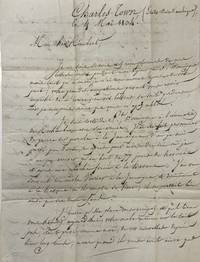
18042937Charlestown: From Mr. Riviére to “Monsieur Rimert Employé dans les bureaux du Préfet Maritime à Brestâ€. Text in French. Arrived through Bordeaux with the town’s backstamp on the delivery address 32 Bordeaux 1804. Handwritten pre-postal letter in ink. Torn at the wax seal and at a folding with no effect on the text. Paper tanned at the foldings. Otherwise in fine condition. Handwritten pre-postal letter in ink. 3 pages on bifolium. Scarce pre-postal letter from Charlestown USA to Brest France by a Saint-Domingue-refugee dated in 1804.<p><br /> Written to Mr. Rimbert in Brest at the “bureaux du Préfet Maritime†by Mr. Riviére in Charlestown South Caroline who - according to his account - was taken from Saint-Domingue as a prisoner on parole to Jamaica after Rochambeau’s surrender to Dessalines in November 1803. Shortly he could leave Jamaica via Havana to Charlestown; the journey took him almost 80 days. Riviére informs Rimbert about meeting his uncle Mr. Verrier and his children in Jamaica and Havana reminds him of their old friendship and ask his help to forward his carrier in the marine administration in case he decides to go back to France.<p><br /> During the French Revolutionary uprisings thousands of French refugees from the West Indies arrived in the United States. Due to the conflicts of the Haitian Revolution 1790–1804 nearly 20000 mostly white planters gens de couleur and slaves fled the French colony of Saint Domingue to seek asylum mainly in American port cities such as New York Philadelphia Baltimore New Orleans and Charleston. The present letter adds a personal touch to this episode of history. From Mr. Riviére to “Monsieur Rimert, Employé dans les bureaux du Préfet Maritime à Brestâ€. Text in French. Arrived thro unknown
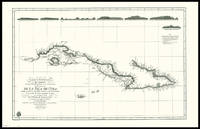
182111711Madrid 1821. 600 by 910mm 23.5 by 35.75 inches. Engraved chart soundings latitude and longitude signs of the sea and six coastal profiles. Rare Spanish Admiralty chart of part of the south-east coast of Cuba. The charts produced by the 'Direccion de Hydrografica' were detailed surveys not unlike the charts of the British Hydrographic Office however official Spanish charts of this sort appear on the market much less frequently than their French and English counterparts and even fewer have appeared to survive than contemporary American publications. unknown
1838ST13648London: Richard Bentley 1838. FIRST EDITION Second State with frame around final plate "The Last Song". 204 x 125 mm. 8 x 4 7/8". With half titles and with 36 pp. of ads at the end of Vol. II. Two volumes. <br/> HANDSOME FOREST GREEN CRUSHED MOROCCO GILT BY RIVIERE & SON stamp-signed on front turn-in covers with French fillet borders raised bands spines gilt in delicately tooled compartments with scrolling centerpiece within a lozenge of small tools volute cornerpieces gilt titling turn-ins densely gilt with floral rolls and plain and decorative rules purple endpapers top edges gilt other edges untrimmed. Original purple cloth binding bound in. With 13 plates by George Cruikshank. Eckel pp. 140-42; Kitton pp. 177-83; Gimbel Collection B-64. ◆Spines evenly sunned to tan as usual with green morocco faint offsetting from final plate otherwise A VERY FINE COPY with only the most trivial imperfections internally and in a sparkling binding.<br/> <br/> This is an extraordinarily attractive copy of the biography of Joseph Grimaldi 1779-1837 called by Britannica "the most celebrated of English clowns" and generally considered without equal as a clown of pantomime. There has been much debate about the exact nature of Dickens' role in the writing of this book. Forster said that Dickens wrote only the introductory chapter; others have said that he edited the manuscript with the help of his father; and Bentley has stated in print that Dickens wrote a significant portion of the work. Eckel says "It is plain that the last chapter is in Dickens' style and that other parts of the book are his. Grimaldi laid the foundation for his memoirs but in a rough and diffuse manner. He gave the manuscript to Thomas Egerton Wilks who after some condensing sold the manuscript to Bentley who in turn passed it to Dickens for the purpose of embroidery." According to Kitton copies with the frame around the final plate as here are more valuable than others because of their relative scarcity; the border was added without Dickens' consent and when he expressed his displeasure it was quickly removed. The especially pretty Riviere binding is typical of the firm's first-rate work and use of the best materials. Richard Bentley unknown
187742208St. Louis: A. Gast & Co. Lith. 1877. 1877. IOWA NEBRASKA. First edition. 8vo. 21.6 cm x 13.3 cm. Original printed yellow wrappers 31 1 pp. illustrated from two full-page pictorial plates three maps on verso of front cover and recto and verso of rear cover. Front map is of the great South Platte region. Map on inside rear cover is a map of Southern Iowa showing lands of the Chicago Burlington & Quincy Railroad Company that are available for sale Map on outside of rear cover is a map showing the leading through routes to the West and the land grants in Iowa & Nebraska of the Chicago Burlington and Quincy R. R. and Burlington & Missouri River Railroad in Nebraska. A scarce and interesting promotional for the sale of 1000000 acres of land owned along the routes of the Burlington and Missouri River Railroad. The Burlington and Missouri put out some of the most interesting and compelling railroad land promotionals in the genre nicely illustrated with maps and plates and this example is no exception. The maps show the lands for sale along the line of the railroad from Monroe Iowa to Omaha; lands in Nebraska from Omaha to Kearney along the South Platte; and a map showing railroad routes from Chicago. The plates are entitled "Looking Southwest from Lincoln Neb." and "Valley of the Big Blue South of Seward Neb." The text is devoted to detailed descriptions of the land including natural resources soil climate stock raising and homesteading opportunities and prices for land and for goods. This publication enjoyed some success; another promotional issued the next year advertised only 750000 acres of land left for sale indicating that the Burlington and Missouri had sold off a quarter million acres of land the previous year. Laid into this copy is a four-page "Circular of Rates on Tickets and Freight" for several railroads including the Burlington & Missouri. Not in Railway Economics nor in the Eberstadt or Decker catalogues. OCLC locates three copies at the American Antiquarian Society Harvard Business School Library and the DeGolyer Library. There is also a copy at Yale. This scarce promotional booklet has covers lightly soiled small chips to the covers covers holding but loose internally quite serviceable. Overall a very good copy. A. Gast & Co. Lith., [1877]. unknown
185378787Adelaide: W.C. Cox Printer 1853. First Edition. Hardcover. Very Good. Adelaide W.C. Cox Printer 1853. Octavo 46 pages. Antique-style quarter calf and marbled papered boards; title page slightly dusty and a trifle marked with two tiny closed tears to the top edge; a few pencilled emphases to the margins; light vertical crease down the centre of the last six leaves; an excellent copy. The author Clerk of the Executive Council of South Australia was on board the vessel; this is his account of the first successful navigation of the Murray as far as Swan Hill by Captain Francis Cadell. Fellow-passenger James Allen also published his version of events. Captain William Randell and his paddle-steamer 'Mary Ann' left Goolwa at the Murray mouth ahead of Cadell and travelled much farther up the Murray but Cadell overtook him en route and reached Swan Hill first. However both men deservedly earned the bonus of 2000 pounds offered by the South Australian Government 'for each of the first two steamers to travel up the Murray as far as the Darling junction' 'Australian Dictionary of Biography'. W.C. Cox, Printer hardcover
1841117511langlois leclercq fortin masson renard martinet 1841 16 in-8 A Paris, Au Bureau Principal des Editeurs, et chez Langlois et Leclercq/ Fortin, Masson et Cie, Renard, Martinet et Cie, 1841-1849, 16 volumes in-8 de 245x155 mm environ, de 384 à 820 pages par volume, complet de 287 planches annoncées sur la table (dont de nombreuses rehaussées à l'aquarelle). Demi chagrin bleu nuit, dos à 4 nerfs plats portant titres et tomaisons dorés, gardes marbrées. Dos insolés, des frottements sur les coiffes, les coins et les coupes, des épidermures, des rousseurs, des pages brunies, état général satisfaisant.