16 813 résultats
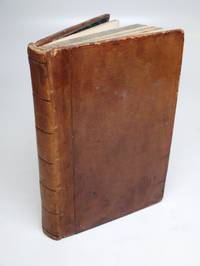
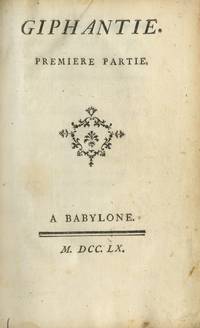
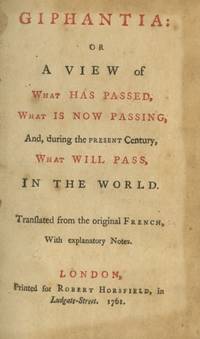
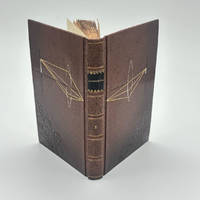
176188236London: Robert Horsfield 1761. First edition in English. Hardcover. 1761 First edition in English. 2 vols. 8vo. Main title printed in red & black part title with woodcut decoration. Uniformly bound by Glenn Malkin in modern speckled calf with geometric gilt design and blind-tooled roll & cogs decorations to covers spines with raised bands and gilt rules with contrasting leather title labels. Housed in leather-backed marbled board compartmentalised slipcase. A scarce imaginary voyage considered to be one of the earliest works of utopian science fiction. This work is also considered a cornerstone book in any collection of photographic literature and photography's first fictional work see Roosens & Salu <em>History of Photography</em> No. 10421. <br /><br />Originally published in France in 1760 as <em>Giphantie</em> an anagram of the author's name this work is credited with one of the earliest mentions of photography in Chapter 17: "That window that vast horizon those thick clouds that raging sea are all but a picture. Thou knowest that the ways of light reflected from different bodies make a picture and paint the bodies upon all polished surfaces on the retina of the eye for instance on water on glass. The elementary spirits have studied to fix these transient images; they have composed a most subtile matter very viscous and proper to harden and dry by the help of which a picture is made in the twinkle of an eye. the impression of the images is made the first instant they are received on the canvas which is immediately carried away into some dark place; an hour after the subtile matter dries and you have a picture so much the more valuable as it cannot be imitated by art nor damaged by time" pages 95-96.<br /><br />Glenn Malkin began binding professionally in 2008 and has since won numerous awards for his design bindings in national and international competitions. Some foxing and other marking all pages uncut; bindings and solander very good. ESTC T99917; Gernsheim History of Photography p. 26. No jacket Robert Horsfield hardcover
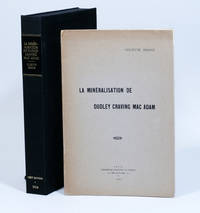
19242729Paris: Imprimerie Croutzet et Depost 1924. First edition. Original wrappers. Very Good. FIRST EDITION of Roche's surreal dadaist roman à clef exposing the misogynistic world of the French avant-garde. With annotations likely in Roche's hand. Like too many women artists of the early twentieth century French writer and artist Juliette Roche 1884 - 1980 has been long overshadowed by her male contemporaries. Roche came of age amidst leading artistic and literary salons of early 20th century Paris. She studied at Académie Ranson then considered the absolute best art school in Paris and was an early adopter of Cubism. However she is most closely associated with Dadaism. Despite Dada being a movement of absolute rebellion it harbored the normalized misogyny of the early twentieth century. Roche's most explicit critique of this discrepancy of rebellion vs repression can be found in La Minéralisation de Dudley Craving Mac Adam her groundbreaking novella.<br /> <br /> Part satire and part Dada nonsense the thinly veiled roman à clef is a prime example of the daring poetic style that Roche developed while living in New York during World War I. Having watched artistic vanguards come and go in Paris' salons and exhibitions Roche observed the New York City hijinks of Francis Picabia French 1879 - 1953 and Marcel Duchamp 1887 - 1968 with a level of detachment that alluded their American peers. She had close access to Picabia perhaps too close: in 1917 he and his wife Gabrielle Buffet-Picabia moved into an apartment directly beneath one Roche shared with her husband Albert Gleizes a French artist and philosopher who helped popularize Cubism on the Upper West Side. While Roche admired Picabia's iconoclasm she was disturbed by the misogyny she saw in works like his manometres where woman as 'la machine' was at best a manipulable object at worst the butt of a private joke. If taking Roche's ambivalence towards and her neighborly proximity to Picabia into consideration the novella could be inspired in part by an age-old story: pure contempt of one's neighbor.<br /> <br /> The novella is an indirect indictment of certain illicit behaviors Roche found annoying and dangerous. She synthesizes her fellow expatriates' personalities and physical traits to create the decadent Mac'Adam and the men he encounters on the day of his demise. Picabia becomes Mac'Adam. Swiss writer and boxer Arthur Craven 1887 - 1918 lends his name to the protagonist while becoming Lloyd Willow. Juliette Roche herself appears as Juliette Granite a play on words since roche means rock in French. Roche spins the narrative in poetic and surreal fragments at turns absurd and others told in a stream-of-consciousness style. La Minéralisation moves beyond conventional storytelling to allow readers into the minds of her characters through rich interior monologues revealing in each case her estimation of the particular model's idiosyncrasies. Roche seemed to find the antics of the all-male world of the Dadaists to be too limited and they're wickedly satirized among these pages.<br /> <br /> Written in ink on the first page is "Publié dans 'La Vie des Lettres' en 1921 / New York 1918" and there are a few words written on page 20 in the same hand. It appears to be Roche's handwriting from the few samples we've seen but we can't guarantee it.<br /> <br /> Paris: Imprimerie Croutzet et Depost 1924. Thin octavo 33pp terminal blank original printed wrappers stapled as issued; custom box. Small tear and split at top of spine; a near-fine extremely well-preserved copy.<br /> <br /> EXCEEDINGLY RARE: We can find records of no other copies that have been on the market.<br /> <br /> References:<br /> <br /> Burke Carolyn "Recollecting Dada: Juliette Roche." Women in Dada: Essays on Sex Gender and Identity edited by Naomi Sawelson-Gorse MIT Press 1998 557. Imprimerie Croutzet et Depost unknown
2000mon0000144541Genesis Publications 02/09/2002 00:00:01. leather_bound. New. in x in x in. Beautiful boxed leather bound signed By David Bowie & Mike Rock edition in pristine condition - A collector's dream only 25000 copies produced this copy number is1464 Genesis Publications hardcover
1760263025Babylon Paris 1760. First. hardcover. fine. Two parts in one volume. 16mo old calf later rebacked in leather; marbled end-leaves & edges. Babylon i.e. Paris 1760. First Edition. Fine.<br/> <br/> A fantasy voyage comparable to Gulliver's Travels and often considered an early work of science fiction predicting both photography and television. Early writing on the title page identifies the author as "M. Tiphaigne Medecin" and notes that the title is an anagram of his name.<br/> <br/> unknown
1760263025Babylon Paris 1760. First. hardcover. fine. Two parts in one volume. 16mo old calf later rebacked in leather; marbled end-leaves & edges. Babylon i.e. Paris 1760. First Edition. Fine.<br/><br/> A fantasy voyage comparable to Gulliver's Travels and often considered an early work of science fiction predicting both photography and television. Early writing on the title page identifies the author as "M. Tiphaigne Medecin" and notes that the title is an anagram of his name.<br/><br/> unknown books
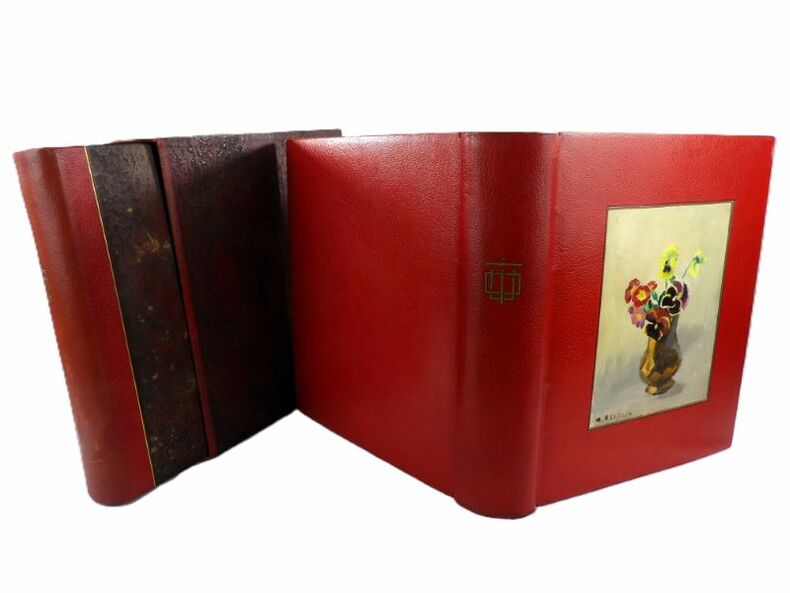
19552693Sans lieu, manuscrit, pièce unique, sans date (circa 1915-1955). 38,5 x 32,5 cm. Reliure signée Legendre en plein maroquin cerise, doublée, dos lisse orné d'un petit motif mosaïqué, une nature morte, peinte à l'huile, est incrustée au centre du premier plat (signature non identifiée), filet noir en encadrement, roulette dorée sur les coiffes, filet doré sur les coupes, gardes de soie moirée, chemise et étui assortis. 38 Manuscrits et 35 oeuvres graphiques originales ornent cet album. Parmi les écrivains, nous avons pu identifier : Henry Charpentier, Vincent Muselli, Philippe Chabaneix, Paul Fort, André Mary, Georges Duhamel, Victor-Gérard Le Dantec, Francis Carco, Pierre Camo, Gabriel-Joseph Gros, Maurice Du Plessys, Guy Lavaud, Louis Chadourne, Ernest Raynaud, André Salmon, Saint-Georges de Bouhélier, Camille Mauclair, Francis Vielé-Griffin, Lucie Delarue-Mardrus, Laurent Tailhade (Lettre autographe signée à Xavier Privas), Henri de Régnier, Fernand Gregh, Xavier de Mongallon, Léon Vérane, Robert Houdelot et [Pierre Louÿs, poème imprimé avec une aquarelle originale dessinée par dessus par Sylvain Sauvage]. Parmi les artistes, nous avons pu identifier : Eugène Corneau, Henry Bégué, Albert André, André Barbier, Robert Lotiron, René Levrel, Marcel Roche, Jean Marchand, Albert Lauzero, Ginette Signac, Pablo Tillac, Joseph Hémard, Albert Lepreux, Serge Czerefkov, Lucien Mainssieux, René Blanc, Pierre Ambrogiani, Kamal, Charles Pollaci et Sylvain Sauvage.
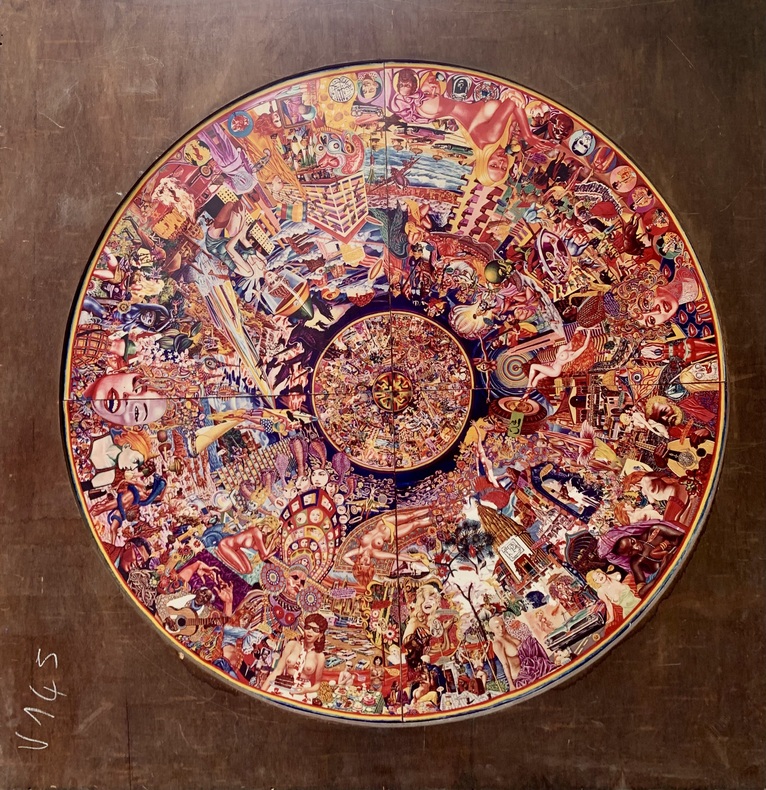
awd-1157Important tirage photographique en couleurs monté dans un encadrement carré en bois, ajouré en cercle au centre. Très rare épreuve, peut-être tirée pour un essai de couleurs lors de la commercialisation d’une affiche en 1969. Mentions Mati Klarwein, Grain of Sand, Robert Crandall Assoc., 1968 sur le côté avec échelles chromatiques, petits manques de pigmentation dans la partie basse (111,5/117,2 cm dans un cadre de 122/122 cm).
1761006246London: Robert Horsfield 1761. The title in French Giphantieis an anagram of the author's name. The book is compared with Swift's Gulliver's Travels and is considered to be an early work of science fiction. It is also held to be predictive of television and also the photographic process describing the "fixing" of an image as held by a mirror. This volume consists of the two parts of Giphantia bound together in one book each with seperate paginations and seperate title pages dated 1761 part 1 and 1760 part 2.Original full calf with five raised bands gilt decorated compartments and red title compartment with title in gilt spelled "Gibhantia". Marbled endpapers two blank leaves then the title page dated 1761 2 page dedication from the translator to Honourable Miss Ross then two page contents or "Table of Chapters. Then Giphantia part the first 130 pages. Then the title page to part 2 dated 1760 contents to part two 2 pages part two126 pages one page of publishers ads with the verso blank then two blank leaves. 4 X 6.5 inches approx.Overall the book is quite good with the outer hinges cracking boards holding well Intenally all complete and in good order and quite clean throughout with no foxing etc. First Edition. Full-Leather. Good/No Jacket. Robert Horsfield Hardcover
19712501170096ybvkNo publisher's imprint; probably early 1971, as the album was released on April 23 1971 on the recently founded label 'Rolling Stones Records'. 2 parts* of 4-layer-pressed cardboard (the outer layers stronger than the inner ones, 3 mm in total), backed with fold-out stands (the lower one twice-folded for higher stability) of slightly softer 'single-wall' cardboard (2 thin layers with wave-shaped filling, also ca. 3 mm). - Upper part (from the upper 40% of the record-cover up to Mick's head): 87 x 41,5 cm (43+ x 16+ inches, widest at elbows) / Lower part (from the lower 60% of the record-cover down to Mick's feet [with plaster on the 2nd toe of his left foot]): 89 x 43,5 cm (35 x 17x inches, widest at feet); Total height: 176 cm (69+ inches).
1965107638BB(London, 1965). 4° (25 x 20 cm.). 24 S., [6] Bl. mit zahlr. farb. Abb. und Karten. Farbig illustr. Orig.-Broschur.
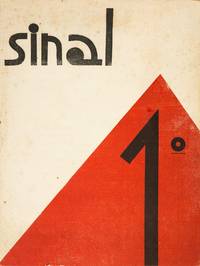
54641Coimbra: Imprensa Académica July 1930. Small quarto 25.5 × 19 cm. Original staple-stitched wrappers with two-color printed linocut; 22 pp. including insides of wrappers with an original graphic illustration and numerous linocut title headings. Binding with barely noticeable export restoration; sporadically somewhat fox-stained; else very good. Rare sole issue of the avant-garde journal which resulted from Branquinho da Fonseca's departure from the periodical "Presença" which was of central importance for the Portuguese avant-garde "Segundo Modernismo". "Presença" was previously founded by Branquinho da Fonseca not only as an experimental and innovative publication in terms of typography and art but above all as the medium of new Portuguese literature and poetry. Poems by Fernando Pessoa who was not so well known during his lifetime and is now considered one of the most important poets in the Portuguese language were published here for the first time. When Pessoa died in 1935 "Presença" printed a special issue in his honor with tributes and excerpts from Pessoa's letters. However "Presença" not only provided a forum for the avant-gardes of its own tongue but also promoted experimental exchange across borders: texts by Proust Gide Joyce Valéry and contemporary Brazilian authors were made accessible to the Portuguese public for the first time in many cases. Furthermore "Presença" ensured that the earlier Orplieu generation was firmly established in the canon of Portuguese modernism. Today Branquinho da Fonseca is best known as the author of the novel "O Barão" which is considered a Portuguese "masterpiece of its genre" in literary history. Cf. Gerhard Wild Kindler Kompakt: Portugiesische Literatur 20 Jahrhundert Heidelberg 2015 pp. 16-18 and 113-115.<br /> <br /> As of November 2024 OCLC lists only one copy in Portugal and none in North America. unknown
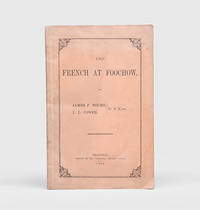
1884173626Shanghai: Printed at the "Celestial Empire" office 1884. China is like a large pie. For many years covetous nations have been nibbling at the edge of the crust First edition of this eyewitness account of clashes between French and Chinese naval forces following the collapse of the Li-Fournier Agreement. Two tables show detail each side's ships and their specifications as well as the damage they sustained. The Tonkin War developed out of a tussle between France and China for influence in Vietnam. Following a number of engagements diplomatic exchanges between Li Hongzhang and Captain Ernest François Fournier produced a tentative agreement that China would withdraw from Tonkin and legally recognize a French protectorate. Negotiations however eventually broke down and the French launched an attack on Fuzhou on 23 August 1884. Foreign military observers including the two American authors of this report saw the engagement as a chance to evaluate the success of recent Chinese attempts to modernize the imperial navy. For the Qing empire the Battle of Fuzhou was a disaster the French fleet eight ships outgunning its eleven vessels all of which were eventually sunk. The defeat "paved the way for the dynasty's downfall" Po p. 206. The eight plates are after sketches made during the battle and show several Chinese ships before and after they were sunk. The final sketch is of a dog which drowned while trying to escape from the Yangwoo the Chinese flagship. Octavo. With 8 plates tables in text. Original light orange wrappers front cover lettered in black within ornamental black frame. Wrappers only lightly creased and marked contents sometime neatly consolidated into covers with adhesive text and plates clean: a near-fine copy. Cordier 2500. Ronald C. Po The Blue Frontier: Maritime Vision and Power in the Qing Empire 2018. unknown
176052879Babylone Paris: n. p. 1760. First edition. 16mo. Part I 2 176 pp; Part II 2 174 pp. Contemporary full mottled calf with the spine in six gilt-decorated compartments; hinges partially cracked but firm; rubbing at the edges and chipping at the corners. Moderate foxing or soiling. A near very good copy. "In 1760 the French writer Charles François Tiphaigne de la Roche wrote a novel that today would be considered science fiction. Titled Giphantie an anagram of his name it describes his imaginary travels. He was lifted into the air and transported half unconscious to a beautiful garden in a strange land. There he met a Spirit who said 'I am the Prefect of this island which is called Giphantie.' With the Prefect as guide Tiphaigne explored the wonders of 'the island.'" In GIPHANTIA Chapter XVII Part I The author prophecies the fixing of transient images of nature by the action of light. "Thou knowest that the rays of light reflected from different bodies make a picture and paint the bodies upon all polished surfaces on the retina of the eye for instance on water on glass. The elementary spirits have studied to fix these transient images: they have composed a most subtle matter very viscous and proper to harden and dry by the help of which a picture is made in the twinkle of an eye. They do over this matter a piece of canvas and hold it before the objects they have in mind to paint. The first effect of the canvas is that of a mirror; there are seen upon it all the bodies far and near whose image the light can transmit. But what the glass cannot do the canvas by means of the viscous matter retains the images. The mirror shows the objects exactly; but keeps none; our canvases show them with the same exactness and retains them all. This impression of the images is made the first instant they are received on the canvas which is immediately carried away into some dark place; an hour after the subtle matter dries and you have a picture so much the more valuable as it cannot be imitated by art nor damaged by time." See PHOTOGRAPHY: ESSAYS & IMAGES 1980 edited by Beaumont Newhall p. 13-14.<br/><br/>This is considered a cornerstone book in any collection of photographic literature and photography's first fictional work.<br/><br/>The English edition of a year later is titled: GIPHANTIA: OR A VIEW OF WHAT HAS PASSED WHAT IS NOW PASSING AND DURING THE PRESENT CENTURY WHAT WILL PASS IN THE WORLD.<br/>Roosens and Salu No. 10421. <br/><br/> n. p. unknown books
8vo., First Edition, with engraved frontispiece, 4 engraved plates and 6 illustrations in the text; attractively bound in tan half calf BY LARKINS, marbled boards, back with raised bands ruled in gilt, second and third compartments with dark brown leather labels lettered and ruled in gilt, all other compartments elaborately tooled with floral spray in gilt, gilt top, marbled endpapers, uncut, a very good, bright, clean copy. CLINTON THOMAS DENT'S COPY WITH HIS FINE ENGRAVED PICTORIAL BOOKPLATE ON FRONT PASTE-DOWN. The binding is signed on front free endpaper verso. With the trade ticket of Matthews & Brooke of Bradford and Leeds on front paste-down. Bonney was President of the Alpine Club from 1881 to 1883; Dent from 1887 to 1889. Dent made the first ascent of the Dru (1978) and visited the Caucasus several times during the last decades of the century. He was instrumental in founding the Association of British Members of the Swiss Alpine Club and became its first President in 1879; an obituary and memoir was published when the Association opened the first British hut on the Allalinhorn in 1912. A UNIQUE AND SPLENDID COPY LINKING TWO PRESIDENTS OF THE ALPINE CLUB AND WITH OUTSTANDING BRITISH AND ALPINE MOUNTAINEERING PROVENANCE. Neate *98.
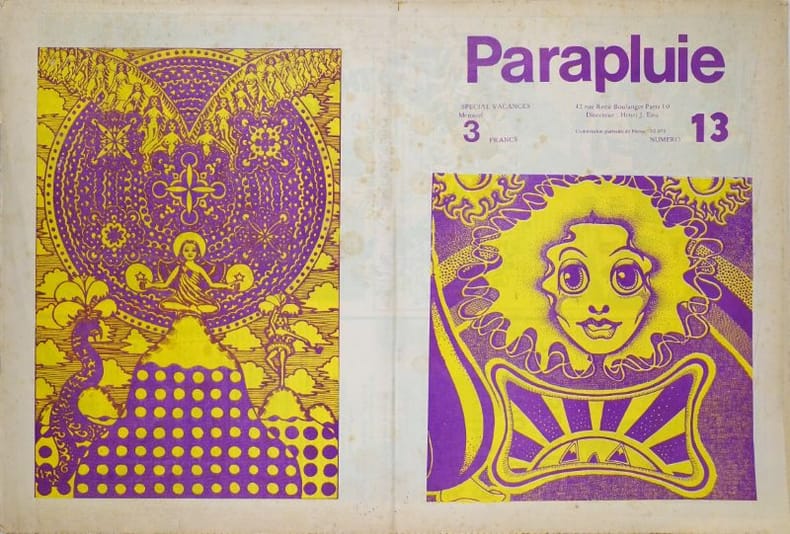
19701032731970-73 Paris novembre 1970-printemps 1973, collection complète.Fascicules 425x290mm environ, 24p., en feuilles, impression en partie en couleurs, couvertures illustrées. Quelques défauts et jaunissements.
Abundant black and white illustrations and reproductions of photos. Features: Two Men's Madness - six lives and a fine ship, the Frank N. Thayer, are lost through the unaccountable frenzy of two Indians; In Wildest Ireland - A.W. Cutler describes and photographs "unspoilt" regions of the Emerald Isle - with many fascinating photos; The Guardian of the Line - the ordeal undergone by a humble railway-crossing keeper's wife in Lithuania on the Russian Front; In Search of the Unknown Land - The tragic story of the Stefansson Arctic Exploration Expedition, twelve-page article including many photos; The Tales of Golab Khan - some amusing stories of Indian life; The Airman's Escape - two British aviators raid a Bulgarian town, then one is shot down and must be rescued by his companion; From Job To Job Around the World - part VI - Two American wanderers make there way through the Holy Land to Constantinople - with photos; The Trouble at Crib No. 2 - a tug-boat fireman recounts an exciting story of a winter rescue on the Great Lakes; Australia's Water Miracle - article and photos describe how the Government of New South Wales has created a miracle of irrigation; The Story of Count Seilern - A Tragedy of the Hapsburgs; Alpine Acrobats - A vivid account, illustrated by some very remarkable photographs, of the first ascent of the needle-like "Cigar Rock" in the Italian Alps; Lovely one-page illustrated ad by Canada Steamship Lines promotes their Niagara to the Sea all-water route; and more. pp. 4 [ads], [3], 290-385, 7-32 [ads]. Unmarked with moderate wear. Soiling to back cover. Covers beginning to loosen, otherwise a sound vintage copy of this exceptional issue.. Book
1516Paris: Ph.-D. Pierres 1782. Three volumes complete. FIRST EDITION of this scholarly encyclopedic and highly entertaining history of French gastronomy. XIII 3 373 1; 4 383 1; 4 363 1. Half-titles present they are often missing. SIGNED in pencil ON THE HALF-TITLE OF VOLUME I BY JORDI JOSEP AND JOAN ROCA OF EL CELLER DE CAN ROCA IN GIRONA SPAIN THE BEST RESTAURANT IN THE WORLD according to the highly prestigious San Pellegrino survey FOR 2013-2014 AND 2015-2016. Signed at the restaurant by all three FOR ME on August 30 2013 shortly after the restaurant was named the finest in the world for the first time a printed menu from that evening is included. And SIGNED in pencil ON THE HALF-TITLE OF VOLUME II BY FERRAN ADRIA OF EL BULLI winner of the San Pellegrino survey a record five times. Signed FOR ME on the evening of October 29 2013 right after Adrià gave a lecture at the Elisava design school in Barcelona. And SIGNED in ballpoint ON THE FRONT FLYLEAF OF VOLUME III BY EDUARD XATRUCH AND ORIOL CASTRO OF DISFRUTAR winner of the San Pellegrino survey for 2024-2025 it is no longer possible to win more than once. Signed FOR ME at the restaurant on July 8 2025 a beautifully-presented printed menu is included. The author originally set out to write an extensive work covering all facets of private life in France but only this first part--which covers everything related to cooking wine eating and hunting--was published. Discusses the origins of cooking tools and techniques the provenance of all kinds of foods including of course foodstuffs that came from the New World and much more including an extensive section on hunting. A classic. PRINTED ON FINE LAID PAPER. 8vo. ELEGANTLY BOUND IN CONTEMPORARY HALF RUSSIA AND MARBLED BOARDS SPINE IN SIX COMPARTMENTS WITH RAISED BANDS. Minimal traces of wear to bindings upper joint of volume I cracked else a fine and bright copy with very large margins and very white paper. Vicaire 510 "Ouvrage tres interessant et tres utile."; Bitting 280 "This is one of the finest works upon the social life of the French people."; Thiebaud 576. AN OUTSTANDING SET OF A RARE AND IMPORTANT WORK SIGNED BY THE PRINCIPALS OF ALL THREE RESTAURANTS THAT WON THE COVETED SAN PELLEGRINO AWARD AND THUS SPEARHEADED THE CATALAN GASTRONOMY BOOM OF THE FIRST QUARTER OF THE 21ST CENTURY. I GUARANTEE THE AUTHENTICITY OF ALL OF THESE SIGNATURES BECAUSE THE CHEFS ALL SIGNED THESE BOOKS FOR ME IN MY PRESENCE. <br/><br/> Paris: Ph.-D. Pierres, 1782 hardcover
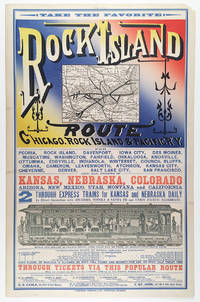
5510Chicago: Cameron Amberg & Co. Printers ca. 1880. Illustrated chromolithographic broadside with map 21.25†x 13.125†plus margins inset map measuring 4.5†x 5.875†illus. measuring 3.25†x 12.5â€. CONDITION: Very good margin chipped at upper right corner a few minor stains. <p>A rare and striking broadside issued by the Chicago Rock Island & Pacific Railway advertising the Rock Island through-express route and promoting the railroad’s numerous destinations connections and amenities.</p> <p>Featuring the eye-catching mix of typefaces and colors that characterized railroad advertising in this era this attractive broadside promotes the numerous midwestern stops and destinations accessible via the Chicago Rock Island & Pacific R’y. At this time two through-express trains for Kansas and Nebraska ran daily in connection with the Atchison Topeka & Santa Fe and Union Pacific railroads. As noted here meals were served in palace dining cars for seventy-five cents each and 150 pounds of baggage were allowed on each full ticket and seventy-five pounds on each half ticket free. The line’s various destinations included Iowa City Council Bluffs Denver Salt Lake City and San Francisco as well as “all points in Kansas Nebraska Colorado Arizona New Mexico Utah Montana and California.â€</p> <p>Showing the Rock Island R.R. in bold the inset map spans from Chicago and Lake Michigan in the east to Omaha and Council Bluffs in the west and reaches from St. Paul in the north to St. Louis and Kansas City in the south—with Lake Michigan lying in the upper-right corner. One axis of the line extends from Milwaukee and Racine Wisconsin to Leavenworth Kansas and another stretches from Chicago to Omaha. Various spurs connect to both.</p> <p>The lower section of the broadside features a marvelously detailed illustration of the interior of a palace dining car showing numerous fashionably dressed passengers seated and dining among African American waiters who are shown in the small kitchen and serving food. In the far-right end of the train men are depicted in drawing rooms—reading newspapers and smoking—and various railway operators and ticket-men appear at the ends of the car. Also included is a table of connections with various railroads that could be made in “Union depots.†Through-tickets via this route could be found on sale at all coupon offices in the U.S. and Canada. Those seeking additional information folders maps and times-tables are encouraged to contact any of the ten agents and managers of the Rock Island R.R. listed at the bottom who were based in New York Toronto Philadelphia Chicago etc.</p> <p>Established in 1847 as the Rock Island & LaSalle R.R. the company was reincorporated in 1851 as the Chicago & Rock Island R.R. Co.—its rails during this period reaching to Morris Illinois and later Ottawa. After acquiring the Mississippi & Missouri R.R. in 1866 the company was renamed Chicago Rock Island & Pacific R.R. Co. Expanding between 1873 and 1882 the company built more branch lines that reached into Iowa as well as Kansas City. In 1880 the firm was reorganized under the name Chicago Rock Island and Pacific R’y Co. and by 1883 extended nearly to the southern boundary of Kansas. After Congress granted passage across Indian Territory in 1887 the Rock Island R.R. began developing through Texas to Galveston as well as New Mexico Territory. During the 1920s the railroad enjoyed considerable success. In 1926 the company began constructing a freight line between Amarillo Texas and Liberal Kansas which was finished in 1929 and served to make accessible a country of rich grain. While the railroad industry continued fairly steadily through 1930 between 1931 and 1935 the Depression took a toll on the Rock Island R.R. and went into decline. The company ceased operation in 1980.</p> <p>OCLC records just one copy held at Yale.</p> <p>REFERENCES: “Chicago Rock Island and Pacific Railway Records†at Kansas Historical Society online.</p> Chicago: Cameron, Amberg & Co., Printers, [ca. 1880] unknown
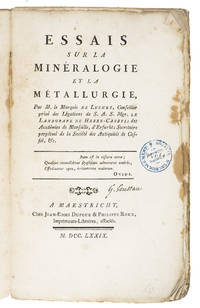
1779K89BNAR73VU7Maastricht 1779. 8vo 22.5 x 13.5 cm. J.E. Dufour & P. Roux Contemporary decorated paper wrappers. 3 parts in 1 volume. 4 XXVII 1 232 pp. Very rare first edition printed in Maastricht of a mining manual by a French enlightened marquis who worked as chief librarian at the Hessen-Kassel court of Friedrich II 1720-1785. Although mentioned reference literature the book is very rare on the market and we found no copy in auction records. Luchet was an acquaintance of Voltaire and in fact had a letter of recommendation from him that helped him obtain his position at the Hessen-Kassel court. Luchet's other writings concerned literature and theatre which makes this mining manual a curious standout. It is unclear why this work was printed in Maastricht except that the Maastricht south Limburg region does have a long history of mining. In a lengthy discourse on mining in the preliminaries Luchet makes a strong pro-mining statement. This is followed by reflections on several aspects of mining often in a question and answer form. He goes into the medical consequences of mining and names several minerals and metals such as coal quartz lead tin gold silver copper and more.A second edition appeared in 1797 often bound with H. Struve Methode analytique des fossils Lausanne 1797.Bookplate on front paste-down owner's name on title-page small stamp on title-page and pages 9 99 199 and 232. First few pages with marginal stains. Binding worn. Otherwise in good condition and wholly untrimmed.l Geology emerging 1404; Hoover 549; Wellcome III p. 451; Worldcat 3 copies; not in Margerie. unknown
188317148London: Bernard Quaritch 1883. Hardcover. Set condition is Good bound in full green cloth with gilt titles one front covers and spines. Hinges are weak. Tearing to cloth exterior stains and scuffs bubbling to cloth at a few spots significant edge wear. A few creases to interior with toning throughout. No markings to text. Illustrated with seven full-page plates and 339 in-text drawings. Two fold-out color maps present Map of World as Known about Second Century B.C. and Sketch Map of Ancient India.Showing Early Tribes Their Sacred Places etc. - tear to latter map Appendix IV also present "Synoptical Table of Gods" etc. also a fold-out; Includes separate linen-backed folding chart "A Student's Synchronological Chart of the Religions of the World" in matching slipcase. 4to. 11 1/2"h x 9 1/2"w. Rare in trade Early issue/printing set as volumes state Quaritch as publisher no later dates mentioned beyond 1883 on title page. A publication that has been highly influential doubted more by the scientific community embraced by others such as Aleister Crowley in understanding comparative religion from a sexual and initiation perhaps esoteric aspect. Bernard Quaritch hardcover
1914548772New York: The Knickerbocker Press 1914. Hardcover. Very Good. First edition. Octavo. 148pp. Frontispiece and 10 plates. Blue cloth binding titled in gilt. Partially unopened with just a hint of foxing and a few small nicks at the bottom edge of the front board and the foot of the spine very good. Inscribed by the author: "To Mrs. Emerson Compliments of Emma Langdon Roche." Roche born into a prominent Mobile Alabama family wrote this book the first to be based on interviews with Cudjoe Lewis also known as Kazoola a survivor of the Middle Passage as a captive on the last known slave ship Clotilda which a group of Americans used to illegally import slaves into Alabama in 1860 from present day Benin more than a half century after the suspension of the Atlantic slave trade. This book includes a photograph of Lewis and his wife Abache as well as drawings of Cudjo Abache and other survivors.<br /> <br /> This book was used by later researchers and writers as a resource about the residents of Africatown on the outskirts of Mobile and the history of the Clotilde. Zora Neale Hurston then a student of anthropology interviewed Cudjo Lewis and other Africans in Alabama as part of her research. She published an article in 1927 "Cudjo's Own Story of the Last African Slaver" purportedly based on her interviews with Lewis but later thought to be mostly derivative of Roche's text in Historic Sketches of the South. Exceptionally scarce source material and rarely found signed. The Knickerbocker Press hardcover
176113462London: Printed for Robert Horsfield 1761. First English edition. 16mo. Part I 130 pp. dated 1761; Part II 126 pp. dated 1760 1 p. advert. Contemporary full calf with the spine expertly repaired; board edges are rubbed. Previous owner's name on endpaper few light pencil notations light foxing and offsetting to endpapers and tile page from the binder's glue. See PHOTOGRAPHY: ESSAYS & IMAGES 1980 edited by Beaumont Newhall p. 13-14 "In 1760 the French writer Charles François Tiphaigne de la Roche wrote a novel that today would be considered science fiction. Titled Giphantie an anagram of his name it describes his imaginary travels. He was lifted into the air and transported half unconscious to a beautiful garden in a strange land. There he met a Spirit who said 'I am the Prefect of this island which is called Giphantie.' With the Prefect as guide Tiphaigne explored the wonders of 'the island.'" In GIPHANTIA Chapter XVII Part I The author prophecies the fixing of transient images of nature by the action of light. "Thou knowest that the rays of light reflected from different bodies make a picture and paint the bodies upon all polished surfaces on the retina of the eye for instance on water on glass. The elementary spirits have studied to fix these transient images: they have composed a most subtle matter very viscous and proper to harden and dry by the help of which a picture is made in the twinkle of an eye. They do over this matter a piece of canvas and hold it before the objects they have in mind to paint. The first effect of the canvas is that of a mirror; there are seen upon it all the bodies far and near whose image the light can transmit. But what the glass cannot do the canvas by means of the viscous matter retains the images. The mirror shows the objects exactly; but keeps none; our canvases show them with the same exactness and retains them all. This impression of the images is made the first instant they are received on the canvas which is immediately carried away into some dark place; an hour after the subtle matter dries and you have a picture so much the more the valuable as it cannot be imitated by art nor damaged by time." This is considered a cornerstone book in any collection of photographic literature and photography's first fictional work.<br/><br/>Roosens and Salu No. 10421. <br/><br/> Printed for Robert Horsfield unknown books
25875INSOLATIONS 1-3. Collection complète.Montpellier, Fata Morgana, 1968, 3 volumes en feuilles, 23 x 30 cm, chacun sous carton à dessin recouvert de papier marbré avec étiquette de l’éditeur et cordonnet, 13, 13 et 18 feuillets, (impression uniquement recto). COLLECTION COMPLÈTE de cette revue en feuilles tirées par insolation sur papier sensible à partir de dessins et calligraphies exécutés sur calques par les auteurs, signé à chaque numéro par tous les participants à la justification. N° 1, Michel Butor, illustrations de P. Alechinsky, B. Dufour, J. Hérold. Tirage à 130 ex. N° 2, Maurice Roche, J.-P. Faye, C. Ollier, B. Dufour, Matta. Tirage à 200 ex. N° 3, P. Guyotat, Denis Roche, R. Weingarten, K. Yacine, B. Dufour, Ipousteguy, Wifredo Lam, F. Lunven. Tirage à 200 ex.Feuillet d’annonce joint avec une illustration supplémentaire.
1760442461760 Babylone. 1760. 2 tomes en 1 volume in-12, plein veau tacheté, dos lisse orné, pièce de titre de maroquin rouge. (2) ff. ; 176 pp. ; (2) ff. ; 174 pp.
21802Paris, Sous l'Enseigne du Pavillon dans un Parc & chez Henri Baguenier Desormeaux, s.d. (1913), in-4, bradel de papier marbré couverture cons., non rogné (reliure de l’époque non signé mais due certainement à D.F. Thiéraut), (16 p.). Edition originale de ce tiré-à-part à 99 ex. tous num. sur papier de Hollande à la forme, de la revue Ariane ou Le Pavillon dans un Parc, numéro d'été 1913. Cette revue était financé et dirigée par René Chalupt. Envoi a.s. de Roché : “à René Chalupt, je ne le dirai point ici, Henri Pierre Roché”. Très rare premier livre du futur auteur de Jules et Jim et avec la meilleure provenance possible. Nous recopions un passage des mémoires de Georges Auric, “Quand j'étais là”, Grasset 1979, pp. 34-35. "Connaissez-vous Roché, savez-vous qui est Henri-Pierre Roché, puis-je apercevoir ce M. Roché?" A peine arrivé à Paris, je questionnais ainsi chaque infortuné que je rencontrais. Jusqu'au beau jour où, enfin!, quelqu'un me répondit: "Mais oui, je le connais très bien..." Mon sauveur était un garçon charmant qui, d'ailleurs, allait s'empresser de nous réunir. (...) Il s'appelait René Chalupt, travaillait chaque jour dans une célèbre maison de pianos dont son père était, je crois, un des dirigeants importants. Le soir venu, il allait, passionné de musique, écouter un concert ou, plus simplement, traversait la rue La Boétie pour retrouver le bel appartement où il écrivait les vers un peu précieux, petits enfants de Levet ou de Toulet, qu'il publia ensuite, sans se hâter, dans des plaquettes devenues introuvables. Avec quelques amis, il éditait une revue d'une sorte assez rare, tout aussi épuisée j'imagine : Ariane ou le Pavillon dans le Parc (sic). Chaque numéro était tiré à quatre-vingt-dix-neuf exemplaires, réunissant à des textes, par exemple de Paul Valéry ou de Léon-Paul Fargue, quelques pages de ce mystérieux Henri-Pierre Roché que Chalupt, pour finir, allait me faire rencontrer".