( Musique Rock - Art psychédélique ) - David Singer.Livre Rare Book
74 résultats
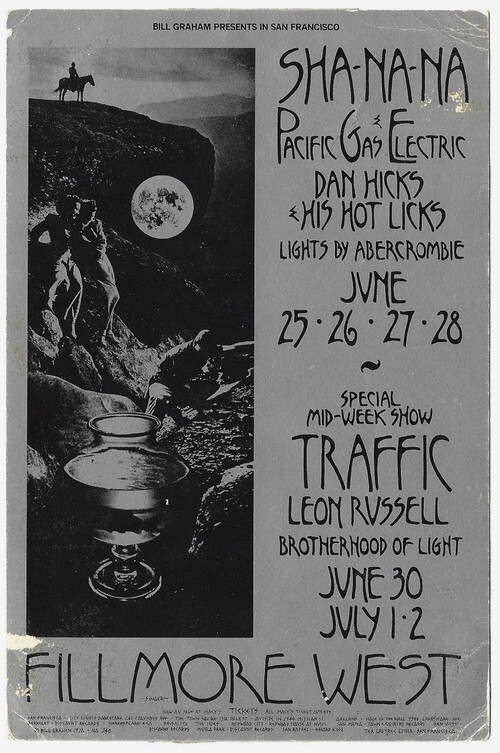
175132775Magnifique carte postale au format 17,5 x 11,5 cm datant de 1970. Superbe illustration psychédélique, en couleurs, de David Singer. Au verso on trouve la programmation à venir de la salle. Petits frottis au recto. Frottis et traces de scotch au verso. Bel état général. Carte éditée pour les concerts présentés par Billy Graham au Fillmore West de San Francisco les 25, 26, 27 et 28 juin 1970. Les artistes étaient : Sha-Na-Na, Pacific Gas & Electric, Dan Hicks & his hot licks, Traffic, Leon Russell, Brotherhood of light.,De toute rareté.
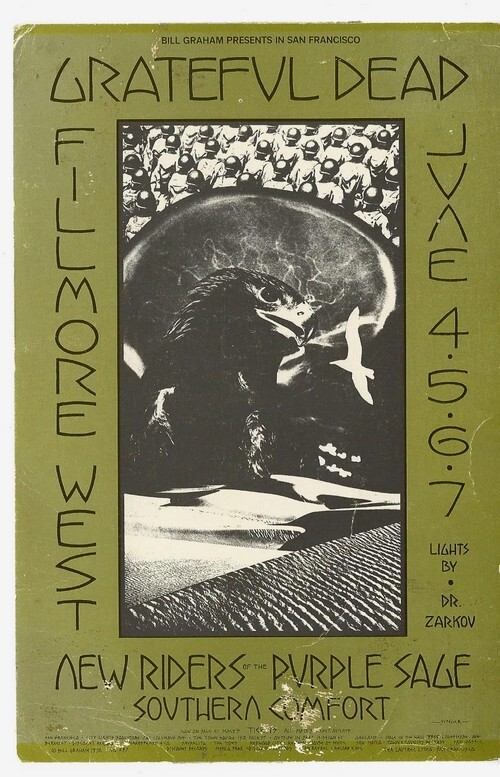
175132784Magnifique carte postale au format 17,5 x 11,5 cm datant de 1970. Superbe illustration psychédélique, en couleurs, de David Singer. Au verso on trouve la programmation à venir de la salle. Petits frottis au recto. Frottis et traces de scotch au verso. Bel état général. Carte éditée pour les concerts présentés par Billy Graham au Fillmore West de San Francisco les 4, 5,6 et 7 juin 1970. Les artistes étaient : Grateful Dead, New Riders of The Purple Sage, Southern Comfort. De toute rareté.
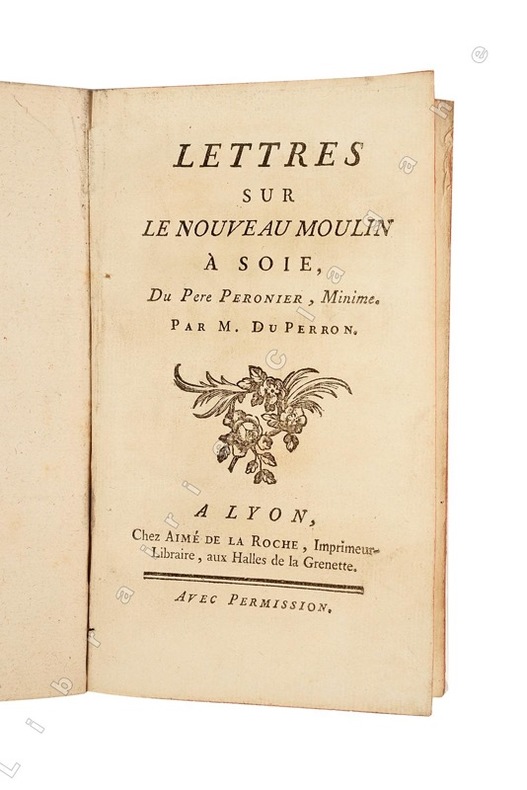
176821414Lyon, Aimé de la Roche, 1768 ; in-12, broché, 46 pp.
1777366766Paris : Chez Nyon l'aine librarie 1777. First Edition. Softcover. Poor copy in the original stiff-card wrappers; wear and tear as with age. Front wrapper missing with parts of the spine band missing. Text remains in fine condition and without blemish. Physical description; lxx 447 pages. Subjects; Maxims. Paris : Chez Nyon l'aine, librarie paperback
175499011754 basane marbrée, dos lisse (coiffes arrasées). in-16, (2ff.), XVIIIpp., (3ff.), 346pp., Paris Ganeau 1754,
180014233Paris Denné jeune 1800
1784115565Dublin Neuch‰tel : de lÕImprimerie de Wilson Et se trouve ˆ Paris chez les Libraires qui vendent des NouveautÂŽs Samuel Fauche pÂre & fils 1784. 185x115mm. VIII - marque de la STN sur page de titre cartonnage de lՎpoque piÂce de titre au dos et filets dorÂŽs. Ex libris Ernest Gloor. Bon ÂŽtat.Barbier IV-954. Michel Schlup - Un imprimeur dans lÕEurope des LumiÂres Samuel Fauche 392. 215 de lÕImprimerie de Wilson, Et se trouve ˆ Paris, chez les Libraires qui vendent des NouveautÂŽs (Samuel Fauche pÂre & fils) unknown
171929226Le Monde Hors-Série 2022. In-8 broché de 112 pages au format 30 x 22 cm. Couverture illustrée. Dos carré avec titre. Premier plat avec petites traces de pliures au mors. Petits tassements aux coins. Interieur frais. 4ème plat avec publicité pour le film de Brett Morgen " Moonage Daydream ". Magazine consacré à David Bowie avec sa vie racontée par de nombreux témoignages, en bandes dessinées, photographies et documents. Bel état général. Rare édition originale.
178446404421À Dublin, de l’Imprimerie de Wilson, et se trouve à Paris, chez les libraires qui vendent des nouveautés, 1784 ; in-8, broché, couverture bleue muette, non rogné. (brochage de l’époque) VIII pp., 216 pp.Une des éditions à la date de l’originale. Sur le titre, ce roman est attribué à Choderlos de Laclos. Le véritable auteur est le marquis de Luchet (Saintes 1740 - Paris 1792). D’abord officier de cavalerie, il quitte l’armée pour faire des affaires qui échouent et l’obligeront à se réfugier à Lausanne pour fuir ses créanciers. Grâce à Voltaire il devint bibliothécaire du landgrave de Hesse. En 1786, il passa au service du prince Henri de Prusse et ne revint en France qu’en 1788. Luchet a beaucoup produit. Ses livres qui se voulaient des mémoires de son temps étaient en réalité des romans satiriques. Drujon. Les livres à clefs II, 965 donne les clefs de celui-ci. On y trouve la ctesse et le cte de La Noue, le mis de Culan, Melle Arnould, Melle Dubois la première femme de Beaumarchais, le Mis de Villette, Beaumarchais, Linguet, Fréron, Boufflers, Vergennes... Lorsqu’on connaît cette clef, le roman devient assez piquant. “Les mémoires que nous publions aujourd’hui sont une fiction, si l’on veut : il n’y a cependant pas un fait dont le fonds ne soit vrai, pas un personnage qui n’existe ou n’ait existé. Tout ce que j’ai supprimé, c’est le merveilleux ; ce qui se passe est beaucoup plus incroyable que ce qu’on invente.”Mylne Martin 84,39. - Exemplaire à toutes marges, bel état intérieur, le brochage est un peu défraîchi.
17841664A Dublin, De l’imprimerie de Wilson, 1784. In-8 de VIII, 216 pages, demi-vélin, dos teinté en noir, étiquette de titre verte ornée. Non-rogné.
17895941Sans lieu, , 1789. 2 tomes de VIII-130-(2) pp. (2)-172-(4) pp.La Galerie des Dames françaises, pour servir de suite à la Galerie des Etats-Généraux, par le même auteur. A Londres, 1790. 207-(2) pp.Ensemble 3 tomes en 2 vol. in-8, demi-basane havane à coins, dos orné à nerfs, tranches rouges (reliure de l'époque).
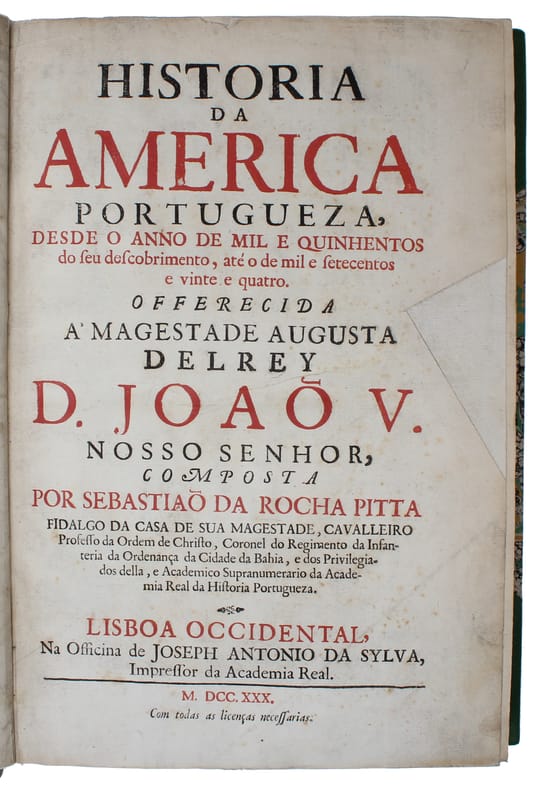
1730176140Lisbon: Joseph Antonio da Sylva Impressor da Academia Real 1730. The first history of Brazil First edition "much sought after by Brazilians" Borba de Moraes. Sebastiao da Rocha Pitta 1660-1738 was himself Brazilian having been born in Bahia. This is an attractive copy of this rare and important work in a carefully restored contemporary binding. The last copy to appear at auction was in 1985. "Though scornfully dismissed by Robert Southey as being 'a meagre and inaccurate work which has been accounted valuable merely because there is no other' the Historia does not deserve such censure. For all its Gongoric turgidity it contains some valuable and authentic information being on some points more fair-minded and accurate than Southey's better written but more prejudiced work" Boxer p. 160. Thomas Lindley writing in his Narrative of a Voyage to Brazil 1805 is less dismissive and certainly more specific in his criticisms describing Pitta as "an intelligent and well-informed Brazilian" who compiled his history "from the chronicles of the Jesuits and other authorities and some valuable local knowledge of his own. This work is copious in its details of the foundation of Brazil as a colony its successive governors its churches its monasteries and convents". However Lindley was less enthusiastic about Pitta's coverage of natural history manufacturing and commerce but the Historia is evidently more of an old-style chronicle than a practical up-to-the-minute guidebook. Lindley also remarks that the Portuguese government "publicly prohibited its being read under the severest penalties and it is now only met with carefully secluded in the cabinets of the curious". Quarto 295 x 197 mm pp. xxvi ii blank 716. Title printed in red and black woodcut headpieces; bound with the half-title and the integral blank before the main body of the text which are frequently lacking. Contemporary sprinkled sheep new dark red morocco label compartments gilt with scrolled foliate corner-pieces floral lozenge central tools edges sprinkled red and blue. Binding a little rubbed and worn in some places some stripping from the front cover. Judicious restoration to spine ends and joints expert repair to head of front board occasional professional paper repairs to margins. Short closed tear to half-title page pale tidemark in margin of last few leaves; overall a very good copy. Borba de Moraes 1983 II 678; Sabin 72300. C. R. Boxer The Golden Age of Brazil 1695-1750: Growing Pains of a Colonial Society 1962. unknown
173060026Lisboa Occidental na Officina de Joseph Antonio da Sylva 1730. Folio 29 x 195 mm. In recent green half calf with five raised bands and gilt lettering and ornamentation to spine. Title-page mounted and with repair to outer margin no loss of text. Last leaf with repair to lower outer corner also with no loss of text. First and least few leaves with brownspotting. Very light browning in margins throughout. Title printed in red and black woodcut initials and head-pieces. A fine and clean copy. 14 716 pp. Here with the often missing half title but wanting the final blank. <br/><br/><em>Rare first edition here with the often missing half title of the first general history of Brazil – “This work is extremely copious in the details of its foundation as a colony its successive governors its churches its monasteries and convents†Sabin. "This first edition is becoming rare and is much sought after by Brazilians . since it is the first history of Brazil to have been printed and since it was written by a Brazilian" Borba de Moraes. The author's purpose was to narrate the events that had taken place in Brazil with the help of "truthful reports" these largely from Jesuit sources and "modern information" given by those who had traveled in the vast Brazilian territory. This was the only history of Brazil available to Pitta’s contemporaries since most of the others composed in the first two centuries of colonization remained in manuscript form until the nineteenth century. Rocha Pitta was born in Bahia in 1660 and died in the year 1738. At the age of 22 he left the University of Coimbra where he took his degree to return to Bahia where he got married. He made up his mind to write a history of Brazil and he spent years in collecting documents in the Monasteries of Brazil and Portugal where he went in order to study French Dutch and Italian for the purposes of his history. “In 1728 after 40 years of study he began to print his history which appeared in 1730. It was universally well received and King John V. appointed him a member of the household in consequence yet in a few years the Portuguese government publicly prohibited its being read under the severest penalties.†Sabin.Sabin 72300 Borba de Moraes 1983 p. 748 </em> hardcover
176611625Amsterdam and Paris: P.-F. Gueffier 1766. Contemporary cat’s paw sheep neatly restored slightly defective gilt spine and label red edges pink silk marker; interleaved throughout — a vertical crease divides the interleaves in two columns. <p>With: Jousse Daniel-Charles.       1742-1769.<br />        Lettre D’Un Orléanois…Sur La Nouvelle Histoire De L’Orléanois. Bruxelles and Paris E. Flon and J. Debure 1766. 12mo 173 x 110 mm. inlaid in blank quarto sheets for binding. 40p.</p> <br /> <p>      Ad I-II: This volume belonged to the local historian and Orléans Cathedral canon Louis-Eusèbe Loiseau 1721-95.<br />       Ad I: ALL PUBLISHED SUPPRESSED. Only Edition. Luchet believed “Good history is a long fable†p. iv tr. Immediately upon publication of this first volume of a projected five Luchet’s fanciful account of the history of Orléans and environs 52 B.C.E. to 1428 C.E. came under fire. He had manufactured personal information abandoned the facts cloven to the marvelous and doubted Jeanne d’Arc’s divine mission pp. 307-419. This last angered the clergy and THE DUC D’ORLÉANS FORCED THE AUTHOR TO BUY UP AND DESTROY THE EDITION.<br />       COUNTERING LUCHET’S FANTASIES LOISEAU COMPILED HIS OWN THIRTY THOUSAND WORD DOUBLE-COLUMN CHRONOLOGY filling 115 interleaf pages. Its preface summarizes Luchet’s History — “detestable in substance and form†tr. lists errors and sketches a damning biography of Luchet. One column of the manuscript chronology draws on Polluche’s Essais historiques sur Orléans 1778 and the other on articles in Calendrier historique d’Orléanois by the Orléans Maurist librarian Louis Fabre 1710-98.<br />       The longest and earliest inserted manuscript is A FIFTEEN-PAGE ESSAY UNFAVORABLE TO LUCHET’S HISTORY identifying still more inaccuracies nine concern Jeanne d’Arc. The Mémoire takes a statistical and economic perspective on Orléans its architecture and exports. Signed by Loiseau the Observations treats the by-laws of the new Orléans learned society born of the 1786 merger of two earlier groups. Loiseau was secretary of one for 25 years 1761-85.<br /> ¶Lanéry d’Arc Le Livre d’or de Jeanne d’Arc. Bibliographie 700; Lelong Bibliothèque historique de la France III: 35603-4; Brainne et al. Les Hommes illustres de l’Orléanais I: 250-2.<br />       Ad II: Only Edition the author’s sole book and the first published attack on Luchet’s History. Exposing 108 blunders with context and secondary source proof Jousse used material gathered by his father 1710-81 who supplied all the entries related to Orléans in Lelong’s Bibliothèque historique 1768-78.<br /> ¶Lanéry d’Arc 700; Lelong III: 35604; Conlon Le Siècle des Lumières 66:976.<br />       All items are in good condition.</p> P.-F. Gueffier unknown
1765019130Amsterdam ma Paris: Arkstée & Merkus ma Hedis 1765 ma 1976. Riproduzione anastatica dell'EO di Amsterdam Arkstée e Merkus 1765. Due parti in un volume 23 cm di 4-165 e 4-136 pagine. In lingua francese. Legatura edioriale in finta pelle con titolo al dorso. Ottime condizioni. Reprint of this rare work edition limited to 150 numbered copies and 30 copies not destined for the trade. Communist utopian work in which the author made ridiculous the so-called progress resulting from private property and social circumstances of the time. Arkstée & Merkus (ma Hedis) unknown
173060026Lisboa Occidental, na Officina de Joseph Antonio da Sylva, 1730. Folio (29 x 195 mm). In recent green half calf with five raised bands and gilt lettering and ornamentation to spine. Title-page mounted and with repair to outer margin, no loss of text. Last leaf with repair to lower outer corner, also with no loss of text. First and least few leaves with brownspotting. Very light browning in margins throughout. Title printed in red and black, woodcut initials and head-pieces. A fine and clean copy. (14), 716 pp. (Here with the often missing half title, but wanting the final blank).
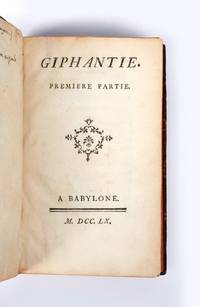
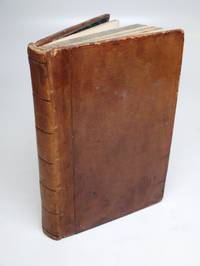
17603006485Babylone" in fact Paris: n.p. 1760. Octavo with four engraved plates by Cochin after Desfriches illustrating the second work "Mon Odyssée ou le Journal de Mon Retour de Saintonge"; contemporary mottled calfspine gilt with red label. <p><p>First edition: a marvellous imaginary work describing an utopian community and prefiguring the uses of photography television and the telephone.</p> <p>Tiphaigne de la Roche 1729-1774 was a physician polymath and much-published writer. In Giphantie an anagram of the author's name the protagonist is lifted semi-conscious and transported by air to a beautiful garden where a charming spirit guide shows him around a 'vaguely utopian society' Lewis. The book is a good example of the imaginary voyage genre using a quite plausible African setting but is more renowned for the fantastical series of technical advances that are discussed in striking detail including everything from prototype televisions to telephones. The discussion of the way in which the ruling spirits of the land have learnt to 'fix' the fleeting images formed by light is so detailed that the novel is considered a milestone in the pre-history of photography. A relevant passage in the subsequent English edition of 1761 is often quoted: 'You know that the rays of light reflected from different bodies form a picture and paint the image reflected on all polished surfaces for instance on the retina of the eye on water and on glass. The elementary spirits have sought to fix these fleeting images.'.</p> <p>This copy is bound together with Pierre Honoré Robbe de Beauveset's rococo poem in four verses Mon Odyssée ou le Journal de Mon Retour de Saintonge La Haye 1760 illustrated with four engraved plates. De Beauveset was an influential French writer known for his satires and erotic works.</p> </p> . n.p. unknown
1760263025Babylon Paris 1760. First. hardcover. fine. Two parts in one volume. 16mo old calf later rebacked in leather; marbled end-leaves & edges. Babylon i.e. Paris 1760. First Edition. Fine.<br/> <br/> A fantasy voyage comparable to Gulliver's Travels and often considered an early work of science fiction predicting both photography and television. Early writing on the title page identifies the author as "M. Tiphaigne Medecin" and notes that the title is an anagram of his name.<br/> <br/> unknown
1760263025Babylon Paris 1760. First. hardcover. fine. Two parts in one volume. 16mo old calf later rebacked in leather; marbled end-leaves & edges. Babylon i.e. Paris 1760. First Edition. Fine.<br/><br/> A fantasy voyage comparable to Gulliver's Travels and often considered an early work of science fiction predicting both photography and television. Early writing on the title page identifies the author as "M. Tiphaigne Medecin" and notes that the title is an anagram of his name.<br/><br/> unknown books
176052879Babylone Paris: n. p. 1760. First edition. 16mo. Part I 2 176 pp; Part II 2 174 pp. Contemporary full mottled calf with the spine in six gilt-decorated compartments; hinges partially cracked but firm; rubbing at the edges and chipping at the corners. Moderate foxing or soiling. A near very good copy. "In 1760 the French writer Charles François Tiphaigne de la Roche wrote a novel that today would be considered science fiction. Titled Giphantie an anagram of his name it describes his imaginary travels. He was lifted into the air and transported half unconscious to a beautiful garden in a strange land. There he met a Spirit who said 'I am the Prefect of this island which is called Giphantie.' With the Prefect as guide Tiphaigne explored the wonders of 'the island.'" In GIPHANTIA Chapter XVII Part I The author prophecies the fixing of transient images of nature by the action of light. "Thou knowest that the rays of light reflected from different bodies make a picture and paint the bodies upon all polished surfaces on the retina of the eye for instance on water on glass. The elementary spirits have studied to fix these transient images: they have composed a most subtle matter very viscous and proper to harden and dry by the help of which a picture is made in the twinkle of an eye. They do over this matter a piece of canvas and hold it before the objects they have in mind to paint. The first effect of the canvas is that of a mirror; there are seen upon it all the bodies far and near whose image the light can transmit. But what the glass cannot do the canvas by means of the viscous matter retains the images. The mirror shows the objects exactly; but keeps none; our canvases show them with the same exactness and retains them all. This impression of the images is made the first instant they are received on the canvas which is immediately carried away into some dark place; an hour after the subtle matter dries and you have a picture so much the more valuable as it cannot be imitated by art nor damaged by time." See PHOTOGRAPHY: ESSAYS & IMAGES 1980 edited by Beaumont Newhall p. 13-14.<br/><br/>This is considered a cornerstone book in any collection of photographic literature and photography's first fictional work.<br/><br/>The English edition of a year later is titled: GIPHANTIA: OR A VIEW OF WHAT HAS PASSED WHAT IS NOW PASSING AND DURING THE PRESENT CENTURY WHAT WILL PASS IN THE WORLD.<br/>Roosens and Salu No. 10421. <br/><br/> n. p. unknown books
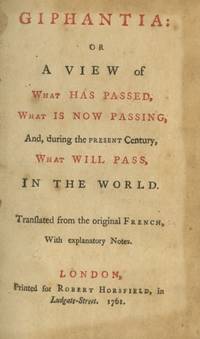
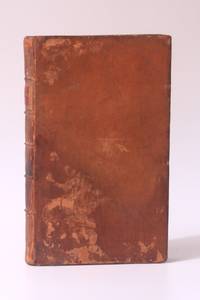
176113462London: Printed for Robert Horsfield 1761. First English edition. 16mo. Part I 130 pp. dated 1761; Part II 126 pp. dated 1760 1 p. advert. Contemporary full calf with the spine expertly repaired; board edges are rubbed. Previous owner's name on endpaper few light pencil notations light foxing and offsetting to endpapers and tile page from the binder's glue. See PHOTOGRAPHY: ESSAYS & IMAGES 1980 edited by Beaumont Newhall p. 13-14 "In 1760 the French writer Charles François Tiphaigne de la Roche wrote a novel that today would be considered science fiction. Titled Giphantie an anagram of his name it describes his imaginary travels. He was lifted into the air and transported half unconscious to a beautiful garden in a strange land. There he met a Spirit who said 'I am the Prefect of this island which is called Giphantie.' With the Prefect as guide Tiphaigne explored the wonders of 'the island.'" In GIPHANTIA Chapter XVII Part I The author prophecies the fixing of transient images of nature by the action of light. "Thou knowest that the rays of light reflected from different bodies make a picture and paint the bodies upon all polished surfaces on the retina of the eye for instance on water on glass. The elementary spirits have studied to fix these transient images: they have composed a most subtle matter very viscous and proper to harden and dry by the help of which a picture is made in the twinkle of an eye. They do over this matter a piece of canvas and hold it before the objects they have in mind to paint. The first effect of the canvas is that of a mirror; there are seen upon it all the bodies far and near whose image the light can transmit. But what the glass cannot do the canvas by means of the viscous matter retains the images. The mirror shows the objects exactly; but keeps none; our canvases show them with the same exactness and retains them all. This impression of the images is made the first instant they are received on the canvas which is immediately carried away into some dark place; an hour after the subtle matter dries and you have a picture so much the more the valuable as it cannot be imitated by art nor damaged by time." This is considered a cornerstone book in any collection of photographic literature and photography's first fictional work.<br/><br/>Roosens and Salu No. 10421. <br/><br/> Printed for Robert Horsfield unknown books
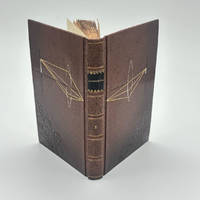
176188236London: Robert Horsfield 1761. First edition in English. Hardcover. 1761 First edition in English. 2 vols. 8vo. Main title printed in red & black part title with woodcut decoration. Uniformly bound by Glenn Malkin in modern speckled calf with geometric gilt design and blind-tooled roll & cogs decorations to covers spines with raised bands and gilt rules with contrasting leather title labels. Housed in leather-backed marbled board compartmentalised slipcase. A scarce imaginary voyage considered to be one of the earliest works of utopian science fiction. This work is also considered a cornerstone book in any collection of photographic literature and photography's first fictional work see Roosens & Salu <em>History of Photography</em> No. 10421. <br /><br />Originally published in France in 1760 as <em>Giphantie</em> an anagram of the author's name this work is credited with one of the earliest mentions of photography in Chapter 17: "That window that vast horizon those thick clouds that raging sea are all but a picture. Thou knowest that the ways of light reflected from different bodies make a picture and paint the bodies upon all polished surfaces on the retina of the eye for instance on water on glass. The elementary spirits have studied to fix these transient images; they have composed a most subtile matter very viscous and proper to harden and dry by the help of which a picture is made in the twinkle of an eye. the impression of the images is made the first instant they are received on the canvas which is immediately carried away into some dark place; an hour after the subtile matter dries and you have a picture so much the more valuable as it cannot be imitated by art nor damaged by time" pages 95-96.<br /><br />Glenn Malkin began binding professionally in 2008 and has since won numerous awards for his design bindings in national and international competitions. Some foxing and other marking all pages uncut; bindings and solander very good. ESTC T99917; Gernsheim History of Photography p. 26. No jacket Robert Horsfield hardcover
176110491Dublin: G. Faulkner. Dublin G. Faulkner 1761. First edition first impression. Hardback. A good copy. First Dublin edition. An imaginary voyage ala Gulliver and a taproot for science fiction proto sf if you like. An important work presaging television and still photography in a manner; as important to the history of photography as to science fiction. An important book. There was a London edition too dated 1761 on the first part's title page and 1760 on the second part. The Dublin issue has 1761 on both title pages. That doesn't tell us much about which precedes. Contemporary calf heavily rubbed and worn. The endpaper has an inkstain with a collector's plate to the front pastedown. Prelims have some waterstaining but not too bad similar to the last few leaves. A nice copy overall. 10491 Hyraxia Books. . Good. Hardback. 1st Edition. 1761. G. Faulkner hardcover
1761006246London: Robert Horsfield 1761. The title in French Giphantieis an anagram of the author's name. The book is compared with Swift's Gulliver's Travels and is considered to be an early work of science fiction. It is also held to be predictive of television and also the photographic process describing the "fixing" of an image as held by a mirror. This volume consists of the two parts of Giphantia bound together in one book each with seperate paginations and seperate title pages dated 1761 part 1 and 1760 part 2.Original full calf with five raised bands gilt decorated compartments and red title compartment with title in gilt spelled "Gibhantia". Marbled endpapers two blank leaves then the title page dated 1761 2 page dedication from the translator to Honourable Miss Ross then two page contents or "Table of Chapters. Then Giphantia part the first 130 pages. Then the title page to part 2 dated 1760 contents to part two 2 pages part two126 pages one page of publishers ads with the verso blank then two blank leaves. 4 X 6.5 inches approx.Overall the book is quite good with the outer hinges cracking boards holding well Intenally all complete and in good order and quite clean throughout with no foxing etc. First Edition. Full-Leather. Good/No Jacket. Robert Horsfield Hardcover
1760442461760 Babylone. 1760. 2 tomes en 1 volume in-12, plein veau tacheté, dos lisse orné, pièce de titre de maroquin rouge. (2) ff. ; 176 pp. ; (2) ff. ; 174 pp.