199 résultats
17628659S.l. s.e. 1762 Un volume in-folio plein veau raciné de l'époque, dos à nerfs orné, pièce de titre en maroquin rouge, double-filet doré sur les coupes, réunissant: - M. de Réaumur, Nouvel Art d'adoucir le fer fondu et de faire des ouvrages de fer fondu aussi finis que de fer forgé. 1762. viii+124pp., 7pl.- M. le Marquis de Courtivron et M. Bouchu, De la forge des enclumes. 1762. 11pp., 1pl. - M. Duhamel du Monceau, Art des forges et fourneaux à fer. 1762. 198pp., 9pl.- M. de Réaumur et M. Duhamel du Monceau, Fabrique des ancres. 54pp., 6pl.Épidermures, manque à la coiffe supérieure, léger travail de vers sur les plats et premiers feuillets, mouillure claire en marge supérieure à la fin de l'ouvrage.
170123030Paris: Nicolas De Fer 1701. First Edition. Very Good. Ginville Vincent de. Ginville Vincent de. First Edition. Paper size 42.5 cm x 28.5 cm. Plate mark 34 x 22.5 cm. Marked "sculpsit Vincent de Ginville" lower left. Paper clip mark just to the plate mark upper margin '109' inked upper right corner some marginal chipping to the paper marginal old pencil price lower right. A few unobtrusive spots inside the plate marks. Copperplate engraving with later hand color. From Nicolas De Fer's Atlas Curieux. Highlights locations of Indian villages found by La Salle during his explorations of the coastal areas of the United States. LOC online We see the Gulf of Mexico Cap de la Floride and many inland village names. A nice map showing some early history of the southern United States. Nicolas De Fer unknown books
1722LBW-6646[Paris, 1722]. 445 x 555 mm.
17926102Mit 28 Abb. auf 5 gefalt. gest. Tafeln. Berlin, A. Mylius, 1789. 8vo. (19,4 x 11,4 cm). 77 S. - Vorgebunden: Rösler, Karl Anton. Bergmännische Nachrichten über die Gebirge und den Bergbau zu Joachimsthal. Nebst einigen Nachrichten über die Gebirge auf der Straße von Prag bis Joachimsthal, hrsg. von Johann Mayer. Dresden, Walther, 1792. 8vo. 126 S. Marmorierter Pappband d. Zt. mit zwei farbigen Rückenschildern. [6 Warenabbildungen]
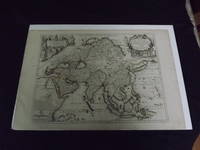
1722biblio10<p>Engraved double page map 28" x 20" wide margins hand colored in outline two uncolored pictorial cartouches. Expert and nearly invisible repairs along centerfold normal aging; about near fine. Impression is bright and clean. Nicholas De Fer 1646-1720 was a highly respected and prolific French cartographer whose maps were valued for their decorative appeal. Around 1690 he was made the geographer to the Dauphin and published his first atlas. He would become geographer to other high-ranking individuals in French and Spanish society. The present map is detailed and attractive map of Asia with a cartouche showing Chinese at the upper left and Indians in the upper right. The map covers a lot of territory showing Arabia and the Persian Empire in the West and Japan in the east but goes as far south as the Isle of Borneo and Java. Part of Eastern Europe is also visible. Library missouri website.</p> books
1722biblio10<p>Engraved double page map 28" x 20" wide margins hand colored in outline two uncolored pictorial cartouches. Expert and nearly invisible repairs along centerfold normal aging; about near fine. Impression is bright and clean. Nicholas De Fer 1646-1720 was a highly respected and prolific French cartographer whose maps were valued for their decorative appeal. Around 1690 he was made the geographer to the Dauphin and published his first atlas. He would become geographer to other high-ranking individuals in French and Spanish society. The present map is detailed and attractive map of Asia with a cartouche showing Chinese at the upper left and Indians in the upper right. The map covers a lot of territory showing Arabia and the Persian Empire in the West and Japan in the east but goes as far south as the Isle of Borneo and Java. Part of Eastern Europe is also visible. Library missouri website.</p>
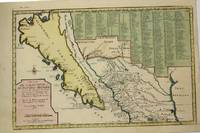
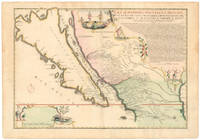
1705M5240Paris c.1705. Very Good. Notes: “California with indented northern coast and labeled: Californias o Carolinas. New Mexico is shown covered with engraved key at may top right. Includes Father Kino’s Place name Co. S. Francisco Xavier at California’s northern tip†McLaughlin<br><br>The title Ba. d. las 11000Virgenes is introduced for the first time. In the Southwest there are names such as Santa Fe Acoma and Casa Grande. The key covers 314 different places and their locations. Size : 230x345 mm 9x13.625 Inches Coloring: Hand Colored Reference: McLaughlin 134; Tooley Amer 62; Wagner 462. Category: Maps United States West California; Maps Central America Mexico; unknown
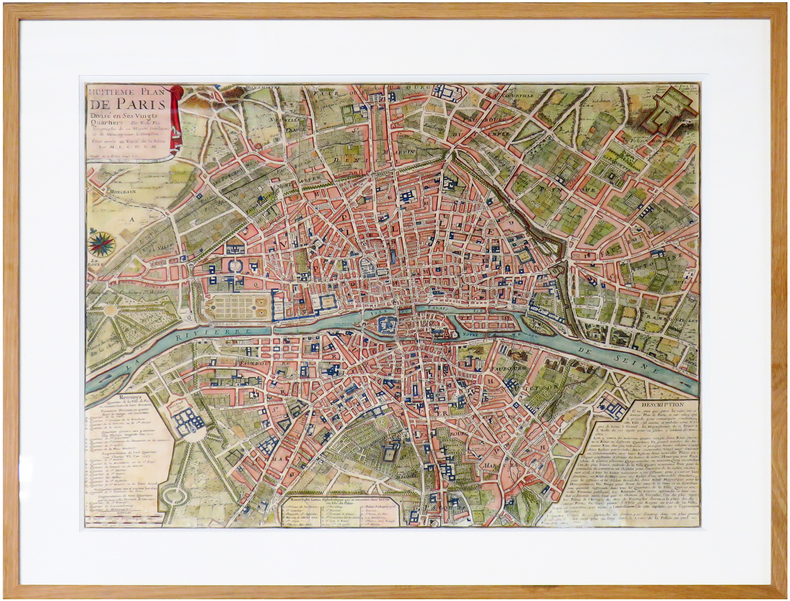
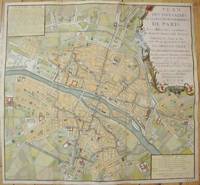
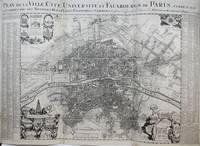
1735M7483Paris c.1735. Very Good;. Notes: Large scale decorative 18th century map of Paris. Top right title in a cartouche adorns a fountain spewing water referring to the establishment of the network of fountains in the capital. Size : 565x590 mm 22.24x23.23 Inches Coloring: Hand Colored Reference: Jean Boutier #212A Category: Maps Europe France Paris;Maps City Maps; unknown
1722152321722 reliure plein veau havane in-quarto carré (binding full calfskin in-quarto), dos 5 nerfs (spine with 5 raised bands) - entre-nerfs à double filets or à fleuron au fer évidé et rinceaux aux angles avec des petits fers en remplissage (between the raised bands double gilt lines - floweret with hollowed out blocking stamp - with foliages executed in the curved lines in angles - with small blocking stamp in filling) - pièce de titre comportant le titre abrégé de l'ouvrage sur fond havane clair (label of the title with the title abbreviated by the work) - rinceaux en tête et en pied (top and at the foot of spine with foliages carried out with the curved line), petits manques de cuir sur le dos (missing pieces of leather on the spine), coiffe supérieure légèrement accidentée (head of the spine damaged), coiffe inférieure manquante (is missing tail of the spine), charnière du quatrième plat fortement épidermée jusqu'au carton (joint of the back cover with strongly scratches up to the cardboard), coins de queue fortement écornés (corners of the bottom strongly dog-eared), roulettes à froid sur les coupes (fillets with blind-stamping decoration on the cuts), toutes tranches peignées (all painting edges), pages de garde peignées (painting endpapers), texte à manchette (marginal note), illustrations : orné de bandeaux - lettrines et de culs-de-lampe et gravures hors-texte (illustrations : illuminated of headpieces and dropped initials and of tailpieces and illustrations full page engravings), cicatrices de mouillures (scars of waterstains), galeries de vers en particulier en fin d'ouvrage atteignant le texte mais sans conséquence sur sa compréhension (worm's gallery in particular at the end of work on the text but without consequence on its understanding), 9 feuillets de pièces liminaires (9 leaves of introductory pieces) + 566 pages + 1 feuillet (1 leaf), 1722 à Paris Chez Michel Brunet - Grand'Salle du Palais au Mercure Galant,
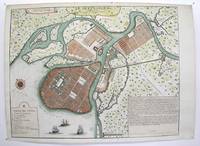
1717M3039Paris 1717. margins trimmed and laid down on 18th century paper otherwise very good. Notes: StolenRare map of the Imperial capital city during the reign of Alexander I with its traditional regular street layout and eleven districts. The map provides excellent detail of the public buildings docks and shipyards fortifications palaces churches hospitals universities etc Size : 365x473 mm 14.375x18.625 Inches Coloring: Hand Colored Category: ; Maps Russia; Maps City Maps unknown
1701685P7Ferrara: Appresso Bernardino Pomatelli 1701. Vellum. Very Good. 9" by 6.5". Not Stated. A very scarce early Italian history on the city of Comacchio in Ferrara illustrated here with a beautiful folding plate of the town and more plates and in-text engravings. In the original Italian. A very scarce work. Illustrated with an engraved title page a folding plate two plates and ten in-text engravings. Collated complete.Collated from Jisc from a copy held at the University of Oxford Libraries. Register runs as 1 8 6 A-Kk8 Ll6. In a vellum binding. An early history on Comacchio. An extensive history of the town of Comacchio a commune of Emilia Romagna in Italy in the province of Ferrara. The town was founded about two thousand years ago. Comacchio was governed first by the Exarchate of 'Ravenna' then by the Duchy of Ferrara' eventually being returned as part of the territories of there Papal States. It was the seat of a Lombard duchy being prosperous under the Goths and Lombards. It owed its fortune to the salt pans and its important location. Comacchio has some beautiful examples of both religious and civil architecture including the Comacchio Cathedral. Written by Giovanni Francesco Ferro though the work is sometimes to his uncle Bartolomeo Ferro. The work is dedicated to Pope Clement XI. In a full vellum binding. Externally with discolouration and marking to the boards and spine. Bumping to the head and tail of the spine and to the extremities. Small amount of loss to the spine label. Internally firmly bound. Pages are lightly age-toned and generally clean with the odd spot. Very small hole to the folding plate. Small amount of loss to leaf C1 to the head affecting two words of text very lightly to leaf D1 affecting six words lightly to leaf D3 affecting ten words E1 affecting nine words E3 affecting eight words F1 affecting seven words F3 affecting six words. Printing error to leaf Q5 affecting roughly nine words. Very Good Appresso Bernardino Pomatelli hardcover
17853860Aus dem Schwedischen übersetzt von Johann Gottlieb Georgi. 2 Bände. Mit 2 gest. Tafeln. Berlin, Haude & Spener, 1785. 8vo. (20,2 x 11,2 cm). 1: XVI, 512 S. 2: 4 Bll., 456 S., 19 Bll. Register. Gesprenkelte Kalblederbände d. Zt. mit etwas Rückenvergoldung u. grünem Lederrückenschild.
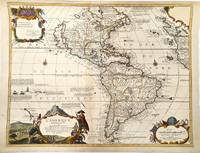
1705M11362Paris c.1705. Very Good. Notes: Detailed French map of the Americas with decorative cartouches.<br>Nicolas de Fer 1646–1720 was a French cartographer and geographer. He also was an engraver and publisher. His work was most often praised for being beautiful and artistic. Size : 464x600 mm 18.27x23.62 Inches Coloring: Hand Colored Category: Maps North America; Maps South America Continent; unknown
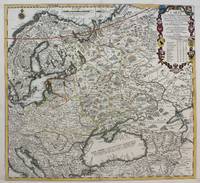
1711M4915Paris 1711. Very Good upper and lower margin have been extended. Laid on acid free paper for long term preservation. Notes: Stolen Size : 520x565 mm 20.5x22.25 Inches Coloring: Original Outline Coloring Category: ; Maps Europe Poland Lithuania; Maps Europe Ukraine unknown
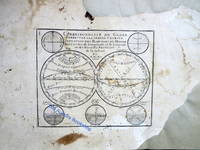
1705180573Paris: Published by the author 1705. First Edition . Hardcover. Very Good/No Jacket. Wide 8vo. An atlas comprising 19 maps 1. Des cercels de Longitude et de Latitude et des Diverses Positions de la Sphere; 2. Carte General du Globe Terrestre et Aquatiques ou Mappemonde en deux Plans-hemisphere 1705; 3. l'Europe Dresee sur diverse Relations; 4. L'Asie Dressee Sur Divers Relations 1705; 5. L'Aftique Dressez sur les dernieres Relations; 6. L'Amerique Meridionale; 7. L'Amerique Septentrionale et les Terres Polaires Arctique; 8. La France Avec Ses Acquisitions Insqu'a l'Annee 1705; 9. Les Environs de Paris 1705; 10. Les XVII Provinces des Pais Bas Divisees 1705; 11. Les Isles Britanniques ou Sont les Royaumes D'Angleterre D'Ecosse et D'Irleland avec les Costes Septentrionales de France et Celles de Pais Bas; 12. Suede Norvegue et Dannemarck 1705; 13. Les Estats de la Couronne de Pologne 1705; 14. L'Allemagne Divisee En Dix Cercles Dressee sur les Derniers memoires; 15. Estats du Grand Duc de Moscovie suivant les derniere relations; 16. Hongrie ou Partie Septent de la Turque en Europe; 17. L'Espagne Divisee en Galice Asturies Biscaye Navarre Leon Vielle et Nouvelle Castille Arragon Andalousie Mursie Valence et Catalogne avec Les Isles Majorque Minorque et Yvica au Roy d'Espagne; Le Portugal et L'Algarve avec Roy de Portugal; 18. L'Italie Divisee en ses Pricipaux Estats; 19. Partie Mediridionale de la Turquie D'Europe ou La Grece. Each map has a written descritpion in French. The first 2 pages are lacking the paper on the right-hand edge and have been repaired. The remainder of the maps and text are in very good original condition. A newer binding in 3/4 brown calf over brown boards with marbled endpapers with the bookplate of Antonio Barrette on the blank ffep. An excellent copy of a very scarce work. <br/> <br/> Published by the author hardcover
17750051621775 Paris, Delalain, 1775. In-quarto (217 X 263 mm) veau fauve marbré, dos cinq nerfs, caissons ornés de fers et fleurons dorés, palettes dorées en queue, pièce de titre maroquin brun, coupes et coiffes filetées, tranches rouges (reliure de l'époque) ; (2) ff. de faux-titre et titre, XXXVII pages d'épitre et préface, (3) pages de table et avis au relieur, 654 pages [+ pages 473 à 480 bis], 13 planches hors-texte, (1) f. d'errata et privilège. Infime mouillure claire dans la marge supérieure des pages I à VIII, habile restauration à un coin, tache sombre en tête du premier plat.
175553444Amsterdam et Leipzig, Arkstée & Merkus 1755 In-folio, atlas demi-veau havane, dos à nerfs richement orné, pièce de titre de maroquin rouge, grande vignette de maroquin rouge avec titre frappé or posé sur le premier plat reliure à l'imitation. Titre et 8 plans gravés à double page et montés sur onglet par Nicolas De Fer. Mouillure au titre, lég. brunissures.
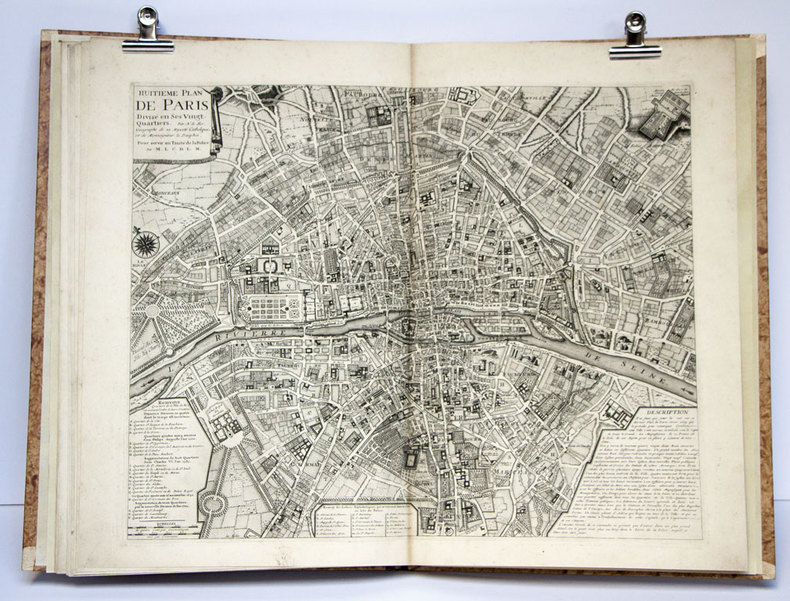
1720M9651Paris: Nicolas de Fer c. 1720. Very Good backed on 19th century paper. Notes: A large-scale and detailed map of the city of Paris and its surroundings during the early 18th century. The map has ornate cartouches in all corners and indexes in the left and right margins. <br>Nicolas de Fer 1646–1720 was a French cartographer and geographer. He also was an engraver and publisher. His work was most often praised for being beautiful and artistic. Size : 637x905 mm 25.08x35.63 Inches Coloring: Hand Colored Category: Maps City Maps; Maps Folding Maps; Maps Europe France Paris; Nicolas de Fer unknown
1705R300113009A PARIS CHEZ L'AUTEUR DANS L'ISLE DU PALAIS A LA SPHERE ROYALE. 1705. In-4. Cartonné. Etat d'usage, Plats abîmés, Dos satisfaisant, Intérieur frais. Atlas comportant 18 cartes en noir et blanc et 18 pages de texte (textes sur deux colonnes) - DESCRIPTIONS DES CARTES : Correspondance du globe terrestre a la sphère céleste situation des habitans du monde des cercles de longitude et de latitude et des diverses positions de la sphère - carte générale du globe terrestre et aquatiques ou mappemonde en deux plans hémisphere - L'Europe dressée sur diverse relations - L'Asie dressée sur divers relations - L'Afrique dressez sur les dernières relations - L'Amérique Méridionale - L'Amérique septentrionale et les terres polaires artiques - La France avec des acquisitions jusqu'a l'année 1705 - Les environs de Paris - Les XVII Provinces des Païs Bas divisées en Provinces Unies en Païs Bas catholiq et en Païs Bas François - Les Isles Britanniques ou sont les Royaumes d'Angleterre d'Escosse et d'Irlande avec les costes septentrionales de France et celles des Païs Bas - Suede Norvegue et Dannemarck - Allemagne divisée en dix cercles dressées sur les derniers memoires - Les Estats de la couronne de Pologne - Estats du Grand Duc de Moscovie suivant les derniere relations - Hongrie ou partie sepentrionale de la Turquie en Europe - L'Espagne divisée en Galice Asturies Biscaye Navarre Leon Vielle et Nouvelle Castille Arragon Andalousie Mursi Valence et Catalogne avec les Isles Majorque Minorque et Yvica - L'Italie divisée en ses principaux Estats - plats cartonnés - coins frottés - annotations sur la page de garde - 10 photos disponibles.. . . A l'italienne. Classification Dewey : 840.05-XVIII ème siècle
1760M7182Paris: Desnos c. 1760. Very Good. Notes: These maps was originally designed by de la Hire 1640-1718 in 1705. Size : 461x461 mm 18.15x18.15 Inches Coloring: Hand Colored Reference: Tooley III:72 Category: Maps Celestial; Desnos unknown
1720NL-01644<p>This exquisite and scarce map was published in Paris in 1720. The maker Nicolas de Fer was one of the most prolific and influential French cartographers of the late 17th and early 18th centuries who worked for the French King and <em>dauphin </em>crown prince.</p><p>The map depicts the most iconic cartographic myth in the European exploration of the Americas: California as a large island. This notable misconception impacted the accuracy of mapmaking for centuries and full acceptance that California was part of the continental mainland was not achieved until the mid-18th century.</p><p><strong>But why '<em>Nouvelle Caroline</em>'</strong></p><p>We can actually start at the eastern edge of the map where we see the great Mississippi River emptying into the Gulf. At first its position seems somewhat anachronistic as it follows an antiquated 17th-century notion of the Mississippi Delta located far to the west. Cartographers began rejecting this configuration after French explorer Sieur de la Salle navigated the entire lower river in 1682. Yet De Fer's choice to position the delta further west was in fact a keen political move executed in service to his patron the <em>dauphin</em>. By positioning the Mississippi so far west as to include it in this map he automatically implies a significantly enlarged French Louisiana even if it remains unseen.</p><p>The French were gradually beginning to encroach on the silver-rich regions in Upper Mexico which at that time belonged firmly to New Spain. But a great upheaval had recently taken place in Spain altering the entire political landscape of Europe. When the Spanish King Charles II died in 1700 this closed the chapter on the powerful dynasty of the Spanish Habsburgs following a long period of decline. When power subsequently transferred to Charles' nephew Phillipe of Anjou who became Philip V of Spain it passed from the Habsburgs to the Bourbons to which the French kings belonged. It was almost a personal victory for De Fer as Philip was the son of the French <em>dauphin</em> who in turn was De Fer's main patron.</p><p>A political element of cartographic land grabbing is echoed in the map's title which refers to the island as 'California or New Carolina' <em>Nouvelle Caroline</em>. This bold new proposal for an alternate name was loaded with political meaning. Following the Spanish succession some still challenged Philip's claim just as some feared an amalgamation of French and Spanish interests and power in the New World. De Fer's maps were part of the counter-propaganda touting the ambitions of his patrons as fact to exaggerate their global influence. While the term 'California' was very much tied to the envisioned island renaming the entire region <em>Nouvelle Caroline</em> New Carolina would make borders more fluid and national ownership less defined.</p><p>Beneath the title De Fer has included extensive text that constitutes an invaluable record of late 17th century missions and Indian villages in this remote part of the New World. The inclusion of this text helped cement De Fer's map as a seminal contribution to West Coast cartography. The mapmaker seems to have been well aware of the importance of this annotation as he surrounded it with fascinating vignettes depicting scenes of Native American life and the abundance of the land. He further compliments these scenes with depictions of fauna in the lower-left corner including an aardvark a sloth and a pelican or spoonbill set around the scale bar.</p><p><strong>Census and details</strong></p><p><em>La Californie ou Nouvelle Caroline </em>was published in the <em>Atlas ou recueil de cartes gegraphiques</em>. It is not only one of the most significant depictions of the California island theory but also its largest separate <em>i.e.</em> regional representation on a printed map. It is essentially an enlarged and far more focused version of his <em>Californie et Nouveau Mexique</em> published twenty years prior in <em>L'Atlas Curieux ou le Monde</em>.</p><p>De Fer's California maps drew on information provided by the Jesuit missionary Father Eusebio Kino who traveled throughout the region in the 1680s and 90s and made extensive observations including the compilation of his own maps. We know that Kino was a significant source because the map's title is taken directly from his original expedition notes and important discoveries made by Kino – such as the mouth of the St. Thomas River discovered in 1684 – have been copied directly onto De Fer's map from his original. The source is hardly a secret: De Fer uses the inset text in the upper right corner to note how his work was drawn from a map that came via the Viceroy of New Spain to the <em>Academie de Sciences in France</em>. The text also provides a history of California's exploration and subjugation up until 1695 – including the initial discovery of Baja California by Hernan Cortes – further underscoring the original author.</p><p>De Fer made several significant changes for the present map. He plots more than 300 towns and villages including many locations on the mainland and in what today is known as New Mexico and southern Arizona. The toponyms generally confirm the influence of Father Kino. Among the many places listed we find the ruins of Casa Grande identified by Kino in 1694 and appeared on this map for the first time. Important towns like San Diego Santa Fe and Mexico City are noted clearly if not prominently. We even see the first inkling of the settlements that soon would grow into Tucson and Phoenix. The spelling of many of the place names also changed on this new map just as De Fer incorporated the first Indian toponyms along the Gila River.</p><p>While the southern coastline is relatively accurately documented there are almost no place names present along the northern mainland or on the eastern side of the island reflecting how little was known about this region at the time. Along California's exterior coast we do find some toponyms in many cases related to the coves and inlets that ships would have frequented. Yet even at this early stage we are already seeing multiple toponymic references to Saint Francis San Francisco in Spanish in the island's northern part.</p><p>Turning to the toponyms of the northern interior we find <em>Gran Quivira</em> which refers to the legend of Cibola or the Seven Cities of Gold supposedly discovered by the Spanish explorer Francisco Vasquez de Coronado in 1539. While we know this terminology from many iconic early West Coast charts like Cornelis de Jode's famous map of the Northwest Pacific 1593 the myth had such pervasive power that the notion persisted well into the 18th century. In this case it has even been complimented by a second quasi-mythological eldorado reference in the toponym <em>Gran Teguaio Coqui</em>. This term originates from the <em>Benevides Memorial </em>1630 which describes it as rivaling Quivira in wealth.</p><p><strong>Context</strong></p><p>Between 1500 and 1747 confusion ensued over whether or not California previously documented in medieval folklore as a mysterious island filled with an abundance of gold was considered part of a series of various mythical islands in an unknown ocean. The "island theory" was perpetuated by Spanish explorers including Juan de la Fuca who suggested in reports published in 1592 that the large opening identifying the mouth of Mexico's Baja peninsula joined a grand bay in the northern part of the continent.</p><p>In 1622 Henry Briggs produced a map based on these reports and the travels of Samuel Purchas. Published in London Briggs' map was accompanied by an article that referred to California as a large island off the coast of <em>Newe Spaine</em>. This "island" appeared to have a rough and rocky coastline complete with smaller islands offshore. Brigg's map became the standard outline for depicting California's insularity and was copied and incorporated onto the maps of influential publishers and geographers throughout Europe.</p><p>Father Kino would eventually dispel the Island of California myth when he discovered Baja California was indeed landbound. Father Kino published this insight in Paris in 1705 some fifteen years before our map was issued quickly becoming the authoritative source for rejecting the island hypothesis. The notion stubbornly persisted despite Kino's publication of his latest observations and map. In addition to influential French cartographers like Nicolas de Fer and Philippe Buache one of the great English mapmakers of the period Herman Moll remained convinced of California's insularity. He even went so far as to claim that he had met sailors who had circumnavigated it. Soon however even the most ardent defenders would have to yield when Ferdinand VII of Spain decreed California to be a peninsula in 1747.</p><p>Cartographers:</p><p><strong>Nicolas De Fer 1646–1720</strong> was a French cartographer and geographer who also worked as an engraver and publisher. He was renowned for his massive output and his pleasant visual designs. He was the son of a Parisian cartographer and began apprenticing at an early age. By twelve however he shifted his apprenticeship to the closely associated field of engraving – a move his father no doubt encouraged as it might enhance his competitive position on the market with his son as a trained engraver.</p><p>De Fer's father died in 1673 but Nicolas did not take over the company until 1687 at which point it had been virtually run into the ground. Nevertheless Nicolas had a knack for business and soon turned things around. By 1690 he was so successful that he won employment as the official geographer to Louis <em>Le Grand Dauphin</em> of France and son of the reigning French king Louis XIV. Soon after with support from the Spanish and French courts De Fer was appointed the official geographer for King Louis XIV. In 1720 shortly before his death he was even appointed royal geographer to Philip V king of Spain.</p><p>De Fer's popularity in the Bourbon royal circles was primarily due to his appreciation of the propagandistic effects of strategic cartography. But no doubt his keen sense of aesthetics helped as well. Whatever the case his maps were hugely popular well-funded and widely distributed. He was impressively productive publishing over 600 sheets from his atelier and covering everything from town plans to world maps. Many of his maps rode the political conjunctures of the age. Hardly would a territory have been won or surrendered before De Fer's atelier was working on a map delineating the new realities.</p>
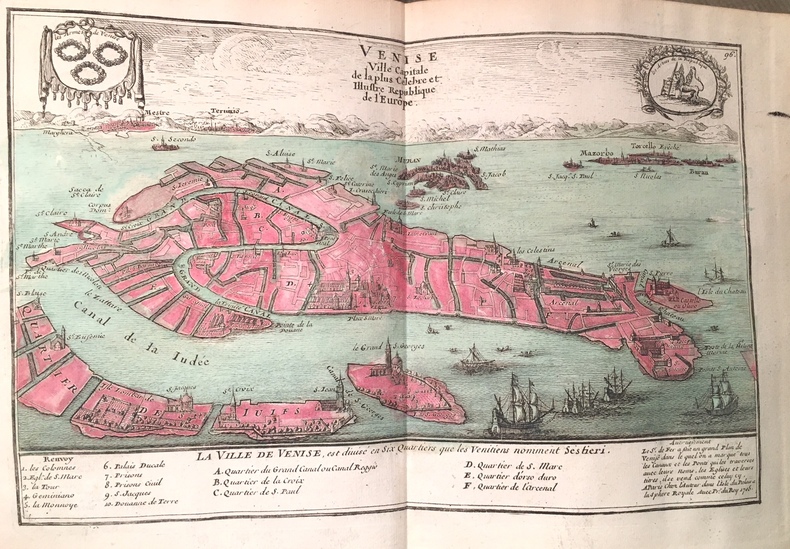
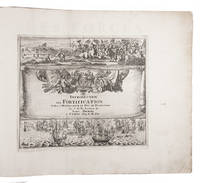
1705B2350Paris: Nicolas de Fer c. 1705. Upper fore-corner of the Toulon Grenoble St. Esprit Verceil and Veue de Verue plates all repaired professionally; otherwise a very good copy text and maps are clean and crisp. Binding: Recent ½ calf with contemporary marbled boards spine in five compartments of raised bands gilt title on two endpapers renewed. With 172 engraved plates by Nicolas de Fer and 8 in-text plates including the title. Notes: Introduction a la Fortification was a famous atlas at its timefirst published in 1690-1695. <br>The author Nicolas de Fer inherited his father’s cartography business. Being a prolific cartographer his reputation grew such that he became the official geographer of King Louis XIV of France and King Philip V of Spain. He made maps of both North America and Europe notably including maps of the War of Spanish Succession. <br> Size: Oblong folio Illustration: With 172 engraved plates by Nicolas de Fer and 8 in-text plates including the title. Lacks 9 plates St. Malo Environs de St. Malo Gravelines Nieuport Combat de Leuse Liege Camp de Weil and Civita Vecchia; but has 5 extras not called for in the plate list Aire Hesdin Menin Batavia and Quebec. Pages: P. plate index title engraved maps and text plates. Category: Book Atlas & Cartography; Book Military Nicolas de Fer hardcover
17284155Paris, de Beaurain Geographe du Roy, 1728. 1728 1 vol. in-4° (273 x 250 mm) de : 1 titre manuscrit avec lettres caligraphiées en rouge, bleu et or dans un encadrement de frises ; [188] ff. (dont 50 ff. de texte sur double page, 5 ff. de texte sur page simple, 133 cartes et planches sur double page dont 13 dépliantes). (Corps d'ouvrage très frais). Plein maroquin brun d'époque, dos à nerfs orné, triple encadrement de filets dorés sur les plats avec fleurons angulaires, roulette dorée sur les coupes, dentelles intérieures tranches dorées.
170223526Paris 1702. Oblong 1mo 30 x 37 cm. chez l'auteur" = Nicolas de Fer a false imprint Contemporary tanned sheepskin sewn on 5 cords gold-tooled spine with the title in the 2nd of 6 compartments. Ad 1 with 10 letterpress title pages in red and black for the 10 parts; 5 engraved titles for parts 1-5 that for part 5 repeating that for part 2; plus 234 beautifully engraved plates a few folding with 366 maps and views of fortified cities. Ad 2 with an engraved title page 2 letterpress title pages in red and black and 40 engraved plates including 2 folding labelled A-S in part 1 and T-Oo in part 2. 2 works in 12 parts or volumes bound as 1. Splendid atlas of fortifications of the cities of Europe plus Malta and some other Mediterranean sites combined with a maritime atlas of the French coasts published by Pieter Mortier 1661-1711. Both are based on the similar publications of Nicolas de Fer 1646-1720 and falsely indicate that they were published by him.Ad 1: The atlas of fortified cities of Europe. Many of the plans show the work of the greatest 17th-century masters of the art and science of fortification including Samuel Marolois Simon Stevin and Sébastien Le Prestre de Vauban. The last two parts contain primarily smaller maps printed 4 to the page. Ad 2: The maritime atlas of the coasts of France. It also shows the fortifications along the coasts so it complements the fortifications atlas and was clearly designed to match it in format and style. With the caption of one plate cut off and 2 plates and 1 letterpress title-page somewhat browned. Further in good condition. A couple plates are bound in the wrong volume. A splendid fortifications atlas.l Ad 1: Muller Historieplaten 3034a; cf. Pastoureau Atlas français IX A & H pp. 203-209 213: Paris Fer ed. 1690-1695 & Amsterdam Mortier ed. 1702 with different title; Phillips pp. 256-7 other ed.; Ad 2: Muller Historieplaten 3034a; Pastoureau Les atlas français XVIe-XVIIe siècles Fer VIII B p. 203 cf. pp. 201-203; for Mortier see: Koeman III pp. 4-10 and IV p. 423. unknown