399 résultats
18218512AB1821. 2 Tle. in 1 Bd. Paris l'auteur und Bechet 1821. 4°. 23 lith. Taf. XI 1 269 S. 13 Bl. Marmor. Pp.-Bd. im Stil d. Zt. Erste französische Ausgabe der beiden Hauptwerke 'The natural history of the human teeth' 1803 und 'The history and treatment of diseases of the teeth' 1806 des englischen Zahnarztes Joseph Fox 1775-1816 die zusammen in einem Band mit zahlreichen Zusätzen und Richtigstellungen 1814 in 2. Auflage erschienen. Diese ist die Grundlage der französischen Übersetzung des Pariser Zahnarztes Joseph-Jean-François Lemaire 1732-1834. - Crowley 905; Waller 10626; Heirs of Hippocrates 1314 zur engl. Ausgabe 1814: 'As the first lecturer on dentistry at Guy' Hospital Fox had an enormous impact on early 19th century dental practices. His operative procedures remained in vogue for more than fifty years. This treatise was in its day the most complete work of its kind and was the first to give specific operative procedures for correcting dental irregularities.' - Garrison/Morton 3679 und 3679.1 engl. EA 1803 bzw. 1806: 'Fox's classic treatise on the teeth. is the first work on orthodontics. By some of the authorities his book is considered mor valuable than Hunter's No. 3676. - Trotz Beschnitts in neuerer Zeit noch breitrandiges Exemplar auf kräftigem Papier. Gering gebräunt und stellenweise etwas fleckig. Leider ohne S. 129-136 diese durch Photokopien ersetzt. S. 137 etwas verfärbt die beiden ersten Bl. mit Eckreparatur. unknown
184750857Bruxelles: J. J. Stienon 1847. Half leather hardcover with 5 raised bands gilt. xlvi596 pp.; 2 plates and large folding map 'Europe Centrale' in rear.; 24.5x16.5 cm. Text in French / Français. - name and few notes on half title page corners bit bumped slightly browned Although very good see picture J. J. Stienon hardcover
184750858Bruxelles: J. J. Stienon 1847. Half leather hardcover gilt. xlvi5962 pp.; 2 plates and large folding map 'Europe Centrale' in rear.; 24.5x16.5 cm. Tipped-in in front of title page hand-written letter dated 1846 and signed 'B. Renard' Text in French / Français. - slightly browned Although very good see picture J. J. Stienon hardcover
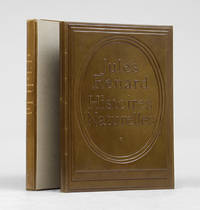
189997129Paris: Floury 1899. Toulouse-Lautrec's masterpiece of the illustrated book First edition number 84 of 100 copies only one of the most celebrated and sought-after of all livres d'artiste some of Lautrec's finest illustrations and the prototype of nearly all modern bestiairies Garvey. Lautrec and Jules Renard met first in 1894. The artist asked to illustrate some of the charming and witty portraits of animals and his first sketches were made at the Jardin d'Acclimatation and Jardin des Plantes in 1896. The last two illustrations printed were executed by Lautrec while he was a patient at the Neuilly clinic of Dr Sémalaigne. Renard's Histoire naturelles "contains some of Toulouse Lautrec's most refined draftsmanship and with Yvette Guilbert it is considered one of the masterpieces of the illustrated book. It was Lautrec who requested the pleasure of illustrating Renard's bestiary and Renard agreed hoping for descriptions that 'would please the animals themselves'. The two creative personalities clashed. Lautrec resented the book's limitation to mundane animals while Renard although paid homage to by a cover design of a fox objected to a number of Lautrec's drawings. Today we are amazed that it took Floury twenty years to sell out the edition of 100 copies" Donson/Gripp. Small folio 310 x 220 mm. With an original transfer lithograph to front wrapper on Japan paper and 22 throughout the text on vélin paper by Toulouse-Lautrec. Finely bound in 1973 by Pierre Lucien Martin 1913-1985 in olive green modelled calf titles to covers in raised lettering. Housed in a matching quarter calf chemise and slipcase. Foot of spine lightly rubbed with one small nick contents fresh; slipcase slightly sunned and rubbed. A finely bound copy. Adhémar 333-355; The Artist and the Book 304; Delteil 297-319; Donson/Gripp Great Lithographs by Toulouse-Lautrec nos. 78/79; Garvey 304 "Now one of the greatest rarities of the 19th century. Not only does it contain some of Lautrec's finest illustration but it is the prototype of nearly all modern bestiaries"; Rauch 17; Wittrock Toulouse-Lautrec I 202-224. unknown
1808Jan004<p>FOX Charles James<br /><em><br /></em><em><strong>A history of the early part of the reign of James the Second with an introductory chapter.</strong></em><br />London Large 4to First edition. Printed for William Miller. 1808. <br />Pp. xl 293 ii cli. Contemporary Tree Calf with extensive gilding on the covers and the spine photos. FINE copy text block is clean bright tight and without any markings or inscriptions. End papers are marbled with the book plate of John Clerk Brodie. This attractive copy is in exceptional condition.</p> William Miller hardcover
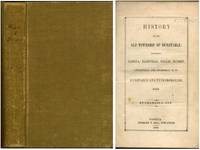
1846SKU1024286Charles T. Gill Publisher 1846. Hardcover. Good. Charles T. Gill Publisher; Nashua 1846. Hardcover. Good olive green cloth binding with handwritten title on spine moderate handling/rub marks to boards and spine binding shaky bumped bottom front board corners moderate shelf wear/rub marks some sunning to pages some age toning throughout pulpy text block edges cracked hinges multiple previous owners info on front free endpaper front free endpaper glued together with frontis-piece previous owner name in faint ink on title page top part of title page cut off and not present couple of ink and pencil notes to appendix pages three tears to top edge rear free endpaper without Dust wrapper. Overall a good copy. 8vooctavo or approx. 6 x 9 inches 278pp. appendix errata in rear. We pack securely and ship daily with delivery confirmation on every book. The picture on the listing page is of the actual book for sale. Additional Scans are available for any item please inquire. Charles T. Gill, Publisher hardcover
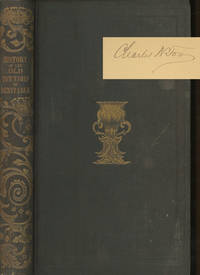
1846s00028466Nashua: Charles T. Gill 1846. First printing. Hardcover. Very Good. First edition 1846. Cloth hardcover with gilt title on the spine and gilt flourish on the front cover all edges gilt illustrated 278 pp. clean unmarked text Very Good copy small old bookseller blindstamp on the front flyleaf soiling or age-toning to some pages some soiling and discoloration to the book's covers light rubbing and wear to the edges of the book's covers including minor fraying or loss at the tips no dust jacket. Errata slip tipped in at rear. Uncommon book. NOT signed by the author on the front flyleaf as the book was published after Mr. Fox's death but some rascally rabbit made it appear as though Fox signed it. Charles T. Gill hardcover
180854984Philadelphia:: Printed by Abraham Small 1808. First US edition. old full mottled sheep. . Old ownership signature at head of title page; foxing to about have of the text; binding tight sound and attractive. 8vo. Printed by Abraham Small, unknown
1827FB4236 /23<p>Green cloth binding with white title plate on the spine.</p><p>Originally sold by John Fox. Pontefract</p><p>Green cloth binding with white title plate on the spine. Fine plates with superb pull out map of early Pontefract</p><p>First edition of this scarce work.</p><p>A history of the market town of Pontefract in West Yorkshire England. With reference to the sieges upon its castle and the Royalist sympathies of the town during the English Civil War. Written by George Fox.</p><p>Pontefract is a historic market town in the Metropolitan Borough of Wakefield in West Yorkshire England east of Wakefield and south of Castleford. Historically part of the West Riding of Yorkshire it is one of the towns in the City of Wakefield district and had a population of 30881 at the 2011 Census. Pontefract's motto is Post mortem patris pro filio Latin for "After the death of the father support the son" a reference to the town's Royalist sympathies in the English Civil War. Small villages and settlements in the immediate area include Stapleton.</p><p>Painting of Pontefract Castle in the early 17th century</p><p>by Alexander Keirincx</p><p>After the Norman conquest in 1066 almost all of Yorkshire came under the ownership of followers of William the Conqueror one of whom was Ilbert de Lacy who became the owner of Tateshale Tanshelf where he began to build a castle. Pontefract Castle began as a wooden motte and bailey castle built before 1086 and later rebuilt in stone. The de Lacys lived in the castle for more than two centuries and were holders of the castle and the Honour of Pontefract from 1067 until the death of Alice de Lacy in 1348.</p><p>King Richard II was murdered at the castle in 1400. Little is known of the precise nature of his demise; in particular Shakespeare may have "adjusted" the facts for his own purposes. There are at least three theories which attempt to explain his death: either he was starved to death by his keepers he starved himself to death or he was murdered by Sir Piers Peter Exton on 14 February 1399 or 1400.</p><p>Robin Hood and the outlaw's Pontefract connection: The town of Pontefract and the village of Wentbridge are of central importance to the legend of Robin Hood as it was told in the Middle Ages. The Fifteenth century Robin Hood ballads place the outlaw's activities in the forest of Barnsdale the southern edge of which bordered modern Wakefield. The earliest surviving manuscript of a Robin Hood ballad "Robin Hood and the Potter" makes reference to Wentbridge: "'Y mete hem bot at Went breg' seyde Lytyll John" 'I met him but at Wentbridge' said Little John. Likewise the Fifteenth Century ballad "A Gest of Robyn Hode" appears to make a cryptic reference to the village by depicting a friendly knight explaining to Robin that he 'went at a brydge' where there was 'a wraste-lyng' wrestling. Significantly the Gest of Robyn Hode makes a very specific reference to a location within Wentbridge known as 'the Saylis' and 'the Sayles' as in a four line stanza the outlaw chief instructs his Merry Men to</p><p>Walk up to the Saylis And so to Watling Street And wait after some uncouth guest Upon Chance you may them meet</p><p>The 19th-century antiquarian Joseph Hunter identified the site of the Saylis: a small tenancy of one-tenth of a knight's fee i.e. a knight's annual income located on high ground 500 yards 457.2 metres to the east of the village of Wentbridge in the manor of Pontefract. The Saylis is recorded as having contributed towards the aid that was granted to King Edward III in 1346–47 for the knighting of his son the Black Prince. The late great historians Richard Barrie Dobson and John Taylor indicated that this location provides a very specific clue to Robin Hood's Pontefract heritage noting that such evidence of continuity makes it virtually certain that the Saylis or Sayles which was so well known to the Robin Hood of the "Gest'' survived into modern times as the 'Sayles Plantation' near Wentbridge. To commemorate this English Heritage has located a Blue Plaque on the bridge that stands in the heart of the village above the River Went lending weight to Pontefract's claims to be the true home of Robin Hood.</p><p>Woodcut of Robin Hood from a 17th-century broadside</p><p>Wentbridge is a small village in the City of Wakefield district of West Yorkshire England. It lies around 3 miles 5 km southeast of its nearest town of size Pontefract close to the A1 road. During the Middle Ages the village of Wentbridge was itself sometimes referred to by the name of Barnsdale because it was the main settlement in the Forest of Barnsdale. The county boundary follows the A1 from the River Went to Barnsdale Bar which is the southernmost point of North Yorkshire. Close by to the southwest is the Roman Ridge a Roman road known in the Middle Ages as Watling Street closely follows the course of the modern-day A639. It was at one time prior to modern construction works being completed possible to look down from the Saylis upon Watling Street as it snaked through the village of Wentbridge and it is upon this stretch of highway that Robin Hood and his Merry Men are believed to have committed their famous heists. Earlier historians have usually assumed that this district was heavily wooded. However aerial photography and excavation have shown that the region has always been a largely pastoral landscape dotted with occasional settlements. In close proximity to the village of Wentbridge there are or were some notable landmarks which relate to Robin Hood. The earliest-known Robin Hood place-name reference – in Yorkshire or anywhere else – occurs in a deed of 1322 from the two cartularies of Monk Bretton Priory near the town of Barnsley. The cartulary deed refers in Latin to a landmark named 'the Stone of Robert Hode' Robin Hood's Stone which was located in the Barnsdale area. According to J. W. Walker this was on the eastern side of the Great North Road a mile south of Barnsdale Bar. On the opposite side of the road once stood Robin Hood's Well which has since been relocated six miles north-west of Doncaster on the south-bound side of the Great North Road.</p><p>Further evidence of Robin Hood's Wakefield connections comes by way of Michael Drayton's Poly-Olbion Song 28 67–70 composed in 1622. The poem strengthens Robin Hood's connections to Pontefract because it speaks of the outlaw's death and clearly states that the outlaw died at 'Kirkby'. Kirkby was an Anglo-Saxon settlement upon which the modern town Pontefract stands. In 2014 the historian Dr S. A. La' Chance published a thesis that detailed how a notorious medieval outlaw named Swein-Son-Of-Sicga and styled by contemporaries as 'The Prince of Thieves' inhabited the forested areas of Barnsdale on the outskirts of Pontefract and made a living by robbing amongst others Abbot Benedict of Selby. Professor J. Green indicates that Hugh Fitz Baldric the late eleventh century Sheriff of Nottingham and Yorkshire held responsibility for bringing Swein-Son-Of-Sicga to justice. Acknowledging this La' Chance suggested that the Robin Hood legend is loosely based upon the deeds of Swein-Son-Of-Sicga. La' Chance closed his thesis by suggesting that in all likelihood the outlaw drew his final breath at Saint Nicholas's hospital Kirkby modern day Pontefract which would account for the reference to Robin Hood's death in the Poly-Olbion.</p> Longman, Rees, Orme & Brown. hardcover
1890SSSrsRUS52London: L.Upcott Gill c1890. 1890. small 8vo. pp. viii 72 16ads. 1 text illus. original black & gilt-stamped cloth extremities trifle frayed several library blindstamps number at upper outer corner of upper cover pocket on rear paste-down. First Edition. F. Hardcover. London: L.Upcott Gill, [c1890]. Hardcover
18821410007New York: E. B. Treat 1882. Hardcover. Quarto 6 2 7-198 pages plus xxxii plates. In Very Good condition. Rebound in dark brown leather quarter binding with green cloth boards and new endpapers; spine paneled with gilt fillets and titling. Very light wear to boards with some small scuffs present and light rubbing along edges. Text block shows moderate wear and toning along edges. Light age toning and sparse foxing throughout. Scattered faint smudges on some pages. Shelved in Room F Oversize. 1410007. Special Collections. E. B. Treat hardcover
1896447056London: Bellairs & Co 1896. Hardcover. Very Good. First edition. 295pp. Two drawings in color by Finch Mason. Three quarter red leather gilt-stamped spine top edge gilt. Paper with owner's gift inscription mounted on to blank preliminary page extremities worn leather dry very good. Bellairs & Co hardcover
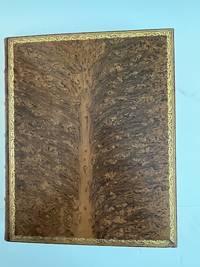
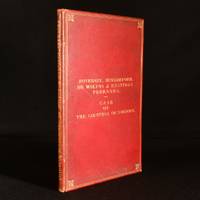
1870911F11London: Edward Walmisley 1870 . First edition. Leather. Very Good. 13.5" by 9". None. A vanishingly scarce publication of the case presented by Edith Maud Countess of Loudoun concerning her right to inherit the baronies of Botreaux Hungerford De Molyns and Hastings. A very scarce work.With three folding genealogical tables.Edith Maud Rawdon-Hastings 10th Countess of Loudoun was a Scottish peer. In this case presented to the House of Lord her legal team detail the genealogy of her family and assert her right to inherit the baronies of Botreaux Hungerford De Molyns and Hastings.The case is signed by Henry Fox Bristowe and J. H. Hodgson counsel for the petitioner.A very scarce attractively bound volume offering insight into inheritance and the peerage in the Victorian period. In a full morocco binding with gilt detailing. Externally bright. Light rubbing to back strip head and tail with areas of significant rubbing to rear joint. Front hinge strained but firmly held. Internally firmly bound. Pages clean and bright with only the odd spot. Very Good Edward Walmisley hardcover
1841F0193Grätz, Kienreich, 1841. Frontispiz, Titelvignetten, einige Textabbildungen, 4 lithographierte, tw. gefaltete Tafeln. 416 S.,2 Bl. 104 Nr. in 1 Band. Pappband der Zeit m. handschriftlichem Rückenschild. Zustand 3, Decke braunfleckig, Ecken u. Kanten stärker bestoßen, 2 kleine Fraußspuren, tw. stockfl., 1 Bl. herausgerissen (anliegende Bl. eingerissen), feste Bindung.
1808his 98William Miller 1808. Book. Very Good. Hardcover. Signed by Authors. FIRST. A good plus first edition in full original leather. worn on edges Armorial bookplate of the SHIRLEY family. signed by Sir Shirley.This the Bulmer edition large folio. William Miller Hardcover
1866952P18London: E. Dallow; Diprose & Bateman; Longmans Green Reader and Dyer. 1866-73. First edition. Cloth. Near Fine. 8" by 5.5". None. Three scarce works by and about John Stuart Mill bound in one volume regarding manhood suffrage and the Ireland question. Three works by and about John Stuart Mill bound in one volume.Containing:'John Stuart Mill: Notices of His Life and Works' the first edition of this very scarce work by Henry Fox Bourne reprinted from 'The Examiner' dated 1873. A concise biographical work on Mill.'Speech of J. Stuart Mill ESQ. M.P. For Westminster Upon the Reform Bill Delivered in the House of Commons April 13th 1866' the first edition of this very scarce work dated 1866. This speech regards manhood suffrage and the abortive Reform Bill 1866.'England and Ireland' the second edition of this scarce work dated 1868. An insightful essay on the unrest in Ireland in particular after the Fenian Rising. Rebound in a modern cloth binding. Externally fine. Internally firmly bound. Pages are very lightly age-toned and clean with only a few light spots. Near Fine E. Dallow; Diprose & Bateman; Longmans, Green, Reader and Dyer. hardcover
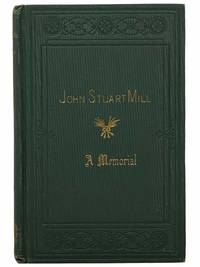
18732308993New York: Henry Holt and Company 1873. Hard Cover. Very Good/No Jacket. 0x0x0. Henry Holt reissue of Osgood edition. Top edge foxed otherwise an excellent copy. 1873 Hard Cover. 96 pp. Green cloth gilt titles blind-stamped borders. A collection of biographical sketches of the English philosopher intended as a memorial by his contemporaries. Includes: A Sketch of His Life; His Career in the India House; His Moral Character; His Botanical Studies; His Place as a Critic; His Work in Philosophy; His Studies in Morals and Jurisprudence; His Work in Political Economy; His Influence at the Universities; His Influence as a Practical Politician; His Relation to Positivism; His Position as a Philosopher. Contributors include: Herbert Spencer; H.R. Fox Bourne; W.T. Thornton; Henry Trimen; W. Minto; J.H. Levy; W.A. Hunter; J.E. Cairnes; Henry Fawcett; Millicent Garrett Fawcett; Frederic Harrison. "John Stuart Mill 20 May 1806 - 7 May 1873 usually cited as J.S. Mill was an English philosopher political economist and civil servant. One of the most influential thinkers in the history of classical liberalism he contributed widely to social theory political theory and political economy. Dubbed "the most influential English-speaking philosopher of the nineteenth century" he conceived of liberty as justifying the freedom of the individual in opposition to unlimited state and social control. Mill was a proponent of utilitarianism an ethical theory developed by his predecessor Jeremy Bentham. He contributed to the investigation of scientific methodology though his knowledge of the topic was based on the writings of others notably William Whewell John Herschel and Auguste Comte and research carried out for Mill by Alexander Bain. He engaged in written debate with Whewell. A member of the Liberal Party and author of the early feminist work The Subjection of Women Mill was also the second Member of Parliament to call for women's suffrage after Henry Hunt in 1832. Henry Holt and Company hardcover
1839036182Philadelphia: Kimber & Sharpless. Full leather covers cracked at hinges leather scuffed and peeled owner names foxed otherwise good. . Good- Good. Full Leather. 1839. Kimber & Sharpless hardcover
1864597376Published by G.P. Friend 1864. 1st edition. Hardback. Very Good. Very good condition with no wrapper. Red embossed cloth gilt titles and vignette. 26 original mounted albumen photographs. 172 pages. Book: Inscription in ink to front endpaper. Rebacked some time ago with original spine laid down. Covers very slightly grubby. Published by G.P. Friend hardcover
1892009172Paris: Paul Ollendorff Editeur 1892. Book. Very Good Plus. Hardcover. First Edition. 12mo - over 6¾" - 7¾" tall. Bound in contemporary quarter red buckram over marbled boards marbled end papers. Very Good Plus the pages uniformly browning spine ever so slightly sunned and title label a bit rubbed. The author's first successful novel basis for a 1964 TV movie in France. Paul Ollendorff, Editeur Hardcover
186322388Paris: Charles Douniol 1863. Fine. Charles Douniol Paris 1863 16 x 25 cm broché First edition published in a small number of copies of this offprint from Le Correspondant. Autograph inscription by Léon Renard at the head of the front cover expanded with a second autograph signature by the author a little lower. Covers stained at foot minor interior foxing a pale marginal dampstain on the half-title page. Rare. Charles Douniol unknown
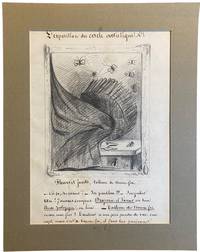
18605293Liége: NP 1860. First edition - an original sketch / caricature believed to be signed and drawn by Renard / Draner. Entitled "L'Exposition du cercle artistique No. 5" to the top of the sketch this is drawn in pencil and signed ink with the title and text below in black ink. It is a good clean image with a touch of foxing / marking only. Now framed under an olive green passe partout and plastic protective cover. This has been professionally framed and so is sealed to the edges. As a result we haven't been able to examine the page outside of the mount. Sketch is 27cm x 19.5cm. Mount is 34.5cm x 27cm. A discarded basket is surrounded by flies and spider's webs. The commentary below states that this is a strange approach to the subject but in good faith! Jules Renard 1833-1926 known by the pseudonym Draner was a Belgian painter illustrator and caricaturist. Born in Liege he moved to Paris in 1861. He became known for his military caricatures and his work as a costume designer for theatre and opera houses in Paris. He died in Paris in 1926 at the age of 92. Première édition - une esquisse / caricature originale que l'on croit signée et dessinée par Renard / Draner. Intitulée "L'Exposition du cercle artistique No. 5" en haut de l'esquisse celle-ci est dessinée au crayon et signée à l'encre avec le titre et le texte en dessous à l'encre noire. Il s'agit d'une bonne image propre avec une touche de rousseur/marquage seulement. L'œuvre est maintenant encadrée sous un passe partout vert olive et une housse de protection en plastique. Elle a été encadrée par un professionnel et est donc scellée sur les bords. Par conséquent nous n'avons pas été en mesure d'examiner la page en dehors de l'encadrement. L'esquisse mesure 27 cm x 195 cm. Le support mesure 345 cm x 27 cm. Un panier abandonné est entouré de mouches et de toiles d'araignées. Le commentaire ci-dessous indique qu'il s'agit d'une approche étrange du sujet mais en toute bonne foi ! Jules Renard 1833-1926 connu sous le pseudonyme de Draner était un peintre illustrateur et caricaturiste belge. Né à Liège il s'installe à Paris en 1861. Il s'est fait connaître par ses caricatures militaires et son travail de costumier pour le théâtre et l'opéra de Paris. Il est mort à Paris en 1926 à l'âge de 92 ans. NP unknown