DARWIN CharlesABAA

7 255 résultats
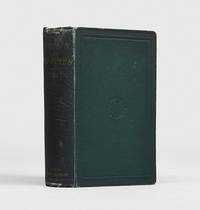
1871286611London: Murray 1871. First. hardcover. very good. 2 volumes. Illustrations within the text. viii 423 1 16; viii 2 475 1 16 pages. Short 8vo publisher's original green cloth covers spotted & lightly worn at ends and tips; small ownership signatures at top of titles else rather clean pages. London: John Murray 1871. First printing of the first edition -- with "transmitted" as first word of page 297 in first volume and Errata on verso of title in 2nd volume; includes 16pp publishers advertisements at the back of each volume dated January 1871. Overall a very good copy of this important book.<br/><br/> "This is really two works. The first demolished the theory that the universe was created for Man while in the second Darwin presented a mass of evidence in support of his earlier hypothesis regarding sexual selection." GM 170. The Descent of Man was the first work to use the word 'evolution' preceding its use in The Origin of Species 6th edition by one year. Scarce as only 2500 copies of this first issue were published in February.<br/><br/> Murray unknown books
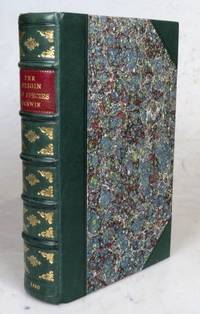
015961London: John Murray; Smith Elder Sixteen volumes uniformly bound. SIGNED BINDINGS BY ZAEHNSDORF BINDERY. The Zaehnsdorf Bindery was one of the leading binders in England founded in 1842 sold in 1947. This set was bound in the early 1900's. All volumes have been rebacked by master binders at Green Dragon Bindery in Shrewsbury MA. Some gutters re-inforced with contemporary papers. Spines are designed in gilt and red titled in gilt. Blue marbled paper-covered boards. Marbled endpapers. Book-plate of IRVING FISHER on pastedown of each volume. Fisher 1867-1947 was an American mathematical economist inventor and eugenicist. Top edges gilt. Crisp and clean throughout. All volumes have been collated complete. One book "A Naturalist's Journal." has a larger format demi octavo. The books and printing details are listed below. Please see photos. 1 "The Origin of Species by Means of Natural Selection" sixth edition 34th thousand John Murray 1890 two volumes; 2 "The Descent of Man and Selection in Relation to Sex" second edition 22nd thousand John Murray 1888 two volumes; 3 "The Various Contrivances By Which Orchids are Fertilised by Insects" second edition fifth thousand John Murray 1890; 4 "The Effects of Cross and Self Fertilisation in the Vegetable Kingdom" third edition John Murray 1891; 5 "The Formation of Vegetable Mould Through the Action of Worms" eleventh thousand John Murray 1888; 6 "The Expression of the Emotions in Man and Animals" second edition edited by Francis Darwin John Murray 1890; 7 "The Variation of Animals and Plants Under Domestication" second edition seventh thousand two volumes John Murray 1890; 8 "Geological Observations on the Volcanic Islands and Parts of South America Visited During the Voyage of H.M.S. Beagle" third edition Smith and Elder 1891; 9 "Insectivorous Plants" second edition John Murray 1888; 10 "The Structure and Distribution of Coral Reefs" third edition Smith and Elder 1889; 11 "The Movements and Habits of Climbing Plants" fifth thousand John Murray 1891; 12 "The Different Forms of Flowers on Plants of the Same Species" third thousand John Murray 1888; 13 "Journal of Researches into the Natural History and Geology of the Countries Visited During the Voyage Round the World of H.M.S. Beagle Under the Command of Captain Fitz Roy" new edition 1890. An unusual and likely "one-of-a- kind" collection of Darwin works including the classics "Origin of Species" and "Descent of Man". Charles Darwin1809-1882 was a noted English naturalist geologist biologist widely-respected for his contributions to evolutionary biology. He in interred in Westminster Abbet not far from Sir Isaac Newton. Please see photo. The association with the eugenicist Irving Fisher book-plates adds interest to the set. Postage will be higher due to the size of the collection. . Multiple Editions. 1/2 Cobalt Blue Morocco. Minor Edge and Corner Wear/No Dust Jackets. Crown Octavo. John Murray; Smith, Elder Hardcover
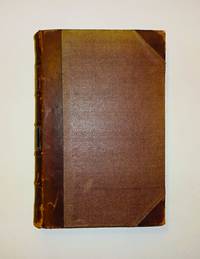
1860033209New York: D. Appleton & Co 1860. Book. Very Good. Hardcover. First American Edition. 432pp. First American edition first issue with two quotes opposite the title page.Gilt lettering on the spine is darkened. Spine professionally rebacked the original spine present. Bound in pebbled brown cloth brown endpapers and the foldout chart is present and in excellent condition. The corners of the front panel show moderate wear. Prev. owner's name in pencil on the front free endpaper and the title page. The hinges are tight and the text block is clean. Overall a very well preserved copy of this classic work. Darwins theory argued that organisms gradually evolve through a process he called natural selection. In natural selection organisms with genetic variations that suit their environment tend to propagate more descendants than organisms of the same species that lack the variation thus influencing the overall genetic makeup of the species. Size: Octavo. D. Appleton & Co Hardcover
47354by means of natural selection or the preservation of favoured races in the struggle for life. London : John Murray 1872. Sixth edition with additions and corrections eleventh thousand. Octavo modern full crushed blue Morocco with gilt ornamental edging spine in compartments with raised bands lettered and tooled in gilt gilt dentelles marbled endpapers pp xxi blank 458 folding lithographed plate; light scattered foxing a very presentable copy. The first printing of the sixth edition - the final authoritative edition of one of the most important texts in the history of science. The first edition of 1859 a great rarity is described in Freeman as "". the most important biological work ever written.""; Dibner "". the most important single work in science.""; Printing & the Mind of Man "". revolutionized our methods of thinking and our outlook on the natural order of things. The recognition that constant change is the order of the universe had been finally established and a vast step forward in the uniformity of nature had been taken"". The sixth edition extensively rewritten by Darwin removed the word 'On' from the title 'On the origin of species' and includes rebuttal of Roman Catholic biologist St. George Mivart's theological arguments in his 1871 text On the Genesis of Species. Printed in a run of 3000 copies it is significant for including the use of the word 'evolution' for the first time in furtherance of Darwin's argument for natural selection. It is the last edition published in Darwin's lifetime and includes extensive revisions and rewriting by the author. The sixth edition includes all Darwin's revisions since On the origin of species was first released in 1859 and is considered the definitive text for what many consider to be the most significant scientific book ever published. The first printing of the sixth edition ie: Eleventh thousand is bibliographically and scientifically significant and is notably scarce in the market. All later imprints are in essence reprints of this edition. Freeman 391 Â hardcover
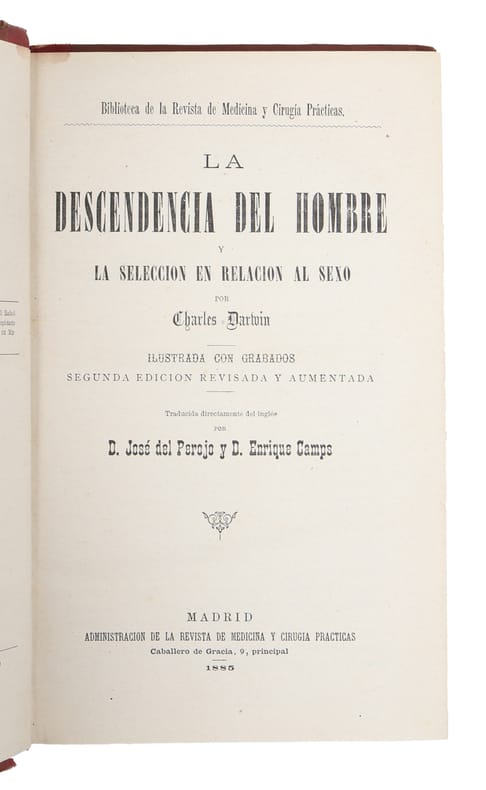
188562338Madrid, Administracion de la Revista de medicina y cirugia practicas, 1885. 8vo. In contemporary red half calf with gilt lettering to spine. Light wear to extremities, cloth-boards with repairs. Inner hinges split. Bookbinder-stamp to front free end-paper. Internally very fine and clean. VIII, 725 pp.
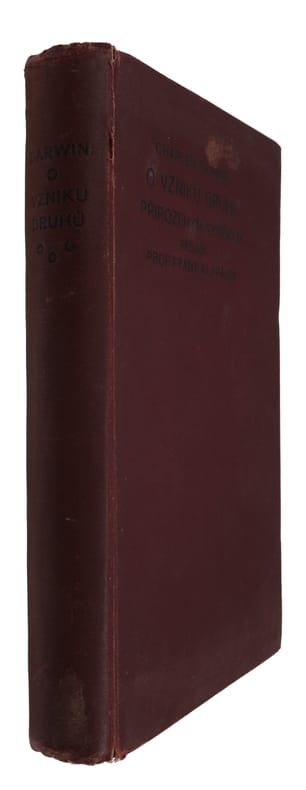
191461622Praze [Prague], Nákladem Autorovým, 1914. 8vo. In the original red binding with black lettering to spine and front board. Light wear to extremities, inner fronthinge pleit, Internally nice and clean. 389, (1) pp. + 1 folded plate.
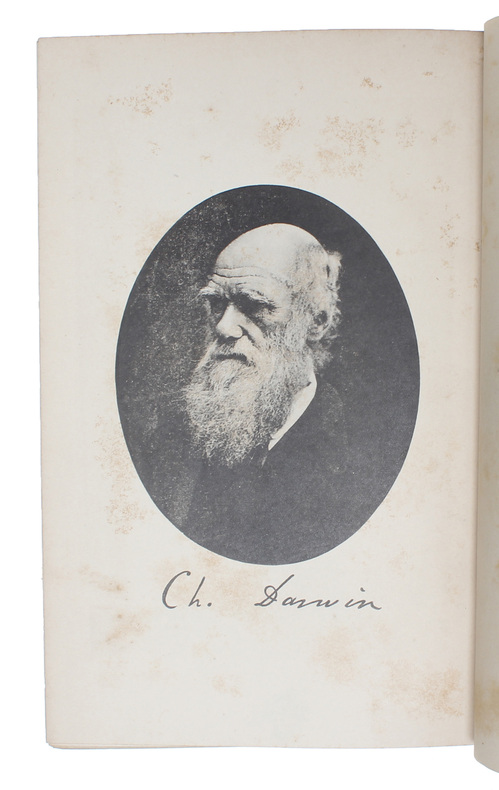
190555802Tokyo, Tokyo Kaiseikan, Meiji 38 [1905]. 8vo. In the original full bloth cloth with gilt letteing (in both Japanese and Latin characters). Light occassional brownspotting, otherwise a fine copy. 4, 894, 28, 12 pp. + frontispiece and folded plate with genealogical tree.
188562338Madrid Administracion de la Revista de medicina y cirugia practicas 1885. 8vo. In contemporary red half calf with gilt lettering to spine. Light wear to extremities cloth-boards with repairs. Inner hinges split. Bookbinder-stamp to front free end-paper. Internally very fine and clean. VIII 725 pp. <br/><br/><em>A landmark in the history of Darwinism in the Spanish-speaking world this 1885 Madrid edition is the first full Spanish translation of “The Descent of Man†and without question the most important Spanish edition of Darwin’s major work on human evolution. “Segunda edición revisada y aumentada†stated on the title-page strictly refers to the fact that this phrase is translated directly from the title-page of the second edition of Darwin’s “The Descent of Man Second Edition Revised and Augmentedâ€. A earlier partial translation Barcelona 1876 was made however only the seven chapters of Part I was translated none of Darwin's footnotes are translated or mentioned and none of the illustrations are reproduced here. The translator states in his "Preface" that he is indeed summarizing much and that his intention is to give a most complete extract of Darwin's main works in one single volume. And since it's necessary to be familiar with "The Origin of Species" he believes that a good way of explaining the basics is to translate a few pages from Ernst Haeckel which occupies pp. ix to xi of said preface. He doesn't specify the source but it seems to be a translation of Haeckel's The History of Creation chapter VII paragraphs 153-161. This present edition edition is unabridged translating the full content of both volumes including Darwin’s detailed exposition on sexual selection racial theory and moral evolution accurately annotated preserving Darwin’s own footnotes and incorporating his illustrations unlike any prior Spanish attempt and being scientifically rigorous following the English second edition directly without filtering through French intermediaries or secondary paraphrases and without reference to earlier Spanish partial versions. This 1885 edition of "La descendencia del hombre" represents a key moment in the Spanish reception of Darwin’s ideas. As the first complete and direct translation of "The Descent of Man" it provided Spanish readers with full access to Darwin’s arguments on human evolution including material previously unavailable in earlier partial versions. Its continued use well into the 20th and even 21st century underscores its bibliographic importance and lasting influence - a major Spanish publisher reused this 1885 translation as late as 2019. In Darwinian thought in the Spanish-speaking world it remains a significant and foundational edition. Freeman 1122c Blanco & Llorca 124 </em> hardcover
191461622Praze Prague Nákladem Autorovým 1914. 8vo. In the original red binding with black lettering to spine and front board. Light wear to extremities inner fronthinge pleit Internally nice and clean. 389 1 pp. 1 folded plate. <br/><br/><em>The rare first Czech translation of Darwin's landmark "Origin of Species" which predates the Latvian Armenian Ukrainian Bulgarian Romanian and Slovenian translations by several years. Freeman 641 </em> unknown
190555802Tokyo Tokyo Kaiseikan Meiji 38 1905. 8vo. In the original full bloth cloth with gilt letteing in both Japanese and Latin characters. Light occassional brownspotting otherwise a fine copy. 4 894 28 12 pp. frontispiece and folded plate with genealogical tree. <br/><br/><em>Rare second translation and arguably the most important of the Japanese translation of Darwin's "Origin of Species" the first being from 1896 and only published once. This is the first translation to be made by a professional biologist. The previous translation "Seibutsu Shigen" was made by a law student which presumably was a contributing factor to the fact that the work primarily was embraced by social thinkers philosophers and politicians to advocate the superiority of Japanese culture and society and military and not by biologist and zoologist. With the present translation Darwin's ideas and theories were finally properly introduced to the people they were intended for: biologist and zoologist. The popularity of Darwin's works and theories became immensly popular in Japan: "Curiously there are more versions of "The Origin" in Japanese than in any other language. The earliest were literary with subsequent translations becoming more scientific as the Japanese developed a technical language for biology." Glick The Comparatice Reception of Darwinism P. XXII."It was as if Darwin's famous oceanic journey and the meticulous research into the animal and plant kingdoms that he spent his life undertaking had all been staged as an elaborate excuse for composing a theory whose true object was Victorian society and the fate of the world's modern nations." Golley Darwinism in Japan: The Birth of Ecology.Darwin's work had in Japan - as in the rest of the world - profound influence on the academic disciplines of zoology and biology however in Japan the most immediate influence was not on these subjects but on social thinkers: ". it exerted great influence on Japanese social thinkers and social activists. After learning of Darwin's theory Hiroyuki Kato the first president of Tokyo Imperial University published his New Theory of Human Rights and advocated social evolution theory social Darwinism emphasizing the inevitable struggle for existence in human society. He criticized the burgeoning Freedom and People's right movement. Conversely Siusui Kautoku a socialist and Japanese translator of the Communist Manifesto wrote articles on Darwinism such as "Darwin and Marx" 1904. In this and other articles he criticized kato's theory on Social Darwinism insisting that Darwinism does not contradict socialism. The well known anarchist Sakae Osugi published the third translation of On the Origin of Species in 1914 and later his translation of peter Kropotokin's Mutial Aid: A Factor of Evolution. Osugi spread the idea of mutual aid as the philosophical base of Anarcho-syndicalism." Tsuyoshi The Japanese Lysenkoism and its Historical Backgrounds p. 9 "Charles Darwin's theory of evolution was introduced to Japan in 1877 Morse 1936/1877 during Japan's push to gain military modernity through study of western sciences and technologies and the culture from which they had arisen. In the ensuing decades the theory of evolution was applied as a kind of social scientific tool i.e. social Spencerism or social Darwinism Sakura 1998:341; Unoura 1999. Sakura 1998 suggests that the theory of evolution did not have much biological application in Japan. Instead Japanese applied the idea of 'the survival of the fittest' which was a misreading of Darwin's natural selection theory to society and to individuals in the struggle for existence in Japan's new international circumstances see also Gluck 1985: 13 265.However at least by the second decade of the 1900s and by the time that Imanishi Kinji entered the Kyoto Imperial University the curricula in the natural and earth sciences were largely based on German language sources and later on English language texts. These exposed students to something very different from a social Darwinist approach in these sciences. New sources that allow us to follow" ASQUITH Sources for Imanishi Kinji's views of sociality and evolutionary outcomes p. 1."After 1895 the year of China's defeat in the Sino-Japanese War Spencer's slogan "the survival of the fittest" entered Chinese and Japanese writings as "the superior win the inferior lose." Concerned with evolutionary theory in terms of the survival of China rather than the origin of species Chinese intellectuals saw the issue as a complex problem involving the evolution of institutions ideas and attitudes. Indeed they concluded that the secret source of Western power and the rise of Japan was their mutual belief in modern science and the theory of evolutionary progress. According to Japanese scholars traditional Japanese culture was not congenial to Weastern science because the Japanese view of the relationship between the human world and the divine world was totally different from that of Western philosophers. Japanese philosophers envisioned a harmonious relationship between heaven and earth rather than conflict. Traditionally nature was something to be seen through the eyes of a poet rather than as the passive object of scientific investigations. The traditional Japanese vision of harmony in nature might have been uncongenial to a theory based on natural selection but Darwinism was eagerly adopted by Japanese thinkers who saw it as a scientific retionalization for Japan's intense efforts to become a modernized military and industial power. Whereas European and American scientists and theologians became embroiled in disputes about the evolutionary relationship between humans and other animals Japanese debates about the meaning of Darwinism primarily dealt with the national and international implications of natural selection and the struggle for survival. Late nineteenth-century Japanese commentators were likely to refer to Darwinism as an "eternal and unchangeable natural law" that justified militaristic nationalism directed by supposedly superior elites". Magner A History of the Life Sciences Revised and Expanded p. 349"Between 1877 and 1888 only four works on the subject of biological evolution were published in Japan. During these same eleven years by contrast at least twenty Japanese translations of Herbert Spencer's loosely "Darwinian" social theories made their appearance. The social sciences dominated the subject and when Darwin's original The Origin of Species Seibutsu shigen finally appeared in translation in 1896 it was published by a press specializing in economics. It is not surprising then that by the early 20th century when Darwin's work began to make an impact as a biological rather than a "social" theory the terms "evolution" shinka "the struggle for existence" seizon kyôsô and "survival of the fittest" tekisha seizon had been indelibly marked as social and political principles. It was as if Darwin's famous oceanic journey and the meticulous research into the animal and plant kingdoms that he spent his life undertaking had all been staged as an elaborate excuse for composing a theory whose true object was Victorian society and the fate of the world's modern nations." Golley Darwinism in Japan: The Birth of Ecology.Freeman 719 </em> hardcover
18605723New York: D. Appleton and Company 1860. First American Edition First Printing First Issue. First American edition first printing first issue with only two reviews facing the title page. Measuring approximately 8" x 5.25" with 432 numbered pages. <br /> <br /> This book is in good plus condition. Moderate surface wear with some cloth loss at the spine ends. Some fading to the gilt lettering on the spine. Moderate foxing to the edges of the textblock. Interior pages lightly foxed. Top of the half-title and title pages neatly trimmed by a previous owner likely to remove previous owner's name. Front endpaper nearly detached.<br /> <br /> "On the Origin of Species" is considered to be the foundation of evolutionary biology. Darwin's book introduced the scientific theory that populations evolve over the course of generations through a process of natural selection. The book presented a body of evidence that the diversity of life arose by common descent through a branching pattern of evolution.<br /> <br /> Please view the many other rare titles available for purchase at our store. We are always interested in purchasing individual or collections of fine books.<br /> <br /> Inventory #O2-74. D. Appleton and Company unknown
19342724London: Chapman and Hall Ltd. 1934. First edition. Octavo original cloth. Signed by the author on the front free endpaper "Bernard Darwin Jan 1935." An excellent copy with some information regarding the book pasted to the inside gutter in the very rare dust jacket with a few closed tears. Rare in the original dust jacket and signed. It is said Bernard Darwin invented golf writing as we know it today. He was the first golf writer to transcribe facts and figures into a branch of literary journalism and he did so with style wit and an ability to turn a phrase. Born September 7 1876 in Downe Kent Darwin's grandfather was Charles Darwin the great naturalist who proposed the theory of evolution. Bernard never trained as a journalist. After graduating from Cambridge with a law degree he became a barrister in London for a few years. But Darwin was unhappy in his work and in 1908 he gave up his career in law. "Once Darwin dipped his toe into golf writing the reports he produced regularly for The Times of London over a forty-five year period and his ruminative essays for the weekly Country Life possessed a quality that no one else has ever approached" Herbert Warren Wind wrote "We are simply very lucky that a man of his high talent was so smitten by golf that he wrote endlessly about it" Golf World Hall of Fame. Chapman and Hall, Ltd. hardcover books
1882451781882. <p>Darwin Charles 1809-82. Funeral of Mr. Darwin. Westminster Abbey Wednesday April 26th 1882 at 12 o'clock precisely . . . G. G. Bradley Dean. Printed card black-bordered with the Dean's seal in black wax in the left margin and the letters "C. H." in red ink on either side of the seal. N.p. 1882. 92 x 122 mm. Fine.</p> <p> Darwin had died at Down House on 19 April 1882 expecting to be buried in the local churchyard. His fame and reputation were such however that Huxley Galton and others felt it would be appropriate to have him buried at Westminster Abbey one of the highest honors that can be bestowed on a British citizen. As Desmond and Moore put it "getting a freethinker into the Abbey was not easy" Darwin p. 666. But Huxley stepped in supported in Parliament by Darwin's neighbor Sir John Lubbock and by a press campaign led by The Standard. The Reverend George Granville Bradley Dean of Westminster Abbey was happy to acquiesce.</p> <p> The Chapter House to which our card allows admission is where those who were to follow the coffin into the Abbey assembled: "On that grey day committees adjourned judges put on mourning dress and Parliament emptied as members trooped across the road. From embassies scientific societies and countless ordinary homes they came. Under leaden skies they converged on the Abbey anticipating the awe and spectacle of a state occasion. In the Chapter House where Parliament had once met the elders of science State and Church the nobility of birth and talent stood waiting to file though the cloisters behind the coffin. They were "the greatest gathering of intellect that was ever brought together in our country" said one' Desmond and Moore p. 672. Darwin was laid to rest beneath the monument to Newton at the north end of the choir screen. </p> . unknown books
1882451781882. <p>Darwin Charles 1809-82. Funeral of Mr. Darwin. Westminster Abbey Wednesday April 26th 1882 at 12 o'clock precisely . . . G. G. Bradley Dean. Printed card black-bordered with the Dean's seal in black wax in the left margin and the letters "C. H." in red ink on either side of the seal. N.p. 1882. 92 x 122 mm. Fine.</p> <p> Darwin had died at Down House on 19 April 1882 expecting to be buried in the local churchyard. His fame and reputation were such however that Huxley Galton and others felt it would be appropriate to have him buried at Westminster Abbey one of the highest honors that can be bestowed on a British citizen. As Desmond and Moore put it "getting a freethinker into the Abbey was not easy" Darwin p. 666. But Huxley stepped in supported in Parliament by Darwin's neighbor Sir John Lubbock and by a press campaign led by The Standard. The Reverend George Granville Bradley Dean of Westminster Abbey was happy to acquiesce.</p> <p> The Chapter House to which our card allows admission is where those who were to follow the coffin into the Abbey assembled: "On that grey day committees adjourned judges put on mourning dress and Parliament emptied as members trooped across the road. From embassies scientific societies and countless ordinary homes they came. Under leaden skies they converged on the Abbey anticipating the awe and spectacle of a state occasion. In the Chapter House where Parliament had once met the elders of science State and Church the nobility of birth and talent stood waiting to file though the cloisters behind the coffin. They were "the greatest gathering of intellect that was ever brought together in our country" said one' Desmond and Moore p. 672. Darwin was laid to rest beneath the monument to Newton at the north end of the choir screen. </p> . unknown
1920feb0107<p>1920 - 1936. First Chinese Edition of On the Origin of Species by Means of Natural Selection or the Preservation of Favoured Races in the Struggle for Life in 4 Volumes by Charles Darwin <br /><br />å¥ å®šç”Ÿç‰©è¿›åŒ–ç†è®ºåŸºç¡€çš„é‡è¦è‘—作。<br /><br />Used book For more details and availability please contact me</p> Zhonghua Book Company paperback
1864feb02681<p>1864. First Italian Edition - On the Origin of Species by Means of Natural Selection or the Preservation of Favoured Races in the Struggle for Life by Charles Darwin.<br />Sull'origine delle specie per elezione naturale ovvero conservazione delle razze perfezionate nella lotta per l'esistenza by Charles Darwin</p><p>Used book For more details and availability please contact me</p> Modena hardcover
1875182454London: John Murray 1875. A meticulous study of botanical evolution First edition first issue in particularly fresh condition. Darwin consulted leading physiologists and chemists in this experimental work to show that carnivorous plants adapted to trap and digest insects enabling them to survive in poor soil. Two of the woodcuts figures 7 and 8 are after drawings by Darwin himself while several are after drawings by his sons George and Francis. Darwin started researching insectivorous plants in 1860 after observing a sundew while resting in Sussex. "During subsequent years whenever I had leisure I pursued my experiments and my book on 'Insectivorous Plants' was published in July 1875 - that is sixteen years after my first observations. The delay in this case as with all my other books has been a great advantage to me; for a man after a long interval can criticise his own work almost as well as if it were that of another person. The fact that a plant should secrete when properly excited a fluid containing an acid and ferment closely analogous to the digestive fluid of an animal was certainly a remarkable discovery" van Wyhe. The finished book discussed the whole range of such plants their adaptations and evolutionary relationships and their specialized digestive processes. Octavo. Woodcuts in text. Original green cloth spine lettered and decorated in gilt covers panelled in blind brown coated endpapers. Bookplate of Henry Wade Deacon 1852-1932 son of chemist and industrialist Henry Deacon; contemporary bookseller's ticket of G. G. Walmsley Liverpool to front pastedown. Cloth bright and unmarked extremities lightly rubbed rear inner hinge starting but holding firm majority of gatherings unopened endleaves foxed: a near-fine copy. Freeman 1217; Norman 601. John van Wyhe "Insectivorous Plants" Darwin Online. hardcover
186048456London: John Murray 1860. Second edition second issue fifth thousand 8vo x 502 pp bound without the advertisements. Folding table leaf N2 pp. 267/8 with some marginal loss and old tape repairs. Modern green half calf marbled sides and endpapers. Freeman 376. First published the previous year. The first issue of the second edition also appeared in 1859; but for the the mention of "fifth thousand" on the title page the two issues are identical. London: John Murray unknown
1872184789London: John Murray 1872. The most important biological book ever written Sixth edition first issue. This is the last lifetime edition and the first Origin to use the term "evolution" earlier used by Darwin in The Descent of Man 1871. This copy has the publisher's blind stamp "Presented by Mr Murray" on the title page. The sixth edition includes a new chapter VII refuting the arguments of the Roman Catholic biologist St George Mivart as well as a glossary by W. S. Dallas. "The edition was aimed at a wider public and printed in smaller type. giving the general impression of a cheap edition which at 7s. 6d. it was" Freeman. The first issue reads "eleventh thousand" on the title page noting the total issue of copies from the first edition of 1859 onwards the second issue reading "twelfth thousand". Both were issued in the same year. Octavo. Folding diagram facing p. 91. Original green ribbed cloth spine lettered and ruled in gilt and blind frames and central vignette blind-stamped to covers brown coated endpapers. Extremities gently worn spine dulled and wrinkled ends chipped inner hinges cracked but firm contents generally clean bar a handful of marginal marks and light spotting a few corners creased: a very good copy in an unrestored state. Freeman 391. hardcover
1868172871London: John Murray 1868. Survival of the fittest First edition first issue of the first of Darwin's works to use the famous evolutionary phrase preceding by a year its first appearance in Origin of Species fifth edition 1869. "Survival of the fittest" was coined by the philosopher and sociologist Herbert Spencer on reading Origin and remains the most succinct summary of Darwin's theory of natural selection. Variation under Domestication represents "the first two chapters of the projected 'big book' on the origin of species of which Origin was an abstract; this was the only section of the 'big book' published during Darwin's lifetime" Norman. It was "intended to provide overwhelming evidence for the ubiquity of variation although it would also incidentally answer Lyell and Gray who maintained that variations had not occurred purely by chance but were providentially directed. Darwin showed that breeders indeed selected from a vast array of minute random variations. He gave numerous instances of the causes of variability including the direct effect of the conditions of life reversion the effects of use and disuse saltation prepotency and correlated growth. Variation also addressed a key criticism of Origin: that it lacked an adequate understanding of inheritance" ODNB. As such Variation is a full statement of the facts on which the theories of Origin were based leaving aside an account of human evolution for Descent of Man 1871. This is the only Darwin title published by Murray to appear in the larger format of demy octavo. The first issue was published in a run of 1500 copies for which this copy has all the relevant points: five errata in Volume I nine errata on seven lines in Volume II and the spine imprint on one line. The second issue with substantial textual variations was published in a run of 1250 copies in February and is distinguished by a single erratum in Volume I no errata in Volume II and a two-line imprint on the spine. 2 vols demy octavo. With 43 woodcuts in text. Vol. I with 32 pp. of publisher's advertisements dated April 1867 vol. II with 2 pp. of advertisements dated February 1868. Original green cloth spines lettered and decorated in gilt covers panelled in blind dark green coated endpapers binder's ticket of Edmonds & Remnants to rear pastedown of vol. I. Bookplates and markings of the Ashmolean Natural History Society to front pastedowns and title pages. Spine ends and corners bumped spine panel of vol. II creased at centre cloth lightly cockled and with damp stain to rear cover rear inner hinge of vol. II split but holding gathering 2C of same starting cords occasionally visible contents clean: a very good copy. Freeman 877; Garrison-Morton 224.1; Norman 597. hardcover
18397627<p>This is a rare volume of the publication "The London Quarterly Review" containing an early review of the 1st edition publication of CHARLES DARWIN'S "The Voyage of the Beagle." The volume contains four separate issues: June October and December 1839 and March 1840. Each issue has its own Contents page. Curiously the volume opens with the Contents page for the October 1837 issue.no contents from this issue are actually present only the singular Contents page. There is an Index for the June and October1839 issues at the front and a separate Index for the December 1839 and March 1840 issues at the center. Volume LXIV. American edition published by Jemima M. Mason in New York. "The London Quarterly Review" was the American edition of the UK version called the "Quarterly Review."<br /><br />The highlight of this volume is the December 1839 issue which contains a rare early possibly the first lengthy 21-page review of the books "Journal of Researches into the Geology and Natural History of the Various Countries Visited by the H.M.S. Beagle" by CHARLES DARWIN and "Narrative of the Surveying Voyages of H.M.S. Adventure and Beagle" by Captain Philip Parker King and Captain Robert Fitzroy. This review of Darwin's book more commonly known as "The Voyage of the Beagle" was published the same year as the true first edition London and precedes the first American edition 1846 by seven years. The reviewer describes Darwin's book as "One of the most interesting narratives of voyaging that it has fallen to our lot to take up and one which must always occupy a distinguished place in the history of scientific navigation."</p> Jemima M. Mason hardcover
1868140941214London: John Murray 1868. First Edition. Near Fine. First edition first issue; one of 1500 copies. Two volumes bound in publisher's original green cloth decoratively ruled in blind with spine lettered in gilt. viii 411 pp. 32pp first issue ads dated April 1867; viii 486 pp. 2pp first issue ads dated February 1868; with five lines errata in volume 1 and 7 lines errata in volume II. .Near Fine with light soiling light edge wear light rubbing and light bubbling to cloth. Inner hinges repaired former owner name to title pages and bookseller ticket to rear pastedowns. Features the first appearance of the iconic Darwinian phrase "survival of the fittest. John Murray unknown books
186216360London: John Murray 1862. FIRST EDITION. Text illustrations. Original plum cloth with an orchid in gilt on front cover. Covers and spine worn spine a bit shabby chipped at foot. Interior is excellent with a modern presentation signature on front flyleaf. First edition of Darwin's primary work on plant fertilization. Detailing the relationship between the sexual structure of orchids and the insects that fertilize them this was the first of three volumes that followed the publication of the Origin which contained supporting evidence for the author's theory of natural selection. Darwin concludes that plants are equal to animals in the marvels of their adaptation; for example he observes that wind-pollinated flowers have no colours; it is only those insect-pollinated varieties that have bright coloured petals and sweet smelling nectars. John Murray unknown
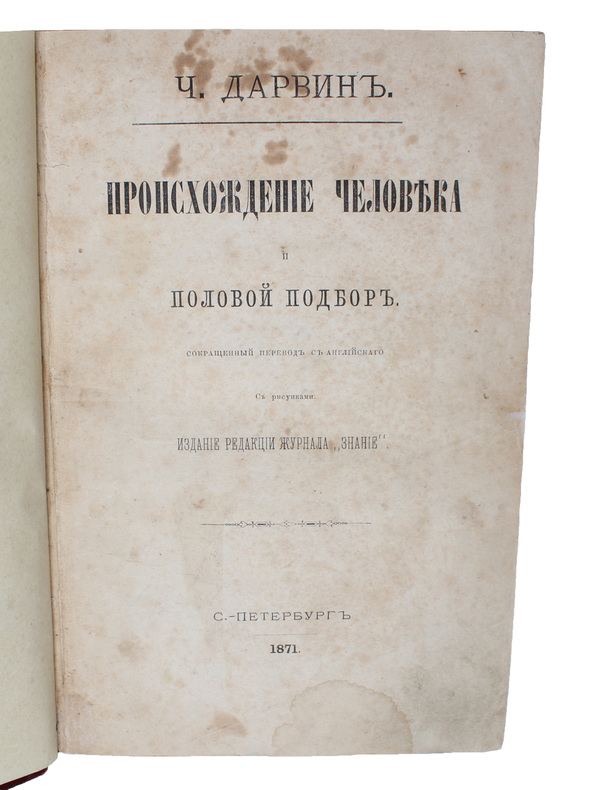
187156375S.-Peterburg, Izdanie redaktsii zhurnala ""Znanie, 1871. 8vo. In recent half calf with four rasied bands and gilt lettering to spine. Soiling and damp stain to title-page. Light brownspotting throughout. (2), VII, (5), 439, (7) pp.
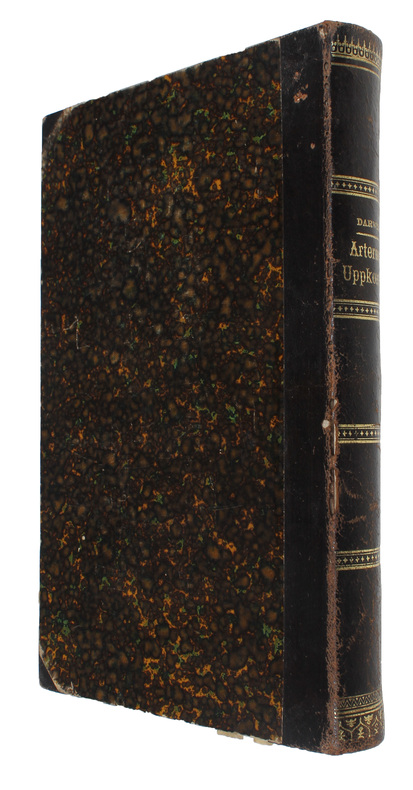
187156496Stockholm, L.J. Hiertas Förlagsexpedition, 1871. 8vo. Contemporary half calf with gilt lettering to spine and gilt ornamentation forming five compartments. Hindges with a few worm holes, back hindges mostly affected, but binding still tight and firmly attached to book block. Previous owner's stamp to pasted down front end-paper. Internally extraordinarily fine and clean. XI, (1), 420 pp. + plate with genealogical tree inserted between p. 96 and p. 97.