DARWIN, CharlesBiblio.com
1 008 résultats
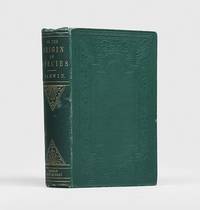
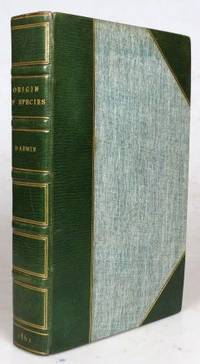
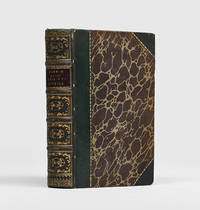
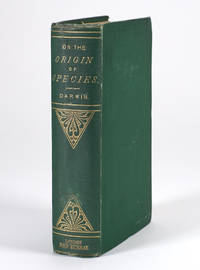
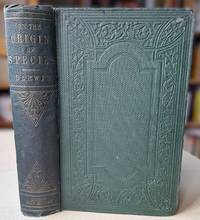
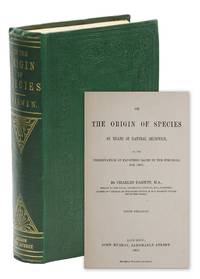
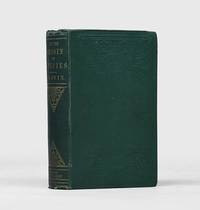
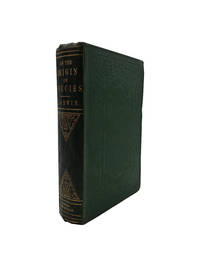
186048456London: John Murray 1860. Second edition second issue fifth thousand 8vo x 502 pp bound without the advertisements. Folding table leaf N2 pp. 267/8 with some marginal loss and old tape repairs. Modern green half calf marbled sides and endpapers. Freeman 376. First published the previous year. The first issue of the second edition also appeared in 1859; but for the the mention of "fifth thousand" on the title page the two issues are identical. London: John Murray unknown
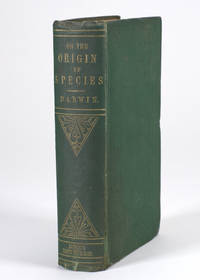
1860174014London: John Murray 1860. The most influential scientific work of the 19th century Second edition of "the most important biological book ever written" Freeman the issue dated 1860 on the title page. The second edition includes a few authorial changes responding to criticism of certain claims made in the first. This is a bright and fresh copy. The second edition largely reprints the text of the first edition of 1859. Among the changes the misprint "speceies" is corrected while the "whale-bear" story speculating that a bear scooping insects from the water may evolve into a whale-like creature is heavily diluted. The hypothesis was seen as absurd at the time and was seized upon by Darwin's critics to ridicule both the scientist and his evolutionary theory; Charles Lyell advised him to remove it entirely. "This story is not found again in any printing except in the American editions of 1860 until the end of copyright" Freeman p. 78. All copies of the second edition save for a handful dated 1859 are marked "fifth thousand" on the title page; the edition is not otherwise indicated as the second. The issue dated 1860 - the form in which the second edition is almost always seen - was published on 7 January 1860 in a print run of 3000 copies. Octavo in 12s. Folding diagram facing p. 117. With 32 pp. of publisher's advertisements dated January 1860 at rear. Original green diagonal-wave-grain cloth spine lettered ruled and decorated in gilt covers blocked in blind Freeman's variant a light brown coated endpapers binder's ticket of Edmonds & Remnants on rear pastedown. Housed in custom modern green solander box. With 1860 ownership signature of Dr R. H. H. Sankey 1831-1921 an Oxford physician and philatelist to front pastedown 20th-century pencil inscription "I. H. Taylor 12 Southdale Road Oxford" to half-title. Cloth and gilt bright light bumping and wear to extremities minor cockling to rear cover small mark to centre of spine inner hinges split but holding firm short closed tears to half-title and title page edges contents clean bar a few brown spots: a very good unrestored copy. Freeman 376. hardcover
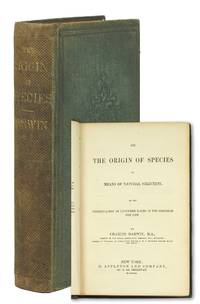
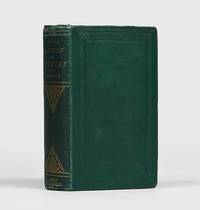
18601263511860. New York: D. Appleton and Company 1860. <br /> <br /> 8vo 7 5/8 x 5 inches; 195 x 125 mm. 432 pp. Folding lithographed diagram speciation tree facing p. 108. Original dark green bead-grain cloth with covers decoratively stamped in blind and spine ruled in gilt and blind and lettered in gilt. Original dark brown coated endpapers front free endpaper removed; early ink signature J.F. Oakes dated 1868; bookplate of Isador H. Coriat and stamp of Edmund Brill with inscription. Professionally conserved: hinges strengthened head and foot of backstrip renewed.<br /> <br /> § First issue of the first American edition. One of the most influential scientific works of the nineteenth century "On the Origin of Species" was and still is one of the most controversial books ever printed. In it "Darwin not only drew an entirely new picture of the workings of organic nature; he revolutionized our methods of thinking and our outlook on the natural order of things. The recognition that constant change is the order of the universe had been finally established and a vast step forward in the uniformity of nature had been taken" Printing and the Mind of Man. Although published the same year as the second English edition the text of the first American edition with the two stereo reprints of the same year is identical to the first English edition Freeman 373 with the whale-bear story surviving intact. Freeman 377. Grolier/Horblit 23b "the most influential scientific work of the nineteenth century". Printing and the Mind of Man 344b describing the 1859 first edition. unknown
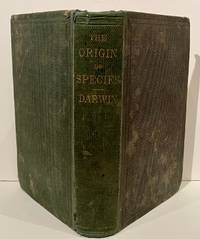
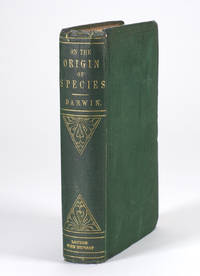
186422591New York: D. Appleton and Company 1864. A new edition revised and augmented by the author. Hardcover. Octavo; 7 5/8 x 5 inches. xi 5-440 2pp publisher's advertisements at rear 1 folded plate. Includes pages numbered 116-121 and index. Contemporary previous owner bookplate for Barton O. Aylesworth who as President of the College of Letters and Science Drake University gained the distinction of being the youngest college president in America. Original publisher's pebbled green cloth with gilt spine lettering 'The Origin of Species/Darwin' yellow coated endpapers. Soiling and edgewear to covers with boards showing at extremities text block still tight a couple of dogeared pages and spots of minor foxing ex-library with pocket at rear no other indications and never loaned else a Very Good copy of this important "Printing and the Mind of Man" title. Freeman 383. D. Appleton and Company hardcover
1869023435New York: D. Appleton and Company. A later printing of the original U. S. Edition which was published in 1860. xi 440 pp including supplement plus two pages of publisher's books. A few inner pages pulling but not loose. Foldiing chart. Clean unmarked copy. Green pebbled gilt lettered cloth. Thumbed top of spine. Gilt top edge of pages light soiling. . Very Good. Hardcover. 1869. D. Appleton and Company hardcover
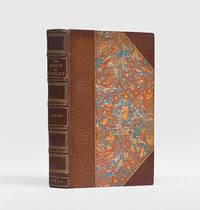
186149837London: John Murray 1861. Third edition seventh thousand. 8vo. xx 538 pp. Later green half straight grain morocco for Hatchards green cloth sides spine with raised bands gilt lettered direct to two panels and dated at the foot marbled endpapers with the bookplate of a Laurence Currie to the front pastedown top edge gilt. Folding table. Light rubbing to the extremities an attractive copy. Freeman 381. First published 1859 this edition includes a leaf detailing alterations from the second edition and also the historical sketch for the first time in a Murray edition. The latter had originally appeared in a shortened form in the first German edition and subsequently in the fourth American printing both 1860. London: John Murray unknown
1859184317London: John Murray 1859. Ushering in a new era of thought about the nature of man First edition of "the most influential scientific work of the 19th century" Horblit and "certainly the most important biological book ever written" Freeman. The initial 1250 copies of Darwin's magnum opus prompted an intellectual revolution comparable to that of Newton or Copernicus. While recognizable theories of evolution had been developing since at least the mid-1750s the Origin introduces the critical mechanism of natural selection to explain the direction of the process. When married with Mendelian genetics natural selection became the foundation of modern evolutionary theory: "every modern discussion of man's future the population explosion the struggle for existence the purpose of man and the universe and man's place in nature rests on Darwin" Mayr pp. vii-xxviii. Octavo 187 x 114 mm. Folding diagram lithographed by W. West. Bound with half-title and without publisher's advertisements as often. Near-contemporary green half calf spine and covers decorated in gilt spine with dark red calf label marbled sides endpapers and edges. Housed in custom green half morocco cloth box. Ornithological bookplate of the zoologist Brunsdon Yapp 1909-1990 author of a study of bird illustrations in medieval texts. Infrequent 20th-century pencil annotations to margins. Light wear faint ghosting to front endpapers minor browning and foxing to contents short closed tears to upper margin of O10 and S2 the latter touching text and short split to fold of diagram: a very good copy. Dibner 199; Freeman 373; Garrison-Morton 220; Grolier/Horblit 23b; Norman 593; Printing and the Mind of Man 344b. Ernst Mayr introduction to the Harvard University facsimile edition 1964. hardcover
1859372885London: John Murray 1859. First Edition one of only 1250 copies. 1 vols. 8vo. Bound with half-title and without publisher's adverts. Folding diagram lithographed by W. West. Late 19th-century half brown morocco by Zaehnsdorf spine lettered and ruled in gilt raised bands marbled sides and endpapers top edge gilt brown silk bookmarker. Red morocco book label of Valentine Hollingsworth 1883-1942. Front joint repaired. Light rubbing slight darkening to spine a few light spots of foxing to preliminaries but otherwise crisp and clean tiny closed tear at foot of title page folding diagram with short closed tear and neat repair at foot: a very good smartly bound copy. First Edition one of only 1250 copies. 1 vols. 8vo. "The most important single work in science brought man to his true place in nature" Heralds of Science 199. <br /> <br /> Darwin "revolutionized our methods of thinking and our outlook on the natural order of things. The recognition that constant change is the order of the universe had been finally established and a vast step forward in the uniformity of nature had been taken" PMM 344. <br /> <br /> "The publication of the Origin of Species ushered in a new era in our thinking about the nature of man. The intellectual revolution it caused and the impact it had on man's concept of himself and the world were greater than those caused by the works of Copernicus Newton and the great physicists of more recent times. Every modern discussion of man's future the population explosion the struggle for existence the purpose of man and the universe and man's place in nature rests on Darwin" Mayr. Freeman 373; PMM 344; Norman 593; Garrison-Morton 220; Grolier/Horblit 23b; Brent Charles Darwin p. 427 John Murray unknown
186142820878<p>THIRD EDITION published on April 1861. Two thousand copies were printed. This edition "was extensively altered and is of interest for the addition of a table of differences between it and the second edition a table which occurs in each subsequent edition and also for the addition of the historical sketch. The sketch which was written to satisfy complaints that Darwin had not sufficiently considered his predecessors in the general theory of evolution had already appeared in a shorter form in the German edition as well as in the fourth American printing where it is called a preface" Freeman.</p><p><strong><em>On the Origin of Species</em></strong><strong> is "certainly the greatest biological book ever written</strong>" Freeman and "<strong>the most important single work in science</strong>" Dibner.</p><p>Darwin's theory of the origin of species by means of natural selection arose out of his studies in the 1830s during and after the voyage of H.M.S. <em>Beagle</em>. From 1831 to 1836 Darwin sailed around the world on the <em>Beagle</em>. During this five-year voyage Darwin and the <em>Beagle</em> visited the Galapagos Islands Brazil Argentina Tierra del Fuego Chile Peru Tahiti Australia New Zealand and other islands and countries finally returning to England by sailing around the Cape of Good Hope. Darwin observed "It appears to me that nothing can be more improving to a young naturalist than a journey in distant countries."</p><p>The voyage of the <em>Beagle </em>was "the most important event in Darwin's intellectual life and in the history of biological science. Darwin sailed with no formal scientific training. He returned a hard-headed man of science knowing the importance of evidence almost convinced that species had not always been as they were since creation but had undergone change. … The experiences of his five years … and what they led to built up into a process of epoch-making importance in the history of thought" DSB.</p><p>Over the coming thirty years Darwin refined the ideas that had germinated aboard the <em>Beagle </em>and finally published them in <em>On the Origin of Species</em>. Darwin concluded his book "There is grandeur in this view of life with its several powers having been originally breathed into a few forms or into one; and that whilst this plan has gone cycling on according to the fixed law of gravity from so simple a beginning endless forms most beautiful and most wonderful have been and are being evolved."</p><p><strong>Darwin's ideas about evolution and natural selection are the underpinnings of modern biological science. Moreover they have given us a new way of viewing and talking about the world. </strong>"Darwin not only not only drew an entirely new picture of the workings of organic nature; he revolutionized our methods of thinking and our outlook on the order of natural things. The recognition that constant change is the order of the universe had finally been established" Printing and the Mind of Man 344b.</p><p>Freeman 381.</p><p>Original green cloth. Foot of spine and lower front joint neatly restored. A very good copy.</p> John Murray hardcover
188781020New York:: D. Appleton and Company 1887. New Edition from the Sixth English Edition with Additions and Corrections. publisher's rust cloth gilt-lettered on the spine and decorated in black. 1887 ink ownership inscription on front free endpaper; cloth and top edge dusty; contents clean; tight and sound. . 8vo. Folding chart. D. Appleton and Company, hardcover
186042820886<p>SECOND EDITION published on January 7 1860 less than two months after the first edition. Three thousand copies were printed.</p><p><strong><em>On the Origin of Species</em></strong><strong> is "certainly the greatest biological book ever written</strong>" Freeman and "<strong>the most important single work in science</strong>" Dibner.</p><p>Darwin's theory of the origin of species by means of natural selection arose out of his studies in the 1830s during and after the voyage of H.M.S. <em>Beagle</em>. From 1831 to 1836 Darwin sailed around the world on the <em>Beagle</em>. During this five-year voyage Darwin and the <em>Beagle</em> visited the Galapagos Islands Brazil Argentina Tierra del Fuego Chile Peru Tahiti Australia New Zealand and other islands and countries finally returning to England by sailing around the Cape of Good Hope. Darwin observed "It appears to me that nothing can be more improving to a young naturalist than a journey in distant countries."</p><p>The voyage of the <em>Beagle </em>was "the most important event in Darwin's intellectual life and in the history of biological science. Darwin sailed with no formal scientific training. He returned a hard-headed man of science knowing the importance of evidence almost convinced that species had not always been as they were since creation but had undergone change. … The experiences of his five years … and what they led to built up into a process of epoch-making importance in the history of thought" DSB.</p><p>Over the coming thirty years Darwin refined the ideas that had germinated aboard the <em>Beagle </em>and finally published them in <em>On the Origin of Species</em>. Darwin concluded his book "There is grandeur in this view of life with its several powers having been originally breathed into a few forms or into one; and that whilst this plan has gone cycling on according to the fixed law of gravity from so simple a beginning endless forms most beautiful and most wonderful have been and are being evolved."</p><p><strong>Darwin's ideas about evolution and natural selection are the underpinnings of modern biological science. Moreover they have given us a new way of viewing and talking about the world. </strong>"Darwin not only not only drew an entirely new picture of the workings of organic nature; he revolutionized our methods of thinking and our outlook on the order of natural things. The recognition that constant change is the order of the universe had finally been established" Printing and the Mind of Man 344b.</p><p>Provenance: nineteenth-century bookplate and signature of William Pearce.</p><p>Original green cloth. Light wear to spine ends. A fine copy with the fragile inner hinges intact.</p><p>Freeman 376.</p> John Murray hardcover
186642820890<p>FOURTH EDITION. Fifteen hundred copies were printed. "It was again extensively altered and it was in this one that the date if the first edition as given on the verso of the half title is corrected from October 1st to November 24th" Freeman.</p><p><strong><em>On the Origin of Species</em></strong><strong> is "certainly the greatest biological book ever written</strong>" Freeman and "<strong>the most important single work in science</strong>" Dibner.</p><p>Darwin's theory of the origin of species by means of natural selection arose out of his studies in the 1830s during and after the voyage of H.M.S. <em>Beagle</em>. From 1831 to 1836 Darwin sailed around the world on the <em>Beagle</em>. During this five-year voyage Darwin and the <em>Beagle</em> visited the Galapagos Islands Brazil Argentina Tierra del Fuego Chile Peru Tahiti Australia New Zealand and other islands and countries finally returning to England by sailing around the Cape of Good Hope. Darwin observed "It appears to me that nothing can be more improving to a young naturalist than a journey in distant countries."</p><p>The voyage of the <em>Beagle </em>was "the most important event in Darwin's intellectual life and in the history of biological science. Darwin sailed with no formal scientific training. He returned a hard-headed man of science knowing the importance of evidence almost convinced that species had not always been as they were since creation but had undergone change. … The experiences of his five years … and what they led to built up into a process of epoch-making importance in the history of thought" DSB.</p><p>Over the coming thirty years Darwin refined the ideas that had germinated aboard the <em>Beagle </em>and finally published them in <em>On the Origin of Species</em>. Darwin concluded his book "There is grandeur in this view of life with its several powers having been originally breathed into a few forms or into one; and that whilst this plan has gone cycling on according to the fixed law of gravity from so simple a beginning endless forms most beautiful and most wonderful have been and are being evolved."</p><p><strong>Darwin's ideas about evolution and natural selection are the underpinnings of modern biological science. Moreover they have given us a new way of viewing and talking about the world. </strong>"Darwin not only not only drew an entirely new picture of the workings of organic nature; he revolutionized our methods of thinking and our outlook on the order of natural things. The recognition that constant change is the order of the universe had finally been established" Printing and the Mind of Man 344b.</p><p>Provenance: contemporary inscription "Adamson The Towers Didsbury." Daniel Adamson was an English engineer boiler manufacturer and driving force behind the Manchester Ship Canal in the 1880s. His home the Towers is sometimes called the Calendar House for its 365 windows 52 doors and 12 chimneys.</p><p>Freeman 385.</p> John Murray hardcover
1860023046London: John Murray 1860. Second edition fifth thousand. Octavo pp x 502 32 page publisher's catalogue dated January 1860 slight age-toning and very slight occasional foxing several lightly creased corners a small marginal tear to page 13/14 the folding plate at page 117 is a little foxed but one part of the three sections is now detached and frayed at the bottom edge the hinge following page 120 is widely cracked but no looseness the front free endpaper very slightly marked the front hinge beginning to crack but no weakness the front paste-down endpaper has two early signatures - James Sharp and E. Byres of Claremont House Balham original green cloth the corners very slightly bruised very slight rubbing the spine slightly dull the spine head slightly pulled and similarly so at the base but with one small tear. Freeman 376 variant a . Second edition. Cloth. Good. John Murray Hardcover
1860140949121London: John Murray 1860. Second Edition. Very Good. Second edition second issue with "fifth thousand" listed on the title page. x 502 32 pp. Bound in publisher's emerald green cloth with decorative stamping in blind and gilt brown coated endpapers. Very Good with slight darkening and lean to spine and crimping at head and tail light bumping to corners and board edges and shallow indentation to rear board center. Hinges repaired two preliminary leaves beginning to detach overopened throughout; binding cracked but holding at p. 121. Occasional foxing to margins. Gift inscription dated 1860 to half-title page recipient's bookplate to front pastedown small binder ticket to rear pastedown. A remarkably good copy with crisp blindstamping and bright gilt.<br /> <br /> <br /> <p>An immensely influential work considered to be the foundation of evolutionary biology in which Darwin postulates that species evolve over the course of generations through natural selection. This copy was gifted to the Reverend Archibald Weir by a grateful student "in remembrance of his preparing him in Classics for the preliminary examination at Apothecaries Hall. John Murray unknown
1871AQ25484New York: Appleton and Company 1871. 447pp 9. With a folding table. Original publisher's printed brown cloth boards tooled and lettered in gilt to spine. Lightly rubbed and marked with chipping to head and foot of spine edges of boards slightly toned spine dulled. Leaves lightly browned occasional light spotting. The fifth edition with additions and corrections of Charles Darwin's 1809-1882 seminal work. Considered to be the foundation of evolutionary biology The Origin of Species introduces the theory of natural selection which states that species populations alter and diversify over generations - branching out from a shared common ancestor. 1871 proved a vexing year for Darwin as he received persistent criticism from zoologist St George Jackson Mivart who in his Genesis of Species 1871 accused Darwin among other allegations of being 'Dogmatic' in his assertions. In response Darwin who struggled to remain even- tempered in conversations with his rival gathered a selection of material to refute Mivart's claims; the revised sixth edition of the Origin of Species published the following year contained supporting research from Alexander Agassiz Abraham Dee Bartlett Albert Günther George Busk T. H. Huxley Osbert Salvin and William Henry. Freeman F390b. Fifth edition with additions and corrections. 8vo. Appleton and Company hardcover
1860190193London: John Murray 1860. The most influential scientific work of the 19th century Second edition the usual issue correctly dated 1860 on the title page of "the most influential scientific work of the 19th century" Horblit and "certainly the most important biological book ever written" Freeman. Darwin's Origin was first published in 1859. The second edition substantially reprinted the text of the first edition with a few authorial changes ranging from correction of the misprint "speceies" to the notable dilution of Darwin's "whale-bear" story where he speculated that a bear scooping insects from the water may evolve into a whale-like creature. The hypothesis was seen as absurd at the time and was seized upon by Darwin's critics to ridicule and criticise both the scientist and his evolutionary theory; Charles Lyell advised him to remove it entirely. "This story is not found again in any printing except in the American editions of 1860 until the end of copyright" Freeman. All copies of the second edition save for those few dated 1859 are marked "fifth thousand" on the title page noting the total issue of copies from the first edition onwards; the edition is not otherwise noted as the second edition. It was published in the form in which it is typically seen on 7 January 1860 in a print run of 3000 copies. Octavo signed and sewn in 12s. Original green diagonal-wave-grain cloth spine lettered in gilt covers blocked in blind Freeman's variant a no priority light brown coated endpapers fore edge untrimmed Edmonds & Remnants binder's ticket on rear pastedown. Folding diagram facing p. 117. 32 pp. publisher's advertisements dated January 1860 at rear. Contemporary Australian gift inscription on half-title "William C. Windeyer from Kate and Lottie. December 5th 1860": Sir William Charles Windeyer 1834-1897 was a New South Wales politician and judge. Spine ends and corners bumped extremities lightly worn cloth bright and unmarked expertly recased contents browned and foxed in places: a very good copy. Freeman 376. See Horblit 23b first edition. hardcover
1860001613London: John Murray 1860. 5 vi-ix 2 2-502pp 1 2-32pp. Original embossed cloth title author and publisher in gilt to spine chocolate coloured endpapers. Later recased on an Oxford hollow corners gently bumped couple of minor bumps to board edges minor rubbing to extremities. Internally some light foxing especially to first two sections an old repair to tiny tears to fore edge of half title and title former owner's name and address to front endpaper but generally fairly clean. With the folding lithographic chart by William West between pages 116 and 117; 32pp of adverts dated January 1860 to rear. Bookseller's label of Folthorp of Brighton to front pastedown and the binder's ticket of Edmonds & Remnants to lower pastedown. Now housed in a cloth drop back box with title and author in gilt to spine made by Temple Bookbinders. The fifth thousand or second edition second issue though not so-called on the title page one of three thousand copies with the misprint 'speceies' corrected and the whale-bear story diluted see Freeman page 78 binding variant 'a' with upright of L in London over right hand upright of H in John. Freeman 376. Second Edition. Hardback. Good/No Jacket. 8vo. John Murray Hardcover
18665323DB1866. 4 Auflage 8. Tsd. mit Ergänzungen und Korrekturen. London John Murray 1866. XXI S. 593 S. mit gefalterter Tafel Diagramm 32 S Werkverzeichnis vom Murray Verlag London. Orignal Leinenband. Besitzerstempel auf dem vorderen Vorsatz: "Wm Krahnstover - Baden-Baden" unknown
185951915London: John Murray 1859. First edition. 8vo. iii-x 502 28 pp bound without the half title but with all the advertisement leaves barring the final two. Early 20th century green full morocco spine with raised bands twin gilt lettered red labels marbled endpapers bookplate of K.F. Russell to the front pastedown and with a long note in his hand on the flyleaf describing the volume's provenance. Folding table mounted on linen. Slight sunning to the spine an attractive copy. The first printing of one of the most important books in the history of scientific thought. "Darwin not only drew an entirely new picture of the workings of organic nature; he revolutionised our methods of thinking and our outlook on the natural order of things. the theory of evolution became with Darwin an interpretation of nature and eventually a causal theory affecting every department of scientific research" Printing and the Mind of Man 344. Kenneth Fitzpatrick Russell 1911-87 was an eminent Australian academic. He was made Chair of Anatomy and Medical History by the University of Melbourne in 1969 having previously been conferred with a DLitt by them - an exceptional award for a science graduate. In 1963 he published "British Anatomy 1525-1800: A Bibliography" a testament to his erudition and one of the standard works on the subject. Russell's handwritten note to the front of the volume states that he bought it in the bookshop Quaine's of Melbourne in 1935. He found the original covers in a parlous state with the spine and upper cover missing and the rear board torn in half this damage clearly also accounting for the absence of the half title and the final advertisement leaves. Russell notes that he had the volume rebound thus by the binder Green paying slightly more for the restoration work than he had done for the book itself. Freeman 373 and pp. 75-77. With the misprint "speceies" on page 20 and the full whale-bear story to page 184. The first page of the advertisements is dated June 1859 as required. London: John Murray unknown
1859116380London: John Murray 1859. First edition of "certainly the most important biological book ever written" Freeman one of 1250 copies. Octavo bound in original cloth half-title one folding lithographed diagram without advertisements. In very good condition with cracks to inner hinges and a touch of shelfwear. Housed in a custom clamshell box. A fine example of this landmark work. Darwin “revolutionized our methods of thinking and our outlook on the natural order of things. The recognition that constant change is the order of the universe had been finally established and a vast step forward in the uniformity of nature had been taken†PMM 344. “Without question a watershed work in the history of modern life sciences Darwin’s Origin elaborated a proposition that species slowly evolve from common ancestors through the mechanism of natural selection. As he himself expected Darwin’s theory became and continues to be in some circles the object of intense controversy†American Philosophical Society. “The five years of Darwin’s voyage on the Beagle were the most important event in Darwin’s intellectual life and in the history of biological science. Darwin sailed with no formal training. He returned a hard-headed man of science… The experiences of his five years in the Beagle how he dealt with them and what they led to built up into a process of epoch-making importance in the history of thought†PMM. John Murray hardcover
18731858Budapest: Kiadja a Természettudományi Társulat Könyvkiadó Vállalata 1873. First Hungarian edition. In publisher’s green cloth bound into two volumes gilt-stamped spine titles panels with blindstamped device. Contemporary ownership signature on half-titleOccasional light foxing throughout in both volumes. Overall in fine condition. First Hungarian edition. In publisher’s green cloth bound into two volumes gilt-stamped spine titles panels with blindstamped device. 2 v. XIV 2 303 1 p. and 1 folding plate; VII 1 361 3 p. and a plate with Darwins portrait protected with tissue paper. <p><br /> First Hungarian edition of Darwin’s opus magnum the On the Origin of Species 1859 the foundation of evolutionary biology.<br /> <p><p><br /> A fajok eredete was Darwin’s first book to be translated into Hungarian. The translator László Dapsy 1843–1890 was a gymnasium teacher in Budapest who studied at the New College in The University of Edinburgh. While in Scotland Dapsy was introduced to Darwin’s scientific theories and back in Hungary he became a pioneer advocate of Darwinism.<br /> <p><p><br /> As a member of the Hungarian Society of Natural Sciences Dapsy urged the publication of Darwin’s works in Hungarian and translated the present book On the Origin of Species. While working on the text he was in correspondence with Darwin who besides authorized the publication provided the photograph after which the portrait illustrating this edition has been made.<br /> <p><p><br /> The translation was revised by another progressive Hungarian scientist and early Darwinist Tivadar Margó 1816–1896 who was the author of the first Hungarian zoological book based on Darwin’s theories and the first biography of Darwin written in Hungarian. Margó held the memorial lecture after Darwin’s death at the Hungarian Academy of Science of which Darwin was an honorary fellow since as early as 1872 wherein he recollected the memories about his personal encounter with Darwin in 1875.<br /> <p><p><br /> Provenance: Ownership stamp of Dr. János Garán 1847–1911 country doctor in Székelyhíd today: Săcueni Romania.<br /> <p><p><br /> Scarce WorldCat locates seven complete copies worldwide of which only two are held in the US Huntington; NLM<br /> <p>. Kiadja a Természettudományi Társulat Könyvkiadó Vállalata unknown
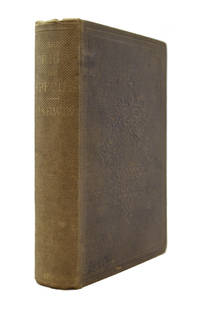
187140592New York: D. Appleton and Co. 1871. Fifth Edition with Additions and Corrections. Octavo original brown blind stamped pebbled cloth. Very Good with light edge wear including lightly bumped spine ends and a short abrasion on the side of the spine. D. Appleton and Co. hardcover
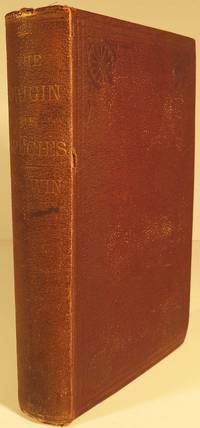
186068677New York: D. Appleton and Company 1860. Full Description:<br> <br> DARWIN Charles. On the Origin of Species by Means of Natural Selection or the preservation of favoured races in the struggle for life. New York: D. Appleton and Company 1860.<br> <br> First American edition third issue. "Revised Edition" on title-page and three quotations to verso of half-title. Octavo 7 11/16 x 4 7/8 inches; 196 x 125 mm. 1-432 pp. With folding chart.<br> <br> Original pebbled brown cloth with covers decoratively stamped in blind. Spine lettered in gilt. Green-coated endpapers. A very slight bit of fraying to top and bottom of the spine. Spine lightly sunned. Previous owner's pencil signature on front free endpaper. And an old ink gift inscription dated 1895 on front flyleaf. Some intermittent light foxing. Housed in a custom full black morocco clamshell. Overall a very good unrestored copy.<br> <br> One of the most influential scientific works of the nineteenth century On the Origin of Species was and still is one of the most controversial. The book caused an uproar immediately upon its publication and many early copies were burned in protest of its author's ideas. In it "Darwin not only drew an entirely new picture of the workings of organic nature; he revolutionized our methods of thinking and our outlook on the natural order of things. The recognition that constant change is the order of the universe had been finally established and a vast step forward in the uniformity of nature had been taken" Printing and the Mind of Man.<br> <br> Although published the same year as the second English edition the text of the first American edition with the two stereo reprints of the same year is identical to the first English edition Freeman 373 with the whale-bear story surviving intact.<br> <br> Freeman 376 "the most important biological book ever written". Grolier/Horblit 23b "the most influential scientific work of the nineteenth century"; Printing and the Mind of Man 344b first edition.<br> <br> Freeman Darwin 379. Printing and the Mind of Man 344.<br> <br> HBS 68677.<br> <br> $6000. D. Appleton and Company unknown
1866155699London: John Murray 1866. The extensively revised Origin Fourth edition of "the most important biological book ever written" Freeman one of 1500 copies. The text was significantly altered from previous editions representing the second largest increase in the Origin. The fourth edition also corrects the date of the Origin's initial publication given on the verso of the half-title from 1 October to 24 November 1859. Octavo. Folding diagram facing p. 130. With 32 pp. publisher's advertisements dated April 1867 at rear. Original green pebble-grain cloth spine lettered and decorated in gilt covers blocked in blind Freeman's variant c no priority dark green endpapers Edmond & Remnants binder's ticket on rear pastedown. Contemporary ownership signature of Samuel Oldham Lees on half-title likely the landowner 1832-1879 later bookplate on front pastedown A. Oldham Lees of Strathspey. Head of spine and inner hinges restored. Spine ends and corners bumped extremities rubbed cloth clean a few leaves creased from reading book block cracked at pp. 432-33. A very good copy. Freeman 385. hardcover
1871023041New York: D. Appleton and Co 1871. Octavo. . 5th edition with additions and corrections. Half-title 447pp. 8pp. publisher's ads. Darwin's work introduced the scientific theory that populations evolve over the course of generations through a process of natural selection. Bound in publisher's brown pebble grained embossed cloth spine lettering faded yellow endpapers marginal faint damp stain to lower corners not affecting text wear to spine ends. Previous owner's name E. K. Boyle dated 1871 who was a prominent lawyer of Belfast Maine. A very good copy. D. Appleton and Co unknown