1 161 résultats
187120-0556New York: D. Appleton & Co. 1871. 1871 447pp fold-out chart 5th ed. w/ additions & corrections corners slighlty bumped slight darkening to spine light shelfwear to cover some wear to spine ends heavier to bottom owner's name to fep 2 pgs w/ browning from newspaper clipping 3 pgs w/ small spiece missing from margin 2 pgs still uncut light foxing to pg edges a couple pencil notes to rear ep no dj contents clean & unmarked. Cloth. Very Good -/No Jacket. D. Appleton & Co. Hardcover
18602D-2DIJ-J9AND. Appleton and Company. Very Good. 1860. Unknown Binding. Appleton 1860. First American edition fourth issue with New Edition Revised and Augmented by the Author on title page. 3 blurbs opp. title. Pages: xi 440 2. Folding plate. Yellow endpapers cracked at rear but holding well. Laid flat a few places but binding tight. Mispagination of 116-21. Freeman 380. Original dark green blind stamped cloth light rubbed slight fraying top spine. Ink gift inscription.; 432 pages . D. Appleton and Company unknown
1864000780New York: Appleton 1864 "A new edition revised and augmented by the author" on title page three quotes on page facing title page. Internally a fresh clean copy with two small fox spots on each of the first few leaves and gone by page ix mostly unread. Respined with new spine covering retaining the original title. i -xi 4-440 2 pp ads. Appleton hardcover
186113209NY: D. Appleton & Company. Very Good. 1861. Third Edition. Hardcover. Rubbing at the spine ends. The contents are "fine" or better. Looks as if it's never been read. Gilt title is faded. ; 8vo 8" - 9" tall; 440 pages . D. Appleton & Company hardcover
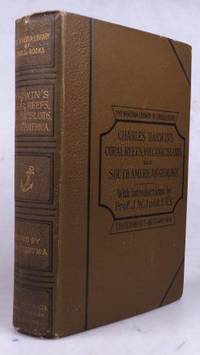
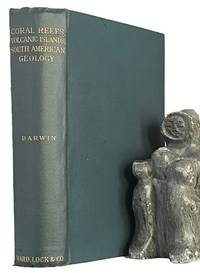
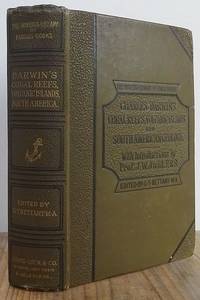
189012138London: Ward Lock and Co 1890. Later Edition. Hardcover. Good. Later Edition. Hardcover. Previously owned by Oliver Sacks. The original editions app.eared in 1842 1844 and 1846 respectively. Minerva Library No. 18. Presents all three parts of the first edition of Darwin's geological results of the Beagle voyage with a critical introduction to each work by Prof. John W. Judd. The voyage of the Beagle lasted from December 1831 to October 1836 and carreid Darwin around the wotld but especially to South America. Former owner name on ffep: Trevor H. Evans St. Johns Hospital.<br /> From the library of Dr. Oliver Sacks the renowned neurologist author and educator. He was in his life celebrated for his contributions to the understanding of the human brain and his ability to communicate complex scientific concepts to a broader audience. In doing so he highlighted the profound impact of neurological disorders on human identity and experience. His library is a reflection of this remarkable polymath's questing mind. Moderate shelf/edge wear discoloration to boards toning else tight and unmarred. Original textured green cloth boards with black and gilt borders and lettering patterned endpapers. 8vo.xx 549pp. illus. b/w illus. including 3 fold-out plates plus 6 page publisher's catalogue 40 text figures. Ward, Lock, and Co hardcover
189050017London: Ward Lock and Co. 1890. 8vo. xx 549 1 6 pp. Publisher's dark olive cloth gilt lettering to the spine and black lettering to the upper cover patterned endpapers. 6 plates including two folding maps and a folding chart. Some mostly light wear to the cloth else a decent copy. The Minerva Library of Famous Books. Cf. Freeman 279. London: Ward, Lock, and Co. unknown
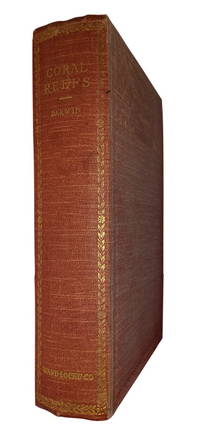
1900S47275London: Ward Lock & Co. c. 1900. xx 549 6 b/w portrait frontis 6 plain plates 3 folding text figs. . HB. 8vo orig. publisher's red cloth spine and front board faded. Final folding map Southern portion of South America torn at top inner corner with Japanese tissue repair.Freeman 294. Minerva Library New Series No. 8. Reprints of all three parts of the first edition of Darwin's geological results of the Beagle voyage with a critical introduction to each work by Prof. John W. Judd. The original editions appeared in 1842 1844 and 1846 respectivley. Freeman 294. Ward, Lock & Co. hardcover
189043494London New York Melbourne. 1890: Ward Lock and Co. 1890. In Fine Condition. 12mo. 18.3cm xx549vip. books ads. including 3 fold-out plates - the rear general map and the Volcano map index original green cloth gilt spine titles Ward, Lock and Co. unknown
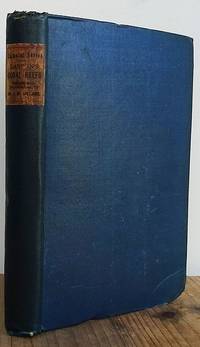
189057931Walter Scott Newcastle-on-Tyne. 1890. pp.xxiv 278 with 4 colour maps plus fold out frontispiece colour map b/w. illus. and 10 page publisher’s catalogue. Small 8vo. Bookplate plus name of Dr. Richard Harper and another. Thor. vg. hardback in original cloth boards. With a page of Dr. Harper’s hand written notes loosely inserted. Freeman 280. Walter Scott, Newcastle-on-Tyne. [] hardcover
189058155Ward Lock & Co. 1890. pp.xx 549 with b/w. maps and illus. including 3 fold-out plates plus 6 page publisher's catalogue. 8vo. Hardback. Armorial bookplate of Robert M. Adam 1885-1967 photographer and botanist and his signature to title page. Subsequent owner's stamp to prelims. and fore-edge. Small closed tear to margin of last fold-out map o/w. contents fine. Original textured cloth boards with black and gilt borders and lettering all in thor. vg. condition. Freeman 279. Each of the three works presented here are prefaced with their own critical introduction by Professor John W. Judd. Ward, Lock, & Co. hardcover
1890131808London NY: Ward Lock AND CO.; PUB. Very Good. 1890 tp. HARDCOVER. Hardcover. 5x7" thick. VERY GOOD CONDITION CLEAN SOLID BRIGHT.Name ep D.E. SEAMAN".Missing 1 Has 4 of 5 listed glossy maps including the large end of volume fold out map.and the similar large fold out map at page 449.; GOLD SPINE titles with gold anchor to one of the bands. Each section Coral Reefs Volcanic Islands and South America of the book has its own critical introduction.Smooth dark green cloth with some areas spine strip & title tips in embossed textured pebbled design.Mini Flower endpapers floral design. folding map at rear publisher's catalogueafter text.; 5496pg adverts pages; Much South American Natural history.GALAPAGOS.Indexed FOR EACH VOLUME INDIVIDUALY.Has numerous small ilustrations in text plus THESE LARGE MAPS IN TEXT 4 OF 5 LISTED has frontis map;.has.map pg 36; MISSING MAP PAGE 89.has the following map pg188.;. map pg 441 4 pg fold out!.;.end of volume nice fold out map 12x12" map SOUTHERN PORTION OF SOUTH AMERICA. . Ward, Lock, AND CO.; PUB hardcover
1896020330London: Ward Lock and Co. 1896. Hardcover. Very Good. 12mo - over 6¾ - 7¾" tall. 549 pages pus six pages of advertisements for The Minerva Library. Includes index to Coral Reefs. Red boards with gilt title 'Coral Reefs Darwin' within a gilt in border repeated on the spine also in gilt print. Six plates. three of which are foldout maps. The front board is chipped towards the middle of the tail; pages ix-xiv are lightly bumped towards the middle of the outer edge xi- xii also suffering from a minute short tear. From page 17- 90 the head's outer edge is bumped and creased. The bump and the crease which is quite small increases in severity easing off towards the last seven pages. pp 67-68 additionally suffer from a tiny closed tear caused by the creasing. From page 441-480 the tail of the page is creased at its nastiest from page 463-471. Neat ownership signature on the verso of the front end paper. The faults are not pretty but for the rest a clean unmarked and solid copy which I think is fair to call very good. No publication date offered I have taken 1896 from Trove. Full title: " On the structure and distribution of coral reefs : also Geological observations on the volcanic islands and parts of South America visited during the voyage of H.M.S. Beagle / by Charles Darwin ; with portrait maps plates and numerous illustrations and critical introductions by Prof. John W. Judd. <br/> <br/> Ward, Lock and Co. hardcover
1890S41327London: Ward Lock & Co. 1890. xx 2 549 7 6 plain plates 3 folding text figs. . HB. 8vo orig. brown publisher's cloth of the series patterned endpapers; light spotting to edges. Short marginal tear to inner edge of final map. Vg. Minerva Library No. 18. Reprints of all three parts of the first edition of Darwin's geological results of the Beagle voyage with a critical introduction to each work by Prof. John W. Judd. The original editions appeared in 1842 1844 and 1846 respectivley. Freeman 279 but this binding variant not recorded. Ward, Lock & Co. hardcover
1891221786London; Scott Publishing 1891. 1st Edition in this form. Hardback. Previous owner's inscription. Eastbourne gilt-crest to the front panel. Finely bound in full contemporary aniline calf. Spine compartments and panels elaborately tooled in gilt. Gilt-cross bands with a contrasting red Morocco gilt-blocked label. Bands and panel edges somewhat rubbed and toned as with age. An uncommopnly good example. ; 8vo 8"" - 9"" tall; 278 pages; Physical description; xxiv 278 10 p. : ill. front. folded map ; 18 cm. Notes; Date of publication from KVK. Spine title: Darwin's Coral Reefs. Subjects; Biology. Evolution Biology. Other titles; Coral reefs. On Certain Areas of Elevation and Subsidence in the Pacific and Indian Oceans as deduced from the study of coral formations. Contents; Contains ""On Certain Areas of Elevation and Subsidence in the Pacific and Indian Oceans as deduced from the study of coral formations"" a reprint of Freeman no. 1647 DC BD 1536 not called for in list of contents but usually found. Referenced by: Freeman no. 280. Referenced by: Freeman no. 1647. Series; The Scott Library. London; Scott Publishing hardcover
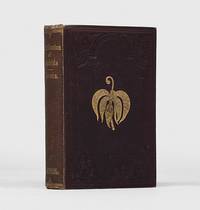
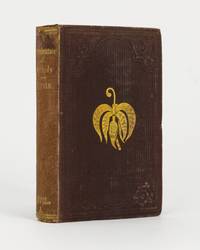
1862167295London: John Murray 1862. In support of natural selection First edition of Darwin's first book following the Origin of Species. This monograph on the structure and function of orchid flowers was "the first of the volumes of supporting evidence" for natural selection Freeman. The print run is estimated at no more than 2000 copies and it is the only Darwin title issued by Murray between 1859 and 1910 not bound in the characteristic green cloth. Orchids is "a methodological masterclass in the scientific use of history showing how homologies between flower parts - these had been elucidated by previous botanists - allow us to model past evolutionary events. Throughout the book Darwin showed how natural selection can create exquisite co-adaptations between plants and animals and in so doing it founded the science of pollination ecology. He was even able to make predictions based on understanding that the extraordinary morphology of orchid flowers is co-adapted to the morphology and behavior of their pollinating species. Orchids was the first of the botanical books which Darwin published from 1862 all of which 'exalted' plants and showed how closely linked to animals they are. It appeared in May 1862 and there were probably only 2000 copies printed. Although highly praised by botanists at the time it never sold well" Freeman the public remaining more interested in the controversy of evolution than the details. Octavo. Folding woodcut plate of the Orchis mascula facing p. 18 33 woodcuts within text. With 32 pp. publisher's advertisements dated September 1871 at rear. Original plum fine diaper-grain cloth Freeman's variant b spine lettered and decorated in gilt covers ornamentally panelled in blind front cover with centrally gilt-stamped orchid motif brown coated endpapers. Cloth entirely unrestored and binding tight and square spine sunned extremities gently rubbed inner hinges tender but holding firm contents clean: a very good copy indeed. Freeman 800; Norman 595. hardcover
1862143986London: John Murray 1862. First Edition. Hardcover. Very Good. London John Murray 1862 first edition first issue. Octavo vi 366 32 publisher's advertisements pages with 34 wood-engraved illustrations some full-page one a folding plate additional to the pagination. Ribbon-embossed plum cloth blocked in gilt and blind; covers slightly worn at the corner-tips and unevenly sunned on the spine; old repair to a split at the head of the front joint; contemporary library stamps to a dozen pages but see our footnote; front hinge cracked but firm; a few other minor signs of age and handling; a very good copy. The scarce first issue of Darwin's first major work after 'On the Origin of Species' 1859. Its exploration of the mechanisms of pollination offered a persuasive observable demonstration of his theory of natural selection in operation in particular through the coevolution of insects and the sexual structures of the orchids that they fertilise. <p>Although praised by botanists the book did not sell well and in later issues the sheets from the first printing were offered in a variant binding and with advertisements dated as late as 1871. This example is in the first-issue binding and has advertisements dated December 1861. The total edition likely comprised fewer than 2000 copies. <p>This copy has the contemporary blindstamp of the Adelaide bookseller W.C. Rigby to the front free endpaper and flyleaf and the contemporary library stamps of the Gawler Institute attesting to the early importation of Darwin's works into colonial South Australia. The title page has an early manuscript shelf mark in ink the Gawler Institute red inkstamp with the inserted reference number 1947 and a much later blue inkstamp for the Salisbury North High School Library. That this book has survived at all is cause for celebration. <p>Freeman 800 'variant a.'. John Murray hardcover
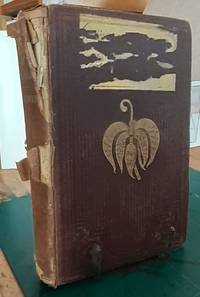
1862020463London: John Murray 1862. 1st Edition . Hardcover. Fair. 8vo - over 7¾ - 9¾" tall. vi 365 pages indexed illustrated plus 32 pages of other John Murray publications. Brown cloth with gilt flower on front panel. The boards: The spine strip is badly damaged with loss along the edge and tail; the front board wears the remnants of a label and the edges are chipped. Internally: there are two handwritten numbers on the head of the spine strip the top one crossed out the second repeated on the verso of the front end paper; the front end paper and the following blank page are partially detached; there are a series of ownership inscriptions - a stamp on the front end paper; three on the title page as well as two more interspersed along the page's blank edge and o plus a handwritten one again on the title page. One of the ownership stamps is superimposed on an association one ECLECTIC ASSOCIATION of VICTORIA the latter with its stamp also on the blank edge of the fold out diagram. Over the date of the handwritten one is a perfect small round ink blob which has seeped onto its verso and beyond that onto the blank head of the Contents page. And finally two tiny l closed closed tear at the head of pp 181 and 183 and well as minute loss on page 183 all of which could be a printer's fault. It is not a pretty copy but beyond the preliminaries it is solidly bound and the print unmarked. First edition of this important work. "Fertilisation of Orchids is a book by English naturalist Charles Darwin published on 15 May 1862 under the full explanatory title On the Various Contrivances by Which British and Foreign Orchids Are Fertilised by Insects and On the Good Effects of Intercrossing.1 Darwin's previous book On the Origin of Species had briefly mentioned evolutionary interactions between insects and the plants they fertilised and this new idea was explored in detail.The book was his first detailed demonstration of the power of natural selection and explained how complex ecological relationships resulted in the coevolution of orchids and insects. The view has been expressed that the book led directly or indirectly to all modern work on coevolution and the evolution of extreme specialisation." Wikipedia <br/> <br/> John Murray hardcover
1862022337London: John Murray. Original maroon cloth with a gilt orchid on the front cover. First Edition. This volume followed Darwins On the Origin of Species and further supported his theory of natural selection. Woodcuts and the woodcut folding plate. Repair to spine some letters missing. Internals nice. . Good. Hardcover. 1st Edition. 1862. John Murray hardcover
186216360London: John Murray 1862. FIRST EDITION. Text illustrations. Original plum cloth with an orchid in gilt on front cover. Covers and spine worn spine a bit shabby chipped at foot. Interior is excellent with a modern presentation signature on front flyleaf. First edition of Darwin's primary work on plant fertilization. Detailing the relationship between the sexual structure of orchids and the insects that fertilize them this was the first of three volumes that followed the publication of the Origin which contained supporting evidence for the author's theory of natural selection. Darwin concludes that plants are equal to animals in the marvels of their adaptation; for example he observes that wind-pollinated flowers have no colours; it is only those insect-pollinated varieties that have bright coloured petals and sweet smelling nectars. John Murray unknown
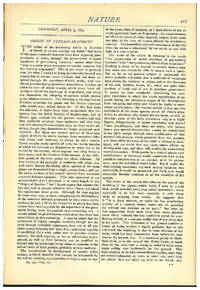
1873484671873. <p>Darwin Charles 1809-82. Origin of certain instincts. In Nature 7 1873: 417-418. Whole number. cix - cxii 417-436 cxiii - cxvi pp. 269 x 183 mm. Without wrappers. First and last leaves conjugate detached but very good otherwise.</p> <p> First Edition of one of Darwin's lesser-known discoveries. Darwin was the first to postulate in this paper the existence of an inertially-based navigational system in animals; his suggestion was confirmed by studies done in the 20th century. This type of navigational system now known as path integration uses input from the vestibular organs and other sensors in the body to enable an animal such as a migrating bird to estimate its position with relation to its home. Freeman The Works of Charles Darwin 1760. </p> . unknown
1900biblio38552<p>Volume 1. New York: P. F. Collier and Son 1900. 393 pages. Frontispiece. Fine Hardcover no dj. Darkgray cloth Gilt spine title. The Book looks AsNew. 8.1"x5.8"x0.9". be33157.</p> P. F. Collier and Son hardcover
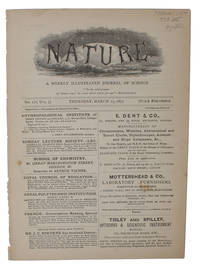
187360131London 1873. Small folio. Extracted with traces from the sewn cords in the original printed wrappers. In "Nature" No. 176 Vol. 7 March 13. Entire issue offered. Issue split in two otherwise fine and clean. Housed in a portfolio with white paper title-label to front board. Darwin's notice: P. 360. Entire issue: Pp. 1 lxxxvi-xcii 357-376. <br/><br/><em>First appearance of Darwin' comment on Aldred Wallace's suggestion that animals find their way home by recognising the odour of the places which they have passed. In the comment Darwin describes the following anecdote: "Many years ago I was on a mail-coach and as soon as we came to a public-house the coachman pulled up for the fraction of a second. He did so when we came to a second public-house and I then asked him the reason. He pointed to the off-hand wheeler and said that she had been long completely blind and she would stop at every place on the road at which she had before stopped. He had found by experience that less time was wasted by pulling up his team than by trying to drive her past the place for she was contented with a momentary stop. After this I watched her and it was evident that she knew exactly before the coachman began to pull up the other horses every public-house on the road for she had at some time stopped at all. I think there can be little doubt that this mare recognised all these houses by her sense of smell." From the present paper. Freeman 1759 </em> unknown
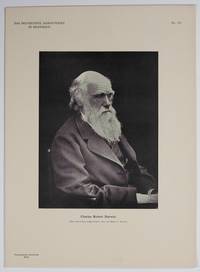
1899368621899. Das 19. Jhdt. Bildniss. 178. - Hrsg. v. Karl Werckmeister. - Berlin Kunstverlag der Photographischen Gesellschaft 1899 265 x 360 mm. Charles Robert Darwin 1809-1882 britischer Naturforscher. Er gilt wegen seiner wesentlichen Beiträge zur Evolutionstheorie als einer der bedeutendsten Naturwissenschaftler. unknown
186859981St. Petersburg 1868 but in fact 1867-1869. 8vo. In contemporary half calf with renewed spine. Inner hindges with repairs and boards with soiling and a few marks and holes to volume 1. Light foxing throughout primarily affecting margins and plates. Overall a good copy. IV 443 1: ill; V.2: 462 I-VI pp. <br/><br/><em>The very first publication of Darwin's 'Variation under Domestication' in any language. The title-page states 1868 but they two volumes were in fact published respectively in November 1867 and 1869."In August 1867 Darwin wrote to Lyell that he was visited by a young Russian "who is translating my new book into Russian.". The book was the 'Variation of Animals and Plants under Domestication' and the youngRussian was Vladimir Kovalevsky who subsequently became a well-known evolutionary palaeontologist. At that time the 'Variation' was not yet published and it seems most probably that the translation was made from a set of proofs given to Kovalevsky by Darwin. Thanks to Kovalevsky's rapid work the first section of the Russian translation of the Variation was published several months prior to the publication of the English original." Glick The Comparative Reception of Darwinism p. 235"The first Russian edition which is dated 1868 on the volume title page is of particular interest. It is the only work in his lifetime of which any part appeared in foreign translation before it appeared in English. Correspondence at Cambridge shows that the translator was sent copies of corrected proofs as they were ready. It was published in seven parts of which four perhaps to the end of Chapter XV appeared in 1867; the next two appeared in 1868 and the last not until 1869 because he had been away in Russian Asia. The title is given in full in English translation under No. 925 and has been discussed above" Freeman.Vladimir Kovalevsky 1842-1883 the translator of this book was a Russian biologist and the founder of evolutionary palaeontology. His own scientific works were printed between 1873 and 1877 and according to Henry Osborn Osborn H. The rise of Mammalia in North America // Proc. Amer. Assoc. Sci. 1894. vol. 42 pp. 189-227 they ''dare away'' all traditional and dry European paleontology. That was mainly because Kovalevsky was a devoted Darwinist and adapted Darwin's ideas to palaeontology. Luis Dollo the Belgian palaeontologist a contemporary of Kovalevsky's described him thus: ''No palaeontologist embodies so perfectly our epoch as the brilliant and miserable Vladimir Kovalevsky friend and guest of the immortal Charles Darwin''. Indeed Kovalevsky was a friend of Darwin's and they corresponded extensively. When visiting Darwin in 1877 the Russian botanist Timiryazev asked Darwin about his views on Russian science and Darwin surprised him with an answer that Vladimir Kovalevsky little known at the time was the bright hope of palaeontology.Kovalevsky was very eager to translate Darwin into Russian as soon as possible so he asked Darwin to send him the proofs of his book chapter by chapter as soon as Darwin finished them. Kovalevsky translated with great speed the complete book contains 900 pages and he began to print the chapters from July 1867 the first English edition appeared on 30th January 1868. The chapters were printed one after another as the translation went on. It is unclear whether any part of it appeared before the English edition.Vladimir Kovalevsky translated another of Darwin's books The Expression of the Emotions in Man and Animals O vyrazhenii emotsyi u cheloveka I zhyvotnikh that appeared the same year as the English edition 1872.Kovalevsky committed suicide at the age of forty after the breakdown of his marriage to the celebrated mathematician Sophia Kovalevskaya who became the first female professor of mathematics in the world.OCLC finds only three complete copies worldwide Cornell American Philosophical Society US and Thomas Fisher Library Canada. Freeman 925 </em> hardcover
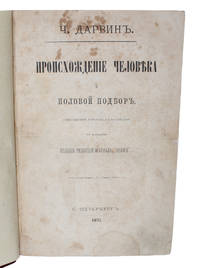
187156375S.-Peterburg Izdanie redaktsii zhurnala "Znanie 1871. 8vo. In recent half calf with four rasied bands and gilt lettering to spine. Soiling and damp stain to title-page. Light brownspotting throughout. 2 VII 5 439 7 pp. <br/><br/><em>The exceedingly rare first Russian translation of Darwin's 'Descent of Man' published only four months after the original English. The Russian publisher was eager to have a translation published hence this early abridged edition - two other Russian translations followed later the same year - The present translation being the very first into any language. "The Descent of Man showed that the process of organic evolution propelled by the struggle for existence and natural selection applied to man no less than to the rest of the animal kingdom. It gave explicit recognition to the idea of the anthropoid origin of man. This claim surprised no one for it was clearly hinted at in the great work of 1859 and was elaborated in Thomas Huxley's Man's Place in Nature and Vogt's Lectures on Man. Nor was it much of a surprise when three Russian translations of The Descent appeared within one year after the publication of the English original. Two general ideas represented the essence of The Descent: natural selection is not only behind the physical survival of man but also behind the evolution of cultural values; and the differences between animal and human behavior are differences of degree rather than of kind." Darwin in Russian Thought "The Expression helped lay the foundations for a scientific study of the psychological aspect of the evolution of species. The book appeared in a Russian translation only a few months after the publication of the English original. The paleontologist Vladimir Kovalevskii was the translator and the embryologist Aleksandr Kovalevskii was in charge of editorial tasks. In 1874 Vladimir wrote to Darwin that nearly two thousand copies of the Russian translation were sold." " The Expression deals much more extensively with selected aspects of human and animal behavior than with general problems of evolutionary biology. The Russian reviewers were generally impressed with Darwin's descriptions and categorizations of animal behavior. The Journal of the Ministry of Public Education was unusually profuse in praising the book's content and writing style. The reviewer commended Darwin's impartiality and avoidance of "materialistic trappings." Even the adherents of spiritualism could read the book he wrote without the least discomfort. The reviewer thought that psychologists would benefit from the information the book presented on the "physiological" basis of behavior. Indeed he recommended the book to all readers interested in the scientific foundations of human behavior. The liberal journal Knowledgewas equally laudatory. It noted that the book was eminently successful on two counts: it offered a "rational explanation" of many expressions of human emotions and it integrated the study of animal and human behavior into the universal process of organic evolution. In fact no educated person could afford to ignore it.N. P. Vagner professor of zoology and comparative anatomy at St. Petersburg University called The Expression a book with "great strengths and minor flaws." The volume reminded him of Darwin's previous works which marked "turning points in the history of science." The strength of the book lay much more in its suggestion of new topics for comparative-psychological research than in a presentation of a theoretically and logically integrated system of scientific thought. Insufficient exploration of the physiological underpinnings of mental activities represented the book's major shortcoming" Darwin in Russian Thought In Russia Darwinism had a profound influence not only upon the different sciences but also on philosophy economic and political thought and the great literature of the period. For instance both Tolstoy and Dostoevsky referenced Darwin in their most important works as did numerous other thinkers of the period.Like Strakhov however Dostoevsky acknowledging the significance of the "Origin of Species" saw the dangers of the theory. In the same year as the publication of Rachinsky's translation he lets the narrator in "Notes from Underground" 1864 launch his attack on Darwinism beginning: "As soon as they prove you for instance that you are descended from a monkey then it's no use scowling you just have to accept it."In "Crime and Punishment" two years later 1866 the Darwinian overtones inherent in Raskolnikov's theory of the extraordinary man are unmistakable. He describes the mechanism of "natural selection" where according to the laws of nature by the crossing of races and types a "genius" would eventually emerge. In general Darwinian themes and Darwin's name occur in many contexts in a large number of Dostoevsky's works.'Descent of Man' was transted into Danish Dutch French German Italian Polish Russian and Swedish in Darwin's lifetime. Freeman 1107. </em> unknown