20 127 résultats
in folio, pp. (8), 12, leg. m. tela edit. Splendido front. inc. in cromolitogr. e altre 12 belliss. tavv. in cromolitogr. raff. le diverse specie botaniche della pianta del cotone. Ediz. orig. del solo vol. di tavole. Il siciliano A.Todaro (Palermo 1818-1892) fu insigne botanico e direttore dell'Orto Botanico di Palermo: oltre ad incrementare le specie siciliane con scambi di piante esotiche, fu promotore della coltivazione della pianta del cotone in Sicilia. Le tavv. sono protette da veline. Ottimo esempl. [275]
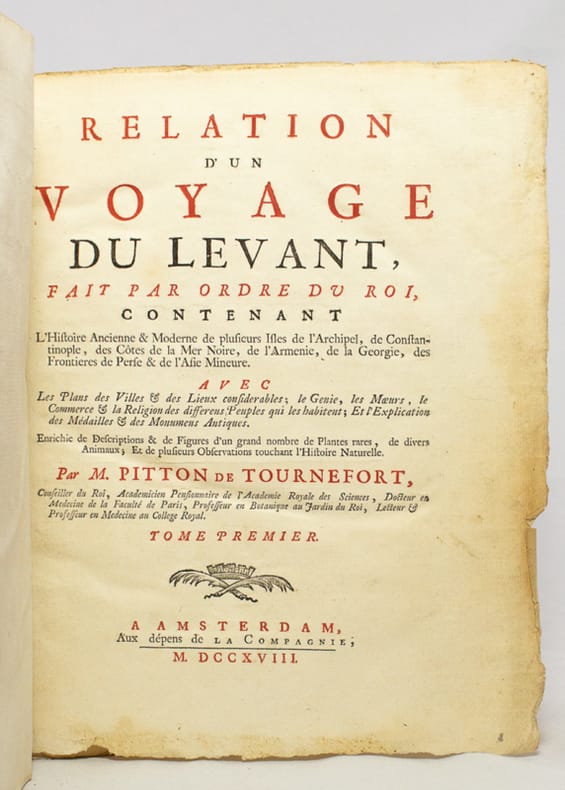
171817654Amsterdam, Aux dépens de la Compagnie, 1718. Deux tomes en un volume in-4° de [28]-188; [2]-208-[16] pages, demi-basane blonde, dos lisse orné de filet doré, pièce de titre en papier cartonné, non rogné.
2 vol. in-4, pp. (4), 790; 886 (manca il Supplemento di 56 pp. con proprio frontespizio e 2 tav.), leg. coeve in p. pelle, tasselli ai dorsi (restauri alle cerniere). Con due frontespizi allegorici (W.M. Craig del. e R. Hicks sc.) e 104 tavole incise in rame e dipinte da mano coeva, di fiori, frutti e piante. Seconda edizione (prima 1820-1824) rivista e corretta di questo importante dizionario botanico riccamente illustrato, che raccoglie anche una quantità d'informazioni concernenti l'agricoltura e la medicina. Buon esempl., seppur con la mancanza del supplemento (vecchia scritta ad inchiostro al verso del secondo frontesp. allegorico).. Nissen 754..
18267160CBZürich, J. Esslinger, (1826?1834). Kl.-8°. Mit 287 kol. Lithographien von Jonas David Labram. Halblederbände der Zeit mit verblasster Rückenvergoldung. + Wichtig: Für unsere Kunden in der EU erfolgt der Versand alle 14 Tage verzollt ab Deutschland / Postbank-Konto in Deutschland vorhanden +, A|B|C 4 Bände. [3 Warenabbildungen]
Pagine: 512 + 239 + 192 + 166 . Illustrazioni: Sono presenti 4 frontespizi con marchio dell'editore ( il grifo sopra pietra incatenata ad un globo alato) e una bella marca editoriale sul finire del primo.Qualche piccola illustrazione all'interno del columella raffigurante misure di caRilegatura: Legatura in pergamena. Dorso con tre nervature e mancanza di pelle per tre cm. , rinforzo coevo con pergamena scritta a mano ma illeggibile. . Stato: Buono . Caratteristiche: Bella collazione di QUATTRO CINQUECENTINE tutte dedicate all'agricoltura: rappresentano le testimonianze più importanti dell'agricoltura romana. Di particolare interesse letterario il libro X del Columella, in esametri in onore di Virgilio.Foto disponibili. . Note epoca: Il primo volume è del 1548 , gli altri tre del 1549. MDXLVIII
2 voll. in-8 gr., pp. (72), 448, 32 (tavv. num. da 1 a 32); 496, (16), 33 (tavv. num. da 33 a 65), bella leg. m. pelle coeva con tit. oro ai d. con nervi, piatti in cart. marmorizz. Fregio inc. in rame ai front. Con ricco apparato iconografico composto da 65 belle tavv. in rame raff. fiori autoctoni della regione della Carniola, antica provincia austriaca, ora in Slovenia. G. Battista Scopoli è stato un naturalista e scienziato trentino, originario della Val di Fiemme (Cavalese 1723 - Pavia 1788). Perfetto stato di conservazione, su carta forte, opera rara a trovarsi completa di tutte le tavv. [015]
16962834FBBasel, Verlag Jacob Bertsche, 1696. 2°. 35,5 x 23 cm. [3] Blatt, 995 Seiten, [26] Blatt. Pergamentband der Zeit. [11 Warenabbildungen]
large folio [53 x 41 cm]; [72 l] pp, 32 fine colored plates, including frontis, from paintings by Mee, each with tissue guard, signed in the plate by Mee, dated 1960s, maps, list of plates, pictorial endpapers. original green morocco-backed boards, bound by Zaehnsdorf, boards with hand marbled paper, gilt spine title lettering & gilt vignette on front, top edge gilted, original clear glassine jacket, original cloth slipcase, clean, fine and bright copy. A pictur A superb production with most attractive plates, including nine of orchids and six of bromeliads, each plate with a descriptive leaf. Margaret Mee (1909-88) traveled to the Amazon area 15 times over a 32 year period, by canoe, on foot and often alone. Her paintings and sketches "could stand without shame in the high company of such masters as Georg Dionysius Ehret and Redoute" (Wilfred Blunt). Mee was a passionate conservationist and devoted her life to recording the diversity and beauty of the Amazon. She was one of the first to protest the destruction still taking place there. Sitwell in Great Flower Books describes her work as: 'exceptional and quite in the tradition of the great eighteenth-century books '. 'Mee's work is of an unusually high order of excellence and in the best tradition of flower painting' [Taylor, director of Royal Botanic Garden of Kew]. 'Mee was a talented botanical painter and intrepid traveller. . .an exceptional personality' [Oak Spring Flora]. One of the plants illustrated was discovered by Mee herself.
In-8 gr. (mm. 252x192), p. pelle bazana coeva, dorso a cordoni (abras.) con decoraz. e tit. oro su tassello, tagli rossi, pp. VII,343, bella vignetta allegorica al frontespizio e 31 tavv. f.t., più volte ripieg. ed inc. in rame da Van der Schley e Wanderlaar, ciasc. con numer. figure. Vi sono contenute 5 Memorie: “De la nutrition des plantes par leurs feuilles - De la direction, & du retournement des feuilles, & à cette occasion de la perpendicularité & du repliement des tiges - De l’arrangement des feuilles sur les tiges, & sur les branches, & de celui qu’on observe dans quelques autres parties des plantes - De quelques singularités des différentes parties des plantes, & principalement des feuilles - Nouvelles recherches sur les feuilles des plantes, &c.” "Prima edizione" di questa important opera del naturalista e filosofo svizzero Charles Bonnet (1720-1793) . Con uniformi arross. ma complessivam. buon esemplare.
18267160CB4 Bände. Zürich, J. Esslinger, (1826–1834). Kl.-8°. Mit 287 kol. Lithographien von Jonas David Labram. Halblederbände der Zeit mit verblasster Rückenvergoldung.
1747D19414London: J. Duke for J. Robinson 1747. Second Edition. Hardcover. Very Good. Decorative title page and frontispiece each delicately hand-colored; followed by 94 of 100 plates likewise handcolored. 19th century Cambridge style binding nicely gilt but with front board loose. Lovely plates. <br/><br/> J. Duke for J. Robinson hardcover
17672830# AUTEUR: Geoffroy médecin # ILLUSTRATEUR: De Garsault # ÉDITEUR: Chez l'auteur rue Saint Dominique porte St Jacques - Paris - Didot le jeune pour le tome VI # ANNÉE ÉDITION: 1767 # COUVERTURE: Plein veau moucheté d'époque - dos à nerfs décor doré - tranches rouges # DÉTAILS: 6 volumes in 8° reliés T1:3ff.+ 118 planches gravées. T2: 3ff.+ 119 à 292 planches. T3: 293 à 466 planches. T4: 467 à 643 planches. T5: 3ff.+ 644 à 729 planches. T6: XIV + 1ff. (privilège) + 472pp. Description, vertus et usages de sept cents dix-neuf plantes, tant étrangères que de nos climats; et de cent trente-quatre animaux, en sept cent trente planches, gravées en taille douce, sur les dessins d'après nature de Mr Garsault, par MM. De Fehrt, Prévost, Duflos, Martinet, et rangées suivant l'ordre du livre intitulé Matière Médicale de M, Geoffroy. Ouvrage utile à toutes Matières Médicales, aux artistes, aux personnes charitables, à tous ceux qui préparent eux-mêmes leurs médicaments. Complet des 729 planches. # PHOTOS visibles sur www.latourinfernal.com
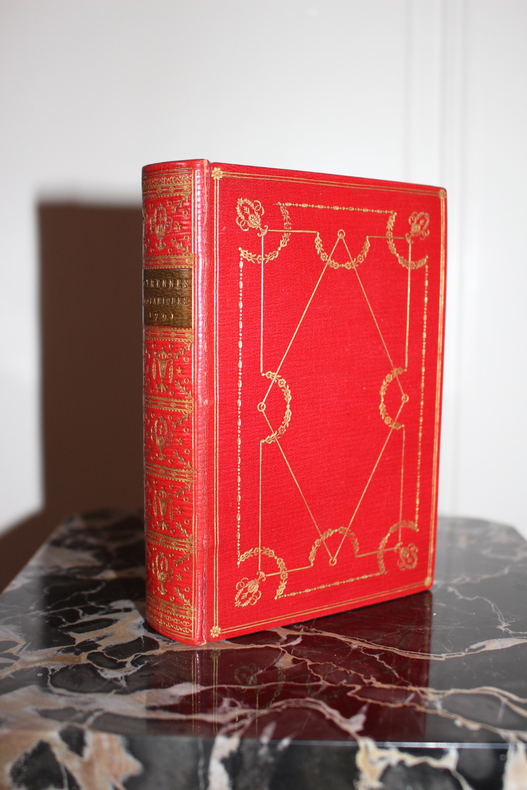
011139[Botanique] Georg-Franz [Georges-François] Hoffmann, La flore de l'Allemagne ou Etrennes botaniques pour l'an 1791. S.l., s.n., [1790]. In-12, front.-[38]-360p + 12 planches en coloris d'époque. Magnifique édition ornée de ses 12 planches botaniques en couleurs, tirage très beau sur papier hollande. Le frontispice et le texte sont sur un joli papier vergé. Très belle reliure dans le goût de Bozerian, plein maroquin rouge, pièce de titre, tranches dorées. Papier légèrement jauni, petite fente en tête d'un mors. Magnifique exemplaire, très rare
1777PHO-990Paris , Gide , 1797 , 3 volumes (1,2,3) in-4° (260x200) relié plein basane époque , dos lisse orné avec tomaison et pièce de titre . Tome 1 (1797) , chez Gay & Gide , xvi-500pp , illustré de 9 planches sur papier bleuté , ex-libris de la maison de Maistre avec sa devise , Tome 2 (1777), chez Nyon l’ainé, viii-278pp 234pp , charnière légèrement fendue , coin usé , Tome 3 (1778) chez Nyon l’ainé , vi-504pp , illustré de 6 portraits ,petits défauts , tome 2 et 3 , ex-libris de Jean-François-Charles Laval de La Loubrerie .
R300001285CHEZ L'AUTEUR. NON DATE. In-8. En feuillets. Bon état, Couv. convenable, Dos satisfaisant, Intérieur frais. 74 aquarelles d'algues avec nom manuscrit.. . . . Classification Dewey : 580-Botanique
Milano,Sonzogno, 1883. In 16°pp.63n. bross.edit.
2 volumes en pagination continue, [10]-320 pp. + [4]-322 à 701-[35] pp., 26 pl. depl basane havane de l'époque, dos à nerfs et fleuronnés, pièces de titre et de tomaison rouges, tranches rouges 1740, 1740, in-4, 2 volumes en pagination continue, [10]-320 pp. + [4]-322 à 701-[35] pp, 26 pl. depl, basane havane de l'époque, dos à nerfs et fleuronnés, pièces de titre et de tomaison rouges, tranches rouges, Seconde édition collective, après celle de 1717 (Leyde, chez Pierre Vander), réunissant tous les travaux de Mariotte (c.1620-1684). L'Avis au lecteur précise que la présentation des mémoires a été faite selon l'ordre d'importance, et non chronologique. Tome I : - Traité de la percussion. - Essais de physique ou mémoires pour servir à la science des choses naturelles. Quatre mémoires, parmi lesquels le célèbre essai sur la nature de l'air : De la végétation des plantes, De la nature de l'air, Du chaud & du froid, De la nature des couleurs. Tome II : - Traité du mouvement des eaux et des autres corps fluides. - Règles pour les jets d'eau. - Nouvelle découverte touchant la vue. - Traité du nivellement avec la description de quelques niveaux nouvellement inventés. - Traité du mouvement des pendules. - Expériences touchant les couleurs et la congélation de l'eau. - Essai de logique contenant les principes des sciences et la manière de s'en servir pour faire de bons raisonnements. La vie du savant et philosophe Mariotte - Clarissimus Mariottus comme le qualifie Newton - est extrêmement peu documentée ; on ignore notamment sa date exacte et son lieu de naissance (il serait né vers 1620 à Dijon, ce qu'aucun document ne permet d'affirmer réellement). Il est pourtant considéré comme celui qui a introduit la physique expérimentale en France et il compte parmi les figures centrales de l'Académie des sciences de Paris dès sa création (1666). De fait, il n'est pas autrement connu que pour son activité au sein de cette institution. Mariotte s'est intéressé tant à la botanique qu'à différentes branches de la physique ; la mécanique avec les règles du mouvement (Traité de la percussion) et les recherches sur les forces exercées par les fluides (Traité du mouvement des eaux), l'ingénierie et la construction (Traité du nivellement), la physiologie de la vision (Nouvelle découverte touchant la vue), l'optique (De la nature des couleurs), la physiologie végétale (De la végétation des plantes), etc. On lui doit les découvertes essentielles du point aveugle de l'oeil, dit tache de Mariotte (Nouvelle découverte touchant la vue), et l'énonciation de la loi sur la pression et le volume des gaz, dite loi de Boyle-Mariotte (dans le Second essai sur la nature de l'air). DSB IX, p. 121. Mariotte, savant et philosophe (Paris, Vrin, 1898)
18405615Mit 1 gefalt. grenzkolor. lithogr. Stadtplan von J[ohann Anton] Williard nach W. Jäger u. 3 lithogr. Tafeln mit Linienkolorit. Stolberg am Harz u. Leipzig, B. G. H. Schmidt, 1840. 4to. (28,5 x 21,3 cm). XX, 350 S. Grüner Halblederband d. Zt. mit Romantikerrückenvergoldung, dreiseitigem Goldschnitt, blauen Vorsätzen u. geprägtem Bezugspapier (am Schwanz signiert: BORMANN).
R300001386CHEZ L'AUTEUR. NON DATE. In-4. En feuillets. Bon état, Couv. convenable, Dos satisfaisant, Intérieur frais. Plus de 150 planches d'herbier naturel classées par famille avec description. En 2 classeurs numérotés I et II.. . . . Classification Dewey : 580-Botanique
4to (260 x 205 mm), 2 parts in one, first part the first edition, the second part is a third edition, [4], vii-xii, 214, 126, [2]; [2], ix, [1], 197, [1]pp., engraved frontispieces and 18 plates (5 folding), of which 5 plates by William Blake, occasional offsetting, signatures L & M misbound (part 2), scattered faint spotting, marbled endpapers, contemporary full red morocco, single gilt fillet border to boards, smooth spine, seven gilt tooled bands producing 6 compartments, upper compartment with the Arnold crest - a demi tiger regardant bezanty holding a pheon, next compartment gilt lettered direct, some light rubbing to extremities, otherwise a very nice copy. Epic poetic tribute to the lives, loves, and reproductive capacity of plants by the grandfather of Charles Darwin. Darwin's Botanic Garden is important for the five plates in part I which are engraved by William Blake: 'The Fertilization of Egypt,' engraved after the painting by Henry Fuseli, and four engravings of the Portland Vase. "The chief source of Erasmus Darwin's literary fame during his lifetime, The Botanic Garden contains a great deal of important and frequently advanced scientific information in the nearly 300 footnotes and the 115 pages of appendices to its verses..."? The Encyclopaedia Britannica. Provenance: Armorial bookplate of George Henry Arnold (1791-1844) to font paste-down; later bookplate of Ralph Hermon Major.
176466397Nouvelle édition considérablement augmentée, & dans laquelle la partie des Fleurs a été entièrement refondue par un amateur, 1 vol. in-24 reliure de l'époque plein veau marbré, dos lisse orné, toutes tranches marbrées, Chez Guillyn, Quai des Augustins, Paris, 1764, 248 pp. et 2 ff. n. ch.
in-4 picc., pp. (40), 512, (24), legatura del tempo in pelle marmorizz., dorso a nervi con tit. e fregi oro, tagli rossi (piccole mancanze alle cuffie). Titolo a stampa rossa e nera, car. rom. e cors., fregi silogr. Con 19 tav. botaniche f.t., di cui 8 ripieg., inc. in rame da J.H. Huber e D. Herrliberger. Prima edizione di questo approfondito e dotto trattato sulle graminacee, sui giunchi, sui vari tipi di spighe, ecc. J. Scheuchzer fu celebre naturalista, fisico e geografo svizzero (Zurigo 1672-1733). Bell'esempl. (lievi ingialliture qua e là).. Nissen 1751. Pritzel 8174. Bibl. Caldesi 117..
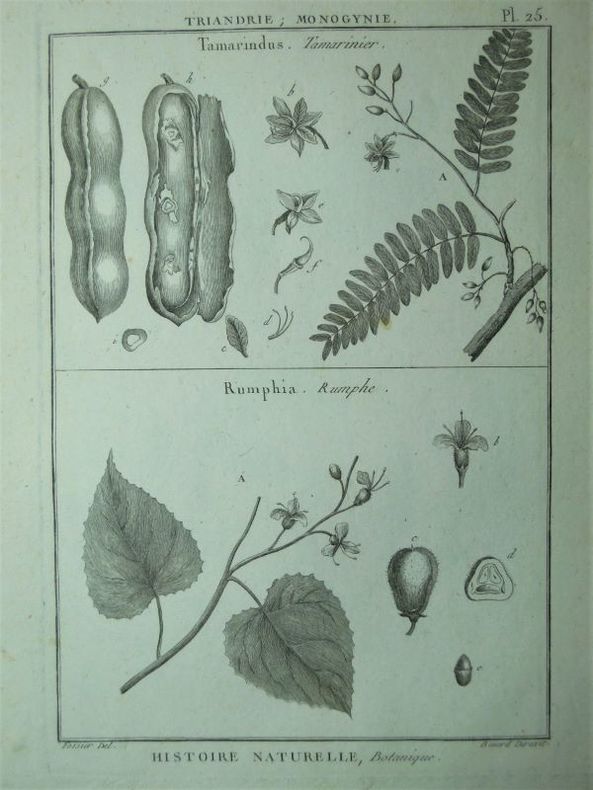
1791151791 Paris, Panckoucke, Agasse, 1791-[1800], 3 vol.in-4° (30,2 x 23,4 cm) : vol. 1 : Botanique. Première livraison. : double-garde bl., 1 f. de titre, 1 f. Illustration des genres, 3 f. de préface, 4 f. d'introduction, 1 f. d'illustration des genres, p. 1-200, planches 1 à 100, double-garde bl. ; Chez Panckoucke, Libraire, Hôtel de Thou, rue des Poitevins, MDCCXCI [1791], vol. 2 : Botanique : double-garde bl. p. 441-496 (fin du tome 1 Botanique), planches 301 à 400, double-garde bl. ; sans imprimeur, ni date [1792 ?], vol. 3 : vingt-deuxième partie. Botanique, comprenant la dioecie, la polygamie et la cryptogamie : double-garde bl., 1 f. de faux-titre, 1 f. de titre, planches 801 à 900, double-garde blanche ; Chez H. Agasse, Imprimeur-LIbraire, rue des Poitevins, n°. 18., an VIII de la République [1799/1800]. 3 volumes de livraison, comportant 300 planches pleine-page, en noir et blanc, de botanique (gravées sur cuivre), d'une remarquable finesse et harmonie, ici en édition originale, de cet ouvrage de référence pour l'histoire des sciences (représentations et découvertes scientifiques inédites) paru entre 1791 et 1823. L'édition complète, reliée, de la partie Botanique se compose de 3 tomes (1 : pl. 1 à 111, 2 : 111 à 445, 3 : 445 à 1000). Fait partie de la monumentale Encyclopédie méthodique (1783-1817) de Panckoucke. Lamarck, Jean-Baptiste Pierre Antoine de Monet de (1744-1829) : officier, naturaliste, d'abord botaniste puis professeur de zoologie au Muséum d'histoire naturelle, membre de l'Académie des sciences et de l'Institut, de l'Institut Royal de France, de la Légion d'honneur. Edtiion continuée par J.-L.-M. Poiret, professeur d'histoire naturelle et de plusieurs sociétés savantes et littéraires. Panckoucke, Charles-Joseph (1736-1798) : Imprimeur-libraire, libraire de l'Imprimerie royale (1764-1778), libraire titulaire de l'Académie (royale des Sciences et des Inscriptions et Belles-Lettres, 1764). Agasse, Henri (1752-1813) Imprimeur-libraire, officier aux Gobelets de la Maison du Roi, bourgeois de Paris, épouse en 1787 Antoinette-Pauline Panckoucke (fille aînée de l'imprimeur-libraire C. -J. Panckoucke, elle-même imprimeur-libraire), associé puis successeur en 1794 de Charles-Joseph Panckoucke, propriétaire de l'"Encyclopédie" de Panckoucke et du "Moniteur". Redouté, Henri-Joseph (1766-1852) : peintre d'animaux, fleurs, aquarelliste, dessinateur d'architectures et illustrateur belge, actif en France à partir de 1785. Participa à l'expédition de Bonaparte en Egypte (Benezit, III, 1924, p. 582).
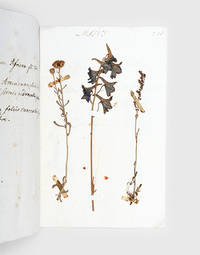
189373Germany: 18th century. A charming fragment of a methodically organized collection A scientific compilation of dried plants each annotated with a Latin binomial and many with their seasonality; this selection comprises spring and summer samples. Such herbariums began to be compiled in the 16th century and many featured in "cabinets of curiosities". They were a tool used by the most influential natural philosophers of the day including Linnaeus Rousseau and Goethe. The box lettered "gewürzpflanzen" and "gewürz" was originally intended to house spice plants. The individual gatherings are numbered and the box reads "nicht voll" not full showing that it was an evolving project that functioned as a reference tool and is likely a surviving specimen of a now-separated larger private collection. Many of the samples are also annotated with reference numbers perhaps to a printed botanical catalogue owned by the compiler or to other parts of the now-scattered collection. "A botanist who came across an unfamiliar plant might send it as a herbarium specimen to a colleague for identification. By comparing dried plants it was possible to discover duplicates of the same plant but with different names. Such uses were possible only if the herbarium sheets were kept separate rather than being bound into books which also made it easier to rearrange their order as new ideas about classification were developed and tested" Allaby p. 61. Comprising 17 booklets individually sewn at folds page size: 212 x 139 mm samples affixed with thin strips of paper or copper contents annotated in black and green ink. Paper stock watermarked with snake on staff with double knobs and star countermarked "BB" perhaps referring to Beckh paper mill Göppingen founded 1747. Housed in contemporary card case with partially-obscured paper labels lettered "No 3" "Gewurz" and "Invatio ecum bot Tom VI. 708 ad pa". First leaf of single booklet and handful of samples not present paper lightly foxed else crisp; box worn and with some worming. Overall in very good condition. Michael Allaby Plants: Food Medicine and the Green Earth 2010. unknown
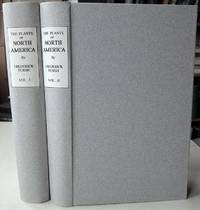
1814020092Fleet Street London: White Cochrane & co. 1814. Two volumes 1814 1813. Octavo illustrated with 24 plain stipple-engraved plates pp xxxvi 751 ivi untrimmed age-toned and with foxing heavy on some pages and plates but almost or entirely lacking on the larger parts of the volumes one page more heavily browned from the insertion of a paper at some point with the blindstamp of the Carnegie Institution on the title pages and also the tiny stamp of the Haverford College Library; the 'sold' label of Haverford is loosely inserted. Recently bound in grey boards new endpapers the paper spine labels reading "The Plants of North America". SCARCE. "The first publication on plants from all of North America above Mexico and the first to publish plants from the Pacific Coast Pursh's Flora includes more than 3000 species and 470 genera including the first descriptions of more than 100 species collected by the Lewis and Clark expedition" ANB. Sabin 66728. Pursh a German botanist came to America in 1799 as a traveler collector gardener and landscape artist. From 1803 until about 1805 he was in charge of William Hamilton's estate near Philadelphia before becoming employed in the botanizing expeditions of Benjamin Smith Barton. From 1809 to 1810 he headed Hosack's Elgin Botanic Garden in New York. In 1811 Pursh traveled to England where he produced his Flora under the patronage of A. B. Lambert to whom the work is dedicated. Pursh relied upon the Lewis and Clark specimens entrusted to M'Mahon for many of his descriptions of the Pacific coast plants; he also consulted some forty-one other botanical collections for his research. Apperently William Hooker the artist of Salisbury's Paradisus Londinensis was responsible for a good portion of both the drawings and engravings. Printing of the Flora Americae Septentrionalis was completed in late 1813 as the Linnaean Society possesses a presentation copy dated 21 December 1813. . Nissen BBI 1570; Pritzel 7370; Stafleu & Cowan TL2 8404. . First Edition. Boards. Good. White, Cochrane & co. Hardcover