Condillac Abbé deLivre Rare Book
73 297 résultats
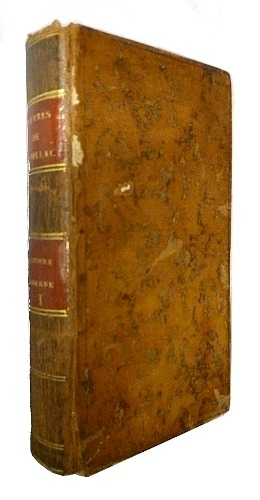
1766qa911Arkstée & Merkus, Bruyset frères, Changuion, Amsterdam, Dufart François, Jombert Charles-Antoine Libraire du Roi pour l'Artillerie et le Génie, Volland Relié 1766 Série complète en 20 volumes in-12 (10x17.5 cm), reliure basane marron, fenêtres de titre et auteur rouge au dos, titre et auteur dorés au dos, contient les 'cours d'étude pour l'instruction du Prince de Parme, aujourd'hui son altesse riyale l'Infant D. Ferdinand, Duc de Parme, Plaisance, Guastalle, etc. par M. l'Abbé De Condillac en 16 tomes (tome I : 'Grammaire', tome II : 'Art d'écrire', tome III : 'Art de raisonner', tome IV : 'Art de penser', tomes V à X : 'Histoire ancienne', tomes XI à XV : 'Histoire moderne', tome XVI : 'De l'étude de l'Histoire', et trois autres tomes : 'Essai sur l'origine des connaissances humaines' (deux tomes en un volume), 'Traité des animaux', 'Traité des systèmes, où l'on démèle les inconvénients et les avantages', les deux parties du 'traité des sensations à madame la comtesse de Vassé' en un volume : iv et 250 pages ; portait de l'Abbé de Condillac en frontispice du tome I ; coiffes et coins frottés (les coiffes de trois volumes sont usées de façon plus importantes), bords légèrement frottés, petits manques sur la majorité des plats, manques importants sur les plats du tome III de 'Histoire ancienne', mors usés, rousseur aux tranches, rares rousseurs à l'intérieur, bel état pour cette superbe série des oeuvres complètes de l'Abbé de Condillac. Livraison a domicile (La Poste) ou en Mondial Relay sur simple demande.
1 diplôme sur vélin préimprimé format 42 x 31,5 cm avec beau sceau de cire, signé par l'impétrant, par le directeur-fondateur de l'école Désiré Girardon, par le Président du Conseil A. Girodon, et par le secrétaire du Conseil des Fondateurs Ancel, daté de Lyon, ke 15 août 1860. Rappel du titre complet : Ecole Centrale Lyonnaise pour l'Industrie et le Commerce fondée en 1857. Diplôme de Première Classe d'Elève de l'Ecole décerné à M. Maurin Napoléon Tibulle Isidore, né le 3 juin 1839 à Naples. [ Diplôme ancien de la première promotion de l'Ecole Centrale de Lyon, attribué le 15 août 1860 ] Ce superbe diplôme est exceptionnel en ceci qu'il s'agit d'un diplôme original de la première promotion (1860) de la future "Centrale Lyon" ! Cette promotion numéro un ne comportait que 14 élèves ! C'est dire la rareté de ce beau et remarquable document, signé notamment par le directeur-fondateur Désiré Girardon. Français
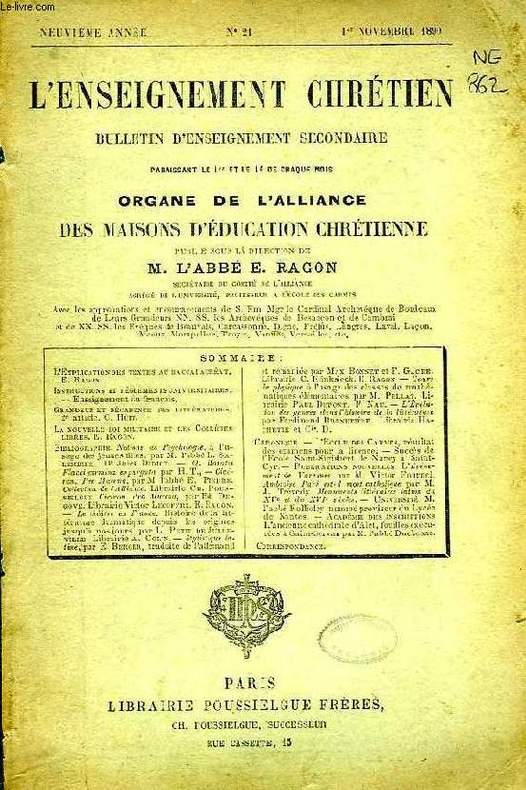
1961RO40189757Librairie Poussielgue Frères. 1890-1961. In-8. Relié. Etat d'usage, Couv. légèrement passée, Dos satisfaisant, Intérieur acceptable. 44 volumes reliés + env. 270 fascicules brochés. Années 1938, 1940-44 fortement incomplètes (fascicules très réduits pour les années de guerre). Plusieurs numéros manquants. Etiquettes de code sur les dos. Tampons et annotations de bibliothèque sur les 1ers plats et en 1res pages. Quelques couvertures abîmées.. . . . Classification Dewey : 370-Education
Librairie Poussielgue Frères. 1890-1961. In-8 Carré. Relié. Etat d'usage. Couv. légèrement passée. Dos satisfaisant. Intérieur acceptable. 44 volumes reliés + env. 270 fascicules brochés. Années 1938, 1940-44 fortement incomplètes (fascicules très réduits pour les années de guerre). Plusieurs numéros manquants. Etiquettes de code sur les dos. Tampons et annotations de bibliothèque sur les 1ers plats et en 1res pages. Quelques couvertures abîmées. Du n° 21, 9e année, nov. 1890, au n° 3, 75e année, déc. 1961. Avec de nombreux suppléments pour les années 1925-1932. Premières années: Organe de l'Alliance des Maisons d'Education Chrétienne, sous la dir. de l'Abbé E. Ragon. Sommaire du n° 21, nov. 1890: L'explication de textes au Baccalauréat, E. Ragon. Instructions et règlements universitaires, Enseignement du français. Grandeur et décadence des littératures, 2e article, C. Huit. La nouvelle loi militaire et les Collèges libres, E. Ragon. Bibliographie. Chronique. Correspondance. Sommaire du n° 3, déc. 1961: S.E. Mgr Blanchet, Du solide. Pierre Sage, Douceur. Louis Ruy, Le sens de la vie. Ch. guignier, Les travaux pratiques de Géographie. Education féminine, 35e Congrès de l'Union. Henri Platelle, Bulletin d'Histoire...
Hardcover Like New. Ships directly from publishers being a new release book . Pls. allow a minimum of 25 business days delivery time.
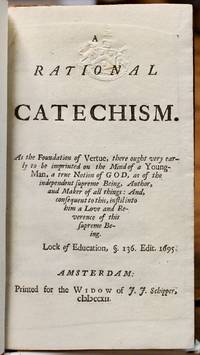
171215978<p>Amsterdam: Printed for the Widow of J.J. Schipper 1712 Second edition not so stated dedicated to the author's "dearest daughters" with a long quote from Locke's On Education on the title-page. The work is a significant distillation of the principles of toleration first published in 1687. . . Contemporary mottled calf. Gilt spine tooled in compartments yellow silk ribbon marker. . Twelvemo. Edges sprinkled red. Binding extremities slightly worn and boards a bit scratched. Front joint cracked but sound. The Macclesfield copy with the blindstamps shelf marks and the South Library bookplate. A very good copy clean copy. William Popple 1638-1708 was the nephew of Andrew Marvell and was educated under his guidance. He was a successful merchant in Hull before moving to Bordeaux where he lived from 1670 to 1688. After returning to London he met William Penn and became secretary of the Dry Club established by John Locke to debate issues of religious liberty. He also translated Locke's Letter on Toleration 1689 from the Latin. When Locke was appointed a commissioner of the Board of Trade in 1696 Popple became the board's secretary. Though this is a dialogue between a father and son the dedication to his daughters states: "I am desirous that it may be a common memorial of me unto all of you when I shall be no more I therefore make it yours also by this dedication: And for the same reason I have likewise added unto it a copy of that advice which I formerly gave him in such verse as my unpractised Muse then dictated.</p> Printed for the Widow of J.J. Schipper,
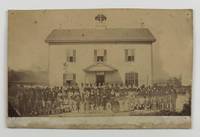
18804993N.p. but likely Live Oak FL 1880. Very good. Albumen photograph 4.5 x 7.75 inches mounted on card. Card trimmed with pinholes at corners remnants of printed caption in bottom margin slight surface soiling and spotting. Penciled annotation on verso. A stunning original photograph featuring Rev. Joseph Leroy Atwell Fish 1828-1890 and his wife and children posed amongst their African-American students at an unnamed "colored school" which was very likely the Florida Baptist Institute. The images captures Fish his wife and probably his daughters in the middle of the frame standing in front of a large two-story schoolhouse surrounded by about eighty young Black men and women in suits and dresses. Revered Fish was a graduate of Amherst College and the Newton Theological Seminary who was ordained a Baptist minister in 1856. Fish was also a teacher who helped found Florida Memorial University Florida Baptist Institute in Live Oak in 1880 where he served as first president of the institution until his death there on March 26 1890. Florida Memorial University is the only HBCU in the southern part of the state. The penciled annotation on the present photograph provides some information on the photograph but is probably ultimately misleading in one regard: "Rev. J.L.A. Fish & wife In Virginia teaching a colored school -- He married my Father & Mother Mr. & Mrs. Milan Hills Lucy M. Williams Dec. 21 1875."<br /> <br /> The latter part of this inscription is indeed true. Reverend Fish married Milan Hills and Lucy Williams on December 21 1875 in Hebron New York where he was serving as a church pastor. But the historical record does not indicate that Reverend Fish ever taught at an African-American school in Virginia if he did it was so brief that it is now lost to history. Fish's first known foray into teaching African American students was a brief six-month stint in Natchez Mississippi in 1879. Immediately thereafter Fish was appointed to the Florida Baptist Institute where he served the last decade of his life. As such it is far more likely that the inscriber here meant to say that Reverend Fish and his wife were "In FLORIDA teaching a colored school."<br /> <br /> Reverend Fish's work at the Florida Institute is covered in the Obituary Record of Graduates of Amherst College for the Academical Year ending June 27 1883: "His chief work was with the Freedmen as he brought Florida Institute out of all its troubles financial and social changed the feeling of the whites from hatred to sympathy with his work and put the school on a permanent foundation. His aim was to educate leaders for the race and the principal effort of his school was to train teachers and preachers to go out through the state and by their example to lift up and educate both intellectually and morally the colored people. His influence was felt throughout the state both through his training of teachers and preachers and through his counsels given at conventions associations and other gatherings of the colored men and in private. He is mourned by both white and black. By the whites because they knew his teachings would help the colored people without causing trouble to them. By the latter because they miss their leader teacher and friend. unknown
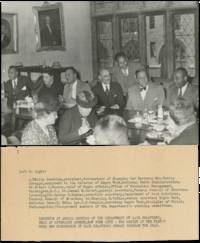
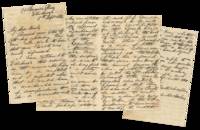
List3004United States 1964. Twenty-seven letters two typed documents totaling four pages six photographs and nine pieces of ephemera including two of Haynes’ heavily stamped passports. One of the typed documents and two of the letters belong to Olyve Jeter Haynes’ second wife. Many items affixed to loose scrapbook leaves. Near Fine. George Edmund Haynes 1800–1960 was an African American sociologist and social worker. He received a B.A. from Nashville HBCU Fiske University an M.A. from Yale and was the first African American to receive a Ph.D. from Columbia graduating in 1912. While in New York Haynes worked with the National League for the Protection of Colored Women and the Committee for Improving the Industrial Conditions of Negroes in New York and formed the Committee on Urban Conditions among Negroes with white suffragist Ruth Standish Baldwin. These three groups would merge into the National League on Urban Conditions among Negroes—shortened to the National Urban League—in 1911. He taught economics and created the sociology department at Fiske and served as director of the Division of Negro Economics under the US Secretary of Labor. He also served the Federal Council of Churches and with the Joint Committee on National Recovery which worked to ensure African Americans got their fair share of the New Deal and had a role in the formation of the State University of New York.<br /> <br /> Offered here is a collection of Haynes’ letters with several photographs and documents. The letters which are sometimes placed alongside copies of Haynes’ outgoing correspondence come from politicians and influential figures in African American higher education. Those from political figures are generally in response to Haynes sending them his thanks for their advocacy for African Americans: Herbert Hoover personally thanks him for his “fine note of friendship†in response to Haynes’ congratulations on his presidential nomination on the 1928 Republican ticket June 21 1928 Franklin D. Roosevelt’s secretary Louis Howe for his letter in appreciation of the President’s speech against lynching before the Fedral Council of Churches December 14 1933 and New York City Mayor Herbert Lehman for his letter in support of the Mayor’s mandate to desegregate CCC camps in the state April 22 1937.<br /> <br /> The letters from fellow educators are more personal and substantial. In an early letter Tuskegee president Robert Russa Moton councils Haynes on an unspecified conflict:<br /> <br /> “I can see no reason why we should not state your case before the Board. It is quite evident that Mr. Wood misunderstood you. I shall be seeing Dr. Dillard next week at which time I hope to talk over and more in detail the whole situation. . The whole thing to me is most unfortunate especially when the work in hand is so very important and there is so much need for all the forces we can summon to do the work.†July 8 1919<br /> <br /> At the time Haynes was with the Division of Negro Economics though it is not clear what misunderstanding had occurred or how it related to Tuskegee’s Board. “Dr. Dillard†is almost certainly James H. Dillard a white advocate for African American education who at the time was the director of the Negro Rural School Fund. Dillard and Haynes seem to have been personal friends as Dillard laments in a later letter that “I wonder if you and I will ever see each other again. The fates seem against it†September 24 1932.<br /> <br /> Another friend of Haynes’ Nathan B. Young writes him in 1931:<br /> <br /> “As you may have heard I am leaving the field of education in Missouri. I am casting about to find something to do. I am still young and healthy with mental powers unabated. I should like to be put into a position where I would have the leisure to ‘write up’ what I have learned by long and varied experience in the field of Negro education. . I am asking my friends to make suggestions as to the best use of the leisure immediately before me. Of course I must keep on earning in order to keep on eating for I am a poor man.†May 26 1931<br /> <br /> A newspaper clipping alongside the letter concerns Young’s unceremonious ouster from the presidency of Lincoln University an HBCU in Missouri. Young had been removed from the same post in 1927 at least in part because of his efforts to turn the school away from agricultural and industrial education and towards becoming an accredited liberal arts university.1 He returned to the post in 1929 but was fired again without a hearing in 1931; in 1933 after a few years of lecture touring Young died.<br /> <br /> Two letters from newsman Julius J. Adams concern an article that the two were writing about the founding of the National Urban League. Adams writes:<br /> <br /> “I am enclosing a copy of a memorandum supplied me by the National Urban League regarding its formation. It is of course strictly confidential but I am eager to get your version of the League’s beginning and desire to see if it coincides. . I must say that the manuscript I am working on is being held up by the printers and it is essential that I get your statement at once. I’d certainly not like to complete the work without including this particular phase of the League. What I’d probably do would be to omit or at least skirt the controversial part of the statement.†June 14 1948<br /> <br /> The attached statement which gives a brief overview of the early years and figures of the Urban League was authored by Eugene Kinckle Jones. Jones was hired as a secretary to the Committee on Urban Conditions so that Haynes could spend most of his time teaching at Fiske.2 As Jones notes in the statement “I was the first full-time employee†as Haynes “never gave full time to the organization.†It is plausible that this is the ‘controversial’ piece that Adams is worried about: Jones convinced the Committee’s board to give him a more significant role in 1916 and by 1917 became executive secretary effectively demoting Haynes who then left the League.3<br /> <br /> The photographs included in the collection date from the later era of Haynes’ career. Three are of the 1942 annual meeting of the Federal Council of Churches Department of Race Relations. The typed caption states that the subjects of the photo—besides Haynes—include labor and civil rights activist A. Philip Randolph journalist Venice Spraggs listed as “assistant to the director of Negro Work†and academic and politician Robert C. Weaver. The Race Relations commission was created in 1921 with the aim of using Christianity to aid racial relations; Haynes became secretary in 1922 and was executive secretary from 1934 to 1947. A 1948 photo shows Haynes with the Temporary Commission on the Need for a State University a New York organization that studied college admissions especially discrimination against African American and Jewish applicants. Its 1948 report which is being presented to Governor Dewey in this photograph included the recommendation to set up the SUNY system. Finally one photograph shows an event at New York City’s WLIN radio station celebrating the release of Haynes’ book Africa: Continent of the Future 1951.<br /> <br /> Later letters concern the death of Haynes’ wife Elizabeth Ross Haynes who died in 1953 with notes of condolence from figures including W.E.B. Du Bois and Adam Clayton Powell. Elizabeth Haynes a fellow social worker sociologist and Fiske graduate was a distinguished figure in her own right. One letter from “Sara†in Bronxville remembers her in some detail:<br /> <br /> “Elizabeth spent two afternoons here while in the process of revising ‘Black Boy’ and I spent a day at your house afterward. We had a child-like and easy way of picking up close communication after long intervals of separation. We never talked about Big Issues and all that — but family matters projects in hand personal expression in the arts memories; we always exchanged some disrespectful jokes about women’s organizations — both of us had felt their sticks for a long time — . I told her the first time they met I meant to get out of teaching colored students before I got helped out by the onrush of young colored teachers. She said that she was quite a lot afraid of giving up her professional work which she had under reasonable control for marriage when she felt no domestic skills and did not even want them much.†November 24 1953<br /> <br /> “Black Boy†is Elizabeth Haynes’ The Black Boy of Atlanta 1952 a biography of African American educator civil rights activist and entrepreneur Richard R. Wright.<br /> <br /> After Elizabeth Haynes’ death George Haynes married Olyve L. Jeter. Two letters are addressed to her one from NUL secretary James H. Hubert worrying about “all the lynchings and what-not†in Harlem and considering carrying a weapon June 2 1937 and one thanking her for her work with the Citizens for Eisenhower-Nixon though misspelling her name as “Alyne†November 7 1952. Also included is a review authored by Jeter of Charles A. Battle’s pamphlet “Negroes on the Island of Rhode Island†which seems to have been sent out for publication. The note to the editor states that Jeter was a staff member in the Federal Council of Churches’ Commission on Race Relations.<br /> <br /> Haynes’ career significantly impacted both Black academic sociology and employment housing and educational conditions for African Americans. Of interest to scholars of Haynes and of African American education in the early and mid century.<br /> <br /> 1 Antonio Fredrick Holland Nathan B. Young and the struggle over Black higher education Missouri University Press 2006.<br /> 2 Nancy J. Weiss The National Urban League 1910–1940 Oxford University Press 1974.<br /> 3 Edgar Allan Toppin “Haynes George Edmund†American National Biography March 27 2025 https://doi.org/10.1093/anb/9780198606697.article.1400270. unknown
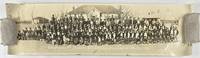
193212881Lawton Ok. 1932. Panoramic photograph 8 x 28.75 inches. Some staining along border with a few spots in the image area a few small chips and creases. Good plus. A striking panoramic photograph featuring several dozen Native American students along with some faculty at the Fort Sill Indian School in December 1932. The Fort Sill Indian School was founded in 1871 with twenty-four students and two employees. Within ten years the school had many more students and seventy-five employees to manage the facility. The present photograph emanates from the era of the Great Depression and features both male and female students from early grades to teenage years. A handful of white teachers are interspersed within the student population. The subjects of the photograph are arranged seven rows deep and are posed in front of one of the school buildings in a rather sparse rural setting.<br /> <br /> "Because the school was located near Lawton before World War II Fort Sill's student body was made up largely of Indians from western Oklahoma -- Comanche Apache Caddo Kiowa Delaware and Wichita. This changed dramatically in the postwar era however as Navajo from New Mexico and Arizona began to be admitted. Within a few years they comprised 80 percent of the student population. The influx of out-of-state Native students gradually declined and by 1970 more than two hundred of the school's three hundred pupils hailed from Oklahoma. Until the 1950s the curriculum for males consisted of vocational and agricultural training and females received instruction in homemaking. Thereafter Fort Sill emphasized more of an academic curriculum although vocational trades remained important. Students who attended Fort Sill came away from the boarding school with impressions that ranged from downright hatred of the school to enduring fondness for it. For some the strict discipline and harsh punishment meted out at the institution made it feel more like a prison than a place of learning. Being away from family and tribal communities made the experience even more alienating. Others however enjoyed their time there making lifelong friends participating in extracurricular activities and remaining Indian despite attempts by the government's educational machinery to grind it out of them" - The Encyclopedia of Oklahoma History and Culture.<br /> <br /> OCLC is silent on other examples of this photograph. unknown
1903List2990Dover and Chatham Ontario; Edinburgh and Blairgowrie Scotland 1903. Seventy-eight pieces: seven 2.5 x 4†photographs mounted on heavy cardstock; with seventeen letters from Alexander to James Macfarlane fifty-two from James to Alexander Macfarlane and two from others to Alexander Macfarlane. Fourteen from 1853–1882; eleven from 1883–1885; thirteen from 1886; twelve from 1887; thirteen from 1888; eight from 1889–1903. Sorted chronologically. Envelopes good to very good; letters generally near fine. Alexander Macfarlane 1851–1913 was a Scottish physicist mathematician and logician. He earned a D.Sc. from the University of Edinburgh in 1878; following this he would teach at the University of St. Andrews the University of Edinburgh the University of Texas at Austin and Lehigh University. Macfarlane earned a number of accolades including elections to many scientific and mathematical societies and an honorary doctorate from the University of Michigan. After his retirement in 1894 Alexander Macfarlane moved to a farm in Ontario left to him by his uncle James who is his correspondent herein. Much less is known about James Macfarlane; born in Scotland in 1806 he immigrated to North America by way of New York in 1835. He purchased land in Dover Township now Chatham Ontario in 1853 and was elected the town’s reeve in 1879. At the time of this correspondence he was a farmer by occupation. The photographs in the collection—portraits of unknown individuals—are likely his as they are from photography studios in the Brantford and Toronto area and seem to date from before Alexander Macfarlane’s arrival in the colony.<br /> <br /> James Macfarlane’s letters to his nephew mainly written between 1886 and 1889 give detailed descriptions of farm life and logistics in 19th-century Ontario. He grew corn wheat beans clover and hay raised pigs and cows and kept a number of workhorses alongside a few seasonal employees. The elder Macfarlane describes the state of his crops the health of his animals and especially his finances taxes and employees’ wages; he writes of “a constant fear of running aground†March 17 1887. However he also occasionally discusses academic or political affairs – it is unclear what education Macfarlane had or what political experience besides his reeveship but from his writing it seems not insignificant. One prohibition-related incident in 1887 especially stands out:<br /> <br /> “During the night between last Saturday & Sunday there was a dynamite explosion in front of the handsome residence of H. Cummings Esq. of Chatham – damage but no one hurt. It is believed it was the doing of the Chatham grogocracy – Mr. C. favours prohibition – Tories do notâ€. August 10 1887<br /> <br /> This letter dates the incident to late on the 6th or early on the 7th of August 1887; we do not find the explosion mentioned in local newspapers from the time.<br /> <br /> Alexander Macfarlane’s letters which comprise most of the earlier letters in the group focus on his burgeoning academic career. In 1882 when the majority of his letters were written he had applied and was waiting to hear about a position as Chair of Mathematics at University College Dundee now the University of Dundee which was then just being formed. Besides occasional discussions of work in which he is currently engaged Macfarlane writes about his tactics for bettering his chances at the Chair; for example:<br /> <br /> “I have just received some information which indicates that I shall have an excellent chance of being successful. Rev. Mr. Tait who was our minister before he left Blairgowrie for Newport opposite Dundee happens to be a very intimate friend of the founder of the College Miss Baxter of Balgavies. I saw from the first that it would be important to secure his cooperation; he has been very active in his support. Recently he was staying at Balgavies and when the College was discussed he spoke highly in my favour. He has persuaded Miss Baxter to take some active steps in my favour. Copies of all the applications etc. are sent to her which seems to indicate that a proposed appointment is submitted to her for approval.†September 19 1882<br /> <br /> The wait is difficult for Macfarlane and he frequently comments with displeasure on related workplace politics. For instance he is upset by the choice of William Peterson—whom he describes as “a fop†October 3 1882—for Principal of the new university:<br /> <br /> “Peterson had this advantage that many of the electors had a bias in favour of a Classical man for the office of Principal. He got only a second class at Oxford. I say nothing on the subject but I have heard others express an opinion that a mistake has been made.†August 13 1882<br /> <br /> And later:<br /> <br /> “Most people express themselves as greatly surprised at the choice the Dundee Council made of a Principal. My theory of the matter is that Professor Donaldson with the view of furthering his own candidature wished to ingratiate himself with Professor Sellars after he saw that Mr Porter would not be accepted by the Council. I feel that the Council may do anything as they seem nearly incapable of forming an independent opinion.†September 27 1882<br /> <br /> When he does not receive the Chair Macfarlane shares his thoughts with his uncle about the state of Scottish Universities especially that they “have no reputation for scholarship†and that the Scottish people “need not expect learning to flourish at their Universities†November 23 1882.<br /> <br /> Of course Macfarlane’s career turned out fine despite this setback; in 1895 he tells James not unfairly that “I am considered one of the foremost thinkers of the day in the field of exact science†March 21.<br /> <br /> Overall a look at the lives and activities of an uncle and nephew with extremely different careers; of interest both to scholars of Ontario history and farming and to historians of science and higher education. unknown
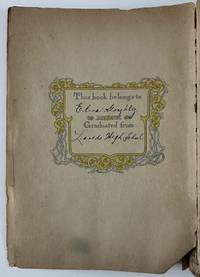
192512981Laredo TX 1925. 118pp. of content of various types including thirty-six photographs most once in mounting corners but now loose plus 41pp. of manuscript inscriptions to Gonzalez an original drawing and various kinds of mounted ephemeral items. Contemporary scrapbook 8.75 x 6 inches. Ownership signature on early page. A well-used personal scrapbook lacking spine and rear cover front cover detached and with significant wear. Front free endpaper also detached. Some photographs somewhat worn but contents generally sound though dust-soiled. Good condition overall. A unique record of a young Texas woman Elena Gonzalez and her experiences as a senior at Laredo High School in 1925 containing numerous photographs a legion of manuscript messages to her from fellow students and dozens of ephemeral items related to her educational experiences in a prominent Texas border town. The book includes thirty-six photographs which mainly picture Gonzalez and her fellow students in individual portraits small groups and class photos almost always in outdoor settings. The photos also include two slightly larger studio portraits of Gonzalez each measuring about 8 x 5 inches.<br /> <br /> The work also includes about forty pages of manuscript inscriptions from fellow students to Gonzalez dated mostly in March and April 1925. Many of the messages take up most or all of an entire page with Gonzalez's classmates sharing memories funny stories good wishes for the future and so forth. Interestingly but not surprising considering where Elena lived several of the manuscript inscriptions are written in Spanish. In addition to the personal inscriptions to Gonzalez the book also contains an eleven-page "Prophecy of the Class of 1925" handwritten by Phyllis Ellis "Prophet of Class of '25." The prophecy was "read in the Laredo High School Auditorium Thursday night May 21 1925 by the writer." Ellis's prediction for Elena is as a model for the Tar Soap Company "to pose for magazine pictures showing the benefits of their products to one's hair." The photographs and manuscript elements are complemented by various kinds of ephemeral items including calling cards programs program clippings mementos from school events clippings from school publications and newspapers including numerous jokes and funny story clippings in both English and Spanish and so forth. Though the condition of the memory book has seen better days the fact that it survives at all is a feat in itself. A wonderful primary source for Mexican-American life in the borderlands. unknown
1928017879Paul Clayton 1928. Hard Cover. Very Good/No Dust Jacket. Reprinted by Evans' grandson in 1928. Very good copy with mild page yellowing. Blue boards have mild bumping to corners. Gilt lettering has faded a bit. Exceptional quality for such a rare book. Paul Clayton hardcover
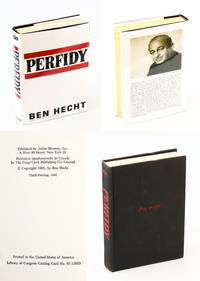
1961425j1622New York: Julian Messner Inc. Good. 1961. Third Printing. Hardcover. "In my own time governments have taken the place of people. They have also taken the place of God. I have written chiefly of one government in this book - that of the new Jewish state of Israel. I am a Jew. I come of a long never-broken line of Jews. They did well by the world. What happened to this fine heritage when the Jews finally fashioned a government of their own in Israel What happened to Jews when they became Jewish politicians What happened to a piety a sense of honor and a brotherly love that 2500 years of anti-semitism were unable to disturb in the Jewish soul My answers are in this book." - Preface. "Describes events surrounding the 1954-1955 Kastner trial in Jerusalem. Based on trial transcripts Hecht concludes that in 1944 Rudolf Kastner a member of David Ben Gurion's Mapai Party deliberately withheld from Hungarian Jews knowledge that the trains Nazis were putting them on were taking them to die not to a fictitious resettlement city as the Nazis claimed and that Kastner lied about it under oath." - Wikipedia. "A devastating account." - E. Jager Jerusalem Post 2007. "Ben Hecht 1894-1964 was an American screenwriter director producer playwright journalist and novelist. A journalist in his youth he went on to write 35 books and some of the most enjoyed screenplays and plays in America." - Wikipedia. vi 281 pp. Extensive footnotes. Unmarked with average wear to original black cloth lettered in red. Moderate lean to spine. Binding intact. Includes new replica dust jacket in glossy new archival-grade protection. A sound early example of this work which remains controversial until today.; 8vo - over 7¾" - 9¾" tall . Julian Messner, Inc. hardcover
1951214h6103London: Methuen & Co. Ltd. Very Good in Good dust jacket. 1951. First Edition. Hardcover. "Professing Jews were banished from Spain in 1492 and from Portugal in 1497. In the 17th century their descendants won a cautious permission from Cromwell to settle in London. This book describes how this little Jewish community the first in England since the Middle Ages grew prospered and contributed to the wealth and influence of London eventually producing in Disraeli one of England's greatest Prime Ministers. The Wardens of the ancient Spanish and Portuguese Jews Congregation of London provided the author with access to all their unpublished manuscript records. This book is thus the first complete study of the subject carried up to present times." - dust jacket. Published on the occasion of the 250th anniversary of the opening of the Bevis Marks Synagogue 1701 : 5461. "Hyamson 1875-1954 served as chief immigration officer in the British Mandate of Palestine from 1921 to 1934. He was made an OBE in 1931." - Wikipedia. pp xii 468. Glossary. Index. 31 half-tone plates 7 line illustrations. Light wear to clean tight and unmarked book. Gentle toning to contents. Spine sunning and light peripheral wear to dust jacket now preserved in archival-grade Brodart. A well-preserved copy of this remarkable history.; 8vo . Methuen & Co. Ltd. hardcover
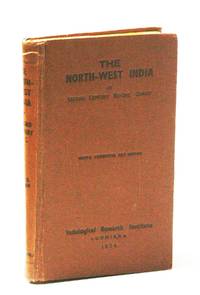
545H2614Ludhiana India: Indological Research Institute 1974. Book. Good. Hardcover. First Edition. 8vo - over 7¾" - 9¾" tall. xxiv 315 pp. Complete with all five fold-out maps. VII black and white plates of numismatic coins and their monograms. "I am very glad that yet another Indian scholar has taken up the subject of the Indo-Greeks. Dr. Mohan's analysis brings to bear upon it a fresh approach and new interpretations. I commend his study to all students of the subject." - Foreword. Chapters include: North-West India or the Uttarapatha; The Peoples; Introduction to the Greco-Sunga Period; The Bactrian Greeks; Demetrius; Rise of the Sungas; Eukratides and his Successors; Menander; Menander's Successors. Unmarked with average wear to publisher's brown cloth. New pastedowns appear to have been applied inside each board extending almost an inch onto free endpapers thus bolstering the hinges. A sound copy of this valuable reference. Indological Research Institute Hardcover
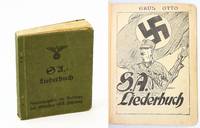
1933545j1632München Munich: Jos. C. Huber. Good. 1933. First Edition Thus. Hardcover. Songbook of the Sturmabteilung SA / Storm Troopers the Nazi Party's original paramilitary wing. Includes one-page forward by Ernst Röhm Chief of Staff of the S.A. who was murdered the following year during the Night of the Long Knives. Text in Fraktur old German script. 4-291 13 pp. Original drab military green decorated cloth over thin flexible boards. Prior owner's name Otto Grun stamped atop title page and written inside front board. Four pages of notes in pencil near back. Tight and square. 13 x 10cm. A sound example of this rare S.A. artifact. ; Illustrations; 24mo . Jos. C. Huber hardcover
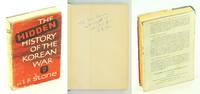
1952515j1190New York: Monthly Review Press. Good in Fair dust jacket. 1952. First Edition. Hardcover. Signed and inscribed by I.F. Stone 1907-1989 upon front free endpaper. "Much about the Korean War is still hidden and much will long remain hidden. I believe I have succeeded in throwing new light on its origins on the operations of MacArthur and Dulles on the weaknesses of Truman and Acheson on the way the Chinese were provoked to intervene and on the way the truce talks have been dragged out and the issues muddied by American military men hostile from the first to negotiations." - Author's Preface. "It is at once a tour de force of research a brilliant piece of interpretation and last but not least an exciting story. If enough Americans will read it we are convinced that it can become one of those rare documents which like Zola's 'J'accuse' play a role in shaping history." - Publisher's Foreword. "A controversial work which maintains that the War was actually brought about by a US-South Korean conspiracy - a charge later to be embraced to varying degrees by revisionist historians. Based on official US and UN documents and American and British newspapers." - K.D. McFarland. In recent years this title has been assigned a prestigious place on the 'Forbidden Bookshelf' a short list of American books once 'vanished' by state and corporate entities but now being revived with a view to providing a better understanding of America's past and how her future course might be corrected. The publisher's note to a 1971 reprint states that upon its original appearance in 1952 this book met with an almost complete press blackout and boycott. xviii 2 364 p. References. Index. Map. Tight clean and unmarked. Nibbling to top edge of back board otherwise moderate wear to original blue cloth. Above-average wear to complete dust jacket now preserved in archival-grade Brodart. A sound signed copy. Edwards 710 Millett p.129-130 McFarland 418 Select Bibliography of Revisionist Books p.28.; 8vo - over 7¾" - 9¾" tall; Korean War 1950-1953 North Korea - History South Korea - History Syngman Rhee General Douglas MacArthur John Foster Dulles Harry Truman United Nations Stalin Dean Acheson; Signed by Author . Monthly Review Press hardcover
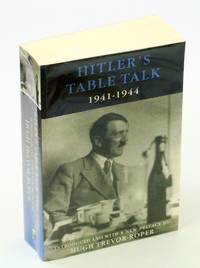
2000113j0241London: Phoenix Press. Good. 2000. Reprint. Paperback. 184212028X . "On Martin Bormann's instructions the secret conversations at Hitler's headquarters from July 1941 to November 1944 were all recorded. This extraordinary document is the result. In the relaxed atmosphere of his inner circle Hitler talked freely about his aims his early life and his plans for further conquest and a new German empire. The full text of Hitler's Table Talk as preserved by Bormann is presented here." - back cover. Reprint of the 1953 first English edition with a new Preface. xxxix 746 pp. Index. Tight and unmarked with moderate wear. Covers nicely protected by easily removable clear plastic which is not affixed to the book. Enser p.209 Kehr & Langmaid 754 Rees G 911.; 8vo . Phoenix Press paperback
19642111902152907670Educational materials survey 1964. Soft Cover. Fine. Size: A5 Number of books: 13 in total Educational materials survey paperback
18773717043Cambridge University Press 1877. This is an ex-library book and may have the usual library/used-book markings inside.This book has hardback covers. In good all round condition. No dust jacket. Super royal 8vo 324 pages with additional 20 pages of CUP publications at the rear. Bound in dark green cloth with black decorative ruling to front and rear boards and gilt stamp title and head and tail bands to spine. Exterior has some moderate shelf wear and the front board is scuffed. Minor chipping to extremities. Black endpapers with bookplate to front pastedown and library markings to rrep. Binding feels slightly loose at hinges but nonetheless remains secure and firm. Pages are clean throughout with intermittent but minimal foxing and pen/pencil markings. Complete with 16 plates illustrated in colour. Please note the Image in this listing is a stock photo and may not match the covers of the actual item1250grams ISBN: Cambridge University Press hardcover
D20107Pisa circa 1827. Quarto signed on front free endleaf "Ida de Guiche Pise 1827" consisting of approximately 200 pages of wove J. Whatman paper watermarked 1825 with about half of the pages inscribed in a neat script that matches the signature in French the text covers a variety of topics including world and art history; bound in full red straight-grained morocco tooled in gilt with custom tooling on front board that reads "Duchesse de Guiche"; all edges gilt; rebacked; contents nicely preserved; 8½ x 7 in. <br/><br/>Ida Guiche was the younger sister of Bonapartist and dandy Alfred d'Orsay 1801-1852 the sartorial inspiration for The New Yorker magazine's mascot Eustace Tilley. Although only about 27 at the time she worked on this book de Guiche was married at the age of 16 to Héraclius de Gramont 9th Duke of Gramont 1789-1855 she had already given birth to five children. She had a total of six children who survived infancy and named them all either Antoine or Antonia. unknown
1595044181Paris: Pierre Mettayer 1595. Early Edition. Hardcover Half Leather. Very Good Condition. 4 volumes bound in 2 rebound in modern half red leather over decorative paper in an antique style. Old library stamps to title index and occasionally to the top right corner. Slight soiling to title quite clean otherwise and an attractive and attractively printed copy. Monstrelet meant to carry on the work of Froissart and extended the Chronicles from 1400-1444. Additions were pieced together and tacked onto the end of his work extending it to 1515. Monstrelet who was present when Joan of Arc was interrogated by Philip the Good includes a great deal of primary source material that otherwise would have been lost to history. 12 328 3 leaves; 8 195 10 130 124 10 leaves. Size: Folio. 4-volume set complete. Quantity Available: 1. Shipped Weight: Over 3 kilos. Category: History; Antiquarian & Rare. Inventory No: 044181. <br/><br/> Pierre Mettayer hardcover books
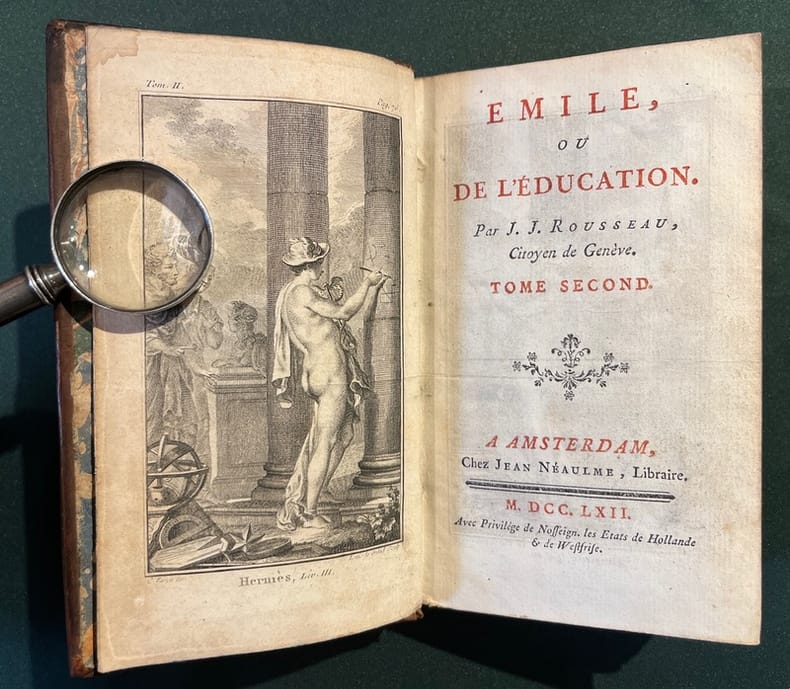
176220434A Amsterdam [Paris], chez Jean Néaulme [N. B. Duchesne], 1762. 4 volumes in-12 de [2]-viii-[2]-466; [2]-407-[1]; [2]-384; [4]-455-[5] pages. Plein veau brun moucheté, dos lisses ornés de filets et fleurons dorés, pièces de titre et tomaison bordeaux et beige, tranches marbrées bleues.
19692080202103700773National Education and Research 1969. Soft Cover. Fine. Size: 26cm B5 National Education and Research paperback
1812513032London: T. Hughes 1812. Hardcover good condition. Very scarce edition of this anti-Irish polemic with a dedication to Spencer Perceval spelt Percival by the editor presumably just before his assassination in 1812. Particularly gruesome plates throughout depicting the martyrs ends. Incorrect spelling of John Foxe. Contemporary binding half bound in red morocco with marbled boards. Spine is rubbed and worn at the ends with a small split at the top corners are bumped and nicked and the leading edges are worn. There is some foxing throughout and slight staining here and there but the text and plates remain clear. Previous auction sticker on the rear corner. Undated but c1812. DP. Hardcover. Good. Used. T. Hughes Hardcover