[CATTLE]. ENGLISH SCHOOL ? SKC S K CBiblio.com

34 831 résultats
RGW20985No Binding. Very good. Lithograph signed and dated on plate on chine colle laid on backing sheet faint horizontal creases An early lithograph presumably privately printed. There is an S above the monogram which is perhaps LC or KC. No Jacket issued unknown
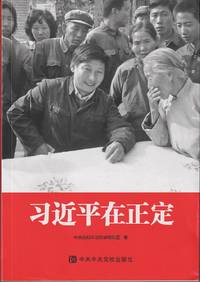
2019217771Beijing.: Central Party School Press. Reprint. 2019. Numerous colour photographic illustrations of interviewees groups of people locations certificates documents and so on relating to Xi Jinping's life in the period1982 - 85. 365pp text in simplified Chinese characters 23.3 x 16.5. Very good copy. The preface states that Zhengding was where Xi Jinping began his political career serving on the County Party Committee while working there for over 3 years 1982 - 85. The book consists of oral accounts of the people with whom he worked at that time which were originally published in "The Study Times". It is a sequel to the interview record "Xi Jinping's Seven Years as an Educated Youth". . Central Party School Press unknown
200319370Centre Georges Pompidou 2003 In-8, broché couv. illustrée, photographies en couleurs, 189 pp. Bilingue français/anglais. Très bon état.
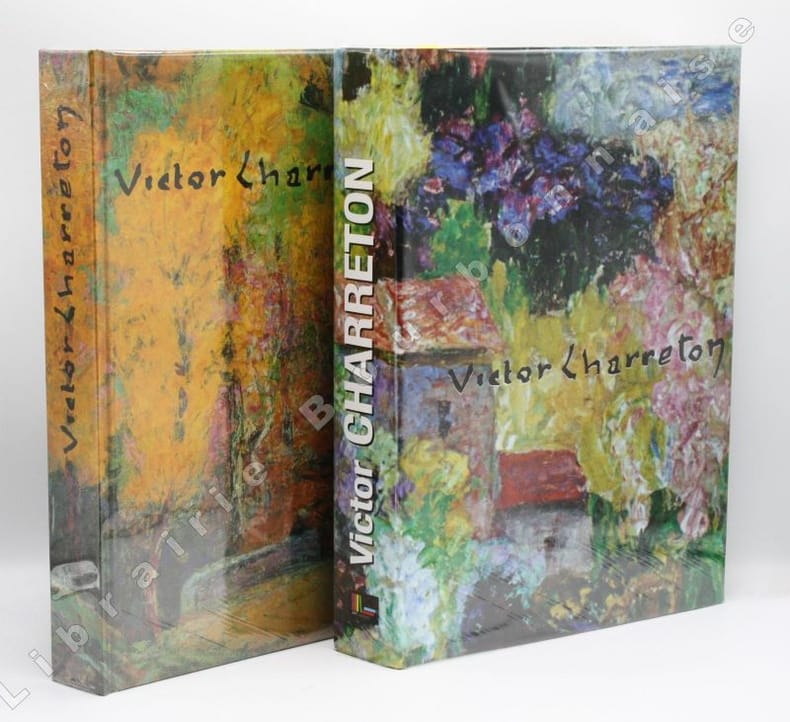
12169[La Sauvetat], Robert Chatin - Paris Art inprogress Editions, 2007 ; fort vol. in-4. 733pp. Cartonnage illustré de l'éditeur, jaquette couleurs. Parfait état.
13210[La Sauvetat], Robert Chatin, Imprimerie Vatel à Brioude, 1995 - Paris, Art inprogress Editions, 2007 ; 2 forts vol. in-4. 597 pp.-1 f. / 733pp. Cartonnages illustrés de l'éditeur, avec une jaquette couleurs por le second volume. Exemplaires neufs.
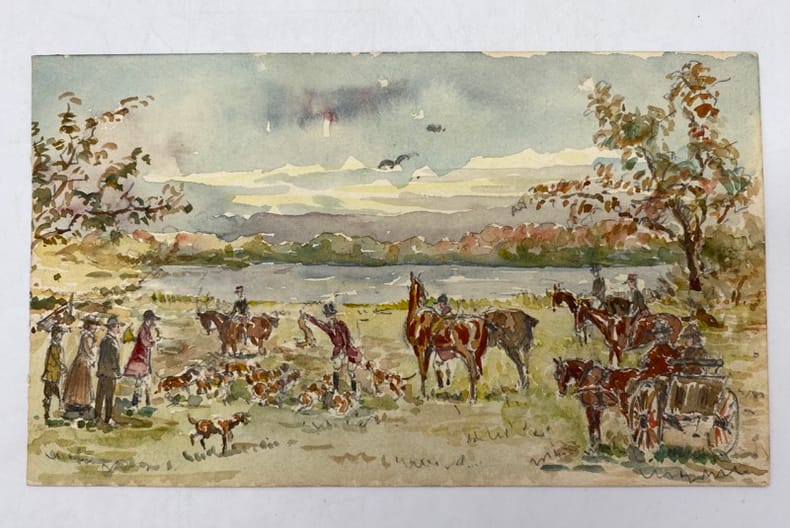
232387(Fin du XIXème siècle) 10 x 17 cm,
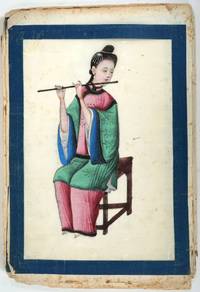
98101501Canton 1860-80's Cheungqua. A group of 7 pith or Tongcao color paintings usual minimal issues mostly clean & solid sold "as is" as a collection with the typical chips & a few fox spots else very good clean examples. A RARE GROUP ! . . . . A SUITE OF 7 FINE CHINESE COLOR PITH PAINTINGS . . . SHOWING BEAUTIFULLY DRESSED CHINESE WOMEN . . . PLAYING MUSICAL INSTRUMENTS . . . EXECUTED IN STUNNING & BRILLIANT COLORS . . . AKA: CHINESE EXPORT WATERCOLOURS . A group of typical "trade paintings" executed by Chinese native artists for foreign traders visiting Canton or Macao during the early to mid-19th century. . A SUPERB SUITE OF FABULOUS COLOR PITH PAINTINGS: A stunningly beautiful group of hand-painted color pith paintings depicting a woman playing a musical instrument. . "GOLDEN LOTUS" or "LOTUS FEET" BOUND FEET Chanzu: This like most illustrations of the period show the women with bound feet. Chanzu bound feet was an erotic obsession and fetish in ancient China. The erotic ramifications are outlined in the references below. . The paintings illustrate Chinese women in a domestic scene with furniture playing musical instruments. Subjects are: . a. Yue1in Ruan Moon Guitar Moon Zither 4 stringed . b. Yanqin Chinese Dulcimer . c. Sanxian three-stringed Chinese lute . d. Drumming on the back of a Chinese ceramic bowl . e. Dizi Chinese bamboo flute . f. Huqin Chinese violin . g. Tong Luo Chinese Brass Gong . DESCRIPTION OF THE PAINTING ART WORK AND CONDITION: . Each painting is in brilliant vivid and stunning colors. Each is skillfully painted with a fine hand delicate fine-point brush with great detail incredible reality texture and appeal. . As usual the set paintings were tipped to a contemporary backing period Each painting is backed with a contemporary stiff paper or a more current back card. . Items "a" & "b" are matted see cover.jpg & title.jpg photos posted to our website. . Each painting is approximately 21 x 34 cm. most have a blue silk ribbon border partial border or border lacking chipped and the like on has restorations on the verso in the margin only. . Each painting has some chips parts missing on the edges or with small holes here and there 'e' by and large the images are complete but some may have usual and often typical age-related cracks or splits a touch of fox spots on "c." . Suitable for framing & display. Please review photographs posted to our website for details. . "RICE PAPER" PAINTINGS: Several authors refer to this name rather than the proper name "Pith" paper paintings also can be called "Tung Tsao." . THE CANTON ARTIST OR 'SCHOOL' OF CHEUNG QUA: Cheung Qua was an export watercolor painter in Canton. He and followers of his school produced various single and albums of these paintings which were sold from his studio. . Often his in-house artists began painting on their own thus replicating the techniques subjects and essence of their masters. Because these paintings were rarely signed the one and only identification ever found was occasionally on the album cover or spine with the studio name. . Often these paintings were sold in various shops in Macao the main resting and gathering place of foreigners during part of the year. . REFERENCE: . CLUNAS Craig.: CHINESE EXPORT WATERCOLOURS. This entire book is devoted to Pith or Rice paper paintings. For musical instruments see color plates on pp.50-53 especially plates on pp.66-67 plates 39 & 40 are particularly similar to our examples that is to say by the same or an artist who was in the same house of Cheungqua or that school. CHU Arthur. et al.: ORIENTAL ANTIQUES AND COLLECTIBLES: A GUIDE pp.62-66. THE CHINESE PITH PAINTING COLLECTION AT THE NATIONAL LIBRARY OF AUSTRALIA: An Annotated Guide. Crossman Carl L. The decorative arts of the China trade : paintings furnishings and exotic curiosities. LEVY Howard S.: CHINESE FOOT BINDING: The History of a Curious Erotic Custom. . --. THE LOTUS LOVERS: The Complete History of the Curious Erotic Custom of Foot binding in China. JACKSON Beverly.: SPLENDID SLIPPERS: A THOUSAND YEARS OF AN EROTIC TRADITION. . . unknown
38044201Canton 1860-80's Cheungqua. A single pith or Tongcao color painting usual minimal issues clean & solid example brilliantly vivid colors rarely found in such clean & fine condition. A RARE EXAMPLE ! . . . . FINE CHINESE COLOR PITH PAINTINGS . . . SHOWING BEAUTIFULLY DRESSED CHINESE IMPERIAL COURT LADY . . . EXECUTED IN STUNNING & BRILLIANT COLORS . . . AKA: CHINESE EXPORT WATERCOLOURS . A stunning Chinese Imperial Court. She wears a golden-embroidered outer dress with elaborate collar sleeves and hem. She wears pink silk-embroidered pants and her "lotus" bound feet are on a wooden stool. She sits on a Ming dynasty style Huahuali wood chair with a fan in her right hand and silk-embroidered accessory in her left. Adjacent to her is a matching Ming table with three ripe 'You' fruits pommel. . This is a typical studio trade painting" executed by Chinese native artists hand-painted color pith painting for foreign traders visiting Canton or Macao during the early to mid-19th century. . "GOLDEN LOTUS" or "LOTUS FEET" BOUND FEET Chanzu: This like most illustrations of the period show the woman with bound feet peeking out below her pant cuff. Chanzu bound feet was an erotic obsession and fetish in ancient China. The erotic ramifications are outlined in the references below. . DESCRIPTION OF THE PAINTING ART WORK AND CONDITION: . This painting is in brilliant vivid and stunning colors. Skillfully painted with a fine hand delicate fine-point brush with great detail incredible reality texture and appeal. . As usual this paintings was tipped to a contemporary stiff backing paper card. . This painting is approximately 19.5 x 27.5 cm. . There are a few old mends on the verso the image is not impacted it remains quite solid and very stable. By and large a far and above average excellent example. Suitable for framing and display. . Please review the photograph posted to our website for details. . "RICE PAPER" PAINTINGS: Several authors refer to this name rather than the proper name "Pith" paper paintings also can be called "Tung Tsao." . THE CANTON ARTIST OR 'SCHOOL' OF CHEUNG QUA: Cheung Qua was an export watercolor painter in Canton. He and followers of his school produced various single and albums of these paintings which were sold from his studio. . Often his in-house artists began painting on their own thus replicating the techniques subjects and essence of their masters. Because these paintings were rarely signed the one and only identification ever found was occasionally on the album cover or spine with the studio name. . Often these paintings were sold in various shops in Macao the main resting and gathering place of foreigners during part of the year. . REFERENCE: . CLUNAS Craig.: CHINESE EXPORT WATERCOLOURS. This entire book is devoted to Pith or Rice paper paintings. For musical instruments see color plates on pp.50-53 especially plates on pp.66-67 plates 39 & 40 are particularly similar to our examples that is to say by the same or an artist who was in the same house of Cheungqua or that school. CHU Arthur. et al.: ORIENTAL ANTIQUES AND COLLECTIBLES: A GUIDE pp.62-66. THE CHINESE PITH PAINTING COLLECTION AT THE NATIONAL LIBRARY OF AUSTRALIA: An Annotated Guide. Crossman Carl L. The decorative arts of the China trade : paintings furnishings and exotic curiosities. LEVY Howard S.: CHINESE FOOT BINDING: The History of a Curious Erotic Custom. . --. THE LOTUS LOVERS: The Complete History of the Curious Erotic Custom of Foot binding in China. JACKSON Beverly.: SPLENDID SLIPPERS: A THOUSAND YEARS OF AN EROTIC TRADITION. . . unknown
180026715Canton 1800. Large 4to. 15 x 12 1/2 inches. 141 watercolours on thin paper nearly all captioned in ink in Chinese in the lower right corner each tipped to a sheet of wove paper. Mid-nineteenth century citron half morocco over marbled paper covered boards spine with raised bands in six compartments lettered in gilt in the second compartment the others with a repeat decoration in gilt marbled edges<br/> <br/> Provenance: Annie Pearson Viscountess Cowdray née Cass 1860-1932 Dunecht House Aberdeenshire.<br/> <br/> An extraordinary album of early Chinese export watercolours of the highest quality.<br/> <br/> Beginning in the late 18th century centred on the treaty port of Canton there existed a thriving trade in ethnographical watercolours executed by local Chinese artists and sold to the western merchants and travellers. The best known result of this trade is William Mason's Costume of China first published in London in 1800 which is illustrated with 60 hand-coloured aquatints adapted from a series of original watercolours by Pu-Qua of Canton. It was common for the local artists including Pu-Qua to work from a set series of models. The present album includes a number of compositions that are from the same set of models as those used by Pu-Qua but they include more detail and more of the trade-associated paraphernalia than are shown in the images as published in Mason's work. This suggests that they were not copied from Mason but were after another more detailed source or were unique compositions by the artist based on a similar series of models. Importantly these watercolours are of a uniformly higher quality than usually encountered and represent not only a wide array of occupations but also members of the highest echelon of Chinese society. The detailing on the costumes worn by these members of the royal court is breathtaking with copious use of gilt. Later collections of Chinese export watercolours were routinely executed on less expensive pith paper whereas the present watercolours are on high quality tissue and are larger in size than those typically encountered. The album represents an earlier more prestigious style of export watercolour paintings specifically meant for wealthy Europeans. These are Chinese watercolours of the highest quality designed and executed to the highest standards. The album was once owned by Annie Pearson Viscountess Cowdray Steward of Colchester and wife of Lord Weetman Dickinson Pearson 1st Viscount Cowdray.<br/> <br/> Cf. Crossman The China Trade Princeton: 1972; cf. Clunas Chinese Export Watercolours London: 1984. unknown
183027903Canton: SunQua Studio 1830. Silk covered boards. The 12 bird images are full page finely done with grass rocks and flowers with shrubs or trees. Unusually the half page images are mounted on the verso of the sheets of bird images. The half page images include collections of shells 4; women playing musical instruments 8; men sitting a scribe man smoking butcher melon fish and vegetable sellers and a few of the punishment images. <br /> <br /> Oblong 4to 8 1/4 x 13 1/4". Leaves mounted with to paper leaves with an unusual paper border with a purple circle pattern on pale background paper. Chinese style binding opening from the back of the album. Bound in a green gold blue and red silk woven in a daisy pattern which sometimes appears with a Sunqua stamp. Without background painting. The first image with some cracking but not affecting the characters some slight browning. Most in very good condition. SunQua Studio unknown
1870279111870. Finely executed portraits of women and their musical instruments larger and more detailed than many other albums. From the school of Youqua. The portraits have no background painting. 8 images mounted with dark turquoise border silk some with cracks; 3 images are mounted on card at a later date. All images loose in papered boards which open Western style and are disbound and very rubbed. Most images are in lovely and larger than most. Besides some small cracks they are in very good condition. 4to 11 1/2 x 8 unknown
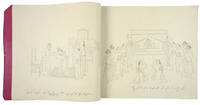
92726Canton 1840s. . Landscape quarto 27 x 29 cm. 118 ink drawings each drawing on one side of fine double-folded paper with manuscript caption in English; several small marginal tears some spotting to one page. Contemporary pink wrappers; with tears and marginal losses.<br /> Fine collection of original drawings showing Chinese ceremonies scenes from the Imperial court portraits of Chinese nobility musical instruments traders and craftspeople each captioned in English. <br /><br />In the mid XVIII century the Emperor Qianlong implemented the Canton System 17571842 in China closing the ports across the country to focus all trade on the southern port of Guangzhou. The Pearl River delta region then became the centre for China's commerce and export industry which gave a push to the development of an artisan industry. Numerous craftspersons and artists in Canton were commissioned to produce various artworks for the European market. They "depicted those phases of Chinese life which fascinated the Westerner but defied descriptions to friends and family at home. Before the advent of the camera this medium played an extremely vital role in revealing Oriental culture to the West." Crossman The China Trade 1972.<br /> Alison Hulme The Changing Landscape of China's Consumerism Oxford 2014. Canton, [1840s]. unknown
108333Circa 1800. . 3 vols folio 50.9 x 37.4 cm; 244 mounted watercolours of flowers fruit birds and silkworms on Chinese paper comprising vol.1: 82 drawings of flowers vol.2: 82 drawings of flowers vol.3: 8 drawings of silkworms 7 of parrots 59 of fruit/flowers 6 of junks nineteenth-century russia gilt gilt armorial of George Spencer-Churchill Marquess of Blandford light foxing to a few plates one volume rebacked retaining original spine one volume with light water stain to upper cover lightly scratched some loss of leather to spine.<br /> A sumptuous collection of mounted watercolours depicting Chinese silkworm cultivation birds including parrots Asian fruits and multiple species of flowers; the work of exceptionally fine draughtsmanship from a Chinese school. Stylistic variety suggests a number of hands. The Chinese characters on the painting of silkworms read Quan Yuan Hao Jian Bo meaning a shop the first three characters that sells silk foil the last two characters. The spines of two volumes are labelled 'Flowers' and the third is labelled 'Silk Worms Fruits &c'.<br /><br />From the library of George Spencer-Churchill fifth Duke of Marlborough 1766-1840. The armorial design on the covers exhibit the coronet of a marquess indicating that the albums were bound whilst the Duke was Marquess of Blanford. He had a famed library at Whiteknights Park near Reading which was sold in 1819 due to financial difficulties exacerbated by his extravagant lifestyle. At Whiteknights the Duke had established the gardens as some of the most renowned in England at the time richly described by Barbara Hofland in A Descriptive Account of the Mansion and Gardens of White-Knights 1819. They featured a folly of a ruined Gothic chapel exotic botanicals imported from China and India and a Chinese temple. He was a passionate botanist and much of his library reflected this love for natural history this rare collection of watercolours being no exception. Lord Macartney's Embassy to China in 1793 saw the opening up of the Imperial lands to the West so it is likely that these drawings were produced in the last decade of the eighteenth or the first decade of the nineteenth century.<br /><br />John William Fordham Johnson 1866-1938 was a British-born Canadian businessman who became Lieutenant Governor of British Columbia in 1931.<br /> Circa 1800. hardcover
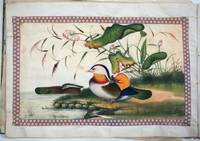
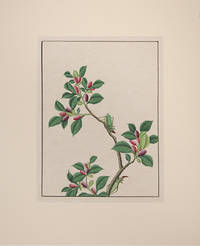
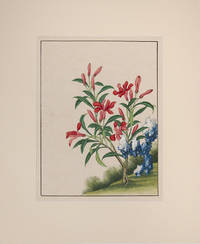
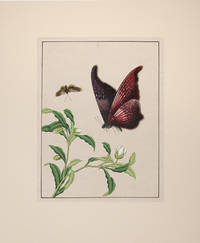
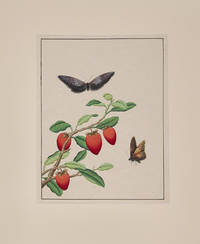
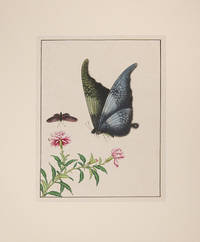
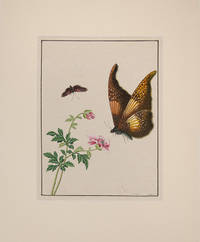
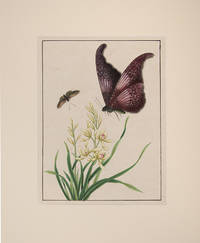
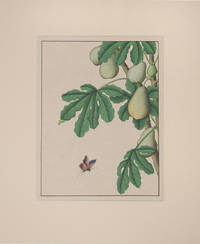
109666China mid nineteenth century. . Ink and gouache on paper mounted. Image size: 356 mm x 300 mm; mounted: 465 mm x 380 mm.<br /> Fine well executed decorative Chinese export watercolour. Light and easily transportable these watercolours mostly produced in the Canton region found a ready market in the West. Natural history studies were and continue to be amongst the most sought-after subjects.<br /> China, mid nineteenth century. unknown
109665China mid nineteenth century. . Ink and gouache on paper mounted. Image size: 356 mm x 300 mm; mounted: 465 mm x 380 mm.<br /> Fine well executed decorative Chinese export watercolour. Light and easily transportable these watercolours mostly produced in the Canton region found a ready market in the West. Natural history studies were and continue to be amongst the most sought-after subjects.<br /> China, mid nineteenth century. unknown
109627China mid nineteenth century. . Ink and gouache on paper mounted. Image size: 356 mm x 300 mm; mounted: 465 mm x 380 mm.<br /> Fine well executed decorative Chinese export watercolour. Light and easily transportable these watercolours mostly produced in the Canton region found a ready market in the West. Natural history studies were and continue to be amongst the most sought-after subjects.<br /> China, mid nineteenth century. unknown
109624China mid nineteenth century. . Ink and gouache on paper mounted. Image size: 356 mm x 300 mm; mounted: 465 mm x 380 mm.<br /> Fine well executed decorative Chinese export watercolour. Light and easily transportable these watercolours mostly produced in the Canton region found a ready market in the West. Natural history studies were and continue to be amongst the most sought-after subjects.<br /> China, mid nineteenth century. unknown
109626China mid nineteenth century. . Ink and gouache on paper mounted. Image size: 356 mm x 300 mm; mounted: 465 mm x 380 mm.<br /> Fine well executed decorative Chinese export watercolour. Light and easily transportable these watercolours mostly produced in the Canton region found a ready market in the West. Natural history studies were and continue to be amongst the most sought-after subjects.<br /> China, mid nineteenth century. unknown
109628China mid nineteenth century. . Ink and gouache on paper mounted. Image size: 356 mm x 300 mm; mounted: 465 mm x 380 mm.<br /> Fine well executed decorative Chinese export watercolour. Light and easily transportable these watercolours mostly produced in the Canton region found a ready market in the West. Natural history studies were and continue to be amongst the most sought-after subjects.<br /> China, mid nineteenth century. unknown
109621China mid nineteenth century. . Ink and gouache on paper mounted. Image size: 356 mm x 300 mm; mounted: 465 mm x 380 mm.<br /> Fine well executed decorative Chinese export watercolour. Light and easily transportable these watercolours mostly produced in the Canton region found a ready market in the West. Natural history studies were and continue to be amongst the most sought-after subjects.<br /> China, mid nineteenth century. unknown
109625China mid nineteenth century. . Ink and gouache on paper mounted. Image size: 356 mm x 300 mm; mounted: 465 mm x 380 mm.<br /> Fine well executed decorative Chinese export watercolour. Light and easily transportable these watercolours mostly produced in the Canton region found a ready market in the West. Natural history studies were and continue to be amongst the most sought-after subjects.<br /> China, mid nineteenth century. unknown
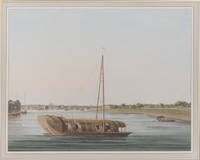
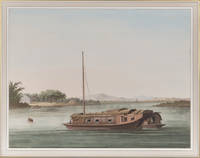
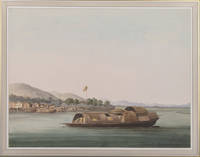
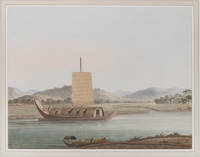
111580Canton circa 1810. . Pencil water colour and body colour drawing of craft heightened with white on paper watermarked 'J Whatman 1804' and '1805'. Framed and glazed overall size: 68.5cm x 58.5cm.<br /> Well executed and highly atmospheric watercolours capturing the importance of the river for trade in early nineteenth century China.<br /><br />A fine group of unusual and very attractive depictions of river life. Typically with the river in the foreground with a finely executed drawing of a native boat the backgrounds showing landscape scenes interspersed with occasional architectural details.<br /><br />The Pearl River is so named because of the pearl-colored shells that lie at the bottom of the river in the section that flows through the city of Guangzhou. Formerly often known as the Canton River it is an extensive river system in southern China. The name 'Pearl River' is also often used as a catch-all for the watersheds of the Xi 'West' Bei 'North' and Dong 'East' rivers of Guangdong. These rivers are all considered tributaries of the Pearl River because they share a common delta the Pearl River Delta. Measured from the farthest reaches of the Xi River the Pearl River system is China's third-longest river 2400 kilometres after the Yangtze River and the Yellow River and second largest by volume after the Yangtze.<br /> Canton, circa 1810]. unknown
111581Canton circa 1810. . Pencil water colour and body colour drawing of craft heightened with white on paper watermarked 'J Whatman 1804' and '1805'. Framed and glazed overall size: 68.5cm x 58.5cm.<br /> Well executed and highly atmospheric watercolours capturing the importance of the river for trade in early nineteenth century China.<br /><br />A fine group of unusual and very attractive depictions of river life. Typically with the river in the foreground with a finely executed drawing of a native boat the backgrounds showing landscape scenes interspersed with occasional architectural details.<br /><br />The Pearl River is so named because of the pearl-colored shells that lie at the bottom of the river in the section that flows through the city of Guangzhou. Formerly often known as the Canton River it is an extensive river system in southern China. The name 'Pearl River' is also often used as a catch-all for the watersheds of the Xi 'West' Bei 'North' and Dong 'East' rivers of Guangdong. These rivers are all considered tributaries of the Pearl River because they share a common delta the Pearl River Delta. Measured from the farthest reaches of the Xi River the Pearl River system is China's third-longest river 2400 kilometres after the Yangtze River and the Yellow River and second largest by volume after the Yangtze.<br /> Canton, circa 1810]. unknown
111583Canton circa 1810. . Pencil water colour and body colour drawing of craft heightened with white on paper watermarked 'J Whatman 1804' and '1805'. Framed and glazed overall size: 68.5cm x 58.5cm.<br /> Well executed and highly atmospheric watercolours capturing the importance of the river for trade in early nineteenth century China.<br /><br />An unusual and very attractive depictions of river life. Typically with the river in the foreground with a finely executed drawing of a native boat the backgrounds showing landscape scenes interspersed with occasional architectural details.<br /><br />The Pearl River is so named because of the pearl-colored shells that lie at the bottom of the river in the section that flows through the city of Guangzhou. Formerly often known as the Canton River it is an extensive river system in southern China. The name 'Pearl River' is also often used as a catch-all for the watersheds of the Xi 'West' Bei 'North' and Dong 'East' rivers of Guangdong. These rivers are all considered tributaries of the Pearl River because they share a common delta the Pearl River Delta. Measured from the farthest reaches of the Xi River the Pearl River system is China's third-longest river 2400 kilometres after the Yangtze River and the Yellow River and second largest by volume after the Yangtze.<br /> Canton, circa 1810]. unknown
111577Canton circa 1810. . Pencil water colour and body colour drawing of craft heightened with white on paper watermarked 'J Whatman 1804' and '1805'. Framed and glazed overall size: 68.5cm x 58.5cm.<br /> Well executed and highly atmospheric watercolours capturing the importance of the river for trade in early nineteenth century China.<br /><br />A fine group of unusual and very attractive depictions of river life. Typically with the river in the foreground with a finely executed drawing of a native boat the backgrounds showing landscape scenes interspersed with occasional architectural details.<br /><br />The Pearl River is so named because of the pearl-colored shells that lie at the bottom of the river in the section that flows through the city of Guangzhou. Formerly often known as the Canton River it is an extensive river system in southern China. The name 'Pearl River' is also often used as a catch-all for the watersheds of the Xi 'West' Bei 'North' and Dong 'East' rivers of Guangdong. These rivers are all considered tributaries of the Pearl River because they share a common delta the Pearl River Delta. Measured from the farthest reaches of the Xi River the Pearl River system is China's third-longest river 2400 kilometres after the Yangtze River and the Yellow River and second largest by volume after the Yangtze.<br /> Canton, circa 1810]. unknown