[CHINESE SCHOOL].Biblio.com
34 831 résultats
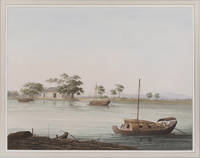
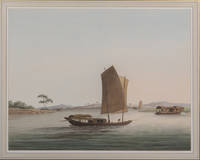
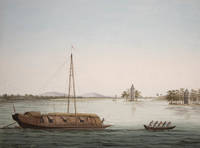
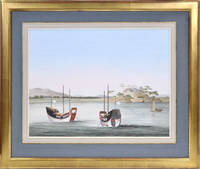
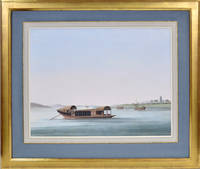
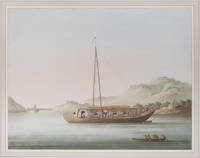
111579Canton circa 1810. . Pencil water colour and body colour drawing of craft heightened with white on paper watermarked 'J Whatman 1804' and '1805'. Framed and glazed overall size: 68.5cm x 58.5cm.<br /> Well executed and highly atmospheric watercolours capturing the importance of the river for trade in early nineteenth century China.<br /><br />A fine group of unusual and very attractive depictions of river life. Typically with the river in the foreground with a finely executed drawing of a native boat the backgrounds showing landscape scenes interspersed with occasional architectural details.<br /><br />The Pearl River is so named because of the pearl-colored shells that lie at the bottom of the river in the section that flows through the city of Guangzhou. Formerly often known as the Canton River it is an extensive river system in southern China. The name 'Pearl River' is also often used as a catch-all for the watersheds of the Xi 'West' Bei 'North' and Dong 'East' rivers of Guangdong. These rivers are all considered tributaries of the Pearl River because they share a common delta the Pearl River Delta. Measured from the farthest reaches of the Xi River the Pearl River system is China's third-longest river 2400 kilometres after the Yangtze River and the Yellow River and second largest by volume after the Yangtze.<br /> Canton, circa 1810]. unknown
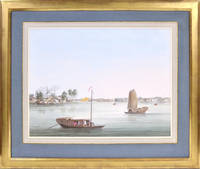
111578Canton circa 1810. . Pencil water colour and body colour drawing of craft heightened with white on paper watermarked 'J Whatman 1804' and '1805'. Framed and glazed overall size: 68.5cm x 58.5cm.<br /> Well executed and highly atmospheric watercolours capturing the importance of the river for trade in early nineteenth century China.<br /><br />A fine group of unusual and very attractive depictions of river life. Typically with the river in the foreground with a finely executed drawing of a native boat the backgrounds showing landscape scenes interspersed with occasional architectural details.<br /><br />The Pearl River is so named because of the pearl-colored shells that lie at the bottom of the river in the section that flows through the city of Guangzhou. Formerly often known as the Canton River it is an extensive river system in southern China. The name 'Pearl River' is also often used as a catch-all for the watersheds of the Xi 'West' Bei 'North' and Dong 'East' rivers of Guangdong. These rivers are all considered tributaries of the Pearl River because they share a common delta the Pearl River Delta. Measured from the farthest reaches of the Xi River the Pearl River system is China's third-longest river 2400 kilometres after the Yangtze River and the Yellow River and second largest by volume after the Yangtze.<br /> Canton, circa 1810]. unknown
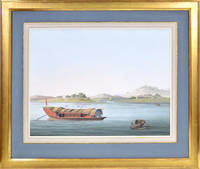
111582Canton circa 1810. . Pencil water colour and body colour drawing of craft heightened with white on paper watermarked 'J Whatman 1804' and '1805'. Framed and glazed overall size: 68.5cm x 58.5cm.<br /> Well executed and highly atmospheric watercolours capturing the importance of the river for trade in early nineteenth century China.<br /><br />A fine group of unusual and very attractive depictions of river life. Typically with the river in the foreground with a finely executed drawing of a native boat the backgrounds showing landscape scenes interspersed with occasional architectural details.<br /><br />The Pearl River is so named because of the pearl-colored shells that lie at the bottom of the river in the section that flows through the city of Guangzhou. Formerly often known as the Canton River it is an extensive river system in southern China. The name 'Pearl River' is also often used as a catch-all for the watersheds of the Xi 'West' Bei 'North' and Dong 'East' rivers of Guangdong. These rivers are all considered tributaries of the Pearl River because they share a common delta the Pearl River Delta. Measured from the farthest reaches of the Xi River the Pearl River system is China's third-longest river 2400 kilometres after the Yangtze River and the Yellow River and second largest by volume after the Yangtze.<br /> Canton, circa 1810]. unknown
100986Canton circa 1810. . A Group of forty pencil water colour and body colour drawings of craft heightened with white on paper watermarked 'J Whatman 1804' and '1805'. Each 36.5 x 48 cm.<br /> Well executed and highly atmospheric watercolours capturing the importance of the river for trade in early nineteenth century China.<br /><br />An unusual and very attractive drawings of river life. Typically with the river in the foreground with a finely executed drawing of a native boat the backgrounds showing landscape scenes interspersed with occasional architectural details.<br /><br />The Pearl River is so named because of the pearl-colored shells that lie at the bottom of the river in the section that flows through the city of Guangzhou. Formerly often known as the Canton River it is an extensive river system in southern China. The name 'Pearl River' is also often used as a catch-all for the watersheds of the Xi 'West' Bei 'North' and Dong 'East' rivers of Guangdong. These rivers are all considered tributaries of the Pearl River because they share a common delta the Pearl River Delta. Measured from the farthest reaches of the Xi River the Pearl River system is China's third-longest river 2400 kilometres after the Yangtze River and the Yellow River and second largest by volume after the Yangtze.<br /> Canton, circa 1810]. unknown
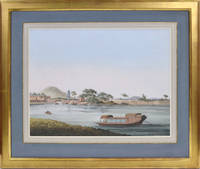
101462Canton circa 1810. . Pencil water colour and body colour drawing of craft heightened with white on paper watermarked 'J Whatman 1804' and '1805'. Framed and glazed overall size: 67.8cm x 57.3cm x 2cm.<br /> 89 mp22pic Well executed and highly atmospheric watercolours capturing the importance of the river for trade in early nineteenth century China.<br /><br />Typically with the river in the foreground with a finely executed drawing of a native boat the backgrounds showing landscape scenes interspersed with occasional architectural details.<br /><br />The Pearl River is so named because of the pearl-colored shells that lie at the bottom of the river in the section that flows through the city of Guangzhou. Formerly often known as the Canton River it is an extensive river system in southern China. The name 'Pearl River' is also often used as a catch-all for the watersheds of the Xi 'West' Bei 'North' and Dong 'East' rivers of Guangdong. These rivers are all considered tributaries of the Pearl River because they share a common delta the Pearl River Delta. Measured from the farthest reaches of the Xi River the Pearl River system is China's third-longest river 2400 kilometres after the Yangtze River and the Yellow River and second largest by volume after the Yangtze.<br /> Canton, circa 1810]. unknown
101456Canton circa 1810. . Pencil water colour and body colour drawing of craft heightened with white on paper watermarked 'J Whatman 1804' and '1805'. Framed and glazed overall size: 67.8cm x 57.3cm.<br /> Well executed and highly atmospheric watercolours capturing the importance of the river for trade in early nineteenth century China.<br /><br />Typically with the river in the foreground with a finely executed drawing of a native boat the backgrounds showing landscape scenes interspersed with occasional architectural details.<br /><br />The Pearl River is so named because of the pearl-colored shells that lie at the bottom of the river in the section that flows through the city of Guangzhou. Formerly often known as the Canton River it is an extensive river system in southern China. The name 'Pearl River' is also often used as a catch-all for the watersheds of the Xi 'West' Bei 'North' and Dong 'East' rivers of Guangdong. These rivers are all considered tributaries of the Pearl River because they share a common delta the Pearl River Delta. Measured from the farthest reaches of the Xi River the Pearl River system is China's third-longest river 2400 kilometres after the Yangtze River and the Yellow River and second largest by volume after the Yangtze.<br /> Canton, circa 1810. unknown
101464Canton circa 1810. . Pencil water colour and body colour drawing of craft heightened with white on paper watermarked 'J Whatman 1804' and '1805'. Framed and glazed overall size: 67.8cm x 57.3cm.<br /> 91 mp22pic Well executed and highly atmospheric watercolours capturing the importance of the river for trade in early nineteenth century China<br /><br />Typically with the river in the foreground with a finely executed drawing of a native boat the backgrounds showing landscape scenes interspersed with occasional architectural details.<br /><br />The Pearl River is so named because of the pearl-colored shells that lie at the bottom of the river in the section that flows through the city of Guangzhou. Formerly often known as the Canton River it is an extensive river system in southern China. The name 'Pearl River' is also often used as a catch-all for the watersheds of the Xi 'West' Bei 'North' and Dong 'East' rivers of Guangdong. These rivers are all considered tributaries of the Pearl River because they share a common delta the Pearl River Delta. Measured from the farthest reaches of the Xi River the Pearl River system is China's third-longest river 2400 kilometres after the Yangtze River and the Yellow River and second largest by volume after the Yangtze.<br /> Canton, circa 1810]. unknown
101452Canton circa 1810. . Pencil water colour and body colour drawing of craft heightened with white on paper watermarked 'J Whatman 1804' and '1805'. Framed and glazed overall size: 67.8cm x 57.3cm x 2cm.<br /> 87 mp22pic Well executed and highly atmospheric watercolours capturing the importance of the river for trade in early nineteenth-century ChinA<br /><br />An unusual and very attractive depiction of river life. Typically with the river in the foreground with a finely executed drawing of a native boat the backgrounds showing landscape scenes interspersed with occasional architectural details.<br /><br />The Pearl River is so named because of the pearl-colored shells that lie at the bottom of the river in the section that flows through the city of Guangzhou. Formerly often known as the Canton River it is an extensive river system in southern China. The name 'Pearl River' is also often used as a catch-all for the watersheds of the Xi 'West' Bei 'North' and Dong 'East' rivers of Guangdong. These rivers are all considered tributaries of the Pearl River because they share a common delta the Pearl River Delta. Measured from the farthest reaches of the Xi River the Pearl River system is China's third-longest river 2400 kilometres after the Yangtze River and the Yellow River and second largest by volume after the Yangtze.A<br /> Canton, circa 1810]. unknown
101453Canton circa 1810. . Pencil water colour and body colour drawing of craft heightened with white on paper watermarked 'J Whatman 1804' and '1805'. Framed and glazed overall size: 67.8cm x 57.3cm.<br /> 88 mp22pic Well executed and highly atmospheric watercolours capturing the importance of the river for trade in early nineteenth century China.<br /><br /><br /><br />The Pearl River is so named because of the pearl-colored shells that lie at the bottom of the river in the section that flows through the city of Guangzhou. Formerly often known as the Canton River it is an extensive river system in southern China. The name 'Pearl River' is also often used as a catch-all for the watersheds of the Xi 'West' Bei 'North' and Dong 'East' rivers of Guangdong. These rivers are all considered tributaries of the Pearl River because they share a common delta the Pearl River Delta. Measured from the farthest reaches of the Xi River the Pearl River system is China's third-longest river 2400 kilometres after the Yangtze River and the Yellow River and second largest by volume after the Yangtze.<br /> Canton, circa 1810]. unknown
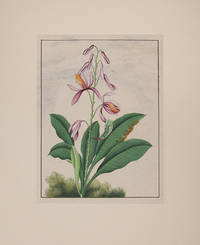
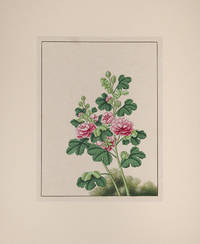
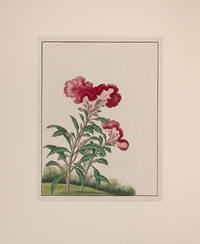
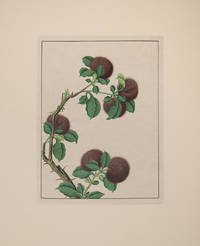
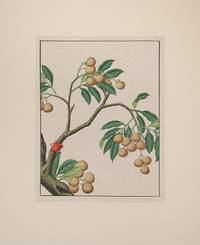
109660China mid nineteenth century. . Ink and gouache on paper mounted. Image size: 356 mm x 300 mm; mounted: 465 mm x 380 mm.<br /> Fine well executed decorative Chinese export watercolour. Light and easily transportable these watercolours mostly produced in the Canton region found a ready market in the West. Natural history studies were and continue to be amongst the most sought-after subjects.<br /> China, mid nineteenth century. unknown
109658China mid 19th century. . Ink and gouache on paper mounted. Image size: 356 mm x 300 mm; mounted: 465 mm x 380 mm.<br /> Fine well executed decorative Chinese export watercolour. Light and easily transportable these watercolours mostly produced in the Canton region found a ready market in the West. Natural history studies were and continue to be amongst the most sought-after subjects.<br /> China, mid 19th century. unknown
109659China mid nineteenth century. . Ink and gouache on paper mounted. Image size: 356 mm x 300 mm; mounted: 465 mm x 380 mm.<br /> Fine well executed decorative Chinese export watercolour. Light and easily transportable these watercolours mostly produced in the Canton region found a ready market in the West. Natural history studies were and continue to be amongst the most sought-after subjects.<br /> China, mid nineteenth century. unknown
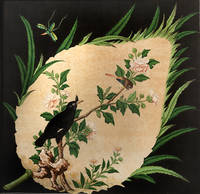
9333419th century. . Four Chinese Export paintings each finely painted in ink and gouache on paper with bird and flower scenes enclosed with floral cartouches on a dark ground.<br />Framed and glazed overall size: 52.3cm x 50.4cm x 3cm. <br /> <br /> 19th century]. unknown
109663China mid nineteenth century. . Ink and gouache on paper mounted. Image size: 356 mm x 300 mm; mounted: 465 mm x 380 mm.<br /> Fine well executed decorative Chinese export watercolour. Light and easily transportable these watercolours mostly produced in the Canton region found a ready market in the West. Natural history studies were and continue to be amongst the most sought-after subjects.<br /> China, mid nineteenth century. unknown
109662China mid nineteenth century. . Ink and gouache on paper mounted. Image size: 356 mm x 300 mm; mounted: 465 mm x 380 mm.<br /> Fine well executed decorative Chinese export watercolour. Light and easily transportable these watercolours mostly produced in the Canton region found a ready market in the West. Natural history studies were and continue to be amongst the most sought-after subjects.<br /> China, mid nineteenth century. unknown
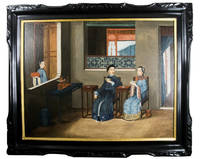
1820ABC_45805China 1820. 47 x 61 cm. picture; 61 x 74.5 cm. frame. Oil painting on canvas in a black lacquered Chinese export frame. An elegant interior scene from a Chinese Mandarins home in the early nineteenth century: a Manchu Mandarin and his consort taking tea in a domestic setting. He wears non-official semi-formal winter attire including rank badge sitting beside ahis beautiful Chinese lady surrounded by fine furniture and fittings. The whole scene reflects his good taste and social standing.Whilst tea had been the driving force of the China Trade since the early eighteenth century giving rise to export paintings illustrating its cultivation and production process the style and subject of the early export paintings was firmly rooted in traditional Chinese art and culture as in this delightful painting.l Cf. Choi Kee Il Tea and design in Chinese export painting in: The Magazine Antiques vol. 154 no. 4 October 1998. unknown
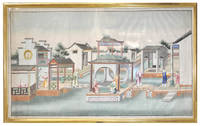
86803Possibly Canton ca.1820. . Two watercolours on paper 95 x 166 cm each; marginal tears some minor restoration light occasional marginal waterstains. Framed and glazed. Overall dimensions: 101 x 171 cm x 5cm.<br /> Very impressive large scale watercolours of Chinese scenes presumably executed for the Western market by an anonymous master and depicting internal and external views of a house. This type of export watercolours is usually found in a much smaller format; due to their very delicate nature it is very uncommon to find examples of such size as the present group and with the colouring still very fresh.<br /> Possibly Canton ca.1820]. unknown
239121916 to 1919 each a ‘Charles Letts School-Boy’s Diary’. At front of diaries for 1916 and 1917 he writes: ‘C L. Harris / 120 Gladstone St / Bedford’. See Fry’s entry by Michael Billington in the Dictonary of National Biography. His brother survives as a rather shadowy figure: he was certainly alive in 1978 when Fry referred to him in the account of his family background ‘Can You Find Me / A Family History’ OUP. In that volume Fry describes his ‘brother Leslie’ as a baby ‘growing sturdily’ noting that ‘though he was later called by his first name Charles he was Leslie for many years to come’. The four years of diary entries that are present here are short and factual and rather uneventful but they have a double interest: at once casting light on the family background of one of England’s finest twentieth-century playwrights and giving a picture of the development of an average English middle-class schoolboy around the period of the First World War as he rises to position of ‘Head of School’ at Bedford. The four volumes are in fair condition aged and worn with the 1916 diary sprung from its covers at the gutter of the rear endpapers. The four volumes are uniform in embossed brown cloth described by the publisher as ‘Art Linen’ each with back loop for pencil. Each volume provides space for four days’ entries per page with numerous preliminary printed pages with the customary useful information including endpapers and other matter reflective of the conflict with maps of the Europe theatre illustrations of medals and of a ‘soldier-’ and ‘sailor-boy hero of the Great War’ the last volume carrying a ‘Message from Admiral Sir John Jellicoe to the Readers of “The Schoolboys’ Diary’. In the first three volumes Harris writes in pencil filling in the diary assiduously from 1 January 1916. In the final volume by May of 1919 the entries become intermittent and on 15 August 1919 they cease entirely. In additional to the daily record Harris also provides details of ‘Pocket Money’ personal information including ‘Size in Hats’ and memoranda dates of significant events such as ‘Promoted to Lance-Corporal in the O.T.C.’ ‘Received 1st XV colours’ and on 24 July 1919 ‘Made HEAD OF SCHOOL.’. Loosely inserted are a few postal order counterfoils and Chatham bus tickets. The entries begin in 1916 with Harris on his school holidays doing errands for his widowed mother and reading to her and entertaining his brother ‘Arthur’ i.e. Christopher Fry for example by taking him on walks to town for a haircut and helping him with his stamp collection. The monotony of school begins repeated entries in early volumes start with ‘School as usual’ and the entries reflect the rounds of sport he is captain of the ‘Wasps’ cricket team in 1916 cadet corps bible classes exams trips to London 2 January 1919: ‘Went over St Dunstans in morning with Jack / Uncle Walter took Jack girl Madeleine & myself up to the “Old Vic†to see Shakespear’s “Macbeth†2.0-5.0. Jolly fine performance though a bit tragic / Left & returned by train took 1 hr each way.’ his health recurring toothache mumps etc the weather involvement for the war effort in agriculture 11 September 1918: ‘Another dismal day all by myself. Have quite made up my mind to chuck farming if this goes on especially as when I was happily walking home at 4.30 I ran into more work & had to load wheat till 7.9.’. By 1918 the entries begin to loosen up a little. On 19 March for example: ‘Rotten wet beastly muddy miserable day with a boil on my chin about the size of an egg & a Corps Inspection 2.30 by Lieut Col Pilkington on top of that. The rest may speak for itself. Also EII beat WII by 1/4 length.’ And on 10 September; ‘G his friend Gerald often referred to & I shocked barley all the morning & then ditched until 5.30. Shocking barley is qute a decent job.’ The signing of the armistice 11 November 1918 is greeted with ‘Flags all over the town bells etc. Bands in afternoon; town packed.’ And on the following day ‘Whole Holiday for Armistice / Thanksgiving Service in Hall instead of Prayers.’ Final entry 14 August 1919: ‘Went over St Mary Redcliffe Church in morn. More wonderful even than the Cathedral. Employed myself immensely. Went on to Downs by myself in even to hear band.’ 1916 to 1919, each a ‘Charles Letts School-Boy’s Diary’. At front of diaries for 1916 and 1917 he writes: ‘C L. Harris / hardcover
Pédagogues et responsables politiques socialistes proposent une description critique de l'institution scolaire et présentent un projet politique axé sur une conception neuve de l'enseignement, de la laïcité, et de la nécessaire unicité du service public. Avec la participation de F. BEST, M. DAVID, J.-M. FAVRET, A.-M. FRANCHI, J. GUYARD, J.-L. PIEDNOIR, et F SERUSCLAT. Français
19842046Paris, La Découverte, "Cahiers libres", 1984 1 volume 13,5 x 22cm Broché. 237p., 1feuillet. Bon état.
85163Paris, Simon & Nyon, 1785 in-4, 4 pp., vignette.
667342Douay, J. F. Willerval, s.d. in-4, 8 pp.
19882090502113709044Not Available 1988. Soft Cover. Fine. The book is in fine condition. Not Available paperback
1930119426L. Giraud-Badin 1930 Un des 100 ex sur Hollande Van Gelder numérotés de 1 à 100. In-4 broché 25,5 cm sur 20. 194 pages. Grande marge conservée. Pages non coupées. 1ère de couverture avec pliure et légère déchirure, page de titre et marges jaunies sinon bon état d’occasion.
1930119427L. Giraud-Badin 1930 Un des 2500 ex numérotés sur Alpha. In-8 broché 24 cm sur 19. 194 pages. Dos insolé sinon bon état d’occasion.