MONTESQUIEULivre Rare Book
19 643 résultats
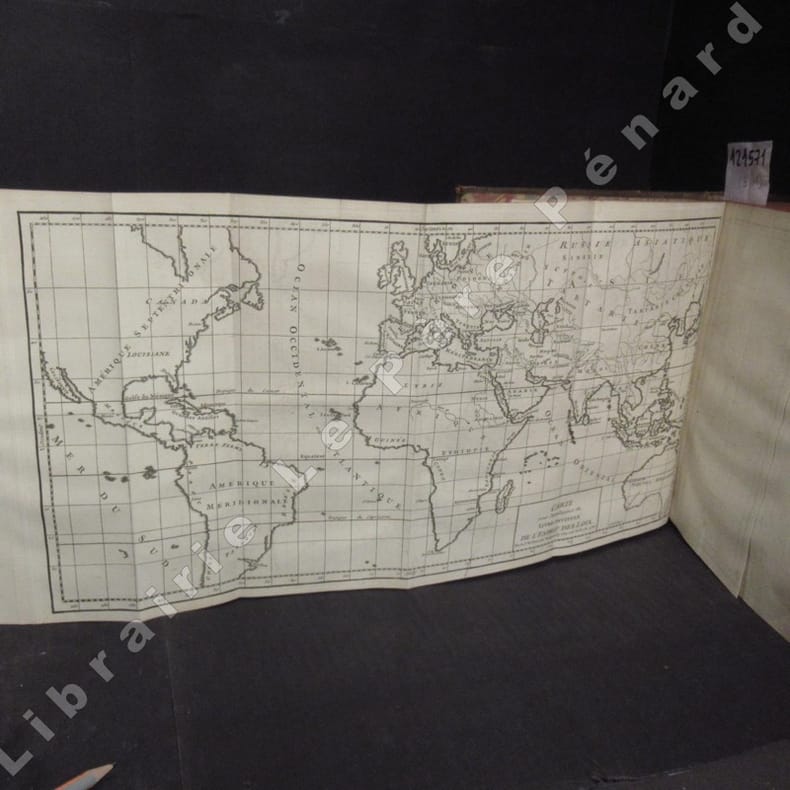
17671215711767 Chez Nourse, A Londres - M.DCC.LXVII. (1767) - Trois volumes in-4 (21cm X 26cm), reliure plein veau blond raciné, dos à 5 nerfs, caissons, fleurons, titre et tomaison en doré, étiquette de titre sur fond rouge - 527 pages + 643 pages + 747 pages - Illustrations et cartes dépliantes illustrées en N&B hors-texte
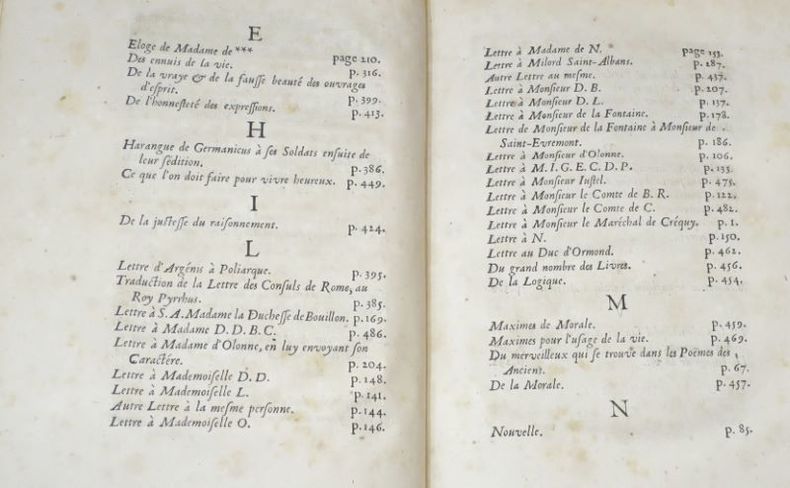
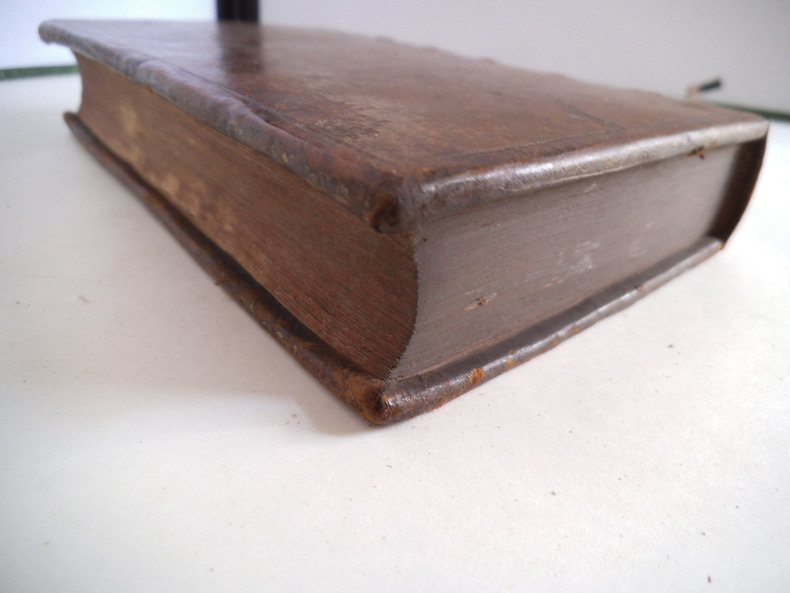
106399Par la Compagnie des Libraires, 1698, complet en 2 volumes in-4 de 250x180 mm environ, Tome I : 1f.blanc, une page de titre, 540 pages, 1f. (table), suivi Nouvelles Oeuvres mélées de Saint-Evremont, de la page 489 à 658, 1f. blanc, - Tome II : 1f.blanc, 6ff. ( page de titre, avertissement et table), 488 pages, 1f.blanc, la suite du volume de la page 489 à 658 sont placées à la fin du tome I, plein veau granité fauve, dos à 5 nerfs portant titres et tomaisons dorés, ornés de caissons à riches motifs dorés, coupes dorées (dorures un peu effacées par endroits), texte orné de lettrines, bandeaux et culs-de-lampes magnifiques. Coins émoussés, cuir frotté avec petites taches et trous de ver, début de fente sur un mors externe, coiffes manquantes, taches de cire sur page 47 du tome II, 3 petites auréoles page 387 du même tome, bon état pour le reste. Relié de manière peu conventionnelle (la fin du tome II se trouve à la fin du tome I).
151382721(Hagenau, Johannes Rynman (Druck von Heinrich Gran), 1513). Titel, 100 (recte 111) Bll., 24 Bll. Register. [= Fehler in der Foliierung: Bl. CX ohne Zählung, Bl. CXI mit C bezeichnet]. 4°. 20,5 cm. Späteres Pgt. mit hs. RTitel.
2004CBS-9780387202686Springer 2004. New. Springer unknown
2004CBS-9780387202686Springer 2004. New. Springer unknown
Good Armenian Full modern leather binding. An ex-library stamp on the colophon. Small 4to. (27 x 18 cm). In Armenian. 512, [8] p., engraved plates. Richly illustrated. Stains on pages and edges. Otherwise a good copy. Extremely rare first Armenian edition of Fenelon's "Telemaque". According to Abdolonyme Ubicini's account in his La Turquie actuelle (Paris 1855), Les Aventures de Télémaque was the most popular classic among Levantines in Istanbul in the first half of the 19th century, and it was translated into many languages besides Turkish and Arabic in the Ottoman Empire. The first printed version of a Greek translation dates from the 18th century, while an Armenian version by Ambroise Calfa was published in Paris in 1860. (The Ottoman Reception of Fénelon's Télémaque.; Meral, Arzu). The translator, Ambroise Calfa Nar Bey, Guy de Lusignan, (1831-1906), was a Franco-Armenian historian and linguist from the second half of the 19th century and the beginning of the 20th century. Ambroise Calfa is one of the three sons of Kévork (Georges) -Youssouf Calfa, an Armenian trader living in Constantinople, and Sophie Cantar (or Kantaroglou), daughter of an Armenian merchant or banker from the Ottoman capital. Member of several learned societies, including the Asian Society, Ambroise Calfa published several historical or linguistic works, including an Armenian Calligraphy (Paris, 1853), a work awarded at the Universal Exhibition of 1855, and, above all, an Armenian-French Dictionary ( Paris, Hachette, 1861) dedicated to Emperor Alexander II. (Wikipedia). Les Aventures de Télémaque, fils d'Ulysse (The adventures of Telemachus, son of Ulisses) with the original title is a didactic French novel by Fénelon, Archbishop of Cambrai, who in 1689 became tutor to the seven-year-old Duc de Bourgogne (grandson of Louis XIV and second in line to the throne). It was published anonymously in 1699 and reissued in 1717 by his family. The slender plot fills out a gap in Homer's Odyssey, recounting the educational travels of Telemachus, son of Ulysses, accompanied by his tutor, Mentor, who is revealed at the end of the story to be Minerva, goddess of wisdom, in disguise. OCLC 953068302 (One institutional copy in BnF). (Utopias from the Middle East 3).
Very Good English Original wrappers. Cr. 8vo. (19,5 x 13,5 cm). In English, Persian, and Ottoman script (Old Turkish with Arabic letters). 26 p. Abû-Muhammad Muslih al-Dîn bin Abdallâh Shîrâzî, (1193-1292), Persian poet and prose writer, widely recognized as one of the greatest masters of the classical literary tradition. His influence is not limited to Persian literature. He also deeply affected Turkish and Urdu literature and the Western world (Encyclopadiae Iranica). Bostan [i.e. the Orchard] and Gulistan [i.e. the Rose Garden], his famous Works, were translated into many languages and commented. Pendname is one of Sa'dî's poetical works. In this ethical-based work, ethical values such as science, justice, consenting to fate, honesty, patience, generosity, modesty, and grace are praised. Bad habits such as talking to ignorant, cruelty, lie, arrogance, and stinginess are badly criticized. The Persian text of Sa'dî's Pendname, it's an English translation, and Ottoman Turkish translation in verse were printed together in the early 20th century. The work is about some moral characteristics that are seen as "acceptable and submissive" in societies and have been recited with the idea of benefiting people. (Source: A BOOK ON ETHICAL LITERATURE: SAADI'S PENDNAME, Melek Dikmen). Major William Henry Carmichael-Smyth, (1780-1861), was a British military officer in the service of the East India Company and an orientalist. In 1797, at the age of seventeen, he was commissioned into the Bengal Artillery. In 1803, the Second Anglo-Maratha War broke out, and he was present at the battles of Aligarh, Delhi, and Laswari. Carmichael-Smyth returned to India in 1810 as a captain and served in the Invasion of Java in 1811. Thereafter he returned to Bengal and went to Callinger as a field engineer where he was mentioned in dispatches for exemplary valor in 1812. He returned to England in 1820 and was elevated to Major in 1821. Not in Özege.; OCLC 50021435, 1065323294.
2012SBS-9781409440550ASHGATE 2012. Hardcover. New. ASHGATE hardcover
2012SBS-9781409440550ASHGATE 2012. Hardcover. New. ASHGATE hardcover
In-4°; pp. (4), 111, (1), legatura in cartonato rigido con tassello al dorso.
In-12°; 1- “Thologi societatis(..)” cc.(3), 93, (6 di cui ultime tre bianche) note manoscritte e timbri ,ad inchiostro, di possesso al frontespizio. Capilettera incise su legno. 2- “De vanitate Mundi” cc. (18), pp. 500. Capilettera incisi su legno. Legatura in piena pelle di scrofa; incisioni al dorso, al piatto superiore e infriore in nero, dorso lacunoso
3626où sont renfermées les plus importantes de la politique & de la morales avec des discours historiques sur chaque fables,nouvelle édition consacrée à l’usage de Mgr le Prince des Asturies. In 12 plein cuir fauve à nerfs,pièce de titre chagrin rouge,2 parties en un volume,titre,frontispice gravé illustré,portrait de Dom Louis Prince des Asturies,XIV,232 pages,titre frontispice illustré gravé,IV table,227 pages, 60 planches gravées à mi-page,marge extérieure fragile sur quelques centimètres en début de la première partie et en fin de la deuxième partie(page 196 à la fin)Amsterdam chez Jean Pauli 1720 bon état d’ensemble
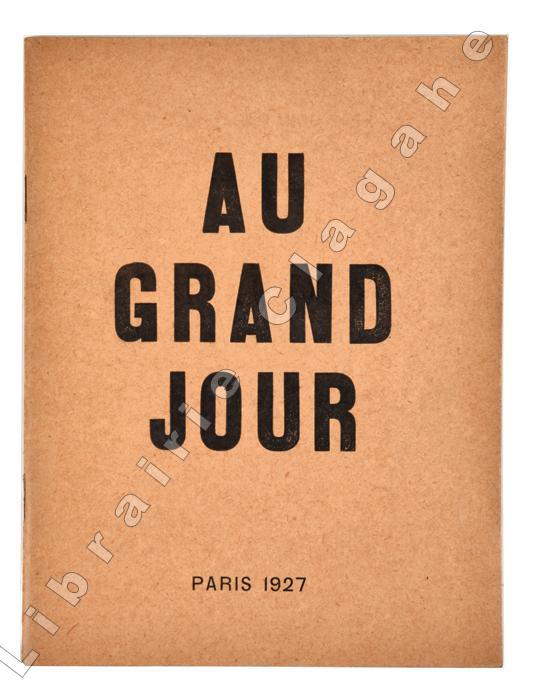
192720110Paris, pour les Editions Surréalistes, 1927 (mai) ; plaquette in-16 (158 x 120 mm) ; broché, double agraphage ; 28, [2] ff., Imprimeur, le dernier blanc, couverture originale “curry”, avec le titre en grandes lettres.
1 Vol. In-4 (27x21) cart.rustico coevo.Ampi margini.Timbro di bibl.estinta pag. LVI-376 front. e c. lett. incisio Strappetti al dorso. Molto ben tenuto PROG 15993 CATT_ATT 53
34090Paris Chez les Frères Estienne, Libraires 1778 in 12 (17,5x10,5) 1 volume reliure plein veau fauve de l'époque, dos lisse très orné, caissons fleuron dorés, pièce de titre de cuir marron, tranches marbrées, XV et 465 pages (3). James Fordyce, Docteur en Théologie de l'Universté de Glasgow, & Pasteur d'une Congrégation de la Cité de Londres. Première traduction française (Rare first French translation). Très bel exemplaire ( Photographies sur demande / We can send pictures of this book on simple request )
in folio, 34 cm, rilegatura coeva rigida in piena pergamena, titolo manoscritto al dorso che è diviso da 5 nervi, p. (28), 744. Vignetta incisa la frontespizio, iniziali decorate e animate, alcuni finalini e incipit decorati, testo su due colonne. Leggero alone al taglio superiore a circa metà del testo che non disturba la lettura, rari e marginali segni di tarlo. Timbri privati al risguardo e al frontespizio
18811252471881 Bruxelles, Gay et Doucé - 1881 - 1 volume in-8 (13x19cm environ); demi basane à coins (couverture d'origine conservée); dos lisse; titre, auteur et décors en doré au dos; tranche de tête dorée; signet - 272 pages - Edition imprimée en tout à 500 exemplaires, celui-ci porte le numéro 268
In-8°; cc 24, capilettera incisi su legno; numerose note manoscritte nel testo; legatura in cartonato, tagli in azzurro. L’opera contiene riflessioni di vario genere circa i costumi, i vizi della gola e della lussuria, la pazzia, anche di Alessandro Magno, la parola di Cristo ecc. Adams M 2091
ORD-7745Le 1er ouvrage est daté: En France 1781. Le second Paris. Imprimerie Royale. 1781. In-4 (197 x 252mm) pleine basane flammée, dos à 5 nerfs orné, pièce de titre maroquin vert, gardes peignées, tranches marbrées, 32 pages et 2ff., 116 pages, bien complet du tableau remplié et des 2 cartes couleurs rempliées également: carte des gabelles et carte des traites. Reliure très lgt abîmée, bel exemplaire.
178537232BBLiegnitz / Leipzig, Verlag David Siegert, 1785 / 1786. Zwei Bände. Mit goldener Titelprägung versehene Halblederbände der Zeit. Jeweils kleines, handschriftliches Nummernkürzel (von alter Hand) auf vorderem Vorsatz. Titelblatt und erste Textseiten beider Bände leicht stockfleckig. Innen ansonsten sehr gute, saubere Exemplare. Keine Anstreichungen! Kein Besitzervermerk! Buchblöcke/
Collana - Bibliografia - Introduzioni - Indici --- AUTORE E TITOLO DEI 12 VOLUMI ( opera completa in 2 cofanetti ): Primo cofanetto: 1. Johann W. Goethe, Il mio Dio Il mio cristo - 2. Roberto Ardig?, L'inconscio - 3. Alessandro Manzoni, La storia e l'invenzione - 4. Piero Martinetti, Ragione e fede - 5. Gaston Bachelard, Il mondo come capriccio e miniatura - 6. Giovanni Gentile, Genesi e struttura della societ? ---Secondo cofanetto: 7.Lev. N. Tolstoj, Che cos'? l'arte? - 8. Berkeley George, Siris - 9.Antonio Rosmini, Aristotele esposto ed esaminato - 10. Rudolf Otto, Il sacro - 11. Giovanni Papini, L'utopia della felicit? - 12. Fedor Dostoevskij, L'uomo ridicolo 12 24x16,5 cm., legatura in mezza pelle con fregi e titoli in oro al piatto e al dorso, piatti, sguardie e cofanetti con carte francesi tirate a mano (rilegature eseguite da Enrico Beretta), pagine in carta vergata corolla book di Fedrigoni, plaquette a colori al piatto con immagine poi eplosa al vivo in antiporta, edizione esclusiva limitata a cinquecento copie personalizzate con apposito ex libris, nostra copia n. CCXII, edizione di gran pregio, legatura stupenda, segnalibro, due cofanetti, per sei volumi cadauno, prima edizione, in italiano, nuovo. 1.Il mio Dio il mio Cristo, di J.W. Goethe, a cura di D. Goldoni, pagg. XLVIII+219(3) - 2.L'inconscio di R. Ardig?. a cura di Ines Testoni, pagg. LXIII+155(3) - 3.La storia e l'invenzione di A. Manzoni a cura di A. Tagliapietra, pagg. XLIV+203(3) - 4.Ragione e fede di P. Martinetti a cura di I. Sciuto, pagg. XLI+224(2) - 5.Il mondo come capriccio e miniatura di G. Bachelard, a cura di F. Conte, pagg. LII+225(2) - 6.Genesi e struttura della societ? di G. Gentile a cura di G. Brianese, pagg. XLIX+235(2) - 7.Che cosa ? l'arte? di L. N. Tolstoj a cura di T. Perlini pagg. LI+179(2) - 8.Siris di G. Berkeley a cura di I. Valent, traduzione e note di M. Cassisa pagg. LXIX+195(3) - 9.Aristotele esposto ed esaminato di A. Rosmini a cura di G. Goggi pagg. LXIV+247(2) - 10.Il sacro di R. Otto a cura di A. Tagliapietra traduzione di E. Buonaiuti pagg. LXIII+231(4) - 11.L'utopia della felicit? di G. Papini a cura di D. Spanio pagg. XLVII+236(3) - 12.L'uomo ridicolo di F. Dostoevskij a cura di G. Brianese pagg. LXXII+226(3).
Un vol. in 8 cm. 22x16 pp. (12)-431-(15) Legatura coeva p. pergamena semirgida brunita con piccoli difetti (un restauro su un bordo, un angolo smussato) . Marchio tipografico al frontespizio; Timbro biblioteca estinta. Gore d'acqua alle ultime cc.; Famoso testo del trattato di retorica dellallocuzione scritto da Emanuele Tesauro.
19811165171Zürich; Verlag Der Alltag, Elefanten Press / u.a., 1981. - 1991. Pro Heft über 100 Seiten; viele Illustrationen; 27 cm, 20,5 und 23,5 cm; kart. / 40 Hefte.
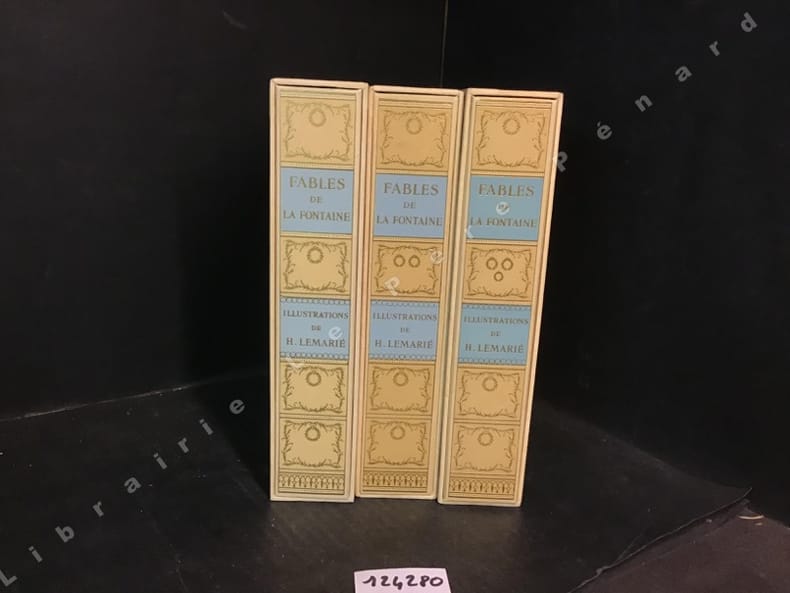
19621242801962 Editions d'Art Les Heures Claires, Paris - 1962/1966 ( Quarante quatre mois de travail ont été nécessaires à la réalisation de cet oiuvrage)) - 3 volumes in-8 en feuillets sous chemise et étui cartonné illustrés de l'éditeur. 194 + 165 + 209 pages - Illustrations en couleur dans le texte gravées par Jean Tarico (travail ayant requis deux mille deux cents bois nécessaires à la reproduction des aquarelles)- Exemplaire bien complet du fac-similé de la lettre d'Henri Lemarié
1704biblio592London: A.&J. Churchil 1704. Fine. <p>12mo LVIII 10 392p 18x11cm Translated by Basil Kennet signed binding by Sydney Aiken Fine leather decorated binding and marbled boards ownwer's signature</p> A.&J. Churchil hardcover