11 347 résultats
1866CAT0165ABoston: Ticknor and Fields 1866. First Trade Edition. Trade Edition. Image measuring 16 x 21 print measuring 18 ½ x 24 ¾ affixed to contemporary heavy stock paper measuring 23 ½ x 28 ½. A strong impression. Some sunning to image and margin. Slight dampstain to lower margin not affecting visible portion. Affixed to original wove backing paper we believe at the time of publication as the engraving itself is printed on thin paper and quite fragile. Overall a very good copy. Very Good. Marshall Edgar. Edgar Marshall's engraving of Lincoln based on one of his paintings gained high praise upon its release and is still considered one of the finest portraits done of Lincoln. Ticknor and Fields announced its publication in November of 1866 following Lincoln's assassination. They offered it by subscription only with 300 artist's proofs available for $20 India roofs for $10 and plain proofs for $5. Marshall had been living in Paris and exhibiting in salons there. He returned home in 1866 and immediately began work on his Lincoln portraits. Gustave Dore stated that this engraving was "the best engraving ever made by any artist living or dead.". Ticknor and Fields unknown books
1904058810New York: Charles Scribner's Sons 1904. First Edition First Printing . Cloth Gilt. Very Good. 377 Pp. Top Edge Gilt. Volume Ii Of 2. One Of 2000 Copies Of The First Printing The American Printing Precedes The British Printing. Gilt Strong Cloth Sunned On Spine Light Even Soil. Ownership Signature "Macveagh" At Top Of Front Endpaper; This Appears To Be Consistent With The Signature Of Lincoln Macveagh Who Was With Henry Holt Publishers 1919-1923 Then Later Founded The Dial Press Which Published Henry James 1943-1950. <br/> <br/> Charles Scribner's Sons hardcover
2015274N.P.: by the artist 2015. Original. Framed and matted. Fine. Lucas Richardson. Framed in black wood and matted in charcoal gray: overall size 18 1/2" x 15 1/2" / image displayed: 7 7/8" x 4 7/8". Lucas Richardson graduated valedictorian from DuCret School of Art in 2002. He has a double major in graphic design and fine art illustration. He continued to study with Peter Caras who had been instructed by Frank Reilley James Bama and Norman Rockwell. As a portrait artist Richardson has undertaken commissions in oil & charcoal mediums. He is also actively engaged in digital design.<br/> <br/> A STRIKING Portrait! by the artist unknown
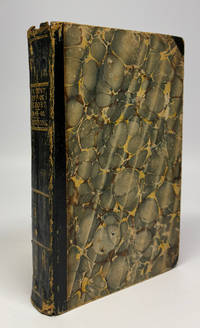
185013208Washington DC: Office of Printers to the House of Reps 1850. First Edition. Hardcover. Good . Octavo 626pp. illustrated plus six plates. A good or better copy in contemporary 3/4 black leather and marbled boards. Contemporary ownership signature to front free endpaper and small private library label to front paste-down else unmarked. Mild foxing to first and last few leaves. Extremities rubbed and scuffed and the joints tender but sound. An important volume in the pantheon of presidential books which chronicles on pp. 57 and 262 the award of a patent to then-Illinois Congressman Abraham Lincoln. Having twice been aboard a riverboat which got stuck on shallow shoals he developed a concept for a bellows fixed under the hull of a riverboat which could be inflated to lift the boat over the obstruction and then retract. Lincoln had been a patent lawyer in the mid-1840s and was closely familiar with the laborious patent application process. <br /> <br /> To this day Lincoln is the only president to have been awarded a patent a fact which contributes to his enduring legacy as an uncommon genius and polymath. As such this tract while unrelated to politics is an essential volume in any substantial Lincoln collection. Uncommon in the trade. Not listed in Monaghan. Office of Printers to the House of Reps hardcover
185611481Boston: Noyes 1856. 72pp. Original gold stamped sm 8vo brown cloth. Sabin 2933. Hammond p.20. Very scarce and interesting account of the White Mountains in the fall. He spent hours on Mt. Washington without food shelter or fire with snow and ice only for drink. His sole protection was an umbrella. The front flyleaf: "N.R. Preston Boston July 1 1857. Noyes hardcover books
186564322Davenport Iowa: Designed by W.H. Pratt and lithographed by A. Hageboeck 1865. Broadside. 38 x 31 cm. Several small tape repairs on verso several untaped tears on edges. A calligraphic portrait memorial of Lincoln using shading to form his likeness with the text of his Emancipation Proclamation. "Designed and written by W. H. Pratt and printed in Iowa the state that sent the most soldiers per capita to the front in the Civil War"- EBERSTADT 40. <br/><br/> Designed by W.H. Pratt and lithographed by A. Hageboeck unknown books
1993SET55155<p>Easton Press 1993. Leatherbound. Near Fine. WE SHIP DAILY. Books shows very little to no use. Extra postage will be needed. PROMPT PROFESSIONAL SERVICE!</p> Easton Press hardcover
199309776Easton Press. Near Fine. 1993. Hard Cover. 10 Volume-set including index and supplement. Bound in publisher's original dark brown leather with four raised bands on the spine. Title and decorations on spine and covers in gilt with all edges in gilt and a bookmarker ribbon bound into each volume. All volumes are tight clean and crisp. This set would be described As New if it wasn't for one minor flaw: Previous owner had his bookshelf repainted and unfortunately put back the books before the paint was completely dried leaving minimal traces of white paint to bottom of boards of some of the volumes - only visible if the books are held upside down - otherwise the books appear unread and look New. ; 8vo . Easton Press hardcover
1865WRCAM56487Providence: Salisbury Bro. & Co. 1865. Illustrated broadside 12 1/2 x 8 inches. Old folds. Remnants of a label on verso a few small chips to edges uneven tanning light foxing. Very good. Rare broadside advertising gold jewelry and "Patent Embossed Carte de Visites.of all noted personages." from Salisbury Bro. & Co. of Providence Rhode Island. The text describes a large stock of photographs offered at wholesale prices to retailers across the country. The broadside has a vignette of the Salisbury factory in the top quarter of the sheet with a dense cascade of text in a variety of different fonts below. The lower third of the sheet is devoted to descriptions of images of Lincoln and the Civil War advertising three different Lincoln images and the promise "Our Picture of Lincoln is the best ever taken. All others as good as ever sold by any one." They also offer images of other prominent Civil War personages as well as "Booth the Assassin Robert E. Lee Jeff Davis and other prominent Rebels all at the same price. Also we have the ASSASSIN'S VISION and the ASSASSIN'S DOOM on full Cards." <br> <br> This broadside is primarily directed towards retailers as opposed to private customers and provides costs for bulk orders of up to 1000 cartes de visite. They claim their prices are "500 per cent. less than any dealers ever have." with prices starting at $7 for 100 and up to $100 for 1000 depending on the image. Although Salisbury Bros. & Co.'s cartes de visite and other photographic products are easily accessible in many libraries we could find no record of this broadside. An interesting record of the mass-marketing of photographic images in the post-Civil War era. Salisbury, Bro. & Co. unknown books
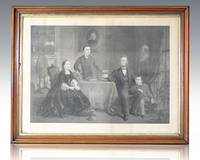
1871135435Portland ME: George Stinson and Co. Publishers 1871. Large format lithograph of the Lincoln family by American engraver George Stinson. Framed. The entire piece measures 27.5 inches by 20.5 inches. Abraham Lincoln served as the 16th President of the United States from March 1861 until his assassination in April 1865. He led the United States through its Civil War and in doing so preserved the Union of the United States of America abolished slavery and strengthened the federal government. Lincoln began constructing his cabinet on election night and sought to create a cabinet that would unite the Republican party. His eventual cabinet would include his primary rivals for the Republican nomination and although his appointees held differing views on economic issues all were opposed to the expansion of slavery into the territories of the United States. The most senior cabinet post of Secretary of State was appointed to William Seward who had recently failed to win the 1860 Republican presidential nomination and Lincoln's choice for Secretary of the Treasury was Ohio Senator Salmon P. Chase Seward's primary political rival and the leader of a radical faction of the Republican party that sought the immediate abolition of slavery. George Stinson and Co., Publishers unknown
186423032AB1864. Washington Printed for the Union Congressional Committee 1864. 8°. 14 pages. Softcover / Original Pamphlet. Original brochure. Some foxing. Unopened. Extremely RARE ! "To vote for Lincoln is to vote for Union and for Liberty". This is how this pamphlet ends in which Laboulaye urges the americans to vote for Lincoln instead for McClellan. But Laboulaye was even more important to the american people in his overall favour of this country as a leading role for freedom and future. He suggested the present by France which was later erected as the "Statue of Liberty" "In the summer of 1865 a group of Frenchmen were gathered together one evening at the home of the well-known author Edouard Rene de Laboulaye in the village of Glavingny a suburb of Paris. Among those present were Oscar and Edmond de Lafayette grandsons of the Marquis d' Lafayette Masonic brother of George Washington; Henri Martin the noted historian and French Mason; and a young artist from Colmar in French later German Alsace by the name of Frederic Auguste Bartholdi who at the time was engaged in making a bust of Laboulaye called by one biographer "America's most ardent admirer in France." Laboulaye told the group that it would be a splendid gesture on the part of all liberty-loving Frenchmen to acknowledge their friendship to America by presenting a fitting memorial. Some have speculated that he had a second motive in mind to call attention to the contrast between the American way of life with its freedoms and that of the French under the repressive Second Empire. The 31-year-old Bartholdi became imbued with the idea and also the challenge it presented to his artistic talent. But the proposal lay dormant during the autocratic rule of Napoleon III and throughout the destructive years of the Franco-Prussian War. In 1871 Laboulaye the Brother Lafayette with their cousin the Marquis de Noailles and the Marquis de Rochambeau along with Henri Martin revived the plan for the as yet unnamed memorial. They suggested that Bartholdi visit America and make arrangements for the presentation of the monument on July 4 1876 the Centenary of the Declaration of Independence. Armed with letters of introduction and full of high hopes Bartholdi sailed for America although it is said that he did not have even a rough drawing of the proposed monument. Two weeks later while standing on the deck of the ship Pereire steaming up Lower New York Bay he caught a vision of a magnificent goddess holding aloft a torch in one hand and welcoming all visitors to the land of freedom and opportunity. Quickly obtaining paper and brush Bartholdi sketched in water-color the idea of the Statue of Liberty substantially as it appears today. It was his thought to have this symbolic structure tower over the steeple of Trinity Church then the tallest building on the New York skyline. He wrote to Laboulaye "these outlines may well aim beyond the mere monument at a work of great moral value." MasonicWorld - By R. W. Robert C. Singer Édouard René Lefèbvre de Laboulaye French pronunciation: edwa ne lfv d labul 18 January 1811 25 May 1883 was a French jurist poet author and anti-slavery activist. In 1865 he originated the idea of a monument presented by the French people to the United States that resulted in the Statue of Liberty in New York Harbor. He got the idea thinking that this would help strengthen their relationship with the United States. Laboulaye was received at the bar in 1842 and was chosen professor of comparative law at the Collège de France in 1849. Following the Paris Commune of 1870 he was elected to the national assembly representing the departement of the Seine. As secretary of the committee of thirty on the constitution he was effective in combatting the Monarchists in establishing the Third Republic. In 1875 he was elected a life senator and in 1876 he was appointed administrator of the Collège de France resuming his lectures on comparative legislation in 1877. Laboulaye was also chairman of the French Anti-Slavery Society. Laboulaye was president of the Société d'économie politique. Always a careful observer of the politics of the United States and an admirer of its constitution he wrote a three-volume work on the political history of the United States and published it in Paris during the height of the politically repressed Second Empire. During the American Civil War he was a zealous advocate of the Union cause and the abolition of slavery publishing histories of the cultural connections of the two nations. At the war's conclusion in 1865 he became president of the French Emancipation Committee that aided newly freed slaves in the U.S. The same year he had the idea of presenting a statue representing liberty as a gift to the United States a symbol for ideas suppressed by Napoleon III. The sculptor Frédéric Auguste Bartholdi one of Laboulaye's friends turned the idea into reality. Wikipedia paperback
186122671<p><b>ABRAHAM LINCOLN.</b>Book. <i>Message of the President of the United States to the Two Houses of Congress. Volume 1</i> Washington: Government Printing Office 1861. 839 pp. 5¾ x 8¾ in. </p><b>Excerpt</b><p><i>"A disloyal portion of the American people have during the whole year been engaged in an attempt to divide and destroy the Union. A nation which endures factious domestic division is exposed to disrespect abroad and one party if not both is sure sooner or later to invoke foreign intervention. </i></p><p><i> Nations thus tempted to interfere are not always able to resist the counsels of seeming expediency and ungenerous ambition although measures adopted under such influences seldom fail to be unfortunate and injurious to those adopting them. </i></p><p><i> The disloyal citizens of the United States who have offered the ruin of our country in return for the aid and comfort which they have invoked abroad have received less patronage and encouragement than they probably expected.</i></p><p><i> It continues to develop that the insurrection is largely if not exclusively a war upon the first principle of popular government--the rights of the people. Conclusive evidence of this is found in the most grave and maturely considered public documents as well as in the general tone of the insurgents. In those documents we find the abridgment of the existing right of suffrage and the denial to the people of all right to participate in the selection of public officers except the legislative boldly advocated with labored arguments to prove that large control of the people in government is the source of all political evil. Monarchy itself is sometimes hinted at as a possible refuge from the power of the people. </i></p><p><i> In my present position I could scarcely be justified were I to omit raising a warning voice against this approach of returning despotism."</i></p><p><b>Historical Background</b></p><p>President Lincoln's first message to Congress in 1861 immediately follows the title page. In the first year of both his presidency and the Civil War Lincoln criticizes disloyal citizens who are trying to ruin the country. He acknowledges that the Confederates firing on Fort Sumter ended hope of a peaceful solution and expresses his confidence in General McClellan. Lincoln also expounds on the foreign affairs the relationship of labor to capital and reports on domestic commerce and other affairs. The remainder of the book is over 400 pages of papers relating to foreign affairs and correspondence with other nations and diplomats. The second half of the book is made up of the Reports of the Secretaries of the Interior War Navy and Postmaster General.</p><p><b>Condition </b></p><p>Good. Original cloth boards with U.S. seal and titled spine some slight chipping and wear to boards and spine binding a little loose and front endpaper almost detached hinges a bit weak but still firm some aging but generally clean internally.</p> hardcover books
1915000429New York: Brentano's 1915. 1st Edition. Hardcover. Very Good. This is a First Edition. This copy is Very Good in original illustrated boards. This copy has some minor soiling to the back cover and a slight discoloration stain to the bottom corner of the front cover. Otherwise a tight and clean copy. Bright lettering on cover and the spine and binging still tight. Scarce First Edition. Brentano's hardcover
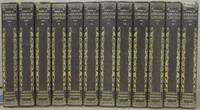
189480033Lincoln Memorial University 1894. Sponsors Edition. Hardcover. Very Good. 23.5 x 16 cm. Complete twelve volume set. This is the Sponsors Edition printed from plates of the original new and enlarged edition of 1894 signed by the chancellor of the university and with the seal of of the university. There is supposed to be a limitation page opposite this in volume 1 but this is NOT present. Several versions of this edition were done. This set bound into brown boards with a gilt emblem of the Lincoln Memorial and TEG. Many unopened pages. Frontispiece in each volume and additional plates and facsimile letters throughout the work. Wear and sometimes chipping at the heads of spines. Nice internally. Heavy set. Substantial additional charges will be required for priority or orders outside the US. Lincoln Memorial University hardcover
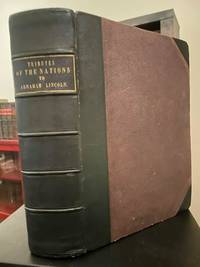
1867118<b>Large thick 4to. Pp 2 XXX 930 with a portrait of Lincoln as a frontis. Contemp. half black morocco raised bands black title label gilt lettered spine brown cloth bds. Marbled edges and eps text slightly toned. An excellent copy. A thick volume of tributes from around the world to the late Abraham Lincoln.</b> Government Printing Office hardcover
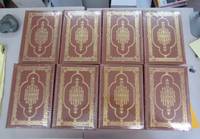
201466226Norwalk Connecticut: Easton Press 2014. Centinnial Edition. Full Leather. As New. 23.5 x 16 cm. Octavo. Illustrated with photogravure frontispieces. 8 volume set bound in brown leather. Black spine labels. Gilt design lettering and foredcges. 5 raised bands. Still in original shrink wrap. Deluxe edition limit to 800 sets. Interior is a facsimile of the P. F. Collier 1906 edition. Volume One: 1832-1843<br /> Volume Two: 1843-1858<br /> Volume Three: The Lincoln-Douglas Debates I <br /> Volume Four: The Lincoln-Douglas Debates II<br /> Volume Five: 1858-1862<br /> Volume Six: 1862-1863<br /> Volume Seven: 1863-1865<br /> Volume Eight: The Life of Lincoln. Easton Press unknown
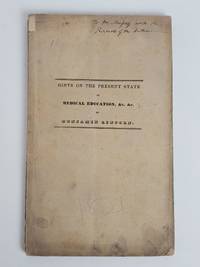
18331359902Burlington: For the Author 1833. Softcover. Octavo 2 3-18 9 xvi 11-76 pages. In Good condition. Bound in paper wraps. Covers show some discoloration and small tears. Text block slightly discolored with extensive foxing and age toning to pages. Ink inscription on cover reads: "To Dr. Mupey with the Respects of the Author". Ex-library copy with usual markings including embossed institutional stamps to several pages and call numbers written in pencil and ink. <br /> Scattered minor ink marginalia and corrections throughout. MF consignment. 1359902. Special Collections. For the Author unknown
1860022564Columbus: Follett Foster. Original brown stamped cloth. First Edition Later Issue. Two leaves of Follett ads rule over publishers imprint on copyright page numeral 2 at bottom of page 13. Debates about whether slavery should be permitted in new states. The publicity from these debates made Lincoln a national figure. Previous owners names in pencil and ink foxing Good. . Good. Hardcover. 1st Edition. 1860. Follett, Foster hardcover
200110929VB2001. 1st ed. SAGE Publications Ltd 2001. 17 x 25 cm. 1580 pages. Hardcover. Versand aus Deutschland / We dispatch from Germany via Air Mail. Einband bestoßen daher Mängelexemplar gestempelt sonst sehr guter Zustand. Imperfect copy due to slightly bumped cover apart from this in very good condition. Stamped. hardcover
167936272For James Collins:: WALTER KETTIBLY:: HIS MAJESTY'S PRINTERS. Very Good with no dust jacket. 1679. Hardcover. POPERY OR THE PRICIPLES AND POSTIONS APPROVED BY THE CHURCH OF ROME WHEN REALLY BELIEVED AND PRACTISED ARE DANGEROUS TO ALL.By T. Ld Bishop of Lincoln. London: Printed by J. C. And Fr. Collins for James Collins in the Temple-passage from Essex-street. MDCLXXIX. Multiple editions in 1679. This has publication statement as above. Authored by Thomas Barlow. Wing B841. ESTC R13656. 4 224 pp. Collation: Imprimatur title B-P8 in 8s. Margin occasionally narrow affecting signing/catchword of a few pages near end of Popery. THE GUNPOWDER-TREASON WITH A DISCOURSE OF THE MANNER OF ITS DICOVERY HORRID CONSPIRATORS.EXAMINATIONS TRYALS AND CONDEMNATION.London Printed by Tho. Newcomb and h. Hills and are to be Sold by Walter Kettilby 1679. Wing B833. ESTC R17295. 4 58 2 263 1 pp. Coll. : cancel imprimatur leaf title leaf A3-D8 A-D8 f-f4 F-R8 in 8s except for the 4-leaf signature f. Leaf D8 is the title leaf of the 3rd work in the volume: KING JAMES HIS SPEECH TO BOTH HOUSES OF PARLIAMENT ON THE OCCASION OF GUNPOWDER-TREASON London Re-printed by His Majestys Printers. M. DC. LXXIX. Gunpowder-Treason is from the same setting of type as the edition where the last numbered page is 191. ESTC R209136. Wing B833. Chip to margin of pp25-26 of King James His Speech. The above 3 titles are bound as a single volume contemp leather scuffed few weak points in bdg corners rounded modern notations to fep. Slight foxing texts very good. Guy Fawkes . For James Collins:: WALTER KETTIBLY:: HIS MAJESTY'S PRINTERS hardcover
553031 vols. 9 x 6 inches framed to 17 x 14-1/2. Two chips lightly scratched. Glued in wood frame. 1 vols. 9 x 6 inches framed to 17 x 14-1/2. unknown
1866238120Washington D.C.: John H. Littlefield; Wm. Terry Printer 1866. Photograph by John Goldin of Littlefield's painting on printed mount. 1 vols. Image 11 1/2 x 18 3/4 in.; mounted to 19 x 24 in. Soiling to image vertical crease large chips to bottom of mount not affecting image or legend; good. Photograph by John Goldin of Littlefield's painting on printed mount. 1 vols. Image 11 1/2 x 18 3/4 in.; mounted to 19 x 24 in. A published photograph of Littlefield's hyper-realistic Lincoln death-bed painting each figure meticulously rendered from photographs. Littlefield studied law under Lincoln in 1858 stumped for him in his Presidential bid and was rewarded with a position in the Treasury Department. After Lincoln's death Littlefield invented this tableau of twenty-five people ranged around the death-bed including Vice-President Johnson Surgeon Chalres Leale and Mrs. Lincoln. "The artist used photographs as models for the twenty-five people gathered in the death room but his profile of the dying Lincoln shows a first-hand acquaintance" Ostendorf LINCOLN'S PHOTOGRAPHS p. 279. Provenance: Harper Family John H. Littlefield; Wm. Terry, Printer unknown
1866238011Washington D.C.: John H. Littlefield; Wm. Terry Printer 1866. Photograph by John Goldin of Littlefield's painting on printed mount. Image 8 1/2 x 13 3/4 in.; mounted to 13 x 17 in. Faint toning to mount; fine. Photograph by John Goldin of Littlefield's painting on printed mount. Image 8 1/2 x 13 3/4 in.; mounted to 13 x 17 in. A published photograph of Littlefield's hyper-realistic Lincoln death-bed painting each figure meticulously rendered from photographs. <br /> Littlefield studied law under Lincoln in 1858 stumped for him in his Presidential bid and was rewarded with a position in the Treasury Department. After Lincoln's death Littlefield invented this tableau of twenty-five people ranged around the death-bed including Vice-President Johnson Surgeon Charles Leale and Mrs. Lincoln.<br /> "The artist used photographs as models for the twenty-five people gathered in the death room but his profile of the dying Lincoln shows a first-hand acquaintance" Ostendorf LINCOLN'S PHOTOGRAPHS p. 279. John H. Littlefield; Wm. Terry, Printer unknown
1905327084Chicago: Illinois Central Railroad Company 1905. 200 copies this is one of Fourteen Copies Printer's Edition By Permission #6. illustrated throughout with photogravures of Lincoln documents in the ICRC collection. 4to. Full pebbled limp pebbled black morocco with gilt stamping on upper cover "Compliments of the Illinois Central Railroad Company." Laid into full orange cloth dropbox with gilt stamp "Collection of Foreman M. Lebold. 200 copies this is one of Fourteen Copies Printer's Edition By Permission #6. illustrated throughout with photogravures of Lincoln documents in the ICRC collection. 4to. Provenance: Lou F. English this copy presented by Walter J. Gunthorp to Lou F. English.; Foreman M. Lebold lettering to clamshell box Illinois Central Railroad Company unknown
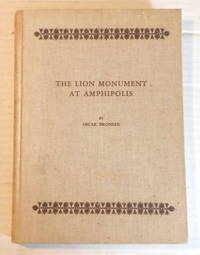
194198734Cambridge MA: Harvard University Press 1941. 1941. Very good. - Quarto 10 inches high by 7 inches wide. Hardcover bound in tan buckram titled in brown within brown decorative borders on the front cover. The titling on the spine is faded. xvii 3 pages 1-76 illustrated with a frontispiece and profuse photographic illustrations as well as a portfolio of 11 plates at the end of the book which includes photographs by MacVeagh. There is some minor foxing to the endpapers and pastedowns and the edges of the pastedowns are soiled. Near fine. <p>The RARE FIRST EDITION from the library of the book's Dedicatee "The Honorable Lincoln MacVeagh".<p>The prospectus "The Lion of Amphipolis - A Plea for its Reconstruction" by Lincoln MacVeagh is a 10 by 7-1/2 inch 4-page pamphlet with a 1934 photograph of the fragments of the lion laid in. It was published in Athens in 1934. ".recently during the progress of the great work in connection with the drainage of the Serres Plain and the deepening of the Amphipolis Gorge the engineers of the Monks-Ulen Company of New York became impressed with the majesty and immensity of the all-but-buried and half-forgotten fragments of the Lion of Amphipolis. Enthusiastically they brought the idea of its reconstruction to me. I visited the site; and the plan herein set forth in which it is my hope that a sufficient number of lovers of Greece and of Greek Art will join was born."<p>The lecture by MacVeagh "The Lion of Amphipolis" was delivered to The French School of Archaeology at Athens in 1937. It is a 10 by 7-1/4 inch 12-page pamphlet illustrated with 4 photographs and 2 maps showing the location of Amphipolis. The lecture is for the most part an account of the restoration work to date. "While the collaboration of the French and American Schools was thus producing unexpected results the Greek authorities were also helping and besides giving the whole enterprise their blessing kindly accorded the schools the collaboration of Mr. Panayiotakis of the National Museum. This able sculptor spent weeks at Amphipolis again thanks to the Monks-Ulen Companies which lent their camp and collected the necessary workmen and tools for his operations. With great effort and patience far from the conveniences of the city Mr. Panayiotakis successfully carried through the task of making moulds some of them of truly gigantic size of all the existing fragments of the Lion. From these he made casts on the spot and again with the help of the engineers fitted these together under an enormous shed and provided in plaster the missing pieces to complete the whole figure. This year it is planned to put the actual fragments themselves together and make the missing parts out of marble cement of a color agreeable to the rest."<p>From the library of Lincoln MacVeagh and his wife Margaret with their "Arcades Ambo" bookplate on the front paste down. Lincoln MacVeagh 1890-1972 a Renaissance man graduated from Harvard magna cum laude in 1913. He went on to study languages at the Sorbonne and became fluent in German French Spanish Latin Greek and Classical Greek. After World War I he became a director of the Henry Holt and Company publishing firm where he became friendly with the poet Robert Frost. In 1923 he left the firm and founded the Dial Press. His name appears on the imprint of many of their publications. In 1933 President Roosevelt appointed him Minister to Greece. He followed presentation of his credentials with a speech in Classical Greek. While in Greece he conducted excavations beneath the Acropolis and made archeological contributions to the National Museum in Athens. He left Greece in 1941 when the German army over ran the country. From there he was appointed the first US Minister to Iceland where he negotiated agreements for the construction of the Keflavik airfield. In late 1942 he became Minister to the Union of South Africa and coordinated American wartime agencies there. In 1943 he was sent to Cairo as Ambassador so that he could assist the governments in exile of Greece and Yugoslavia. He returned to Athens as Ambassador in 1944. MacVeagh gave secret testimony before Congress concerning the Balkans in 1947 testimony that was an important factor in the formation of the Truman Doctrine. In 1948 as Ambassador to Portugal MacVeagh was influential in admitting her into NATO. In 1952 President Truman named him Ambassador to Spain. President Truman wrote to him on March 9 1948: "On the occasion of your appointment as Ambassador to Portugal I would like to make some personal expression of appreciation for the high services you have already rendered your country. During the past fifteen critical years you have served with distinction as Chief of the United states Missions to Iceland the Union of South Africa Yugoslavia and Greece. In this last post especially - as Minister from 1933 to 1941 and as Ambassador since 1943 - your scholarly statesmanship and diplomatic judgment have been of the utmost value." Cambridge, MA: Harvard University Press, 1941. hardcover