VERLAINE PaulMareMagnum

19 839 résultats
- Léon Vanier, Paris 1891, 12,5x19cm, relié. - Second edition, first for some parts, one of 100 copies on vergé blanc paper. Contemporary Bradel half dark-green cloth over marbled paper boards, the spine with gilt fleuron, date and double gilt fillets at foot, upper corners rubbed, covers preserved. Handsome autograph inscription from Paul Verlaine to Alice Densmore. An attractive copy in a pleasant binding. [FRENCH VERSION FOLLOWS] Deuxième édition, en partie originale, un des 100 exemplaires d'auteur imprimés sur vergé blanc. Reliure à la bradel en demi percaline sapin, dos lisse orné d'un fleuron doré, date et double filet dorés en queue, plats de papier marbré, coins supérieurs émoussés, couvertures conservées, reliure de l'époque. Précieux envoi autographe signé de Paul Verlaine à Alice Densmore. Bel exemplaire agréablement établi.
- Léon Vanier, Paris 1891, 12x19cm, relié. - Deuxième édition imprimée à petit nombre sur vergé de Hollande. Reliure en demi maroquin rouge à coins, dos à cinq nerfs, date dorée en queue, infime décoloration sans gravité du dos, plats de papier marbré, gardes et contreplats de papier caillouté, couvertures et dos conservés, tête dorée, élégante reliure non signée établie toute fin XIXème-début XXème. Provenance : de la bibliothèque Simone et André Maurois avec leur ex-libris gravé et encollé sur un contreplat. Envoi autographe signé de Paul Verlaine à la cantatrice Marie-Blanche Vasnier : "A Madame Vasnier, hommage respectueux. P. Verlaine." Marie-Blanche Vasnier fut la muse du jeune Claude Debussy, de quatorze ans son cadet, qui lui dédia de nombreux chants d'amour. [ENGLISH DESCRIPTION ON DEMAND]
- s.l. [Paris] 19 mai 1890, 13,4x20,3cm, une page sur un feuillet. - Lettre autographe signée de Paul Verlaine adressée à François Coppée ; une page rédigée à l'encre noire sur un feuillet. Pliures transversales inhérentes à l'envoi. Belle lettre du Prince des poètes, sollicitant l'aide de son ami : "Excusez-moi, mais la misère revenue en attendant des choses sûres et très prochaines en dehors d'une souscription mal conduite, me force à penser à vous pour un prêt de quelques jours. Pourriez-vous remettre au porteur, mon ami le poète Paterne Berrichon quelque chose comme 50 francs (je dois payer mon garnot demain !) Quelque fois que Berrichon ne vous trouverait pas, envoyez moi par la poste (mandat plutôt) cette somme qui vous sera rendue, soyez en sûr, sous très peu de jours." Avec ses acolytes du cercle zutique, Verlaine avait malmené François Coppée avant de faire de lui dédier l'un de ses très beau poèmes de Jadis et Naguère (1884) et de peindre de lui un élogieux portrait dans Les Hommes d'aujourd'hui en 1885. L'histoire ne dit pas si Coppée prêta la somme demandée à Verlaine, mais il ne vota en tout cas pas pour lui lorsque le poète présenta sa candidature à l'Académie française en 1893. [ENGLISH DESCRIPTION ON DEMAND]
- Paris s.d. [1890], 21,3x14cm, 3 pages in-8 au verso de 4 feuillets de l'Assistance publique de Paris. - VERLAINE Paul Complete autograph manuscript signed by Paul Verlaine of one of his Hospital Chronicles: "We poets, as well as they, the workers, our companions in misery" Paris n. d. [1890], 213 x 140 mm (8 3/8 x 5 1/2 "), 3 pages in-8 at the back of 4 leaves of the Assistance publique de Paris Complete autograph manuscript signed by Paul Verlaine of one of his Hospital Chronicles, 90 close lines in black ink on the verso of paper from the Assistance publique de Paris. The chronicle of one of Verlaine's stays in hospital between September 1889 and February 1890. The note "III" has been crossed out in blue printer's pencil. In the definitive collection, this text is, in fact, second. In the version published by Le Chat noir on 5 July 1890, there appear to be no variations with the text of this manuscript. This is thus the final state of the text, the one sent to the printer. Jacques Borel dates the writing of this chronicle to a hospital stay in Cochin in June 1890. Verlaine spent many days in hospital during his life, especially in this period. During these stays, he wrote Hospital Chronicles, prose poems in eight parts. Here, he mixed anecdotes, observations of the lives of the patients, and a delicate poetical analysis of the world of the hospital. Verlaine starts off with a troubling and tired observation: "But certainly, all the same, the Hospital darkens, despite the fine June weather...Yes, the Hospital is dark despite philosophy, insouciance, and pride." Despite the fine weather, the inflexibility of the system, the misery and the sickness give the poet a gloomy take on things: "let us punish all objections under pain of expulsion, still severe, even in this month of flowers and hay, of warming days and clement nights, if you have the devil at your back and debt and hunger at home." Discharge, whether by way of being thrown out or getting cured, and life outside did not offer more comfort than the stay itself: "Clearly, we'll all get out sooner or later, more or less well, more or less happy, more or less sure of the future, at any rate more or less alive. So we will think sadly...of our suffering, emotional and otherwise, of the doctors, good or inhuman". This was a feeling he had already experienced during what he called "my intervals", the times when he was out of hospital. Life outside hospital was a miserable prospect, despite his established fame. Verlaine compares his misery to that of the working classes who share his stays in various hospitals. The poet calls for resignation from his "brothers, artisans of one sort or another, workers without a life's-work and poets...and publishers too, let us accept our fate, let us drink up the cup of tea with (barely any sugar), or this little hot chocolate, and let us be brave whether it be with our medicine, or an enema, or chewing tobacco. Let us follow their prescriptions closely, let us obey all injunctions, so that injections and colonics will seem sweet to us, and let us reprimand all objections...". And along with them, the poet wanted to take advantage of the beauties of June in quoting two verses from the Chanson sentimentale of Xavier Privas: "We are pleased with ourselves in the strong sun. And under the green branches of the oaks, we poets, as well as they, the workers, our companions in misery...". Equal in the face of misfortune, whether active or passive, they might feel nostalgia once they were out: "And perhaps some day we will miss these good times where you workers, you could rest and where we, we poets, worked, and where you artists earned your wine and your cups ...?" Despite this reverie, Verlaine was: "tired of so much poverty (provisionally, believe me, because I have been so used to it these last five years!)" and concludes bitterly with the observation of the lack of humanity in modern medicine: "Hospital with a capital H, an awful idea, ev
Oblong folio album (245 x 380 mm). 57 ff. 50 full-page pen and ink drawings of imaginary cities and their armies; 50 emblematic cartouches each containing an octave describing the opposite city, some with Latin mottos; dedication in ornamental border; allegorical cartouche with octave praising Venice on the verso. Contemporary red morocco with gilt triple fillets enclosing large oval centerpiece composed of double fllets in arabesque patterns with armorial shield, edges gilt. Stored in custom-made half morocco case. Unique album with splendid manuscript designs for imaginary fortified cities, created for and dedicated to Marino Grimani in the year of his appointment as Doge of the City and Republic of Venice, which he would reign over until his death. Grimani served as Superintendent of Fortresses before becoming Doge and worked for many years on the design and construction of the Palmanova fortress, the greatest of the Renaissance star forts and constantly embattled by the Ottomans as well as by other forces for centuries to come. Vericci's album constitutes a paragon of Renaissance idealism: a utopian vision which champions the might derived from pushing human genius to the limits of the imagination, combining mathematics, philosophy, and military prowess with art, poetry, and design. Little is known about the author-artist Marco Vericci, some of whose other ingenious military designs survive in the Biblioteca Bertoliana in Vicenza, but he may have worked with Grimani on the designs for Palmanova. Italian art historian Lionello Puppi has cautiously suggested that "Vericcius" may be a pseudonym of Fillipo Pigafetta, a Venetian soldier and mathematician who wrote extensively on military fortifications. In this album, Vericci illustrates and whimsically describes fifty imaginary cities whose designs are based on the utopian mathematical ideals of the Renaissance star fort. The cities, with names like "Mirabella", "Grimanopoli", and "Durissima", are situated in elaborate landscapes (almost all are island fortresses, like their model) and are rendered in exquisite detail. The octave opposite each illustration describes the strengths and virtues of each fantastical fortress in the vein of Italo Calvino's novel "Invisible Cities" - which also featured a litany of imaginary towns all reflective of La Serenissima herself. The last illustration but one depicts the 1571 Battle of Lepanto, a major naval victory by the Holy League over the Ottomans. The Palmanova fortress was dedicated exactly 22 years, to the day, after the battle - thus its inclusion here links the glory of Lepanto explicitly to the achievements of Doge Grimani, in addition to re-situating this imaginative work in its real-life context of simmering conflict not just between Europe and the Turks, but also between Venice and Austria - her enemy to the North. - Some light soiling and spotting; some early marginal repairs where ink has corroded the paper; traces of paste on first two leaves with loss to a few letters. Otherwise in excellent state of preservation and still in its richly gilt morocco binding commissioned for the Doge of Venice (his arms in the centre of the back cover rubbed). Manfredo Tafuri, Venice and the Renaissance (Boston: MIT Press, 1995). Lionello Puppi, Scrittori vicentini d'architettura del secolo XVI (Venice: Accademia Olimpica, 1973).
58307o.J. Ohne Ort (Paris), ca. 1880, Fol. (24 x 18,7 cm). Auf bedrucktem Trägerpapier mit Rahmen.
Volledig in 2 delen: xi,319 + lxv,321 pp. + 16 platen buiten tekst, Uitgave van de Koninklijke Vlaamsche Academie voor Taal- en Letterkunde, 27cm., originele omslagen, deel 2 nog onopengesneden, stempeltje op titelbladen en etiket onderaan op rug, verder in goede staat, zeldzaam, T100255
- Les éditions du petit véhicule, Nantes 1988, 16x24cm, broché. - Edition originale sur papier courant. Ouvrage illustré de 7 dessins de Karel Appel. Bel exemplaire. Envoi autographe daté et signé d'André Verdet à son ami le poète Charles Dobzynski : "Pour mon copain Charles Dobzynski, à mon complice spatio-poète, bien sidéralement sien A. Verdet." enrichi d'un grand dessin original tricolore. [ENGLISH DESCRIPTION ON DEMAND]
complete in 2 vols.: x,452 + xviii,494pp.with ills., 25cm., in the series "Mediaevalia Lovaniensia" Series 1 Studia 20-21, softcovers, fine condition, [contributions in Dutch, French, German and English], R74608
xviii + 494pp.with ills., 25cm., in the series "Mediaevalia Lovaniensia" Series 1 Studia 21, softcover, fine condition, [contributions in Dutch, French, and English], R74610
Very Good Turkish Original autograph - manuscript card signed 'Vera' including New Year celebration, with its original envelope, sent to Turkish architect Cengiz Bektas. Envelope size: oblong, 12x19 cm; card size: oblong, 9,5x15 cm. In Turkish. The card is bifolium. 1 p. It includes eight lines, a new year celebration sent to Turkish architect Cengiz Bektas, (1934-2020) and his wife Gönül Bektas. With an extra autograph note. Vera Tulyakova was born in 1932 in Moscow. He graduated from the Gerasimov Cinema Institute, Script Department. Later he worked as a redactor in the animation department of the cinema studio. After marrying Nazim Hikmet, she worked as a reporter at Agency Novosti.
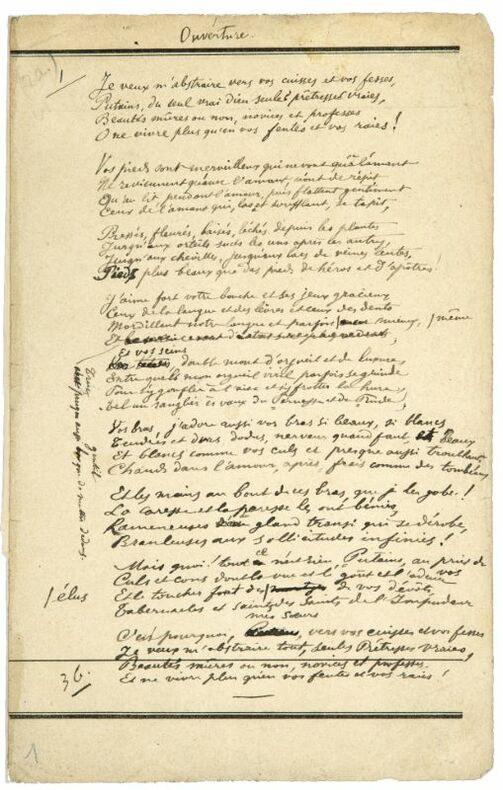
1890888011890 1 page in-8 à l'encre brune (22 x 13.9 cm) sur papier d'hôpital, sous chemise demi-maroquin noir. Trace d'un ancien montage sur onglet. Beau poème libre paru dans le recueil Femmes, imprimé "sous le manteau" en 1890 à Bruxelles chez Kistemaeckers [Dutel, Bibliographie des ouvrages érotiques publiés clandestinement en français entre 1880 et 1920, p.138]. Verlaine rend gloire à la chair féminine et d'abord à ses représentantes, les prostituées (on relèvera la subtilité de cette mise en bouche décrite uniquement en rimes féminines dans le premier quatrain) : "Je veux m’abstraire vers vos cuisses et vos fesses,Putains, du seul vrai dieu seules prêtresses vraies,Beautés mûres ou non, novices et professesO ne vivre plus qu’en vos fentes et vos raies !"Cette ouverture donne le ton, et Verlaine décline en neuf strophes sa passion pour le corps féminin : pieds, bouches, seins, bras, mains, sexes... Les putains sont "soeurs", "seules prêtresses vraies". Il compose une adoration incarnée et pornographique. Verlaine, amant inassouvi, chante la femme non en spectateur attendri, mais en acteur mu par la hantise charnelle :"Et vos seins, double mont d'orgueil et de luxureEntre quels mon orgueil viril parfois se guindePour s'y gonfler à l'aise et s'y frotter la hure :Tel un sanglier ès vaux du Parnasse et du Pinde."Si l'oeuvre de Verlaine est empreinte de volupté, ses derniers productions érotico-pornographiques ont une force brute, nourries d'une spontanéité et d'une urgence flamboyante libérées de tout impératif d'élégance ou moral... une poésie, par la même, profondément humaine. Le manuscrit comporte quelques ratures et une variante : "Prêtresses" au lieu de "compagnes" (vers 34).
1890888011890 1 page in-8 à l'encre brune (22 x 13.9 cm) sur papier d'hôpital, sous chemise demi-maroquin noir. Trace d'un ancien montage sur onglet. Beau poème libre paru dans le recueil Femmes, imprimé "sous le manteau" en 1890 à Bruxelles chez Kistemaeckers [Dutel, Bibliographie des ouvrages érotiques publiés clandestinement en français entre 1880 et 1920, p.138]. Verlaine rend gloire à la chair féminine et d'abord à ses représentantes, les prostituées (on relèvera la subtilité de cette mise en bouche décrite uniquement en rimes féminines dans le premier quatrain) : "Je veux m’abstraire vers vos cuisses et vos fesses,Putains, du seul vrai dieu seules prêtresses vraies,Beautés mûres ou non, novices et professesO ne vivre plus qu’en vos fentes et vos raies !"Cette ouverture donne le ton, et Verlaine décline en neuf strophes sa passion pour le corps féminin : pieds, bouches, seins, bras, mains, sexes... Les putains sont "soeurs", "seules prêtresses vraies". Il compose une adoration incarnée et pornographique. Verlaine, amant inassouvi, chante la femme non en spectateur attendri, mais en acteur mu par la hantise charnelle :"Et vos seins, double mont d'orgueil et de luxureEntre quels mon orgueil viril parfois se guindePour s'y gonfler à l'aise et s'y frotter la hure :Tel un sanglier ès vaux du Parnasse et du Pinde."Si l'oeuvre de Verlaine est empreinte de volupté, ses derniers productions érotico-pornographiques ont une force brute, nourries d'une spontanéité et d'une urgence flamboyante libérées de tout impératif d'élégance ou moral... une poésie, par la même, profondément humaine. Le manuscrit comporte quelques ratures et une variante : "Prêtresses" au lieu de "compagnes" (vers 34).
2003G74615Leuven, Leuven University Press 2003 167pp., 24cm., in the series "Symbolae Facultatis Litterarum Lovaniensis" Series B vol.28, very good condition, [text in Spanish], G74615
19911221029 octobre [18]91. Billet sur un papier ligné (13,5 x 9 cm).
179414019Signé par de nombreux membres de la commune de Versailles, d'un curé; Beau sceau de cire rouge. 27 ventose an 2 (17 mars 1794). En feuille Bon Versailles 1794
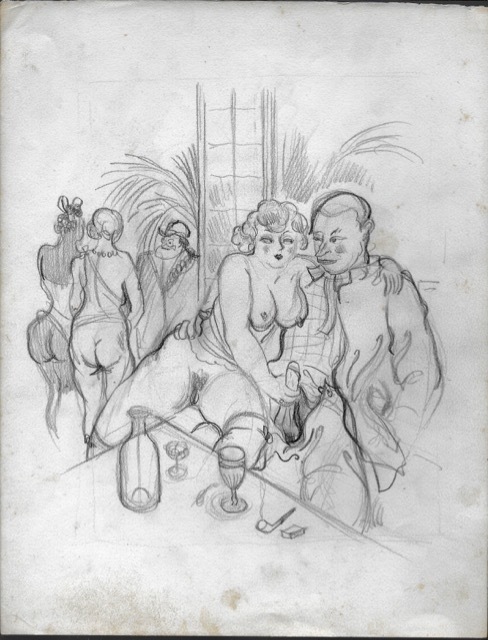
11382Scène de maison close. Beau dessin érotique non signé mais atribuable à Vertès ? Pas de couverture Très bon 15 x 18 cm
1920003755Paris Albert Messein 1920 In-8 Broché
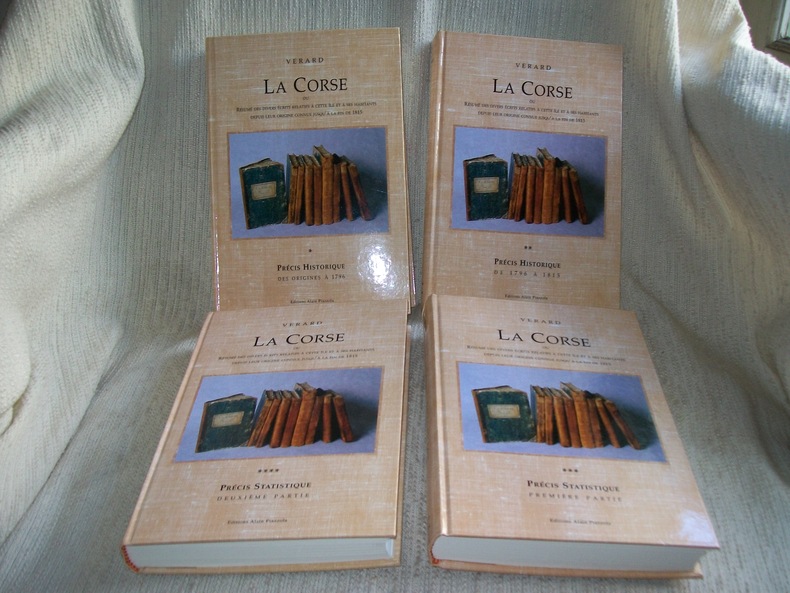
1999GITh454Ajaccio Editions Alain Piazzola 1999. 4 volumes in8 XIX 388pp 1 feuillet non chiffré table, 278pp 1 feuillet non chiffré table, 324pp 2 feuillets non chiffrés table, 281pp 4 feuillets non chiffrés dont table. Cartonnage de l'éditeur de papier glacé bradel, 1er plat illustré. Quelques illustrations réunies sur 4 feuillets dans le Tome I. Bel exemplaire en bon état et complet. 1 des 25 exemplaires sur papier Acquarello avorio numérotés à la main en chiffres romains et paraphés par l'éditeur. Première édition de ce manuscrit très intéressant.
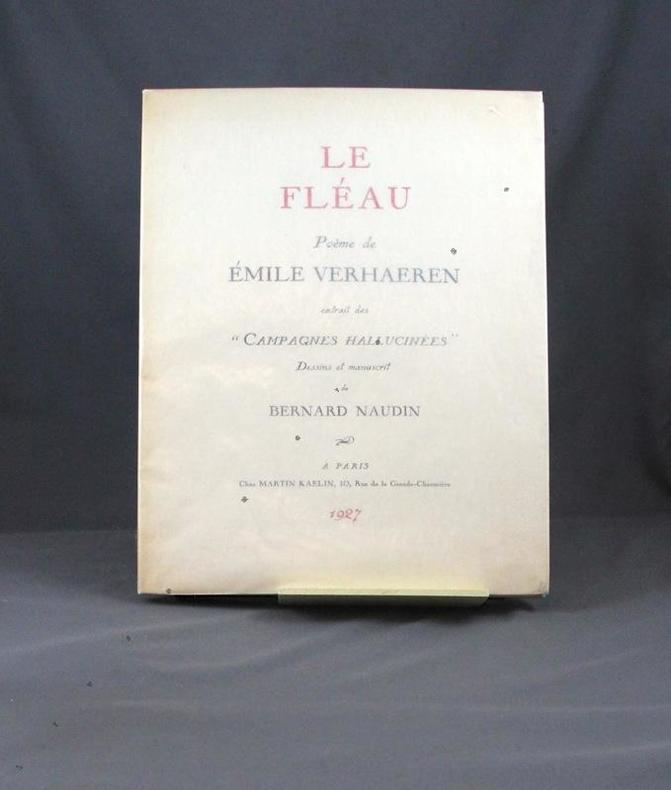
9544PARIS, Martin Kaelin, 1927 - in-Folio - en feuilles sous cartonnage remplié sous jaquette (déchirée avec rousseurs) - 9 dessins NB PP & quelques uns en texte - Fac-similé du manuscrit fait par Bernard NAUDIN , sur le désir du poète Emile VERHAEREN, avec les dessins que l'illustrateur avait exécutés pour le mâitre - Ex. 58, l'un des 200 sur Hollande - Bon exemplaire, intérieur frais - Réf.
1927492341927 PARIS, Martin Kaelin, 1927 - in-Folio, 38 x 30 cm - en feuilles sous cartonnage remplié sous jaquette (déchirée avec rousseurs) - 9 dessins NB PP & quelques uns en texte - Fac-similé du manuscrit fait par Bernard NAUDIN , sur le désir du poète Emile VERHAEREN, avec les dessins que l'illustrateur avait exécutés pour le mâitre - Ex. 58, l'un des 200 sur Hollande - Bon exemplaire, intérieur frais - Réf. 49234
19274083A Paris, Chez Martin Kaelin, 1927. In-folio en feuilles de 22 ff. non chiffrés. Couverture imprimée à rabats. Marques de scotch sur les gardes. Ensemble en belle condition.
1953R48374Tournai, Desclée 1953 216pp.+ 9 planches, br.orig., non coupé, 23cm.
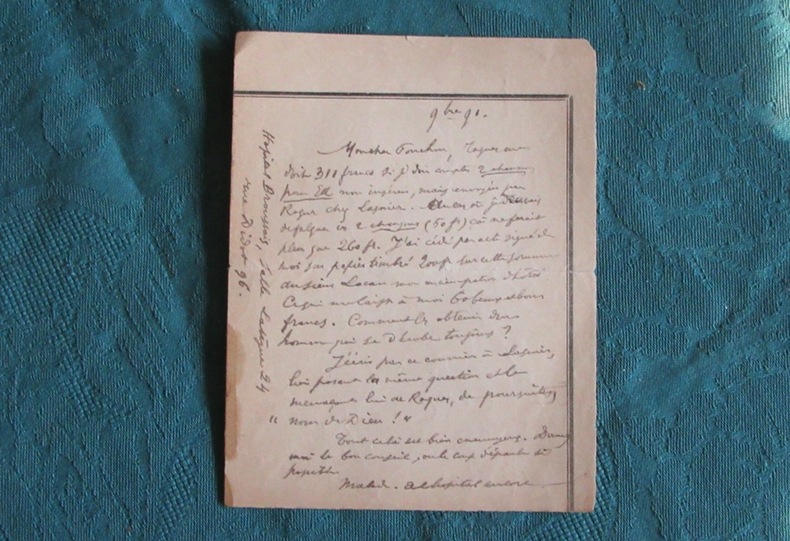
189119420Lettre Autographe de Paul Verlaine, et adressée à Raoul Ponchon de l’hôpital Broussais en novembre 1891.Lettre d'une page in-12° au dos du papier administratif de l'assistance publique. Une pliure centrale. Une tache marginale. Format in-12° (14x11). Très bon état."Mon cher Ponchon, xxxx, soit 311 francs si je compte 2 chansons pour elle, non insérées, mais envoyées par Roques chez Lasnier. Je voudrais défalquer 2 chansons (50 fr) ca ne ferait plus que 260 fr. J'ai cédé par art. signé sur papier timbré 200 fr sur cette somme au sieur Lacan mon ancien patron d'hotel, ce qui me laisse à moi 60 beaux et bons francs. Comment les obtenir d''un homme qui se dérobe toujours ? J'écris par ce courrier à Lasnier lui posant la meme question et le menacant lui ou Roques, de poursuites, non de dieu ! Tout ceci est bien ennuyeux. Donnez-moi le bon conseil ou le coup d'épaule si possible. Malade à l'hopital encore. hopital Broussais, salle Lasègue 24, rue Didot 96."
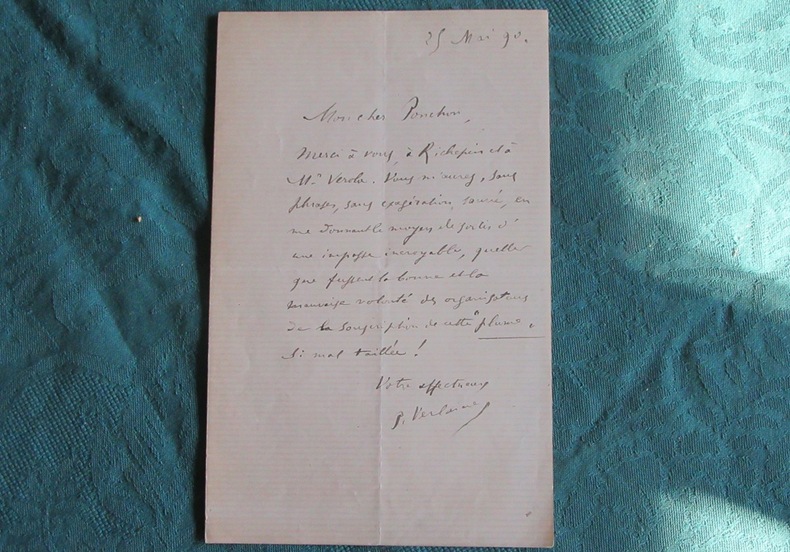
189019419Lettre Autographe de Paul Verlaine signée, et adressée à Raoul Ponchon le 25 mai 1890.Lettre d'une page in 8°. Format in-8°(21x14). Très bon état."Mon cher Ponchon, merci à vous, à Richepin et à M Verola. Vous m'aurez, sans phrases, sans exagération, sauvé, en me donnant le moyen de sortir d'une impasse incroyable, quelle que fussent la bonne et la mauvaise volonté des organisateurs de la souscription de cette plume si mal taillée ! Votre affectueux, Paul Verlaine."