2 979 résultats
In folio, pp. (24), 374, (1), all’ultima pagina marca tipografica incisa su legno; con l’aggiunta di due carte manoscritte datate bologna 1553 che contengono un’epistola di Rigus a Francesco Cospo, in cui l’autore della lettera sostiene che la traduzione dell prima opera di Diodoro qui pubblicata sia da ascriversi a Angelo Cospo e non a Bartolomeo, come indica il frontespizio, che infatti è stato corretto a mano dallo stesso. Il grecista bolognese Cospo fu variamente chiamato anche Angelo Bartolomeo. LEgatura in piena pergamena. Al frontespizio piccola lacuna restaurata in corrispondenza di un legno ovale. fori di tarlo alle prime e ultime carte.
157321702Florenz, Giunti, 1573. 16 Bll., 578 S., 2 Bll. mit einigen einigen großen, figürlichen Holzschnitt-Initialen und Holzschnitt-Vignetten. 8°. Pgmt. der Zeit (knitterfaltig, etw. fleckig und gebräunt sowie etw. bestoßen, oberes Kapitell mit kl. Einriss). [5 Warenabbildungen]
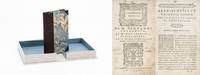
158431320AB1584. Venetia Appresso I Gioliti 1584. 9.5 cm x 15.4 cm. 107 1 pages including illustrated titlepage with Giolito's printer mark and Giolito's stunning colophon of Phoenix rising from the ashes and the Motto: "Semper eadem" "Always the same". Hardcover in custom - made solanderbox. Recently rebound in half-leather with marbled paper-covered-boards. The bookblock in very good condition with some minor contemporary inkstains. Name of preowner "Exlibris Bernard Rielliae "Bernard Reilly" in contemporary ink 16th or 17th century entry. Small lesion to titlepage and first three pages only. Very faint faded dampstain to the outer margins of a few pages. This is one of the rare Giolito editions of Boccaccio's "L'Elegia di Madonna Fiammetta" in which the important italian publisher Gabriel Giolito added a two-page-dedication to the women of Citta di Casale. His dedication reads: to the Gentili et Valorose donne della Città di Casale di Monferrato Gentle and Valorous women of the city of Casale Monferrato. This early dedication to women conveyed what later became the normative terms of Giolitos advertising techniques. According to Giolito Lamorosa Fiammetta was ideal feminine reading since it narrated a womans amorous experiences" Source: Androniki Dialeti - "The Publisher Gabriel Giolito de Ferrari Female Readers and the Debate about Women in Sixteenth-Century Italy" Elegia di Madonna Fiammetta or The Elegy of Lady Fiammetta in English is a novel by the Italian writer Giovanni Boccaccio probably written between 1343 and 1344. Written in the form of a first-person confessional monologue it describes the protagonist Fiammetta's passion for Panfilo a Florentine merchant and takes place in Naples. It has been characterised as the first psychological novel in Western literature. It consists of a prologue and nine chapters. Wikipedia Giovanni Boccaccio 16 June 1313 21 December 1375 was an Italian writer poet correspondent of Petrarch and an important Renaissance humanist. Boccaccio wrote a number of notable works including The Decameron and On Famous Women. He wrote his imaginative literature mostly in the Italian vernacular as well as other works in Latin and is particularly noted for his realistic dialogue which differed from that of his contemporaries medieval writers who usually followed formulaic models for character and plot. Boccaccio grew up in Florence. His father worked for the Compagnia dei Bardi and in the 1320s married Margherita dei Mardoli who was of a well-to-do family. Boccaccio may have been tutored by Giovanni Mazzuoli and received from him an early introduction to the works of Dante. In 1326 his father was appointed head of a bank and moved with his family to Naples. Boccaccio was an apprentice at the bank but disliked the banking profession. He persuaded his father to let him study law at the Studium the present-day University of Naples where he studied canon law for the next six years. He also pursued his interest in scientific and literary studies. His father introduced him to the Neapolitan nobility and the French-influenced court of Robert the Wise the king of Naples in the 1330s. At this time he fell in love with a married daughter of the king who is portrayed as "Fiammetta" in many of Boccaccio's prose romances including Il Filocolo 1338. Boccaccio became a friend of fellow Florentine Niccolò Acciaioli and benefited from his influence as the administrator and perhaps the lover of Catherine of Valois-Courtenay widow of Philip I of Taranto. Acciaioli later became counselor to Queen Joanna I of Naples and eventually her Grand Seneschal. It seems that Boccaccio enjoyed law no more than banking but his studies allowed him the opportunity to study widely and make good contacts with fellow scholars. His early influences included Paolo da Perugia a curator and author of a collection of myths called the Collectiones humanists Barbato da Sulmona and Giovanni Barrili and theologian Dionigi di Borgo San Sepolcro. Wikipedia hardcover
1803270497Milan: Societa Tipografica 1803. hardcover. very good. 4 volumes. Thick 8vo full tree calf ornately gilt spine and covers rubbed at extremities all edges gilt. Milan: Societa Tipographica 1803. Very good .<br/><br/> Societa Tipografica unknown books
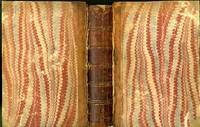
1573047703Florence: Giunti 1573. Early Edition. Hardcover. Very Good Condition. Later quarter calf front cover and free endpaper detached rear board just about detached. Mild dampstain over first 100 pages scattered foxing and browning but generally quite bright otherwise. Two small worm holes in gutter of final colophon leaf. Two portraits Boccaccio and an unidentified woman and lovely historiated initials throughout - a finely printed Giunti edition of Boccaccio's masterpiece. 32 580 1pp. Admas B2156 Brunet I 1002 note Pettas Giunti of Florence 496.<br /> <br /> The first of the famed Council of Trent editions - having been unable to ban a book as widespread and beloved as The Decameron it was censured in 1564 the council of Trent instead removed all mention of priests clergy and the Church from the work while leaving all the erotic bits that would have been too easily missed. Marketed as a "correction" of earlier supposedly erroneous editions. Provenance: Kimbolton Castle copy with case/shelf ticket inside front cover.<br /> <br /> Size: Quarto 4to. Quantity Available: 1. Shipped Weight: Under 1 kilo. Category: Poetry; Antiquarian & Rare. Inventory No: 047703. Giunti hardcover
1609006287Paris: Matthieu Guillemot 1609. "Reueue Corrigee & mise en meilleur ordre en ceste nouuelle Edition A Paris Chez Matthieu Guillemot au Palais en la gallerie des prisonniers." RARE early French edition with Italian and French texts on facing pages. Rectos French only are numbered. 458 pp. Very Good bound in full calf gilt title at spine faded yet legible 5 raised bands with gilt rules red title label edges of boards rubbed prior owner name front end page dated 1823 light toning to end pages contents clean and remarkably free of toning or foxing. Written by Boccaccio in the years 1343-1345 "La Fiammette" "has been called the first psychological novel in a modern language". First Edition Thus. Full Calf. Very Good. 16mo - over 5¾" - 6¾" tall. Matthieu Guillemot Hardcover books
1597<p>Boccaccio. Decameron. Translated into French Vatican Decameron. Vatican Vatican Apostolic Library MS Pal. lat. 1989. Egeria S.L. 2006. Facsimile of Giovanni Boccaccio's manuscript translated into French. The 656 pages contain over one hundred miniatures by the Master of the Cité des Dames. Full leather binding with gold titles and decorations. Without the two volumes of commentary and translation of the work into Italian. Limited and numbered edition of 2990 copies. Excellent condition.</p> Egeria S.L. hardcover
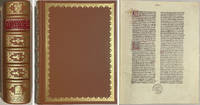
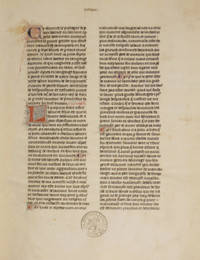
2503SB005<p>Biblioteca Apostólica Vaticana. Egeria. Madrid. 2006.</p>_x000d_<p>De 305x24 cm. Com ii 327 vii fólios. Encadernação editorial inteira de pele sobre pastas de madeira com belos rótulos e estampagens a ouro acondicionada numa caixa editorial forrada em tecido acetinado. Cortes das folhas pintados de castanho.</p>_x000d_<p>Profusamente ilustrado com um ciclo de cem belíssimas iluminuras ricamente decoradas a ouro. Criadas pelo Mestre da <em>Cité des Dames</em> estas imagens revelam uma impressionante diversidade narrativa retratando figuras da nobreza eruditos religiosos reis e ladrões imersos em ambientes vibrantes com detalhadas representações da arquitetura gótica. Inclui também a reprodução de iniciais ornamentadas e de belos florões.</p>_x000d_<p>Exemplar n.º 649 de uma tiragem de 2900 assinado pelos editores e autenticado pelo notário José Manuel Senante Romero do Notário de Madrid que declara que a edição foi feita em exclusivo para ser comercializada pelo Club Internacional del Libro.</p>_x000d_<p>Edição fac-similada muito luxuosa e limitada do Codex Palatinus Latinus 1989 cujo único exemplar se conserva na Biblioteca Apostólica Vaticana. A reprodução do documento original é feita com o máximo detalhe possível atendendo ao formato e às cores. Foram publicados também dois volumes complementares um com a tradução integral para espanhol e outro com uma coletânea de estudos sobre a obra não presentes neste exemplar. Vale notar que estes foram traduzidos publicados e distribuídos também em português pela «Ediclube» Lisboa 2007.</p>_x000d_<p>O <em>Decameron Vaticano</em> é uma das mais notáveis joias da arte e literatura francesas representando a primeira tradução francesa do célebre <em>Decameron</em> de Giovanni Boccaccio realizada por Laurent de Premierfait entre 1411 e 1414 a partir de uma versão latina. Este magnífico manuscrito iluminado datado de 1414 terá sido originalmente propriedade dos Duques da Borgonha possivelmente oferecido por Jean de Berry um dos mais importantes bibliófilos da época. O códice distingue-se por ilustrar pela primeira vez cada uma das novelas do Decameron com as iluminuras descritas acima.</p>_x000d_<p>A obra de Boccaccio escrita em meados do século XIV é constituída pelos contos narrados num grupo de sete mulheres e três homens que fugindo da peste que assolava Florença em 1348 se refugiam no campo e passam o tempo a contar histórias que retratam com realismo e ironia a sociedade da época. Esta coleção de cem novelas tornou-se um marco da literatura mundial.</p>_x000d_<p>Giovanni Boccaccio 13131375 foi um escritor poeta e humanista italiano considerado um dos precursores do Renascimento. Nascido em Certaldo ou Florença destacou-se pela sua obra-prima Decameron influenciando profundamente a literatura europeia. Amigo de Petrarca Boccaccio contribuiu para a valorização dos clássicos e da língua italiana sendo especialmente lembrado pelo seu estudo da obra de Dante Alighieri. Além da sua produção literária dedicou-se ao estudo da Antiguidade e à preservação do legado cultural greco-romano tornando-se uma figura central no Humanismo.</p>_x000d_<p>Laurent de Premierfait c. 13601370 1418 foi um humanista poeta e tradutor francês reconhecido por introduzir obras clássicas na França medieval. Natural de Prémierfait uma aldeia próxima de Troyes estudou em Paris e serviu como secretário do cardeal Amédée de Saluces na corte papal de Avinhão. Destacou-se pelas traduções de textos de autores como Cícero e Boccaccio. As suas traduções encomendadas por figuras aristocráticas como Jean de Berry foram fundamentais para a disseminação da literatura clássica e humanista em França. Laurent faleceu em Paris em 1418 possivelmente vítima de uma epidemia ou durante a invasão da cidade pelos borgonheses.</p>_x000d_<p>O Mestre da Cité des Dames fl. 1400 fl. 1415 foi um iluminador anónimo ativo em Paris entre 1400 e 1415 conhecido por colaborar com Christine de Pizan na decoração de manuscritos. O seu nome deriva das ilustrações que criou para «La Cité des Dames» obra de Christine. Trabalhou em parceria com artistas como Jacquemart de Hesdin e o Mestre de Boucicaut destacando-se pela atenção aos detalhes da vida quotidiana e pela representação realista da arquitetura gótica. Além dos manuscritos de Christine de Pizan ilustrou obras como a «Bible historiale» de Jean de Berry e a primeira tradução francesa do «Decameron» de Boccaccio.</p>_x000d_<p>EN 30.5x24 cm. ii 327 vii folios. Publisher's binding in full leather over wooden boards with beautiful labels and gilt embossing packed in a publisher's box lined with satin fabric. Brown edges.</p>_x000d_<p>Profusely illustrated with a cycle of one hundred beautiful illuminations richly decorated in gold. Created by Maitre de la Cité des Dames these images reveal an impressive diversity of narrative portraying figures of nobility scholars churchmen kings and thieves immersed in vibrant environments with detailed representations of Gothic architecture. It also includes the reproduction of decorated initials and beautiful <em>fleurons</em>.</p>_x000d_<p>Copy no. 649 of a print run of 2900 signed by the publishers and authenticated by notary José Manuel Senante Romero of the Notary of Madrid who declares that the edition was made exclusively to be commercialised by the Club Internacional del Libro.</p>_x000d_<p>A very luxurious and limited facsimile edition of the Codex Palatinus Latinus 1989 the only copy of which is kept in the Vatican Apostolic Library. The original document has been reproduced in as much detail as possible taking into account the format and colours. Two complementary volumes have also been published one with the full translation into Spanish and the other with a collection of studies on the work which are not present in this copy. It is worth noting that these have also been translated published and distributed in Portuguese by "Ediclube" Lisbon 2007.</p>_x000d_<p>The <em>Decameron Vaticano</em> is one of the most remarkable jewels of French art and literature representing the first French translation of the famous <em>Decameron</em> by Giovanni Boccaccio made by Laurent de Premierfait between 1411 and 1414 from a Latin version. This magnificent illuminated manuscript dated 1414 was originally the property of the Dukes of Burgundy possibly given to them by Jean de Berry one of the most important bibliophiles of the time. The codex stands out for illustrating each of the Decameron's novellas for the first time with the illuminations described above.</p>_x000d_<p>Boccaccio's work written in the middle of the 14th century is made up of tales told by a group of seven women and three men who fleeing the plague ravaging Florence in 1348 take refuge in the countryside and spend their time telling stories that portray the society of the time with realism and irony. This collection of one hundred novellas has become a landmark in world literature.</p>_x000d_<p>Giovanni Boccaccio 1313-1375 was an Italian writer poet and humanist considered one of the forerunners of the Renaissance. Born in Certaldo or Florence he stood out for his masterpiece Decameron which profoundly influenced European literature. A friend of Petrarch Boccaccio contributed to the valorisation of the classics and the Italian language and is especially remembered for his study of the work of Dante Alighieri. In addition to his literary output he dedicated himself to the study of antiquity and the preservation of the Greco-Roman cultural legacy becoming a central figure in Humanism.</p>_x000d_<p>Laurent de Premierfait c. 1360-1370 - 1418 was a French humanist poet and translator recognised for introducing classical works to medieval France. Born in Prémierfait a village near Troyes he studied in Paris and served as secretary to Cardinal Amédée de Saluces at the papal court in Avignon. He stood out for his translations of texts by authors such as Cicero and Boccaccio. His translations commissioned by aristocratic figures such as Jean de Berry were fundamental to the dissemination of classical and humanist literature in France. Laurent died in Paris in 1418 possibly from an epidemic or during the invasion of the city by the Burgundians.</p>_x000d_<p>Maitre de la Cité des Dames fl. 1400 - fl. 1415 was an anonymous illuminator active in Paris between 1400 and 1415 known for collaborating with Christine de Pizan on the decoration of manuscripts. His name derives from the illustrations he created for "La Cité des Dames" a work by Christine. He worked in partnership with artists such as Jacquemart de Hesdin and the Master de Boucicaut and stood out for his attention to the details of everyday life and his realistic depiction of Gothic architecture. As well as Christine de Pizan's manuscripts he illustrated works such as Jean de Berry's "Bible historiale" and the first French translation of Boccaccio's "Decameron".</p> M-10-B-35 hardcover
17576011757 Londra, [s.n.], 1757.
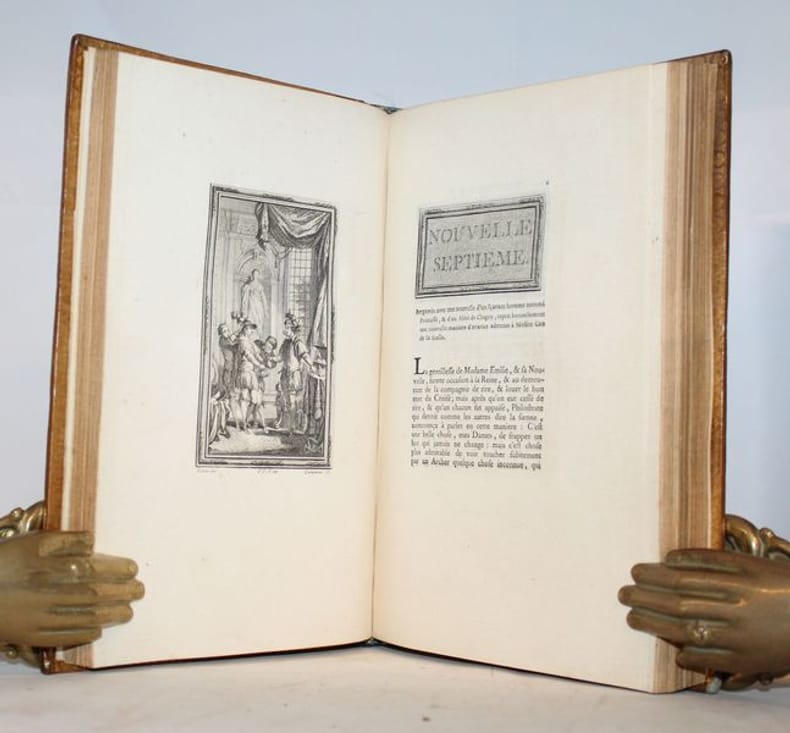
22629Londres [Paris], s.n. [Prault], 1757-1761. Cinq volumes in-8. Edition ornée de 5 titres-frontispices, un portrait de l'auteur, 110 figures hors texte et 97 culs-de-lampe gravés à l'eau-forte d'après les dessins de Gravelot, Boucher, Eisen et Cochin. Quelques épreuves comportent au verso le paraphe caractéristique du premier tirage. (Quelques cahiers uniformement brunis à la fin du T.I et début du T.II, la vignette "Huitième Nouvelle" (T.IV p.71) gravée à l'envers, gravure en regard insérée de travers par le relieur, quelques fines rousseurs éparses). Plein veau blond, dentelle de palmettes dorées, dos lisse orné, torsade sur les coupes, dentelle intérieure, tranches dorées. Reliure vers 1800. (Usures à 3 coins, traces brunes sur un plat du tome I et une coiffe du tome III).
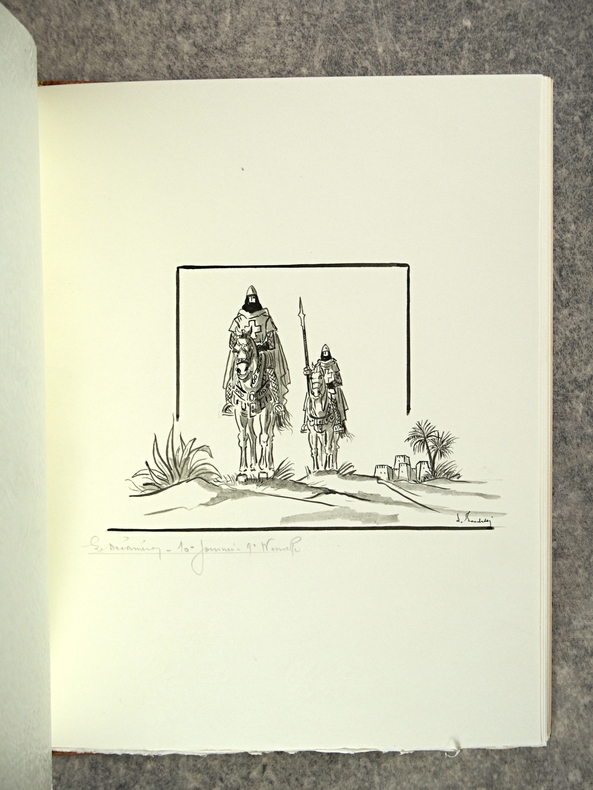
19762865A NICE. LE CHANT DES SPHERES. EDITIONS D’ART SEFER. 1976-1978. 5 VOLUMES IN-4 (21,5 X 27 X 29,5 CENTIMETRES ENVIRON), RELIURE DE L’EDITEUR PLEIN VEAU HAVANE, PLATS ENTIEREMENT ORNES D'UN DECOR MOYENNAGEUX ESTAMPE A FROID ET DORE, DOS A QUATRE NERFS DECORE DE MEME, TITRE ET TETE DORES, SOUS ETUI BORDE. AVEC 45 ILLUSTRATIONS EN COULEURS DANS LE GOUT DE L'ENLUMINURE : 5 TITRES-FRONTISPICES, 30 PLANCHES HORS TEXTE DONT 1 PLANCHE DOUBLE, 10 TETES DE CHAPITRES A PLEINE PAGE. NOMBREUSES LETTRINES ET CULS-DE-LAMPE EN COULEURS ET DORE. TEXTE ENCADRE DUNE GUIRLANDE A DECOR DE FEUILLAGES MONOCHROME. PREMIER TIRAGE LIMITE A 2530 EXEMPLAIRES NUMEROTES, DONT 30 HORS COMMERCE , TOUS SUR VELIN DE LANA FLIGRANE SEFER AU LEOPARD. UN DES 60 EXEMPLAIRES DE TETE NUMEROTES DE I A LX ET COMPORTANT: UNE ILLUSTRATION ORIGINALE EN COULEURS SIGNEE, UN DESSIN ORIGINAL EN NOIR SIGNE, UNE SUITE EN COULEURS ET UNE SUITE EN SEPIA DES ILLUSTRATIONS HORS TEXTE, CELUI-CI PORTANT LE NUMERO XXXVI. BEL EXEMPLAIRE.
Opera in 2 volumi con relativi cofanetti. Rilegatura in pelle Rigoldi Monza. Con fregi, scritte e taglio superiore delle pagine in oro zecchino. Diverse tavole a colori. ottime condizioni
In-8°; cc. 72, s.n.t., (1525). Si apre con la lettera “Al gentile et valoroso giovane messer Francesco Tomacello da Fano, Lucio Paolo Rosello”, sacerdote padovano, segue il testo dell’opera “Invettiva ... contra una malvagia donna, detto Laberinto d’amore, et altrimenti il Corbaccio”. Da c. 57 l’Episola a Pino de Rossi. Legatura in piena pergamena più tarda con tassello e titolo in oro al dorso. Gamba 203 “non ho trovato registrata da verun bibliografo questa stampa”. Mostra di manoscritti, documenti e edizioni, Certaldo, 1975, v. 2, n. 42, EDIT16 2367.
158233055-217Florence Filippo & Iacopo Giunti October 1582. Printer's woodcut device on title large historiated woodcut initials a different printer's device on last leaf. In Italics. 16 leaves 585 pp. 1 38 leaves. 4to c. 210 x 145 mm. 18th century half calf rep. Florence Filippo & Iacopo Giunti October 1582. An important edition of this classic of Italian literature by Giovanni Boccaccio 1331-1375. This literary ten-day odyssey became the emblem of creative expression in the Italian Renaissance about the human experience its nature and psyche. Boccaccio's epic is edited here by Leonardo Salviati 1540-1589 a Florentine nobleman who was a founder member of the Accademia della Crusca. Its avowed aim was to uphold the purity of the Tuscan language as it had been in the fourteenth century. The Accademia Florentina founded in 1540 was dedicated to the same purpose and Salviati was active in both bodies. In 1584 Salviati published his "Degli Avvertimenti della Lingua sopra il Decamerone" a detailed discussion about the language used by Boccaccio. In this edition of the Decameron Salviati returned to the old texts and dedicated the work to Jacopo Buoncompagni one of his patrons. The text includes many beautiful historiated initials. - A very well printed and rare edition. - Ind. Aur. 120.402; Adams B-2158; STC Italian 110; Brunet I 1002; Gamba Serie dei testi di lingua p. 59 no. 181. LITERATURE:ITALIAN ; EROTICA ; GRAPHIC ARTS:GIUNTA ; Florence, Filippo & Iacopo Giunti unknown
1803270497Milan: Societa Tipografica 1803. hardcover. very good. 4 volumes. Thick 8vo full tree calf ornately gilt spine and covers rubbed at extremities all edges gilt. Milan: Societa Tipographica 1803. Very good.<br/> <br/> Societa Tipografica unknown
1952698244 xii128 pages 23 woodcuts 1 facsimile title page limited edition no.188 of 225 copies handmade paper tipped in bookplate for John Ryder Published by Editones Officinae Bodoni hardcover
17252091202133213132Tommaso Edlin 1725. Soft Cover. Fine. Volume: 1 Tommaso Edlin paperback
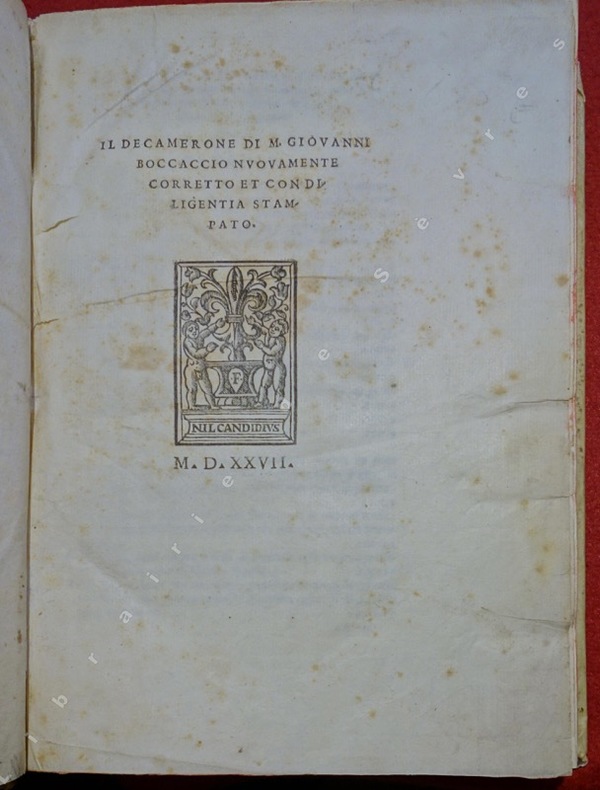
1729166231729 Florence (Venise), Philippo di Guntia (Étienne Orlandini), 1527 (1729), in 4 de 7 feuillets non chiffrés (titre et feuillet blanc compris), 184 feuillets, avec marque typographique de l'imprimeur au verso du dernier feuillet, rel. pastiche de plein velin ivoire, titre manuscrit à l'encre brune au dos, bel ex.
1934307366London: Printed at the Shakespeare Head Press and published for the press by Basil Blackwell 1934. #159 of 325 copies. Title pages printed within woodcut borders woodcut decorations throughout by R. J. Beedham and E. Joyce Francis after those found in the 1492 Venetian edition of Boccaccio printed by Joannes and Gregorius de Gregoriis decorative initial letters and running headlines printed in blue. 319; 268pp. 2 vols. 4to. This copy is one of an unspecified but small number of copies bound in full blue morocco t.e.g. on the rough rest uncut Colin Franklin notes the standard binding as "half bound in morocco on linen". #159 of 325 copies. Title pages printed within woodcut borders woodcut decorations throughout by R. J. Beedham and E. Joyce Francis after those found in the 1492 Venetian edition of Boccaccio printed by Joannes and Gregorius de Gregoriis decorative initial letters and running headlines printed in blue. 319; 268pp. 2 vols. 4to. Printed at the Shakespeare Head Press and published for the press by Basil Blackwell unknown books
1590D6205Venice: appresso Fabio e Agostino Zoppini fratelli e Onofrio Farri compagni 1590. Hardcover. Very Good. 4to 210 x154mm. 8 544pp 92 index epithets glossary by Ruscelli. Collation: ast. 4; A-2M 8; 2N 2; 2O-2R 8; 2S 4. Woodcut printers device to title. Oval woodcut portrait of Luigi Groto Cieco dAdria 1541-1585 facing first text page 10 woodcut illustrations numerous woodcut initials most historiated with griffins putti other figures or foliage and decorative chapter head- and tailpieces. Text in italic type; headlines chapter headings and marginalia in Roman. Printed marginalia. Early vellum; title with upper margin stained cancelled inscription and small tear some wear mostly on preliminaries; joints starting. Collection inscription in abbreviated Italian on front pastedown dated 1841 possibly from a Jesuit Society. Early booksellers stamp C. Simms of Manchester. <br/><br/>Good large quarto copy of Giovanni Boccaccios Decameron redacted by Luigi Groto 1541-1582 from the edition edited by Girolamo Ruscelli 1500s-1556 and first published two years previously. Groto a minor Venetian writer reworked Boccaccios famous tale; retaining parts of the original parable but also creating his own tangents. Groto for instance created a predicament concerning a young man who finds himself confronted by three different ladies he has been secretly courting. When his deceit is discovered he must answer as to which of them is his true love. The lengthy narration of the amoroso imbroglio is Grotos own literary stamp and he hoped with these revisions he would gain literary fame stating I will give life and light to Boccaccio and he will do likewise for me . I will rescue him from darkness and burial and he in turn will rescue me from obscurity Ironically Grotos retelling of the Decameron remains known for it deformations of the tale rather than its celebration. Each of the ten sections are preceded by an overview written by Ruscelli the well-known editor of Ptolemys Geographia of 1754 and a large woodcut illustration depicting narrative scenes of the Decameron tale. Brunet I 1002; STC Italy I: p.256. appresso Fabio e Agostino Zoppini fratelli e Onofrio Farri compagni hardcover books
1574D11148Venice: Giovanni Antonio Bertano 1574. Paperback. Very Good. 4to 204 x 148mm. 1 16 263pp. 2 leaves including final blank. Signatures: A-KK 8. Front flyleaf with likely 18th-century half-title added in manuscript calligraphic script over undulating ownership inscription on ribbon De Me Giovanni Agostino Panater and palm or quill on island in sea with ship signature repeated on title. Woodcut printers device of Bertano of young stork bring food to decrepid parent in the nest and motto on filial piety Pietas Homini Tutissima Virtus Compassion is the safest power. Few woodcut initials throughout. Italian translation by Giovanni Betussi. Dedicated to Count Collaltino di Collalto. Contemporary limp vellum ms. title to spine; spine darkened head cap chipped with loss text block loose in binding; intermittent browning title with old owners signatures cancelled minor marginal worming added half-title with ink oxidation. The whimsical added title complements this monumental Italian humanist work; a defense of poetry and a synthesis of ancient mythological sources which justified the study of pagan literature within a Christian context. <br/><br/>Betussis Italian translation of Boccaccios medieval work on progeny in classical times a veritable mythological encyclopedia that aimed to solve questions about lines of succession. Boccaccios Genealogia sought to preserve the past from oblivion by creating an almanac of inter-related families including the competing noble houses in order to organize lines of descent. With the Genealogia Boccaccio aimed to solve contradictory accounts of hereditary matters by assuming the existence of pagan gods and organizing their progeny - Jupiter I and Jupiter II for instance. Perhaps most contentious was Boccaccios identification of Demogorgon as the ultimate progenitor of all pagan divinities description starting on page 5 who was also associated with Satans netherworld conspirators. The Genealogia reputedly had been copied and transmitted before its completion apparently without the consent of Boccaccio. The earliest Latin editions all follow the first of 1472. This is a later edition of Giuseppe Betussis Italian translation of the Genealogia; Betussis first was printed in Venice by Comino da Trino di Monferrato in 1547. Nearly a dozen subsequent editions follow this date well into the seventeenth century. Betussi was a prominent man of letters in Paduas Accademia and was at the avant-garde of those promoting the substitution of Italian for Latin as the language of scholarly literature. To his edition Betussi added a ten-page biography of Boccaccio and alphabetical indices corresponding to page numbers not book or chapter. The Genealogia became a standard reference works for readers who wished to disentangle the complexities of Greco-Roman mythology. The work was enormous in scope covering approximately 950 individuals groups and beasts both named and unnamed in fifteen books and 723 chapters with over a thousand citations from Greek Roman medieval and Trecento authors. Near the end of the sixteenth century the Genealogia while mostly out of the public eye still provided source material for numerous authors including Edmund Spenser and his work on Christianized paganism. This edition rare OCLC lists one other in Toulouse. Giovanni Antonio Bertano paperback books
1627177918Venice: Per il Valentini 1627. Hardcover. Poor sewing coming undone foxing and staining of vellum present marks on pastedown endpapers missing otherwise complete. Bound in vellum on board with 3 raised bands. Woodblock capitals and incidental designs. 20 leaves 247 leaves. "Of the geneology of the gods." Binding copy. Fifteen books dealing with "all the gods of the gentiles" along with the life of Giovanni Boccaccio. Per il Valentini hardcover books
1712574390Amsterdam; Cologne: George Gallet; Jacques Gaillard 1712. Hardcover. Very Good. Mixed two-volume set uniformly bound in near contemporary straight-grained light brown morocco with decorative blind stamping and gold tooled borders on the covers gilt spines also stamped in blind plain dark brown endpapers all edges gilt. Vol. 1 is the first edition printed in Amsterdam by George Gallet in 1697; Vol. 2 is the second edition printed in Cologne by Jacques Gaillard in 1712. 12mos. Both volumes are in French. Vol. 1: 14 title page and avertissement 14 Table 366pp. illustrated with an engraved frontispiece plate and in-text engravings preceding each of the novellas 1-44; Vol. 2: 427 12 Tablepp. illustrated with in-text engravings preceding each of the novellas 45-100. Note: The Table in vol. 1 includes a duplicate leaf signed 2. Both title pages are printed in red and black. Each volume has a contemporary engraved armorial bookplate and a later Italian bookseller’s ticket on the front pastedown. The spines and edges of the boards are rubbed and worn else a very good attractive set with Romeyn de Hooghe’s celebrated etchings in fine condition. George Gallet; Jacques Gaillard hardcover
1627177918Venice: Per il Valentini 1627. Hardcover. Poor sewing coming undone foxing and staining of vellum present marks on pastedown endpapers missing otherwise complete. Bound in vellum on board with 3 raised bands. Woodblock capitals and incidental designs. 20 leaves 247 leaves. "Of the geneology of the gods." Binding copy. Fifteen books dealing with "all the gods of the gentiles" along with the life of Giovanni Boccaccio. Per il Valentini hardcover
1590D6205Venice: appresso Fabio e Agostino Zoppini fratelli e Onofrio Farri compagni 1590. Hardcover. Very Good. 4to 210 x154mm. 8 544pp 92 index epithets glossary by Ruscelli. Collation: ast. 4; A-2M 8; 2N 2; 2O-2R 8; 2S 4. Woodcut printers device to title. Oval woodcut portrait of Luigi Groto Cieco dAdria 1541-1585 facing first text page 10 woodcut illustrations numerous woodcut initials most historiated with griffins putti other figures or foliage and decorative chapter head- and tailpieces. Text in italic type; headlines chapter headings and marginalia in Roman. Printed marginalia. Early vellum; title with upper margin stained cancelled inscription and small tear some wear mostly on preliminaries; joints starting. Collection inscription in abbreviated Italian on front pastedown dated 1841 possibly from a Jesuit Society. Early booksellers stamp C. Simms of Manchester. <br/><br/>Good large quarto copy of Giovanni Boccaccios Decameron redacted by Luigi Groto 1541-1582 from the edition edited by Girolamo Ruscelli 1500s-1556 and first published two years previously. Groto a minor Venetian writer reworked Boccaccios famous tale; retaining parts of the original parable but also creating his own tangents. Groto for instance created a predicament concerning a young man who finds himself confronted by three different ladies he has been secretly courting. When his deceit is discovered he must answer as to which of them is his true love. The lengthy narration of the amoroso imbroglio is Grotos own literary stamp and he hoped with these revisions he would gain literary fame stating I will give life and light to Boccaccio and he will do likewise for me . I will rescue him from darkness and burial and he in turn will rescue me from obscurity Ironically Grotos retelling of the Decameron remains known for it deformations of the tale rather than its celebration. Each of the ten sections are preceded by an overview written by Ruscelli the well-known editor of Ptolemys Geographia of 1754 and a large woodcut illustration depicting narrative scenes of the Decameron tale. Brunet I 1002; STC Italy I: p.256. appresso Fabio e Agostino Zoppini fratelli e Onofrio Farri compagni hardcover