di Boccaccio, GiovanniAntiquariat.de

2 979 résultats
198622498Leipzig, Weimar: Gustav Kiepenheuer Verlag, 1986. 192 Seiten , 20 cm Pappeinband
2251604987.Gpaperback. Good. Access codes and supplements are not guaranteed with used items. May be an ex-library book. paperback
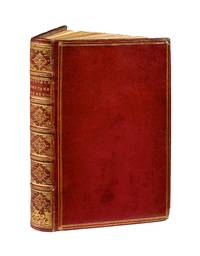
1551ABAA25-4<p>Lyon Guillaume Rouille 1551.</p><p>12mo 158 x 101 mm of 384 pp. 4 ll the last one doubled numerous ornamented initials two tiny holes in title small stain in lower margin of pp. 17-20. A fine copy.</p><p>Red morocco triple gold fillet around the covers spine ribbed richly decorated with the special crowned dolphin lace at the foot decorated edges inner gilt roulette gilt edges on marbling. <em>Bound in the 17th century.</em></p><p><strong>One of Boccaccio's most famous works the 'De claris mulieribus' written in Latin around 1360 is a book both erudite and amusing intended for a wide audience</strong>. Following the model of Petrarch's <em>Hommes illustres</em> Boccaccio recounts the lives of 104 famous women queens and courtesans virtuous and promiscuous from Eve to Pope Jeanne.</p><p><strong>First edition of this translation by Denis Sauvage. </strong>This is the first French translation after the Italian version due to Denis Sauvage; it replaced that which L.A. Ridolfi had given according to the Latin original.</p><p>Written in 1361-1362 Boccaccio's <em>De mulieribus claris</em> <em>The Illustrious Women</em> is the first collection of women's biographs in western history.</p><p>Inspired by Boccaccio's own admission by his friend Petrarch's <em>De viris illustribus </em><em>The Illustrious Men</em> this work offers a reasoned compilation of "stories" both pagan and Christian of remarkable women whose excellence in good or evil Boccaccio highlights even if it means drawing from this "evil" the appropriate moral lesson. We thus find the great figures traced by Titus Livius Pliny the Elder or Suetonius but also from Saint Jerome or the Bible the book begins with a "biography" of Eve. There is certainly no lack of the traditional depreciatory remarks inherited from the two antiquities on the weakness of women's character but in the praise of figures such as Nicostrata or Epicharis a certain evolution of mentalities is already apparent provoked by the prodromal stages of humanist reflection on female virtues.</p><p><strong>This book quickly translated into French</strong> Laurent de Premierfait or into German Heinrich Steinhöwel strongly marked its time since Chaucer drew on it for The Canterbury Tales and Christine de Pisan in 1405 for her Livre de la cité des dames.</p><p><strong>In this newly inspiring work Boccace therefore gives the modern reader an overview vast and often picturious of medieval attitudes to women</strong> at a time when the renascent elites were going to change their view of women's potential Jean-Yves Boriaud <em>Les Femmes illustres</em> / <em>De Mulieribus claris</em>.</p><p>"<em>The work written between 1360 and 1362 amplified and recast in later years contains the biography of 104 famous ladies of all times from Eve to Queen Joan of Naples; it is dedicated to the beautiful Andrée Acciaiuoli sister of the great seneschal Nicolas Acciaiuoli second wife of a Count of Altavilla.</em></p><p><em>The example of Petrarch and his treatise on illustrious men had a significant influence on Boccaccio as he himself acknowledged. The narrative vein expands with some freedom as in the pages devoted to the life of the papess Joan the voluptuous length on the love affairs of Thisbe and the story of the naive Paulina a Roman beloved of the God Anubis which is rather reminiscent of the tale of Lisette and the angel Gabriel in the Decameron. . Taken as a whole the volume is a compromise between historical scholarship and storytelling a pleasant book of scholarship intended not only for men but also for women - who says Boccaccio for his excuse being accustomed to hear stories have a greater need of them and are entertained by a copious exposition</em>." T. F. G. Rouville.</p><p>Beautiful italic printing by Philibert Rollet with nice initials and some ornaments. The title is set in a remarkable wood frame reproduced by Baudrier.</p><p><strong>Fine copy of exceptional elegance covered with a fine seventeenth century binding the spine of which bears the crowned dolphin lace.</strong></p><p>Label of the <em>Pierre Berès</em> bookshop on the first flyleaf it appeared under n°32 of its 1951 catalogue <em>Livres Français des quinzième & seizième siècles</em> at a price of 45 000 fr.</p><p>FR</p><p>Lyon Guillaume Rouille 1551.</p><p>In-12 de 384 pp. 4 ff. le dernier doublé nombreuses initiales ornées deux infimes trous ds. le titre pte. tache ds. la marge inf. des pp. 17 à 20. Exemplaire réglé.</p><p>Maroquin rouge triple filet or autour des plats dos à nerfs richement orné avec la dentelle spéciale au dauphin couronné en pied coupes décorées roulette intérieure dorée tranches dorées sur marbrures. <em>Reliure du XVIIe siècle</em>.</p><p>158 x 101 mm.</p><p><strong>Une des œuvres célèbres de Boccace le 'De claris mulieribus' composé en latin vers 1360 est un livre à la fois érudit et amusant destiné à un large public</strong>. Suivant le modèle des <em>Hommes illustres</em> de Pétrarque Boccace y raconte les vies de 104 femmes célèbres reines ou courtisanes vertueuses ou libertines d'Eve à la papesse Jeanne.</p><p><strong>Edition originale de cette traduction due à Denis Sauvage.</strong> Il s'agit de la première traduction française d'après la version italienne due à Denis Sauvage ; elle remplaçait celle que L.A. Ridolfi avait donnée d'après l'original latin.</p><p>Rédigé en 1361-1362 le <em>De mulieribus claris</em> <em>Les Femmes illustres</em> de Boccace constitue <strong>la première collection dans l'histoire occidentale de biographies féminines. </strong></p><p>Inspiré de l'aveu même de Boccace par la lecture du <em>De viris illustribus</em> <em>Les Hommes Illustres</em> de son ami Pétrarque cet ouvrage propose une compilation raisonnée des " histoires " païennes et chrétiennes de femmes remarquables dont Boccace met en exergue l'excellence dans le bien ou le mal quitte à tirer de ce " mal " la leçon de morale appropriée. On y retrouve donc de grandes silhouettes tracées par Tite-Live Pline lʼAncien ou Suétone mais venues aussi de saint Jérôme ou de la Bible le livre commence par une " biographie " d'Eve. Les propos dépréciatifs traditionnels hérités des deux antiquités sur la faiblesse de caractère des femmes nʼy manquent certes pas mais transparaît déjà dans la louange de figures comme celles de Nicostrata ou Epicharis une évolution certaine des mentalités provoquée par les prodromes de la réflexion humaniste sur les vertus féminines.</p><p><strong>Ce livre vite traduit en français</strong> Laurent de Premierfait ou en allemand Heinrich Steinhöwel <strong>marqua fortement son époque </strong>puisquʼy puisèrent aussi bien Chaucer pour <em>The Canterbury Tales</em> que Christine de Pisan en 1405 pour son <em>Livre de la cité des dames</em>.</p><p><strong>Dans cet ouvrage d'inspiration nouvelle Boccace donne donc au lecteur moderne un aperçu vaste et souvent piquant des attitudes médiévales à l'égard des femmes</strong><strong></strong> à un moment où les élites renaissantes vont changer leur regard sur les potentialités féminines. Jean-Yves Boriaud <em>Les Femmes illustres / De Mulieribus claris</em>.</p><p><em>" L'œuvre écrite entre 1360 et 1362 amplifiée et refondue dans les années postérieures contient la biographie de 104 dames de renom de tous les temps d'Ève à la reine Jeanne de Naples ; elle est dédiée à la très belle Andrée Acciaiuoli sœur du grand sénéchal Nicolas Acciaiuoli épouse en secondes noces d'un comte d'Altavilla.</em></p><p><em>L'exemple de Pétrarque et de son traité des </em>Hommes illustres<em> influença notablement Boccace ainsi qu'il l'a reconnu lui-même. La veine narrative s'y élargit avec quelque liberté comme dans les pages consacrées à la vie de la papesse Jeanne aux voluptueuses longueurs sur les amours de Thisbé à l'histoire de la naïve Paulina Romaine aimée du Dieu Anubis qui rappelle d'assez près le conte de Lisette et de l'ange Gabriel du Décaméron. … Dans son ensemble le volume est un compromis entre l'érudition historique et le conte un plaisant livre d'érudition destiné non seulement aux hommes mais aussi aux femmes - lesquelles déclare Boccace pour son excuse étant habituées à entendre des histoires en ont un besoin plus grand et se divertissent d'un copieux exposé. "</em> T. F. G. Rouville.</p><p>Jolie impression en italique de Philibert Rollet avec de jolies initiales et quelques ornements. Le titre est placé dans un remarquable encadrement sur bois reproduit par Baudrier.</p><p><strong>Exemplaire réglé d'une élégance exceptionnelle revêtu d'une fine reliure du dix-septième siècle dont le dos porte en pied la dentelle au dauphin couronné.</strong></p><p>Etiquette de la librairie <em>Pierre Berès</em> au premier contreplat il a figuré sous le n°32 de son catalogue <em>Livres Français des quinzième & seizième siècles</em> de 1951 au prix de 45 000 fr.</p> hardcover
44596215-nnew. unknown
44596215like new. unknown
B9783036539546Hardback. New. hardcover
In 4, pp. 8 con ill. n.t. Descrizione di alcuni codici miniati conservati in biblioteche tedesche e austriache. E' citato il codice del 'Filocolo' di Giovanni Boccaccio, uno dei primi lavori dello scrittore, romanzo avventuroso in volgare, sapientemente raffigurato dal miniatore 'dotato al pari del poeta di doti inventive non comuni'.
In-8°, 18pp, legatura in brossura.
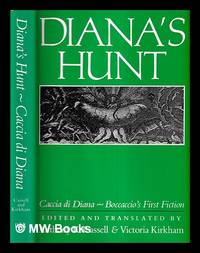
1991422951Philadelphia Pa. : University of Pennsylvania Press 1991. First Edition. Hardcover. Near fine cloth copy in a near-fine very slightly edge-nicked and dust-dulled dust-wrapper. Remains particularly well-preserved overall; tight bright clean and strong. Physical Description: xvi 255 pages : illustrations ; 24 cm. Subjects: Boccaccio Giovanni 1313-1375. Caccia di Diana; Caccia di Diana Boccaccio Giovanni; Civilization Medieval in literature. Philadelphia, Pa. : University of Pennsylvania Press hardcover
1991YY7184University of Pennsylvania Press 1991. Dustwrapper unfaded and unclipped. Robust packaging. Tracking is always added to USA orders. It can be added to other overseas orders on request. Used books are exempt from USA tariffs. 1st edition. No ownership marks. Binding sound text unmarked. No ownership marks. Binding sound text unmarked. Fine/Near Fine. xvi 260pp. University of Pennsylvania Press Hardcover
196040638BBHamburg, Cram, de Gruyter & Co., 1960. Kartoniert. Bibliotheks-Exemplar (Bibliotheks-Etikett auf dem Buchrücken, Bibliotheks-Stempel [Ausgeschieden] verso Titelblatt). Innen ansonsten sehr gutes, sauberes Exemplar. Keine Anstreichungen! Kein Mängelexemplar! Einband fachmännisch mit transparenter, selbstkl (Hamburger romanistische Studien; A: Allgemeine romanistische Reihe, Band 45).
86, [2] pp.; 21 cm. Bross. edit. Come nuovo
2004BN9602Herder 2004. 2004. Hardcover. 242 x 202 x 08 cm. Ein Vater der seine drei Söhne gleichermaßen liebt hat nur einen einzigen Ring zu vererben. Er lässt zwei Kopien anfertigen sodass nun jeder in dem Glauben leben kann er habe den echten. Diese Geschichte vermittelt im Streit der Religionen seit Jahrhunderten die EinsichtNicht in Gewalt sondern im friedlichen Miteinander zeigt sich die Wahrheit. Max Bolliger erzählt die Geschichte für Kinder neu und verleiht dem klassischen Stoff eine eigene NoteEs ist der Ring der Nächstenliebe und wer den echten hat dem wird sie leichter fallen als den anderen Mit den verzaubernden Illustrationen werden Leser und Betrachter in eine märchenhafte Welt geführt Über den AutorGiovanni Boccaccio geb. 1313 als unehelicher Sohn eines Kaufmanns und einer Französin in Florenz absolvierte in Neapel Kaufmannslehre und Studium. 1349 kehrte er nach Florenz zurück. 1350 lernte er Petrarca kennen; die beiden Wegbereiter der Renaissancekultur blieben eng befreundet und führten bis zum Tode Petrarcas eine anregende Korrespondenz. Neben seiner schriftstellerischen Arbeit war Boccaccio Botschafter des stadtstaates Florenz und humanistischer Gelehrter. Er starb 1375 auf seinem Landgut in Certaldo Toskana.Max Bolliger geboren 1929 Ehrendoktor der Theologischen Fakultät der Universität Zürich. 2008 vom Kanton St. Gallen für sein Lebenswerk ausgezeichnet. Erhielt kürzlich den italienischen Kinderbuchpreis. Zahlreiche weitere Preise und Ehrungen. <br/><br/>Ein Vater der seine drei Söhne gleichermaßen liebt hat nur einen einzigen Ring zu vererben. Er lässt zwei Kopien anfertigen sodass nun jeder in dem Glauben leben kann er habe den echten. Diese Geschichte vermittelt im Streit der Religionen seit Jahrhunderten die EinsichtNicht in Gewalt sondern im friedlichen Miteinander zeigt sich die Wahrheit. Max Bolliger erzählt die Geschichte für Kinder neu und verleiht dem klassischen Stoff eine eigene NoteEs ist der Ring der Nächstenliebe und wer den echten hat dem wird sie leichter fallen als den anderen Mit den verzaubernden Illustrationen werden Leser und Betrachter in eine märchenhafte Welt geführt Über den AutorGiovanni Boccaccio geb. 1313 als unehelicher Sohn eines Kaufmanns und einer Französin in Florenz absolvierte in Neapel Kaufmannslehre und Studium. 1349 kehrte er nach Florenz zurück. 1350 lernte er Petrarca kennen; die beiden Wegbereiter der Renaissancekultur blieben eng befreundet und führten bis zum Tode Petrarcas eine anregende Korrespondenz. Neben seiner schriftstellerischen Arbeit war Boccaccio Botschafter des stadtstaates Florenz und humanistischer Gelehrter. Er starb 1375 auf seinem Landgut in Certaldo Toskana.Max Bolliger geboren 1929 Ehrendoktor der Theologischen Fakultät der Universität Zürich. 2008 vom Kanton St. Gallen für sein Lebenswerk ausgezeichnet. Erhielt kürzlich den italienischen Kinderbuchpreis. Zahlreiche weitere Preise und Ehrungen. Herder hardcover
19593115476Büttenpapierfabrik Hahnemühle (in Lizenz von: Insel) 1959. 49 Seiten. Auf Büttenpapier gedruckt. Gr. 8° (22,5-25 cm). Orig.-Pappband mit Musterpapierbezug. [Hardcover / fest gebunden].
19651606Munich: suddeutscher verlag 1965. Hardcover. Near Fine. Near Fiine dondition hardcover in dustjacket and in slipcase. suddeutscher verlag hardcover
1 Vol. In-4 p t. editoriale.Sovracpt. ill pag. 196 ill. di Fouquet (a col e non) n.t PROG 14271 CATT_ATT 24
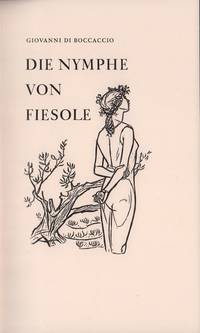
87742Frankfurt a.M. Trajanus-Presse 1958. . 8Il ninfale fiesolana dt. - Eins von 300 nummerierten Exemplaren auf Hoshino-Bütten von Hand gesetzt aus der Original Janson Antiqua um 1670 in einem Handeinband von Willi Pingel. Gesamtgestaltung von Gotthard de Beauclair. Im Druckvermerk vom Übersetzer und Illustrator SIGNIERT. - Exlibris. Gutes sauberes Exemplar Frankfurt a.M. Trajanus-Presse, 1958). unknown
1957RO60012483Im Insel Verlag. 1957. In-12. Relié. Bon état, Couv. convenable, Dos satisfaisant, Intérieur frais. 176 pages. Illustré de photos noir et blanc. Texte en allemand.. . . . Classification Dewey : 430-Langues germaniques. Allemand
1957R300288510Insel-Verlag. 1957. In-12. Relié. Etat d'usage, Coins frottés, Dos satisfaisant, Quelques rousseurs. 176 pages. Livre en allemand. Tranches jaunes. Pièce de titre noire, titre, auteur et filets dorés. Plats jaspés. Coiffes frottées. Annotation à l'encre en page de garde.. . . . Classification Dewey : 430-Langues germaniques. Allemand
195756298BBFrankfurt am Main. Trajanus-Presse Gotthard de Beauclair. 1957-1958. 27x17 cm. 200 S. Mit 38 Originalholzschnitten von Felix Hoffmann. Originalhalblederband mit rotem goldgeprägtem Rückenschild, in Schuber.
197165326ABWiesbaden, Sändig 1971. XVIII, 345, (3) S., 2 beilieg. gefalt. Tabellen, OLwd. (einige sehr schwache Flecken). Sonst tadellos. OLwd. (einige sehr schwache Flecken). Sonst tadellos.
Cm. 18, pp. x, 290 (2). Bross. orig. ornata (controfondata). ben conservato.
In-8° (cm. 21,9x14,9), pp. (94) con 44 DISEGNI da cura di Anna Richetta Cantamutto ispirati a varie interpretazioni pittoriche antiche della novella. Con molti riferimenti alle abntiche interpretazioni (la novella fu tradotta in latina da Petrarca molto discussa in tutti tempi, e da poco era stata oggetto di un Convegno all'Università dell'Aquila.
8°, pp.52, cop.muta coeva con una picc. mancanza. Lievi fioriture. Fa da pref. allo studio una lettera di Lelio Carfora al Torelli, in cui si legge che, tra "antichi mss. normanni conservati nella R.Biblioteca di Stokolma" fu ritrovato "un poema scritto in versi normanni intorno agli amori di Fiore e Biancafiore, le quali sono bellamente narrate nel Filocopo del Boccaccio..."(p.10).
In-8° (cm. 21x12,8), pp. 52. Brossura coeva muta con rinforzo al dorso. Fresco e pulito l'interno nell sue barbe. Difende dottissimamente l'originalità del FILOCOPO messa in dubbio dalla scoperta di un antico manoscritto normanno di Stoccolma, su cui si diffonde una lettera di Lelio CARFORA riportata all'inizio. Dedica a stampa alle Accademie della Crusca e alla Pontaniana. MARULLI, accademico Pontaniano. Raro.